kottke.org posts about video
Talk to anyone who lives near the flight path of Burlington, Vermont’s airport and it won’t be too long until they are complaining to you about the F-35 jets that routinely disrupt their lives. The loud, expensive weaponry arrived in the state in 2019 and have upset and angered residents ever since.
A sudden roar announced that the military jets were taking to the sky again.
Julia Parise’s son had developed a routine for whenever this happened: He would look to his mother and assess whether it was “one of them” — the F-35 fighter jets that had become such a constant presence in his young life — before asking her to cover his ears. He might do it himself, recalling aloud her reassurances as he did: “They won’t hurt me. They won’t hurt me.”
To capture the community unrest created by what one resident calls “Lockheed Martin’s welfare program” (the jet program will cost taxpayers $1.7 trillion over its lifetime), filmmakers Patrick McCormack and Duane Peterson III made a short film called Jet Line: Voicemails from the Flight Path featuring residents’ concerns from a complaints hotline the pair set up.
This short film employs an anonymous hotline to elevate the voices beneath Vermont’s F-35 flight path, the first urban residents to live with one of the military’s most controversial weapons systems overhead.
Tranquil scenes of unassuming neighborhoods near Burlington International Airport are juxtaposed with voicemails of the unheard, those drowned out by the ear-shattering “sound of freedom.” Exploring the relationship between picturesque residential areas and the deafening fighter jets overhead, Jet Line is a poetic portrait of a community plagued by war machines, documenting untenable conditions in a small city once voted one of the best places to live in America.
I hear the F-35s almost every time I am up in the Burlington area and they are very loud. I hear them when I’m on the phone with friends who live in Winooski. I hear them during my weekly Zoom session w/ my Burlington-based therapist and we have to pause for a few seconds so everyone can hear again. I live 30 miles away and they flew loudly over my house earlier today, as they do at least once a week. Over the weekend, the Marine Corps tweeted that they’d lost an F-35 somewhere in South Carolina and — yes, you heard right: they lost a whole-ass $100 million lethal weapon over a populated area. (They found the wreckage yesterday.) Hopefully when one of VT’s F-35s decides to drop out of the sky someday, it somehow misses everyone.
On their current US tour commemorating the 20th anniversaries of their two seminal albums (Give Up and Transatlanticism), The Postal Service and Death Cab For Cutie have been coming together to perform an encore rendition of Depeche Mode’s Enjoy the Silence. The video above is their version of it from last weekend’s show in New Haven, which I attended and very much enjoyed, but there are several other versions to choose from on YouTube: Boston, Wash DC, Portland, Rhode Island, etc.
In this ASMR stop motion cooking video, a chef butchers a huge Lego salmon and prepares a salmon and rice bowl. This video is surprisingly visceral, what with the sound effects and the (Lego) blood.
This reminds me more than a little of the sushi scene in Isle of Dogs. (thx, caroline)
I don’t think I’ve ever seen the animation style Gabriel Gabriel Garble uses in his short film Well Wishes My Love, Your Love — it’s so cool and unique. Everything in the film has this sort of radiating energy that interacts with everything else. (via it’s nice that)
Deadline’s Robert Lang compiled a bunch of short films (that you can watch for free online) that were later developed into feature-length films like Reservoir Dogs, Marcel the Shell with Shoes On, Boogie Nights, Bottle Rocket, Napoleon Dynamite, and District 9.
For instance, here’s Quentin Tarantino’s original Reservoir Dogs:
Wes Anderson’s original Bottle Rocket:
The original short version of Marcel the Shell with Shoes On:
Peluca, upon which Napoleon Dynamite was based:
The Dirk Diggler Story, the short film by PT Anderson on which Boogie Nights was based:
Ok, this is a little bit bonkers: HeyGen’s Video Translate tool will convert videos of people speaking into videos of them speaking one of several different languages (incl. English, Spanish, Hindi, and French) with matching mouth movements. Check out their brief demo of Marques Brownlee speaking Spanish & Tim Cook speaking Hindi or this video of a YouTuber trying it out:
The results are definitely in the category of “indistinguishable from magic”.
If you expand the default iPhone alarm into a piano ballad, it sounds quiet lovely actually. The sheet music is available here.
See also Steve Reich Is Calling, two iPhones ringing at slightly different tempos.
The first teaser trailer for season four of the Apple TV+ series For All Mankind takes the form of a recruitment video encouraging people to join the burgeoning workforce in space. It doesn’t give us much in the way of plot or character updates, but here’s the season synopsis (spoilers if you’re not caught up to the end of season three):
Rocketing into the new millennium in the eight years since Season 3, Happy Valley has rapidly expanded its footprint on Mars by turning former foes into partners. Now 2003, the focus of the space program has turned to the capture and mining of extremely valuable, mineral-rich asteroids that could change the future of both Earth and Mars. But simmering tensions between the residents of the now-sprawling international base threaten to undo everything they are working towards.
I have to admit my interest in the show waned a bit after the first season, but it’s still a pretty great show and I will be tuning in for season four on November 10. And is it just me or, if you tilt your head and squint, can you see For All Mankind as a prequel/origin story for The Expanse? (via gizmodo)
This is pretty clever actually: Disney+ and ESPN+ will air a real-time, Toy Story-ified version of the Oct 1st Jacksonville Jaguars and Atlanta Falcons NFL game. From Deadline:
Using the NFL’s Next Gen Stats and on-field tracking data, every player and play will be presented in “Andy’s Room,” the familiar, brightly colored setting for the Toy Story franchise. The action will be virtually simultaneous with the main game telecast, with most plays recreated after an expected delay in the neighborhood of about 30 seconds. Woody, Buzz Lightyear and many other characters will be visible throughout, and a press release notes they will be “participating from the sidelines and in other non-gameplay elements.” Along with game action, the announcers, graphics, scoreboard, referees’ penalty announcements, celebrations and other parts of the experience will all be rendered in a Toy Story-centric fashion.
I stopped watching the NFL years ago, but I might tune in to see how this works.
I love reading about speedrunning, specifically Super Mario Bros speedrunning, so this piece in Ars Technica about a new world record by Niftski is right up my alley. Here’s the run if you want to watch it:
Four particular things caught my eye about this run:
- Niftski’s new record is 4m 54.631s, which is now faster than what was believed to be the theoretical limit for a human-played game.
- It’s also extremely close to the fastest SMB game ever played done using tool-assisted speedrunning (where you basically play in super slow motion, so you can make all the very precise movements easily, a la The Flash). “In the battle of man versus machine, Niftski is now just 0.35 seconds away from standing up, John Henry-style, against the standard of machine-made automation.”
- I always marvel at the level of dedication and ingenuity of the players working together (though competition) to lower the possible times through the tiniest of adjustments.
- His heart rate tops out at 188bpm by the end of the game. I know he’s sitting at a desk, but that’s got to be of some cardiovascular advantage, right?
👏👏👏
A group of students from ETH Zurich and Lucerne University of Applied Sciences and Arts recently set a record for the fastest 0-62mph time with their hand-built electric car: 0.956 seconds. The 309-lb car got up to 62mph in just 40.3 feet, which is ~10 feet shorter than the width of a basketball court. The old record was 1.46 seconds, which this car just absolutely obliterated. For reference, the Tesla Plaid’s 0-60 time is 1.99 seconds.
The video of their run is kind of amazing…the car is just so ludicrously quick that I started giggling when it leapt off the line.
About once a year, boat owners on Wisconsin’s Lake Chippewa gather to move a small floating island from blocking access under a bridge. It’s a simple application of Newtonian physics: the boats all just nose into the island, gun their motors, and slowly shove the island out of the way.
The floating clump of mud and plant material is technically a bog, not an island, but it’s hefty enough to support the growth of trees all the same. Looking at it, you could easily believe it was a fully-fledged island. That is… until it starts drifting around.
“It’s one of the first things you look for when you come out here in the morning; where’s the bog?” Denny Reyes, owner of The Landing in Chippewa, told Arizona News.
The problematic bog is actually one of many, but it’s one of the biggest and close to a bridge that can get blocked when it goes for a wander. In 2022, with the wind on their side, it took around 25 boats to budge the bog and collectively push it back out into the lake.
Nature does its thing so quickly sometimes that you have to slow it down to appreciate the beauty and power of it. This is a video of a kingfisher plucking fish out of the water, with views from both above the water (which catches the dive and takeoff) and below the water (which shows the efficient grab of the fish). The underwater view is amazing…I’d never seen that before.
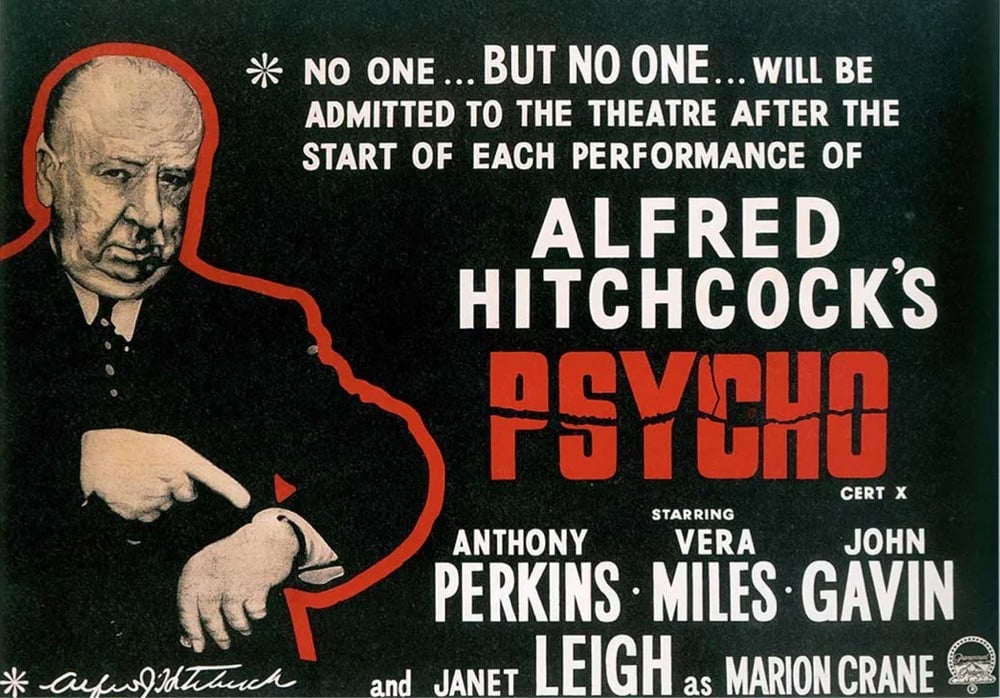
Going to the movies used to be a somewhat different experience than it is today: people wandered into a theater at any point in a film and would just watch until it looped back around when they came in. From a piece in the Hollywood Reporter:
Throughout the classical Hollywood era, moviegoers dropped in on a film screening whenever they felt like it, heedless of the progress of the narrative. In the usual formulation, a couple go to the movies, enter midway into the feature film, sit through to the end of the movie, watch the newsreel, cartoon, and comedy short at the top of the program, and then sit through the feature film until they recognize the scene they walked in on. At this point, one moviegoer whispers to their partner, “This is where we came in,” and they exit the theater.
This began to change in the 40s and 50s for a variety of reasons — theater owners and movie studios didn’t like it, movies were getting more complex, the rise of TV, etc. — but the real shift occurred with the premiere of Psycho in 1960. The studio put out a promotional blitz before it’s release stating that no one would be allowed entrance to the theater after the start of the film.
On June 16, 1960, after a saturation campaign giving fair warning, the DeMille and Baronet theaters in New York premiered Psycho with the see-it-from-the-beginning edict in place. In a practice later to be known as “fill and spill,” exhibitors hustled audiences in and out with military efficiency (the staggered showtimes — every two-hours for the 109-minute film — made for a tight squeeze). Uniformed Pinkerton guards were on hand to enforce the policy.
Here’s a video of Hitchcock laying out the policy for moviegoers (via open culture):
Psycho didn’t singlehandedly stop the practice, but Hitchcock’s stand was an important part in shifting moviegoing practices to the set start times we have today.
Really interesting video from Moth Light Media about how hummingbirds evolved into the unusual little creatures they are today.
The story of hummingbird evolution is how they have reaped the advantages of drinking a natural energy drink and then have had to evolve alien features to quell the disadvantages that have now gone on to define them.
Other popular videos from Moth Light Media include Evolution of Spider Webs, What Happens to Whale Bodies When They Die?, When Fungus Grew to the Size of Trees, and How Plants Became Meat Eaters.
In this short video essay, Evan Puschak explores the typical life cycle of superhero storytelling, where things move from standalone stories to crossovers and interconnections, the stakes continually rise, and things get so complicated that entertainment becomes homework. Marvel in particular is in the later stages of this cycle,1 where casual fans are dropping off because they haven’t watched increasingly mediocre movies and full seasons of shows to keep up to date on what’s to come.
It is with the appropriate feelings of melancholy and excitement that I share with you the teaser trailer for The Boy and the Heron, the legendary Hayao Miyazaki’s final animated feature film for Studio Ghibli.
A young boy named Mahito, yearning for his mother, ventures into a world shared by the living and the dead.
There, death comes to an end, and life finds a new beginning.
A semi-autobiographical fantasy about life, death, and creation, in tribute to friendship, from the mind of Hayao Miyazaki.
Miyazaki had previously retired after 2013’s The Wind Rises but according to Studio Ghibli co-founder Toshio Suzuki, he had good reason to come back for one more film:
Miyazaki is making the new film for his grandson. It’s his way of saying, ‘Grandpa is moving on to the next world, but he’s leaving behind this film.’
The Boy and the Heron opens on December 8 in the US. (via waxy)
Somehow I’d never heard of this before watching this video (nor it seems, had much of anyone else outside of the participants), but the building located at 368 Broadway in Manhattan was, in the years after 9/11, the creative home for a surprising number of filmmakers: Greta Gerwig, Lena Dunham, the Safdie brothers (Josh & Benny), the Neistat brothers (Casey & Van), the Schulman brothers (Ariel & Nev), and Henry Joost.
Here’s a clip of Van Neistat talking about those days (starting at 19:50):
Brian Eno had a word for places like 368 Broadway and the people who gather together to create: scenius. Austin Kleon elaborated on scenius in his book Show Your Work:
There’s a healthier way of thinking about creativity that the musician Brian Eno refers to as “scenius.” Under this model, great ideas are often birthed by a group of creative individuals — artists, curators, thinkers, theorists, and other tastemakers — who make up an “ecology of talent.” If you look back closely at history, many of the people who we think of as lone geniuses were actually part of “a whole scene of people who were supporting each other, looking at each other’s work, copying from each other, stealing ideas, and contributing ideas.” Scenius doesn’t take away from the achievements of those great individuals: it just acknowledges that good work isn’t created in a vacuum, and that creativity is always, in some sense, a collaboration, the result of a mind connected to other minds.
For the role of a teacher/coach in her new film Bottoms (about a pair of queer girls who start a fight club in their high school in order to get laid), director Emma Seligman made the unorthodox decision to cast former NFL player Marshawn Lynch. It turned out to be an inspired choice — according to an interview with Seligman, he was a natural.
He was one of the best improvisers I’ve ever worked with. I’m not overstating that. He improvised most of his stuff in the movie that ended up in the final cut! We couldn’t ever write something that would be as funny as what he gave us. He’d spew out the most brilliant jokes ever. I kept on encouraging him to do more improv. He’d be like, “Ugh, that stuff’s easy! I wanna get your words right!” I told him that it was so much better than anything we could have written and he was like, “I don’t care about this. I want to honor your work.” I’m so glad I got to talk about him this much.
Here’s a short clip of Lynch doing his thing as Mr. G, “an air-headed high school teacher”:
Lynch also used the film as an opportunity to make some amends for how he reacted when his sister came out as queer:
This was a good opportunity for me because when I was in high school, my sister had came out as being a lesbian or gay — I did not handle it right. You feel me, as a 16-year-old boy, I didn’t handle it the way that I feel like I probably should have. So I told [Seligman] it was giving me an opportunity to correct my wrongs, to rewrite one of my mistakes.
From that interview with Seligman again:
In our first conversation, he told me that his sister is queer and when they were in high school, he didn’t necessarily handle it super well. He felt like this movie coming into his hands was the universe giving him a chance to right his wrongs. That’s what he said. He walked her down the aisle. He felt like they were all good, you know? But his sister thought it’d be really cool if he did this.
If you have never seen this old interview with Lynch about the value of persistence, buckle up because you’re in for a treat:
When most people think of bees, they picture the honeybee. But the honeybee is a domesticated animal — essentially livestock — and are well taken care of. The thousands of species of wild bee are paid less attention and are no less important to maintaining healthy ecosystems (and yes, helping out with pollination).
As a group, wild bees are considered incredibly important pollinators, especially for home gardens and crops that honey bees can’t pollinate. Tomatoes, eggplants, and peppers, for example, require “buzz pollination;” bees have to vibrate their bodies to shake the pollen free — a behavior that honey bees can’t do (bumblebees and some other native species can).
Yet these free services native bees provide are dwindling. While wild bees are, as a group, understudied, existing research suggests that many species are threatened with extinction, including more than a quarter of North American bumblebees.
Adam Driver as Enzo Ferrari — a little too on the nose? Michael Mann hasn’t made a film since 2015’s Blackhat and hasn’t made an award-winning film since 2004’s Collateral, so it’s nice to see him back in the director’s chair. The film is based on Brock Yates’ 1991 book Enzo Ferrari: The Man and the Machine.
Next to the Pope, Ferrari was the most revered man in Italy. But was he the benign padrone portrayed by an adoring world press at the time, or was he a ruthless despot, who drove his staff to the edge of madness, and his racing drivers even further?
Brock Yates’s definitive biography penetrated Ferrari’s elaborately constructed veneer and uncovered the truth behind Ferrari’s bizarre relationships, his work with Mussolini’s fascists, and his fanatical obsession with speed.
Ferrari just premiered at the Venice Film Festival and early reviews are mostly positive but not overwhelmingly so. The film opens on Dec 25 in the US.
Once Upon a Time in Northern Ireland is a 5-part documentary series from director James Bluemel on the Troubles in Northern Ireland that is available to watch on PBS and BBC. A short1 trailer is above.
“Once Upon a Time in Northern Ireland” weaves together the personal stories of ordinary men, women and children who were drawn — both willingly and unwillingly — into a conflict that spanned over thirty years. The series mixes extraordinary archive footage and emotionally compelling first-person testimonies to create an intimate, multi-generational portrait of Northern Ireland’s past, present and future with an emphasis on understanding and empathy for all points of view.
I’ve heard really good things about this series and, after recently reading Patrick Radden Keefe’s excellent Say Nothing, I’m looking forward to watching this. Bluemel even interviewed Michael McConville, whose mother’s disappearance forms the backbone of Keefe’s book:
Michael McConville remembering the day his mother, Jean, was taken away and murdered by the IRA felt like an important historical story to include in the series. The IRA denied murdering her for over 30 years and they only revealed the whereabouts of her body in 2006. The trauma of this event on Michael is evident, not just in the way he talks but also the way he holds himself, his body displays the pain he feels. The trauma of those years can be consuming and was present in nearly everyone I interviewed.
Once Upon a Time in Northern Ireland is available to stream on PBS and BBC sites and apps. (via @overholt)
Oh yay, I had been wondering just the other day what Errol Morris has been up to and it turns out to be a project with Apple TV+ called The Pigeon Tunnel, which is billed as the final interview with espionage novelist John le Carré (born David Cornwell).
It’s terribly difficult to recruit for a secret service. You’re looking for somebody who’s a bit bad, but at the same time, loyal. There’s a type. And I fit it perfectly.
The movie has the same title and covers some of the same ground as le Carré’s 2016 memoir, probably with more of an emphasis on Morris’s general obsession with what constitutes truth. More info on the film from the Toronto International Film Festival, where the movie is premiering on Sept 11:
Cornwell once worked for the British spy agencies MI5 and MI6. He sparingly gave interviews, but accepted Morris’ invitation because he saw it “as something definitive.” He had already begun a process of opening up in his memoir The Pigeon Tunnel: Stories from My Life.
Crucial to the narrative is the author’s relationship to his father Ronnie, an inveterate gambler and con artist. Cornwell’s mother disappeared when he was five, so his main frame of reference was the world of his father, who was endlessly on the run from the mob or the police. The title The Pigeon Tunnel comes from Cornwell’s experience as a child going to Monte Carlo with Ronnie. Imprinted on his memory was a shooting range on the top of a cliff. Beneath the grass was a tunnel from which trapped pigeons were ejected over the sea as targets.
The Pigeon Tunnel will be out on Apple TV+ on Oct 20, 2023.
Oh, this is delightful: a short documentary about a group of Mayan women in the tiny town of Hondzonot in the Yucatan peninsula who formed a softball team called Las Diablillas (Little Devils).
As a girl, Ay Ay loved playing sports at school. But, when she asked her parents’ permission to go out and play after school, they would say no — that only boys could do so. The custom in Hondzonot was that girls would stay busy inside, get married (some as young as twelve or thirteen), and have a family. Ay Ay always thought differently, she told me, but she had no choice but to obey her parents, and later her husband. One day, a mobile health unit came to town, and the doctor taught some local women to play softball with a wooden stick and a tennis ball, as a way to combat the risks of diabetes and hypertension. After the doctor left, the women kept playing, and the health benefits of the sport eased the community stigma. Little by little, Ay Ay asked permission from her husband to go out every day. “I felt it was necessary. I wanted to distract myself,” she told Fajardo, “from the routine at home.”
The women purposely wear the traditional huipil tunic as their uniform and play with an infectious spirit of camaraderie. Major League Baseball made their own short documentary about Las Diablillas:
“The question isn’t, ‘Who will give me permission?’ It’s, ‘Who’s going to stop me?’” says Geimi Santa Ofelia May Dzib, the team’s left fielder, in the opening scenes of MLB Originals’ latest short film, “Las Diablillas,” which explores how these women have found empowerment through sport.
The NY Times also published a piece about the team a few years ago:
“Here a woman serves the home and is not supposed to go out and play sports,” said Fabiola May Chulim, the team captain and manager of the Little Devils, known here as Las Diablillas, their name in Spanish. “When a woman marries, she’s supposed to do chores and attend to her husband and kids. We decided a few years ago that’s not going to impede us anymore from playing a sport when we want.”
Ahh, it seems like only yesterday that I read the news about David Fincher’s upcoming film The Killer. And it was. So now here’s the teaser trailer — interest piqued. What will tomorrow bring?
The Killer stars Michael Fassbender and will make its premiere at the Venice Film Festival on Sept 3, then a limited release in theaters, and then will be streaming on Netflix on Nov 10. As a refresher, here’s what Fincher has been up to lately-ish: directed Mank (2020) & Mindhunter (2017-2019), executive produced Voir and Love, Death & Robots (also directed one episode). Fun Fincher Facts: he was apparently an assistant cameraman for Return of the Jedi and did “matte photography” for Indiana Jones and the Temple of Doom.
From the Journey to the Microcosmos YouTube channel, this is an exploration of the tiny worlds contained in rainwater puddles and their connection to the discovery of microbial organisms in the 1670s by Dutch scientist Antonie van Leeuwenhoek. What a trip that must have been, to be the first person to peer microscopically into some water and observe tiny organisms swimming around. (via @JenLucPiquant)
A McDonald’s restaurant apparently appears in season two of Loki on Disney+ and to mark the occasion, the fast food giant made a commercial featuring a number of other appearances by the brand in movies and TV, including The Office, The Fifth Element, Coming to America (“They’re McDonald’s. I’m McDowell’s.”), and Seinfeld. (Perhaps the most famous McDonald’s reference in cinema history, Jules’ Royale with Cheese bit in Pulp Fiction, is conspicuously missing.)
The ad was created to introduce their As Featured In Meal promotion, which seems to consist of 1100-calorie meals from their usual menu paired with a packet of Sweet ‘N Sour Sauce with the Loki logo on it. I thought the commercial was fun and clever but that promotion is a bit Sad Meal.
On July 4, 2023, a couple thousand people gathered in Alaska to watch old junker cars get launched off of a 300-foot cliff and just get obliterated on impact. (The launching starts at the 8-minute mark.) It’s entertaining to watch in a Jackass sort of way, but the whole thing is a metaphor for a particular facet of America: loud, dumb, fun, and wasteful.
Jan Hakon Erichsen does weird things with dried pasta, mostly spaghetti but also lasagna. This is goofy and fun. Check out his Instagram and YouTube for more artistic hijinks. (thx, clarke)
This is a lovely, mesmerizing short video made by artist Catherine Chalmers in collaboration with some leafcutter ants. I’m not gonna say why, but you should watch this all the way to the end…there’s a bit of a twist that’ll make you smile.
Earlier this year, Chalmers was the subject of a profile in the New Yorker:
The work encourages us to empathize with bugs. One reason they disgust us, Chalmers believes, is that they seem immoral, or at least differently moral. “We see ourselves as individuals,” she said. “And we see insects as being this uniform, formless mass that will sacrifice themselves and do all these sorts of things.” Some of her photos capture a praying mantis eating the head of her mate. “Civilization is a march for greater and greater and greater control over the world,” she said. But nature doesn’t play by our rules.
You can more of Chalmers’ collabs with ants and other insects on her website and Instagram. She’s also spoken about her work at a National Geographic Conference and at a TEDx event. (thx, andy)
Newer posts
Older posts





Socials & More