kottke.org posts about Star Trek
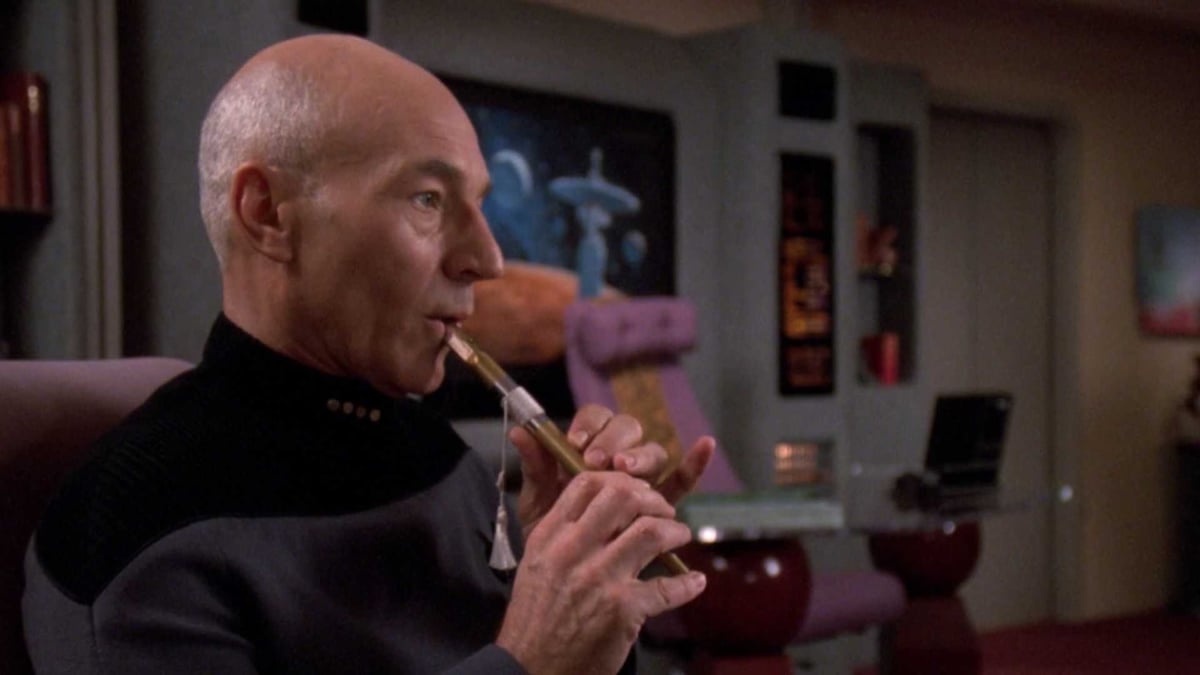
In the wake of Patrick Stewart’s death the other day, I watched a couple episodes of Star Trek: The Next Generation — the two-part series finale All Good Things… in fact.1 Wanting to add more Picard-centric episodes to my watchlist, I did some research.
There are several lists out there of the episodes of ST:TNG and Star Trek: Picard where Captain Jean-Luc Picard particularly shines. Some episodes appear on nearly every list; these are the consensus favorites:
- The Inner Light. “Captain Jean-Luc Picard is struck unconscious by an energy beam from an alien probe. While just 25 minutes pass for the rest of the crew between Picard being struck unconscious and eventually regaining consciousness on the Enterprise bridge floor, the probe makes Picard experience 40 years of lifetime as Kamin, a humanoid scientist whose planet is threatened by the nova of its sun.”
- Family. “Captain Jean-Luc Picard visits his brother’s family in France, where he begins to come to terms with his treatment by the Borg.”
- The Best of Both Worlds. “In this two part episode, the Enterprise must battle the Borg who are intent on conquering Earth, with a captured and assimilated Captain Picard as their emissary.”
- Darmok. “The crew of the Enterprise is unable to establish meaningful communication with the crew of an alien vessel, which is resolved by the struggle of the ships’ captains to defend each other from a vicious beast.”
- All Good Things… “The plot involves Captain Jean-Luc Picard jumping through time and the formation of an anomaly that defies causality, the whole situation being a test that allows Picard to demonstrate human potential to the Q Continuum by making an intuitive leap of faith to understand the cause of, and how to eliminate, the anomaly before it destroys humanity.”
- The Measure of a Man. “In this episode, the rights of the android officer Lt. Commander Data are threatened by a scientist who wishes to dismantle him to produce replicas of him. Captain Jean-Luc Picard fights in a Starfleet court for Data’s right of self-determination, not to be declared mere property of Starfleet, while Commander William Riker is obliged to argue on behalf of the scientist.”
- Starship Mine. “While the Enterprise is evacuated for hazardous maintenance, Captain Picard must, alone, contend with thieves posing as a work crew aboard the ship. The plot has been noted for its similarity to the 1988 action film Die Hard.”
- Chain of Command. “Jean-Luc Picard is relieved of command of the Enterprise and reassigned to lead a covert mission, while his replacement is assigned to deal with the Cardassians openly. The second part of the episode is noted for the intense performance of Patrick Stewart and its depiction of brutal torture and interrogation scenes.”
- Tapestry. “Q allows a supposedly deceased Captain Jean-Luc Picard to re-visit a pivotal event in his youth that he since regrets. Picard changes the past, but upon returning to the present he finds that the event made him the man he became.”
- The Drumhead. “An explosion aboard the Enterprise leads to a high-level investigation headed by Admiral Norah Satie, a retired officer renowned for her skill at exposing conspiracies.”
You can check out the lists at Screen Rant, Collider, Comicbook.com, That Love Podcast, and Popular Mechanics for more good Picard episodes.
The movies seemed to be out of scope for these lists, but I’ve always loved First Contact and Picard’s unhinged pursuit of the Borg — “The line must be drawn here!”

Sir Patrick Stewart, best known for his role as Captain Jean-Luc Picard on Star Trek: The Next Generation, has died at the age of 86. He passed at home in Los Angeles from Alzheimer’s disease and Lewy body dementia.
He was largely considered an unknown when the “Star Trek” offer came along. At the invitation of a friend, a university professor, Mr. Stewart had been in Los Angeles conducting master classes on Shakespeare when, one evening, he gave a lecture and performed some bits of the plays in a program that was open to the public.
A TV producer who was involved in developing a new “Star Trek” series happened to attend and soon persuaded Mr. Stewart to audition — even though, as Mr. Stewart later wrote, he knew “next to nothing” about the franchise.
Surprised to get the part — the “Star Trek” creator, Gene Roddenberry, who was overseeing the new series, had not been keen to hire him at first — Mr. Stewart expected the project to be a short-term commitment. How, he remembered thinking, could the show possibly succeed with a middle-aged pacifist captain with a French name and a British accent?
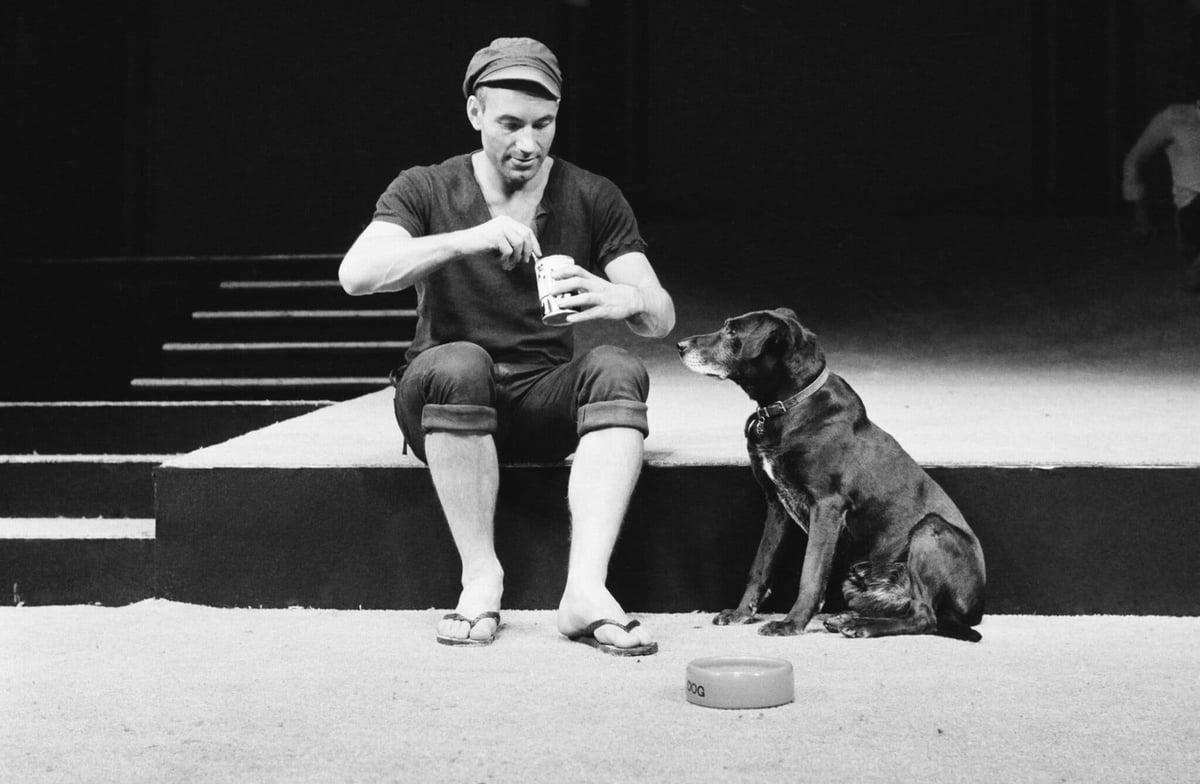
This is hard news to take, even though Stewart lived a full and fulfilling life. The Next Generation will always be my favorite Star Trek series and Picard my favorite captain. Stewart got off to a rough start on the series:
So when he was on set shooting the show’s debut season and co-stars like Jonathan Frakes, Denise Crosby and Brent Spiner would tease him or ad-lib a joke or laugh when they flubbed their lines, it would low-key infuriate him.
“I could be a severe bastard,” he writes. “My experiences at the Royal Shakespeare Company and the National Theatre had been intense and serious… On the TNG set, I grew angry with the conduct of my peers, and that’s when I called that meeting in which I lectured the cast for goofing off and responded to Denise Crosby’s, ‘We’ve got to have some fun sometimes, Patrick’ comment by saying, ‘We are not here, Denise, to have fun.’”
“In retrospect,” Stewart continues, “everyone, me included, finds this story hilarious. But in the moment, when the cast erupted in hysterics at my pompous declaration, I didn’t handle it well. I didn’t enjoy being laughed at. I stormed off the set and into my trailer, slamming the door.”
But he found his footing and eventually found meaning in the role of Picard (archive):
Q: There’s a passage where you say that, from your father, “I drew Picard’s stern, intimidating tendencies. But I like to think that my mother is in the captain too, in his moments of warmth and sensitivity.” Do you see Picard as your way of reconciling that conflict between your parents?
A: Very much so, yes. Both Star Trek and therapy have been responsible for that. Having to open the doors into my childhood in order to be an actor became utterly intriguing to me in a way that it never had been before. And I regret that when I look back on some of the roles I played, what I might have brought to them if I just released myself a little bit more.
Might watch an episode or two this evening in remembrance. If you’re not a Trek fan, you can watch Stewart play Macbeth in 2010:
I 100% love this video of every time someone says a percentage on Star Trek: The Next Generation. And the word “percent” has lost all of its meaning due to semantic satiation. (thx, caroline)
I am still stinge watching my way through the second season of Strange New Worlds, but the third season of the show premieres sometime this summer, so I’d better finish it up before then. Anyway, I love this show and crew and the trailer looks appropriately kooky and wacky so let’s goooo!
Fall always brings brisker days, earlier sunsets, and a whole raft of new books that are impossible to find the time to read. Add this memoir by Patrick Stewart to the pile next to your bed: Making It So (bookshop.org). The Hollywood Reporter has a great video excerpt with audio from the audiobook (narrated by Stewart himself, naturally) about his early days on Star Trek: The Next Generation:
From an accompanying article:
So when he was on set shooting the show’s debut season and co-stars like Jonathan Frakes, Denise Crosby and Brent Spiner would tease him or ad-lib a joke or laugh when they flubbed their lines, it would low-key infuriate him.
“I could be a severe bastard,” he writes. “My experiences at the Royal Shakespeare Company and the National Theatre had been intense and serious… On the TNG set, I grew angry with the conduct of my peers, and that’s when I called that meeting in which I lectured the cast for goofing off and responded to Denise Crosby’s, ‘We’ve got to have some fun sometimes, Patrick’ comment by saying, ‘We are not here, Denise, to have fun.’”
“In retrospect,” Stewart continues, “everyone, me included, finds this story hilarious. But in the moment, when the cast erupted in hysterics at my pompous declaration, I didn’t handle it well. I didn’t enjoy being laughed at. I stormed off the set and into my trailer, slamming the door.”
Update: Gideon Lichfield has a great interview with Stewart for Wired.
Q: There’s a passage where you say that, from your father, “I drew Picard’s stern, intimidating tendencies. But I like to think that my mother is in the captain too, in his moments of warmth and sensitivity.” Do you see Picard as your way of reconciling that conflict between your parents?
A: Very much so, yes. Both Star Trek and therapy have been responsible for that. Having to open the doors into my childhood in order to be an actor became utterly intriguing to me in a way that it never had been before. And I regret that when I look back on some of the roles I played, what I might have brought to them if I just released myself a little bit more.
(via @samuelwade)
In this short video from the BBC narrated by Helena Bonham Carter, activist and actor George Takei talks about his imprisonment in an American concentration camp during WWII because he was of Japanese descent.
I began school in Rohwer, a real school, in a black tar paper barrack. There was an American flag hanging at the front of the classroom and on the first morning, the teacher said, “We’re going begin every morning with the pledge of allegiance to the flag. I will teach it to you and you are to memorize that.” But I could see right outside my schoolhouse window the barbed wire fence and the sentry tower as I recited the words “with liberty and justice for all”. An innocent kid, too young to understand the stinging irony in those words.
Takei has done many talks & interviews over the years about his experience, including for the Archive of American Television, Democracy Now!, and a TED Talk back in 2014:
He also published a graphic novel about his time in the camps called They Called Us Enemy.
Drawing from the materials of The Roddenberry Archive, this video takes us on a virtual tour of the 3D rendered bridges of every iteration of the Starship Enterprise from Star Trek, from the original 1964 sketches to the final scenes of Star Trek: Picard. I’ve watched a bunch of Star Trek recently and it was neat to see the evolution of the design and presumed technology. Designing for the future is difficult and it’s even tougher when, for instance, you need to design something that for the future that looks contemporary to now but also, somehow, predates a design that looked contemporary 30 years ago. (If that makes any sense…)
You can also head over to The Roddenberry Archive to check out all of the Enterprise designs in more detail, inside and out. (via open culture)
Along with the transporters and communicators, one of the marquee bits of technology in the Star Trek universe is the warp engine. From Star Trek: The Movie to DS9 & Voyager to Picard and Lower Decks, this video takes a look at how the warp jump special effect has changed over the years. Surprising thing I did not know: there was no warp jump special effect in the Original Series.
See also Star Trek Transporters Through the Years and In a Race to the Edge of the Solar System, Which Star Trek Ship Would Win?
Last week, William Shatner finally got a chance to boldly go where he hadn’t actually been before: into space. And upon returning from the 11-minute flight, the 90-year-old TV spaceship captain had come down with more than a touch of the Overview Effect. From the transcript of his post-flight remarks:
If…. Everybody in the world needs to do this…
Everybody in the world needs to see the…” (begins to cry) “…It was unbelievable, unbelievable. I mean, you know the little things… weightlessness… to see the blue color just.. go WHIP by!!! And now you’re staring into blackness. That’s the thing… the covering of blue… this sheet, this blanket, this comforter of blue that we have around us. We think, ‘Oh, that’s blue the sky!’
And then suddenly you shoot up through it all of the sudden… as if you whip off the sheet off you when you are asleep and you’re looking into blackness. Into BLACK UGLINESS… And you look down and there’s the blue down there… and the black up there and it’s… it’s just… there is Mother Earth… and comfort… and there is ….is there death? I don’t know! Is that death? Is that the way death is?? WOOP, and it’s gone! Jesus…
It was so moving to me… this experience …it’s something unbelievable. You see it… yeah, you know… weightlessness… my stomach went up and I thought, ‘God, this is so weird…’ but not as weird as the covering of blue… this is what I never expected. Oh, it’s one thing to say, ‘Oh… the sky and the thing and the… gradual…’ It’s all true… but what isn’t true… what is unknown until you do it is… is this pillow.. There’s this soft blue… look at the the beauty of that color! And it’s so THIN! And you’re through it in an instant…
He continued:
I don’t know, I can’t even begin to express what I …what I would love to do is to communicate as much as possible … the jeopardy… the the the moment you see how… The vulnerability of everything, it’s so… small. This AIR which is keeping us alive is thinner than your skin! It’s… it’s a… it’s a sliver! It’s immeasurably small when you think in terms of the Universe! It’s negligible! This air… Mars doesn’t have it! No… nothing… I mean, this…
They should have sent a poet. Jokes aside, I’m sure that if I’d just returned from a flight into space, I’d would be equally flummoxed and unable to articulate what I’d just experienced. Hell, I couldn’t even talk after seeing a solar eclipse.
Production designers working on science fiction movies and TV shows are part-time magicians because they routinely have to invent the future using things from the present. The site Star Trek + Design is collecting the futuristic design objects — chairs, cups, silverware, sofas — that designers used on the sets of Star Trek movies and TV shows to depict the future.
Being drawn to the aesthetics of Trek, especially of The Next Generation, made me curious about the specific objects that set designers used to create the visual embodiment of what living and working on a starship would look like in a technologically-advanced, post-scarcity future.
For instance, this is an RBT Chair by Teknion used in Star Trek: Discovery:

Park Avenue glasses made by Anchor Hocking were used for barware in TNG:

Voyager used Arne Jacobsen’s AJ Flatware in several episodes (as did Kubrick’s 2001):

Check out the site for many more sourced objects.
See also Film and Furniture, a Site About the Decor in Movies.
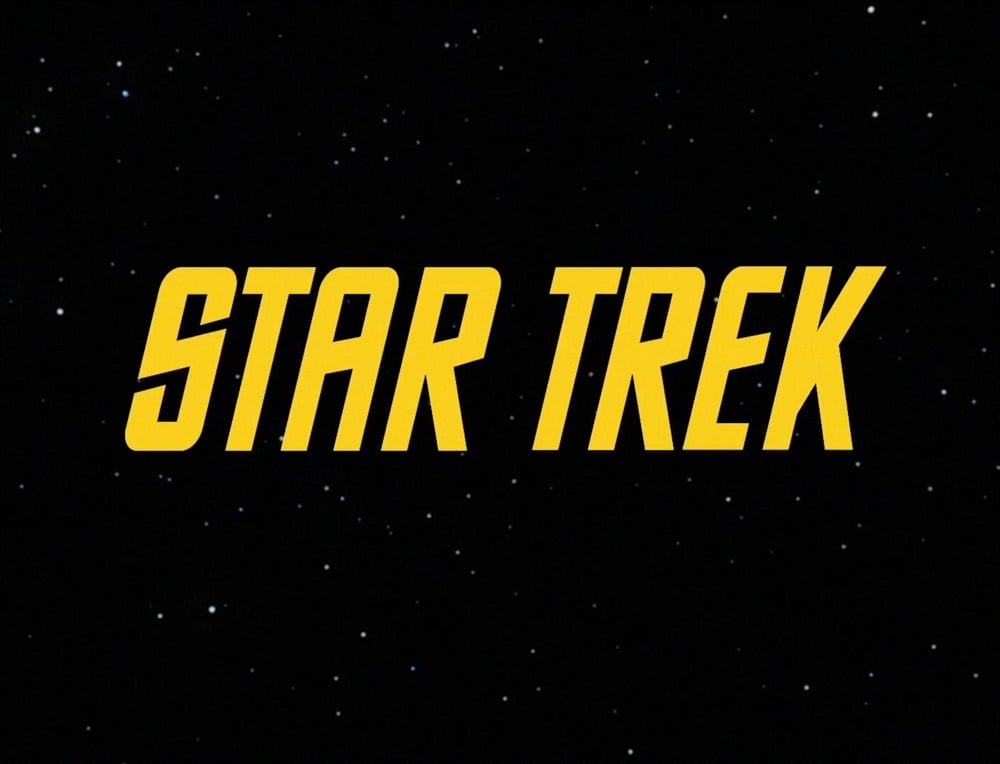
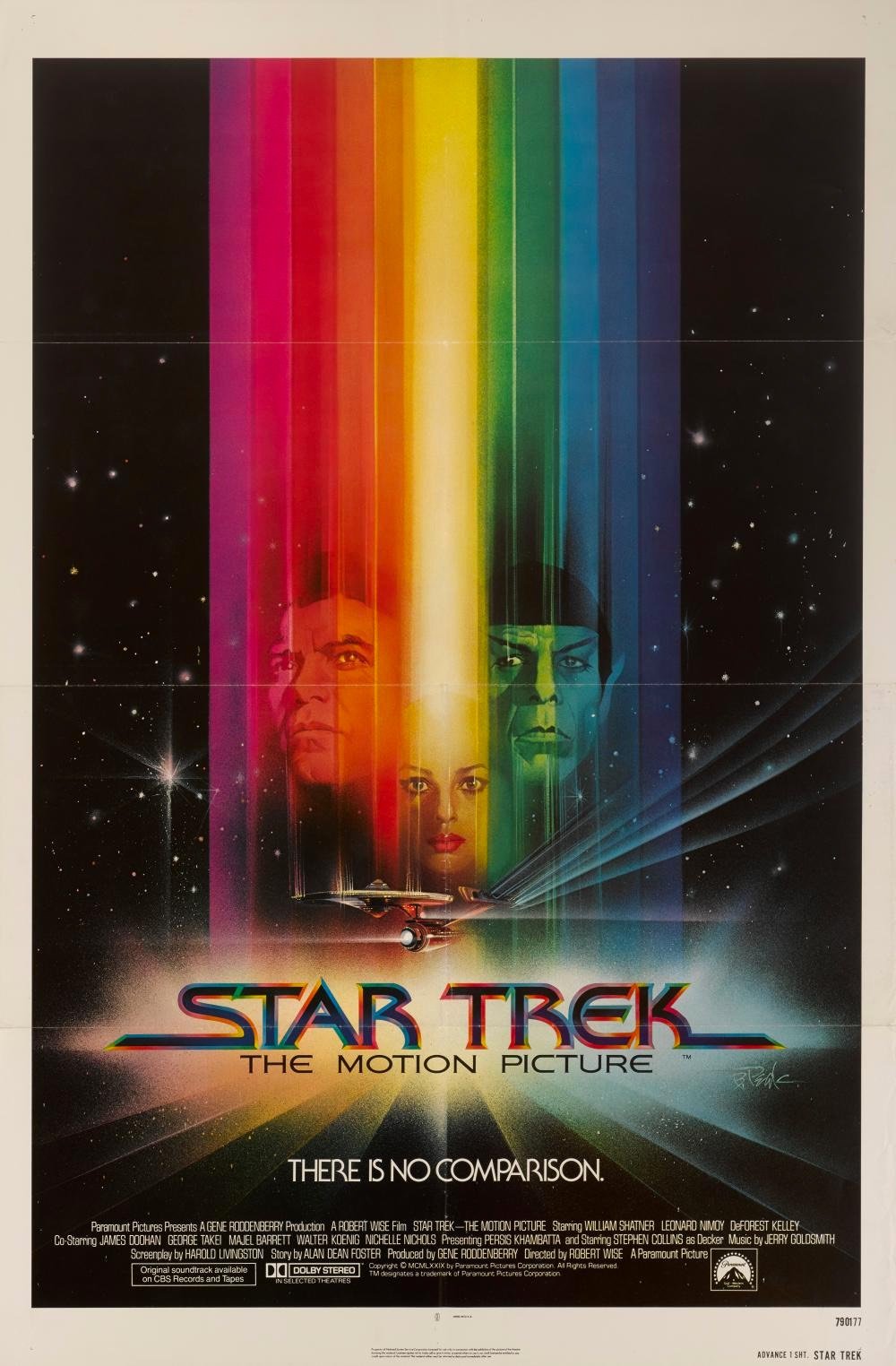
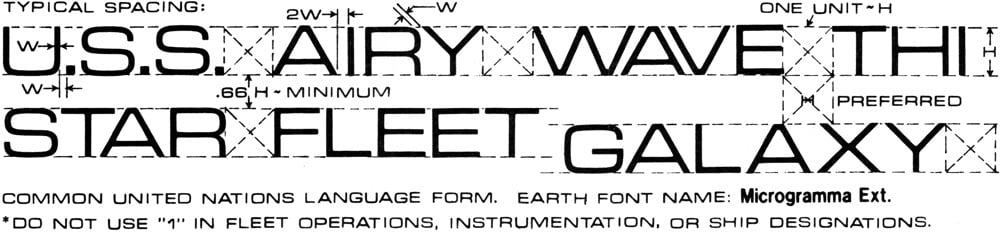
In an extended excerpt from his book Typeset in the Future: Typography and Design in Science Fiction Movies (Amazon), Dave Addey goes long on the typography and design of Star Trek: The Motion Picture (and Trek in general).
Alas, The Original Series’s inconsistent typography did not survive the stylistic leap into the 1970s. To make up for it, The Motion Picture’s title card introduces a new font, with some of the curviest Es known to sci-fi. It also follows an emerging seventies trend: Movie names beginning with STAR must have long trailing lines on the opening S.
For io9, Eleanor Tremeer digs into the complex and sexist legacy in Star Trek’s progressive universe. From Uhura on, Star Trek has always pushed the boundaries of how women were portrayed on TV, particularly in science fiction, but in some aspects, the shows have also been undeniably sexist.
With Yar gone, the women of The Next Generation fit more snugly into classic feminine molds, as Marina Sirtis reminisces. “They got it right, they cast a woman as the security chief. But Denise left, and the two remaining women were in caring professions. So it was ok to be on a spaceship as a woman, but you had to be a nurturer.” Speaking to io9, Gates McFadden (Crusher) is scathing about the few times the women would be thrown together, not to work together, but to gossip. “If the ladies did have a scene together we were dressed up in leotards talking about men. We weren’t sharing opinions on a medical issue!”
Over the ensuing years, Troi and Crusher would slowly get more screen time, as their characters became more nuanced, but they would rarely get the chance to break out of their nurturer molds. And with Crosby gone, security chief wasn’t the only position that needed filling. “I was never supposed to be the chick on the show, the va-va-voom. That was supposed to be Denise,” Sirtis told us. For as progressive as Star Trek tried to be with its women, every show has something in common: There has to be a hot chick.
To understand why this was the case, you have to look behind the scenes and at who was making the casting and plotting decisions.
If the entertainment industry is dominated by men now, this was even more the case decades ago. Star Trek has had a few female writers and producers over the years-DC Fontana wrote for The Original Series, The Next Generation, and Deep Space Nine; Jeri Taylor got her start producing The Next Generation before co-creating Voyager, to name just two immensely influential staffers. But, as Sirtis points out, Star Trek was a franchise created by men: “Even though we were writing a show about the 24th century, apart from Jeri Taylor and Melinda Snodgrass [another writer], the writers and producers were all men. Twentieth-century men. So it’s not gonna be that far-reaching.”
We could argue, of course, that Star Trek was a product of its era, but the actors were aware, at the time, that the show could be better. This aggravated Gates McFadden, as early as season one of The Next Generation, as she revealed to io9. “I wondered, did the women exist for the men to react to? Even Wesley just reacted to his mother, not seeking out her counsel-for counsel he sought out the men on the ship.” Coming from academia, McFadden was used to a collaborative creative environment, but she didn’t encounter that behind the scenes of The Next Generation. “Jonathan Frakes could bound into the producer’s office and put his feet up, but I couldn’t. That wasn’t acceptable.”
I’m rewatching The Next Generation right now and have been paying a lot of attention to how the women on the show (both the recurring cast and various single-episode characters) are portrayed. There’s definitely improvement after the first season or two, but there’s just so much on the show that’s off and obviously written primarily by and for men.
Anyway, if you’re a Star Trek fan at all, you should read Tremeer’s whole piece.
Here I was, flying along fat, dumb, and happy (like my dad used to say), not really wanting or needing any more The Next Generation-era Star Trek or Jean-Luc Picard in my life and now this. How could I have been so mindless? This trailer got me so fired up for Star Trek: Picard — the Borg! Data in a drawer! a potty-mouthed Seven of Nine! — that I am practically levitating. Nostalgia is death — inject it directly into my veins.
In this NASA promotional film from 1977, Star Trek star Nichelle Nichols takes a tour of the Johnson Space Center with Apollo 12 astronaut Al Bean and urges viewers, especially women and people of color, to sign up to be astronauts on NASA’s Space Shuttle program.
As one of the first black women to play a lead role on television, Nichols was a role model for women and people of color, particularly those interested in science, space, and engineering. When she was she thinking of quitting Star Trek, Nichols met Martin Luther King Jr. at a NAACP fundraiser and he talked her into staying on the show. She recalled King telling her:
Do you not understand what God has given you? … You have the first important non-traditional role, non-stereotypical role. … You cannot abdicate your position. You are changing the minds of people across the world, because for the first time, through you, we see ourselves and what can be.
So when NASA came calling, Nichols used her position well:
She relayed her response to NASA with a mischievous twinkle in her eye, “I am going to bring you so many qualified women and minority astronaut applicants for this position that if you don’t choose one… everybody in the newspapers across the country will know about it.”
Nichols credited Star Trek with the success of her recruiting efforts. “Suddenly the people who were responding were the bigger Trekkers you ever saw. They truly believed what I said… it was a very successful endeavor. It changed the face of the astronaut corp forever.”
Among the recruits drawn to NASA by Nichols’ efforts were Sally Ride, the first American woman in space, Ronald McNair & Judith Resnick, who both died in the Challenger accident, Guion Bluford, the first African-American in space, and Mae Jemison, who was the first black woman in space. The diversity of the latest batch of NASA astronauts-in-training is a testament to Nichols’ and NASA’s joint efforts as well. (via open culture)
Older posts





Socials & More