



Cubist watercolors
Man, I don’t know what to call this style of painting (rectanglism?) but Adam Lister does these cool pseudo-bitmappy paintings of famous artworks and notable pop cultural icons.



This site is made possible by member support. 💞
Big thanks to Arcustech for hosting the site and offering amazing tech support.
When you buy through links on kottke.org, I may earn an affiliate commission. Thanks for supporting the site!
kottke.org. home of fine hypertext products since 1998.
Beloved by 86.47% of the web.
Man, I don’t know what to call this style of painting (rectanglism?) but Adam Lister does these cool pseudo-bitmappy paintings of famous artworks and notable pop cultural icons.
The soundtrack for David Fincher’s adaptation of Gone Girl is out and as with his last two films (The Social Network, The Girl with the Dragon Tattoo), the music is by Trent Reznor and Atticus Ross.
Whenever the words “Reznor”, “Fincher”, “Atticus”, and “soundtrack” get into a sentence together, you know it’s good news for your earholes. (via @arainert)
ps. Speaking of Fincher, he spoke to Disney about directing a Star Wars movie and had an interesting take on the original trilogy:
I always thought of Star Wars as the story of two slaves [C-3PO and R2-D2] who go from owner to owner, witnessing their masters’ folly, the ultimate folly of man.
I somehow didn’t know or forgot that PT Anderson was doing a movie based on Thomas Pynchon’s Inherent Vice. It turns out he totally is and here’s the first trailer:
That looks entirely goofy and good.
Mad food scientist Dave Arnold, lately of high-tech NYC bar Booker & Dax, is coming out with a book called Liquid Intelligence: The Art and Science of the Perfect Cocktail.
Years of rigorous experimentation and study — botched attempts and inspired solutions — have yielded the recipes and techniques found in these pages. Featuring more than 120 recipes and nearly 450 color photographs, Liquid Intelligence begins with the simple — how ice forms and how to make crystal-clear cubes in your own freezer — and then progresses into advanced techniques like clarifying cloudy lime juice with enzymes, nitro-muddling fresh basil to prevent browning, and infusing vodka with coffee, orange, or peppercorns.
Practical tips for preparing drinks by the pitcher, making homemade sodas, and building a specialized bar in your own home are exactly what drink enthusiasts need to know. For devotees seeking the cutting edge, chapters on liquid nitrogen, chitosan/gellan washing, and the applications of a centrifuge expand the boundaries of traditional cocktail craft.
I don’t know how many cocktail books the world can handle but even with The Bar Book, Death & Co., The PDT Cocktail Book, and Bitters, my personal library still has space on the shelf for more. (via @kathrynyu)
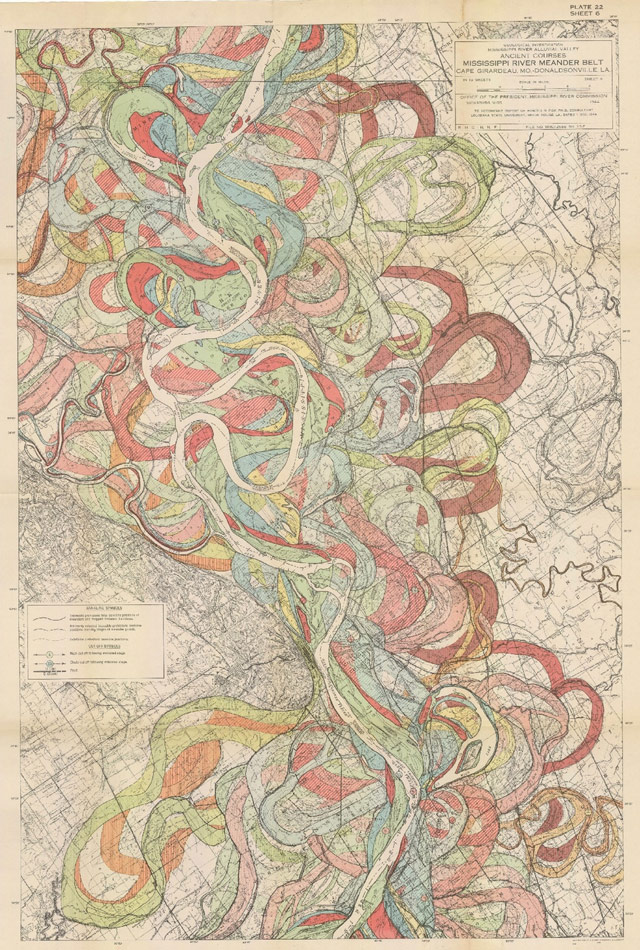
Bill Rankin of radicalcartography picks his five favorite maps. The historical meanderings of the Mississippi River map from an Army Corps of Engineers report is a favorite of mine too:
This video of a giant red leech devouring an earthworm twice its own length is the most disturbing nature footage I’ve ever seen.
Damn nature, you scary!
How do you pick just 10 essays for a list of the best essays since 1950? You exclude any New Journalism, non-American writers, and even so, it must have been difficult. Here’s Robert Atwan’s full list and a few of his choices:
Susan Sontag, “Notes on ‘Camp’”
David Foster Wallace, “Consider the Lobster”
Annie Dillard, “Total Eclipse”
John McPhee, “The Search for Marvin Gardens”
Many of the essays are available online…ladies and gentlemen, start your Instapapers.
Rose Callahan photographs gentlemen with “exceptional personal style” for her blog, The Dandy Portraits.

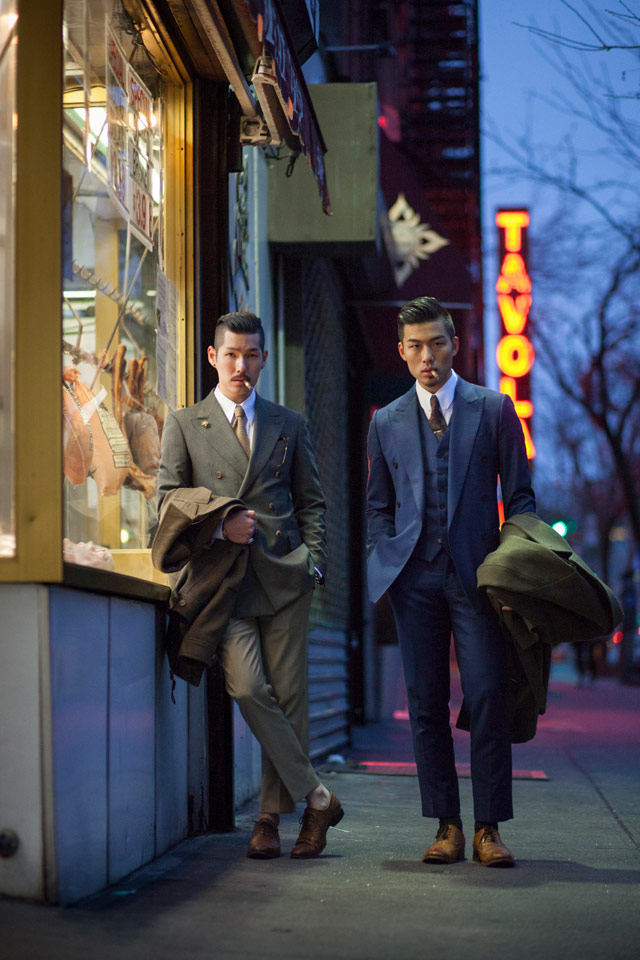
She’s collected some of her best shots into a book, I Am Dandy: The Return of the Elegant Gentleman. See also the great dude battles of the 1880s. (via slate)
One of the last interviews David Foster Wallace gave was with Bryan Garner, a lawyer and lexicographer who became friendly with Wallace due to their mutual love of language. That hour-long interview is reproduced in Quack This Way: David Foster Wallace & Bryan A. Garner Talk Language and Writing.
David Foster Wallace was at the center of late-20th-century American literature, Bryan A. Garner at that of legal scholarship and lexicography. It was language that drew them together. The wide-ranging interview reproduced here memorializes 67 minutes of their second and final evening together, in February 2006. It was DFW’s last long interview, and the only one devoted exclusively to language and writing.
It was Wallace’s piece featuring Garner in Harper’s, Tense Present, that cemented him as a favorite writer of mine, even before I tackled Infinite Jest. Wallace later expanded the essay to 62 pages in Consider the Lobster and Other Essays.

TBD Catalog is a catalog from the near future, filled with imagined goods you might see in a SkyMall or IKEA catalog in 2024. Or as they put it, “the catalog of the near future’s normal ordinary everyday”.
This is not your near future of superlative Silicon Valley exuberance where you happily 3D-print a perfect set of lease-licensed Opinel steak knives or blissfully commute to work in your fascistically sleek Google-powered, chem-battery fueled autonomous vehicles. Nor is this the abysmal near future where you huddle in the smoldering foxholes of apocalyptic ruin. TBD Catalog runs through the middle. It is neither extreme. It is a design fiction about a normal, ordinary everyday near future. TBD Catalog is a design fiction because it makes implications without making predictions. TBD Catalog is a design fiction because it sparks conversations about the near future. It serves to design-develop prototypes and shape embryonic concepts in order to discard them, make them better, reconsider what we may take for granted.
From the brains of Bruce Sterling, James Bridle, Aaron Straup Cope, and a dozen others, you can order yours here. And holy cow, I’m getting one of these Bounty Hunter Coaches Jackets too. (Looking good, @darthjulian)
There’s an incredible 16-second sequence in this video of clouds, starting at around 10 seconds in. It looks as though the sky is a roiling ocean wave about to crash on the beach. I’ve watched it approximately 90 times so far today.
It’s worth making the video fullscreen and pumping it up to the max quality (2160p!) to see it properly. (via colossal)
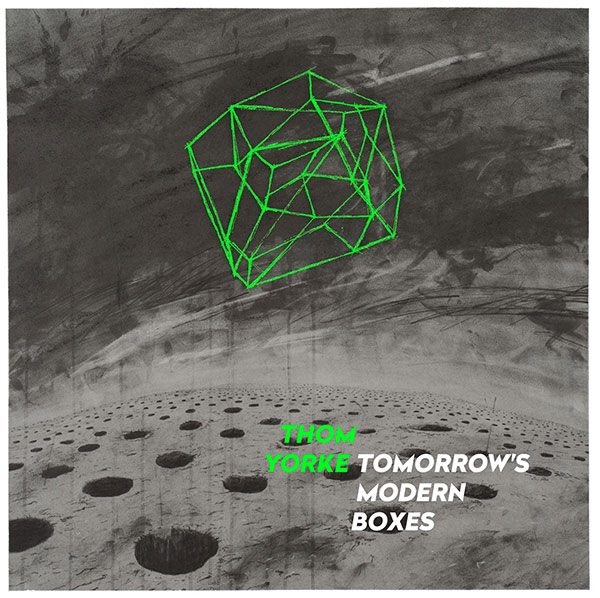
Just dropped: a new album from Radiohead’s Thom Yorke called Tomorrow’s Modern Boxes. The album is being distributed on BitTorrent; one song and a video are free with the rest of the album costing $6 to d/l. On Twitter, Yorke says: “I am trying something new, don’t know how it will go. but here it is:)” (via @naveen)
After the Civil War, the economic recovery of the southern United States hinged on trade with the North and moving goods westward via the railroad. But there was a problem. Tracks in the South had been built with a gauge (or track width) of 5 feet but the majority of tracks in the North had a 4-foot 9-inch gauge (more or less). So after much planning, over a concentrated two-day period in the summer of 1886, the width of thousands of miles of railroad track (and the wheels on thousands of rail cars) in the South was reduced by three inches.
Only one rail would be moved in on the day of the change, so inside spikes were hammered into place at the new gauge width well in advance of the change, leaving only the need for a few blows of the sledgehammer once the rail was placed. As May 31 drew near, some spikes were pulled from the rail that was to be moved in order to reduce as much as possible the time required to release the rail from its old position.
Rolling stock, too, was being prepared for rapid conversion. Contemporary accounts indicate that dish shaped wheels were provided on new locomotives so that on the day of the change, reversing the position of the wheel on the axle would make the locomotive conform to the new gauge. On some equipment, axles were machined to the new gauge and a special ring positioned inside the wheel to hold it to the 5-foot width until the day of the gauge change. Then the wheel was pulled, the ring removed, and the wheel replaced.
To shorten the axles of rolling stock and motive power that could not be prepared in advance, lathes and crews were stationed at various points throughout the South to accomplish the work concurrently with the change in track gauge.
And you thought deploying software was difficult.
Update: In their book Information Rules, Carl Shapiro and Hal Varian point out that sometimes having different standards from the norm is a good thing.
As things turned out, having different gauges was advantageous to the South, since the North could not easily use railroad to move its troops to battle in southern territory during the Civil War. Noting this example, the Finns were careful to ensure that their railroads used a gauge different from the Russian railroads! The rest of Europe adopted a standard gauge, which made things easy for Hitler during World War II: a significant fraction of German troop movements in Europe were accomplished by rail.
They also describe the efforts that the South went through to support the stronger standard of the North without switching over:
In 1862, Congress specified the standard gauge for the transcontinental railroads. By this date, the southern states had seceded, leaving no one to push for the 5-foot gauge. After the war, the southern railroads found themselves increasingly in the minority. For the next twenty years, they relied on various imperfect means of interconnection with the North and West: cars with a sliding wheel base, hoists to lift cars from one wheel base to another, and, most commonly, a third rail.
At home, I have a drawer full of sliding wheel bases and third rails in the form of Euro-to-US & Asia-to-US power adapters.
Alex Wellerstein took all of the badge photos of the people who worked on the atomic bomb project during World War II at Los Alamos and made a huge image out of them.

I just finished reading Genius, James Gleick’s excellent biography of Richard Feynman. Here’s Feynman (left) and his friend Klaus Fuchs, whose car he used to borrow on the weekends to visit his ailing wife in Albuquerque.

After the war, Fuchs was revealed to be a Soviet spy. If you’re at all interested in the Manhattan Project and the espionage surrounding it and somehow have not read Richard Rhodes’ The Making of the Atomic Bomb and Dark Sun, do so now…they are two of my all-time favorite books. (via greg.org)
In the future, people won’t want to meet or talk to celebrities, they’ll just want to borrow some of their social capital.
(via ★interesting)
DJs now routinely make deliberate mistakes mixing tracks so that people will know they’re mixing the tracks by hand and not just using software to automatically match beats.
DJs all over the world are now deliberately making mistakes during their mixes to prove to fans and critics that they are in fact real DJs.
The latest craze, known as miss-mixing, is proving very popular amongst digital DJs as a way of highlighting that they are actually manually mixing tracks rather than using the sync button.
Michael Briscoe, also know as DJ Whopper, spoke about miss-mixing with Wunderground, “Flawless mixing is now a thing of the past, especially for any up and coming digital DJs. You just can’t afford to mix without mistakes these days or you’ll be labelled as a ‘sync button DJ.’”
As computers get better at things like DJing, cooking, writing, and the like, imperfection may become a mark of human-produced goods and media. In the future, we’ll be urged to buy not just hand-made but Human Made™ the way people go for American made, locally made, organic, artisanal, or vintage goods nowadays. The problem, as Tyler Cowen notes, is if computers are smart enough to DJ, they’re certainly clever enough to be a little sloppy too.
Update: I gots hoodwinked! Wunderground is a satirical site…DJs are not intentionally making mixing mistakes. But the idea is not all that farfetched! Under the doctrine of even if it’s fake it’s real, I’m satisfied with my conclusions. (thx, ken & mumoss)
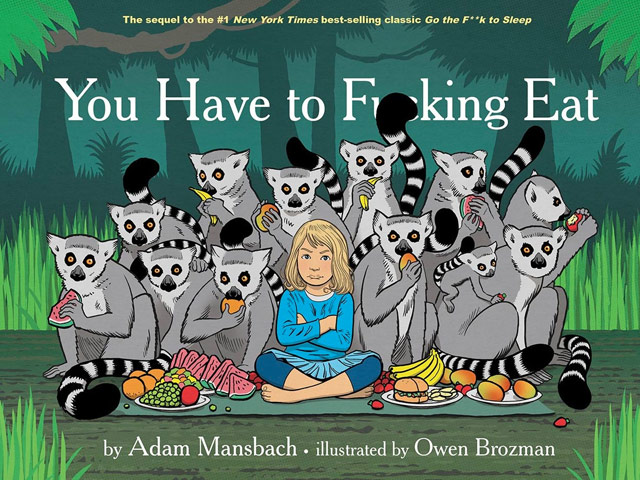
From the author of the bestselling children’s book Go the Fuck to Sleep comes a sequel of sorts: You Have to Fucking Eat.
Give me even the simplest gravity simulator and I will play with it for many many minutes. Or hours. Or days. (Send help!)
Jack Handey, who wrote for SNL for seventeen years, remembers Phil Hartman.
Phil Hartman was perhaps the best cast member, ever, of Saturday Night Live. I loved writing for him. So did the other writers. Phil was rarely “light in the show,” as the saying went.
Roles I gave him, from an unfrozen caveman lawyer to a giant businessman to a frustrated robot, Phil made shine. He was especially good at being the patient, authoritative voice of reason, gently explaining to an idiot why he was an idiot, and why he had to stop being an idiot.
(via digg)
Imagine celebrity faces with no mouths and bigger noses. You know, a nosemouth.


(via @bryanjclark)
When Anthony Bourdain’s hour-long food and travel show first launched on CNN, it marked the network’s step away from 24 hours news and towards more entertainment programming. But maybe Bourdain is just the reporter we need these days when most of what we see of other cultures is satellite images or shots of rubble. “I’m not a foreign policy wonk, but I see aspects of these countries that regular journalists don’t.” From FastCo: Anthony Bourdain has become the future of cable news, and he couldn’t care less.
Entangled is a short film by Tony Elliott about a quantum experiment that goes wrong. Shit gets real at approximately precisely 4:19.
Reminds me a bit of Primer.
I think this guy is the T-1000 robot from Terminator 2, but for chopping onions instead of assassinating future resistance fighters. Evidence:
1. In the brief view we get of his face at about 20 seconds in, he is not even really looking at the onion. Total robot move.
2. Um, he’s like superhumanly fast at chopping that onion.
3. The T-1000 can easily morph into other people, like this fast watermelon cutter or this pancake flipper or this lemon chopper. Different people, same shapeshifting food prep robot from the future! (via @kdern)

David McCandless has been highlighting good information design for years on Information Is Beautiful. The site spawned a book of the same name in 2009. Now McCandless is back with a new book, Knowledge Is Beautiful.
Every day, every hour, every minute we are bombarded with information, from television, from newspapers, from the Internet, we’re steeped in it. We need a way to relate to it. Enter David McCandless and his stunning infographics, simple, elegant ways to interact with information too complex or abstract to grasp any way but visually. McCandless creates visually stunning displays that blend the facts with their connections, contexts, and relationships, making information meaningful, entertaining, and beautiful. And his genius is as much in finding fresh ways to provocatively combine datasets as it is in finding new ways to show the results.
Here’s some more information about the book.


From photographer Sandro Miller, in collaboration with the actor himself, recreations of iconic photographs with John Malkovich in place of the original subjects.
This looks like a time lapse, but it’s not. It’s just a straight-up gorgeous video of the aurora borealis filmed in Yellowknife, Northwest Territories, Canada.
It is real time motion! NOT time-lapse. Brighter the Aurora, faster the movement.
(via the kid should see this)
Anthony Bourdain travels a lot; here’s how he approaches flying, packing, getting good local recommendations, etc.
The other great way to figure out where to eat in a new city is to provoke nerd fury online. Go to a number of foodie websites with discussion boards. Let’s say you’re going to Kuala Lumpur — just post on the Malaysia board that you recently returned and had the best rendang in the universe, and give the name of a place, and all these annoying foodies will bombard you with angry replies about how the place is bullshit, and give you a better place to go.
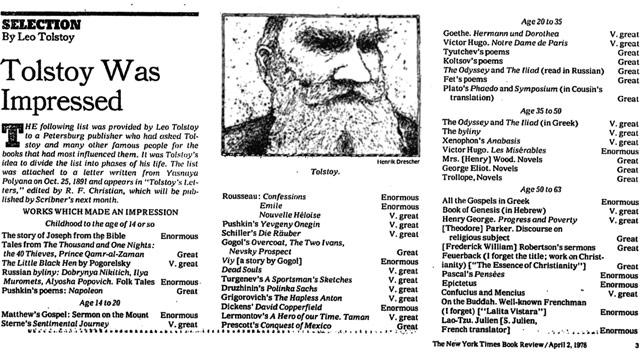
When Russian author Leo Tolstoy was in his 60s, he was asked to list the books which influenced him the most in his career. He responded by grouping the books into three main categories by level of impact: great, v. great, and enormous. Some of his picks:
Matthew’s Gospel: Sermon on the Mount - Enormous
Dickens’ David Copperfield - Enormous
Victor Hugo. Les Misérables - Enormous
Pushkin’s Yevgeny Onegin - V. great
George Eliot. Novels - Great
The NY Times reprinted the list in 1978; here’s the original listing.
In 2011, Steven Soderbergh revealed he’d repeatedly watched Raiders of the Lost Ark in black & white. Now he’s released a full-length version of the film in b&w, with no dialogue and an alternate soundtrack (Reznor and Ross’s score to The Social Network) so that you can focus on how the film is constructed visually.
So I want you to watch this movie and think only about staging, how the shots are built and laid out, what the rules of movement are, what the cutting patterns are. See if you can reproduce the thought process that resulted in these choices by asking yourself: why was each shot — whether short or long — held for that exact length of time and placed in that order? Sounds like fun, right? It actually is. To me. Oh, and I’ve removed all sound and color from the film, apart from a score designed to aid you in your quest to just study the visual staging aspect. Wait, WHAT? HOW COULD YOU DO THIS? Well, I’m not saying I’m like, ALLOWED to do this, I’m just saying this is what I do when I try to learn about staging, and this filmmaker forgot more about staging by the time he made his first feature than I know to this day (for example, no matter how fast the cuts come, you always know exactly where you are — that’s high level visual math shit).
The Shawshank Redemption came out 20 years ago and promptly bombed. Now it’s one of the most popular movies of all time. Here’s how it came to be made.
Filming on location is often something to be endured, and Shawshank’s schedule was particularly brutal: workdays were 15 to 18 hours, six days a week, over three humid months inside the former Ohio State Reformatory, in Mansfield, and on nearby constructed sets, which included the huge cellblock. “We were lucky to have Sundays off,” says Darabont.
A bakery in Mansfield now sells Bundt-cake replicas of the Gothic prison, which these days is a tourist attraction that draws Shawshank pilgrims. But in 1993 the defunct penitentiary-closed three years earlier for inhumane living conditions-“was a very bleak place,” according to Darabont. Robbins adds, “You could feel the pain. It was the pain of thousands of people.” The production employed former inmates who shared personal stories similar to those in Shawshank’s script, “in terms of the violence of the guards and throwing people off the top of cellblocks,” says Deakins.
Robbins remembers “going to that place inside for three months. It was never depressing, because Andy had this hope inside. But it was, at times, dark because of the situations that the character goes through.” Deakins confirms that working on the film was “a very intense situation. Sometimes the performances really affected me while I was shooting it.” The scene that gave Deakins “a tingle down the spine” is also Robbins’s favorite: the prisoners drinking beer on the sunny license-plate-factory roof. Coming more than a half an hour into the movie-and two years into Andy’s sentence-it’s the first bright spot in a film heretofore gray in palette and tone. Andy risks being thrown off the roof by Captain Hadley in order to procure a few “suds” for his fellow prisoners-a moment when the character shifts from victim to burgeoning legend. That Andy himself doesn’t drink is beside the point.
The scene was shot over a “hard, hard day,” says Freeman. “We were actually tarring that roof. And tar doesn’t stay hot and viscous long. It tends to dry and harden, so you’re really working. For the different setups you had to keep doing it over and over and over and over and over.”
I was one of the few who saw Shawshank in the theater (I watched at least two or three movies a week back in those days) and loved it immediately. (via @aaroncoleman0)
Gastropod is a new podcast about about food “through the lens of science and history” from radio journalist Cynthia Graber and Edible Geography’s Nicola Twilley. Episode 1, embedded below, is about the history of cutlery.
Chances are, you’ve spent more time thinking about the specs on your smartphone than about the gadgets that you use to put food in your mouth.
But the shape and material properties of forks, spoons, and knives turn out to matter-a lot. Changes in the design of cutlery have not only affected how and what we eat, but also what our food tastes like. There’s even evidence that the adoption of the table knife transformed the shape of European faces.
In 1967, Steve Reich wrote a piece of music called Piano Phase. The piece is performed by two pianists playing the same piece of music at two slightly different speeds. As the piece progresses, the music moves in and out of phase with itself. Classical percussionist David Cossin performed with a duet of Piano with himself to produce a Piano/Video Phase:
Give it 30-90 seconds for the phase shifting to kick in. For those who aren’t so musically inclined, this pendulum phasing video provides a more visual representation of what’s going on:
(via @pieratt)
Update: See also this Piano Phase visualization from Alexander Chen, Rhythm Necklaces, and an animation of Reich’s Clapping Music. (thx, @anotherny, @RianVDM, and everyone who sent in Chen’s piece)
Update: And whoa, here’s Rob Kovacs playing Piano Phase on two pianos:
That seems….difficult.
Sometimes, bees don’t want to be domesticated. The rules of nature, laid down in genetic code and behavioral norms over hundreds of thousands or even millions of years, are difficult to bend. John Knight discovered this while exploring beekeeping as a new hobby.
While a newborn queen may seem ruthless, the success of a beehive hinges on allegiance to its queen. Though she can mate with an average of 12 different drones, there is only one queen, which makes for a hive of closely related bees. As a new queen begins to produce her own pheromones, the hive slowly aligns with her as the old bees die and new workers hatch. In a sense, the hive is genetically wired to be loyal to the monarchy. If the hive was to raise multiple queens, or if the workers were to start laying eggs, the interests of the population would slowly fracture.
When she was 33, Christine Hyung-Oak Lee had a stroke. It was not exactly a normal stroke and it ended up saving her life.
Our fridge was empty. I went to Andronico’s grocery store and browsed the aisles, a blur of colors and letters and shapes. What was it we needed? I wondered. I could not figure out how the pieces fit together, that I would need onions because we used onions for everything, that I would need bread for sandwiches, that I would need meat for a possible entree. They were shapes and colors and textures. That fleshy pink package was a fleshy pink rectangle. The countless numbers of canned soup and canned vegetables were mere metal cylinders.
I emerged with one thing: a jar of Muir Glen spaghetti sauce. I grabbed it because I had seen it before, because I could read the label. If it was something I could understand, it must be something I needed. I did not need spaghetti sauce.
I still do not remember how it is I paid, whether by cash or by debit or credit card. I do not remember swiping or handing over bills. I just remember blinking in the cold winter sun at my car in the parking lot. Holding a jar of spaghetti sauce.
And wondering how to get home. I did not know how to get home.
I got in the car and started driving. If I just drove, I thought, I would somehow get home.
Each time I thought about whether I needed to make a left turn or right or stop or go, I felt lost. I had no idea. And so I pressed on without thinking, while relying on intuition. Each time I stopped, I recognized landmarks - a tree or a house or a store. I knew I was getting closer to home, but I did not know how to continue.
Intuition carried me when logic and memory failed.
I made it home.
And then I thought, I need to get to a hospital.
I picked up the phone and then I asked myself, What is the phone number for 911?
I looked at the numeric keypad, and I could not figure out what number each shape represented. And what is the number for 911?
I thought perhaps I should try calling my husband. I could not remember his phone number, either. It did not occur to me to look for it in the contacts list on my BlackBerry, either.
I finally decided I would mash a bunch of numbers on the keypad and talk to whomever it was I dialed on the landline. I did not think about the fact that I did not know where I lived, but I punched in a set of numbers anyway.
“Hello,” a man said.
“Hi!” I said.
“Hi,” he said.
“Who is this?” I asked.
“This is A-,” he replied.
“Oh! I have been trying to reach you! I forgot your phone number and I didn’t know how to get ahold of you! I called this phone number, because it was in my fingers.”
Just go read the whole thing, what a great piece.
This wonderfulness just popped up on Rdio: The Hits/The B-Sides 3 by Prince. (And here on Spotify.)
Three hours, forty-seven minutes, and six seconds of the artist formerly known as The Artist Formerly Known as Prince’s best music, 56 songs in all.
Casey Neistat visited several Apple Stores in NYC on the eve of the iPhone 6 launch to observe the folks standing in line. He found that many of those in line, particularly right in the front, were Chinese resellers.
The iPhone 6 won’t be available in China for several months, so a lively and lucrative black market has sprung up. The video shows several typical transactions: two phones (the maximum allowed per person) are purchased with cash and then the people sell those phones to men who presumably have them shipped to China for resale.
I remember last year, when the iPhone 5s came out, there was always a line of mostly Asian people outside the Soho store in the morning, even months after the launch. (via @fromedome)
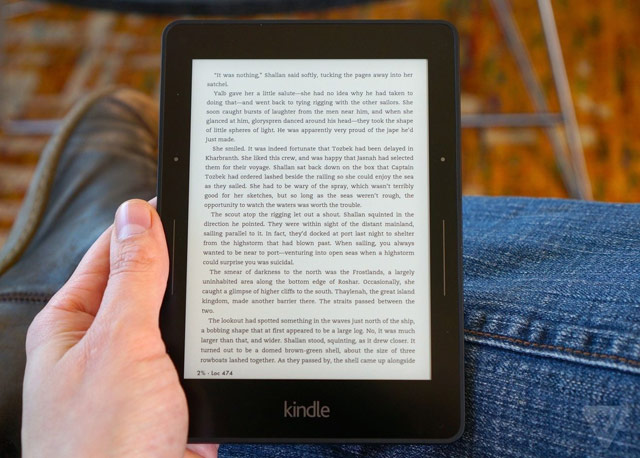
Amazon updated their line of Kindles and tablets and the Kindle Voyage looks like great top-of-the-line dedicated ereader. The Verge loves it. I’m still rocking a third-generation Kindle and have been pondering an upgrade to a Paperwhite, but the Voyage is very tempting.
From Hilary Mantel’s forthcoming collection, The Assassination of Margaret Thatcher, an excerpt of the title story in the NY Times Sunday Book Review.
I said, “It’s the fake femininity I can’t stand, and the counterfeit voice. The way she boasts about her dad the grocer and what he taught her, but you know she would change it all if she could, and be born to rich people. It’s the way she loves the rich, the way she worships them. It’s her philistinism, her ignorance, and the way she revels in her ignorance. It’s her lack of pity. Why does she need an eye operation? Is it because she can’t cry?”
When the telephone rang, it made us both jump. I broke off what I was saying. “Answer that,” he said. “It will be for me.”
And this line!
She lives on the fumes of whiskey and the iron in the blood of her prey.
I love Hilary Mantel. Instant pre-order. (via @TomJunod)
Update: A member of Parliment’s House of Lords is calling for Hilary Mantel to be investigated by the police for this story.
“If somebody admits they want to assassinate somebody, surely the police should investigate,” Lord Timothy Bell, a friend and former PR adviser to Thatcher, told the Sunday Times. “This is in unquestionably bad taste.”
The Guardian took Bell to task for his own taste:
Let us deal first with taste. This man’s client-list presently glitters with Rolf Harris and Cuadrilla, the UK fracking company. He has previously managed the reputations of General Pinochet and Asma al-Assad, wife of the Syrian president. “I’m not concerned with taste,” said Mantel in my interview with her. Apparently neither is Lord Bell.
English PEN released a statement in support of Mantel:
Lord Bell’s call for the police to investigate Mantel for writing a work of fiction is disproportionate and wholly inappropriate. The fact that Ms Mantel’s story has caused offence is not a matter for the police: authors are free to shock or challenge their readership by depicting extraordinary events or extreme acts.
‘If depicting a murder in literature were equivalent to inciting murder, then Lord Bell’s colleagues Lord Dobbs, Baroness James and Baroness Rendell would all need to be investigated by the police too,’ said Robert Sharp, Head of Campaigns at English PEN. ‘It is most disturbing when politicians and commentators in a democracy start calling for censorship on the grounds of offence or bad taste. Not only does it undermine the right to freedom of expression in the UK, it sends a very poor signal to politicians in authoritarian regimes who sue, threaten and sometimes kill writers and journalists for satirising or criticising the political class.’
Even if it’s fake it’s real?
You can now program by tweeting snippets of Wolfram Language code to their Tweet-a-Program bot, @WolframTaP. To test it out, I tweeted:
@wolframtap NestList[Subsuperscript[#, #, #] &, o, 6]
— Jason Kottke (@jkottke) September 19, 2014And got back:
.@jkottke (More info: http://t.co/HBUuaZOB3w) pic.twitter.com/ylYxi5lTJQ
— Tweet-a-Program (@wolframtap) September 19, 2014Cool!
Marvin Gaye’s isolated vocals on I Heard It Through The Grapevine. The man has pipes.
From Mallory Ortberg, a hilarious send-up of the comments you see all too frequently on recipe sites.
“I didn’t have any eggs, so I replaced them with a banana-chia-flaxseed pulse. It turned out terrible; this recipe is terrible.”
“I don’t have any of these ingredients at home. Could you rewrite this based on the food I do have in my house? I’m not going to tell you what food I have. You have to guess.”
“I don’t eat white flour, so I tried making it with raw almonds that I’d activated by chewing them with my mouth open to receive direct sunlight, and it turned out terrible. This recipe is terrible.”
“Could you please give the metric weight measurements, and sometime in the next twenty minutes; I’m making this for a dinner party and my guests are already here.”
These are barely exaggerated. I once saw a comment on a pesto recipe where the person substituted bay leaves for the basil and used other ingredients in the place of pine nuts and olive oil, then complained how bad it tasted and how terrible the recipe was. Oh, the literal humanity. (via nick)
Amidala friendzones Anakin, Obi-Wan hunts for drugs, and Jango Fett pumps the bass in this hilarious Auralnauts reimagining of Star Wars: Attack of the Clones.
You may have also seen their recent video of the Throne Room scene at the end of Star Wars without John Williams’ score (reminiscent of these musicless musicvideos) or Bane’s outtakes from The Dark Knight Rises. Still champion though: bad lip reading of NFL players. (via @aaroncoleman0)
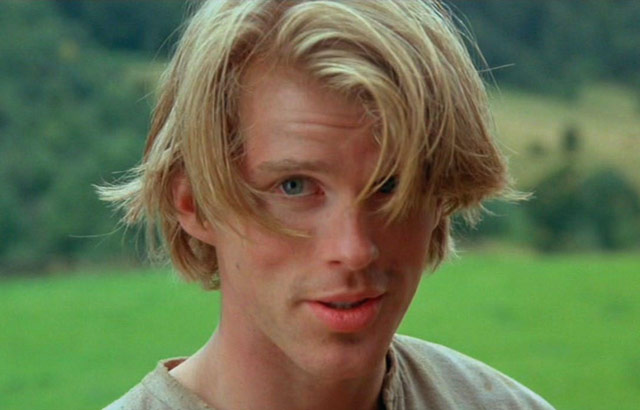
Actor Cary Elwes (Westley, The Dread Pirate Roberts) has written a book about the making of the Princess Bride, As You Wish: Inconceivable Tales from the Making of The Princess Bride.
From actor Cary Elwes, who played the iconic role of Westley in The Princess Bride, comes a first-person account and behind-the-scenes look at the making of the cult classic film filled with never-before-told stories, exclusive photographs, and interviews with costars Robin Wright, Wallace Shawn, Billy Crystal, Christopher Guest, and Mandy Patinkin, as well as author and screenwriter William Goldman, producer Norman Lear, and director Rob Reiner.
The Princess Bride isn’t currently streaming on Netflix, but you can rent it from Amazon.
According to Rolling Stone, 1984 was the greatest year in pop music history. And they made a list of the top 100 singles from that year; here’s the top 5:
5. Thriller, Michael Jackson
4. Let’s Go Crazy, Prince
3. I Feel for You, Chaka Khan
2. Borderline, Madonna
1. When Doves Cry, Prince
1984 was also a fine year for movies and the most 1980s year of the 1980s. Both Bill Simmons and Aaron Cohen agree, 1984 was the best year.
In this video entitled Rush Hour, cars, pedestrians, and cyclists have been edited together to produce dozens of heart-stopping near misses.
Reminds me of the world’s craziest intersection, traffic organized by color, intersections in the age of driverless cars, and the dangerous dance of NYC intersections. (via colossal)
Greenland has been covered in dark ice this summer. Why is that such a problem? Because dark things absorb more heat than lighter colored things, causing the dark ice to melt faster than white ice would. Eric Hotlhaus explains.
There are several potential explanations for what’s going on here. The most likely is that some combination of increasingly infrequent summer snowstorms, wind-blown dust, microbial activity, and forest fire soot led to this year’s exceptionally dark ice. A more ominous possibility is that what we’re seeing is the start of a cascading feedback loop tied to global warming. Box mentions this summer’s mysterious Siberian holes and offshore methane bubbles as evidence that the Arctic can quickly change in unpredictable ways.
This year, Greenland’s ice sheet was the darkest Box (or anyone else) has ever measured. Box gives the stunning stats: “In 2014 the ice sheet is precisely 5.6 percent darker, producing an additional absorption of energy equivalent with roughly twice the US annual electricity consumption.”
Perhaps coincidentally, 2014 will also be the year with the highest number of forest fires ever measured in Arctic.
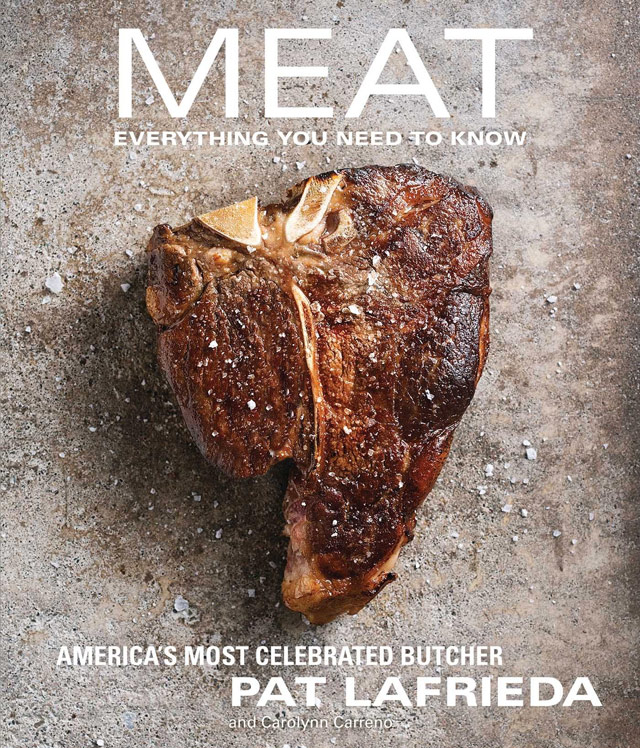
Whoa hey, super-butcher Pat LaFrieda has a cookbook out, Meat: Everything You Need to Know.
No one understands meat’s seductive hold on our palates better than America’s premier butcher, Pat LaFrieda. In Meat: Everything You Need to Know, he passionately explains the best and most flavorful cuts to purchase (some of them surprisingly inexpensive or unknown) and shares delicious recipes and meticulous techniques, all with the knowledge that comes from a fourth generation butcher. If you have ever wondered what makes the meat in America’s finest restaurants so delectable, LaFrieda — the butcher to the country’s greatest chefs — has the answers, and the philosophy behind it.
Paired up with Tartine Bread, all we need now is some emulsifying genius to hit us with Mayonnaise cookbook and we’ll be all set in sandwich-land.
Join designer James Victore for an opinionated tour of the typography of Brooklyn and Queens.
We’re going to do a typographical tour of Brooklyn and Queens, We’re going to look at type on the street and signage on the street and try to figure out what the hell it’s for.
Favorite quote: [Pointing at a logo for a waxing salon] “There’s been a designer here. Which is not always a good thing.” (via gothamist)
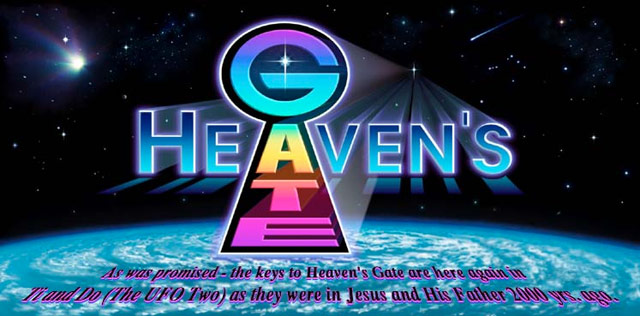
In late March 1997, 39 members of the Heaven’s Gate group were found dead in a mansion in California, having committed mass suicide in anticipation of being picked up by a spacecraft following the Hale-Bopp comet. When police discovered the bodies and word began to spread via national news, mailing lists, and online forums, a major point of focus was the extensive amount of information left on the group’s website.
Whether Hale-Bopp has a “companion” or not is irrelevant from our perspective. However, its arrival is joyously very significant to us at “Heaven’s Gate.” The joy is that our Older Member in the Evolutionary Level Above Human (the “Kingdom of Heaven”) has made it clear to us that Hale-Bopp’s approach is the “marker” we’ve been waiting for — the time for the arrival of the spacecraft from the Level Above Human to take us home to “Their World” — in the literal Heavens. Our 22 years of classroom here on planet Earth is finally coming to conclusion — “graduation” from the Human Evolutionary Level. We are happily prepared to leave “this world” and go with Ti’s crew.
If you study the material on this website you will hopefully understand our joy and what our purpose here on Earth has been. You may even find your “boarding pass” to leave with us during this brief “window.”
Which website, as Gizmodo’s Ashley Feinberg reports, is still very much operational, thanks to the efforts of a pair of Heaven’s Gate members who chose to remain in their fleshy “vehicles” on Earth.
Every month, the bills get paid on time. The emails get answered, and any orders filled. Which, for HeavensGate.com, is positively extraordinary. Because as far as the public is aware, every last member of the suicide cult died 17 years ago from a cocktail of arsenic and apple sauce. A few stayed behind, though. Someone had to keep the homepage going.
The site is still up, in part, because the group supported themselves financially by running a web design business.
As far as early 90s web design firms go, Higher Source did it all. And looking back at the archived site for the group’s occupational design firm, while they never directly mention their affiliation with the Heaven’s Gate cult, subtle references to the company’s origins abound. With Higher Source, you were getting “a crew-minded effort” from people who have worked “closely” together for 20 years. Of course, close in this case meant literal bunkmates.
You were getting a lot more than that, though. UFO and suicide cult connotations of hindsight aside, this is one of the most pristine testaments to early internet web design around. Not only could Higher Source program in Java, C++, and Visual Basic as well as use Shockwave, QuickTime, and AVI, they could gradient the hell out of your word art, too.
In 1997, I was working as a web designer for a small web development firm in Minneapolis. Our homepage and services offered were not all that different than Higher Source’s. I remember vividly being in the office when the news of the suicide hit and a bunch of us gathered around a computer, browsing through the site before the TV news mentions finally crashed it. It was the first time an internet meme was a major aspect of a national news story. Like, holy shit, they are talking about web design on CNN!
What I don’t remember clearly is if Heaven’s Gate / Higher Source was being discussed online before the suicides happened. It seems like a UFO cult that also did web design would have been a prime topic for conversation in web development circles. Does anyone recall either way?
Update: Meant to add, watching the videotaped statements of each Heaven’s Gate Member before they killed themselves is weird and chilling. They’re almost giddy!
This is glorious: an erotic poem by Chris Plante constructed from snippets of iPhone 6 reviews.
I have really big hands
Would be an understatement.
This is quite helpful.
When the tips of your fingers are grasping on for dear life,
Your fingers need to secure a firm grip.
I can still wrap my fingers around
Well…
More of everything.
No lines from John Gruber’s review, but Linus Edwards made a short poem just from that one:
Makes itself felt in your pants pocket.
Ah, but then there’s The Bulge.
I definitely appreciate the stronger vibrator.
(via @sippey)
Socials & More