Lyndsay Rush, who describes herself as a “part-time poet, full-time dingdong”, goes by the handle of @maryoliversdrunkcousin on Instagram. Her forthcoming collection of poems is called Microdosing Hope (out in March 2027). I liked this one she shared recently, called An Inconvenient Life:
I want a dumb phone and a smart president I want slow fashion and fast friends I want to be bored and benevolent, silly and still I want innovation that doesn’t kill and news that doesn’t break I want your email to find me lingering and lallygagging pondering and present I don’t want to save time just to waste it; Staring at screens of various sizes Tapping away the years Scrolling past everything that makes a good life good
Using William Blake (aka “the patron saint of unclassifiable artists”) as an example, Evan Puschak’s latest video explores how society often rejects artists whose work doesn’t fit neatly into established categories and frameworks of criticism and commerce.
What you’re seeing here, these are not paintings. They’re prints of engravings from Blake’s illuminated books, which he designed, wrote, etched, colored, and printed himself using a technique that he invented. These extraordinary books are works of art that mix and synthesize categories. And as a result, the art world of the late 17 and early 1800s didn’t really know what to make of them. And Blake never sold more than a handful.
The friend who helps you clean your room. Those who are kind to those who can do nothing for them. Messy folks who repeatedly get it wrong but never stop trying to get it right anyway. Kindred spirits. Loud laughers. Pals who make the grocery store fun. Loved ones who get as excited about your success as you do. The person you feel comfortable crying in front of. Sing-in-the-car friends. People who text you to look at the moon.
I am 100% the friend who will text you to look at the moon or the meteor shower or the aurora.
Someone who isn’t afraid to just be human. The friend who commits to the bit, even if it is well past its expiration date. People who accept that their ducks will always be in a bit of a zig-zag formation. Relentlessly creative folks. Daydreamers. Awkward silence embracers.
Teachers who believed there was potential within you, even when you were convinced you would always be a lost cause. The internet friend who showed you that your art does matter, and it’s needed. The mentor who became the older sister you never had. The ex-partner who showed you there are some types of people you’re only meant to love from afar. The neighbors who became family. The family members who became friends.
Shel Silverstein’s Homework Machine was one of my kids’ favorite poems of his when they were little. First published in 1981, the short poem turned out to be rather prescient about AI, especially the earlier LLMs, which couldn’t math their way out of a wet paper bag.
Your homework comes out, quick and clean as can be.
Here it is— ‘nine plus four?’ and the answer is ‘three.’
It’s not often that a movie trailer makes you cry — but this one might.1 Come See Me in the Good Light is a documentary film about poets Andrea Gibson and Megan Falley facing a cancer diagnosis that took Gibson’s life earlier this year.
This is the beginning of a nightmare, I thought. But stay with me, y’all, because my story is one about happiness, being easier to find, once we realize we do not have forever to find it.
A couple years ago, Andrea said, “Whenever I leave this world, whether it’s sixty years from now, I wouldn’t want anyone to say I lost some battle. I’ll be a winner that day.”
Whatever beast of emotion bucks or whimpers through you right now, I hope you can hold that line beside it: Andrea didn’t lose anything. If you had been here in our home during the three days of their dying — if you’d seen dozens of friends drift in to help, to say goodbye, to say thank you, to kiss their perfect face, if you’d felt the love that floored every hospice nurse — you would have agreed. Andrea won.
The film is set to premiere Nov 14 on Apple TV.
A YT commenter: “I am laid low in the gentlest way and this is just the trailer”.↩
James Earl Jones did many things during his long career, including acting as Verizon’s pitchman. As part of a 2005 promotion, Jones recited Edgar Allan Poe’s The Raven in that amazing rumbly voice of his, reprising his earlier performance on The Simpsons. Here’s the full version on Soundcloud, including his introduction — “he wrote about murder, torture, and being buried alive”:
As part of the same promotion, he also apparently recorded a recitation of the Gettysburg Address, but I cannot locate a copy of that anywhere.1 However, he did recite part of the Gettysburg Address, along with fragments of other Lincoln speeches, in a performance of Aaron Copland’s Lincoln Portrait with the Seattle Symphony Orchestra:
And in 2000, also on behalf of Verizon, he read Dr. Seuss’ Mr. Brown Can Moo, Can You? to a group of schoolchildren. I would love to hear that recording.↩
The oldest longleaf pine tree in the world, I remember, is a nameless tree in Weymouth Woods in North Carolina. It is roughly 474 years old, taking root around the time Michelangelo took over construction of the dome of St. Peter’s Basilica, fifty-nine years before European colonizers arrived at Jamestown. In 2016, when the tree turned 468, visitors to the North Carolina State Parks system held a “Party for the Pine.” They celebrated by hiking to the tree, cutting cake, singing it “Happy Birthday.”
In phonology (the study of the smallest units of language), the parts of a signed word are: handshape, location, palm orientation, movement, and non-manual signal. They are called parameters. Each parameter has a number of primes. In sign language specifically ASL, the same parameter in two or more words (signs) are repeated. The parts may be the same handshape, movement, and/or location, or combined, but the handshape rhyme is the most commonly used.
This explanation of how to rhyme diddle and fiddle in ASL is illustrative.
And here’s an example of ASL poetry where you can clearly see the rhymes and music of the words in her poem. The poet, Christine Marshall, didn’t caption the poem and suggested viewers suggest a translation in the comments. The pinned translation is below.
“Deaf Heart by Christine Marshall
A heartbeat pounds, within me strong
A beat consistent, as a song
But singing yet, does not appease
The world around me, just a tease
They talk, they chat, they have a spat
Without a sound, imagine that!
My heartbeat now, the only tone
I sit, I stare, I’m all alone
The beat it fades, a somber dirge
Then a shocking, shaking surge
My eyes are struck, my senses peaked
I’ve never seen a sight so sweet
A language without metronome
A language I can call my own
These people my experiences share
My whole life passing, unaware
All this time in quiet space
All alone and out of place
Now my heart is torn in two
“Who am I?”, or “I AM WHO?”
I know my heart has made it clear
My reservations disappear
I give myself to their embrace
To ASL my saving grace
My heart beats on and on in me
My heart is Deaf, and now I see”
In every issue, the quarterly Buddhist magazine Tricycle publishes a winning haiku from its ongoing monthly haiku contest. The poem appears alongside a column written by the contest’s judge, poet and author Clark Strand. This season’s haiku-adjacent column includes the following bit, about one theory on the nature of haiku:
The Japanese haiku critic Kenkichi Yamamoto (1907–1988) believed that the best haiku strike a balance between humor and existential isolation. “Loneliness in life and the comical elements of life are two sides of the same coin,” he wrote. As a genre of literature, haiku thrives on the flip of that coin — the small element of uncertainty that challenges our ordinary understanding of the world.
I hadn’t realized there were such things as haiku critics (!). I also like the idea of loneliness and humor being related somehow.
Read the Spring 2024 winning haiku here. And enter the monthly contest here. (The next round must include the word “turnip.”)
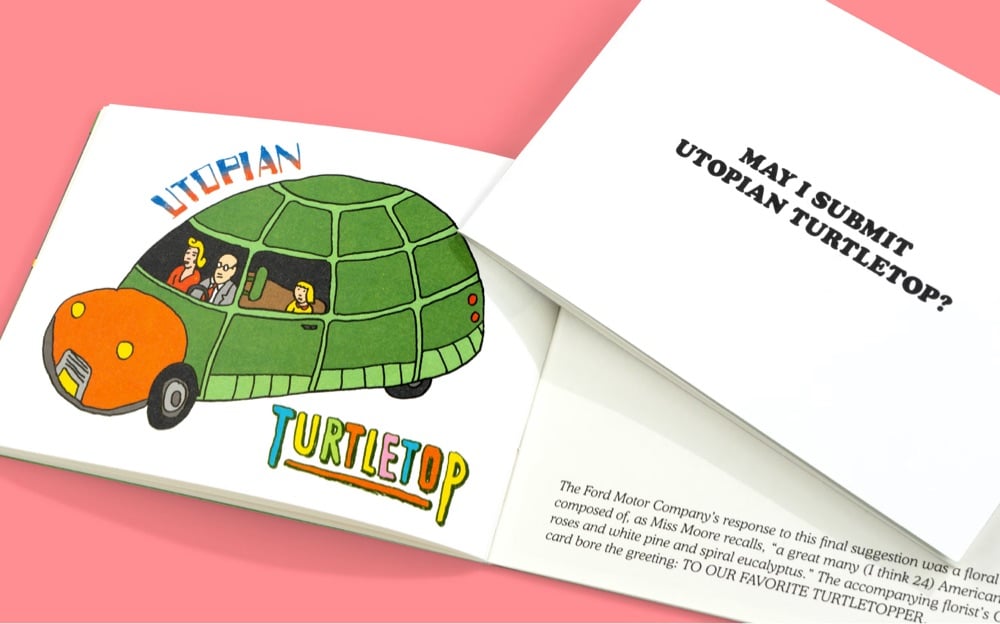
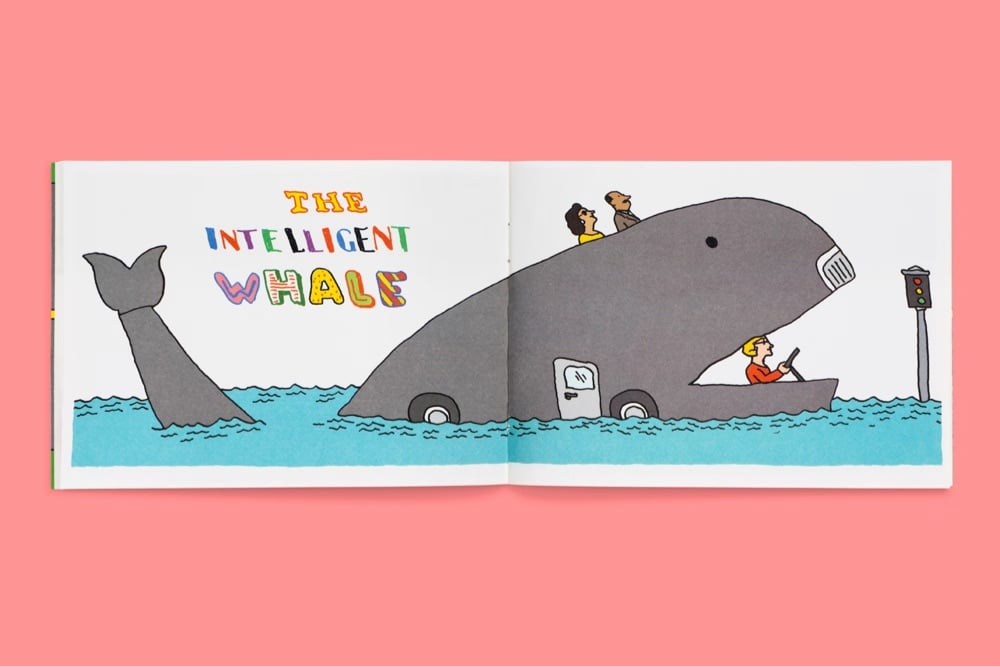
In 1955, the Ford Motor Company hired poet Marianne Moore to come up with some names for their revolutionary new car. Moore ended up submitting some amazing names, including “Silver Sword”, “Intelligent Whale”, “Angel Astro”, and “Utopian Turtletop”.
What Moore lacked in corporate nomenclature experience, she made up for in enthusiasm and imagination: she submitted over two dozen names for consideration, each one more delightful — and unlikely — than the last. In the end, the poet’s suggestions were rejected and the company’s chairman himself named the vehicle. Thus was born the notorious car known as the Edsel.
Ford realized perhaps too late that they shouldn’t have, in fact, sent a poet — but we’re sure glad they did.
Note: If you are a member and tried to log in, it didn't work, and now you're stuck in a neverending login loop of death, try disabling any ad blockers or extensions. Or try logging out and then back in. Still having trouble? Email me!





Socials & More