kottke.org posts about video
This video interview with two former inmates (Five Mualimm-Ak and Terrence Slater) about their experiences in solitary confinement is, well, I was going to says “sobering” but it’s not sobering. It’s fucking infuriating and upsetting. Just to pick one moment, here’s Mualimm-Ak’s answer to “How do you maintain a sense of who you are?”:
You don’t. You live off of your memories because you have nothing else to accumulate to move forward. And then you end up having this short-term memory disorder which is a part of you the consequences of being in solitary where you can’t keep one train of thought for too long. And then you’re dropped off in 42nd Street-Times Square, the biggest tourist spot in the world, with 20 million commuters. It’s a sensory overload.
As Atul Gawande wrote in the New Yorker in 2003, solitary confinement is legalized torture by the state. Here’s more from a Psychology Today article on how long-term solitary can change your perception of the world:
Being confined in a 6x9-foot cell for almost 30 years, with very limited contact with other humans or physical exercise, surely has consequences on one’s overall health, including the brain. King knew that solitary confinement was changing the way his brain worked. When he finally left his cell, he realized he had trouble recognizing faces and had to retrain his eyes to learn what a face was like. His sense of direction was also messed up, and he was unable to follow a simple route in the city by himself. It is as if his brain had erased all those capabilities that were no longer necessary for survival in a cell no bigger than the back of a pick-up truck.
A couple of things from the video that merit your attention. The first is Hell Is a Very Small Place, a book of stories by people who are now or have been in solitary confinement. And second, Mualimm-Ak started an organization called Incarcerated Nation Network “an abolition alliance network dedicated to transforming the prison industrial complex & ending torture” — join me in sending a donation to them? (via open culture)
The green screen is a staple of visual effects for movies and TV. You film actors in front of a green or blue screen and then use digital editing technology to replace the solid color with any background you’d like. But as Phil Edwards explains in this video, the effects teams for some movies and shows (like Disney’s The Mandalorian) have swapped green screens for virtual sets. In lieu of block colored backgrounds, the actors are surrounded by massive LED panels that display the background and background action so everything can be filmed in one go.
It’s a pretty cool technique. Among the benefits of such a system: you get the “natural” light from the LEDs falling on the actors and other objects in the scene, so you don’t need to add it in later digitally or use extra on-set lighting.
I didn’t know I needed the Wobble Dog 9003i hot dog wobbling machine in my life before watching this video but now I can’t imagine living without it. Q: Can something be both hilarious and kinda-but-not-really erotic at the same time? A: Yes? (via @machinepix)
Since 1789, Fueki Syoyu Brewing has been making soy sauce using simple ingredients, big wooden barrels for aging, and traditional methods handed down through the generations to ensure the signature richness and taste of their product. This video from Eater takes us inside the brewery to see how the magic happens.
This clip of Leta Powell Drake interviewing 80s TV & movie stars like Tom Hanks, Telly Savalas, and Gene Hackman is incredible. She was obviously not intimidated by celebrity — leaning in closely to Hackman, she says: “You’ve done some brilliant pictures and you’ve done some stinkers.” And that’s not even her worst burn.
The clips were compiled from interviews that she did for the TV station KOLN/KGIN in Lincoln, NE when celebs would come through town to promote their latest thing. History Nebraska has a full archive of these interviews available on YouTube.
Here’s a video profile of Drake from 2014 and a recent profile. She’s in the Nebraska Broadcasters Association Hall of Fame (alongside Johnny Carson, Tom Brokaw, and Dick Cavett), played a character called Kalamity Kate on TV for several years, and also won city championships in horseshoes, golf, and bowling. Wow. (via @jfrankensteiner)
Fifty years ago today, on the beach outside a small town in Oregon, local officials used way too much dynamite (a half ton!) to dispose of a beached whale with a result that seems predictable in hindsight: chunks of whale absolutely everywhere. The explosion was captured on film by local TV station KATU and in the 90s, it went viral on the internet.
As it turns out, that was overkill. Mammalian marine guts spewed everywhere, raining down on townsfolk. A quarter-mile away, cars were smashed with chunks of cetacean carcass.
This story remained a local legend for two decades, until the early ’90s , when the newspaper columnist Dave Barry mentioned seeing footage of the exploding beast. Soon after, this video clip — originally reported by Portland news channel KATU — went viral on the internet, long before “going viral on the internet” was even a thing.
You should watch it if you’ve never seen it, and if you have, you should definitely watch it again today in all of its digitally remastered 4K glory above. I clearly remember the day at work in the mid-90s when someone discovered this video and the entire office came to a halt as we all watched it over and over again in a tiny QuickTime player window on a small computer screen — it’s just as hilarious today as it was back then.
When I think back to my middle and high school experience, I always felt weird and out of sync with everyone else. I was comparing my insides to my classmates’ outsides and — surprise! — I didn’t measure up. It was only later in life that I realized that this was a universal experience that continues for, as far as I can tell, most of your life? This short promo video for UK youth support hotline Childline (with a Radiohead soundtrack) shows that feeling different is a common experience and urges kids to reach out for help if they’re feeling isolated.
There is nothing wrong with being different from other people. But if feeling different is making you feel isolated or upset, then there are things you can do to feel better.
(via colossal)
I missed this back in March (I think there was a lot going on back then?) but the feature-length documentary AlphaGo is now available to stream for free on YouTube. The movie documents the development by DeepMind/Google of the AlphaGo computer program designed to play Go and the competition between AlphaGo and Lee Sedol, a Go master.
With more board configurations than there are atoms in the universe, the ancient Chinese game of Go has long been considered a grand challenge for artificial intelligence. On March 9, 2016, the worlds of Go and artificial intelligence collided in South Korea for an extraordinary best-of-five-game competition, coined The DeepMind Challenge Match. Hundreds of millions of people around the world watched as a legendary Go master took on an unproven AI challenger for the first time in history.
During the competition back in 2016, I wrote a post that rounded up some of the commentary about the matches.
Move after move was exchanged and it became apparent that Lee wasn’t gaining enough profit from his attack.
By move 32, it was unclear who was attacking whom, and by 48 Lee was desperately fending off White’s powerful counter-attack.
I can only speak for myself here, but as I watched the game unfold and the realization of what was happening dawned on me, I felt physically unwell.
This is a video of world champion Grant Holloway doing the 110-meter hurdles that’s been modified to keep his head right in the middle of the video. While champion hurdlers don’t keep their heads as still as birds do when hunting, Holloway’s relative lack of motion is incredible.
In this view, you can clearly see how expert hurdlers don’t jump their whole bodies over the hurdle (like Super Mario or something) — it’s more that they just bring their lower bodies up over the hurdles while their heads & shoulders remain more or less the same height from the ground. There’s hardly any lateral motion either — very little wasted energy here.
As a ballerina in NYC during the 60s, Marta C. González undoubtably performed Tchaikovsky’s Swan Lake hundreds or even thousands of times. González passed away recently — perhaps from complications due to her Alzheimer’s, which can affect a person’s memory and movements in profound ways — but she had one last chance to revisit her ballet days before she died. In the video above, you can see how, as she starts to listen to Swan Lake in a pair of headphones, she reanimates and begins performing the dance choreography in her wheelchair. Clips from what I’m assuming is her past Swan Lake performance are interspersed throughout the video. What a lovely moment.
Awkward is an animated short film from animator/illustrator Nata Metlukh about some of life’s less graceful moments — the “after you” dance of bumping into someone on the street, a disliked haircut in the barber chair, incorrect assumptions, and mistakenly waving hello to someone you don’t know. (via colossal)
In his 1944 State of the Union address, President Franklin Roosevelt encouraged Congress to turn its attention to what he called “a second Bill of Rights”, legislation that would ensure all American citizens “equality in the pursuit of happiness”. Roosevelt argued that the United States had grown large enough and economically powerful enough to support this effort.
Here’s an excerpt from his address:
We have come to a clear realization of the fact that true individual freedom cannot exist without economic security and independence. “Necessitous men are not free men.” People who are hungry and out of a job are the stuff of which dictatorships are made.
In our day these economic truths have become accepted as self-evident. We have accepted, so to speak, a second Bill of Rights under which a new basis of security and prosperity can be established for all — regardless of station, race, or creed.
Among these are:
- The right to a useful and remunerative job in the industries or shops or farms or mines of the nation;
- The right to earn enough to provide adequate food and clothing and recreation;
- The right of every farmer to raise and sell his products at a return which will give him and his family a decent living;
- The right of every businessman, large and small, to trade in an atmosphere of freedom from unfair competition and domination by monopolies at home or abroad;
- The right of every family to a decent home;
- The right to adequate medical care and the opportunity to achieve and enjoy good health;
- The right to adequate protection from the economic fears of old age, sickness, accident, and unemployment;
- The right to a good education.
All of these rights spell security. And after this war is won we must be prepared to move forward, in the implementation of these rights, to new goals of human happiness and well-being.
After WWII, many countries in Europe came to similar conclusions and enacted reforms to offer these rights to their citizens. In America, aside from the significant efforts of the Johnson administration in the 60s, we went in different direction, doubling down on inequality in the pursuit of happiness.
For the National Film Board of Canada, director Andrea Dorfman and poet Tanya Davis collaborated on this short film about how to stay connected with ourselves and feel a connection with others while spending time physically apart from other people. I liked this bit about hugging a tree:
Go outside if you’re able, breathe the air
there are trees for hugging
don’t be embarrassed
it’s your friend, it’s your mother, it’s your new crush
lay your cheek against the bark, it’s a living thing to touch
See also Davis and Dorfman’s previous collaboration: How to Be Alone. (thx, scotty)
I thought you could use a video of some fuzzy Tetris bricks that automagically ease/ooze into their proper places. That’s it. That’s the post. (via @Remember_Sarah)
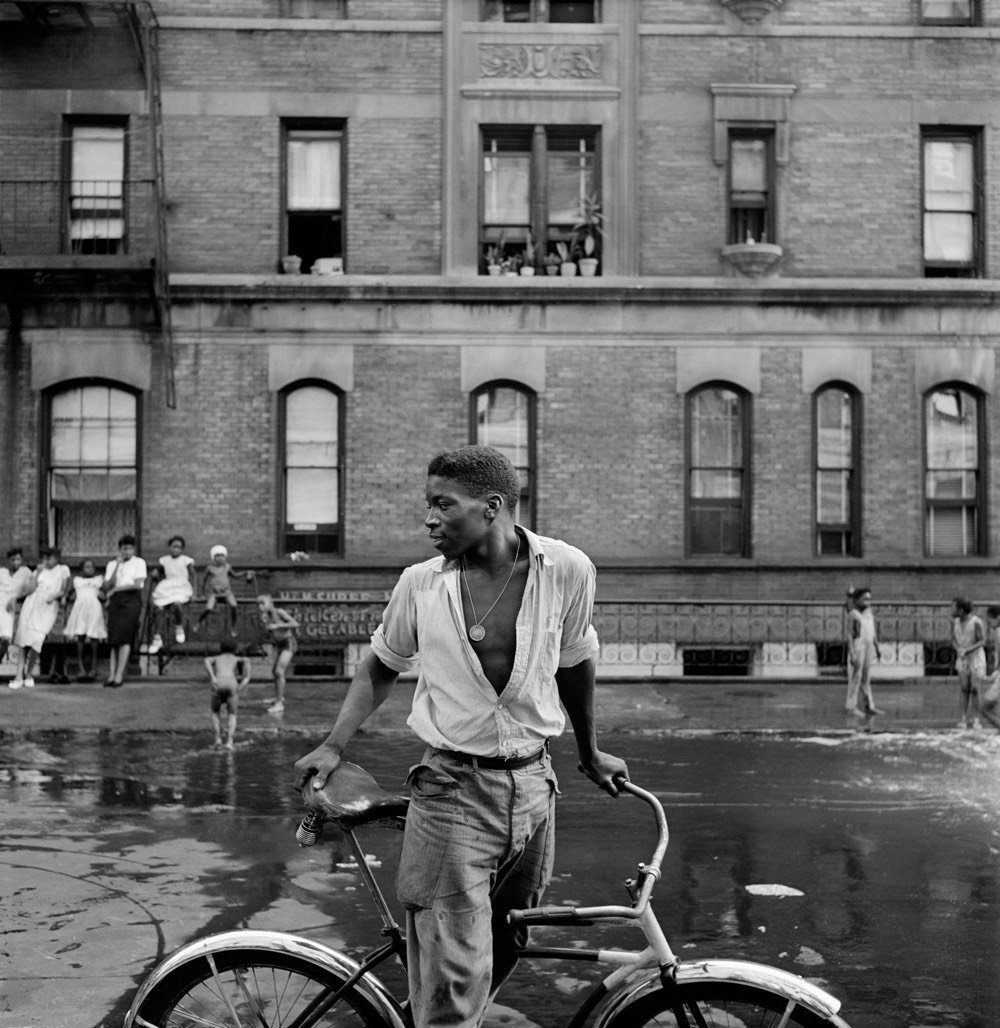
Gordon Parks was a novelist, poet, musician, composer, painter, and film director, but he was best known for his photography. In this video, Evan Puschak takes a look at Parks’ photography, from his FSA photos taken in the 40s to his photo essays for Life magazine. What a life, what a career. Here are just a few of Parks’ photos; I encourage you to check out the rest.



Second-tier Scottish football club Inverness Caledonian Thistle doesn’t have a camera operator for matches at their stadium so the club uses an AI-controlled camera that’s programmed to follow the ball for their broadcasts. But in a recent match against Ayr United, the AI controller kept moving the camera off the ball to focus on the bald head of the linesman, making the match all but unwatchable. No fans allowed in the stadium either, so the broadcast was the only way to watch.
Media correspondents from all over the world spend months and years in the United States, reporting on our current events, politics, and culture. In this illuminating video from the New Yorker, several of them talk about what they think of our country. As outsiders, they’re able to see things that Americans don’t and can talk to people who may not otherwise feel comfortable talking to (what they perceive as) biased or corrupt American media. They’ve also observed an unprecedented level of division and are aware of the disconnect between America’s rhetoric about freedom and the sense that they’re reporting from a failed state.
Over the summer, members of the QAnon cult started to take over the “Save the Children” movement on Instagram & Facebook, eventually luring lifestyle influencers into spreading the cult’s message. From the NY Times:
But new research suggests that the biggest jolt to QAnon came from the so-called “Save the Children” movement. It started out as a fund-raising campaign for a legitimate anti-trafficking charity, but was then hijacked by QAnon believers, who used the movement to spread false and exaggerated claims about a global child-trafficking conspiracy led by top Democrats and Hollywood elites. This hijacking began in July, around the same time that Twitter and Facebook began cracking down on QAnon accounts.
What happened is QAnon folks started mass-faving posts about Save the Children and trafficking, so influencers began posting more content related to those topics, using bogus statistics and QAnon talking points. As the video from Vox above explains, child sex trafficking is a legitimate issue but QAnon’s claims about it — and the Instagram-aesthetic memes it has spawned — do not reflect reality. From Michael Hobbes at Huffington Post:
First of all, decades of social science research has found that the vast majority of children are abused by someone they know, usually their parents but sometimes other children or figures of authority they trust. “Stranger danger” kidnappings, on the other hand, are extremely rare — the latest estimate is 115 per year in the entire United States.
Second, the summer-long panic about missing children is almost entirely based on faulty statistics. Though it’s true that more than 400,000 children are reported missing each year, that is not even close to the number who disappear. The vast majority of these reports are misunderstandings or runaways. Roughly 10% are kidnapped by a parent as part of a custody dispute. Over 99% return home, most within a few days.
For the fourth season of Netflix’s drama on Queen Elizabeth and the British monarchy, The Crown moves into the 1980s. The first full trailer features two women who largely defined Britain in that decade: Margaret Thatcher (played by Gillian Anderson) and Lady Diana Spencer, later Princess Diana (played by Emma Corrin). As a fan of the first three seasons of the show and You’re Wrong About’s multi-part series on Princess Diana, I am very much looking forward to this.
Oh, I already know what you’re thinking. Who cares about how to cut a tree down? Who cares about 8 different ways to cut a tree down? Who cares about watching 45 minutes of 8 different ways to cut a tree down? I hear you. But this tree felling tutorial is actually really informative & entertaining and watching people who are good at their work, are good at explaining their work, and genuinely have a passion for what they do is always worthwhile. The top comments on the video are almost uniformly positive; here’s a representative remark:
I live off-grid in the forest (same mtn range as these guys) and for 30+ years I have been felling trees for fire-prevention, firewood, and home-milled lumber. I have fortunately never had an accident, but after watching this video I realized that was only dumb luck. After carefully studying this video (3 times through), as well as others on this channel, this year I have placed every tree exactly where I wanted (even the leaders) and I’ve done this in a much safer manner than before.
Did you know, for example, the extent to which tree fellers can accurately place a falling tree? I did not and their precision is impressive — I actually cheered when the tree fell during the sizwill cut demo.
Under Pressure, the classic tune from David Bowie and Queen, seems like one of those songs you don’t want to mess with — we’re looking at you here, Vanilla Ice. But if someone is going to cover it, it might as well be Karen O from the Yeah Yeah Yeahs and Willie Nelson.
(via open culture)
This week’s fun internet plaything has been the 3D virtual house tour of this three-bedroom house at 8800 Blue Lick Rd. in Louisville, KY. If you take the tour, you’ll quickly see why: from the standpoint of physics, the house doesn’t seem to make any sense. You think you’re in the basement and then head up some stairs to find yourself…still in the basement? It’s all very Inception crossed with the Winchester Mystery House with a side of How Buildings Learn.
So of course people turned it into a game: find the oddly located bathtub. They even started speedrunning it.
Resident internet meme sleuth Andy Baio called the owner of the house and got the scoop on the puzzling residence.
A larger question remained: what’s the deal with this place? Whoever owned it, they were too organized to be hoarders. The home appeared to double as the office and warehouse for an internet reseller business, but who sells a house crammed floor-to-ceiling with retail goods?
Internet sleuths unearthed several news articles from 2014, outlining how police discovered thousands of stolen items being sold online during a raid at the address, the result of a four-year investigation resulting in criminal charges for four family members living and working at the house.
But it didn’t add up. If they were convicted for organized crime, why was there still so much inventory in the house, with products released as recently as last year? Why is it still packed full while they’re trying to sell it? And what’s with the bathtub!?
I had questions, so I picked up the phone.
He also explains why the bathtub is no longer viewable in the 3D walkthrough.
Earlier this month, Prince William (British royal) & David Attenborough (British royalty) announced The Earthshot Prize. Inspired by the moonshot effort of the 1960s, the initiative will award five £1 million (~$1.3 million) prizes each year over the next 10 years for projects that provide global solutions to pressing environmental problems in five different categories: fixing the climate, cleaning the air, protecting & restoring nature, reviving the oceans, and building a waste-free world.
The Earthshot Prize is centred around five ‘Earthshots’ — simple but ambitious goals for our planet which if achieved by 2030 will improve life for us all, for generations to come. Each Earthshot is underpinned by scientifically agreed targets including the UN Sustainable Development Goals and other internationally recognised measures to help repair our planet.
Together, they form a unique set of challenges rooted in science, which aim to generate new ways of thinking, as well as new technologies, systems, policies and solutions. By bringing these five critical issues together, The Earthshot Prize recognises the interconnectivity between environmental challenges and the urgent need to tackle them together.
(via moss & fog)
In 1979 the BBC aired an interview with Frank Prentice, who was an assistant purser on the Titanic who survived the sinking of the ship in 1912. I’m not sure what to expect when I started listening, but I was completely captivated by Prentice’s tale.
More information on the Mrs. Clark from his story is available here.
Mrs Clark left Titanic with Mrs Astor in lifeboat 4. She recalled Mrs Astor insisting that the lifeboat be turned around to rescue more people; the lifeboat eventually pulled around eight crewmen from the water. When the ship eventually founded Mrs Clark recalled the “heartrending moans and cries” of those struggling in the water.
There are many other interviews with Titanic survivors on YouTube, including this 40-minute feature of seven survivors telling their stories and this 1970 British Pathé clip:
(via @daniel_beattie)
Back to the Future is 35 years old this year and to celebrate, Universal has cut together eight fan-made animations of action from the film into an abridged version of the beloved movie.
See also a deepfake version of BTTF with Tom Holland as Marty and Robert Downey Jr. as Doc.
The animation above shows how bridges were built in medieval times, well before the advent of backhoes, cranes, and bulldozers powered by steam and gasoline. I could explain what you’re about to see, but you should just watch the video.
The bridge constructed in the video is the real-life Charles Bridge in Prague, which was built over several decades in the 14th and 15th centuries. From Amusing Planet:
Construction of the Charles Bridge started in 1357, under the auspices of King Charles IV, but it was not completed until the beginning of the 15th century. The bridge has 16 arches and 15 pillars, each shielded by ice guards. It’s 512 meters long and nearly 10 meters wide. The balustrade is decorated with 30 statues and statuaries depicting various saints and patron saints, although these were erected much later, between 1683 and 1714. To preserve these statues, they were replaced with replicas during the 1960s. The originals are at Prague’s National Museum.
Until the middle of the 19th century, the Charles Bridge was the only crossing on river Vltava, which made the bridge an important connection between Prague Castle and the city’s Old Town and adjacent areas.
When I was younger, I remember watching (and loving) a PBS series on the building techniques used to construct the pyramids in Egypt, Stonehenge, the Colosseum, and Incan buildings. That the internet is now overflowing with engaging history videos like this bridge video is truly wonderful.
On Tuesday, NASA’s OSIRIS-REx spacecraft touched down on an asteroid called Bennu for about six seconds in order to collect a mineral sample to bring back to Earth.
The Origins Spectral Interpretation Resource Identification Security - Regolith Explorer spacecraft will travel to a near-Earth asteroid, called Bennu (formerly 1999 RQ36), and bring at least a 2.1-ounce sample back to Earth for study. The mission will help scientists investigate how planets formed and how life began, as well as improve our understanding of asteroids that could impact Earth.
The video above is a time lapse sequence of the touch down, sampling, and subsequent take off.
These images were captured over approximately a five-minute period. The imaging sequence begins at about 82 feet (25 meters) above the surface, and runs through the back-away maneuver, with the last image in the sequence taken at approximately 43 feet (13 meters) in altitude — about 35 seconds after backing away. The sequence was created using 82 SamCam images, with 1.25 seconds between frames.

New York City has a new digital subway map that reflects the current status of the subway lines. And you can even see the trains moving, right on the map. (Finally!!) Visually, the new map combines the styles of two past maps, each beloved in their own way.1 Fast Company explains:
The first map is that by Massimo Vignelli, who simplified the snaking subway system into a clean diagram which traded geographic literality for graphical clarity. This elegant simplification turns the confounding subway into a logical system. But the main Vignelli map was scorned by New Yorkers because it wasn’t an actual map, and it was quickly replaced (though a permutation actually lives on as the MTA’s Weekender diagram, which signals weekend services). Meanwhile, the primary map the MTA uses today was created by Unimark International and Michael Hertz Associates. It’s more geographically accurate, but it actually condenses information that was in the Vignelli map. For example, it combines individual train lines such as the C, D, and E lines into singular trunks.
Here’s a video from filmmaker Gary Huswit that shows how the team came up with the new map:
Zooming the map in and out, you see different levels of detail, just like with Google or Apple Maps. I like it — a good combination of form and function.2
Update: A reader reminded me of designer Eddie Jabbour’s Kick Map of the NYC subway, which effectively melded the styles of the Vignelli and Hertz maps together more than 15 years ago.

What’s interesting is that the MTA explicitly rejected and criticized the Kick Map but ended up doing something quite similar with the new digital map. I think Jabbour’s effort deserves to be acknowledged here. (thx, nicolas)
This image-stabilized video of Tomasz Furmanek kayaking through the fjords of western Norway is almost obscenely beautiful. I want to go to there. (Really dislike the music though…this would have been so much better just with the ambient noise of the boat and paddle slipping through the water. Like this video.)
Well, this is interesting. A World of Calm is a new TV series from HBO Max based on a sleep & meditation app called Calm.
A timely antidote for our modern lives, each half-hour episode takes audiences on an immersive visual journey into another world. Building on the record-breaking success of Calm’s Sleep Stories™ — bedtime stories for grown ups with over 250m listens — each relaxing tale is designed to transform how you feel. Transporting the viewer into tranquility through scientifically-engineered narratives, enchanting music and astounding footage, to naturally calm your body and soothe the mind. Each story is brought to life by a different iconic voice.
Narrators include Lucy Liu, Mahershala Ali, Idris Elba, Zoe Kravitz, Keanu Reeves, and Kate Winslet. Based on the trailer (above) that hits a number of kottke.org pet topics — relaxing videos, soothing sounds, nature documentaries, aerial photography, craftsmanship — I will likely be spending some time with A World of Calm soon, possibly while high?
Newer posts
Older posts





Socials & More