kottke.org posts about video
Harriet is a biopic about freedom fighter Harriet Tubman coming out in November. Tubman is played by Cynthia Erivo, who looked super familiar but I couldn’t place her…turns out I’d seen her in Widows and Bad Times at the El Royale. Erivo is joined by fellow castmembers Leslie Odom Jr., Janelle Monáe, and Clarke Peters.
50 years ago, the Sony TC-50 cassette player and recorder accompanied the Apollo 11 crew to the Moon and back. (Here’s what they listened to.) Ten years later, the company came out with the Walkman, the first portable cassette player that struck a chord with consumers. In this video, Mat of Techmoan shows us the TC-50 and shows how similar it is to the later Walkman. I found this video via Daring Fireball, where John Gruber remarked on the iterative nature of design: “You get to a breakthrough like the original iPhone one step at a time.”
Well, this trailer for A Beautiful Day in the Neighborhood is our first look at Tom Hanks playing Fred Rogers and, hmm. I dunno. Hanks looks a little stiff to me, unnatural, but maybe no one could actually play such a beloved childhood figure in a convincing way. I was so young when I watched his show every day for years on end that Mr. Rogers’ movements and mannerisms were imprinted on my super-plastic preschool brain, never to be forgotten. Mr. Rogers tossed his shoe between his hands a little bit differently every day, but he never tossed it like Hanks does in that trailer.
But who am I kidding, I will still see this movie. It’s based on Can You Say…Hero?, a piece that Tom Junod wrote about Rogers for Esquire magazine.
Mister Rogers weighed 143 pounds because he has weighed 143 pounds as long as he has been Mister Rogers, because once upon a time, around thirty-one years ago, Mister Rogers stepped on a scale, and the scale told him that Mister Rogers weighs 143 pounds. No, not that he weighed 143 pounds, but that he weighs 143 pounds…. And so, every day, Mister Rogers refuses to do anything that would make his weight change-he neither drinks, nor smokes, nor eats flesh of any kind, nor goes to bed late at night, nor sleeps late in the morning, nor even watches television-and every morning, when he swims, he steps on a scale in his bathing suit and his bathing cap and his goggles, and the scale tells him that he weighs 143 pounds. This has happened so many times that Mister Rogers has come to see that number as a gift, as a destiny fulfilled, because, as he says, “the number 143 means ‘I love you.’ It takes one letter to say ‘I’ and four letters to say ‘love’ and three letters to say ‘you.’ One hundred and forty-three. ‘I love you.’ Isn’t that wonderful?”
If you’ve never read it, you should…it’s a lovely piece of writing about a wonderful human. I reread it every year or so, just to fill up my cup.
I was away this weekend at a family function and mostly without internet access, so I didn’t get to watch the coverage of the Moon landing for the first time in more than a decade. I also didn’t get to share a bunch of links I had up in browser tabs and now I think everyone is (justifiably) tired of all the Apollo 11 hoopla, myself included. But I hope you’ll indulge me in just one more and then I’ll (maybe! hopefully!) shut up about it for another year.
It’s tough to narrow it down, but the most dramatic & harrowing part of the whole mission is when Neil Armstrong notices that the landing site the LM (call sign “Eagle”) is heading towards is no good — it’s too rocky and full of craters — so he guides the spacecraft over that area to a better landing spot. He does this despite never having flown the LM that way in training, with program alarms going off, with Mission Control not knowing what he’s doing (he doesn’t have time to tell them), and with very low fuel. Eagle had an estimated 15-20 seconds of fuel left when they touched down and the guy doing the fuel callouts at Mission Control was basically just estimating the remaining fuel in his head based on how much flying he thinks the LM had done…and again, the LM had never been flown like that before and Mission Control didn’t know what Armstrong was up to! (The 13 Minutes to the Moon podcast does an excellent job explaining this bit of the mission, episode 9 in particular.)
Throughout this sequence, there was a camera pointed out Buzz Aldrin’s window — you can see that video here — but that was a slightly different view from Armstrong’s. We’ve never seen what Armstrong saw to cause him to seek out a new landing site. Now, a team at NASA has simulated the view out of his window using data from the Lunar Reconnaissance Orbiter Camera:
The LROC team reconstructed the last three minutes of the landing trajectory (latitude, longitude, orientation, velocity, altitude) using landmark navigation and altitude call outs from the voice recording. From this trajectory information, and high resolution LROC NAC images and topography, we simulated what Armstrong saw in those final minutes as he guided the LM down to the surface of the Moon. As the video begins, Armstrong could see the aim point was on the rocky northeastern flank of West crater (190 meters diameter), causing him to take manual control and fly horizontally, searching for a safe landing spot. At the time, only Armstrong saw the hazard; he was too busy flying the LM to discuss the situation with mission control.
This reconstructed view was actually pretty close to the camera’s view out of Aldrin’s window:
See also a photograph of the Apollo 11 landing site taken by the LRO camera from a height of 15 miles.
Here I was, flying along fat, dumb, and happy (like my dad used to say), not really wanting or needing any more The Next Generation-era Star Trek or Jean-Luc Picard in my life and now this. How could I have been so mindless? This trailer got me so fired up for Star Trek: Picard — the Borg! Data in a drawer! a potty-mouthed Seven of Nine! — that I am practically levitating. Nostalgia is death — inject it directly into my veins.
In this episode of Earworm, Estelle Caswell and the gang explore the elements of a classic house track — the disco diva samples, the sounds of the Roland TR-909 drum machine, and pianos — and delve into the origins of house.
House has become one of the most popular forms of electronic music since its inception in the late 80’s. It began in Chicago, when local DJ’s and music producers experimented with remixing disco vocals over hard hitting drum machines. They would soon play a huge role in popularizing the sound and distinguishing house music as a global music genre.
The bit near the end about the influence on Chicago house music by Italian disco records was super interesting.
The Apollo Flight Journal has put together a 20-minute video of the full descent and landing of the Apollo 11 Lunar Module containing Neil Armstrong and Buzz Aldrin on July 20, 1969.
The video combines data from the onboard computer for altitude and pitch angle, 16mm film that was shot throughout the descent at 6 frames per second. The audio recording is from two sources. The air/ground transmissions are on the left stereo channel and the mission control flight director loop is on the right channel. Subtitles are included to aid comprehension.
Reminder that you can follow along in sync with the entire Apollo 11 mission right up until their splashdown. I am also doing my presentation of Walter Cronkite’s CBS news coverage of the landing and the Moon walk again this year, starting at 4:10pm EDT on Saturday, July 20. Here’s the post I wrote about it last year for more details. (thx, david)
Filmmaker Alfonso Cuarón has become the modern director most associated with the long take. In this video, The Royal Ocean Film Society takes a look at the long shots in his films, from Great Expectations to Gravity to Roma and considers how his approach evolves over time and what separates them from the use of long takes as “an obnoxious mainstream gimmick”.
All of the sequences discussed in the video are available to watch in full length here.
(I looked up Cuarón’s filmography and noticed he’s only directed 5 films in the past 20 years and only 8 total. I would have guessed more.)
The YouTube channel Primer is running a series on evolution and how it works. Topics include mutations, selfish genes, and altruism in natural selection. The most popular video of the series is this one on the simulation of natural selection:
In it, you can see how different environments cause groups to tend towards certain traits (size, speed, sensing ability) based on food availability, with random mutation and reproduction in the mix as well. Seeing the populations’ traits change in realtime as the generations pass is a powerful way to make sense of a complex concept.
I don’t know who needs to hear this, but if you’re in need of some relaxing sounds, a meditative moment, or a chill work soundtrack, I recommend this 71-minute video of Tibetan singing bowl music.
See also Hours and Hours of Relaxing & Meditative Videos.
In order to create the illusion of motion, tattoo artists are creating tattoos with large green areas to use them as green screens for custom motion graphics. Watch the first five seconds of this video and you’ll get the gist:
(via @tedgioia)
Watch, listen, and learn as pianist and composer Nahre Sol plays what you might think of as a very simple song, Happy Birthday, in 16 increasing levels of complexity. She starts out using a single finger and ends by playing an original composition that seemingly requires 12 or 13 fingers to play. This gave me, a musical dunce, a tiny glimpse into what a composer does.
Sol has a popular YouTube channel where she posts videos of her musical explorations, including Improvising in the Style of Different Classical Composers and The Blues, As Digested by a Classical Musician. (via open culture)
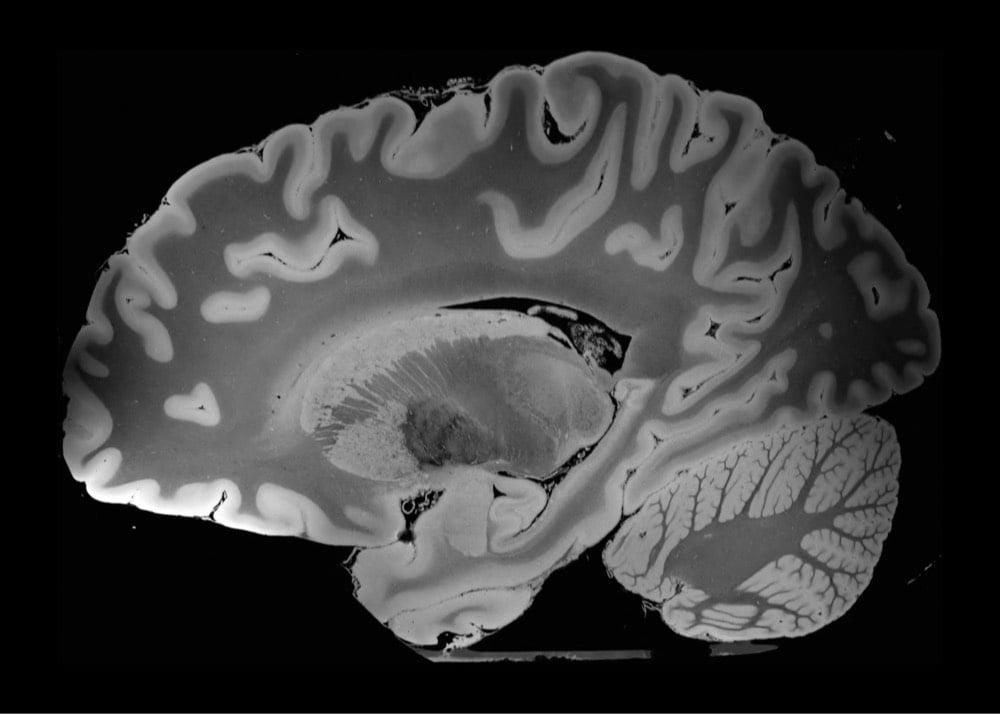
A team of researchers at the Laboratory for NeuroImaging of Coma and Consciousness have done an ultra-high resolution MRI scan of a human brain. The scan took 100 hours to complete and can distinguish objects as small as 0.1 millimeters across.
“We haven’t seen an entire brain like this,” says electrical engineer Priti Balchandani of the Icahn School of Medicine at Mount Sinai in New York City, who was not involved in the study. “It’s definitely unprecedented.”
The scan shows brain structures such as the amygdala in vivid detail, a picture that might lead to a deeper understanding of how subtle changes in anatomy could relate to disorders such as post-traumatic stress disorder.
This video above shows the scanned slices of the entire brain from side to side.
You can view/download the entire dataset of images here.
Taking advantage of inexpensive and easy-to-use software, deepfake artist Ctrl Shift Face has replaced Jack Nicholson’s face with Jim Carrey’s face in several scenes from The Shining. If you pay close attention it looks a little off — it’s not as good as the Bill Hader / Arnold Schwarzenegger one — but if you were unaware of Nicholson or The Shining going in, you probably wouldn’t notice.
These Shining videos are clever and fun and we’ve talked a little bit about how deepfakes might affect our society, but this Hannah Arendt quote from a 1974 interview is likely relevant:
If everybody always lies to you, the consequence is not that you believe the lies, but rather that nobody believes anything any longer. This is because lies, by their very nature, have to be changed, and a lying government has constantly to rewrite its own history. On the receiving end you get not only one lie — a lie which you could go on for the rest of your days — but you get a great number of lies, depending on how the political wind blows. And a people that no longer can believe anything cannot make up its mind. It is deprived not only of its capacity to act but also of its capacity to think and to judge. And with such a people you can then do what you please.
This is the incredible and interesting and dangerous thing about the combination of our current technology, the internet, and mass media: “a lying government” is no longer necessary — we’re doing it to ourselves and anyone with sufficient motivation will be able to take advantage of people without the capacity to think and judge.
During the course of his television career, Bob Ross painted more than 1000 paintings. But you never see them for sale. You can buy Bob Ross paint sets and even a waffle maker that makes waffles that look like Bob Ross — “Pour in the batter, lower the lid, and before you know it, there’s Bob Ross ready for butter and syrup.” — but good luck buying one of his actual paintings. In this charming little video from the NY Times, we learn where all of Bob Ross’s paintings are, meet the paintings’ custodians, and discover why the art isn’t for sale.
In 1994, the talk show host Phil Donahue asked Mr. Ross to “say out loud your work will never hang in a museum.”
“Well, maybe it will,” Mr. Ross replied. “But probably not the Smithsonian.”
Some of Ross’s paintings can be viewed at The Bob Ross Art Workshop & Gallery in New Smyrna Beach, Florida. Every episode of The Joy of Painting can be viewed on YouTube or sometimes streaming on Twitch. I watched on Twitch for a couple minutes just now and was tickled to catch him saying one of his signature phrases: “happy little trees”.
B-box is a beehive designed for use in close proximity to humans, like near your house or in an urban environment. It does this by separating the honey part of the hive from the area where the bees live and limiting their access to the hive through an entrance more than seven feet above the ground. Check out this video for details:
The makers of the B-box are seeking funding for the project on Indiegogo. Very tempting! (via colossal)
This is an older clip so maybe you’ve seen it before, but if you need something a little bit fun & joyful today, you can’t do much better than this video of Christopher Walken dancing in dozens of his movies, edited together to C+C Music Factory’s “Gonna Make You Sweat”.
Walken is, of course, a wonderful dancer…a throwback to the “Gene Kelly, Fred Astaire, Ginger Rogers, dance on air” era of the 30s, 40s, and 50s. See also Walken dancing in Spike Jonze’s video for Fatboy Slim’s Weapon of Choice.
The Simpsons has never exactly portrayed its characters in a flattering light, but this version of the show’s title sequence reimagined as a Russian art film by Lenivko Kvadratjić is downright depressing. (via bb)
In the latest episode of Earworm, Estelle Caswell and Jacob Collier break down Stevie Wonder’s Sir Duke, in which he pays tribute to the jazz artists that inspired him, both in lyric and in the arrangement of the music. As someone who isn’t musical but has experience programming, writing, designing, and doing science, it’s fun to see a similar borrow/remix/homage process at work on a virtuoso level.
According this video by Kurzgesagt (and their extensive list of sources), the answer to that question for now is: no, our electronic devices are not causing long- or short-term health problems in the brains or bodies of people who use them.
Electrosmog is one of those things that is a bit vague and hard to grasp. When personal health is involved, feelings clash extra hard with scientific facts and there is a lot of misinformation and exaggeration out there. On the other hand, some people are really worried and distressed by the electricity that surrounds them. And just to wave this off is not kind or helpful.
While there is still a lot of researching being done on the dangers of constant weak electromagnetic radiation, it is important to stress that so far, we have no reason to believe that our devices harm us. Other than… well… spending too much time with them.
Japanese public broadcaster NHK has produced a four-part documentary on legendary animator Hayao Miyazaki called 10 Years with Hayao Miyazaki. The behind-the-scenes film follows Miyazaki as he made his last two films for Studio Ghibli, Ponyo and The Wind Rises. Here’s the synopsis of the first episode:
An exclusive, behind-the-scenes look at the genius of Japan’s foremost living film director, Hayao Miyazaki — creator of some of the world’s most iconic and enduring anime feature films. Miyazaki allowed a single documentary filmmaker to shadow him at work, as he dreamed up characters and plot lines for what would become his 2008 blockbuster, “Ponyo on the Cliff by the Sea.” Miyazaki explores the limits of his physical ability and imagination to conjure up memorable protagonists.
The whole show is available to watch online at NHK with English subtitles and narration.
See also Never-Ending Man: Hayao Miyazaki. (thx, yuko)
This is a short video of a set of subway stairs in Brooklyn where one of the steps is juuuust a bit taller than the rest, which makes most people trip on it.
We don’t often think about it but even the least graceful humans move in a finely calibrated way. When we’re climbing stairs, our feet don’t clear the treads by much, so that even the tiniest deviation in the height of a step can spell trouble.
I’d love to see a study of how quickly our bodies learn how high the steps are in a new flight of stairs. Like, maybe we clear the first couple of steps by an inch or two but then we’re locked in and subsequent clearances are much smaller.
Is there a word for the way people tend to speed up after they trip climbing stairs? The stumble hustle? It’s such a small & endearing little thing that most people do.
My least favorite flight of stairs in the entire NYC subway system are, I believe, at the SW corner of 14th St and 6th Ave in Manhattan. Each of the steps is a different height, making for a tricky ascent and a downright dangerous descent. I keep thinking they’re gonna get fixed, but I used them on my last visit to the city in June. At this point, they’re like an old friend who’s kind of a jerk but you’ve known him so long that whaddya gonna do? (via @fishtopher)
Update: On Twitter, André Filipe Barro shared the Brazilian phrase for speeding up after tripping up the stairs: “went on a chicken chase”. Excellent!
Hoi Toider is a dialect spoken by long-time residents of Ocracoke, North Carolina. It sometimes sounds more Australian, Scottish, or like Elizabethan English than American English.
When older Ocracoke natives, or O’cockers as they call themselves, speak, the ‘I’ sound is an ‘oi’, so they say ‘hoi’ instead of ‘high’. That’s where the Hoi Toider name comes from: it’s based on how the O’cockers say ‘high tide’.
Then there are the phrases and vocabulary, many of which are also kept over from the original settlers. For example, when you’re on Ocracoke, someone might ‘mommuck a buck before going up the beach’, which means ‘to tease a friend before going off the island’.
“We have a lot of words that have been morphed to make our own,” said Amy Howard, another of William Howard’s descendants, who runs the Village Craftsmen, a local arts and crafts store. “[Hoi Toider] is a combination from a whole blend of cultures. A lot of the early settlers were well travelled, so they ran into lots of different types of people. For example, the word ‘pizer’ we use comes from the Italian word ‘piazza’, which means porch. So if you’re going to be sitting on your pizer, you’re sitting on your porch.”
You can hear some folks speaking Hoi Toider is these videos:
Today, July 2, 2019, just after 4:30pm ET, a total solar eclipse will be visible in parts of Chile and Argentina. Because most of you, I am guessing, are not currently in those parts of Chile and Argentina, the best way to watch the eclipse is through any number of live streams, three of which I’m embedding here:
I was lucky enough to see the eclipse in 2017 and it was a life-altering experience, so I’ll be tearing myself away from the USA vs England match for a few minutes at least.
Listen in as “Gong Master Sven” plays a gong that’s 7 feet across. (No seriously, listen…it’s wild. Headphones recommended.)
Ok, show of hands. How many of you of thought it was going to sound like that? I had no idea! He barely hits it! The whole thing sounded like a horror movie soundtrack or slowed-down pop songs. Here’s another demonstration, with some slightly harder hits:
The Memphis Gong Chamber looks like an amazing place. Watching this on YouTube, we’re missing out on a lot of the low-end sounds:
And if you were actually standing here like I am, you can feel all your internal organs being massaged by the vibrations from this. It’s really quite the experience.
This guy drags some objects over a large gong and it sounds like whale song:
Ok well, there’s a new item for the bucket list. (via @tedgioia)
The Shawshank Redemption came out in 1994. Although crime rates had already started falling across the country, the media (with shows like COPS) and government (Joe Biden & Bill Clinton’s push for a crime bill now considered disastrous) were still pursuing and glorifying a punitive criminal justice system. But as this excellent video by Pop Culture Detective explains, Shawshank offered 90s audiences a different view of prison and the criminal justice system.
On a narrative level The Shawshank Redemption is a movie about the power of hope in the face of extraordinary hardship. But underpinning Andy Dufresne’s story we also find a blistering critique of the prison system and criminal justice policy in the United States.
In the film, the audience gets to see the system as harsh & corrupt and the prisoners as, well, people — human beings worthy of rehabilitation. In the 25 years since Shawshank debuted (and bombed) at the box office, public opinion in America has shifted away from the punitive view of the 90s to the more humanistic perspective embodied by the film.
See also Running from COPS, Sexual Assault of Men Played for Laughs, and Ava DuVernay’s 13th. (via waxy)
Mark Rober built a rock skipping robot and by adjusting a bunch of different parameters, he figured out the best way to skip rocks. And no, I completely did not get out a notepad and start jotting down notes while watching this video and there’s no way I’m heading out to one of my favorite rock skipping places tomorrow morning to try out some new techniques. Nope. Not gonna happen. (thx, tom)
After the fall of the Soviet Union, Deniss Metsavas served for many years with the Estonian Defense Forces and was, at the same time, a Russian spy. In this video for The Atlantic, Metsavas describes how he was recruited by Russian intelligence using kompromat (compromising material).
For years, Metsavas navigated his disparate allegiances. He got married and started a family. But as he grew in prominence in the Estonian Defense Forces, his Russian handlers began to demand highly classified information on Estonia’s involvement with the United States and NATO, specifically with regard to weapons. Metsavas tried to extricate himself, only to find that his handlers would stop at nothing to obtain the intel-including ensnaring a family member in the increasingly dangerous situation.
Watching the video and reading the accompanying article, you get the sense that maybe the Cold War never ended…
I keep track of every media thing I “consume”, so here are quick reviews of some things I’ve read, seen, heard, and experienced in the past month. I just started reading In the Garden of Beasts by Erik Larson; I loved his The Devil in the White City. On the TV front, I’m holding off on season 3 of The Handmaid’s Tale and season 2 of Big Little Lies for some reason…don’t want to get sucked into anything right now, I guess. Ditto for catching up on the Historical Cinematic Universe…just not feeling it at the moment. As always, don’t pay too much attention to the letter grades…they’re higher in the summer than in the cold, depressing winter.
Deadwood: The Movie. A fitting end to one of the best shows on TV. It was great to be able to spend a little more time with it. (A-)
Booksmart. I loved this movie. Great soundtrack too. (A)
Thermapen Mk4. Finally got tired of my anxiety about overcooking my meat. Been using it with the reverse sear to great effect. (B+)
Serial season 3. I couldn’t make it through more than two episodes of each of the previous two seasons, but I went the distance on this one. Is the American system of justice just? I doubt it. (A-)
Working by Robert Caro. The DVD extras for The Power Broker and the LBJ books. I don’t have time to read a 3000-page biography of Lyndon Johnson right now, but Working made me want to do it anyway. (A-)
Persuasion System. The latest album from Com Truise. Great for working to. (B+)
Isabella Stewart Gardner Museum. An idiosyncratic and deeply personal little museum. I felt very much at home there. (A)
Small Steps, Giant Leaps. Apollo 11 artifacts paired with historic scientific tomes from the likes of Galileo & Newton go together like chocolate and peanut butter. (A-)
Mary Queen of Scots. Nothing much here to distinguish this from your usual historical drama. (B)
Toulouse-Lautrec and the Stars of Paris. Great show at the MFA. Was not a particular fan of Toulouse-Lautrec before but perhaps I am now. (A-)
Street Food. Interesting to compare this to David Gelb’s other show, Chef’s Table. Same focus on quality ingredients and serving great food, but very different ends of the economic spectrum. (B+)
Brooklyn Botanic Garden. Caught the peak of the cherry blossoms. Beautiful. But crowded. (A-)
Salt Fat Acid Heat. This wasn’t exactly my cup of tea, but I can see what other people love about it. The final episode is the strongest and I thought Nosrat’s emphasis on shopping as a vital part of cooking was interesting. (B)
Summer in Vermont. It’s been spectacular here lately. (A)
Normal People by Sally Rooney. I burned through this in only two days. (A)

Cumulonimbus mammatus. They’re no asperitas clouds, but cumulonimbus mammatus is still one of the best clouds around. (A)
The Ezra Klein Show interview with Alison Gopnik. Gopnik’s ideas about gardeners vs carpenters and explore vs exploit are fascinating frameworks for thinking about human creativity. (A-)
Pachinko by Min Jin Lee. It’s tough to maintain a coherent story told over several generations, but Lee manages it easily. (A-)
No Country for Old Men. Masterful. (A)
Chernobyl. Sometimes bureaucracy is no match for the truth. See also the accompanying podcast. (A-)
The Lives of Others. Got on a bit of a Cold War kick. (A-)
Always Be My Maybe. Strong ending. (B+)
Toy Story 4. Hollywood is often accused of being super liberal, but I thought the values depicted in this movie were quite conservative. (B+)
Anima. Thom Yorke’s solid third solo album. (B+)
13 Minutes to the Moon. There’s lots of Apollo stuff out there right now and some of it doesn’t bring anything new to the table. But this podcast from the BBC is substantial, with interviews from key players, including Apollo software engineer Margaret Hamilton, who doesn’t give many interviews these days. (A-)
Bad Times at the El Royale. Rhymes with Tarantino but not that well. This should have been 90 minutes long. (B-)
Long Shot. Why did this flop? It’s not exactly great but it works fine. (B)
Whitney Biennial 2019. Things that caught my eye were Christine Sun Kim’s hand-drawn graphs about “deaf rage” and Jeanette Mundt’s paintings of Olympic gymnasts based on these composite photos in the NY Times. (B)
Past installments of my media diet are available here.
Google Arts & Culture, with expertise from music video geniuses La Blogothèque, have produced a series of videos they’re calling Art Zoom. Inspired a bit by ASMR, the videos feature musicians talking about famous artworks while they zoom in & out of high-res images taken with Google’s Art Camera. Here, start with Maggie Rogers talking about Vincent van Gogh’s Starry Night:
You can zoom into Starry Night yourself and get even closer than this:
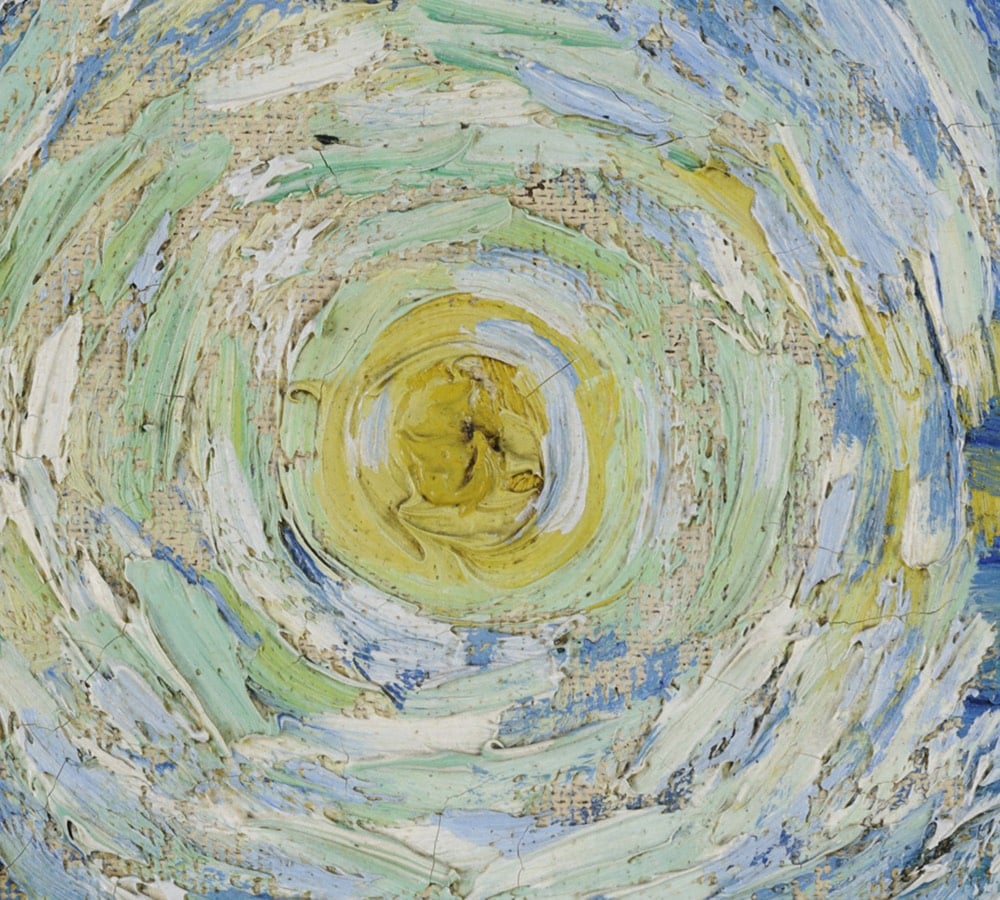
The other two videos in the series feature Jarvis Coker talking about Monet’s La Gare Saint Lazare and Feist talking about The Tower of Babel by Pieter Bruegel the Elder.
Newer posts
Older posts





Socials & More