kottke.org posts about remix
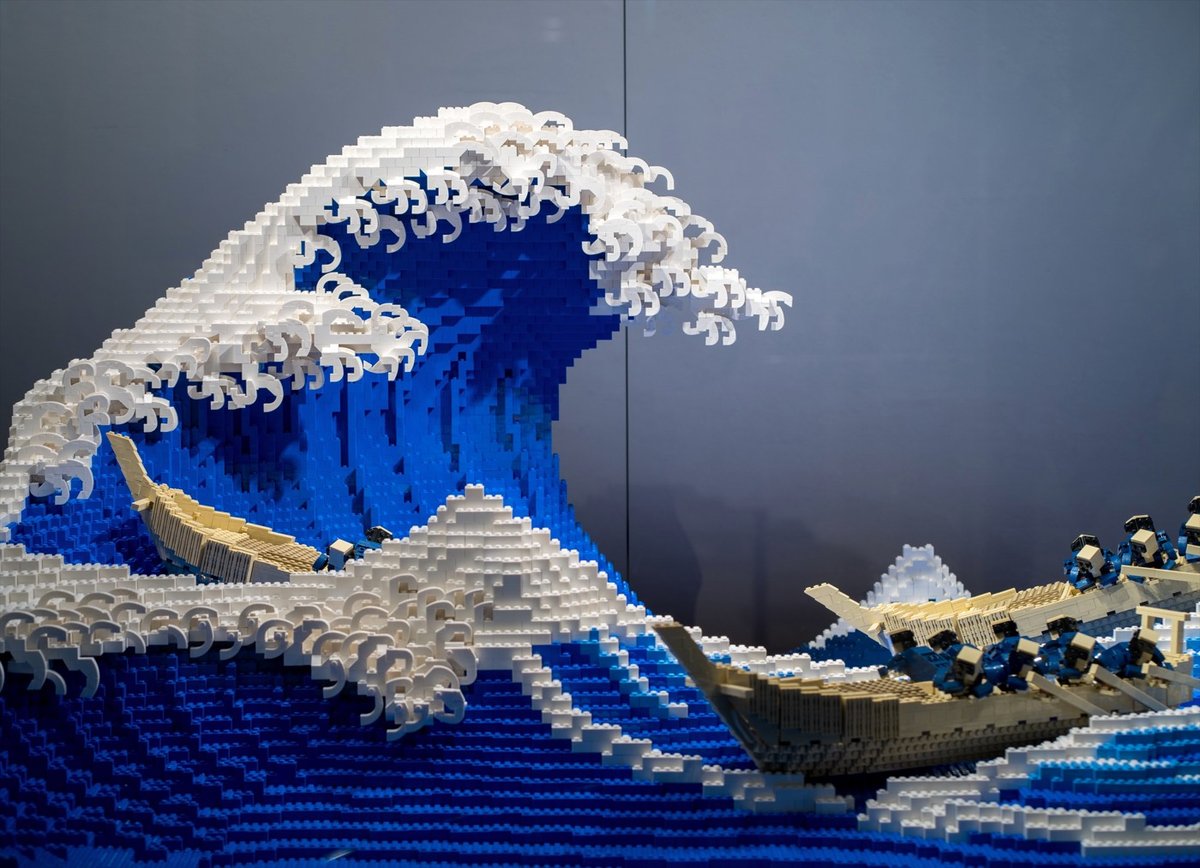
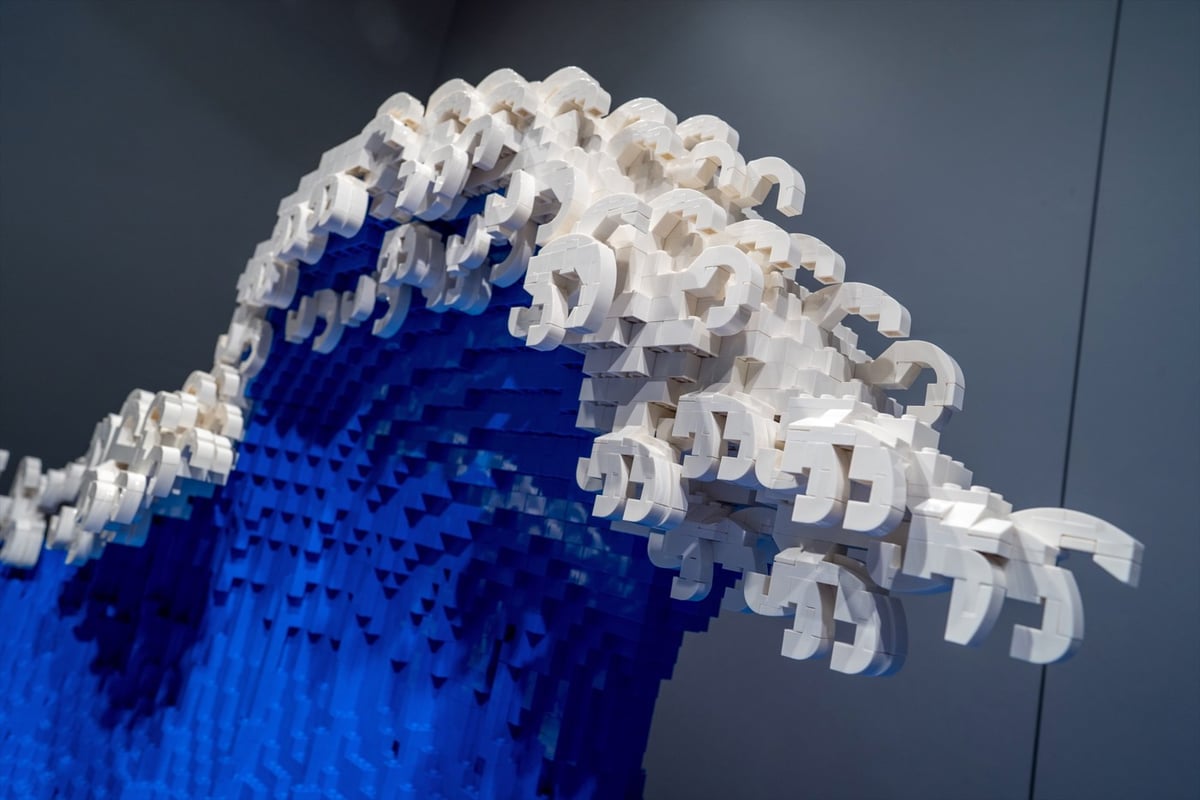
Jumpei Mitsui, the youngest-ever Lego Certified Professional, has created a Lego version of Hokusai’s iconic woodblock print, The Great Wave off Kanagawa. The Great Wave is perhaps the most recognizable (and most covered) Japanese artwork in the world. Mitsui’s Lego rendering is composed of 50,000 pieces and took 400 hours to build. From Spoon & Tamago:
In ensuring that his 3D lego replica not only payed homage to the original but also captured the dynamics of crashing waves, Mitsui says he read several academic papers on giant wave formations, as well as spent hours on YouTube watching video of waves.
You can check out the Lego Great Wave in person at the Hankyu Brick Museum in Osaka.
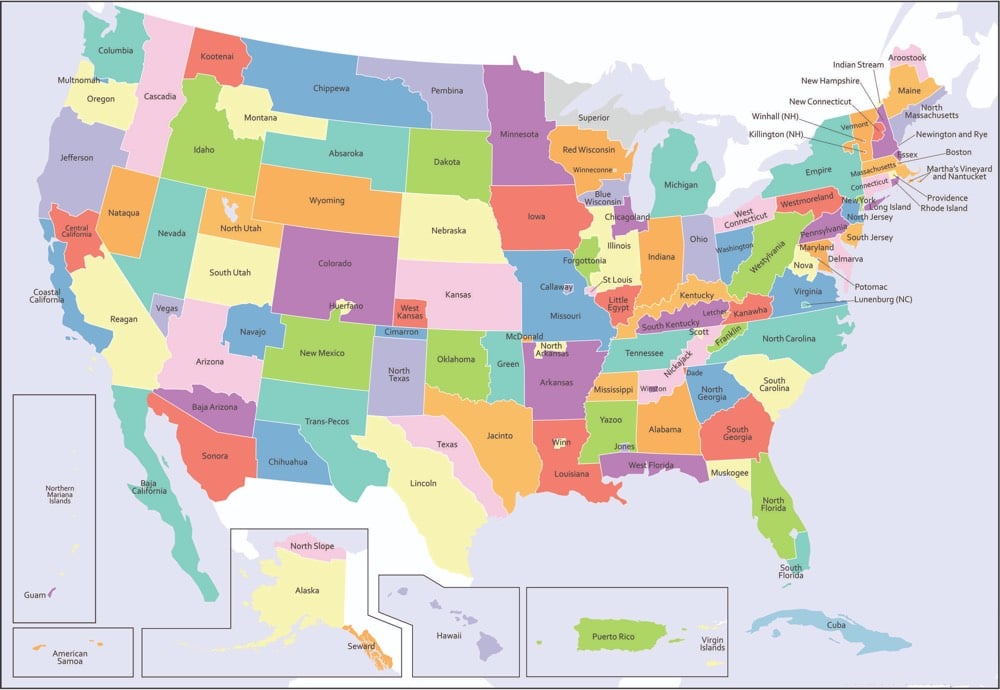
For BBC Future, Sam Arbesman writes about “maps that plot alternative worlds to our own”.
These are the “what if” stories that ask us to imagine our world on a different path: what if a battle, election or assassination had gone the other way, or a pivotal person had never been born? Some of these stories involve time travel to make the change, but many alternate histories are simply imagined differences. What if the Nazis had not been beaten, as in the novel The Man in the High Castle, or what if the Soviets had landed a man on the Moon first, like in For All Mankind?
The map above was created by Andrew Shears and shows what the United States could have looked like if various state partition plans had come to fruition.
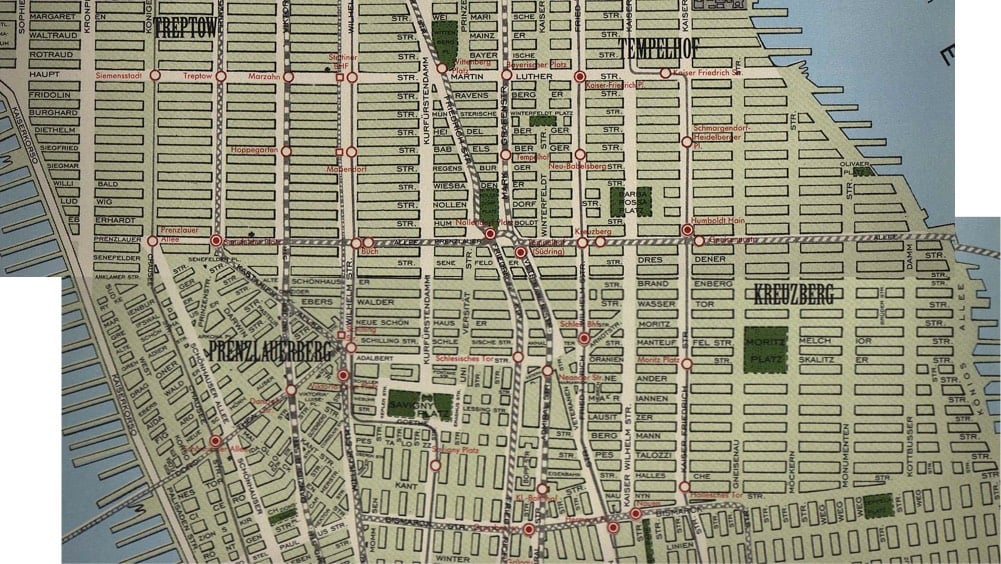
One of my favorite alternative history maps not covered by Arbesman is Melissa Gould’s Neu-York, a map of Manhattan after a hypothetical conquest of the United States by the Nazis in World War II (which I blogged about way back in 2003, when kottke.org had comments!)
See also Alternate Map of the Americas Features “Long Chile”.

This map of the lower 48 US states hand-drawn by XKCD’s Randall Munroe is super clever: 7 of the states are actually missing. Maybe the pandemic is starting continuing to rot my brain, but I stared at this for an embarrassingly long time before finding any of the absent states. Even now that I know which ones are gone, the map doesn’t look out of place at all. *claps*
I don’t think it’s much of a stretch to argue that much of the enduring success of Blade Runner comes down to how well the potent combination of the film’s score, created by electronic composer Vangelis, and the visuals instantly evoke, even in 2020, the future. Ok, a dystopian neo-noir future, but the future nonetheless. A YouTuber has reworked that score, along with ambient sounds and dialogue from the film, into a feature-length soundscape that, as Colin Marshall put it at Open Culture, “feels a great deal like watching Blade Runner without actually watching Blade Runner”. I think I’ll be listening to this as I work today. (via open culture)
I thought you could use a video of some fuzzy Tetris bricks that automagically ease/ooze into their proper places. That’s it. That’s the post. (via @Remember_Sarah)


Over on his Instagram, Raj Haldar is making modernist versions of book covers for children’s books. So far there’s Goodnight Moon, The Snowy Day, The Very Hungry Caterpillar, Haldar’s own P Is For Pterodactyl, and a few others. Here’s what he says about Goodnight Moon:
Today, I’ve reduced ‘Goodnight Moon’ to nothing more than a few circles, rectangles, and triangles. What’s amazing, and a testament to how deeply this classic picture book is embedded in our collective consciousness is that even as a collection of the most simple forms, the cover is thoroughly recognizable.
(via print)
Under Pressure, the classic tune from David Bowie and Queen, seems like one of those songs you don’t want to mess with — we’re looking at you here, Vanilla Ice. But if someone is going to cover it, it might as well be Karen O from the Yeah Yeah Yeahs and Willie Nelson.
(via open culture)
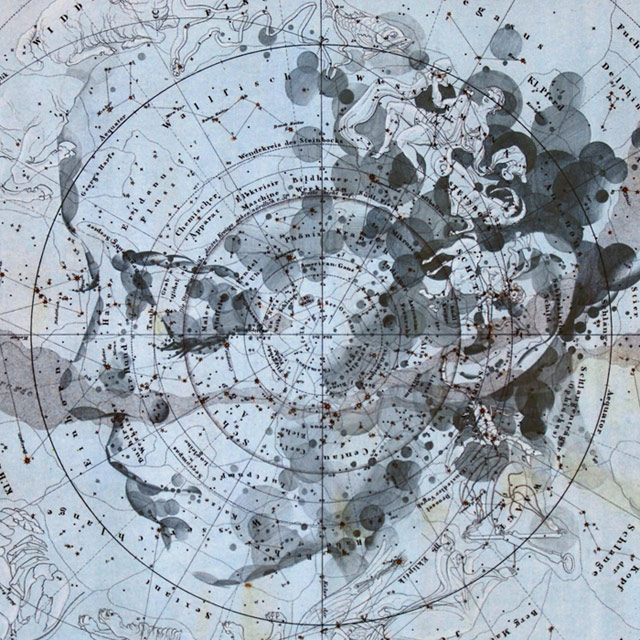
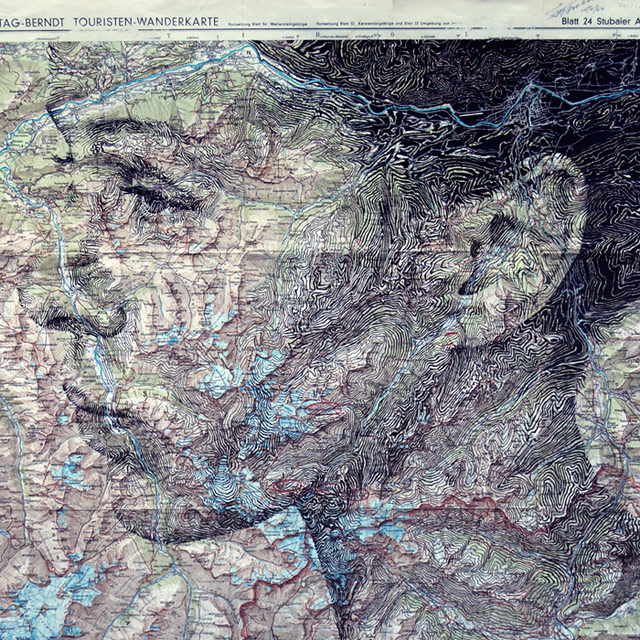
Artist Ed Fairburn draws portraits of people and objects on top of maps and, well, it is just my exact cup of tea. His newest stuff is available on Instagram. I’ve featured his work twice before and it won’t be the last. (via colossal)
Back to the Future is 35 years old this year and to celebrate, Universal has cut together eight fan-made animations of action from the film into an abridged version of the beloved movie.
See also a deepfake version of BTTF with Tom Holland as Marty and Robert Downey Jr. as Doc.
Using an AI-based framework called Pixel2Style2Pixel and searching for faces in a dataset harvested from Flickr, Nathan Shipley made some more photorealistic faces for Pixar characters.


In response to a reader suggestion, Shipley fed the generated image for Dash back into the system and this happened:

I cannot tell where these images should live in the uncanny valley. You can see some similar experiments from Shipley here: a more realistic version of Miles from Spider-Verse, images of Frida Kahlo and Diego Rivera “reverse engineered” from paintings, and an image generated from a Rembrandt self-portrait.
Today’s good, clean, uncomplicated fun is right here in the form of this video - it does what it says on the tin.
See also the melodica version of the “welcome to Jurassic Park” scene. (via laura olin’s newsletter)
Update: I knew there was some similar M83 thing that I’d seen recently and was forgetting about: Midnight City but with Nelson Muntz laughing. (via @dansays)

This album cover was tweeted out the other day by Philip Glass’s official account with no additional comment. What really makes it IMO is the song titles listed at the bottom of the cover: Those Speedy Clouds, Escalators of Death, Run For It…Rockets Are Exploding All Over the Place!
I tried to track down who made this, but the only other instance I could find online was on Philip Glass’s Instagram exactly one year ago. Koyaanisqatsi is a serious work of art — it’s refreshing to see how playful Glass is about its representation. You could imagine other artists/musicians not being so chill about it.
Update: Aha, designer Cris Shapan made this. (via @jdpbbank)
Update: Here’s a short snippet of what this album might sound like.
After creating a series of music video mixes for the entire decade of the 80s (and 1979), the Hood Internet is back to take us through the 90s. Their first video, on 1990, features 60 different songs in only 3.5 minutes and is embedded above.
1990 was my last year of high school, so this is a total memory bomb for me. I listened to a lot of C & C Music Factory, Divinyls, DJ Jazzy Jeff & The Fresh Prince, En Vogue, Madonna, Mariah Carey, MC Hammer, Roxette, Salt-n-Pepa, Sinéad O’Connor, Whitney Houston, and missed whole scores of much cooler music that was unavailable to me because I lived in the middle of nowhere where the listening choices were country, heavy metal, or top 40. It’s an understatement to say that college was very musically eye-opening for me.
Update: Here are the installments from 1991, 1992, and 1993. Right into my college years and so hugely nostalgic.
Update: Here’s their 34-minute megamix of 600 songs from 1990-1999.
This playlist on Soundcloud has each year’s mix from 1975-1999 and there are also yearly playlists of all the songs used for these mixes on Spotify (scroll down to “Artist Playlists”).
In this experimental feature-length film that played at Cannes in 2012, director György Pálfi constructed a love story using clips from 450 films that span nearly the entire history of cinema. I was afraid this would be gimmicky, but it’s so well constructed and so smoothly adheres to the tropes of romantic movies that I got totally sucked in. It reminded me a lot of Christian Marclay’s The Clock, a 24-hour film made from hundreds (thousands?) of other movies and TV shows where the on-screen action is synced to the viewer’s time of day. (via waxy)



Study of the Creative Specimens is a collection of fantastical hybrid creatures created for Adobe’s 99U conference by Mark Brooks and illustration studio alademosca. Prints are available from Paper Chase Press. (via colossal)
Newer posts
Older posts




Socials & More