Entries for March 2016
From the nonbinary.org wiki, a list of gender identities that aren’t male or female.
transgender is an umbrella term for all genders that go beyond society’s ideas of gender, which includes some kinds of binary gender people. Some call their gender identity simply “transgender,” as a nonbinary identity itself.
genderfuzz. Coined by lolzmelmel in 2014. “having multiple genders that are fuzzy and blurred together, making it impossible to identify each one individually or separate one from the rest. alternative names: blurgender (not to be confused with genderblur)
cosmicgender. Coined by dragon-friker in 2014. “A gender so vast and complex that you are only able to process a small bit of it at a time. like viewing the night sky through a telescope you cannot hope to see all of it at once however you may gain more knowledge about parts of it the longer you focus on one part. may contain any number of sub genders within it that may present themselves to you. it is infinite in its possibility. name from the vast reaches of space filled with things we cannot begin to imagine.”
hijra. In south Asian countries including India, Pakistan, and Bangladesh, the Hijra are people assigned male at birth who have a feminine gender expression. This is a very ancient tradition. Today, Hijra are legally recognized as a gender other than female or male.
nocturnalgender. Coined by passengender in 2014. Any gender that feels more intense during the night, “but weak/nonexistent when it is light out.” Syn. batgender, owlgender, moongender. Counterpart: flowergender.
Fascinating.
Update: Sam Escobar answers some frequently asked questions about non-binary gender.
The gender binary separates those who identify as male or female, simple as that. Non-binary genders, however, don’t fit neatly within these two-they can be a combination of male and female, a fluid back-and-forth, or totally outside of the binary. Cisgender people, on the other hand, are folks whose identities align with the gender they were assigned at birth.
(via @djacobs)

Inspired by Randall Munroe’s Thing Explainer, Morten Just built a simple text editor for OS X that restricts your writing to the 1000 most common English words. You can also use Munroe’s Simple Writer on the web.
Com Truise’s new EP, Silicon Tare, comes out tomorrow but you can listen on Soundcloud right now. Grab the mp3s or vinyl at Ghostly or Amazon. (Previously.)
In the past two weeks, the results of three surveys and studies about the Earth’s climate have been released: a paper on a possible dramatic climate shift, a survey of coral bleaching at the Great Barrier Reef, and a study on the West Antarctic ice sheet. All three investigations tell the story of climate change happening quicker than was previously anticipated.
From the paper published last week by former NASA climate scientist James Hansen and a number of colleagues:
Virtually all climate scientists agree with Dr. Hansen and his co-authors that society is not moving fast enough to reduce emissions of greenhouse gases, posing grave risks. The basic claim of the paper is that by burning fossil fuels at a prodigious pace and pouring heat-trapping gases into the atmosphere, humanity is about to provoke an abrupt climate shift.
In Australia, more than 40% of the Great Barrier Reef has been damaged by coral bleaching.
Scientists who have dedicated their careers to studying the reef and its ecosystem say the current bleaching is unprecedented, and perhaps unrecoverable. The emotion in their responses so far have been palpable.
“I witnessed a sight underwater that no marine biologist, and no person with a love and appreciation for the natural world for that matter, wants to see,” said Australian coral scientist Jodie Rummer in a statement, after spending more than a month at a monitoring station in the Great Barrier Reef.
Though corals comprise only about 0.2 percent of the global oceans, they support perhaps a quarter of all marine species.
And just yesterday, a study on the West Antarctic ice sheet was released that says the ice sheet could melt much faster than previously thought, raising global sea levels by 3 feet in less than 90 years. Even the normally staid NY Times invoked the Sword of Damocles in the lede.
The great ice sheet, larger than Mexico, is thought to be potentially vulnerable to disintegration from a relatively small amount of global warming, and capable of raising the sea level by 12 feet or more should it break up. But researchers long assumed the worst effects would take hundreds — if not thousands — of years to occur.
Now, new research suggests the disaster scenario could play out much sooner.
Continued high emissions of heat-trapping gases could launch a disintegration of the ice sheet within decades, according to a study published Wednesday, heaving enough water into the ocean to raise the sea level as much as three feet by the end of this century.
Miami might not make it to the end of the century.
Oh and BTW, the maximum extent of sea ice in the Arctic was a record low in 2016, February was a total Messi-esque outlier in terms of how unusually hot it was, March, while not as warm, will still be the hottest March ever, and just look at the 2016 trend in the first chart here.
You can think of the Earth as a massive machine, with many interconnected, resilient, and redundant systems. For a long time, humans thought it was too big for our actions to affect this machine in a meaningful way. But the Industrial Revolution’s release of hundreds of millions of years of stored greenhouse gases in less than 300 years put a strain on that entire machine. We didn’t notice that strain for a long time, but we’re starting to now in the form of higher temperatures, weird weather, bleaching coral reefs, rapidly melting ice sheets in Greenland & Antarctica, and dozens of other ways. I hope there’s still time to do something meaningful about it before the slower moving parts of the machine fail permanently.
In this 25-minute film, director Amanda Murray profiles The 1939-1940 New York World’s Fair through rare color film footage and talking to people who attended.
A modernist, techno-utopia landed in New York in 1939, rocketing kids from the Depression into ‘The World of Tomorrow.’
I had to stop myself from falling down a major research rabbit hole here, but just one of the tidbits I ran across was the IND World’s Fair Line, an NYC subway line built especially for the fair. (via @jcormier)
Plane lands on moving truck. This is the inverse of the plane-on-a-treadmill thing.
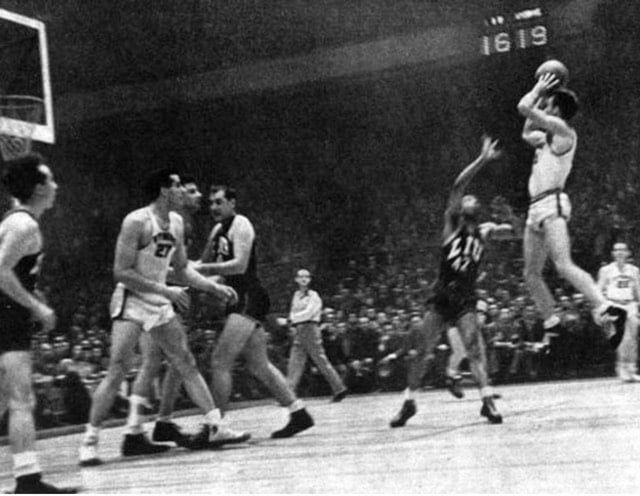
It is perhaps difficult to believe, but the jump shot was not always a part of basketball. It had to be invented. Rise and Fire by Shawn Fury is the story of that invention, which is still — *cough* Steph Curry — being tinkered with in the lab.
In his short post about the book (he calls it “new and fun”), Tyler Cowen shares this excerpt:
But in March 1963, a month before his final game for the Celtics, [Bob] Cousy complained to the Associated Press, “I think the jump shot is the worst thing that has happened to basketball in ten years.” Cousy’s objections? “Any time you can do something on the ground, it’s better,” he said, sounding very much like a coach who would have enjoyed benching Kenny Sailors or Bud Palmer. “Once you leave the ground, you’ve committed yourself.” Jump shot critics discouraged players from flying into the air because they feared the indecision that came when someone left their feet. They feared the bad passes from players who jumped with no clear plan of what they’d do in the air. Staying grounded meant fewer mistakes. It was simply a safer way to play the game, if not as exciting.
1963 was more than 50 years ago, but well into the modern era in the NBA. (I know, pre-merger, but still. We’re not talking George Mikan here.) Wilt Chamberlain, Bill Russell, Oscar Robertson, and Jerry West were all playing, as was a rookie named John Havlicek, who played for the Celtics until the late 70s.
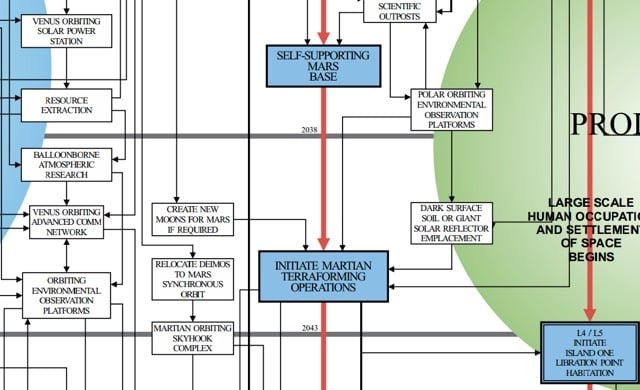
In 1989, a Rockwell engineer named Ron Jones published his Integrated Space Plan, a detailed outline of the next 100 years of human space travel, from continuing shuttle missions in the 1990s to the large scale habitation of Mars. The plan includes all sorts of futuristic and day-dreamy phrases like:
Create new moons for Mars if required
Humanity begins the transition from a terrestrial to a solar species
Humanity commands unlimited resources from the Moon and asteroids
Space drives global economy
Independent spacefaring human communities
Wired has a good look at how the plan came to be.
The graphic is divided into nine columns that show, in chronological order, the path toward human exploration of deep space. The center row of boxes, the “critical path,” outlines the major milestones Jones decided were attainable within the next century of space travel; the boxes to the left and right of the critical path are support elements that must be realized before anything on the critical path can happen. The Integrated Space Plan can be read top to bottom and left to right. The big circles intersecting the boxes are the the plan’s overarching long-range goals, which include things like Humanity begins the transition from a terrestrial to a solar species and Human expansion into the cosmos. In many ways, it’s a graphical to-do list.
The keen observer will note that we are waaaaay behind in the plan. A lunar outpost was supposed to be up and running before 2008 and a self-supporting lunar base is due to happen in the next year or two. Can Musk and Bezos get us back on track? (via @ftrain)
Using behind-the-scenes footage shot over the past decade, Magnus is a feature-length documentary about reigning world chess champion Magnus Carlsen.
From a young age Magnus Carlsen had aspirations of becoming a champion chess player. While many players seek out an intensely rigid environment to hone their skills, Magnus’ brilliance shines brightest when surrounded by his loving and supportive family. Through an extensive amount of archival footage and home movies, director Benjamin Ree reveals this young man’s unusual and rapid trajectory to the pinnacle of the chess world. This film allows the audience to not only peek inside this isolated community but also witness the maturation of a modern genius.
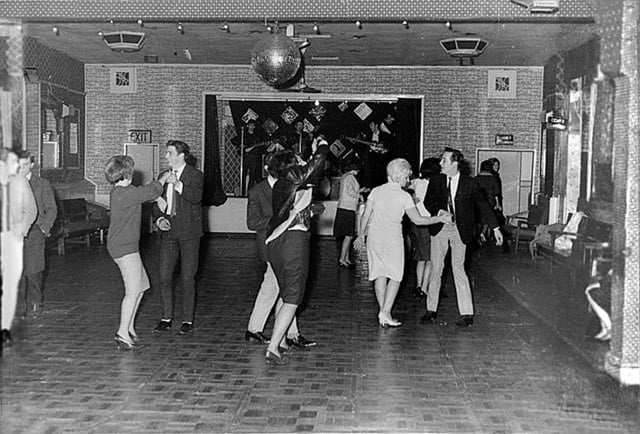
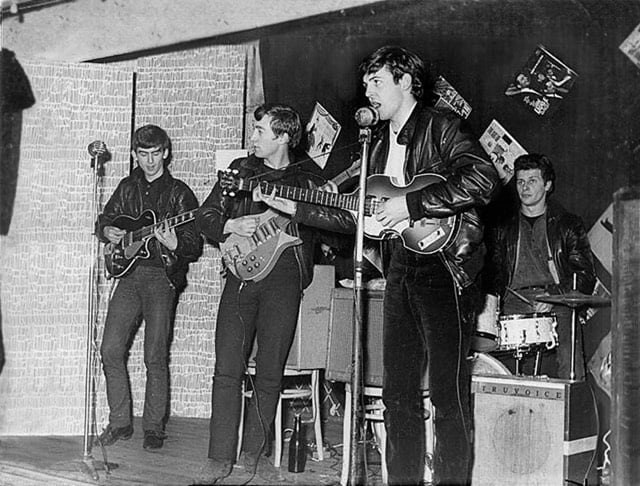
You’ve got to start somewhere, and for The Beatles, that somewhere included Palais Ballroom in Aldershot, England, where they played in front of only 18 people in 1961.
When the Beatles arrived after being driven nine hours from Liverpool by Leach’s friend Terry McCann, their posters were nowhere to be found, and they had to wait to be let into the venue.
That night, the Beatles played their usual covers of Chuck Berry and Jerry Lee Lewis to about 18 very bored people.
Everybody hates management-speak and corporate jargon, but here are some terms that people used to think of as horrible jargon that we all got used to. Maybe one day we’ll all be leveraging deliverables without a second thought.
(via @mulegirl)
Using traditional cinematography, characters are not usually confined to the bottom third of the screen, crammed all the way in the corner, or placed right at the edge of the screen, looking offscreen. But rules are meant to be broken and the director of photography for Mr. Robot uses these unconventional shots to tell the audience about what’s happening on the screen.
P.S. Season 2 is coming in July.
P.P.S. I love that episode titles for season 1 are modeled after the filenames of pirated videos on BitTorrent: eps1.0_hellofriend.mov, eps1.4_3xpl0its.wmv, eps1.7_wh1ter0se.m4v, etc.
P.P.P.S. Tony Zhou of Every Frame a Painting doesn’t like the framing in Mr. Robot, called it a gimmick. I’m ashamed to admit that I didn’t even notice the unusual framing when I watched it. I am flunking out of internet film school, aren’t I? :(
Jeff Seal digs through garbage bags outside of NYC grocery stores, delis, bakeries, and supermarkets to find perfectly good food that’s been thrown out.
A ranking of 109 superhero movies. Spider-Man 2 at #3?!! No, no, no.
Elena Ferrante, the mysterious Italian novelist of the critically acclaimed Neapolitan Novels, is coming out with a children’s book called The Beach at Night.
Elena Ferrante returns to a story that animated the novel she considers to be a turning point in her development as a a writer: The Lost Daughter. But this time the tale takes the form of a children’s fable told from the point of view of the lost (stolen!) doll, Celina.
The book has been out in Italy since 2007, but with so much interest in Ferrante (and her true identity), the English language version is now on its way.
BTW, I started reading the Neapolitan Novels last week and have barely put them down since…I should finish the second book tonight. So good.
Founding Fathers is a full-length documentary film about the history of hip hop narrated by Public Enemy’s Chuck D. Everyone knows that hip hop originated in the Bronx. What this film presupposes is, maybe it didn’t? Maybe hip hop started even earlier than commonly thought in places like Brooklyn with DJs like Grandmaster Flowers.
I don’t know if this film ever found release anywhere…it’s not even on IMDB or Wikipedia. (via @sampotts)
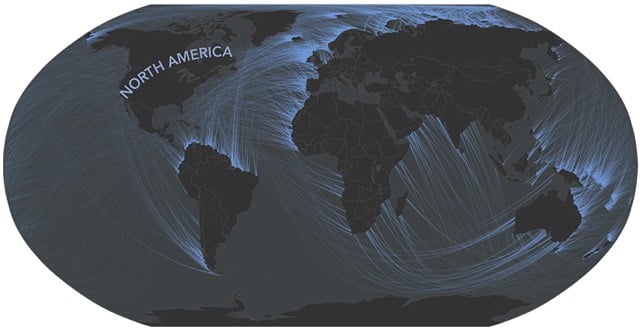
Beyond the Sea is a neat project by Andy Woodruff that visualizes what lies across the ocean from the world’s coastlines. For instance, standing on the coast in North America looking straight out, you might see Brazil or the west coast of Africa, but also the east coast of Africa, India, and even Iran.
In the northern reaches of Newfoundland, near the town of St. Anthony, is the Fox Point Lighthouse. I’ve never been there, but I know it has one of the most impressive ocean views in the world. If you face perpendicular to the right bit of rocky coastline there and gaze straight across the ocean, your mind’s eye peering well beyond the horizon, you can see all the way to Australia.
What’s really across the ocean from you when you look straight out? It’s not always the place you think.
Stewart Brand wrote a summary of a seminar given by Jane Langdale about how the efficiency of photosynthesis might be improved for some of the world’s plants, particularly rice.
Most plants use what’s called C3 photosynthesis to produce sugars and starch, but the process is not very efficient. Some plants, like corn and sugarcane, have evolved the capability to produce sugars and starch using the much more efficient C4 photosynthesis process. So if you could modify rice to use C4 instead of C3, yields would increase dramatically.
Rice is a C3 plant — which happens to be the staple food for half the world. If it can be converted to C4 photosynthesis, its yield would increase by 50% while using half the water. It would also be drought-resistant and need far less fertilizer.
You can read more about the efforts in developing C4 photosynthesis in Technology Review.
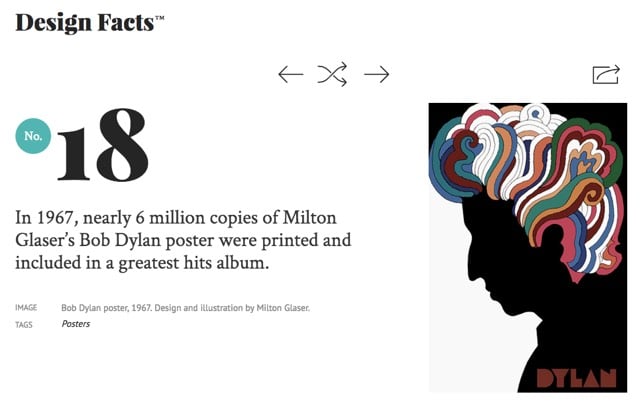
Design Facts is just what it says on the tin.
Design Facts is a platform for sharing the inspiring, shocking, passionate, brilliant, revolutionary, carefully crafted and relatively young history of our craft, all in bite-sized servings.
Warning, once you start reading, you’re probably not going to be able to stop until you’ve seen all 135 facts. (Also, there’s is something charmingly old school about this site. Sure, it’s a slideshow, but in a 1997 sort of way.)
Vanity Fair had Sam Roberts, an obituary writer from the NY Times, come up with an obit for Jesus, as it might have been written 2000 or so years ago.
His father was named Joseph, although references to him are scarce after Jesus’s birth. His mother was Miriam, or Mary, and because he was sometimes referred to as “Mary’s son,” questions had been raised about his paternity.
He is believed to have been the eldest of at least six siblings, including four brothers-James, Joseph, Judas, and Simon-and several sisters. He never married-unusual for a man of his age, but not surprising for a Jew with an apocalyptic vision.
The “about 33” in reference to his age is a nice touch.
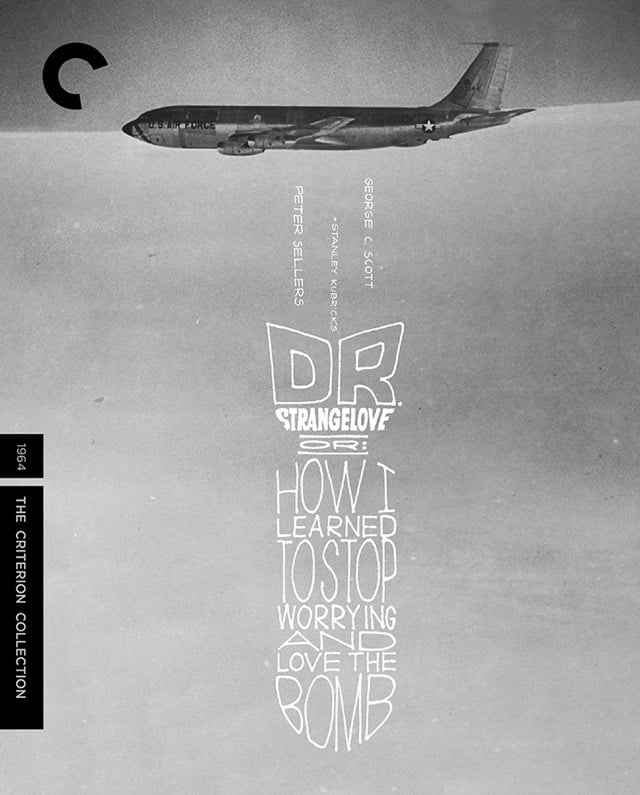
The Criterion Collection is coming out with a Blu-ray version of Stanley Kubrick’s Dr. Strangelove, Or: How I Learned to Stop Worrying and Love the Bomb. Features include a restored 4K digital transfer and a bunch of interviews and short documentaries about the film. Strangelove is one of my top two favorite films of all time. (via df)
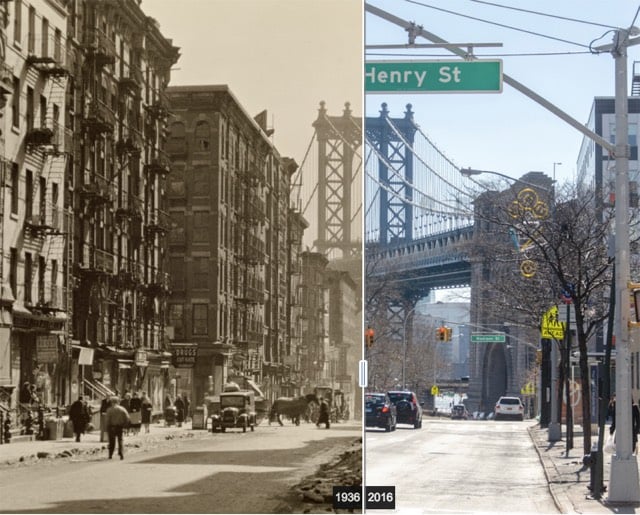
The WSJ dispatched Matthew Riva to re-shoot classic NYC street scenes first captured by Berenice Abbott in the 1930s.
One of the things that a number of people commented on after seeing The Force Awakens (including me) was that the movie seemed to be a remix or an homage to the original Star Wars.
With The Force Awakens, JJ Abrams did the same thing, but instead of pulling from Flash Gordon and Kurosawa like Lucas did, he pulled from what he grew up with as a kid and in film school…Star Wars and Spielberg. In a way, The Force Awakens is a reboot of the original 1977 Star Wars, similar plot and all. And even if it isn’t a true reboot, it sure does rhyme.
Although some of the comparisons are a stretch, this video does a nice job highlighting the visual similarities of the two movies.
Related: Kenji Lopez-Alt took off his food nerd hat for a second and donned his Star Wars nerd hat with this piece at Medium: Rey is a Palpatine.
Apple turns 40 years old next week on April 1. To celebrate in their typical “don’t dwell on the past but whoa look at all the cool stuff we’ve done” fashion, Apple debuted a 40-second commercial at an event earlier this week featuring 40 significant things from the company’s history. Stephen Hackett annotated each of things in the video.
April 1, 1976: Apple Computer, Inc. is founded.
The Happy Mac used to greet you as your machine booted up. It got replaced way back in 2002.
iMac: The computer that saved Apple.
The iPod mini made music fashionable and the iPod nano made it colorful.
Multi-Touch: If you see a stylus, they blew it!
Touch ID: Unlock your device with just your fingerprint.
Hackett also notes only a handful of products from the non-Jobs era Apple are featured. (via df)
Update: Former Apple executive Jean-Louis Gassée wrote about Apple’s 40th. I liked these two paragraphs:
Apple 2.0 began in late 1996 when Jobs managed what turned out to be a reverse acquisition of Apple. We owe much gratitude to then-CEO Gil Amelio who unwittingly saved the company hiring Steve to “advise” him. Jobs’ advice? Show Amelio the door and install himself as “interim” CEO. Jobs then made an historic deal with Bill Gates which gave him time to let his team of NeXT engineers completely rebuild the Mac OS on a modern Unix foundation. Steve also rummaged through the company and found Jony Ive who gave us the colorful iMacs, the first of a series of admired designs.
What followed is recognized as the most striking turnaround story in any industry, one that has been misunderstood and pronounced as doomed at almost every turn. The list of Jobs’ “mistakes” includes killing the Macintosh clone program by canceling Mac OS licenses; getting rid of floppies and, later, CD/DVD-ROMs (mostly); entering the crowded MP3 player field; introducing iTunes and the micropayment system; the overpriced, underpowered $500 iPhone; the stylus-free iPad (ahem)…
Update: To mark the anniversary, Apple flew a pirate flag over their headquarters in honor of the original Macintosh team.
The building looked pretty much like every other Apple building, so we wanted to do something to make it look like we belonged there. Steve Capps, the heroic programmer who had switched over from the Lisa team just in time for the January retreat, had a flash of inspiration: if the Mac team was a band of pirates, the building should fly a pirate flag.
A few days before we moved into the new building, Capps bought some black cloth and sewed it into a flag. He asked Susan Kare to paint a big skull and crossbones in white at the center. The final touch was the requisite eye-patch, rendered by a large, rainbow-colored Apple logo decal. We wanted to have the flag flying over the building early Monday morning, the first day of occupancy, so the plan was to install it late Sunday evening.
In this clip from Koyaanisqatsi, Andy Kelly replaced Philip Glass’ score with music from the Wii Shop Channel. As he notes, the movie doesn’t seem quite as haunting now. (via @daveg)
The latest video from Primitive Technology (previously, awesome) is about making a bow and set of arrows from scratch.
The bow is 1.25 m (55 inches) long and shoots 60 cm (2 feet) long arrows. I don’t know the draw weight — safe to say greater than 15 kg (35 pounds) perhaps? The stave was made from a tree that was cut with a stone axe and split in half with a stone chisel. I don’t know it’s name but it’s common here and is the same wood I use for axe handles.
I love how these videos are shot and edited. The editing feels very contemporary — quick-fire pacing with very little superfluous material — but the lack of narration, dialogue, or explanatory text feels old school. Reminds me of the super-effective and efficient Buzzfeed Tasty vids.
People seem to like this, but I don’t know…I’ve got a bad feeling about it. Batman in The Lego Movie was cool and all, but is it enough to hang an entire film around? Not that this question isn’t totally moot…in 10 years, every movie will feature Lego superheroes.
Update: And now there’s a second trailer? Already?
At this rate, we’ll be able to cut the whole movie together by the time it comes out next year, just from the trailers.
Update: The first full trailer is out and, sure, I’ll go see this with the kids when it opens.
(via Trailer Town which also has a few other Lego Batman trailers, so why don’t you go watch them there because Trailer Town is soooo coooool. Oh, oh, you’re leaving? You know what? Fine, go. That’s right go. If you like F’ING TRAILER TOWN SO MUCH, JUST FUC — [sorry, Jason has been invited into the cooldown room for awhile])
A man in Germany rigged a camera to take a photo 10 minutes after sunrise every day for an entire year. Phil Plait explains the Sun’s motion:
The video starts at the vernal equinox in 2015, on March 21, and runs through to March 20, 2016. The Sun rises due east, then moves left (north) every morning at a rapid rate. You can then see it slow, stop at the June solstice, and then reverse direction, moving south (right). It slows and stops again at the December solstice (note the snow on the rooftops!), then reverses, moving north again. The weather gets pretty bad, but you can still see enough to get a sense that the Sun moves most rapidly at the equinoxes and most slowly at the solstices, just as I said.
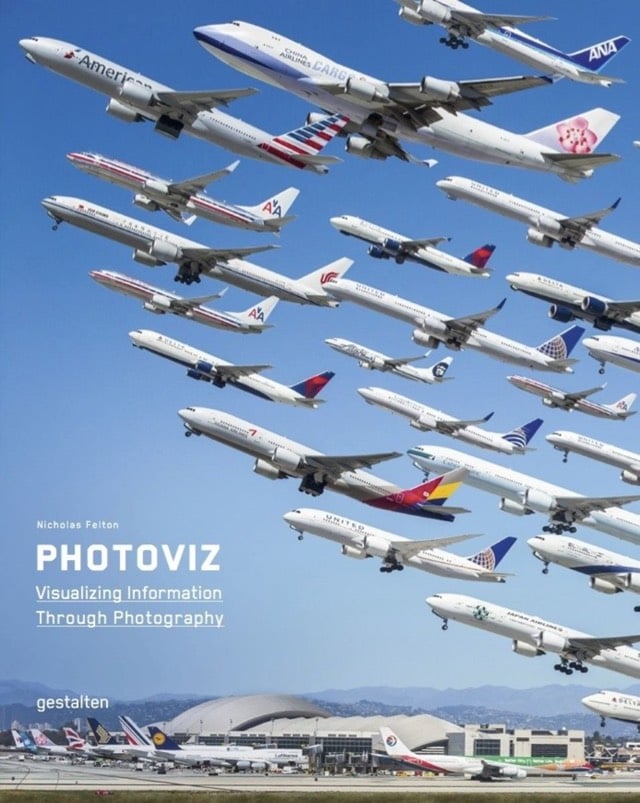
Nicholas Felton is out with a new book on information visualization and photography called Photoviz.
The stories told with graphics and infographics are now being visualized through photography. Fotoviz shows how these powerful images are depicting correlations, making the invisible visible, and revealing more detail than classic photojournalism.
Ahhhhh, this looks amazing. And is right up my alley as well…I quickly looked through some of the images featured in the book and I’ve posted many of them here before (see time merge media for instance). Can’t wait for this one to arrive.
Picasso Inc. “If Picasso were alive today, he would be one of the 10 wealthiest men in the world.”
This is an experiment about expectations. Six photographers are given an assignment to shoot photos of one man. Each photographer is told a different story about the man: he’s a millionaire, a lifesaver, an ex-con, a fisherman, a psychic, a recovering alcoholic. As you might expect, the photos taken by the different photographers of the same person are pretty different.
Older posts





Socials & More