Entries for May 2015
Google just announced Project Jacquard, an effort to introduce interactivity into textiles. Swipe your sofa cushion to change the channel on your TV,1 tap a special “knock” on your collar to unlock your front door, or control your party’s playlist with a few taps of your pants.
Update: Google and Levi’s are collaborating on a jacket that uses the Project Jacquard technology. They announced the collaboration last year:
With the Levi’s Commuter jacket, introduced in 2016, the technology comes to life through a conductive fabric and a Bluetooth device that attaches to the garment. The connected area consists of 15 threads on the left sleeve, just visible enough for you to know where to touch to trigger actions from a paired smartphone.
They just announced the price and availability: $350 and fall 2017.
Jellyfish Lake in Palau is home to approximately 13 million jellyfish. Their mild stings mean you can snorkel in their midst and capture beautifully surreal scenes like this:
If I had a bucket list, I think a swim in Jellyfish Lake w/ classical accompaniment might be on it. (via colossal)
Oh, this is my favorite thing of the month: Shelby Mitchusson performing Eminem’s Lose Yourself in American Sign Language.
Great song and a great performance. Em, sign this woman up for your next tour! (via devour)
Update: Amber Galloway Gallego is an American Sign Language interpreter who specializes in doing rap and hip-hop concerts.
As an American Sign Language interpreter who specializes in music performance, Gallego has interpreted over 300 rap, R&B, and rock concerts, and has worked with everyone from Aerosmith to Destiny’s Child. After a deaf friend told her that “music wasn’t for deaf people,” she embarked on a quest to prove otherwise; today, she’s hired by major music festivals all over the United States to make auditory performances more relatable for the deaf.
To do so, she employs a tireless mixture of hand signs, facial expressions, body movement, and sensibility.
I saw Mad Max: Fury Road yesterday (enjoyed it) but have a few questions.
1. With gasoline in such short supply, I’m surprised the various groups in the movie didn’t take more advantage of solar power to generate energy for electric vehicles and such. Sunshine is obviously abundant in post-apocalyptic Australia and from the looks of what was scavenged from before the nuclear war and the ingenuity on display in getting what they found to function, they should have been able to find even rudimentary solar cells and get them to work.
2. Speaking of energy scarcity, I wonder if the troop-pumping-up and opponent-intimidating function of the flamethrowing guitar player was worth all of the fuel spewed out of the end of his instrument and energy consumed by the incredible number of speakers on his rig.
3. The roads in the movie were in remarkable shape, aside from the swampland. Who was responsible for their upkeep? Even dirt roads need maintenance or they develop potholes and washboarding. And for what reason were they kept in such good condition outside of the Citadel/Gas Town/Bullet Farm area? Aside from Furiosa’s Rig, the chase party, and two smallish motorcycle gangs, I saw no other vehicular traffic on the roads…and who would have been semi-regularly traveling out past the canyon anyway? To where? For what?
4. What was the political and economic arrangement between the Citadel, Gas Town, and the Bullet Farm? Did the Citadel trade their water and crops for gas and bullets? Or was Immortan Joe, as the defender of the lone source of abundant fresh water in the region, the defacto leader of all three groups? The People Eater and Bullet Farmer certainly came a’running when Joe needed help retrieving his wives. There were obviously other sources of water in the region — how else did the biker gangs survive? — so you’d think that Gas Town and the Bullet Farm could have teamed up to squeeze Joe into giving them a better deal or even overthrowing him. Point is, there seemed to be a surprising lack of political friction between the three groups, which seems odd in an environment of scarcity.
5. Surely land was plentiful enough that large solar stills could have generated enough fresh water for people to live on without having to rely on the Citadel for it.
Update: Reddit has a go at answering some of these questions. (via @pavel_lishin)
Turns out, if you take Junkie XL’s soundtrack to Mad Max: Fury Road and pair it with a train chase scene from Buster Keaton’s silent film masterpiece The General, it works pretty well.
While researching this post on some weekend reading from David Foster Wallace, I stumbled across Way More than Luck, an anthology of notable commencement speeches.
Here, in an anthology of some of the finest of the genre, brilliant creative minds in every sector offer their wisdom: David Foster Wallace on living a compassionate life, Debbie Millman on the importance of taking risks, Michael Lewis on the responsibility that good fortune merits — and so many other greats. Some of this advice is grand (believe in the impossible), and some of it is granular enough to check off a life list (donate five percent of your money or your time).
See also The Top 7 Commencement Speeches of All Time.
This video features a man who plays with marbles for several hours each day, his custom-built marble alley, and his very patient & understanding wife.
The man has been playing with marbles for 60 years and owns over 1500 marbles, which are stored according to how quickly they move down the track. (via boing boing)
Update: I think this guy’s head would explode if he saw this mega marble run with 11,000 marbles.
(via digg)
It is what it is. What’s done is done. My name is not my name. My name is my name.1 Derek Donahue found all of the tautologies from The Wire and collected them into one video:
These types of phrases characterize the immovable forces the characters feel govern their lives and actions: poverty, bureaucracy, addiction, institutional corruption, ethnicity, etc.
This is smart: a startup design service called BentoBox just for designing restaurant websites. Entrepreneur magazine recently profiled the service.
The site conveys important information — location, hours and a phone number are featured prominently, as are frequently asked questions — in a visually appealing way that expresses the restaurant’s high-end yet relaxed atmosphere while also making you hungry.
This is what a restaurant website should do — namely, serve as an extension of its brick-and-mortar presence — and yet so many miss the mark, says Krystle Mobayeni. For years, Mobayeni ran her own web design agency. Clients included Rent the Runway, Sailor Jerry, the School of the Visual Arts, plus a few restaurants, such as David Chang’s Momofuku. While companies in other industries usually had a good handle on their web presence, Mobayeni noticed that the restaurants were struggling. There wasn’t a good platform that anticipated their needs and gave them an easy way to present themselves on the web, and so often, their sites suffered for it.
The number has been steadily dwindling the last few years, but it’s surprising how many restaurant sites are still Flash, don’t work on mobile, and make you work to find the location and opening hours. Some examples of Bento’s work: Parm, Fedora, and The Meatball Shop. Damn, now I’m hungry. (via @adamkuban)
Alexey Kondakov takes figures from classical paintings, places them in contemporary scenes, and posts the results on Facebook. Think of cherubs riding the subway, that sort of thing.
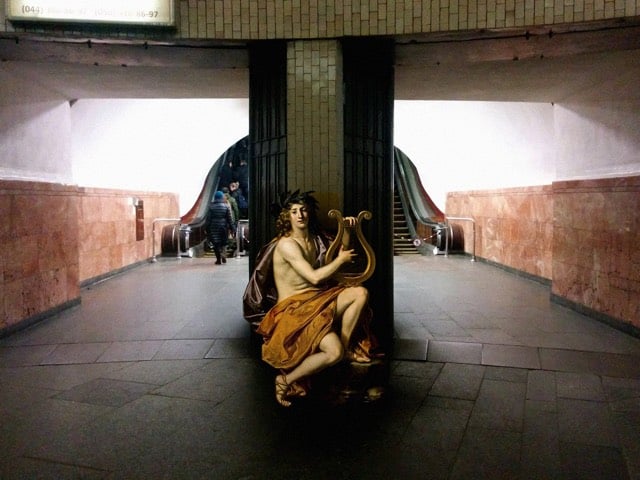

(via colossal)
Our national full-justification of text nightmare is over…Amazon has finally ditched fully justified text on the Kindle.
But the new app finally gives the boot to the hideous absolute justification of text that the Kindle’s been rocking since 2007. The new layout engine justifies text more like print typesetting. Even if you max out the font size on the new Kindle app, it will keep the spacing between words even, intelligently hyphenating words and spreading them between lines as need may be.
The layout engine also contains some beautiful new kerning options. They’re subtle, but once you see them, you can’t unsee them: for example, the way that the top and bottom of a drop cap on the Kindle now perfectly lines up with the tops and bottoms of its neighboring lines. Like I said, it’s a small detail, but one that even Apple’s iBooks and Google Play Books doesn’t manage to quite get right.
Huzzah! The company is still working through a backlog of converting titles to the new layout, so give it some time if the changes aren’t showing up. (via nextdraft)
In 2015, texting reigns supreme. “Who saw that coming? The return of the telegram? Pretty much nobody.”
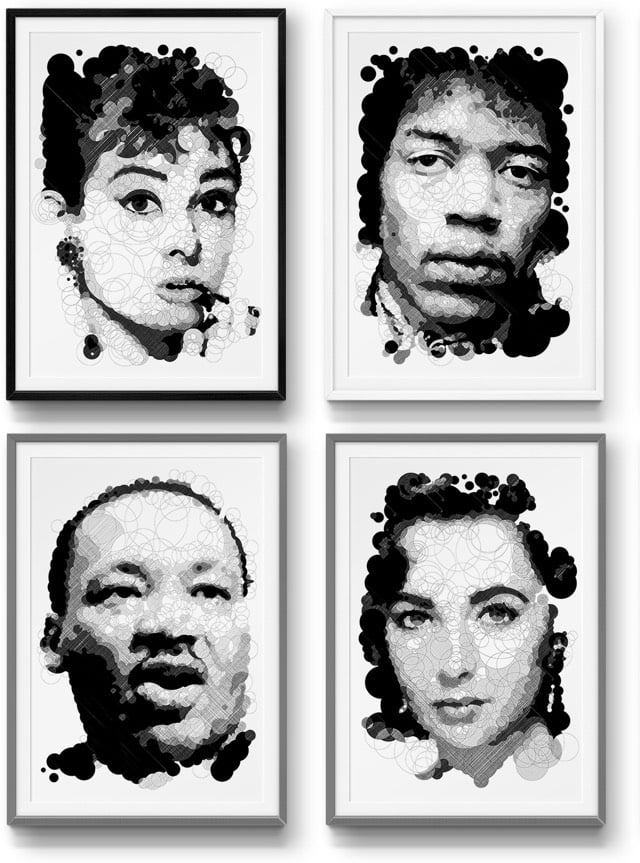
This looks cool…Thomas Pavitte has reinvented the paint-by-numbers with Querkles. Instead of simple numbered areas to fill in, Querkles cleverly uses overlapping circles that you fill in with different shading techniques or colors to reveal hidden faces. Here’s a short demo of how it works:
Pavitte has two different books available: Querkles and Querkles Masterpiece, featuring famous faces from the art world. See also coloring books for adults.
“The more people think you’re really great, the bigger the fear of being a fraud is.” That’s the most resonant line for me from the first trailer for The End of the Tour, the story of a five-day interview between reporter David Lipsky and David Foster Wallace that takes place in 1996, just after Infinite Jest came out.
The movie is based on a book Lipsky published called Although Of Course You End Up Becoming Yourself, which I read and thought was great.1 Jesse Eisenberg plays Lipsky and Jason Segel does as much justice to Wallace as one could hope for, I think. I am cautiously optimistic that this movie might actually be decent or even good. (via @jcormier)
Dior and I is a fashion documentary about the first haute couture collection designed by Christian Dior’s new artistic director. But from the looks of the trailer, you don’t have to know or care about the fashion industry to get something out of watching a group of people accomplish something creative, difficult, and political under extreme time constraints.
The film is playing at select theaters around the US and should be available next month for streaming and digital download. (via russell davies)
Shuttered storefronts. Abandoned retail locations. Small businesses that fall like the House of Cards & Curiosities on Eighth Avenue. These are the signs of urban blight we usually associate with economic downturns or poor, forgotten neighborhoods. But these shuttered storefronts are in one of America’s wealthiest neighborhoods; NYC’s West Village. As The New Yorker’s Tim Wu explains, some urban blight emerges when economic times are too good and rents get too high. And we’re not just talking about mom and pop here. Even Starbucks is closing some Manhattan locations due to rent hikes.
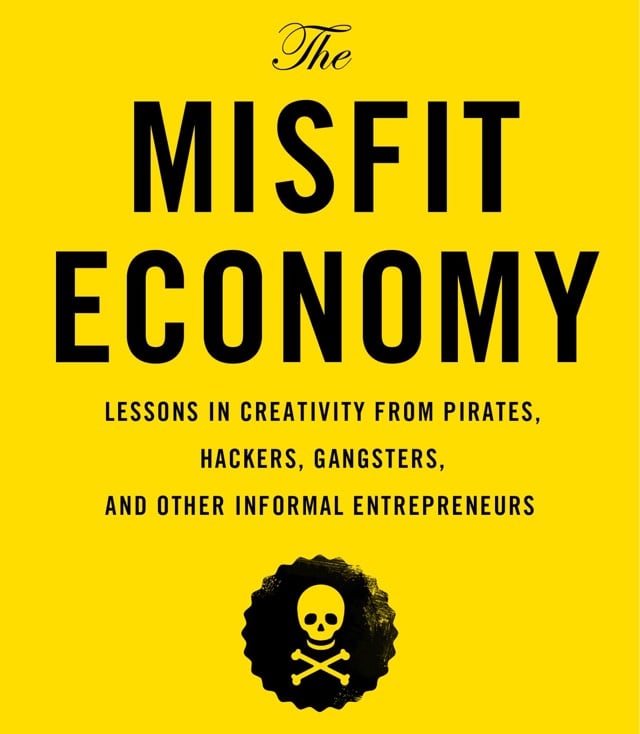
The Misfit Economy looks intriguing; the subtitle is “Lessons in Creativity from Pirates, Hackers, Gangsters and Other Informal Entrepreneurs”.
Who are the greatest innovators in the world? You’re probably thinking Steve Jobs, Thomas Edison, Henry Ford. The usual suspects.
This book isn’t about them. It’s about people you’ve never heard of. It’s about people who are just as innovative, entrepreneurial, and visionary as the Jobses, Edisons, and Fords of the world, except they’re not in Silicon Valley. They’re in the street markets of Sao Paulo and Guangzhou, the rubbish dumps of Lagos, the flooded coastal towns of Thailand. They are pirates, slum dwellers, computer hackers, dissidents, and inner city gang members.
Across the globe, diverse innovators operating in the black, grey, and informal economies are developing solutions to a myriad of challenges. Far from being “deviant entrepreneurs” that pose threats to our social and economic stability, these innovators display remarkable ingenuity, pioneering original methods and practices that we can learn from and apply to move formal markets.
Screentendo is an OS X application that converts a selection of your computer screen into a playable Super Mario Bros game. Here’s a demo using the Google logo:
The source code is here if you want to try it out. (via prosthetic knowledge)
The NY Times has a short documentary on Chris Burden’s Shoot, a conceptual art piece from 1971 in which Burden is shot in the arm by a friend.
Burden passed away earlier this month. (via digg)
University of Minnesota student Daniel Crawford and geography professor Scott St. George have collaborated on a piece of music called Planetary Bands, Warming World. Composed for a string quartet, the piece uses climate change data to determine the musical notes — the pitch of each note is tuned to the average annual temperature, which means as the piece goes on, the musical notes get higher and higher.
(via @riondotnu)
A cleverly constructed mashup of all the major Hollywood studio intros — MGM’s roaring lion, Disney’s castle, Paramount’s flying stars, Miramax’s skyline — into one mega-intro.
(via @pieratt)
The Atlantic has republished and reformatted Host by David Foster Wallace on their website. Originally published in 2005, Host was a profile of talk radio host John Ziegler and contained several layers of footnotes, which are beautifully handled in this new online version.
The Nick Berg beheading and its Internet video compose what is known around KFI as a “Monster,” meaning a story that has both high news value and tremendous emotional voltage. As is SOP in political talk radio, the emotions most readily accessed are anger, outrage, indignation, fear, despair, disgust, contempt, and a certain kind of apocalyptic glee, all of which the Nick Berg thing’s got in spades. Mr. Ziegler, whose program is in only its fourth month at KFI, has been fortunate in that 2004 has already been chock-full of Monsters — Saddam’s detention, the Abu Ghraib scandal, the Scott Peterson murder trial, the Greg Haidl gang-rape trial, and preliminary hearings in the rape trial of Kobe Bryant. But tonight is the most angry, indignant, disgusted, and impassioned that Mr. Z.’s gotten on-air so far, and the consensus in Airmix is that it’s resulting in some absolutely first-rate talk radio.
Yesterday was the 10th anniversary1 of Wallace’s commencement speech at Kenyon College, among the finest ever given IMO.
The point here is that I think this is one part of what teaching me how to think is really supposed to mean. To be just a little less arrogant. To have just a little critical awareness about myself and my certainties. Because a huge percentage of the stuff that I tend to be automatically certain of is, it turns out, totally wrong and deluded. I have learned this the hard way, as I predict you graduates will, too.
That speech is also available as a short book, This Is Water. If you read both of those things and hunger for more, luckily there is so much much more.
I’ve never had the desire to go to business school or get an MBA, but I found this post by Ellen Chisa about what she learned during her first year at Harvard Business School fascinating. It almost nearly sort of makes me want to think about maybe applying to business school.
People often know what they’re good at (it got them where they are!) Unfortunately, things won’t always go well in your career. How you react and recover impacts everyone around you.
One of the best things I did this year was answering these two questions honestly, for myself:
What is my worst self?
When does my worst self come out?
My worst self: critical, impatient, stubborn, cynical, and sarcastic. It comes out when I feel like I’m not in a position to make an impact, and when I feel undervalued in a situation. It also happens if I think I’m fundamentally “right” and someone disagrees. If it goes on for too long I become incredibly apathetic and don’t do anything.
I have a hard time avoiding this, but I am better at catching it now. When I do catch it, I attempt to apologize to the group, move on, and catch it faster the next time.
Knowing yourself wasn’t really something I was taught in school, nor was it emphasized at home, so I was slow to learn my strengths and weaknesses and how to properly apply them to situations in my life. That struggle continues even today.
New kids app: Simple Machines. I’ll be fighting w/ the kids over this one. “No, Daddy’s playing right now…”
Netflix will air a Christmas special starring Bill Murray and directed by Sofia Coppola. That is an amazing collection of proper nouns all together in the same sentence.
Written by Sofia Coppola, Bill Murray and Mitch Glazer and directed by Sofia Coppola, A Very Murray Christmas is described as an homage to the classic variety show featuring Bill Murray playing himself, as he worries no one will show up to his TV show due to a terrible snow storm in New York City. Through luck and perseverance, guests arrive at the Carlyle hotel to help him; dancing and singing in holiday spirit.
(via several kind people)
Wine ratings are all over the place, particularly when price enters the picture. This video explains that the most expensive wine is not always the best tasting wine, but you might prefer it anyway.
(via @riondotnu)
OldNYC offers a map view of old photos of New York City, drawn from the collection at the New York Public Library. This is fantastic, like a historical Google Street View. For instance, there used to be a huge theater on the corner of 7th Avenue and Christopher St, circa 1929:
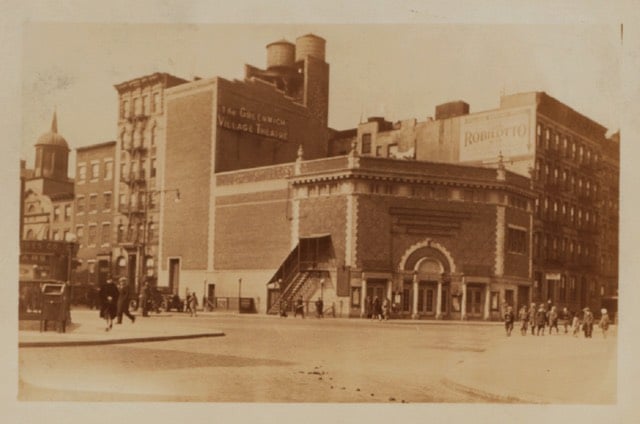
If I didn’t have a thing to do this afternoon, I would spend all day exploring this. So so good. (via @mccanner)
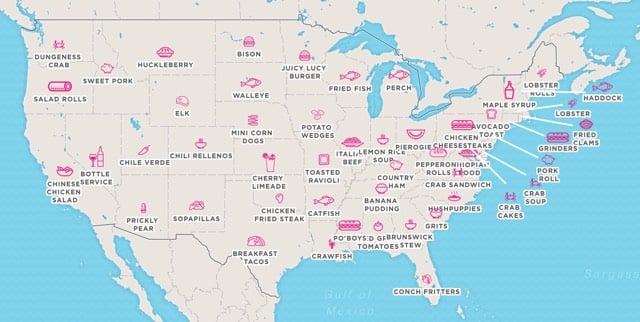
From a Foursquare and Mapbox collaboration, a map of the most popular tastes in each US state.
Every state in the U.S. has a unique flavor, from Chicken Cheesesteak to Chinese Chicken Salad. Foursquare analyzed the data to pinpoint which food or drink is most disproportionately popular in each destination, and worked with Mapbox to create the dynamic map.
Louisiana is crawfish, Vermont is maple syrup, and Texas is breakfast tacos. I love that Nevada is bottle service. All that state wants is to get you drunk in the least fiscally responsible way possible.
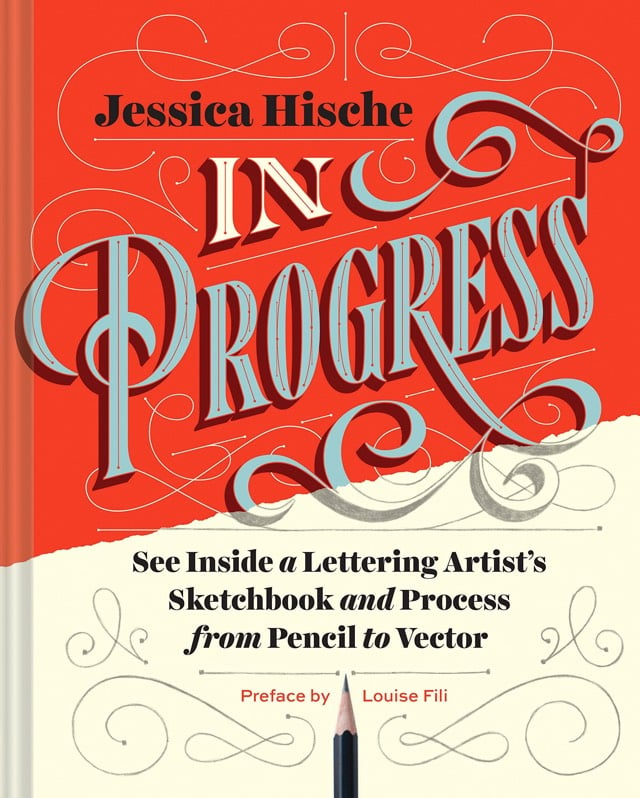
One of my favorite designers, Jessica Hische (she did the film titles for Moonrise Kingdom), is coming out with a new book in September called In Progress: See Inside a Lettering Artist’s Sketchbook and Process, from Pencil to Vector.
This show-all romp through design-world darling Jessica Hische’s sketchbook reveals the creative and technical process behind making award-winning hand lettering. See everything, from Hische’s rough sketches to her polished finals for major clients such as Wes Anderson, NPR, and Starbucks. The result is a well of inspiration and brass tacks information for designers who want to sketch distinctive letterforms and hone their skills.
Hische made a video offering a quick tour of the book:
Looks great!
Miriam Weeks was in the news last year as the Duke freshmen who performed in pornographic movies as Belle Knox. In this five-part documentary video series, Weeks discusses her decision to work in the porn industry and how it has affected her life.
I’m 18 years old, and I travel across the country having sex with people on camera, and every dollar I make goes to tuition. I’ve built a name for myself. I’m building a brand. I love the porn industry. It makes me feel like a strong independent woman. It’s given me back my sense of self.
Probably NSFW, although all the nudity appears to be blurred.
A time lapse of the first three weeks of a bee’s life, from egg to adult, in only 60 seconds.
Some explanation of what’s going on can be found in this video. (via colossal)
Star Wars was a film that literally couldn’t be made; the technology required to bring the movie’s universe to visual life simply didn’t exist.
So George Lucas did what any enterprising young director who was destined to change the movie business would do. He invented a company to invent the technology. Wired’s Alex French and Howie Kahn take you inside the magic factory with the untold story of ILM.
Researchers using the Keck Observatory have discovered a new kind of galaxy that are large but filled with relatively few stars.
“If the Milky Way is a sea of stars, then these newly discovered galaxies are like wisps of clouds”, said van Dokkum. “We are beginning to form some ideas about how they were born and it’s remarkable they have survived at all. They are found in a dense, violent region of space filled with dark matter and galaxies whizzing around, so we think they must be cloaked in their own invisible dark matter ‘shields’ that are protecting them from this intergalactic assault.”
The night sky in such galaxies would look a lot like our skies do in large cities:
“If there are any aliens living on a planet in an ultra-diffuse galaxy, they would have no band of light across the sky, like our own Milky Way, to tell them they were living in a galaxy. The night sky would be much emptier of stars,” said team member Aaron Romanowsky, of San Jose State University.
(via gizmodo)
In The Plot Against Trains, Adam Gopnik muses about how infrastructure in America has become dilapidated in part because we (or at least much of we) believe little good can come from the government.
What an ideology does is give you reasons not to pursue your own apparent rational interest — and this cuts both ways, including both wealthy people in New York who, out of social conviction, vote for politicians who are more likely to raise their taxes, and poor people in the South who vote for those devoted to cutting taxes on incomes they can never hope to earn. There is no such thing as false consciousness. There are simply beliefs that make us sacrifice one piece of self-evident interest for some other, larger principle.
What we have, uniquely in America, is a political class, and an entire political party, devoted to the idea that any money spent on public goods is money misplaced, not because the state goods might not be good but because they would distract us from the larger principle that no ultimate good can be found in the state. Ride a fast train to Washington today and you’ll start thinking about national health insurance tomorrow.
The ideology of individual autonomy is, for good or ill, so powerful that it demands cars where trains would save lives, just as it places assault weapons in private hands, despite the toll they take in human lives. Trains have to be resisted, even if it means more pollution and massive inefficiency and falling ever further behind in the amenities of life — what Olmsted called our “commonplace civilization.”
The way he brings it back to trains at the end is lovely:
A train is a small society, headed somewhere more or less on time, more or less together, more or less sharing the same window, with a common view and a singular destination.
Well, except when you’re on that Snowpiercer train. Although in the end (spoiler!), Curtis brought the train’s segregated society back to “a common view and a singular destination” by crashing it and killing (almost) everyone on it. Hopefully America isn’t headed toward the same end.
For the 30th anniversary of Spin, the editors compiled a list of the 300 best albums released in the past 30 years. The top 20 includes albums by Nirvana, Pixies, Bjork, Radiohead, Beastie Boys, and DJ Shadow. The #1 album is…….. nevermind, you should go find out for yourself. (via @jblanton)
Conrad Milster is the chief engineer at the Pratt Institute, which means he’s in charge of the 19th-century steam engines that provide the school’s heat and hot water. Dustin Cohen made this lovely short film about Conrad, an oddball who fits right into his life.
On the topic of New York, Conrad says, “It sucks, but it’s the Big Apple!” (via acl)
Richard Stallman, the free software activist and author of some of the world’s most used and useful software, probably uses his computer and the Internet a lot differently than you do. For starters, ethics and privacy concerns trump his need for convenience.
I am careful in how I use the Internet.
I generally do not connect to web sites from my own machine, aside from a few sites I have some special relationship with. I usually fetch web pages from other sites by sending mail to a program (see git://git.gnu.org/womb/hacks.git) that fetches them, much like wget, and then mails them back to me. Then I look at them using a web browser, unless it is easy to see the text in the HTML page directly. I usually try lynx first, then a graphical browser if the page needs it (using konqueror, which won’t fetch from other sites in such a situation).
I occasionally also browse using IceCat via Tor. I think that is enough to prevent my browsing from being connected with me, since I don’t identify myself to the sites I visit.
I never pay for anything on the Web. Anything on the net that requires payment, I don’t do. (I made an exception for the fees for the stallman.org domain, since that is connected with me anyway.)
I would not mind paying for a copy of an e-book or music recording on the Internet if I could do so anonymously, and it were ethical in other ways (no DRM or EULA). But that option almost never exists. I keep looking for ways to make it happen.
Kobe? Shaq? LeBron? No, Tim Duncan is the best NBA player since Jordan.
Software from a group at the University of Washington and Google discovers time lapses lurking in photos posted to the internet. For example, their bot found hundreds of photos of a Norwegian glacier on the Web, taken over a span of 10 years. Voila, instant time lapse of a retreating glacier.
First, we cluster 86 million photos into landmarks and popular viewpoints. Then, we sort the photos by date and warp each photo onto a common viewpoint. Finally, we stabilize the appearance of the sequence to compensate for lighting effects and minimize flicker. Our resulting time-lapses show diverse changes in the world’s most popular sites, like glaciers shrinking, skyscrapers being constructed, and waterfalls changing course.
This is like a time machine, allowing you to go back 5 or 10 years and position a camera somewhere to take photos every few days or weeks. Pretty clever.
Older posts





Socials & More