kottke.org posts about video

For the New Yorker, photographer David Williams visited the 2018 World Livestock Auctioneer Championship in Bloomington, Wisconsin. Amanda Petrusich wrote about the competition and his photos here.
This year’s champion, Jared Miller, of Leon, Iowa, took home a customized 2018 Chevrolet Silverado truck to drive for his yearlong reign; he also won six thousand dollars, a world-champion belt buckle, a world-champion ring, a money clip, and a bespoke leather briefcase. In interviews, Miller, like many successful auctioneers, appears personable and polite. When he begins his chant, his mouth only opens so much — when you’re talking as fast as he is, the tongue does most of the work — but what comes out sounds something like a undulating yodel, or a less guttural take on the Inuit tradition of throat singing. Once you tune in to its particular rhythms — and it can take a few minutes to acclimate to the crests and swells — the prices become discernible: “One dollar bid, now two, now two, would you give me two?”
You can listen to Miller’s winning chant on Facebook.
I hadn’t realized Werner Herzog made a 45-minute documentary about auctioneers at the same competition in 1976 called How Much Wood Would a Woodchuck Chuck. You can watch the whole thing on YouTube, although the audio isn’t synced that well:
According to the article, Herzog called auctioneering “the last poetry possible, the poetry of capitalism”. This poetry can be difficult to follow, so this auctioneer explained what he and his fellow chanters are saying up on the stand.
Rap music also has a claim on being “the poetry of capitalism” and Graham Heavenrich had the genius idea of layering auctioneer chants over beats; you can listen in on Instagram or with this compilation:
Ok and just for kicks, when I was searching for the auctioneer beats thing on YouTube, I ran across this young woman rapping the entirety of Rap God by Eminem (the part starting at 4:26 = fire). Sign her up for the 2019 World Livestock Auctioneer Championship!
The New Yorker asked three professional poker players to give blow-by-blow accounts of their most memorable hands. Aside from the rules, I know almost nothing about poker and have played Texas Hold’em for about one total hour in my life — guess how I did! — so I actually learned a lot from this video. And the third player’s explanation of his hand and his thought process was fascinating.
See also Scrabble pros recount their best and worst plays.
English is a marvelously and maddeningly inconsistent language. The words “rough”, “though”, “thought”, and “through” all contain “ough” but pronounced in a different way.
In this video, Aaron Alon gradually normalizes the vowel sounds in his speech down to one sound per letter. The end result sounds a little like Werner Herzog doing an impression of someone from Wales doing an impression of an Italian who doesn’t speak English that well. Which makes sense because that’s pretty much how the language came together in the first place!
As a fundraiser for the Leukemia & Lymphoma Society, Micah Sherman and Mark Stetson produced a web series called The Bob Ross Challenge in which 13 comedians attempt to paint along with Bob Ross as he does his thing with the trees and little fluffy clouds. Here’s the first episode, featuring Aparna Nancherla:
I feel like she does a lot better than I would have! The episodes are each less than 2 minutes long…you can burn through the whole season in about 20 minutes. Or if you want to try the challenge yourself, you can watch every episode of The Joy of Painting on YouTube. (via open culture)
From Jenny Yang’s Bad Appetite series, a group of Vietnamese critique questionable recipes for phở from American recipe sites that, for instance, try to substitute daikon radish for the noodles?
Politely, to not hurt your feelings, I’ll eat it.
The title is wrong. The whole thing, the recipe is fine. You want to eat, whatever, you cook it. Not with that name. Wrong name. Rename it. This one’s “Japanese soup”.
Don’t skip the last third of this. After politely dissing the recipes, Yang’s subjects talk about the importance of food in Vietnamese culture and share stories of how they came to the United States.
See also Koreans Learn to Make Kimchi from Brad at Bon Appetit.
Are wormholes science or just science fiction? As this video by Kurzgesagt shows, they’re actually a little bit of both. Einstein and string theory both posit that these “short cuts” through spacetime could exist, but finding or building a stable wormhole, a la Star Trek, is another matter altogether.
In the description of the video, they link to a pair of papers published by Michael Morris and Kip Thorne in the late 80s: Wormholes, Time Machines, and the Weak Energy Condition and Wormholes in spacetime and their use for interstellar travel: A tool for teaching general relativity. For a high school physics class, I gave a presentation on wormholes & time travel and I’m pretty sure I used at least one of those papers as a reference. The presentation also included a clip of Bill & Ted’s Excellent Adventure. The teacher gave me a B+ — he felt the presentation was excellent (*guitar riff*) but that I had, in spite of the movie clip, “lost most of the other students” and should have chosen a more suitable topic.
Add finding Waldo to the long list of things that machines can do better than humans. Creative agency Redpepper built a program that uses Google’s drag-and-drop machine learning service to find the eponymous character in the Where’s Waldo? series of books. After the AI finds a promising Waldo candidate, a robotic arm points to it on the page.
While only a prototype, the fastest There’s Waldo has pointed out a match has been 4.45 seconds which is better than most 5 year olds.
I know Skynet references are a little passé these days, but the plot of Terminator 2 is basically an intelligent machine playing Where’s Waldo I Want to Kill Him. We’re getting there!
Update: Prior art: Hey Waldo, HereIsWally, There’s Waldo!
From CBC’s This Is That, a satirical presentation that is
I’m now going to come back to the center of the stage and give you some unremarkable context about how I became a thought leader. If it’s ok with you, I’d like to pace while telling you this story.
I chuckled throughout this, but deep down I’d love to have the stage presence to give a talk like this. Whenever I’ve done talks in the past, my brain always convinces me that I’m about to be eaten by a lion — “flee flee flee!” — and I end up doing my best impression of the squeaky-voiced teen from The Simpsons.
Update: In 2014, Will Stephen did a talk at TedxNewYork that’s very similar to the one above, perhaps even a bit better.
White men speaking confidently gets you 85% of the way to a compelling talk, irrespective of content. (via @h4emtfr)
For the past six years, physicist Greg Spriggs and a team at Lawrence Livermore National Laboratory have been tracking down films of nuclear tests conducted by the United States in order to digitize and declassify them.
“You can smell vinegar when you open the cans, which is one of the byproducts of the decomposition process of these films,” Spriggs said. “We know that these films are on the brink of decomposing to the point where they’ll become useless. The data that we’re collecting now must be preserved in a digital form because no matter how well you treat the films, no matter how well you preserve or store them, they will decompose. They’re made out of organic material, and organic material decomposes. So this is it. We got to this project just in time to save the data.”
You can find over 400 of the films they’ve restored so far on LLNL’s YouTube account.
I’m not saying that your day will be 100% better if you watch this short video of 30 normally super-aggro hummingbirds splashing around together in a birdbath, but I’m not not saying that either. At any rate, this video is quite charming. (via colossal)
Tom Cruise is not scared of heights. And he can fly helicopters? (Not only can he fly them, he does it well enough to perform stunts.) In this rough 30-minute reel of behind-the-scenes footage from the filming of Mission Impossible: Fallout, you get to see how many of the movie’s best stunts are done. Note: you’ll need to skip around a bit…there’s a lot of less exciting bits in there too. But don’t miss the car/bike stuff at the beginning, Cruise flying/hanging from the chopper, and, holy shit, the skydive choreography at the end, where the actors and camera folks dance intricately in a military cargo plane with the back hatch open before just jumping out of it, Cruise acting all the way.
You can tell when watching the film that you’re seeing practical effects. Visual effects are getting really really good, but movies like this with real people driving real vehicles…they just feel different. Visual effects sometimes break the fourth wall (and not in a good way); if it looks fake, your brain says “that’s fake”, and then you’re just a little less invested in what’s going on in the story.
I don’t know what is going on in this video — boards coming apart and then back together again, trucks on hinges, ice “skating”, and other inventive nonsense on a skateboard — but it seems like a lot of it defies reality in a Newtonian sense. Sir Isaac’s all like, feck thee, thou’st foote wagon is not poss’ble. (Yeah, I don’t know either. Matt Tomasello is good at skateboarding and seems to have fun doing it. Watch the video.) (via @bmovement)
Update: Check out Tomasello’s latest video. This is some seriously inventive shit.
(via dunstan)

When Jerry and Rita Alter died, a painting was found in their bedroom in the tiny town of Cliff, NM, and then was sold to an antiques dealer along with the rest of their effects for $2000. The dealer soon discovered that the painting was an original Willem de Kooning worth in the neighborhood of $150 million. The painting had been stolen in a daring raid from a Tucson museum in 1985 and a recently discovered piece of evidence shows the Alters were in Tucson on the day before the theft.
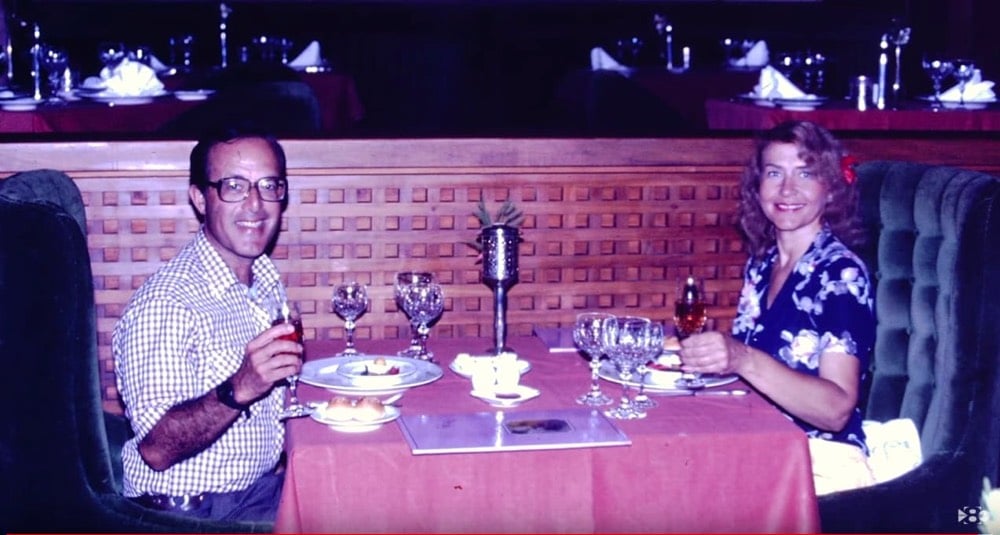
The next morning, a man and a woman would walk into the museum and then leave 15 minutes later. A security guard had unlocked the museum’s front door to let a staff member into the lobby, curator Olivia Miller told NPR. The couple followed. Since the museum was about to open for the day, the guard let them in.
The man walked up to the museum’s second floor while the woman struck up a conversation with the guard. A few minutes later, he came back downstairs, and the two abruptly left, according to the NPR interview and other media reports.
Sensing that something wasn’t right, the guard walked upstairs. There, he saw an empty frame where de Kooning’s “Woman-Ochre” had hung.
At the time, the museum had no surveillance cameras. Police found no fingerprints. One witness described seeing a rust-color sports car drive away but didn’t get the license plate number. For 31 years, the frame remained empty.
Earlier this year, WFAA made a short documentary film about the Alters and the heist.
(If you don’t want to watch the entire video, at least check out the bit starting at 18:00 where the painting is given back to the museum and authenticated…that is something you rarely see on video as it happens.)
Adding to the mystery: the couple obviously never sold the painting but they retired early, travelled the world, and left a $1 million inheritance, all seemingly beyond their means as public school employees.
Something else doesn’t add up. Jerry and Rita Alter worked in public schools for most of their careers. Yet they somehow managed to travel to 140 countries and all seven continents, documenting their trips with tens of thousands of photos.
And yet, when they died, they had more than a million dollars in their bank account, according to the Sun News.
“I guess I figured they were very frugal,” their nephew, Ron Roseman, told WFAA.
Hmm, where did they get all that coin?
Director Barry Jenkins is back with his first feature film since Moonlight won the Best Picture Oscar in 2016. It’s called If Beale Street Could Talk, an adaptation of a 1974 novel of the same name by James Baldwin.
In this honest and stunning novel, James Baldwin has given America a moving story of love in the face of injustice. Told through the eyes of Tish, a nineteen-year-old girl, in love with Fonny, a young sculptor who is the father of her child, Baldwin’s story mixes the sweet and the sad. Tish and Fonny have pledged to get married, but Fonny is falsely accused of a terrible crime and imprisoned. Their families set out to clear his name, and as they face an uncertain future, the young lovers experience a kaleidoscope of emotions-affection, despair, and hope. In a love story that evokes the blues, where passion and sadness are inevitably intertwined, Baldwin has created two characters so alive and profoundly realized that they are unforgettably ingrained in the American psyche.
The trailer looks amazing…can’t wait to see this one.
From Edward Burtynsky (known around these parts for his aerial photographs of industrial landscapes) and filmmakers Jennifer Baichwal & Nicholas de Pencier comes a film called Anthropocene.
The Holocene epoch started 11,700 years ago as the glaciers of the last ice age receded. Geologists and other scientists from the Anthropocene Working Group believe that we have left the Holocene and entered a new epoch: the Anthropocene. Their argument is that humans have become the single most defining force on the planet and that the evidence for this is overwhelming. Terraforming of the earth through mining, urbanization, industrialization and agriculture; the proliferation of dams and diverting of waterways; CO2 and acidification of oceans due to climate change; the pervasive presence around the globe of plastics, concrete, and other technofossils; unprecedented rates of deforestation and extinction: these human incursions, they argue, are so massive in scope that they have already entered, and will endure in, geological time.
The film is one part of a larger “multimedia exploration” of the human epoch, which will include a book of new photography from Burtynsky, a traveling museum exhibition, interactive VR & AR experiences, and an educational program.
The film is premiering at the Toronto International Film Festival in September.
Update: In this video for Canadian Geographic, Catherine McKenna, Canada’s Minister of the Environment and Climate Change, talks with Burtynsky, Baichwal, and de Pencier about this project.
The European Southern Observatory’s Very Large Telescope in Chile has been watching the supermassive black hole in the center of our galaxy and the stars that orbit it. Using observations from the past 20 years, the ESO made this time lapse video of the stars orbiting the black hole, which has the mass of four million suns. I’ve watched this video like 20 times today, my mind blown at being able to observe the motion of these massive objects from such a distance.
The VLT was also able to track the motion of one of these stars and confirm for the first time a prediction made by Einstein’s theory of general relativity.
New infrared observations from the exquisitely sensitive GRAVITY, SINFONI and NACO instruments on ESO’s Very Large Telescope (VLT) have now allowed astronomers to follow one of these stars, called S2, as it passed very close to the black hole during May 2018. At the closest point this star was at a distance of less than 20 billion kilometres from the black hole and moving at a speed in excess of 25 million kilometres per hour — almost three percent of the speed of light.
S2 has the mass of about 15 suns. That’s 6.6 × 10^31 pounds moving at 3% of the speed of light. Wowowow.
It’s fun to watch this kidney bean grow into a plant over the course of 25 days to the strains of The Blue Danube waltz by Johann Strauss. Thanks to this cross-sectional view, you can see the main root push down into the soil and the tendrils branching out to anchor the plant for its remarkable vertical growth to come.
I have been going a little Moon crazy lately. There was the whole Apollo 11 thing, I finished listening to the excellent audiobook of Andrew Chaikin’s A Man on the Moon (which made me feel sad for a lot of different reasons), and am thinking about a rewatch of From the Earth to the Moon, the 1998 HBO series based on Chaikin’s book. This video from National Geographic answers a lot of questions about the Moon in a short amount of time.
From Vladimir Tomin, a fun augmented reality video where he uses a set of image editing tools to manipulate the scenery in fanciful ways. (It’s kinda hard to describe this…just give it 5 seconds and you’ll get the idea.)
(via Instagram’s explore page (yes, I’m the guy who uses the IG explore page))
Darth Vader was only on screen in the original Star Wars movie for 8 minutes and for a little under 34 minutes in the whole original trilogy. In the latest Nerdwriter episode, Evan Puschak examines how the cinematography of the films (particularly Empire Strikes Back) helped make Vader into an iconic character despite such little screentime.
Today seems to be movie villain day on kottke.org: see also this morning’s post on Black Panther’s Killmonger.
Mark Hogancamp was beaten by five men outside a bar and left for dead. He spent nine days in a coma, lost his memory, and spent over a year in physical therapy. As part of his recovery, Hogancamp built a meticulously constructed WWII town in his backyard that he called Marwencol.
When his state-sponsored rehabilitative therapies ran out, Mark took his recovery into his own hands. In his backyard, he created a new world entirely within his control — a 1:6 scale World War II town he named Marwencol. Using doll alter egos of his friends and family, his attackers and himself, Mark enacted epic battles and recreated memories, which he captured in strikingly realistic photographs. Those photos eventually caught the eye of the art world, which lead to a series of gallery exhibitions, the award-winning documentary “Marwencol,” the acclaimed book “Welcome to Marwencol,” and a new identity for a man once ridiculed for playing with dolls.
Robert Zemeckis has turned Hogancamp’s story into a movie starring Steve Carell called Welcome to Marwen. Here’s the trailer; it comes out in December 2018:
In 2010, Jeff Malmberg made a documentary about Hogancamp & and his project. It’s a little hard to find these days despite a 98% rating on Rotten Tomatoes, but you can watch it on Amazon w/ a trial subscription or buy it on iTunes. Here’s the trailer:
Hogancamp also collected some of the photos of Marwencol into a book.
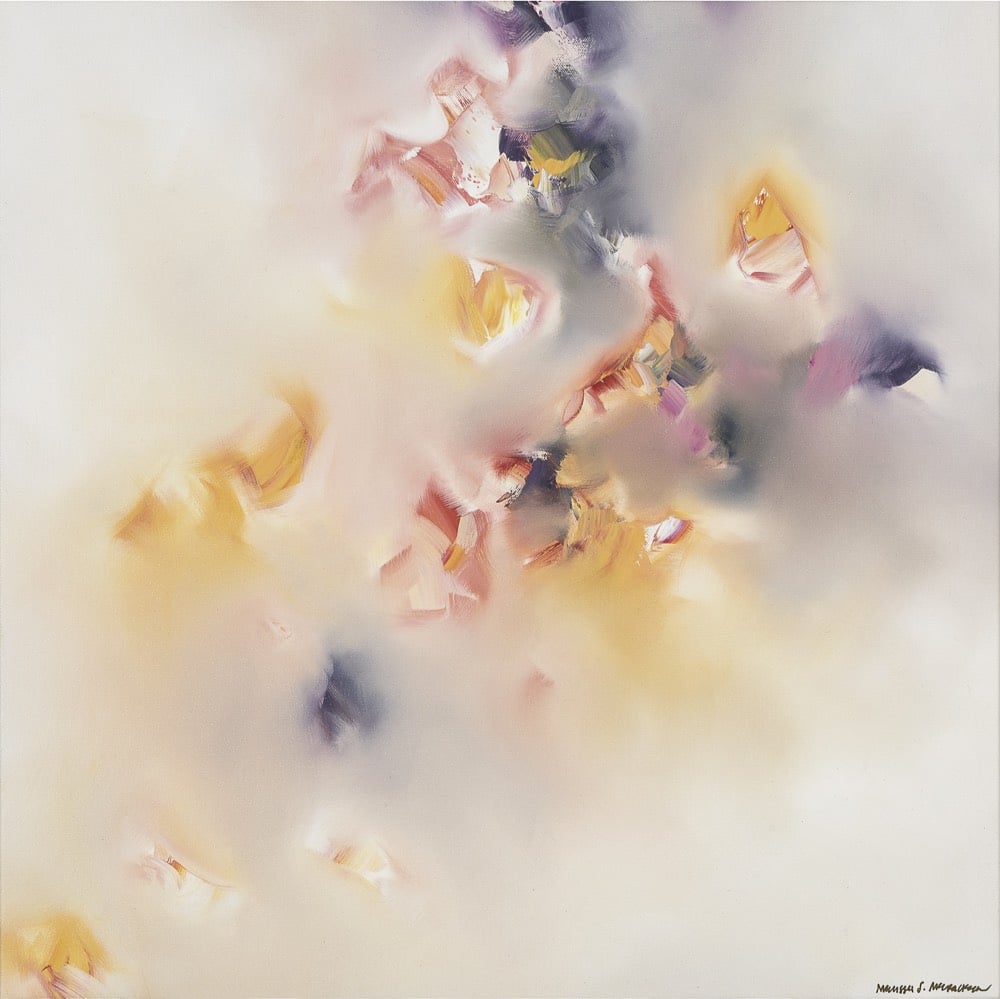


Melissa McCracken has synesthesia and experiences seeing the music she listens to as shifting colors. In an old artist statement, McCracken explained how she sees the world differently than many people:
Basically, my brain is cross-wired. I experience the “wrong” sensation to certain stimuli. Each letter and number is colored and the days of the year circle around my body as if they had a set point in space. But the most wonderful “brain malfunction” of all is seeing the music I hear. It flows in a mixture of hues, textures, and movements, shifting as if it were a vital and intentional element of each song.
Great Big Story did a short video profile of McCracken a couple of years ago:
I like how she says she dislikes how some songs sound but likes how they look. What a cool way to be able to experience the world.
McCracken is a bit coy on her site and Instagram about which songs inspired which paintings, but the paintings above are titled Love Is Touching Souls (from a Joni Mitchell lyric), Life on Mars (David Bowie), and Wasn’t It Kind of Wonderful (lyrics from a Lianne La Havas song?).
What makes a good movie villain? In this video, Lessons from the Screenplay discusses what I thought was the best and most interesting aspect of Black Panther: the empathetic villain in the form of Killmonger.
Killmonger is a great example of how an antagonist can challenge the hero not just through confrontation and violence, but by representing something that affects the hero emotionally.
Rather than pitting T’Challa against some “generically evil” villain, the filmmakers gave him a true foil that both he and the audience could empathize with. And by the end, Killmonger actually changes T’Challa’s mind on the central issue in the film and it felt earned.
What happens when a city made entirely of cardboard catches fire? Nothing good, as Phil Brough’s 3D animated short film clearly illustrates. Fire in Cardboard City has been playing at film festivals around the world and now thanks to the New Yorker, you can watch the whole thing online. Sarah Larson talked with Brough about how the film came together.
The results look so realistic that they could almost be stop-motion. “I built a big virtual set, I guess, is how you could describe it,” he said. “The characters are like stop-motion marionettes in a way; they have joints to the arms and the knees and all of that, and controllers.” He then used a low-budget motion-capture process — a D.I.Y. version of Hollywood’s green screens and Ping-Pong-ball suits — using the XBox Kinect and special software. “It sees you doing the motions you want the character to do, and then you can transfer that to the animation so you can transfer that onto your characters,” he said. He considered having a giant robot attack Cardboard City, and then settled on fire: that looked kind of cool, too.
I *love* the DIY corrugated cardboard look of this film…I’d happily watch a feature-length version of this. See also Caine’s Arcade. (thx, karen)
I watched RBG last night, the documentary film about Supreme Court Justice Ruth Bader Ginsburg. What a remarkable person she is. Here’s the trailer:
If you’ve seen the movie (or even if you haven’t), Jeffrey Toobin’s 2013 New Yorker profile of Ginsburg goes easier on the memes and deeper into her legal process and views.
At this point, Ginsburg was a leader on the legal side of the women’s movement, especially when she became the first tenured woman at Columbia Law School, in 1972. She co-founded the first law review on women’s issues, Women’s Rights Law Reporter, and co-authored the first casebook on the subject. Also in 1972, she co-founded the women’s-rights project at the American Civil Liberties Union. When Sally Reed took her case to the Supreme Court, Ginsburg volunteered to write her brief.
“In very recent years, a new appreciation of women’s place has been generated in the United States,” the brief states. “Activated by feminists of both sexes, courts and legislatures have begun to recognize the claim of women to full membership in the class ‘persons’ entitled to due process guarantees of life and liberty and the equal protection of the laws.” In an opinion for a unanimous Court in Reed v. Reed, Chief Justice Burger overturned the Idaho law as “the very kind of arbitrary legislative choice forbidden by the Equal Protection Clause of the Fourteenth Amendment.” Sex discrimination, in other words, was unconstitutional. Susan Deller Ross, a professor at Georgetown University Law Center, who also worked as a lawyer on sex-discrimination cases during this period, said of Ginsburg, “She helped turn the Court a hundred and eighty degrees, from a very hands-off attitude, which had often been expressed very cavalierly, to one where they struck down law after law that treated the sexes differently.”
Building on the Reed precedent, Ginsburg launched a series of cases targeting government rules that treated men and women differently. The process was in keeping with Ginsburg’s character: careful, step by step. Better, Ginsburg thought, to attack these rules and policies one at a time than to risk asking the Court to outlaw all rules that treated men and women differently. Ginsburg’s secretary at Columbia, who typed her briefs, gave her some important advice. “I was doing all these sex-discrimination cases, and my secretary said, ‘I look at these pages and all I see is sex, sex, sex. The judges are men, and when they read that they’re not going to be thinking about what you want them to think about,’” Ginsburg recalled. Henceforth, she changed her claim to “gender discrimination.”
The piece mentions an impromptu serenade of opera fan Ginsburg by Plácido Domingo at Harvard…it’s a cute moment:
For a deeper dive, the best books about Ginsburg are The Legacy of Ruth Bader Ginsburg by Scott Dodson, My Own Words (a collection of her writing), and the more fun Notorious RBG: The Life and Times of Ruth Bader Ginsburg by Irin Carmon & Shana Knizhnik.
I love hearing people talk about how they work. In this quick video, conductor James Gaffigan explains what it is he does on stage and how different composers like Leonard Bernstein shape and enhance the performance of the musicians they’re leading.
If you’ve ever seen an orchestra perform you’ve probably had a difficult time looking away from the person dead center on the stage — the conductor. It’s hard to miss someone as they swing their arms around pointing at the musicians that seem to be focused instead on their music stands. So what exactly is the conductor doing?
In response to a dumb viral video with almost 20 million views that suggests detonating a powerful nuclear device at the bottom of the ocean would unleash global chaos, Kurzgesagt provides a counterpoint using, you know, science. This was also an early What If? query:
The bubble grows to about a kilometer across in a couple of seconds. The water above bulges up, though only slightly, over a large area. Then the pressure from that six miles of water overhead causes it to collapse. Within a dozen or so seconds, the bubble shrinks to a minimum size, then ‘bounces’ back, expanding outward again.
It goes through three or four cycles of this collapse and expansion before disintegrating into, in the words of the 1996 report, “a mass of turbulent warm water and explosion debris.” According to the report, as a result of such a deep-water closed bubble creation and dissipation, “no wave of any consequence will be generated.”
Gosh, I don’t know what micro-fraction of regular readers are going to be interested in this, but I sure was! In 2015, DJ Pete Tong and the Heritage Orchestra (under director Jules Buckley) collaborated on a performance of a bunch of Ibiza club hits from the likes of Moby, Fatboy Slim, Orbital, Brainbug, and Daft Punk. Here’s a Spotify playlist of the songs they covered.
Did I get goosebumps when the violins started in on Robert Miles’ Children? Possibly! Some of this stuff was the soundtrack to my web design work & play in the late 90s. kottke.org circa 1999 was at least 20% Fatboy Slim, Orbital, BT, Robert Miles, The Orb, and Daft Punk.
Update: And here’s an album of the performance itself on Spotify as well as a subsequent album featuring different club tracks. Tong and the orchestra are also touring the show around England, Ireland, and Scotland.
At Miya’s Sushi in New Haven, CT, chef owner Bun Lai makes sustainable sushi using invasive species and other typically overlooked ingredients.
By collecting invasive seafood on shell-fishing beds, we are basically providing a free weeding service… We hope that this will do a few things. First of all, it could potentially curb the dominance of invasive species in the ecosystem. Secondly, it would provide the seafood industry a greater supply of native seafood and reduce the stresses on those populations already fished. Finally, we hope that it would encourage greater balance in the inter-regenerative relationship between man and the oceans. If we were to have thirty Miya’s in thirty different places, each one would have a slightly different menu, each reflecting the problems of its local universe.
Take a look at the current menu…there are entire sections dedicated to dishes made from invasive species (like Kentucky silver carp, Japanese knotweed, and Florida lionfish) and sustainable seafood.
In this video, MoMA film curator La Frances Hui gives us a very quick and informative overview of what to look for when watching kung fu and martial arts films. Aside from Jackie Chan & more recent stuff like Crouching Tiger & Hero, I’ve never been super into martial arts movies, but after watching this, I’m excited to watch some of Lau Kar-leung’s films, particularly The 36th Chamber of Shaolin (which is currently streaming on Amazon Prime). Lau also directed and did the fight choreography for Drunken Master II, a favorite of mine that I haven’t seen in awhile.
Newer posts
Older posts





Socials & More