kottke.org posts about video
From natural rubber to hundreds of bands in a box, here’s how a Japanese manufacturing firm makes rubber bands.
Fun fact about me: I always have a rubber band or two on my wrist…I’ve been wearing them for no particular reason since I was 17. So this video is right up my alley. (via digg)
When you apply power with higher-than-normal voltage to electric kids toys, they tend to move faster. When you apply 30V instead of the usual 2.5V or 5V, they move really fast:
This reminds me of when I was in grade school. Does anyone remember Stompers? They were battery-operated cars and trucks that were bigger than HotWheels and, while not remote-controlled, were able to move around under their own power. But they weren’t that speedy…maybe they could do 1-2 mph.
Anyway, some kid at school figured out that you could remove the AA battery, connect wires to the battery terminals, and then connect those wires to as many C- and D-cell batteries as you could gang together in a series. So instead of the usual 1.5V, you could pump 4.5V, 6V, 7.5V, or even 9V into those tiny cars. And boy, did they go. We could barely keep up as we raced them against each other down the halls, running behind them holding our battery packs. But the thrills were short-lived — I think the school banned them and all that current burned the tiny Stomper motors out after awhile. Fun while it lasted though! (via waxy)
For the past 13 years, former Secretary of Labor Robert Reich has taught a class called Wealth & Poverty at UC Berkeley. He retired from teaching this year and has uploaded his lectures from the course to YouTube.
Welcome to my final UC Berkeley course on Wealth and Poverty. Drawing on my 40+ years in politics, including my time as secretary of labor, I offer a deeper look at why inequalities of income and wealth have widened significantly since the late 1970s in the United States, and why this poses dangerous risks to our society.
This course also offers insights into the political and public-policy debates that have arisen in light of this inequality, as well as possible means of reversing it.
Here’s the first lecture, What’s Happened to Income & Wealth:
Reich has also published an abbreviated syllabus for each of the classes; links can be found in his course introduction (here’s class #1).
This is fun: Aqua’s pop hit Barbie Girl, redone in the style of six classical composers: Mozart, Beethoven, Schumann, Schubert, Chopin, and Ravel. (via @Erikmitk)
To help celebrate 50 years of hip-hop, Cypress Hill visited NPR’s studios to perform a Tiny Desk Concert.
While the term “pioneer” is used loosely in pop culture today, few terms describe Cypress Hill’s impact over the past three decades more adequately. They are the first Latino hip-hop group to achieve platinum and multi-platinum status. B Real, Sen and producer DJ Muggs crafted a sound in the ’90s that stretched beyond regional boundaries. It was dark, psychedelic and at times directly addressed mental health before the topic was commonplace. Many dismissed the group as “stoner rappers,” yet the members were fervent advocates for the legalization of weed long before it came to fruition.
Really enjoyed this one…I’m not a particular fan of Cypress Hill but after this, maybe I am?
After my post about Soap Bubble Worlds yesterday, several people sent me this video of the rainbow colors that can be seen on the surface of and in the steam above a swirling cup of hot water. I was expecting a straight-forward visual display accompanied by some relaxing music (and that version does exist) but it also includes a fascinating explanation of where all these colors and swirls come from.
Scientific investigations into beautiful phenomena always makes me think of physicist Richard Feynman’s thoughts on beauty:
I have a friend who is an artist, and has sometimes taken a view which I don’t agree with very well. He’ll hold up a flower and say “Look how beautiful it is” and I’ll agree. And he says, “you see, as an artist I can see how beautiful this is, but you as a scientist take this all apart and it becomes a dull thing.” And I think that he’s kind of nutty.
First of all, the beauty that he sees is available to other people, and to me too, I believe - although I may not be quite as refined aesthetically as he is, but I can appreciate the beauty of a flower. At the same time, I see much more about the flower than he sees. I could imagine the cells in there, the complicated actions, which also have a beauty. I mean, it’s not just beauty at this dimension of one centimeter, there’s also beauty at smaller dimensions. The inner structure, also the processes, the fact that the colors and the flower are evolved in order to attract insects to pollinate it is interesting. It means that insects can see the color.
It adds a question: Is this aesthetic sense also exist in the lower forms that… why is it aesthetic… all kinds of interesting questions which the science, knowledge, only adds to the excitement, and mystery, and the awe of a flower. It only adds. I don’t understand how it subtracts.
(thx, everyone)
This advertisement from Orange, the French telecom company, about the French national football team is one of the best commercials I’ve seen recently. I don’t want to tell you too much about it because the impact of it comes from watching it, so just watch it and you’ll see. And afterwards, you can read more about the ad here.
When you think of directors that have influenced Wes Anderson, you typically think of Truffaut, Godard, Scorcese, and Ashby. But as you’ll see in this video of Anderson pulling out some recommended films from this Paris video store, his taste in movies is broad. There’s Drunken Angel (Kurosawa), A Streetcar Named Desire (Kazan), Vagabond (Varda), Birth (Glazer), Bridge of Spies (Spielberg), and Witness (Weir).
Of Spielberg, Anderson says:
If you make movies, if you direct movies, this is somebody who can help you. You looked at his movies for solutions. He usually found a way to do it right. He’s one of my favorites.
(via open culture)
This is a supercut of the final moments of the Titanic as represented in various films and TV shows, from 1912’s La Hantise to a 2012 British TV series written by Downton Abbey’s Julian Fellowes. It also doubles as a demonstration of the increasing capabilities and aspirations of filmmakers and their special effects teams throughout the years, although in terms of budget and effort, James Cameron’s effort in 1997 marks the high point.
Greta Gerwig takes us on a whirlwind tour through 33 films that influenced the Barbie movie, visually, thematically, and in terms of plot/content. The influences include The Wizard of Oz, Rear Window, Pee-wee’s Big Adventure, Singin’ in the Rain, The Godfather, Oklahoma!, 2001, and Saturday Night Fever.
Then, Saturday Night Fever, I always had a sense of wanting this to be a movie with an amazing soundtrack. Saturday Night Fever obviously has this incredible soundtrack by the Bee Gees. There’s a documentary about the Bee Gees, and I’d seen it and was so touched by the Bee Gees, and I thought Barbie seemed so disco to me in her heart, because Barbie’s sort of — and I will say this as a lover of Barbie and disco — a little bit dorky in the best way. Saturday Night Fever was a movie that was driven by music, but not a musical. I guess we’re half of a musical.
In this video from Architectural Digest, architect Michael Wyetzner runs us through why American diners look the way they do. Early diners took their cues from trains:
So let’s take a look at a typical American diner. So the outside has a shape that’s reminiscent of a train. In fact, that’s how diners got their name. They’re named after the dining car on a train.
Many of the design elements in a diner are based on the necessities of dining on a train in a railroad car, like booth seating and counter seating, and an open kitchen.
So I like these two photos because they show all the elements that go into the classic American diner. On the exterior, you have that stainless steel smooth curvature, you’ve got that Art Deco typography. And then on the interior you have the checkered floor, you have the booths, you have the globes, and you have the jukebox.
In the early part of the 20th century, trains were the dominant form of travel. If you look at some of the earliest diners, they were in fact, actual train cars that were placed permanently on the ground.
Later, cars and space travel provided inspiration in the diner’s evolution.
This is great: The Cut asked 100 people to scream as loud as they could in front of a camera. For some, it was cathartic while others found it uncomfortable. Some folks didn’t know how to scream which I don’t entirely understand?
This video reminded me a lot of Ten Meter Tower, one of my all-time favorite short documentaries, in which dozens of people are filmed jumping from a 10-meter diving platform for the first time. Both videos deal with inner vs. outer selves and people’s comfort with expressing vulnerability. (via colossal)
If you were left hungry by the food in season two of The Bear, Binging With Babish has got you covered. In this video, he recreates the potato chip omelette that Sydney makes in the second-to-last episode of the season. And then, he makes an adjacent dish, José Andrés’s tortilla española with potato chips. Just to contrast, here’s Andrés making it:
Double yum. See also How to Make Perfect Soft-Scrambled Eggs, Hey, Let’s Watch Jacques Pépin Fry Eggs (and make omelettes), and 59 Ways to Cook Your Eggs.
A new eruption started yesterday in the general area of Iceland’s Fagradalsfjall volcano and drone pilot Isak Finnbogason was there to capture some footage. The shot of the lava flow beginning at the 1:00 mark is absolutely stunning.
This short video is an excerpt from a longer livestream Finnbogason did — here’s another short excerpt that shows just how large the eruption is and how close some people are getting to it:
He’s starting another livestream of the eruption in just a few minutes here (at 2:30pm ET) if you’d like to follow along.
Hey folks. I’m sure you’ve read about the heavy rains and the flooding in the Northeast, particularly in New York and Vermont. My town here in central VT did not flood last night (though some area fields may have) and appears to be out of danger but other places around me were not so lucky.
In particular, I’m stunned by the several feet of water that are currently covering Montpelier, the capital of Vermont and a place that I know pretty well. This is a video from late last night and early this morning of someone paddling around downtown Montpelier, surveying the flooding and interviewing locals:
The water is not rushing, just standing, and there is almost no one around — there’s an eerie quiet that’s punctuated by the sounds of alarms going off all around. And there’s just so much water. Here’s a drone view of Montpelier (photo) from this morning:
And the threat isn’t over yet. A nearby dam is close to capacity and if they need to release the water, it could quickly dump much more water into the city (UPDATE: the threat to the dam has thankfully subsided for now):
“This has never happened since the dam was built so there is no precedent for potential damage,” City Manager William Fraser wrote in a statement posted to Montpelier’s Facebook page at 3:53 a.m. “There would be a large amount of water coming into Montpelier which would drastically add to the existing flood damage.”
People who live along the north branch and in downtown Montpelier are at greatest risk, he said. The dam, located on the border of Middlesex and Montpelier, is located about three miles north of the city center.
With “few evacuation options remaining,” Fraser wrote, “People in at risk areas may wish to go to upper floors in their houses.”
I’ve walked those streets a lot. Been to many of those shops. Eaten in those restaurants. Watched dozens of films in those movie theaters. I cannot believe how much water there is. So many people are going to be displaced from their homes for weeks and months. Businesses will be closed for weeks? Months? Some may never reopen. I’m not sure what else to say here.
Other places near here flooded too: Richmond, Waterbury, Moretown, Middlesex. The freeway is closed in some areas and motorists were left stranded. Officials had to evacuate the State Emergency Operations Center in Waterbury.
Towns further south in Vermont got hit too: Londonderry, Weston, Shrewsbury.
One of the things I’ve been doing this morning is trying to figure out why some places (Montpelier) got hit hard while other low-lying areas less than 15-20 miles away didn’t. And I’ve come to the conclusion that water does not give a fuck. Not about logic or human life or property. It just flows where it wants. There’s more rain over here than there is over there — because a butterfly’s wing flapped halfway across the world.
Climate disasters, fueled by large-scale, human-driven changes in the global climate, are becoming more frequent. In the past few weeks in Vermont, we’ve had wildfire smoke from Canada forcing people to stay inside, a heat wave, and now this flooding. And Vermont is a place that is supposedly safer for climate refugees to go. But that’s the thing about a global climate crisis: it’s going to affect absolutely everyone absolutely everywhere.
Well, this looks good: Joaquin Phoenix and Vanessa Kirby star as Napoleon and Josephine Bonaparte in Ridley Scott’s forthcoming film about the French dictator. The film will be out in theaters on November 22 and on Apple+ sometime after that.
Craig Mod recently finished a 16-day tour of jazz kissas in northern Japan. Jazz kissas are bar/cafes where one goes to listen to jazz, mostly on records and not live. Mod loosely defies them thusly:
Mostly defined as: Mid-20th century “listening cafes” for jazz music. But there is a lot of variance in this definition. Lots are coffee-focused cafes, fitting into the broader “kissaten” universe. But some are more bar-like, and some even jazz clubs (but for the most part, live music is rare). You can tie yourself in knots splitting hairs over this stuff. Though they’re traditionally known as “jazz kissa” — the shortened version of “kissaten” (fear not: even if you call them “jazz kissaten” you won’t suddenly turn into a pillar of salt). Some are seventy years old. Some forty. Some are five years old. The important defining element is simply: A presiding and effusive ever-abiding love for jazz, jazz, and more jazz.
At each stop, he recorded the ambient sounds of each kissa so that you can experience a little bit of the atmosphere at these places — here’s the full playlist. The recordings were done with a pair of microphones so that the audio is in stereo. This sounds great with a good pair of headphones!
Not going to bury the lede here: this is a straight-up masterpiece and maybe the best thing I’ve seen all week. Hidari is a stop-motion animation of an inventive fight sequence between a lone warrior/craftsman and a boss & his minions. The vibe of the animation is at once halting and buttery smooth, a combination that’s wonderfully expressive. Directed by Masashi Kawamura, the plan is to turn this into a feature-length film:
This is a pilot version of the stop-motion samurai film that tells the story of “Jingoro Hidari,” a legendary Edo-era craftsman. All the characters are made by wood and animated frame by frame, just like how Jingoro’s wooden sculptures came to life in his many anecdotes. We hope you enjoy this film, which mixes dynamic actions as seen in Japanimation, and the rich analog expressions of stop-motion animation.
Our intention is to use this pilot film as a starting point to create a full length feature film. We have started activities to raise the necessary partners and funding to achieve this goal.
Take my money! (P.S. Turn on subtitles if you don’t speak Japanese. Oh, and here’s a behind-the-scenes look at how they did the animation.)
Oh boy. I thought the teaser trailer was good, but the full trailer for Martin Scorsese’s Killers of the Flower Moon just dropped and I am. So. Excited. To. SEE. THIS!
At the turn of the 20th century, oil brought a fortune to the Osage Nation, who became some of the richest people in the world overnight. The wealth of these Native Americans immediately attracted white interlopers, who manipulated, extorted, and stole as much Osage money as they could before resorting to murder.
Once again, it’s based on David Grann’s Killers of the Flower Moon: The Osage Murders and the Birth of the FBI, which I highly recommend. Grann + Scorsese appears to be a potent combination — the latter is already signed on to adapt Grann’s latest bestseller, The Wager.
Illustrator Kevan Atteberry created the Clippy character that was introduced in Microsoft Office 97. There was a ton of backlash when the character was introduced, but as time has passed, many people have begun to think fondly of him.
He’s a guy that just wants to help, and he’s a little bit too helpful sometimes. And there’s something fun and vulnerable about that.
Precise. Symmetric. Stylized. Controlled (often bright) color palette. Slow-motion. Lateral tracking. These are all hallmarks of Wes Anderson’s films. But as this short video from Luís Azevedo shows, there are plenty of imperfect moments in his movies as well. Anderson is a canny filmmaker and it’s the contrast between the controlled worlds he constructs and these more frenetic, off-kilter, imperfect moments that gives them their weight and impact.
Photographs have always been an imperfect reproduction of real life — see the story of Dorothea Lange’s Migrant Mother or Ansel Adams’ extensive dark room work — but the seemingly boundless alterations offered by current & future AI editing tools will allow almost anyone to turn their photos (or should I say “photos”) into whatever they wish. In this video, Evan Puschak briefly explores what AI-altered photos might do to our memories.
I was surprised he didn’t mention the theory that when a past experience is remembered, that memory is altered in the human brain — that is, “very act of remembering can change our memories”. I think I first heard about this on Radiolab more than 16 years ago. So maybe looking at photos extensively altered by AI could extensively alter those same memories in our brains, actually making us unable to recall anything even remotely close to what “really” happened. Fun!
But also, one could imagine this as a powerful way to treat PTSD, etc. Or to brainwash someone! Or an entire populace… Here’s Hannah Arendt on constantly being lied to:
If everybody always lies to you, the consequence is not that you believe the lies, but rather that nobody believes anything any longer. This is because lies, by their very nature, have to be changed, and a lying government has constantly to rewrite its own history. On the receiving end you get not only one lie — a lie which you could go on for the rest of your days — but you get a great number of lies, depending on how the political wind blows. And a people that no longer can believe anything cannot make up its mind. It is deprived not only of its capacity to act but also of its capacity to think and to judge. And with such a people you can then do what you please.
As I said in response to this quote in a post about deepfakes:
This is the incredible and interesting and dangerous thing about the combination of our current technology, the internet, and mass media: “a lying government” is no longer necessary — we’re doing it to ourselves and anyone with sufficient motivation will be able to take advantage of people without the capacity to think and judge.
P.S. I lol’d too hard at his deadpan description of “the late Thanos”. RIP, big fella.
The other day I posted about how contemporary filmmakers, Wes Anderson in particular, use miniatures in their films. The model/prop maker featured, Simon Weisse, has worked with Anderson on several films, including his latest, Asteroid City. Weisse has been posting behind-the-scenes shots of his studio’s work on Asteroid City to his under-followed Instagram account and I thought a separate post highlighting some of those props and miniatures would be fun.

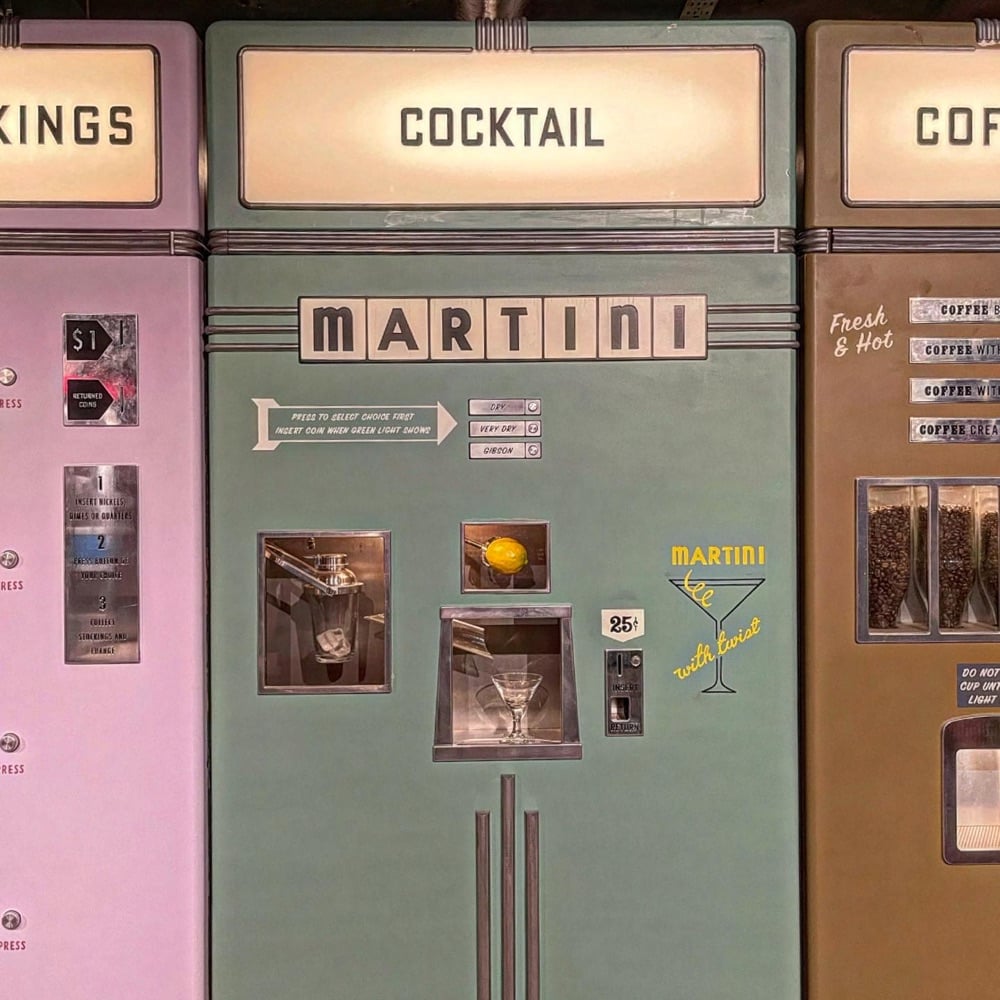
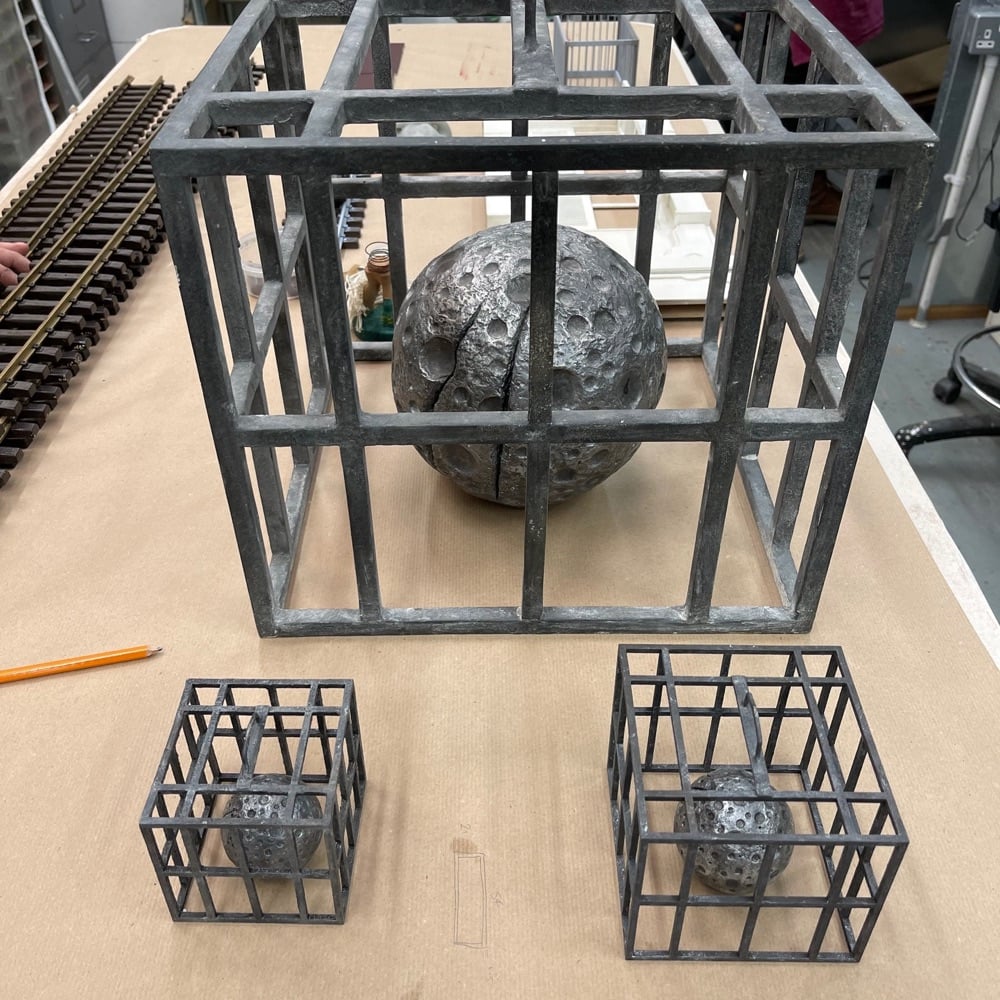
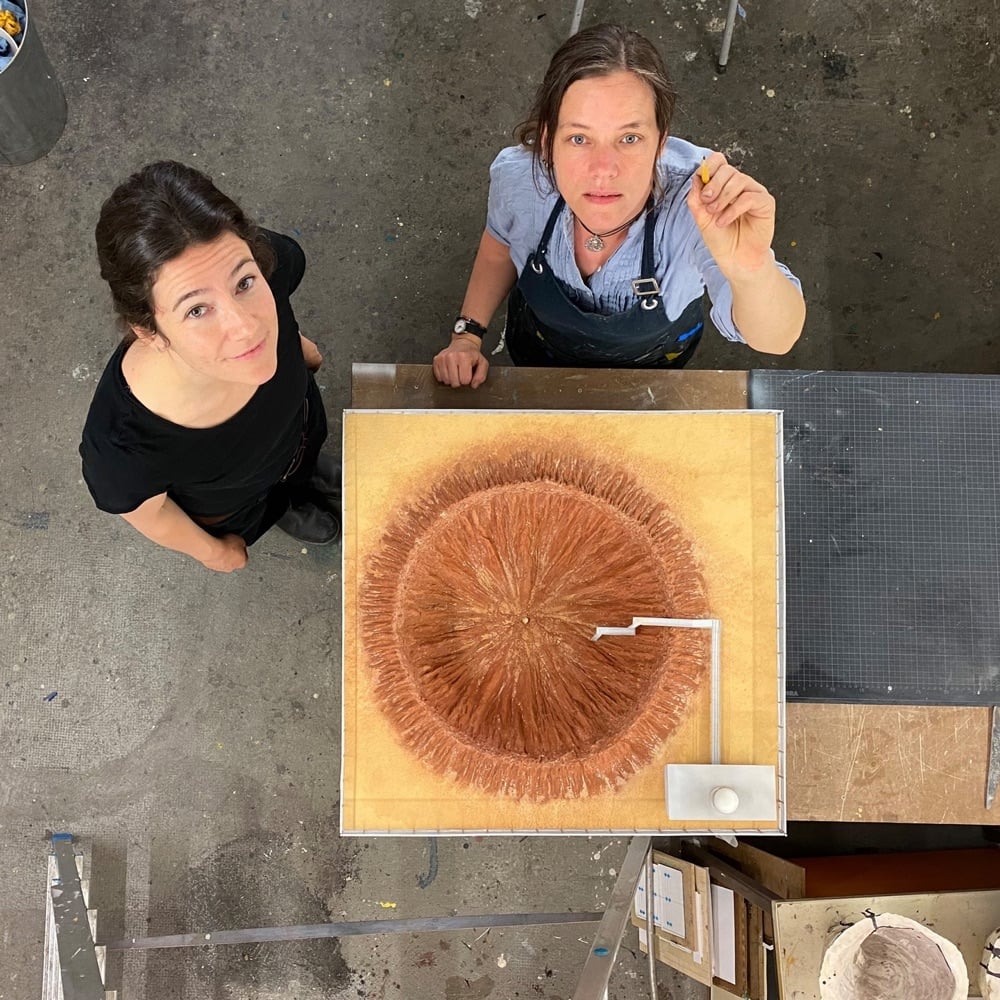
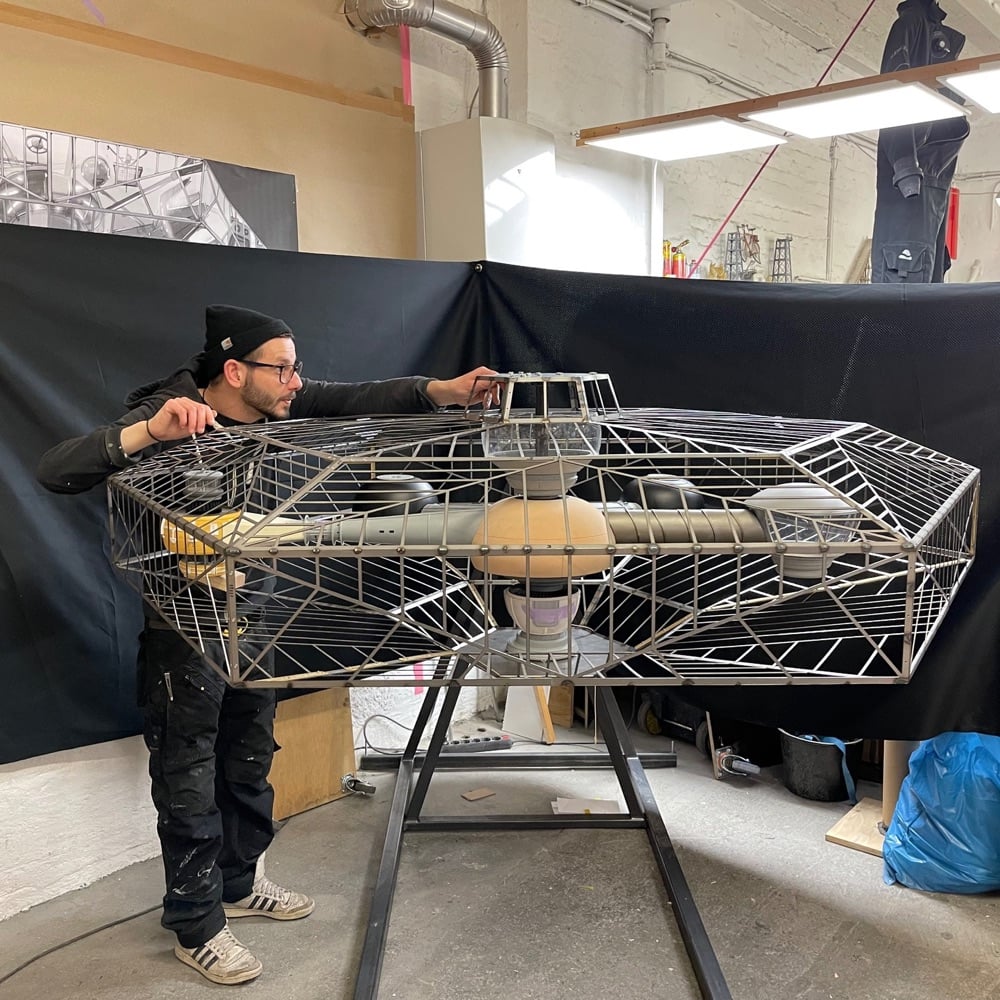
This video shows a bunch more of the miniatures used in the movie:
I also ran across a few behind-the-scenes videos of the production if you’re in the mood to deep-dive (as I appear to be):
If you’re lucky enough to be in London in the next week and a half, you can go and see some of these props and sets and even eat at the diner at 180 Studios. Very. Jealous.
From the Library of Congress, footage of the first gay pride march in NYC in 1970. The march, called the Christopher Street Liberation Day Parade, was held on June 28 to commemorate the first anniversary of the Stonewall Uprising. From Gothamist:
The Christopher Street Gay Liberation Day March started in Greenwich Village at about 2 p.m. that day in 1970, just outside the Stonewall Inn, which was then for rent, having closed the previous October.
As they gathered, the marchers were few, and brave. There were groups from Washington, DC and Boston, college organizations from Rutgers, Yale and Columbia. Some transgender people who were there at the time said that organizers asked them to march in the back, but they refused.
“The trans community said, ‘Hell no, we won’t go.’ We fought for this as much as you did, or even started it,” said Victoria Cruz. “And we just mingled throughout the crowd. There was no trans contingent. We just mingled.”
They started walking very briskly up Christopher Street, because they were scared. There had been bomb threats. People worried they would be shot at, or harassed again by the police. Martin Boyce was there, and he says that afterwards they joked it was “the first run.”
“I was worried about being single file, because I just watched a program on National Geographic about wildebeests and I saw how the ones on the side were picked off. So I thought I would stay in the middle — but there was no middle.”
As the march went on, it gathered people & momentum and they eventually made it without major incident to Central Park.
When you write some code and put it on a spacecraft headed into the far reaches of space, you need to it work, no matter what. Mistakes can mean loss of mission or even loss of life. In 2006, Gerard Holzmann of the NASA/JPL Laboratory for Reliable Software wrote a paper called The Power of 10: Rules for Developing Safety-Critical Code. The rules focus on testability, readability, and predictability:
- Avoid complex flow constructs, such as goto and recursion.
- All loops must have fixed bounds. This prevents runaway code.
- Avoid heap memory allocation.
- Restrict functions to a single printed page.
- Use a minimum of two runtime assertions per function.
- Restrict the scope of data to the smallest possible.
- Check the return value of all non-void functions, or cast to void to indicate the return value is useless.
- Use the preprocessor sparingly.
- Limit pointer use to a single dereference, and do not use function pointers.
- Compile with all possible warnings active; all warnings should then be addressed before release of the software.
All this might seem a little inside baseball if you’re not a software developer (I caught only about 75% of it — the video embedded above helped a lot), but the goal of the Power of 10 rules is to ensure that developers are working in such a way that their code does the same thing every time, can be tested completely, and is therefore more reliable.
Even here on Earth, perhaps more of our software should work this way. In 2011, NASA applied these rules in their analysis of unintended acceleration of Toyota vehicles and found 243 violations of 9 out of the 10 rules. Are the self-driving features found in today’s cars written with these rules in mind or can recursive, untestable code run off into infinities while it’s piloting people down the freeway at 70mph?
And what about AI? Anil Dash recently argued that today’s AI is unreasonable:
Amongst engineers, coders, technical architects, and product designers, one of the most important traits that a system can have is that one can reason about that system in a consistent and predictable way. Even “garbage in, garbage out” is an articulation of this principle — a system should be predictable enough in its operation that we can then rely on it when building other systems upon it.
This core concept of a system being reason-able is pervasive in the intellectual architecture of true technologies. Postel’s Law (“Be liberal in what you accept, and conservative in what you send.”) depends on reasonable-ness. The famous IETF keywords list, which offers a specific technical definition for terms like “MUST”, “MUST NOT”, “SHOULD”, and “SHOULD NOT”, assumes that a system will behave in a reasonable and predictable way, and the entire internet runs on specifications that sit on top of that assumption.
The very act of debugging assumes that a system is meant to work in a particular way, with repeatable outputs, and that deviations from those expectations are the manifestation of that bug, which is why being able to reproduce a bug is the very first step to debugging.
Into that world, let’s introduce bullshit. Today’s highly-hyped generative AI systems (most famously OpenAI) are designed to generate bullshit by design.
I bet NASA will be very slow and careful in deciding to run AI systems on spacecraft — after all, they know how 2001: A Space Odyssey ends just as well as the rest of us do.
Vox talks to prop & model maker Simon Weisse, who made miniatures for Wes Anderson’s Asteroid City, about the perhaps surprising popularity of miniatures in contemporary filmmaking, when the technique works and when it doesn’t (e.g. when unscalable elements like rain or fire/explosions are involved), and why certain directors use it instead of CGI.
Miniatures in movies are way more common than you may realize, and one of the most stylish filmmakers keeping them alive is Wes Anderson. In this video we spoke to Simon Weisse, prop maker and model marker for some of Wes Anderson’s recent projects, like The Grand Budapest Hotel, The French Dispatch, and Asteroid City.
Older movies, like 1977’s Star Wars: Episode IV — A New Hope, had no choice but to use miniatures to make their worlds feel real. But even in the modern day of CGI, filmmakers are still using minis — just look at projects like The Mandalorian, Blade Runner 2049, Harry Potter, and The Dark Knight series. In those movies, miniatures are used for expansive sets that establish the world of a film, otherworldly vehicles like spaceships, and more.
It’s perfect for Anderson’s storybook aesthetic, of course…it looks great in Asteroid City (which I really enjoyed overall).
The creepy twins. Jack feverish at the typewriter. Danny riding his Big Wheel through carpeted hallways. The elevators of blood. These familiar scenes from Stanley Kubrick’s horror classic The Shining (and several more) have been recreated in this Lego stop-motion animation. The video took 50-60 hours over a three-week period to make and was an exercise in constraints:
“Mostly, it came down to choosing the right pieces,” he says. “I made this movie only with pieces I already had in my collection, so I had to do with just what I had laying around. For instance, the famous carpet pattern in the hallway could have been more realistic, but with the pieces I had, it became a little more abstract. I went with clay for the bloody elevator scene also because I do not have thousands of red translucent pieces.”
(via boing boing)
I loved Liu Cixin’s The Three-Body Problem trilogy (read it twice!) and was excited/apprehensive when Netflix announced they’d partnered with Game of Thrones showrunners D.B. Weiss and David Benioff to adapt the books into a TV series. Well, the first trailer is here and has tipped my scales more towards excited. Really looking forward to when this premieres in January March 2024 — if they get it right, this could be something really special.
Using the metaphor of a cancerous tumor as an unruly village, Kurzgesagt explains how cancer develops in the human body, how the body fights against it, and how, sometimes, the cancer develops into something unmanageable.
In a sense this tiny tumor is like a rogue town. Imagine a group of rebels in Brooklyn decided that they were no longer part of New York but started a new settlement called Tumor Town, which happens to occupy the same space. The new city wants to grow, so it orders tons of steel beams, cement and drywall. New buildings follow no logic, are badly planned, ugly and dangerously crooked. They are built right in the middle of streets, on top of playgrounds and on existing infrastructure. The old neighborhood is torn down or overbuilt to make room for new stuff. Many of the former residents are trapped in the middle of it and begin to starve. This goes on for a while until the smell of death finally attracts attention. Building inspectors and police show up.
On his YouTube channel this week, Phil Edwards explores the question of why all pop music radio stations in the US sound the same. The short answer is consolidation caused by deregulation but the longer answer is worth watching. And if you want more information, Edwards’ list of sources in the video description is pretty extensive.
Newer posts
Older posts





Socials & More