



Noah soundtrack
A Clint Mansell soundtrack for a Darren Aronofsky film? Hell. Yes.
Mansell also did the soundtracks for Moon (my favorite of his, I think) and Requiem for a Dream. The Noah soundtrack is available for purchase on iTunes and Amazon.

This site is made possible by member support. 💞
Big thanks to Arcustech for hosting the site and offering amazing tech support.
When you buy through links on kottke.org, I may earn an affiliate commission. Thanks for supporting the site!
kottke.org. home of fine hypertext products since 1998.
Beloved by 86.47% of the web.
A Clint Mansell soundtrack for a Darren Aronofsky film? Hell. Yes.
Mansell also did the soundtracks for Moon (my favorite of his, I think) and Requiem for a Dream. The Noah soundtrack is available for purchase on iTunes and Amazon.
Errol Morris’ documentary about Donald Rumsfeld, The Unknown Known, comes out next month. The trailer:
In the first of a four-part companion series to the movie for the NY Times, Morris explores The Certainty of Donald Rumsfeld.
When I first met Donald Rumsfeld in his offices in Washington, D.C., one of the things I said to him was that if we could provide an answer to the American public about why we went to war in Iraq, we would be rendering an important service. He agreed. Unfortunately, after having spent 33 hours over the course of a year interviewing Mr. Rumsfeld, I fear I know less about the origins of the Iraq war than when I started. A question presents itself: How could that be? How could I know less rather than more? Was he hiding something? Or was there really little more than met the eye?
The Unknown Known has been referred to as a sequel of sorts to The Fog of War, but from this it seems more like its opposite. Morris got some substantive and honest answers to important questions from McNamara, whereas it sounds like he got bupkiss from Rumsfeld.
Update: Here’s part 2.
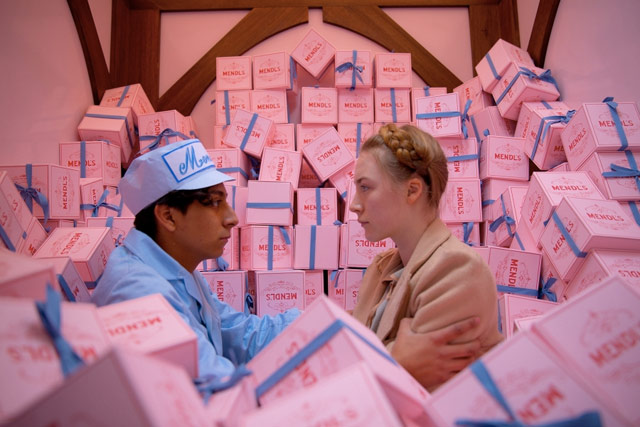
The Grand Budapest Hotel is Wes Anderson’s most design-y film, and that’s really saying something. Typography is present in almost every frame; at times, it was almost oppressive. Creative Review interviewed designer Annie Atkins, who was responsible for the film’s graphic design elements.
Oh my goodness, so many signs in the 1960s hotel lobby! I have to give credit to Liliana for this work, as she took care of nearly all of these. She had three sign-writers from Berlin painting non-stop for a week to get them all done in time for our first day of shoot, as that set was first up. Wes and Adam had seen so many examples of quite officious signage in what had been communist East Germany — don’t do this, don’t do that, do this but only like that! The signs really added to the claustrophobic feeling of that set, and Wes had asked for them all to be black with simple white hand-painted lettering — based on the style of the old sign at Yorckstrasse subway station in Berlin.
Ed Catmull has written a book about Pixar’s creative process: Creativity, Inc.
Creativity, Inc. is a book for managers who want to lead their employees to new heights, a manual for anyone who strives for originality, and the first-ever, all-access trip into the nerve center of Pixar Animation — into the meetings, postmortems, and “Braintrust” sessions where some of the most successful films in history are made. It is, at heart, a book about how to build a creative culture — but it is also, as Pixar co-founder and president Ed Catmull writes, “an expression of the ideas that I believe make the best in us possible.”
For nearly twenty years, Pixar has dominated the world of animation, producing such beloved films as the Toy Story trilogy, Monsters, Inc., Finding Nemo, The Incredibles, Up, and WALL-E, which have gone on to set box-office records and garner thirty Academy Awards. The joyousness of the storytelling, the inventive plots, the emotional authenticity: In some ways, Pixar movies are an object lesson in what creativity really is. Here, in this book, Catmull reveals the ideals and techniques that have made Pixar so widely admired — and so profitable.
Catmull was a founder of Pixar and while he never got the press Jobs and Lasseter did, he was instrumental in the company’s success and is currently president of both Disney and Pixar’s animation studios. Fast Company has an excerpt of the book.
Candor could not be more crucial to our creative process. Why? Because early on, all of our movies suck. That’s a blunt assessment, I know, but I choose that phrasing because saying it in a softer way fails to convey how bad the first versions really are. I’m not trying to be modest or self-effacing. Pixar films are not good at first, and our job is to make them so — to go, as I say, “from suck to not-suck.”
Think about how easy it would be for a movie about talking toys to feel derivative, sappy, or overtly merchandise driven. Think about how off-putting a movie about rats preparing food could be, or how risky it must’ve seemed to start WALL-E with 39 dialogue-free minutes. We dare to attempt these stories, but we don’t get them right on the first pass. This is as it should be. Creativity has to start somewhere, and we are true believers in the power of bracing, candid feedback and the iterative process — reworking, reworking, and reworking again, until a flawed story finds its through line or a hollow character finds its soul.
Oh hello Grand Budapest Hotel soundtrack on Rdio. Alexandre Desplat. It’s a goooood morning.
Also available for download on Amazon or iTunes if that’s your thing.
Last year (spoilers!), CERN confirmed the discovery of the Higgs boson. Physicist-turned-filmmaker Mark Levinson has made a film about the search for the so-called God Particle. Particle Fever follows a group of scientists through the process of discovery and the construction of the mega-machine that discovered the Higgs, the Large Hadron Collider. Here’s a trailer:
Two additional data points: the movie is holding a 95% rating on Rotten Tomatoes and legendary sound designer and editor Walter Murch edited the film. Particle Fever is showing at Film Forum in New York until March 20. (thx, james)
When Owen Suskind was three, a switch flipped within him and he went from a typical chatty rambunctious three-year-old to autistic.
I had just started a job as The Wall Street Journal’s national affairs reporter. My wife, Cornelia, a former journalist, was home with him — a new story every day, a new horror. He could barely use a sippy cup, though he’d long ago graduated to a big-boy cup. He wove about like someone walking with his eyes shut. “It doesn’t make sense,” I’d say at night. “You don’t grow backward.” Had he been injured somehow when he was out of our sight, banged his head, swallowed something poisonous? It was like searching for clues to a kidnapping.
After visits to several doctors, we first heard the word “autism.” Later, it would be fine-tuned to “regressive autism,” now affecting roughly a third of children with the disorder. Unlike the kids born with it, this group seems typical until somewhere between 18 and 36 months — then they vanish. Some never get their speech back. Families stop watching those early videos, their child waving to the camera. Too painful. That child’s gone.
But a tenuous connection remained between Owen and his pre-autistic self: Disney movies. And through them, Owen slowly learns how to communicate with the outside world again.
So we join him upstairs, all of us, on a cold and rainy Saturday afternoon in November 1994. Owen is already on the bed, oblivious to our arrival, murmuring gibberish…. “Juicervose, juicervose.” It is something we’ve been hearing for the past few weeks. Cornelia thinks maybe he wants more juice; but no, he refuses the sippy cup. “The Little Mermaid” is playing as we settle in, propping up pillows. We’ve all seen it at least a dozen times, but it’s at one of the best parts: where Ursula the sea witch, an acerbic diva, sings her song of villainy, “Poor Unfortunate Souls,” to the selfish mermaid, Ariel, setting up the part in which Ursula will turn Ariel into a human, allowing her to seek out the handsome prince, in exchange for her voice.
When the song is over, Owen lifts the remote. Hits rewind.
“Come on, Owen, just let it play!” Walt moans. But Owen goes back just 20 seconds or so, to the song’s next-to-last stanza, with Ursula shouting:
Go ahead — make your choice!
I’m a very busy woman, and I haven’t got all day.
It won’t cost much, just your voice!
He does it again. Stop. Rewind. Play. And one more time. On the fourth pass, Cornelia whispers, “It’s not ‘juice.’ ” I barely hear her. “What?” “It’s not ‘juice.’ It’s ‘just’ … ‘just your voice’!”
I grab Owen by the shoulders. “Just your voice! Is that what you’re saying?!”
He looks right at me, our first real eye contact in a year. “Juicervose! Juicervose! Juicervose!”
Walt starts to shout, “Owen’s talking again!” A mermaid lost her voice in a moment of transformation. So did this silent boy. “Juicervose! Juicervose! Juicervose!” Owen keeps saying it, watching us shout and cheer. And then we’re up, all of us, bouncing on the bed. Owen, too, singing it over and over — “Juicervose!” — as Cornelia, tears beginning to fall, whispers softly, “Thank God, he’s in there.”
This is the best thing I’ve read in a month, so so heartbreaking and amazing. Just pre-ordered the book…can’t wait to read the full version.
Denis Medri illustrates scenes from Star Wars as if Luke, Leia, Han, and the rest of the gang were teenagers in an 80s movie like Back to the Future, Karate Kid, or Breakfast Club.

Great Scott, the Force is strong in these two.
Hold onto yer butts, you can use the computer interface from Jurassic Park right in your web browser.
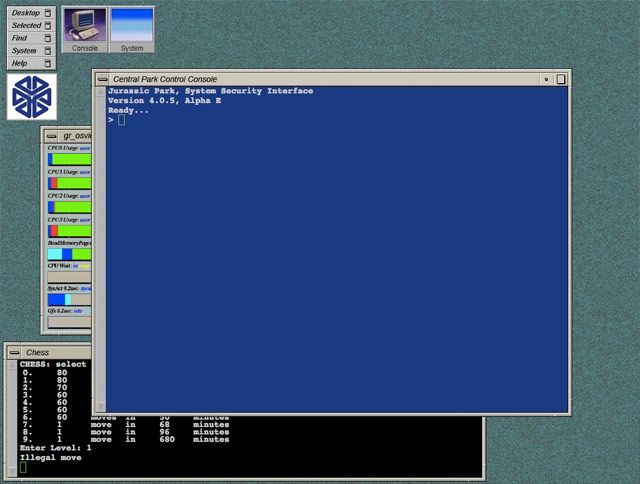
It may look a little confusing but just remember: this is a Unix system and you know this.
In his own words, Wes Anderson explains different aspects of his visual style.
Nicely edited together by Nelson Carvajal at Way Too Indie.
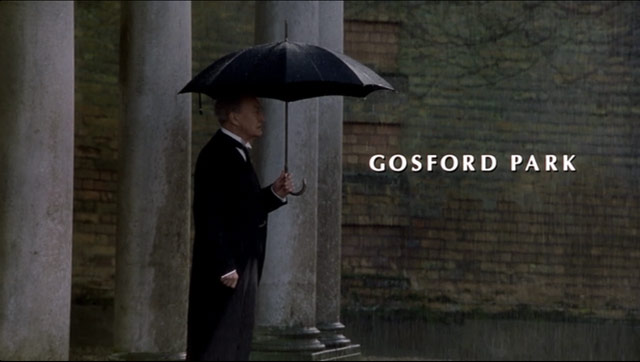
If you’re having Downton Abbey withdrawals, may I suggest Robert Altman’s Gosford Park? Written by Downton creator Julian Fellowes, it’s a proto-Downton of sorts: lots of upstairs/downstairs with a dash of mystery. And the cast! Clive Owen, Emily Watson, Stephen Fry, Kristin Scott Thomas, Michael Gambon, Derek Jacobi, Kelly Macdonald, Helen Mirren, Ryan Phillippe…and Maggie Smith plays a witty countess.
Watch it on Netflix Instant, at Amazon, or on iTunes.
My mind is so tiny these days it doesn’t take much to blow it, so grain of salt and all that. But, this theory that Andy’s mom in Toy Story is Jessie’s original owner is popping my fuse right now.
Several months ago, one of my anonymous Pixar Theory Interns (that’s a thing on a resume) came to me with a crazy proposition: Andy’s mom is Emily, Jessie’s previous owner.
I laughed. I then agreed.
Previously: a grand unified theory of Pixar.
Fine work as usual from Christian Annyas: a look at the design of the Warner Bros logo from 1923 to the present. The classic “WB” shield of my Bugs-and-Daffy-saturated youth will always be a favorite, but I do like the Saul Bass logo of the 70s and early 80s:
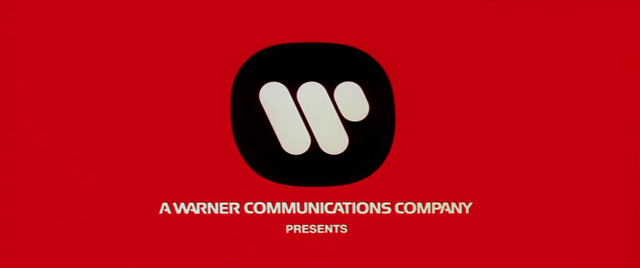
Affleck’s Argo and Soderbergh’s Magic Mike both used the Bass logo in place of the contemporary logo, which is the kind of little detail I love.
Huzzah! Long unavailable (or at least not widely available), Errol Morris’ documentary film on Stephen Hawking and his work, A Brief History of Time, is now available for rent or purchase on iTunes. Or if you can wait a little bit, there’s a Criterion Blu-ray edition coming out in mid-March. Bonus: score by Philip Glass!
This is called a billing block:
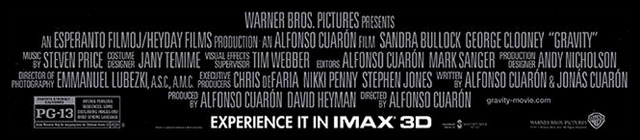
You find it at the bottom of movie posters and often at the end of movie trailers. In an Op-Art piece from last year, Ben Schott explains how the billing block is carefully constructed with information from contracts and legal agreements.
The content, order and format of the billing block are governed by two things: personal service contracts with cast and crew, and industrywide agreements with professional guilds — notably the Directors Guild of America (D.G.A.) and the Writers Guild of America (W.G.A.). Thus, while some elements of the billing block remain consistent, others depend of the type of film and on individual negotiations. That said, there has been a marked inflation in billing block credits. An “Ocean’s 11” poster from 1960 credited just three noncast individuals; the 2001 remake poster credited, coincidentally, 11.
Socials & More