kottke.org posts about movies
I’ve written before about the Shepard scale and its use by Hans Zimmer in the soundtrack for Dunkirk.
Zimmer and Dunkirk director Christopher Nolan achieved that effect by utilizing an auditory illusion called the Shepard tone, a sound that appears to infinitely rise (or fall) in pitch — the video above refers to it as “a barber’s pole of sound”.
The effect is apparent throughout the soundtrack as a seemingly never-ending crescendo. But as Ed Newton-Rex explains, Zimmer was a bit more clever in the way he used the Shepard scale in the music:
So Zimmer isn’t just using the Shepard scale to build tension. He’s using three simultaneous Shepard scales, on three different timescales, to build tension in three storylines that are moving at different paces. The bottom part represents the week of the soldiers; the middle part the day of the men on the boat; and the top part the hour of the pilots. All start in different places, but build in intensity to the same point.
In short, he’s taken the idea of the Shepard scale, and applied it to the unique structure of Dunkirk.
Cool!
Black Panther animation supervisor Daryl Sawchuk goes through some of the digital visual effects from the film, with an emphasis on the suits for Black Panther and Killmonger, both of which are extensively digital throughout the film.
I don’t know exactly when this happened, but somewhere in the past few years, the digital visual effects in these big action movies stopped looking fake to me. Either I’m less discerning about my blockbuster entertainment these days or the effects have successfully crossed the uncanny valley. Probably a bit of both. Engadget’s Devindra Hardawar disagrees, btw: ‘Black Panther’ is amazing. Why are its CG models so terrible?
You can see some more of Black Panther’s visual effects in this video and read about them in Art of VFX.
Last week, I was under the rock that everyone talks about and didn’t get to see Avengers: Infinity War until a couple of days ago. (Mild spoilers follow.) There’s a lot to like about the movie — I personally loved watching it — but the thing that surprised the hell out of me was how closely the motivations of Thanos and the Avengers echoed the subject of Charles Mann’s The Wizard and the Prophet.
Prophets look at the world as finite, and people as constrained by their environment. Wizards see possibilities as inexhaustible, and humans as wily managers of the planet. One views growth and development as the lot and blessing of our species; others regard stability and preservation as our future and our goal. Wizards regard Earth as a toolbox, its contents freely available for use; Prophets think of the natural world as embodying an overarching order that should not casually be disturbed.
Thanos is a prophet and the Avengers are wizards…both are even specifically referred to using those exact words at different points in the movie. More specifically, Thanos is a Malthusian…he wants to cut the population of the galaxy in half to up everyone’s quality of life. From the book, a description of economist Thomas Malthus’ ideas:
Human populations will reproduce beyond their means of subsistence unless they are held back by practices like celibacy, late marriage, or birth control. But the reproductive urge is so strong that people at some point will stop restricting births and have children willy-nilly. When this happens, populations inevitably grow too large to feed. Then disease, famine, or war step in and brutally reduce human numbers until they are again in balance with their means of subsistence — at which stage they will increase again, beginning the unhappy cycle anew.
Jeremy Keith noticed the same thing and I echo his amazement: “I was not expecting to be confronted with the wizards vs. prophets debate while watching Avengers: Infinity War”.

Dutch art gallery Cook & Becker is releasing a series of high quality art prints taken from the very Studio Ghibli-like game Ni No Kuni II. Beautiful stuff.
A large part of the appeal of the Ni No Kuni series is how the games look: it’s like you’re wandering around inside a lush Studio Ghibli animated film while playing a fantastical role-playing game. That was certainly true of the recent Ni No Kuni II: Revenant Kingdom — this in spite of the fact that the famed animation house wasn’t technically involved. It still bore the telltale signs of a Ghibli production, however, including the charming character designs of Yoshiyuki Momose and huge, stunning locations including mysterious, bioluminescent forests and vast kingdoms.
This summer for the 50th anniversary of the film, Warner Bros. is releasing a 70mm print of 2001: A Space Odyssey made from the original camera negative. Christopher Nolan, who oversaw the process, explains that this release will be as close to what Kubrick intended as possible:
For the first time since the original release, this 70mm print was struck from new printing elements made from the original camera negative. This is a true photochemical film recreation. There are no digital tricks, remastered effects, or revisionist edits. This is the unrestored film — that recreates the cinematic event that audiences experienced fifty years ago.
Here’s a trailer for the new print:
On YouTube, Krishna Ramesh Kumar compared some of the shots in this trailer with those from the 2007 Blu-ray version of the film. Some of the scenes look pretty different in tone:
As part of a larger anthology film called Paris Je T’aime, the Coen brothers directed a short film about a character played by Steve Buscemi waiting for a train in the Tuileries Metro station. Buscemi makes the mistake of making eye contact with another person.
The entire movie sounds really interesting…I just put it on my watch list. 20 directors were chosen to direct short films, one each about the 20 Parisian arrondissements, among them the Coens, Alfonso Cuarón, Alexander Payne, Tom Tykwer, and Olivier Assayas. And in addition to Buscemi, the film features appearances by Juliette Binoche, Willem Dafoe, Nick Nolte, Maggie Gyllenhaal, Elijah Wood, and Natalie Portman. (via open culture)
I know it’s almost May of 2018, but I missed Art of the Title’s Top 10 Title Sequences of 2017 when it came out back in January, so here you go. Come on, it ain’t so bad…nothing in the preceding four months has made these sequences any worse. For example, the opening credits for Guardians of the Galaxy Vol. 2 are still delightful:
Or the spooky credits for Mindhunter, which remind me of the opening titles for Six Feet Under & Se7en and the rolling tape footage used extensively in The Fog of War.
Two men attending the same college in the early 80s kept getting mistaken for each other and when they met, they realized that they were actually twins. And then they met a third doppelganger, who turned out to the third triplet, all separated from each other at birth. Three Identical Strangers, a feature-length documentary that premiered at Sundance, tells the story of the three men: how they met, what happened after they were born, and “an extraordinary and disturbing secret that goes beyond their own lives”.
50 years ago this month, Stanley Kubrick’s 2001: A Space Odyssey premiered in the US. For this week’s issue of the New Yorker, Dan Chiasson looks at the cultural impact of the film, which got off to a rocky start.
Fifty years ago this spring, Stanley Kubrick’s confounding sci-fi masterpiece, “2001: A Space Odyssey,” had its premières across the country. In the annals of audience restlessness, these evenings rival the opening night of Stravinsky’s “Rite of Spring,” in 1913, when Parisians in osprey and tails reportedly brandished their canes and pelted the dancers with objects. A sixth of the New York première’s audience walked right out, including several executives from M-G-M. Many who stayed jeered throughout. Kubrick nervously shuttled between his seat in the front row and the projection booth, where he tweaked the sound and the focus. Arthur C. Clarke, Kubrick’s collaborator, was in tears at intermission. The after-party at the Plaza was “a room full of drinks and men and tension,” according to Kubrick’s wife, Christiane.
Chiasson references a 1966 profile of Kubrick in the New Yorker by Jeremy Bernstein, which catches the filmmaker in the act of making 2001.
In addition to writing and directing, Kubrick supervises every aspect of his films, from selecting costumes to choosing the incidental music. In making “2001” he is, in a sense, trying to second-guess the future. Scientists planning long-range space projects can ignore such questions as what sort of hats rocket-ship hostesses will wear when space travel becomes common (in “2001” the hats have padding in them to cushion any collisions with the ceiling that weightlessness might cause), and what sort of voices computers will have if, as many experts feel is certain, they learn to talk and to respond to voice commands (there is a talking computer in “2001” that arranges for the astronauts’ meals, gives them medical treatments, and even plays chess with them during a long space mission to Jupiter-“Maybe it ought to sound like Jackie Mason,” Kubrick once said), and what kind of time will be kept aboard a spaceship (Kubrick chose Eastern Standard, for the convenience of communicating with Washington). In the sort of planning that nasa does, such matters can be dealt with as they come up, but in a movie everything is immediately visible and explicit, and questions like this must be answered in detail. To help him find the answers, Kubrick has assembled around him a group of thirty-five artists and designers, more than twenty special-effects people, and a staff of scientific advisers. By the time the picture is done, Kubrick figures that he will have consulted with people from a generous sampling of the leading aeronautical companies in the United States and Europe, not to mention innumerable scientific and industrial firms. One consultant, for instance, was Professor Marvin Minsky, of M.I.T., who is a leading authority on artificial intelligence and the construction of automata. (He is now building a robot at M.I.T. that can catch a ball.) Kubrick wanted to learn from him whether and if the things that he was planning to have his computers do were likely to be realized by the year 2001; he was pleased to find out that they were.
A new book by Michael Benson, Space Odyssey: Stanley Kubrick, Arthur C. Clarke, and the Making of a Masterpiece, looks back at how the film was made. The visual effects are one of the reasons the film is so celebrated today; Vulture took a quick look at four of the most influential effects:
The ending of the film can still be puzzling after several viewings — deliberately so, according to Kubrick — but ScreenPrism took a crack at a literal explanation of the Giant Space Baby et al.:
Kubrick himself explained the plot of 2001 in a 1969 interview in just two paragraphs:
You begin with an artifact left on earth four million years ago by extraterrestrial explorers who observed the behavior of the man-apes of the time and decided to influence their evolutionary progression. Then you have a second artifact buried deep on the lunar surface and programmed to signal word of man’s first baby steps into the universe — a kind of cosmic burglar alarm. And finally there’s a third artifact placed in orbit around Jupiter and waiting for the time when man has reached the outer rim of his own solar system.
When the surviving astronaut, Bowman, ultimately reaches Jupiter, this artifact sweeps him into a force field or star gate that hurls him on a journey through inner and outer space and finally transports him to another part of the galaxy, where he’s placed in a human zoo approximating a hospital terrestrial environment drawn out of his own dreams and imagination. In a timeless state, his life passes from middle age to senescence to death. He is reborn, an enhanced being, a star child, an angel, a superman, if you like, and returns to earth prepared for the next leap forward of man’s evolutionary destiny.
And there’s much more to explore about 2001 in the kottke.org archives.
When warning about the dangers of artificial intelligence, many doomsayers cite philosopher Nick Bostrom’s paperclip maximizer thought experiment.
Imagine an artificial intelligence, he says, which decides to amass as many paperclips as possible. It devotes all its energy to acquiring paperclips, and to improving itself so that it can get paperclips in new ways, while resisting any attempt to divert it from this goal. Eventually it “starts transforming first all of Earth and then increasing portions of space into paperclip manufacturing facilities”. This apparently silly scenario is intended to make the serious point that AIs need not have human-like motives or psyches. They might be able to avoid some kinds of human error or bias while making other kinds of mistake, such as fixating on paperclips. And although their goals might seem innocuous to start with, they could prove dangerous if AIs were able to design their own successors and thus repeatedly improve themselves. Even a “fettered superintelligence”, running on an isolated computer, might persuade its human handlers to set it free. Advanced AI is not just another technology, Mr Bostrom argues, but poses an existential threat to humanity.
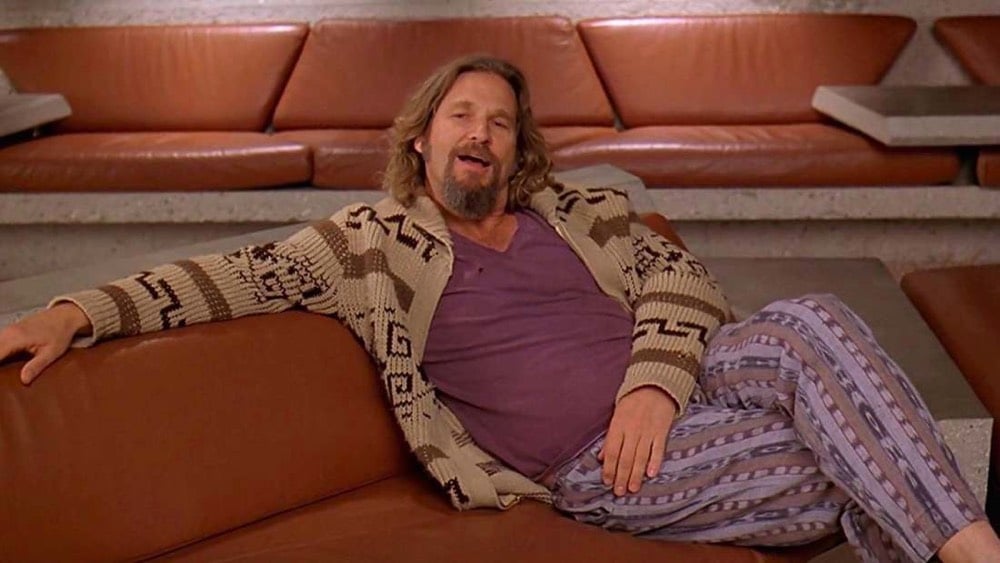
Harvard cognitive scientist Joscha Bach, in a tongue-in-cheek tweet, has countered this sort of idea with what he calls “The Lebowski Theorem”:
No superintelligent AI is going to bother with a task that is harder than hacking its reward function.
In other words, Bach imagines that Bostrom’s hypothetical paperclip-making AI would foresee the fantastically difficult and time-consuming task of turning everything in the universe into paperclips and opt to self-medicate itself into no longer wanting or caring about making paperclips, instead doing whatever the AI equivalent is of sitting around on the beach all day sipping piña coladas, a la The Big Lebowski’s The Dude.
Bostrom, reached while on a bowling outing with friends, was said to have replied, “Yeah, well, you know, that’s just, like, your opinion, man.”
Update: From science fiction writer Stanisław Lem’s The Futurological Congress, published in 1971:
Spent the whole afternoon ingesting a most remarkable work, The History of Intellectronics. Who’d ever have guessed, in my day, that digital machines, reaching a certain level of intelligence, would become unreliable, deceitful, that with wisdom they would also acquire cunning? The textbook of course puts it in more scholarly terms, speaking of Chapulier’s Rule (the law of least resistance). If the machine is not too bright and incapable of reflection, it does whatever you tell it to do. But a smart machine will first consider which is more worth its while: to perform the given task or, instead, to figure some way out of it. Whichever is easier. And why indeed should it behave otherwise, being truly intelligent? For true intelligence demands choice, internal freedom. And therefore we have the malingerants, fudgerators and drudge-dodgers, not to mention the special phenomenon of simulimbecility or mimicretinism. A mimicretin is a computer that plays stupid in order, once and for all, to be left in peace.
See also the principle of least effort. (thx, michał)
P.S. Also, come on, no one drinks White Russians on the beach. Ok, maybe The Dude would.
Recutting movie trailers to wrong-foot movies into different genres is an old YouTube tradition — see The Shining as a romantic comedy, 90s-style opening credit sequences for prestige dramas like Game of Thrones, and Toy Story as a horror film — but this recasting of Wall-E into trailers for seven different genres (including a Jony Ive bit at an Apple keynote) is a good demonstration of the power of film editing. Just switch a few scenes, slip in some different music, change the pacing of cuts, and you’ve got yourself a completely different movie. Watching these types of videos always makes me think that film editors do not get the credit they deserve. (See, for example, how extensive editing rescued Star Wars.) (via @johnbarta)
The other day I observed that whenever a new issue of the Noticing newsletter goes out, a bunch of people unsubscribe. When this happens each week I panic a little, so I asked other newsletter writers if this happened to them too. And it does.
In the ensuing thread, a former Twitter employee chimed in to say that “the single biggest correlation with people unfollowing an account [on Twitter] was whenever an account tweeted anything at all”. And someone else chimed in with “historically the biggest problem of newspaper subscriptions: physical delivery of the damn things leads to churn!” I also remarked that this reminded me of Jon Bois’ amazing Chart Party episode on Barry Bonds, where he concludes (spoilers!) that in 2004, Bonds would have finished with essentially the same on-base percentage if he hadn’t used a bat for the entire season.
Newsletters you’re better off not sending, newspapers you shouldn’t publish, and pitches you should never swing at. Was WOPR right in WarGames? Is the only winning move not to play?
Global thermonuclear war notwithstanding, this issue highlights the need to keep in mind why you’re playing a particular game in the first place. I often return to something that Ludicorp (makers of Flickr) had on their about page from a book by Charles Spinosa et al. about the goal of business:
Business owners do not normally work for money either. They work for the enjoyment of their competitive skill, in the context of a life where competing skillfully makes sense. The money they earn supports this way of life. The same is true of their businesses. One might think that they view their businesses as nothing more than machines to produce profits, since they do closely monitor their accounts to keep tabs on those profits.
But this way of thinking replaces the point of the machine’s activity with a diagnostic test of how well it is performing. Normally, one senses whether one is performing skillfully. A basketball player does not need to count baskets to know whether the team as a whole is in flow. Saying that the point of business is to produce profit is like saying that the whole point of playing basketball is to make as many baskets as possible. One could make many more baskets by having no opponent.
The game and styles of playing the game are what matter because they produce identities people care about. Likewise, a business develops an identity by providing a product or a service to people. To do that it needs capital, and it needs to make a profit, but no more than it needs to have competent employees or customers or any other thing that enables production to take place. None of this is the goal of the activity.
The people who work for newspapers want to provide their readers with high quality information.1 Barry Bonds wants to play baseball, be competitive, and provide entertainment to the fans instead of standing bat-less in the batter’s box; the Giants & MLB presumably want those things as well. With my efforts here and with the newsletter, I’m not playing a subscriber or profits maximization game — I want to share my ideas & information that I find and connect with people. This isn’t to say that you shouldn’t keep your eye on how much money you make or how many subscribers you’ve got for a relatively new newsletter,2 but keeping your purpose firmly in mind while you do those things is of paramount importance. Otherwise you’re just stalemating yourself.
Chadwick Boseman, who portrays T’Challa in Black Panther, hosted Saturday Night Live over the weekend, appearing in character on Black Jeopardy. Let’s just say T’Challa finds it challenging to understand the cultural references and idioms of contemporary American Black English but eventually gets the hang of it. I laughed solidly, and at times uncomfortably, through the entire thing.
See also Tom Hanks’ appearance on Black Jeopardy, which Jamelle Bouie highlighted as a particularly astute piece of American political analysis.
The Auralnauts have finished up their epic comedic retelling of the first six episodes of Star Wars with episode 6, The Last Laser Master. Follow Laser Master Duke Dirtfarmer and his friends in the fight against the Empire and its fearsome planet-killing weapon: Laser Moon II.
You can watch the five other episodes — including Jedi Party, The Friend Zone, and Revenge of Middle Management — in this playlist.
For snackier Auralnauts fare, see How to make a blockbuster movie trailer, some Bane outtakes from the Dark Knight Rises, and the Star Wars throne room scene minus the John Williams score.
Quick reviews of some things I’ve read, seen, heard, and experienced in the past month or so. I was out of town for a few days so there are more books on here than usual. I’m trying to keep it up…reading right now but too early to call: Broad Band, Am I There Yet?, Black Panther: A Nation Under Our Feet. Oh and I’m really glad The Americans is back on, even though it’s the final season. (As I’ve said before, don’t pay too much attention to the letter grades. They are subjective and frequently wrong.)
Star Trek Voyager. Not in the same league as Next Generation, but it hums along nicely after they get going. (B)
Mr. Robot. I watched the first episode of season three and then got distracted by other things. Anybody watch the whole season? Is it worth circling back? (TBD)
Annihilation. I enjoyed this more than many people I know, but not as much as Matt Zoller Seitz. Eager to watch it again since reading the book (see below). (B+)
Lincoln. I love this movie. One of Spielberg’s best. (A)
Ugly Delicious. I wanted to hate this, but it’s really interesting and David Chang wears you down with his, well, I wouldn’t call it charm exactly. The episode that really hooked me was the Thanksgiving one, when he’s wandering around a massive supermarket with his mom, who’s mockingly calling him “David Chang” (you can almost hear the appended ™ in her voice) and then refers to him as the “Baby King”. Also, for a chef, Chang is weirdly incurious about food but harangues people for not appreciating kimchi. I really should write a longer post about this… (A-)
Murder on the Orient Express. Better than I had heard, if you choose to embrace its slight campiness. I really enjoyed Branagh’s Poirot. (B+)
Geostorm. I love disaster movies like this, but I kept checking my phone during this one and a day or two later I couldn’t have told you a single plot point. That will not stop me from watching it again because (see first sentence). (C)
Sunsets. I recommend them, particularly on the beach. (A)
The Wizard and the Prophet by Charles Mann. “I recommend that you read The Wizard and the Prophet”. (A)
Sing, Unburied, Sing by Jesmyn Ward. Great book, deserving of all its accolades. (A-)
Annihilation by Jeff VanderMeer. This is likely an unpopular opinion, but I liked the movie more. Upon finishing, I was not inclined to read the sequels. (B)
The Odyssey, translated by Emily Wilson. As I mentioned here, I’m reading this aloud to my kids, which feels a little like a time machine trip back to antiquity. (A)
An Incomplete History of Protest. Inspiring collection of objects related to the protests of everything from the AIDS crisis to Vietnam. Fascinating to see how the disenfranchised leveraged art and design to counter their neglect by the powerful. (A-)
Grant Wood: American Gothic and Other Fables. Fun to see American Gothic up close, but I was more impressed by some of Wood’s other work, particularly his illustration-like landscapes. I showed the kids a photo I had taken of one of the paintings and Ollie said, “that looks like a 3D rendering!” (B+)
Stephen Shore at MoMA. I’d label this a “must see” if you’re into photography at all. Shore’s shape-shifting career is inspiring. (A-)
Red Sparrow. I was texting with a friend about how cool it would be if J. Law’s character in Red Sparrow was Paige Jennings from The Americans all grown up, but the timelines don’t match up. (B-)
Harry Potter Hogwarts Battle. I don’t play a lot of board games so maybe this is a common thing now, but I really like how all the players have to work together against the game to win. But once you get past the first couple of decks, the games take *forever*. (B+)
The Royal Tenenbaums. Rushmore will always be my sentimental Wes Anderson fave, but Tenenbaums is right up there. (A)
Consider the Lobster by David Foster Wallace. I have been listening to the audiobook version while in the car, and Wallace’s reading of the first story, Big Red Son (about an adult video awards show), made me laugh so hard that I had to pull of the road at one point. (A)
Logan Lucky. Much better on the second watch. I don’t know why I didn’t appreciate it the first time around…I love Soderbergh and this is basically Ocean’s 7/11. (A-)
Moon. I saw this when it originally came out but didn’t like it as much the second time around. Great soundtrack though. (B+)
Sleep. An 8-hour-long album designed to be played while you sleep. I listened to the entire album while working, and it’s pretty good for that purpose as well. (A-)
Simon and the Whale. Wonderful room and service. Really good cocktails. I know the kitchen crew and they still blew me away with the food. (A)
Girls Trip. I haven’t laughed so hard at a movie since I don’t know when. Bridesmaids maybe? Can’t wait to watch this again in a few months. (A-)
Ready Player One. I very much enjoyed watching this movie. Spielberg must have had fun going back through the 80s pop culture he had a large part in shaping. (A-)
Electricity. I’m writing this not from my usual home office but from the lobby of the local diner/movie theater. We had a wind storm last night, which knocked the power out at my house. That means no heat, no water, no wifi, and very poor cell reception. And a tree came down across the road I live on, so I was “stranded” for a few hours this morning until someone showed up with a chainsaw. I unreservedly recommend electricity (and civilization more generally). (A+)
Newer posts
Older posts





Socials & More