kottke.org posts about movies
I finally got a chance to watch “Fury” last weekend, and the part of the movie that was the most compelling to me was the end title sequence. The sequence terrifyingly captures the slamming chaos of war. (Contains graphic imagery.)
The main title sequence and the end title sequence were created by Greenhaus GFX.
HBO will premiere the critically acclaimed authorized documentary Kurt Cobain: Montage of Heck later this year on May 4. Here’s the trailer:
Looks promising. The film is directed by Brett Morgen, who also did the excellent The Kid Stays in the Picture documentary about Robert Evans. And the name comes from a late-80s mixtape made by Cobain.
2015 seems like a pretty good year to do a documentary about Back to the Future. Here’s a trailer:
The scope of the film has changed since the project started — it was originally just about the DeLorean Time Machine — and so the production team has gone back to Kickstarter to fund completion of the film. (via @ystrickler)
Ok, I’m starting to feel better about Inside Out, Pixar’s upcoming animated feature that takes place mostly inside the mind of a young girl. The first trailer featured a bunch of gender stereotypes and mostly left me scratching my head, but the second trailer is solid:
First the actual Michael Bolton pops up in Office Space and now Derek Zoolander and Hansel are walking an actual runway show during Paris Fashion Week:
Is this what we have to look forward to for the next 10 years, late-90s/early-00s media remixed for an aging and increasingly wealthy Generation X? Bring it on?
Update: Here’s the video of the whole show; the Zoolander appearance happens right at the beginning.
And as if there were any doubt, the stunt was a promo for Zoolander 2, which will come out in 2016.
Update: At one point, Zoolander grabbed the phone out of someone’s hand and walked with it. Here’s the video of that.
The someone turns out to be Jerome Jarre, a big Vine star who gets paid by brands to do this sort of thing all the time so chances are it was staged. Sorry, there are no more genuine moments left, it’s all fake from now on.
Funny or Die digitally inserted the singer Michael Bolton into Office Space, where he plays Michael Bolton, the Initech programmer.
(via devour)
From filmmaker Adam Curtis, a four-part documentary series on “how those in power have used Freud’s theories to try and control the dangerous crowd in an age of mass democracy”. Here’s part one:
And continue with the rest in this playlist. Here is a good review:
This is a powerful and arresting documentary series — I ended up watching all four episodes back to back in a marathon effort. It was that gripping. I had felt similarly about his more recent documentary about the rise of neo conservatism and arab fundamentalism and the similarity in their techniques for recruiting followers (and their mutual need of each other in that project) — but ‘The Century of the Self’ (TCS from now on), is much grander in its scope. It seeks to analyse the different conceptions of the self in the twentieth century, and how these conceptions were ultimately used by corporations to manipulate consumers into purchasing their products. Curtis takes large swipes at corporate capitalism in this documentary, but his target is even wider than this — he seeks to tell a story about the relationship between the differing conceptions of individualism and the capitalist, democratic institutions (corporations and governments) which organise themselves around these conceptions.
(thx, kyle)
In Mr. Holmes, Ian McKellen plays a post-retirement Sherlock Holmes who has moved to the country to take up beekeeping. Here’s the trailer:
Update: Not that the first trailer was bad or anything, but this new one provides much more of a sense of what the film is about.
I’m going to watch the shit out of this movie.
For the New Yorker, Alex Ross writes about movie soundtracks, with an emphasis on the scores for the 2014 crop of films.
This year’s Oscar nominations for Best Original Score did the field few favors, overlooking some significant work. Jonny Greenwood, increasingly known as much for his film music as for his contributions to Radiohead, has yet to be acknowledged by the Academy, despite his idiosyncratic, imaginative collaborations with the director Paul Thomas Anderson, most recently in “Inherent Vice.” Jason Moran deserved a nod for his “Selma” score, which oscillates between subdued moods of hope and dread, avoiding the telltale gestures of the great-man bio-pic. (The Aaron Copland trumpet of lonely American power is in abeyance.) Most baffling was the omission of Mica Levi’s score for “Under the Skin,” which, like Greenwood’s work for Anderson, moves from seething dissonance to eerie simplicity and back again.
I listen to movie soundtracks quite a bit; they’re good to play while working. Here are a few I’ve enjoyed from 2014:
As part of Errol Morris Week on Grantland1, Alex Pappademas did a great interview with Morris about his work. Morris has interviewed serial killers, Holocaust deniers, rapists, and the architect of the Vietnam War but said that the person that most challenged his capacity for empathy was Donald Rumsfeld.
He’s confident right now! He doesn’t have to wait 100 or 500 years. He doesn’t care. I really care whether I’m right or wrong. I really do care. And probably for lots of reasons. I don’t want to be seen as a dumbass, I don’t want to be seen as someone who believes in something that’s absolutely false, untrue, something that can’t be substantiated, checked. I believe that there’s some deep virtue in pursuing truth. Maybe it’s the highest virtue. I believe that. Whether you can attain it or not, you can pursue it. It can be a goal. It can be a destination. I don’t believe that’s Donald Rumsfeld’s goal. I believe that Robert S. McNamara really wanted to understand what he had done and why he had done it. You know, we remain a mystery to ourselves, among the many, many, many other mysteries there are. And McNamara’s struggle with his own past — I was deeply moved by it. I think he’s a war criminal, I think he sees himself as a war criminal, but I like him.
Update: Another recent interview, by Brin-Jonathan Butler, is being offered as a 99¢ Kindle Single.
Someone edited the courtroom scene from A Few Good Men and took out all the dialogue, leaving just the reaction shots. It’s surprisingly coherent and dramatic.
See also Dr. Phil without dialogue and musicless music videos. (via @pieratt)
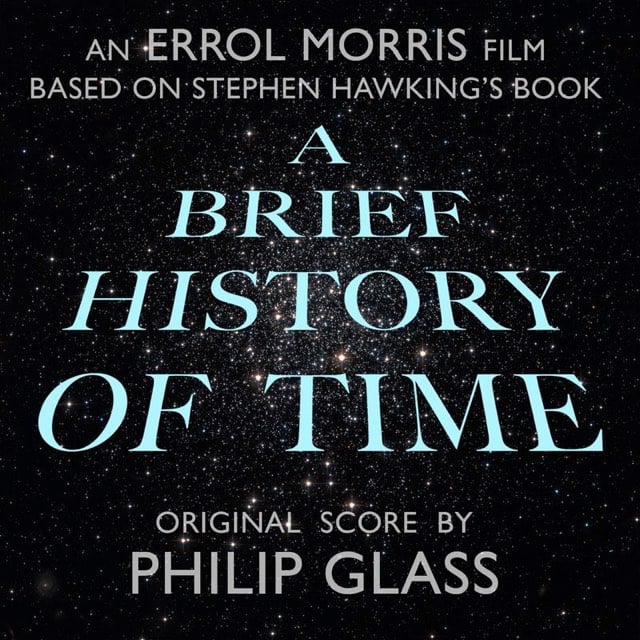
Philip Glass did the soundtrack for A Brief History of Time, Errol Morris’ documentary on Stephen Hawking, but it was never released as an album. Until earlier this month. Huzzah! Appears to only be available on iTunes — couldn’t find it on Amazon, Rdio, or Spotify — and I wish they’d done more with that cover. Bleh.
From Dissolve, a video that recreates scenes from some Oscar winning movies using only stock footage.
The recreated movies include Gladiator, The Social Network, Jurassic Park, and 2001. See also their first effort at this sort of thing.
A montage of hundreds of sounds from Quentin Tarantino’s movies, from Zed drumming his fingers on top of the gimp’s head in Pulp Fiction to the schiiiiing of The Bride’s Hattori Hanzo sword in Kill Bill.
From Steven Benedict, a short video essay featuring the characters from different Coen brothers’ films talking to each other. According to Benedict, the dialogue reveals three main themes of their movies.
While other essays have assembled several recurring visual tropes: elevators, dogs, dream sequences, bathrooms etc., this essay has the characters talk to one another across the films so we can more clearly hear the Coens’ dominant concerns: identity, miscommunication and morality. Taken as a trinity, these elements indicate that the Coens’ true subject is the search for value in a random and amoral universe.
(via @khoi)
Wooper is a Robot Chicken parody of Looper, in which cartoon characters like Elmer Fudd are sent back in time to be killed because they can’t show guns in children’s cartoons anymore.
(via @gruber)
In this persuasive video, Chris Stuckmann argues that today’s action movies are mostly bad and provides six reasons why.
His fifth point, the camerawork, drives him a little crazy.
Shakycam. Fucking shakycam. At some point, someone somewhere told Hollywood that people like incoherent incompetent camera work, blinding the audience with multiple cuts and assaulting us with nothing but a barrage of sound effects that are supposed to subconsciously tell us that something is happening on screen.
See also how to do action comedy from Every Frame a Painting and Chaos Cinema from Mattias Stork. (via devour)
Here’s a good explanation of what the One Ring from Lord of the Rings actually is and what it can do:
I transcribed a short passage from the video:
First, the ring tempts everyone (well, almost everyone) with promises that yes, this little ring can be a mighty weapon or a tool to reshape the world and gosh don’t you just look like the best guy to use it. Let’s go vanquish the powerful demigod who lives over there to get started, shall we? This is why the hobbits made great ring bearers, because they’re pretty happy with the way things are and don’t aspire to greatness. Of course, there’s Gollum, who started out as a hobbit, but all things considered, he held out pretty well for a couple hundred years. Set the ring on the desk of most men and they wouldn’t be able to finish their coffee before heading to Mordor to rule the world and do it right this time.
What’s interesting about hearing of The Ring in this focused way is how it becomes a part of Tolkien’s criticism of technology. The Ring does what every mighty bit of tech can do to its owner/user: makes them feel powerful and righteous. Look what we can do with this thing! So much! So much good! We are good therefore whatever we do with this will be good!
The contemporary idea of the tech startup is arguably the most seductive and powerful technology of the present moment, the One Ring of our times. It’s not difficult to modify a few words in the passage above to make it more current:
First, the startup tempts everyone (well, almost everyone) with promises that yes, this little company can be a mighty weapon or a tool to reshape the world and gosh don’t you just look like the best guy to use it. Let’s go disrupt the powerful middleman who lives over there to get started, shall we? This is why the nerds made great ring bearers, because they’re pretty happy with the way things are and don’t aspire to greatness. Of course, there’s Sergey and Larry, who started out as nerds, but all things considered, they held out pretty well for a decade. Set the ring on the desk of most men and they wouldn’t be able to finish their mail-order espresso before heading to Silicon Valley to rule the world and do it right this time.
Ok, haha, LOL, and all that, but it’s curious that nerds (and everyone else) shelled out billions of dollars to watch Peter Jackson’s LOTR movies in the early 2000s in the aftermath of the dot com bust. Those were dark times…the power of the startup had just been lost after Kozmo’s CEO Dave Isildur was slain by economists while delivering a single pint of Ben & Jerry’s Chubby Hubby to far reaches of the Outer Sunset and had not yet been rediscovered by Schachter, Butterfield, and Zuckerberg.
And these nerds, whose spines all tingled when Aragorn charged into the hordes of Mordor — for Frodo! — and whose eyes filled with tears when Frodo parted with Sam at the Grey Havens, came away from that movie experience siding with Boromir, Saruman, and Denethor, determined to seize that startup magic for themselves to disrupt all of the things, defeat the evil corporate middlemen, and reshape the world to be a better and more efficient place. And gosh don’t you just look like the best guy to use it?
From the Motion Picture Editors Guild, a list of the 75 best-edited movies of all time.
As for directors, Alfred Hitchcock is the most often cited, making the list 5 times (although not placing in the top 10), and spanning 3 decades. Right behind him are Steven Spielberg and Francis Ford Coppola, both of whom made the list 4 times. Like Hitchcock, Spielberg’s pictures were released over 3 decades. Coppola’s pictures, however, were all released in the 1970s - with 2 in 1974 (the only director with 2 films in a single year). All of his pictures placed in the top 22 films, with 3 of them in the top 11. At the other end of the continuum, there were 33 years between Terrence Malick’s 2 films on the list.
Directors Stanley Kubrick and Martin Scorsese follow, with 3 films each making the cut. Tied with Malick for 2 pictures are Bob Fosse, William Friedkin, Akira Kurosawa, Christopher Nolan, Ridley Scott, Steven Soderbergh, Orson Welles and Bob Wise; all others received 1 mention.
The top ten:
1. “Raging Bull” (Thelma Schoonmaker, 1980)
2. “Citizen Kane” (Robert Wise, 1941)
3. “Apocalypse Now” (Lisa Fruchtman, Gerald B. Greenberg, Walter Murch, 1979)
4. “All That Jazz” (Alan Heim, 1979)
5. “Bonnie And Clyde” (Dede Allen, 1967)
6. “The Godfather” (William H. Reynolds, Peter Zinner, 1972)
7. “Lawrence of Arabia” (Anne V. Coates, 1962)
8. “Jaws” (Verna Fields, 1975)
9. “JFK” (Pietro Scalia, Joe Hutshing, 1991)
10. “The French Connection” (Gerald B. Greenberg, 1971)
You think of filmmaking as male dominated, but one thing I noticed about that top 10 right away: five women in the list, including three in the top five. (via hitfix)
Update: Women have been well-represented in film editing in part because the job began as menial labor.
For much of Hollywood history, there were virtually no filmmaking opportunities available to women other than screenwriting and acting — with one major exception. Women have always been welcomed — and in many quarters preferred by male directors — as film editors, or “cutters,” as they were originally known. In the early days, the job was regarded as menial labor, and it largely was. Cutters worked by hand, running film on reels with hand cranks and manually cutting and gluing together strips of it. (Moreover, they almost never received screen credit.) After the advent of the Moviola editing machine in 1924, the process became faster and easier, but was still tedious and low paying, which is why most cutters remained young, working-class women.
It was around this time that the job of cutting films became less about just maintaining proper continuity and more about being creative. The Russian films of Sergei Eisenstein introduced the concept of montage — how “colliding” separate pieces of film together could advance a storyline and manipulate viewers’ emotions — and this approach became widely discussed and imitated the world over, not least of all by some of the more enterprising female cutters in America, some of whom, like Margaret Booth, began to experiment with leftover footage on the cutting room floor and proved to be quite inventive.
More on the early history here. (via @ironicsans)
I liked Magic Mike and I hope this one is going to be as good, although no McConaughey hey hey girl, so I dunno.
And also, Soderbergh is not returning as director, although he is responsible for the movie’s cinematography, editing, and even some camera operating.
File this under #notfromtheonion: Philip Glass is co-composing the score for the new The Fantastic Four movie.
Ahead of 20th Century Fox’s latest superhero reboot of The Fantastic Four, director Josh Trank has confirmed that composer Philip Glass will be scoring the forthcoming film with Marco Beltrami.
Trank, best known for his 2012 film Chronicle, spoke to Collider about his long time admiration for the composer, and said that he had been working with Glass for around a year on the film after contacting his manager.
Previous films scored by Glass include The Hours, Koyaanisqatsi, A Brief History of Time, and The Fog of War. But this actually isn’t too much of a surprising departure for Glass…he did the scores for both Candyman and Candyman II, horror films based on a short story by Clive Barker.
The Dissolve picks the 50 best films of the current decade. Picks 50-26, and picks 25-1. Boyhood, The Social Network, Under the Skin, and Inside Llewyn Davis all rank high. (via @khoi)
Tim Wu writes for the New Yorker about how Netflix uses a ~70/30 combination of data and human judgment to determine their recommendations and what shows/movies to make.
Over the years, however, I’ve started to wonder whether Netflix’s big decisions are truly as data driven as they are purported to be. The company does have more audience data than nearly anyone else (with the possible exception of YouTube), so it has a reason to emphasize its comparative advantage. But, when I was reporting a story, a couple of years ago, about Netflix’s embrace of fandom over mass culture, I began to sense that their biggest bets always seemed ultimately driven by faith in a particular cult creator, like David Fincher (“House of Cards”), Jenji Leslie Kohan (“Orange is the New Black”), Ricky Gervais (“Derek”), John Fusco (“Marco Polo”), or Mitchell Hurwitz (“Arrested Development”). And, while Netflix does not release its viewership numbers, some of the company’s programming, like “Marco Polo,” hasn’t seemed to generate the same audience excitement as, say, “House of Cards.” In short, I do think that there is a sophisticated algorithm at work here — but I think his name is Ted Sarandos.
I presented Sarandos with this theory at a Sundance panel called “How I Learned to Stop Worrying and Trust the Algorithm,” moderated by Jason Hirschhorn, formerly of MySpace. Sarandos, very agreeably, wobbled a bit. “It is important to know which data to ignore,” he conceded, before saying, at the end, “In practice, its probably a seventy-thirty mix.” But which is the seventy and which is the thirty? “Seventy is the data, and thirty is judgment,” he told me later. Then he paused, and said, “But the thirty needs to be on top, if that makes sense.”
This reminds me of the situation in chess, where cyborg human/computer teams can beat computer- or human-only players in chess, although perhaps for not much longer.
Some of you will know that Average is Over contains an extensive discussion of “freestyle chess,” where humans can use any and all tools available — most of all computers and computer programs — to play the best chess game possible. The book also notes that “man plus computer” is a stronger player than “computer alone,” at least provided the human knows what he is doing. You will find a similar claim from Brynjolfsson and McAfee.
Computer chess expert Kenneth W. Regan has compiled extensive data on this question, and you will see that a striking percentage of the best or most accurate chess games of all time have been played by man-machine pairs. Ken’s explanations are a bit dense for those who don’t already know chess, computer chess, Freestyle and its lingo, but yes that is what he finds, click on the links in his link for confirmation. In this list for instance the Freestyle teams do very very well.
I wonder what the human/cyborg split is at Buzzfeed or Facebook? Or at food companies like McDonald’s or Kraft? Or at Goldman Sachs?
The producers of A Most Violent Year, one of the year’s most acclaimed movies, are doing something interesting to promote their film. They’re running a blog that posts all sorts of media and information about NYC in 1981, the year the film is set. Today, they released a short documentary that features interviews with some people who were scraping together lives in NYC circa 1981. It’s worth watching:
Featuring Guardian Angels founder Curtis Sliwa, performance artist and former Warhol Factory fixture Penny Arcade, actress Johnnie Mae, Harlem street-style legend Dapper Dan, auto body shop owner Nick Rosello, and trucking union rep Wayne Walsh.
The trailer for A Most Violent Year is here…I’ve heard good things about this one and hope to catch it soon.
Someone called TolkienEditor has cut the three Peter Jackson The Hobbit movies down into a single 4-hour film and put the result up on BitTorrent. Their goal was to make the film hew more closely to the book, put the focus back on Bilbo as the main character, and to quicken the pace of the narrative.
The investigation of Dol Guldor has been completely excised, including the appearances of Radagast, Saruman and Galadriel. This was the most obvious cut, and the easiest to carry out (a testament to its irrelevance to the main narrative). Like the novel, Gandalf abruptly disappears on the borders of Mirkwood, and then reappears at the siege of the Lonely Mountain with tidings of an orc army.
The Tauriel-Legolas-Kili love triangle has also been removed. Indeed, Tauriel is no longer a character in the film, and Legolas only gets a brief cameo during the Mirkwood arrest. This was the next clear candidate for elimination, given how little plot value and personality these two woodland sprites added to the story. Dwarves are way more fun to hang out with anyway.
I enjoyed PJ’s The Hobbit, particularly the second one, but my main criticism was the lack of focus on Bilbo. I couldn’t rustle up any interest in the dwarves or their quest…they were a bunch of ex-rich dudes trying to get their money back. Bah! Martin Freeman was an amazing Bilbo and we just didn’t get enough of him. (via @tcarmody)
Update: There is also a three-hour cut of the film that keeps even closer to the spirit of the book. (via @cdwarren)


Stephen Biesty is a illustrator for books who draws “illustrations that are unrivaled for their ambitious scope and attention to detail”. I love this but somehow I hadn’t seen any of his apparently quite popular books. Many of them appear to be out of print, but there are some available on Amazon: Stephen Biesty’s Incredible Cross-Sections, Stephen Biesty’s Incredible Everything, and Into the Unknown.
Looking through these illustrations and also thinking about Richard Scarry’s books, I’m reminded of the intricate cross-sections from Wes Anderson’s movies. For instance, the boat from The Life Aquatic:

Biesty’s first book with this illustration style came out in 1992, the same year a 23-year-old Anderson shot his first short film, Bottle Rocket. But the director’s first real use of the cross-section didn’t happen until The Royal Tenenbaums in 2001, and even then it wasn’t explicit…but the tour of the Tenenbaum house definitely felt detailed in the same way as Biesty’s intricate cross-sectional drawings. I’m not the first person to draw parallels between Anderson’s work and Scarry, but I wonder if Biesty is somewhere in there too. (via @aaroncoleman0)
Along with imagining Mary Poppins as one of Doctor Who’s Time Lords, one of my favorite literary alternate realities is imagining Hermione Granger as the main character of the Harry Potter books. In 2011, Sady Doyle wrote a review of the books as if Rowling had focused on Hermione.
In Hermione, Joanne Rowling undermines all of the cliches that we have come to expect in our mythic heroes. It’s easy to imagine Hermione’s origin story as some warmed-over Star Wars claptrap, with tragically missing parents and unsatisfying parental substitutes and a realization that she belongs to a hidden order, with wondrous (and unsettlingly genetic) gifts. But, no: Hermione’s normal parents are her normal parents. She just so happens to be gifted. Being special, Rowling tells us, isn’t about where you come from; it’s about what you can do, if you put your mind to it. And what Hermione can do, when she puts her mind to it, is magic.
Ditto for the whole “Chosen One” thing. Look: I’ve enjoyed stories that relied on a “Chosen One” mythology to convince us that the hero is worth our time. I liked Buffy the Vampire Slayer as much as anyone. But it’s hard to deny that “Chosen Ones” are lazy writing. Why is this person the hero? Because everyone says he’s the hero. Why does everyone say he’s the hero? Because everyone says so, shut up, there’s magic.
And more recently, Daniel Dalton had a more overtly feminist and humorous take.
It was clear that she was the one who was protecting Harry and Ron, and this was never more evident than when she revealed she could control time.
She’d been using her Time-Turner to attend twice the number of classes, but she agreed to use it to help Harry save his godfather, even though it meant she’d never be able to use it again.
She’d given up her greatest power for her best friend, because helping people made her feel good.
And though she hoped he understood the sacrifice she was making by letting her education slide, she knew he didn’t. Because men.
Over the past year or so, I’ve been rereading the books and rewatching the movies with my kids through the Hermione-as-hero lens. And I’ve noticed that even without altering the story as Doyle and Dalton do, Hermione is by far the smartest, most loyal, and bravest young witch or wizard at Hogwarts. Harry has his moments but the kid had a rough and abusive childhood and so his principal talent is getting angry and doing stupid impulsive shit. Mainly, he’s manipulated by Voldemort and Dumbledore into doing exactly what they want him to do, and he plays the part splendidly. On the other hand, Hermione is an amazing witch and has a real choice as to how she wants to apply her considerable talents. And she chooses goodness, friendship, and doing the right thing over comfort, power, and even her own family, every time. (via @djacobs)

As an addendum to his 2013 book, The Wes Anderson Collection, Matt Zoller Seitz has written a book on Anderson’s latest film, The Grand Budapest Hotel.
This supplementary, one-volume companion to The Wes Anderson Collection (Abrams 2013) is the only book to take readers behind the scenes of The Grand Budapest Hotel, with in-depth interviews between Anderson and cultural critic and New York Times bestselling author Matt Zoller Seitz. Anderson shares the story behind the film’s conception, the wide variety of sources that inspired it — from author Stefan Zweig to filmmaker Ernst Lubitsch to photochrom landscapes from turn-of-the-century Middle Europe — personal anecdotes about the making of the film, and other reflections on his filmmaking process.
Here’s an interview with Seitz on the book and Inhabiting Wes Anderson’s Universe. This new book will look good next to The Wes Anderson Collection and The Making of Fantastic Mr Fox on my bookshelf.
Update: Martin Venezky is the designer of the book and has shared some spreads from the book. Looks gorgeous.
The Art of the Title covers the opening title sequence to Kubrick’s Dr. Strangelove.
Notably, none of the aerial footage in the opening came from — or was even made for — Kubrick’s film. The footage is all stock. Because it came from more than one stock reel, the sequence features multiple aircraft, including an angle from a KC-135 Stratotanker’s refueling deck, which dates back to October 20, 1956 and came directly from the Boeing company. The sequence shows the KC-135 transferring its precious fluids to a B-52 Stratofortress, the colossal bomber featured later in the film. The phallic piece of machinery in the first shot, however, is not the refueling probe of a B-52 or of a KC-135, as one would assume, but possibly that of a Gloster Meteor jet fighter. Regardless, it is the first in a long line of sight gags and sex jokes sprinkled throughout the film.
Also included is a short interview with the title designer, Pablo Ferro.
David Ehrlich returns with a video montage of his 25 favorite movies of 2014. (Here’s his 2013 video.)
His top 5:
5. Gone Girl
4. Nymphomaniac
3. Under The Skin
2. Inherent Vice
1. The Grand Budapest Hotel
These year-end videos by Ehrlich are incredibly effective trailers for movies. Not just the individual films, but the whole idea of cinema itself. Having just watched this, I want to leave my office, head to the nearest theater and just watch movies all day.
Newer posts
Older posts





Socials & More