Entries for November 2025
On tour for the 35th anniversary of Home Alone, Macaulay Culkin said his kids love the movie, but don’t know he’s Kevin. They’re only three and four years old, so this makes sense, but it’s still hilarious.
And while they will even get excited when they see the young character in montages on Disney+, where the film is available to stream, Culkin said, “They have no idea that I’m Kevin.” “They’re only three and four years old,” continued the actor, adding that he wants “to keep up that illusion as long as possible.”

But also, did you know Angels With Dirty Souls isn’t a real movie? I didn’t.
Since we’re here, how about a Home Alone oral history from 10 years ago?
Mark Radcliffe
Chris wanted to do snow dressing as part of the background of the movie. Budgetwise, we couldn’t really afford it. On the second day of shooting, we had a blizzard. From then on, we pretty much had to bring in snow machines after it started to melt and match it for the rest of the movie. I remember that whenever the snow melted, we were spraying ice, and then they had problems with ice. The next thing, they were literally laying bags of ice to try and create snow.
James Giovannetti Jr., second assistant director
We had refrigerated semitrucks of shaved ice coming to the set. There must’ve been about 15 guys dumping tons of ice in the yard every day. We may have even got water in the house, because when it started melting, it started seeping into the basement.
Jacolyn Bucksbaum
The morning when Catherine O’Hara pulls up and finally gets home, it was gorgeous, real snow. The biggest snowstorm in years, and it was Valentine’s Day. Mother Nature really helped us out with that one.
There are actually quite a few Home Alone oral histories.
And most importantly, in my opinion, please read this thread about Die Hard vs Home Alone from two people with “philosophy” in their bio which includes the line, “The damned in hell are not more powerful for the fact that the fires do not consume them; it is part and parcel of their torment.”
I wonder if they could make Home Alone again now or does the ubiquity of cell phones preclude a lot of the dramatic tension the film relies on?
Rebecca Solnit: A Year on From Trump’s Victory, Resistance Is Everywhere. “There has, in fact, been a tremendous amount and variety of resistance and opposition and it’s mattered tremendously.”
Atul Gawande of Harvard’s School of Public Health: The Trump regime’s destruction of USAID “has already caused the deaths of six hundred thousand people, two-thirds of them children”.
A long profile of comics legend Alan Moore. “For the first time in his 45-year career, Alan Moore is alone on the page.”
I’m still working on the KDO gift guide for this year. In the meantime, here’s the 2024 edition, which has aged well and includes these popular Japanese nail clippers.
“Australia is on course to meet a target of eliminating cervical cancer by 2035, which, if achieved, will make it the first country to do so.” This is due in large part to their HPV vaccination campaign.
It’s been a really tough year for many of us, the citizens of the world. But on this day of thanksgiving in the US, I wanted to ask you all: what are you thankful for today?
I’m thankful that I was able to travel to say goodbye to a friend, thankful for the time I’ve spent with my kids over their holiday break, and thankful for all of you, especially those who support the site with a membership, helping to supply a small front in what feels like at times the final stand of the open web. Thank you.
vintage post from Jun 2013
· gift link
Perhaps inspired by All Streets, Ben Fry’s map of all the streets in the US, Nelson Minar built a US map out of all the rivers in the country.


Minar put all the data and files he used up on Github so you can make your own version.
“Art is valuable precisely because it is not easy to create. We are interested in art, in any and all of its forms, because humans made it. That’s the very thing that makes it interesting; the who, the how, and especially the why.”
If Quantum Computing Is Solving “Impossible” Questions, How Do We Know They’re Right? “In order to validate quantum computers, methods are needed to compare theory and result without waiting years for a supercomputer to perform the same task.”
This is the trailer for an HBO documentary called Thoughts and Prayers about “the impact of the $3 billion active shooter preparedness industry on schools and communities across America”.
It’s tough to watch, as is this clip from the film in which a girl describes a bag of supplies that she carries in her backpack in case there’s a school shooting.
From David Ehrlich’s review in IndieWire:
Bulletproof desks that students can flip over at the first sign of trouble. A robot dog the size of a Pomeranian that jumps and yaps at the sight of an intruder. Inflatable body armor light enough for a first grader to blow up and hide behind. These are just a few of the more sensible products that are on display in the opening moments of Zackary Canepari and Jessica Dimmock’s utterly damning “Thoughts & Prayers” — the least farcical selection of props that contribute to America’s burgeoning active shooter defense industry, which now grosses more than three billion dollars per year.
Of course, that’s a small price to pay for the laughably transparent illusion that we’re taking any meaningful steps toward protecting our kids from being slaughtered in their classrooms. In a crumbling empire where common sense has been eroded by ideology, and the political will to solve a problem can’t hope to compete with the ghoulish impulse to profit from it, creating a new business sector might just be the only kind of healing that the richest country on Earth can afford.
It is totally and utterly and completely sickening that we choose to live this way in America.
In a London increasingly dominated by rideshare services, some drivers are still opting to study for years for The Knowledge, “the grueling examination that requires applicants to essentially memorize more than 100 square miles of city streets”.
21st-Century Culture Has Hit a Wall. “We — creators and audiences alike — have to make an effort to encourage bold new forms of culture. Even failures and half steps will be more interesting than overly market-tested products.”
Konnichiwa! I’m back from Japan and finally getting over my jetlag, which took much longer than I expected. Here’s a list of all the things I’ve been reading, watching, listening to, and experiencing over the past few months.1 Let us know what movies, books, art, TV, music, etc. you’ve been enjoying in the comments below!
Deacon King Kong by James McBride. This was my first time reading anything by McBride and maybe I have a new favorite author? I love everything about this story and the way he tells it. (A+)
The Da Vinci Code. One of my go-to comfort movies. “Scientific” art history detective story? Yes, please. (A)
One Battle After Another. Great. Especially Sean Penn. And it reminded me of a Wes Anderson movie for some reason? Like one that he would have made had he followed the Bottle Rocket path instead of the Rushmore Path. (A+)
Meredith Dairy Marinated Sheep & Goat Cheese. All cheese is delicious, but this one particularly so. (A)
Fantastic Four. It was ok? Aside from a few things, I’m having trouble getting excited about post-Infinity Saga Marvel. There was just a special alchemy about that whole arc that is proving impossible to reproduce. (B)
The Age of Innocence by Edith Wharton. Fantastic right from the first page. Sharp writing about social mores, reminded me of Middlemarch & Price and Prejudice in that respect. One of my all-time favorites, I think. (A+)
The Gilded Age (season three). Still enjoying the hell out of this show. Total suspension of disbelief is a must. (A-)
Mission: Impossible. I haven’t seen this in maybe 20 years and I guess it holds up? Not my favorite of the series though. (B+)
Tinker, Tailor, Soldier, Spy. Great spy thriller. Gary Oldman is fantastic in this. Cold War? Spies? Britain? I will pretty much watch as many of this type of movie as you can make. (A)
Leaving America. This is a 12-part podcast on the logistics, benefits, and challenges of leaving the United States. Oh, no reason. (B+)
The Fellowship of the Ring (and TT & ROTK) by J.R.R. Tolkien. It’s been a while since I’ve read The Lord of the Rings books and wow, are they long. There’s entirely too much “and they travelled from here to there” logistics that drag on over several pages and descriptions of hilltops & ancient landmarks that you only hear about once. But Andy Serkis narrating the audiobook? So good. (A-)
The Lord of the Rings trilogy. After each audiobook, I watched the extended version of the corresponding film. My general feeling after 65+ hours of audiobook and 12+ hours of movie is that the books are too long and the movies too short. An 18-hour mini-series — perhaps three seasons of six episodes each? — seems like the sweet spot. (A)
Star Trek: Strange New Worlds (season three). Maybe didn’t enjoy this quite as much as the previous two season, but I love spending time with these people and look forward to doing more of that when season four drops. (B+)
Jaws. Got to see this in the theater when they released it for the 50th anniversary. Spielberg had such a strong style right from the jump. (A-)
Paradise. Just fine. But I feel like there are better apocalyptic shows out there. (B)
Downton Abbey: The Grand Finale. It was so nice to head to the theater to nestle myself into the low-stakes world of Downton Abbey for 2 hours. (B+)
Daft Punk Fortnite. Love anything with Daft Punk. (A)
The Heaven & Earth Grocery Store by James McBride. Right after finishing Deacon King Kong, I did something I almost never do: started in on a different book from the same author. Loved this one too. (A+)
Tron: Ares. It was a loud NIN music video on a huge screen, what’s not to like? Jared Leto was fine, but there were probably better casting options here that the audience would have been more excited about. And the direction could have been stronger…Gillian Anderson and Greta Lee were both surprisingly meh. (B+)
Tron: Ares soundtrack. Better than the movie. (A-)
Total Recall. First time! Maybe a little too Verhoeven/B-movie for me. (C+)
Cars. I’ve seen this movie several times and what I noticed this time around is how incredibly expressive the cars are. You can just tell they worked very hard on that aspect of the animation. (A-)
Shopkeeping by Peter Miller. This was recommended from a couple of different vectors — pretty sure one was Robin Sloan. Lots of resonance to my work here and how I think about it (and want to think about it). (A-)
Japan. Absolutely loved it. (A+)
Iyoshi Cola. Craft colas are often disappointing, but this one was absolutely delicious. Wish I could get it in the States for less than $14 a can. (A)

teamLab Borderless. Some of this was too “built for Instagram” but a couple of the rooms (the one where it felt like the whole room was moving & the cathedralish one with the light strings) were great. (A-)
The Sumida Hokusai Museum. Had to make the pilgrimage here. (A-)
In Praise of Shadows by Jun’ichirō Tanizaki. Read this book about Japanese aesthetics while visiting Japan — it provided an interesting context. (B+)
Hokusai at Creative Museum Tokyo. Fantastic show…there were hundreds and hundreds of prints and drawings that showed his evolution and influence. (A+)
Okunoin Cemetery. Had one of the strongest senses of place I have ever experienced. (A)
Konbini. The Japanese convenience stores really are as appealing as you’ve heard. (A-)
Awakening Your Ikigai by Ken Mogi. Perhaps a little over-simplifying when it comes to Japanese culture, but I appreciated the message of having a purpose. (B)
Sho-Chan Okonomiyaki. When I got to Hiroshima, I knew I had to try their version of okonomiyaki, so I went to Okonomimura, a multi-story building crammed with okonomiyaki restaurants. I picked one and had one of the most surprising meals of my trip. So good. (A)

Blue Planet Sky. I spent a lot of time sitting in this room by James Turrell. (A)
Kanazawa Phonograph Museum. Lovely little museum, and a good opportunity to observe how successful inventions move from technology to culture/fashion/commerce. (A)
Princess Mononoke. I saw this in the theater on my last full day in Tokyo; they recently released a 4K remaster. Absolutely breathtaking. (A+)
Butch Cassidy and the Sundance Kid. Redford and Newman are both total smokeshows in this. And I’d forgotten how goofy this movie is. (B+)
A House of Dynamite. A very tough watch, but I thought this was fantastic as a tour of some of the different kinds of people who hold the fate of every single person on the planet in their hands every damn day. They’re tired, stressed, distracted, at cross-purposes with themselves, set in their ways, more celebs than leaders, and mediocre. And none of them have ever seen Dr. Strangelove? (A)
Past installments of my media diet are available here. What good things have you watched, read, or listened to lately?
Chindōgu is the Japanese practice of inventing things that are not exactly useful but neither are they useless; they’re more unuseless, a term coined by chindōgu’s originator Kenji Kawakami. Some examples are tiny umbrellas for shoes, chopsticks with a tiny fan on them to cool your noodles before you slurp them, a flu headset (basically a roll of toilet paper you wear as a hat), and onion chopping glasses that have little fans that blow the onion fumes away from your eyes so you don’t start crying. This video explains chindōgu and provides some examples:
This is a great explainer as well, with lots of images and videos of examples, like this one:
Chindōgu have to be made. If you design the invention on paper and don’t make it, it doesn’t qualify. It’s a piece of paper with a bad invention on it. Bring the invention into the physical world so humankind can experience how truly almost useless it is.
Related: How the selfie stick was invented twice.
My Car Is Becoming a Brick. “Cars used to be entirely mechanical objects” but now “certain models are destined to age their way out of compatibility with the latest software” (like smartphones).
To Explore Violence Against Women, She Drugs Herself Onstage. “It’s an attempt to explore whether performance can give form to the disorganizing experience of trauma, its gaps and obsessional thinking.”
What’s the difference between an artist and a creator? “An artist is a self-directed artistic expressor” vs. “a creator is a self-directed market expressor”. (Wondering where I fit on the 4-quadrant graph…)
Vanity Fair sat down with Harrison Ford and asked him to identify which of his lines he’d said in which movie, mostly as a way of getting him to talk about his career. A few observations:
- I love that they trolled him with The Star Wars Holiday Special…and he knew the line! “I’ve never seen it, which explains it. But I was there, though.”
- Harrison Ford was in Apocalypse Now? And George Lucas, when he saw the film (post-Star Wars), didn’t recognize Ford?
- On Blade Runner: “I like any cut without the narration.”
The story he tells about his first role with lines, in a film called Dead Heat on a Merry-Go-Round, is a good one.
Variety has done a bunch of these videos with actors & directors like Kate Winslet, Greta Gerwig, Carol Burnett, Jeffrey Wright, and Gary Oldman.
America’s Polarization Has Become the World’s Side Hustle. “Social media monetization programs have incentivized this effort and are almost entirely to blame.” Team USA just scoring own goal after own goal these days.
Requiem for Early Blogging. “I still look for people with early blogger energy, though — people willing to make an effort to understand the world and engage in a way that isn’t a performance, or trolling, or outright grifting.”
The Surprising Benefits of Giving Up. A recent meta-analysis reveals that “adjusting our goals in response to stress or challenges, rather than grinding on, is often ‘a more appropriate and beneficial response’”.
A thread of “feel good” YouTube channels to watch. E.g.: “CinemaTherapy. Two former college roommates (one a filmmaker, the other a therapist) analyze movies.”


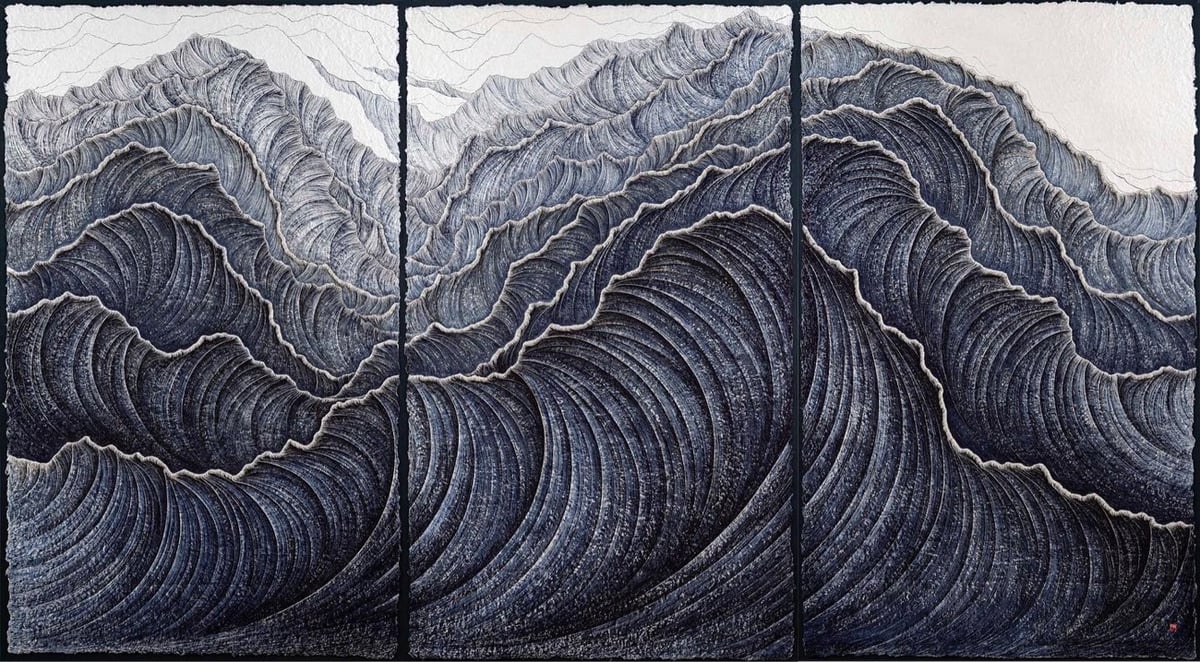
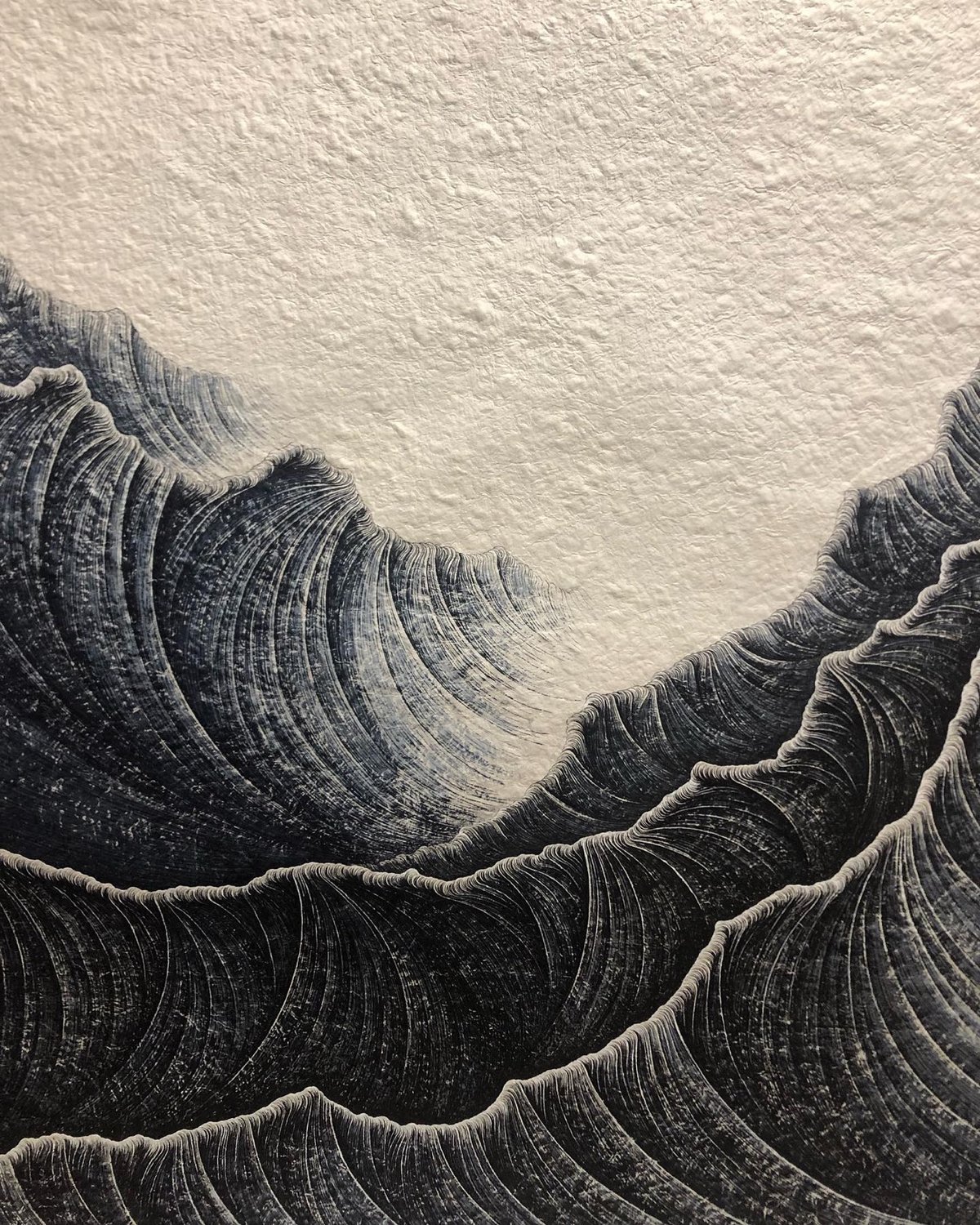

I’ve posted about Korean artist Lee Hyun-Joung’s swirling and swooping work before, but I recently saw one of her pieces in person and decided to feature some of her most recent stuff. It’s always a good time to look at art.
Lots to like about Variety’s list of 100 Best Comedy Movies of All Time, but Coming to America at #46 and no Trading Places at all make me question the list’s credibility.
How the Elite Behave When No One Is Watching: Inside the Epstein Emails. They reveal “a power elite practiced at disregarding pain” who have “learned to look away from so much other abuse and suffering” to protect their network of power.
So I’ve been watching Breaking Bad creator Vince Gilligan’s Pluribus on Apple TV and this review from Inkoo Kang resonated with me (emphasis mine):
Millions of offscreen casualties aside, it’s clear that Gilligan is aiming for a lighter — and stranger — outing than his two previous series. (For all that “Pluribus” delights in eerie atmospherics, the Southwestern sunniness keeps things from getting too dark.) The uncanny scenarios he conjures are a source of humor, intrigue, and genuine unease. But the show never adds up to more than the sum of its parts. Carol makes for a maddeningly tunnel-visioned protagonist — one with a shocking lack of curiosity about the entity that’s overtaken the Earth, or even about what the infected do all day when they’re not offering to cater to her whims. Her one-note sullenness means that Seehorn, who was heartbreaking as the repressed Kim on “Saul,” is squandered as the lead of her own show. The contentment and coöperativeness of the hive mind are similarly tough to dramatize.
It was somewhere around the middle of episode two when I started asking myself if I was supposed to care about Carol and what was going to happen to her, which is never a good sign. I like plenty of shows with unlikable protagonists (like Succession & Seinfeld) but I often can’t get past stubborn & incurious ones — it just seems fake to me and breaks my willing suspension of disbelief.
The show has a 99% rating on Rotten Tomatoes. Pluribus fans, what am I missing here? The premise is good and I want to like it. Presumably many of the critics have seen the whole season and so maybe it picks up as it goes on?
“The Little Movie That Couldn’t”: ‘Mallrats’ Turns 30. I can’t remember if I was one of the few that saw this in the theater, but I loved this movie on VHS/DVD. Haven’t seen it for, what, 20 years though…
“Today, the only naked bodies that many Americans will likely ever see are their own, a partner’s, or those on a screen. Gone are our unvarnished points of physical comparison — the ordinary, unposed figures of other people.”

We’ve talked before about how some people can picture things in their heads quite vividly and others can’t at all. The latter group has a condition called aphantasia.
As soon as I close my eyes, what I see are not everyday objects, animals, and vehicles, but the dark underside of my eyelids. I can’t willingly form the faintest of images in my mind.
Larissa MacFarquhar wrote a fascinating article about aphantasia (and its opposite, hyperphantasia) for the New Yorker: Some People Can’t See Mental Images. The Consequences Are Profound.
Naturally, aphantasics usually had a very different experience of reading. Like most people, as they became absorbed, they stopped noticing the visual qualities of the words on the page, and, because their eyes were fully employed in reading, they also stopped noticing the visual world around them. But, because the words prompted no mental images, it was almost as if reading bypassed the visual world altogether and tunnelled directly into their minds.
Aphantasics might skip over descriptive passages in books — since description aroused no images in their minds, they found it dull — or, because of such passages, avoid fiction altogether. Some aphantasics found the movie versions of novels more compelling, since these supplied the pictures that they were unable to imagine. Of course, for people who did have imagery, seeing a book character in a movie was often unsettling — because they already had a sharp mental image of the character which didn’t look like the actor, or because their image was vague but just particular enough that the actor looked wrong, or because their image was barely there at all and the physical solidity of the actor conflicted with that amorphousness.
And also:
When aphantasics recovered from bereavement, or breakups, or trauma, more quickly than others, they worried that they were overly detached or emotionally deficient. When they didn’t see people regularly, even family, they tended not to think about them.
M.L.: “I do not miss people when they are not there. My children and grandchildren are dear to me, in a muffled way. I am fiercely protective of them but am not bothered if they don’t visit or call. … I think that leaves them feeling as if I don’t love them at all. I do, but only when they are with me, when they go away they really cease to exist, except as a ‘story.’”
The bits about hyperphantasia are just as interesting:
Hyperphantasia often seemed to function as an emotional amplifier in mental illness—heightening hypomania, worsening depression, causing intrusive traumatic imagery in P.T.S.D. to be more realistic and disturbing. Reshanne Reeder, a neuroscientist at the University of Liverpool, began interviewing hyperphantasics in 2021 and found that many of them had a fantasy world that they could enter at will. But they were also prone to what she called maladaptive daydreaming. They might become so absorbed while on a walk that they would wander, not noticing their surroundings, and get lost. It was difficult for them to control their imaginations: once they pictured something, it was hard to get rid of it. It was so easy for hyperphantasics to imagine scenes as lifelike as reality that they could later become unsure what had actually happened and what had not.
“I can imagine my hand burning, to the point where it’s painful. I’ve always been curious — if they put me in an fMRI, would that show up? That’s one of the biggest problems in my life: when I feel something, is it real?”
One hyperphantasic told a researcher that he had more than once walked into a wall because he had pictured a doorway.
The more I read about this, the more I think that for those at either end of the phantasic scale, their inability (or extreme ability) to see things in their minds is a major component of what we think of as personality. Even just thinking about myself, there are all sorts of behaviors and traits I can connect to not being able to visualize things in my head that clearly. In some ways, it might be one of the most me things about me. (thx, willy)
Activists are role-playing ICE raids in games like Fortnite & GTA to teach people what to do IRL situations. “Many people may not have seen an interaction with ICE yet, it’s a way to get folks to know or get used to what that might look like.”
The World Lost the Climate Gamble. Now It Faces a Dangerous New Reality. “We are heading into ‘overshoot’ within the next few years. The world is going to become more turbulent and more dangerous. So, what comes after failure?”
The Bad UX World Cup 2025. “Build a date picker with bad UX (the worse, the better).” The winning entry used a Tinder-like interface to swipe your desired days, months, and years.
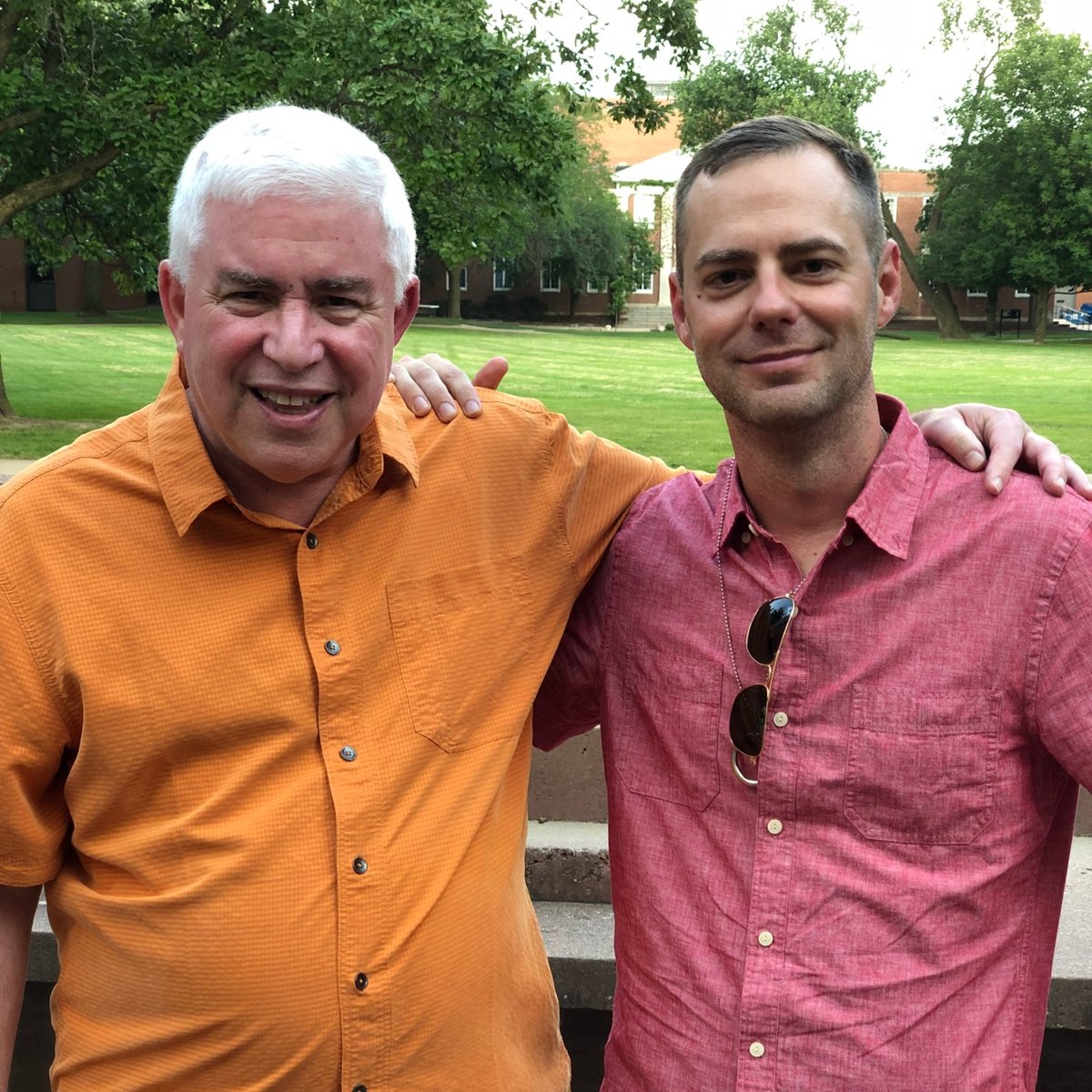
I’m headed out on an unexpected trip this afternoon, to attend the funeral of Dr. Steve Feller, who was my advisor in college and to whom I owe a great deal. I talked about Doc, as all his students called him, on this podcast with Craig Mod several years ago. From the transcript:
When I got to college, it was like, holy shit, there are people here who take [the learning] part of school seriously – because they’re curious about it, because they can’t help it. I learned that that I am one of those people — that I just can’t help being interested in all sorts of different things. College for me was like this amazing thing.
Didn’t know what I was going to major in when I got there, but after a year or two, I decided I was going to major in physics. I had this advisor. His name was Dr. Feller. He was the best teacher, hands down, I’ve ever had in my entire life.
He would do this amazing thing. I didn’t notice this right away, but when I got to be a junior and senior, I noticed this more and more.
In the class, he would teach simultaneously to every level in the class, no matter if you knew exactly what was going on with everything, or if you were really struggling, or anywhere in between. I don’t know how he did it. Like I still don’t know how he did it.
He was so generous with his time and his energy. He had this infectious energy that just propelled everyone forward. I just took so much from that experience and from having him as an advisor, and as a mentor, and as a friend really. He became a friend.
I think I owe him a lot in how I approach the world, and how I approach work, and in just thinking of the world as this endless bounty of things to know.
I feel very lucky to have had him in my life, and I know many, many other people feel the same way. (Photo above of Doc & me in 2018.)
I don’t know how much I’ll be posting here over the next few days; I will likely see you back here next week. 💞
Goro Obata went to the woods because he wished to live deliberately, to front only the essential facts of life, and see if he could not learn what it had to teach, and not, when he came to die, discover that he had not lived.
In the mountains of Hokkaido, Goro Obata traded city rules for freedom, backcountry skiing, fly fishing — and a café that sometimes closes on sunny days. Watch his story of choosing lifestyle over convention, and discover what “Higashikawa style” really means.
Obata in the video (bold mine):
From then I thought, life is fast. Death comes so easily. If I just drift, in no time I’ll be an old man. I want to build a fun lifestyle. That’s what I thought. I want to build it.
(With apologies to Henry David Thoreau.)
Stigler’s law of eponymy: “No scientific discovery is named after its original discoverer.” Stigler’s law is itself an example of Stigler’s law.
As part of the fascist war on “woke”, tens of thousands of books have been pulled from the shelves of libraries around the country over the past few years. On the front line are the nation’s librarians, “first responders in the fight for democracy and our First Amendment rights”. The Librarians is a documentary film about this latest wave of censorship & persecution of librarians; here’s the trailer:
From a review on RogerEbert.com:
“The Librarians” is a documentary about the hysterical, unfounded, personal, and sometimes violent attacks on librarians. It is also about their unwavering commitment to making facts, literature, and inspiration available to anyone.
And:
The film has some indelibly searing moments, linking these efforts to Senator Joseph McCarthy’s Red Scare, to Nazi propaganda minister Joseph Goebbels’ burning books by Jewish authors, and to the Twilight Zone episode “The Obsolete Man,” with Burgess Meredith as a librarian sentenced to death. There is a quote from President Eisenhower: “Don’t think you’re going to conceal faults by concealing evidence they ever existed. Read every book.”
The Librarians is out in theaters now but not very widely, so you’ll have to check the list of screenings on their web site.
NASA’s Perseverance rover scooped up a rock that might prove there was life on Mars. But the planned return of that sample to Earth is endangered by the Trump regime.
Iowa City Made Its Buses Free. Traffic Cleared, and So Did the Air. “The transit system is one of the greatest tools communities have to combat climate change and reduce emission. You can make a pretty immediate impact.”
“Geothermal is underdeveloped, and its upfront costs can be high, but it’s always on and, once it’s set up, it is cheap and enduring.” Why the Time Has Finally Come for Geothermal Energy.
Rainy Day Jazz Vinyl Set. “Plenty of ballads, blues and heart-warming songs from Jazz artists across the ages for a cold, and rainy Sunday afternoon.”
Two reasons why XKCD’s What If? series is so compelling:
- Even when an answer seems straightforward, the devil is in the details.
- And with respect to the details, Munroe does his due diligence.
In this case, the answer to “what’s the longest possible sunset you can experience while driving, assuming you’re obeying the speed limit and driving on paved roads?” was fairly surprising and exact and the explanation delightful.
Btw, the ending of the video is a callback to an early XKCD comic about angular momentum.
CDC officials confirm that the US is two months away from measles being considered endemic for the first time since 2000. “Elimination status is lost if the virus spreads continuously for 12 months.”
The Saudification of America Is Under Way. “Jamal Khashoggi’s plight and murder was a warning sign for the US, of the impending loss of freedom and censorship that would sweep the country.”
Dark chocolate is very serious business. That’s why this ad for Bournville dark chocolate, which takes aim at dark chocolate snobbery, is so funny.
This one is so intense. It comes with a list of side effects.
Mine comes with a therapist.
To the uneducated palette, this tastes like burnt tire.
This one captures bitterness, astringency, and resentfulness. The taste is so grown up.
Oh, mine’s massively grown up.
This is only available under the counter of a pet store with no address.
This sugar was used by the Aztecs as currency.
Some believe this one’s haunted.
Mine’s flammable.
Edward O. Wilson in 2009: “The real problem of humanity is the following: we have paleolithic emotions; medieval institutions; and god-like technology. And it is terrifically dangerous, and it is now approaching a point of crisis overall.”
The Strange Afterlife of Hilma af Klint, Painting’s Posthumous Star. “As af Klint’s fame has grown, so have the questions — about what she believed, whom she worked with, and who should be allowed to speak in her name.”
The Fascinating History of Tarot Card Decks: From the Renaissance to the Modern Day. The V&A does an unboxing of a half dozen tarot card decks from the last 500 years.
In an interview lasting for more than an hour, classicist Mary Beard shares her knowledge & experience about how the picture of Rome we might have in our heads, inherited from Hollywood movies like Gladiator, is incomplete (and just plain wrong in some cases) and what the reality was, gleaned from Roman sources.
We’ve inherited the history of Ancient Rome through movies, ruins, and shallow stories. The truth is far messier, says classicist Mary Beard. The hidden side of Roman life that screens rarely capture is chaotic; crowded streets teeming with Romans whose everyday lives were shaped by social hierarchies and familial obligations.
Mary Beard unpacks what archaeology, literature, and even shoes tell us about the Romans’ daily lives. From the role of slaves in dressing elites to the rowdy crowds at chariot races, she shows how we’ve underestimated their complexity.
(via open culture)
Older posts









Socials & More