kottke.org posts about video
As of December 1, 2018, the LIGO experiment has detected gravitational waves from 10 black hole merger events. In the computer simulations shown in this video, you can see what each of the mergers looked like along with the corresponding gravitational waves generated and subsequently observed by the LIGO detectors.
Google finally announced a consumer service around the self-driving car technology they’ve been developing for almost a decade. Waymo One is basically a taxi hailing service backed by a fleet of automated cars. The promotional video for the service is an upbeat but ho-hum reminder of the convenience of app-hailed transportation:
But there’s a voiceover line about halfway through that gets at the heart of why self-driving cars seem so compelling to people:
What if getting there felt like being there?
Sure, it’s not so much the destination that matters, it’s the journey…but commuting isn’t a journey. People in cities spend a lot of their time in rooms: working, reading, drinking, chatting, etc. Waymo’s cars aren’t quite rooms, but that’s where they’re headed: private rooms for hire that also get you from one place to another. It’s WeWork on wheels, a mobile Starbucks, a portable third place. Along the way, you could have a beer or coffee, do karaoke, make some work calls, watch a movie, chat with friends, make out, or answer some emails. C-suite executives with dedicated chauffeured transportion are already doing this with custom vans. Private jets are essentially vacation homes that can travel anywhere in the world. (Cruises offer this experience too.) If Waymo (or someone else) can make this happen for a much larger segment of the population, that’s a compelling service: transportation-less transportation.

Eye charts at your optometrist’s office typically only have 10 letters on them: CDHKNORSVZ. Inspired by that lettering, creative agency ANTI Hamar and typographer Fábio Duarte Martins have expanded that abbreviated alphabet into a free font with a full alphabet called Optician Sans. Here’s a video look at how they did it:
(via khoi)
In this episode of Modern History, Jason Kingsley and Chris Carr talk about the kind of food that an English knight would encounter on the road…i.e. what might commonly be termed “peasant food”. Depending on what was in season, the midday meal offered would be the sort of farm-to-table artisanal fare that urban dwellers crave at their neighborhood bistro on date night: house-brewed beer, artisan bread made from interesting grains, fresh salmon, peas from the garden, and a drizzled sauce made from an unusual herb.
The pair discuss what a knight would eat at home in a follow-up episode. A knight’s dedicated cook would consult with his physician on dietary matters and the ingredients and level of processing would reflect the knight’s higher status in society, e.g. his bread would be white and not dark, basically the opposite of today.
Jazz crossed over into pop music territory in the 70s, with jazz artists like Grover Washington Jr. and George Benson gaining airplay on the radio but losing the respect of “straight-ahead” jazz critics & peers. One reviewer wrote of a popular album by Benson:
Hearing George Benson on this album is like watching Marlon Brando in the Three Stooges movie. Such is the relationship between the artist and the “art”.
In this third installment of Earworm’s series on jazz, Estelle Caswell charts the rise of smooth jazz from its beginnings in the 70s right on through to Kenny G and the format’s eventual crash in the 2000s. There’s also a Spotify playlist of smooth jazz standards in case you’re in the mood to hear more.
Also, how perfect is it that the term “smooth jazz” was coined by a participant during a focus group convened by a market research firm? That’s so smooth jazz.
My favorite scene in Wes Anderson’s Isle of Dogs is the sushi-making scene. It’s a pure showcase of stop motion animation goodness and wordless storytelling.
Andy Biddle has posted a behind-the-scenes time lapse video of him and Anthony Farquhar-Smith animating that scene:
From the costume changes, it looks like that 40 seconds of video took about 29 days to complete, although obviously not full days in many cases.
You can see more of Biddle’s work here and Farquhar-Smith’s work here.
Update: Somehow I totally missed the days counter in the upper left corner of the video…the sequence took 32 days to do. (This is like the awareness test with the moonwalking bear.) (thx, all)
Update: Isle of Dogs’ head puppet master explains a bit more about what goes into making these stop motion scenes.
From directors Molly Brass and Stephen Tyler, this is a really lovely & poignant short film about Chess Forum and its owner, Imad Khachan, a Palestinian refugee who came to America to get a PhD in American literature and ended up as the owner/operator of a classic NYC establishment.
Anybody who doesn’t speak any language or different languages, they can sit here and play chess. You can still hold a meaningful conversation without saying a word.
In the 90s, Khachan opened Chess Forum across the street from another chess shop, The Chess Shop, after a disagreement with its owner.
After an ownership agreement between Khachan and a former business mentor fell to pieces, Khachan opened the Chess Forum directly across the street from his former partner’s shop, The Chess Shop. His move triggered what, in New York chess circles, is still known as the Civil War on Thompson Street.
“Sometimes attack is the best defense,” Khachan said of his decision.
His move tore New York’s tight-knit chess community in two. A ceasefire eventually settled in, with each shop courting its own customers and suppliers. His business rival closed in 2012, but the feud taught Khachan a lesson as strong as any he learned on the board.
“Like any chess game it’s the thinking ahead that keeps you one step ahead of the guy who’s shooting after you and not hitting you,” he said. “You have to keep moving.”
Update: Speaking of “holding a meaningful conversation without saying a word”, Gregor McEwan sent in links to a pair of papers he co-authored that argue that game play should be considered conversation: Chess as a Conversation: Artefact-Based Communication in Online Competitive Board Games and “I’m Just Here to Play Games:” Social Dynamics and Sociability in an Online Game Site.
Our analysis provides new evidence that even simple turn-based games contain a great deal of interaction richness and subtlety, and that the different levels of communication should be considered by designers as a real and legitimate vehicle for social interaction.
My favorite end-of-the-year review of movies is always David Ehrlich’s video countdown of the top 25 best films. In this year’s review, I was surprised to see Annihilation on the list (I thought it was ok?) and also delighted by the high ranking of Paddington 2. Eighth Grade, The Favourite, and First Reformed all deservedly made the list, along with Mission: Impossible - Fallout, which I really liked. Would have liked to have seen Black Panther on there though.
Ehrlich shared the best moment from each of the 25 movies at Indiewire.
David Attenborough’s new nature series, Dynasties, is already airing in the UK and Canada (we have to wait until January 19 in the US) and they’ve also been posting some video clips on YouTube. Perhaps the most compelling is the video above, of a young male lion being attacked by a pack of hyenas.
You can check out some of the other clips in this playlist, including painted wolves fighting off honey badgers to protect their young and emperor penguins practicing parenthood with a snowball.
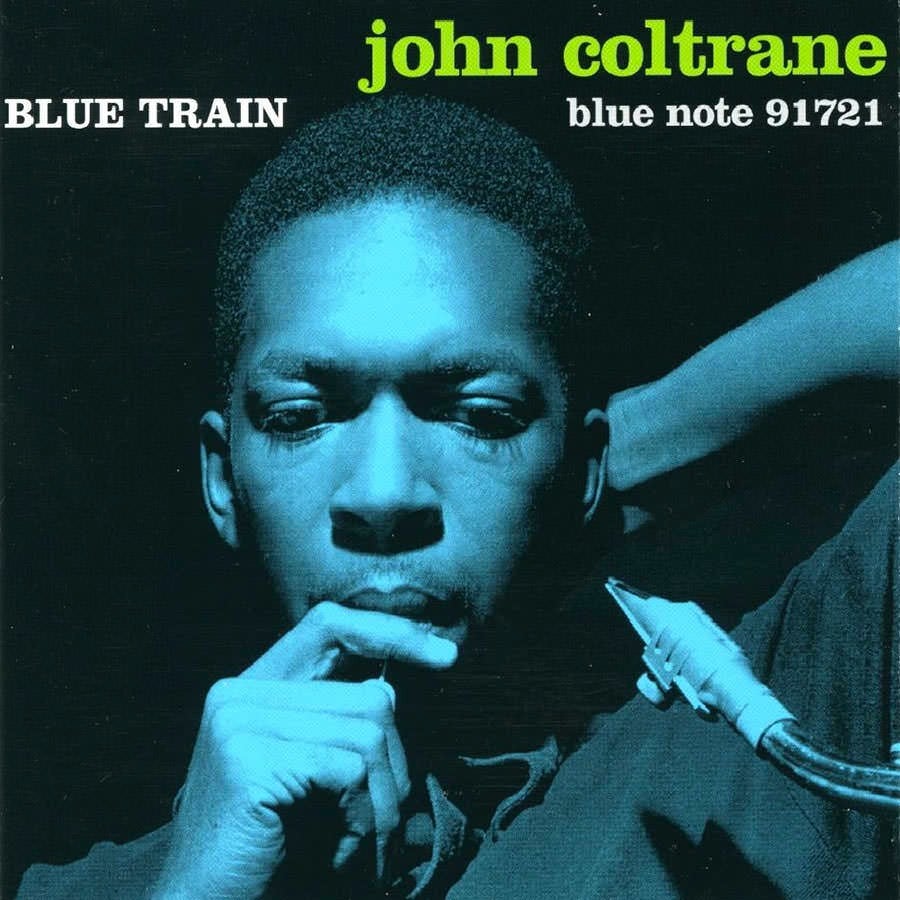
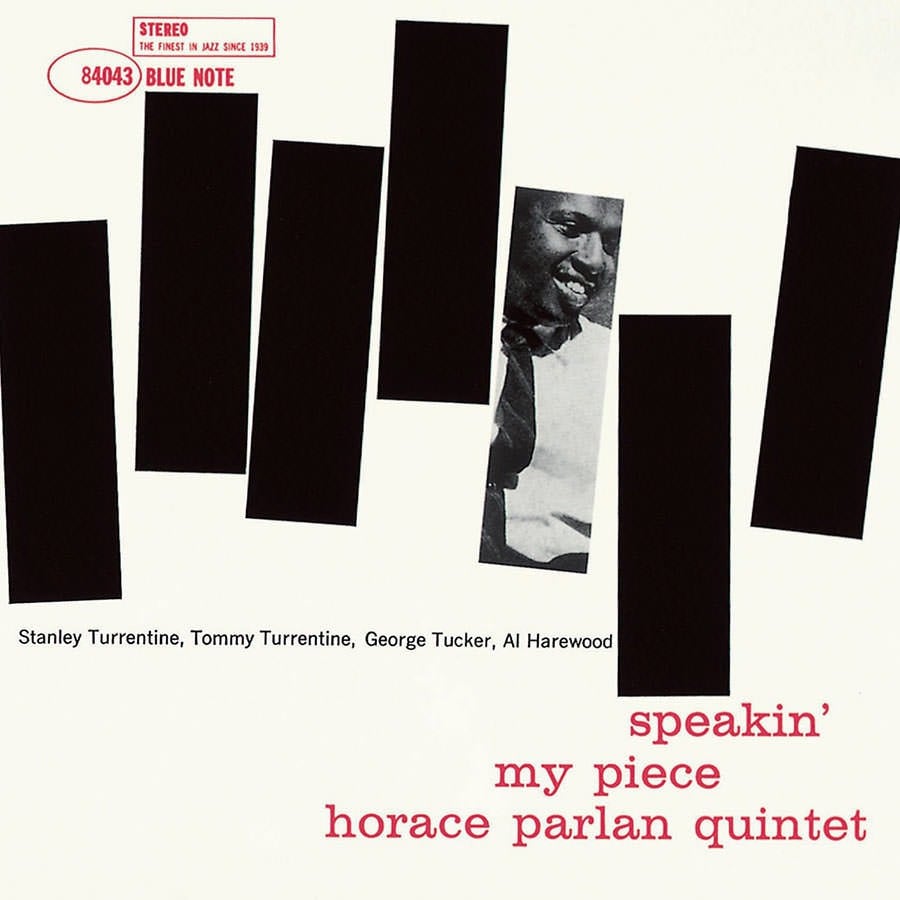
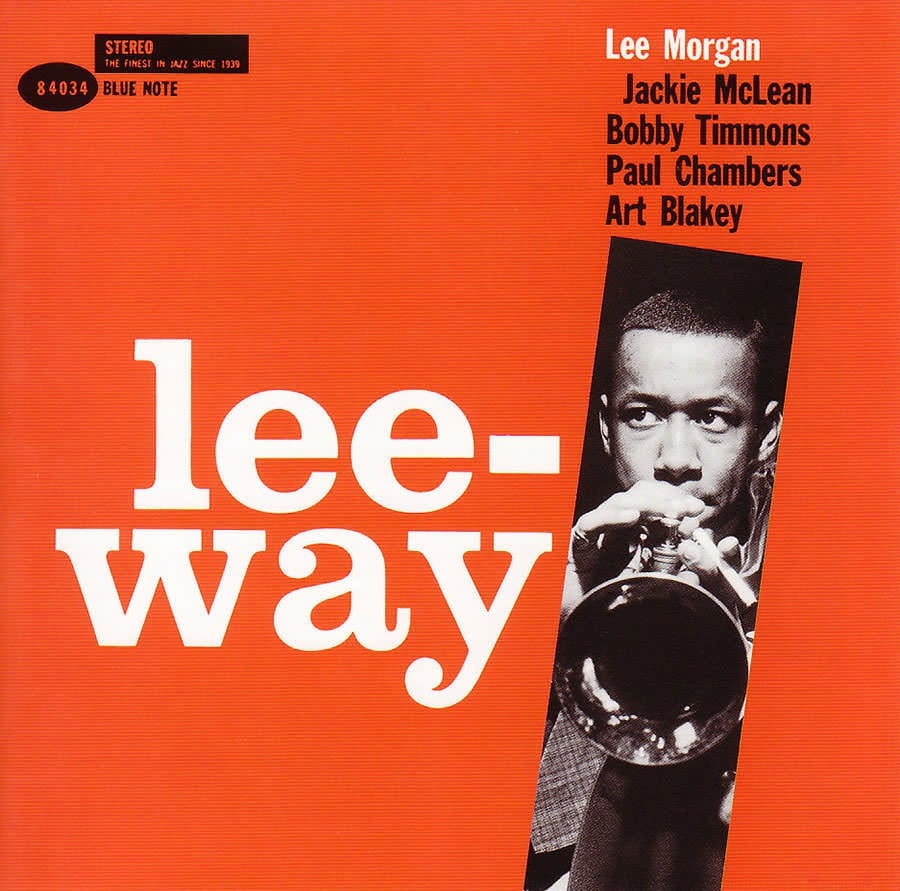
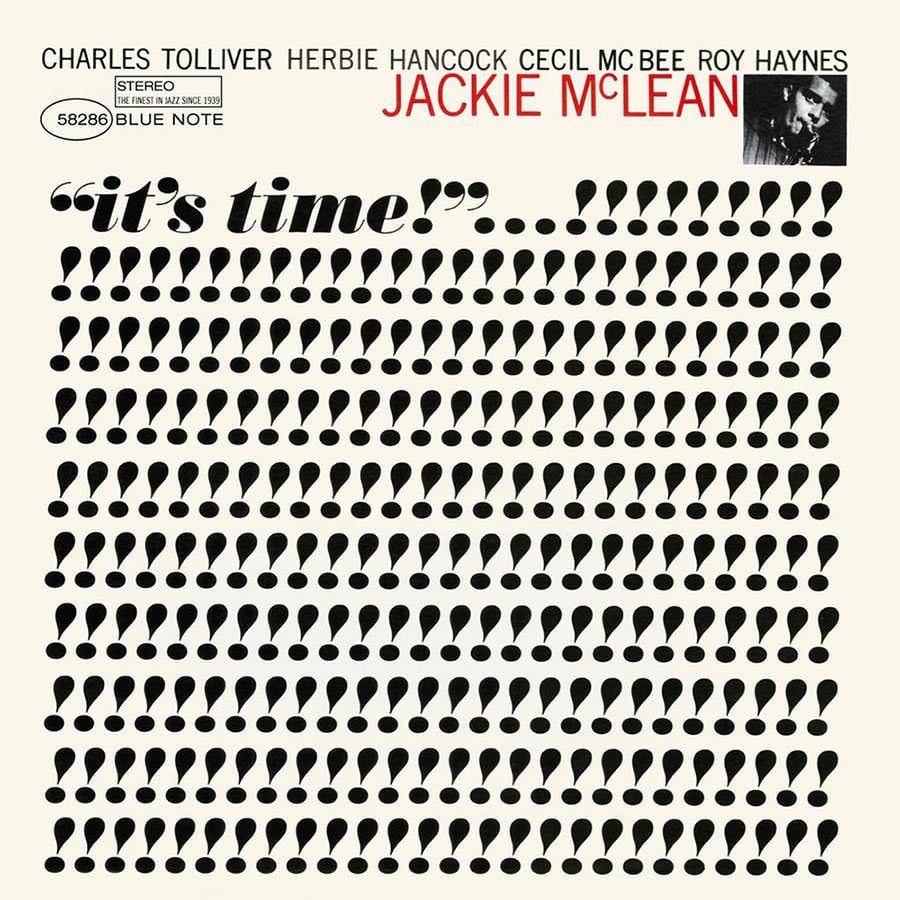
In part 2 of Earworm’s series on jazz, Estelle Caswell talks to producer Michael Cuscuna about the iconic album covers of Blue Note Records.
Inspired by the ever present Swiss lettering style that defined 20th century graphic design (think Paul Rand), Blue Note captured the refined sophistication of jazz during the early 60s, particularly during the hard bop era, and gave it a definitive visual identity through album covers.
The covers were the work of Reid Miles, who was paid $50 per cover but later landed a gig making ads for the likes of Coca-Cola to the tune of $1 million per year. Here are a few of the covers designed by Miles for Blue Note:
From Neil Cicierega, who you may remember from this hilarious recap of J.R.P.G. Torkelson’s Lorne of the Rings trilogy, comes this short guide to the film career of Tom Hanks, including his best-known works like Tuber & Hoonis, Sadness in the Saddle, and You’ll Get Soil. I woke up feeling a little blah this morning, but this cheered me right the hell up.
To make food look appetizing in advertisements, food stylists use a bunch of tricks that may not even involve edible objects. For example, syrup on pancakes is motor oil (because it doesn’t absorb), Elmer’s glue is cereal milk (it prevent the cereal from sinking), shaving cream is whipped cream (doesn’t melt), and dish soap helps the head on a beer appear foamier and last longer. Check it out:
(via @machinepix)
Earlier this year, I wrote that director Peter Jackson was working on a documentary about WWI that would feature film footage cleaned up and colorized with the same special effects technology used to produce massive Hollywood films like Jackson’s own LOTR movies.
The footage has been stabilized, the grain and scratches cleaned up, and the pace slowed down to from comedic to lifelike. Jackson’s also planning on using colorization to make the people in that old footage seem as contemporary as possible.
The brief glimpses of the cleaned and colorized footage in the initial trailer were tantalizing, but the newly released trailer above is just breathtaking or jaw-dropping or however you want to put it. I’ve watched it three times so far…some of those scenes are so vivid they could have happened yesterday! That what viewing early color photography and film does to you:
Until recently, the color palette of history was black and white. The lack of color is sometimes so overpowering that it’s difficult to imagine from Matthew Brady’s photos what the Civil War looked like in real life. Even into the 1970s, press photos documenting the war in Vietnam were in B&W and the New York Times delivered its news exclusively in B&W until the 90s, running the first color photograph on the front page in 1997.
Which is why when color photos from an event or era set firmly in our B&W history are uncovered, the effect can be jarring. Color adds depth, presence, and modernity to photography; it’s easier for us to identify with the people in the pictures and to imagine ourselves in their surroundings.
Jackson talked to the BBC about how the film was made:
Check out this post at Open Culture for more about the making of the film.
They Shall Not Grow Old just became my #1 most-anticipated movie for the rest of 2018. It’s only showing in the US on Dec 17 and Dec 27…I just got my ticket here.
Remember Alfonso Cuarón’s Gravity? A missile strike on a satellite causes a chain reaction, which ends up destroying almost everything in low Earth orbit. As this Kurzgesagt video explains, this scenario is actually something we need to worry about. In the past 60 years, we’ve launched so much stuff into space that there are millions of pieces of debris up there, hurtling around the Earth at 1000s of miles per hour. The stuff ranges in size from marbles to full-sized satellites. If two larger objects in low Earth orbit (LEO) collided with each other, the resulting debris field could trigger a chain reaction of collisions that would destroy everything currently in that orbit and possibly prevent any new launches. Goodbye ISS, goodbye weather satellites, goodbye GPS, etc. etc. etc. The Moon, Mars, and other destinations beyond LEO would be a lot harder to reach because you’d have to travel through the deadly debris field, particularly with crewed missions.
To celebrate the 20th anniversary of the first module of the International Space Station being put into orbit, ESA astronaut Alexander Gerst shot a 15-minute time lapse video of the Earth from the ISS, long enough for two complete orbits of the planet. Landmarks along the journey are annotated right on the video and the location of the ISS is also plotted on a map in the top right corner. Love the nighttime thunderstorms over the Pacific.
See also An Incredible Video of What It’s Like to Orbit the Earth for 90 Minutes.
This is probably the craziest and most unlikely table tennis shot you will ever see. Just watch. The guy who pulls it off is Christopher Chen from the Trondheim Table Tennis Club in Norway. I haven’t watched ESPN in years so I don’t know if “getting on SportsCenter” is as big a deal as it used to be, but if so, this should get on SportsCenter.
See also the table tennis volley that sounds like the Super Mario Bros theme song and The Community of the Tables.
Using 3D rendering software, Yeti Dynamics made this video that shows what our sky would look like if several of our solar system’s planets orbited the Earth in place of the Moon. If you look closely when Saturn and Jupiter are in the sky, you can see their moons as well.
the moon that flies in front of Saturn is Tethys. It is Tiny. but *very* close. Dione would be on a collision course, it’s orbital distance from Saturn is Nearly identical to our Moon’s orbit around Earth
See also their video of what the Moon would look like if it orbited the Earth at the same distance as the International Space Station.
Update: And here’s what it would look like if the Earth had Saturn’s rings. (via @FormingWorship)
After a seven-month journey covering over 300 million miles, NASA’s InSight probe will land on the surface of Mars today around 3pm. The video embedded above is a live stream of mission control at NASA’s Jet Propulsion Laboratory that starts at 2pm and will be the best thing to watch as the probe lands. (See also this live stream of NASA TV.) The landing will occur around 2:47pm ET but the landing signal from Mars won’t arrive on Earth until 2:54pm ET at the earliest. And no video from the landing itself of course…”live” is a bit of a misnomer here but it still should be exciting.
NASA produced this short video that shows what’s involved in the landing process, aka how the probe goes from doing 13,000 mph to resting on the surface in just six-and-a-half minutes.
The NY Times has a good explainer on the InSight mission and landing.
NASA’s study of Mars has focused on the planet’s surface and the possibility of life early in its history. By contrast, the InSight mission — the name is a compression of Interior Exploration Using Seismic Investigations, Geodesy and Heat Transport — will study the mysteries of the planet’s deep interior, aiming to answer geophysical questions about its structure, composition and how it formed.
I love this stuff…the kids and I will be watching for sure!
Update: The Oatmeal has a great comic about the InSight landing.
Ricky Jay died yesterday, aged 72. He was a master magician with a deck of cards, an actor, writer, and historian. The definitive profile of Jay was written by Mark Singer in 1993 for The New Yorker. It begins like this…just try not to read the whole thing:
The playwright David Mamet and the theatre director Gregory Mosher affirm that some years ago, late one night in the bar of the Ritz-Carlton Hotel in Chicago, this happened:
Ricky Jay, who is perhaps the most gifted sleight-of-hand artist alive, was performing magic with a deck of cards. Also present was a friend of Mamet and Mosher’s named Christ Nogulich, the director of food and beverage at the hotel. After twenty minutes of disbelief-suspending manipulations, Jay spread the deck face up on the bar counter and asked Nogulich to concentrate on a specific card but not to reveal it. Jay then assembled the deck face down, shuffled, cut it into two piles, and asked Nogulich to point to one of the piles and name his card.
“Three of clubs,” Nogulich said, and he was then instructed to turn over the top card.
He turned over the three of clubs.
Mosher, in what could be interpreted as a passive-aggressive act, quietly announced, “Ricky, you know, I also concentrated on a card.”
After an interval of silence, Jay said, “That’s interesting, Gregory, but I only do this for one person at a time.”
Mosher persisted: “Well, Ricky, I really was thinking of a card.”
Jay paused, frowned, stared at Mosher, and said, “This is a distinct change of procedure.” A longer pause. “All right-what was the card?”
“Two of spades.”
Jay nodded, and gestured toward the other pile, and Mosher turned over its top card.
The deuce of spades.
A small riot ensued.
Magic aside, Jay’s performances were master classes in how to entertain. Even in grainy YouTube videos, it is impossible to look away:
In 2002, he threw playing cards at Jackie Chan, Conan O’Brien, and a watermelon on television:
When asked about “a world without lying” by Errol Morris in 2009, Jay replied:
When you’re talking about Kant and trust, it made me think of one of the ways I tell people about the con game. I say, “You wouldn’t want to live in a world where you can’t be conned, because if you were, you would be living in a world with no trust. That’s the price you pay for trust, is being conned.”
The 2012 documentary film about Jay, Deceptive Practices, is streaming for free on Amazon Prime Video…I know what I’m watching tonight. Here’s the trailer to pique your interest:
Update: A poetic remembrance of Jay from his friend David Mamet.
Our great sage Johnny Mercer wrote, “Go out and try your luck / You might be Donald Duck / Hooray for Hollywood.” But Ricky, as the Stoics taught, did not enter that race. He achieved fame and adulation, but like the warrior monk or the Hasidic master, he sought perfection.
He spent five or six hours a day practicing. He did it for 60 years. And, like all great preceptors, he was, primarily, a student. His study was the metaphysical idea of Magic, which found expression not only in performance, but in practice, commentary, design and contemplation. They were all, and equally to him, but expressions of an ideal.
For a cultural program to accompany the 2012 Olympics in London, artist Sue Austin created a video of herself exploring a coral reef in a wheelchair outfitted with motors and wings to help it steer and go through the water.
It’s a tiny bit surreal to see how freely she moves around in something that many of us associate with an absence of a particular type of movement. But as Austin explains in her 2013 TED Talk, she thinks of her wheelchair in terms of freedom of movement, which is highlighted for others by the underwater video. (via colossal)
The last time I posted a video by Vladimir Tomin I struggled to describe what it was about, eventually punting with “just give it 5 seconds and you’ll get the idea”. They’re fun augmented reality sketches — like peeling up a road’s center line with a cursor — what’s not to like?! (via colossal)
In this video, a pair of scientists talk about their work in studying the communication patterns of humpback whales to learn more about how we might someday communicate with a possible extraterrestrial intelligence. No, this isn’t Star Trek IV. For one thing, whales have tailored their communication style to long distances, when it may take hours to received a reply, an analog of the length of possible interplanetary & interstellar communications. The scientists are also using Claude Shannon’s information theory to study the complexity of the whales’ language and eventually hope to use their findings to better detect the level of intelligence in alien messages and perhaps even the social structure of the alien civilization itself.
P.S. Fascinating whale facts are sprinkled throughout the video. Humpback whales “have had the Ocean Internet for millions of years” and can communicate directly with each other up to 1000 km away. That means that a whale off the coast of Portland, OR can chat with another whale near San Francisco. (via @stewartbrand)
Tungrus and the Chicken from Hell is a short film by Rishi Chandna about an Indian family who inexplicably have a pet rooster who terrorizes everyone in the apartment, including the cats. He shits on the floor, scratches up the furniture, wakes everyone with round-the-clock crowing.
If anybody wants to adopt a rooster, do your research. And, like all pets, be prepared for life to become hell.
There’s a focus pull right before the 10 minute mark that’s possibly one of the best cinematic moments you’ll see in film all year — it may just make you feel poignant about a rooster. (thx, anna)
Film & design legend Pablo Ferro died this weekend at the age of 83. Ferro was known for designing the iconic opening title sequences for Dr. Strangelove and Bullitt (among others).
He also designed what is probably my favorite movie trailer, for A Clockwork Orange:
I wrote about Ferro’s work with Stanley Kubrick in this post 10 years ago. From a piece by Steven Heller that I linked to in the post:
Kubrick wanted to film it all using small airplane models (doubtless prefiguring his classic space ship ballet in 2001: A Space Odyssey). Ferro dissuaded him and located the official stock footage that they used instead. Ferro further conceived the idea to fill the entire screen with lettering (which incidentally had never been done before), requiring the setting of credits at different sizes and weights, which potentially ran counter to legal contractual obligations. But Kubrick supported it regardless. On the other hand, Ferro was prepared to have the titles refined by a lettering artist, but Kubrick correctly felt that the rough hewn quality of the hand-drawn comp was more effective. So he carefully lettered the entire thing himself with a thin pen.
The Art of the Title also interviewed Ferro about the Strangelove opening credits.
The titles for Strangelove were last-minute; I didn’t have much time to produce it. It came up because of a conversation between Stanley and I. Two weeks after I finished with everything, he and I were talking. He asked me what I thought about human beings. I said one thing about human beings is that everything that is mechanical, that is invented, is very sexual. We looked at each other and realized — the B-52, refueling in mid-air, of course, how much more sexual can you get?! He loved the idea. He wanted to shoot it with models we had, but I said let me take a look at the stock footage, I am sure that [the makers of those planes] are very proud of what they did and, sure enough, they had shot the plane from every possible angle.
Update: The Art of the Title also did a huge three-part interview with Ferro as a career retrospective. Great deep dive into a substantial career.
Designer Jacopo Colò has made a video game that allows you to spend an hour inside a 2013 James Turrell installation, The Color Inside.
Turrell’s work is all about the fundamental materials: space, time and light, and is usually focused on permanent installations. His most famous works are the Skyspaces. A Skyspace is (most of the times) a room with a hole in the ceiling that allows to see the sky above, with nothing in between. At specific times during the day — at sunrise and sunset — a hidden strip of LED lights color the room, rotating trough the whole color spectrum. And if during the day the hole in the ceiling simply frames the sky, during the light show, filtered through a cloud of colored light, the view of the sky is altered. The sky can become pink, green, deep blue. It’s a beautiful spectacle.
Here’s a sped-up video that shows the, uh, “game play”:
Sure, I know this is a television commercial for a UK department store and therefore should be afforded a certain level of emotional detachment, but only the most cynical folks out there will still be stone-faced at the end of this holiday advert starring Elton John.
After watching it, I thought back to my childhood for a gift that turned out to be more than just a gift. The closest I could come is a telescope1 my dad got me when I was maybe 8 or 9. While I didn’t grow up to be a celebrated astrophysicist or anything like that, that telescope solidified my love of science, encouraged my curiosity, and fostered my growing worldview that the universe could be wondrous without being magical. I could see sunspots on the Sun, the rings of Saturn, the moons of Jupiter, and shadows cast by craters on the Moon with my own eyes just as well as I could see the blades of grass right in front of me. Those objects moved around out there according to the same simple physical laws as the Earth moved, as did the baseball my dad & I played catch with, the rocket that shepherded astronauts to the Moon, and the waves on the ocean.
Seeing that all of those things were tied together across massive distances by a single system made a powerful impression on me. There was no need to say “well, I don’t know how that works so it must be some magical force or being”. I could go to a book and look up how Saturn’s rings formed, where the Moon’s craters came from, and why we only ever see one side of the Moon from Earth. And if the answer to a question didn’t exist, you could take that curiosity and go find out yourself, no permission necessary, and contribute to the collective human understanding of our existence. I switched away from a career in science shortly after entering grad school, but the spirit of scientific inquiry and curiosity has never left me or my work. I’ve loved being a designer, technologist, writer, and curator who still thinks like a scientist, like a little kid peering through his telescope at the rings of Saturn for the very first time and wanting to know everything about them.
What’s going on in the brains of people who meditate? Anecdotal evidence suggests that meditation does something to people’s minds and bodies…quiets and calms them. In this video, Daniel Goleman reports on research done by his colleague Richard Davidson, a neuroscientist at the University of Wisconsin–Madison. Davidson brought a number of “Olympic level meditators” into his lab and hooked them up to a brain scanner. He found that the brains of these expert meditators have different brain wave patterns than the rest of us.
Perhaps the most remarkable findings in the Olympic level meditators has to do with what’s called a gamma wave. All of us get gamma for a very short period when we solve a problem we’ve been grappling with, even if it’s something that’s vexed us for months. We get about half second of gamma; it’s the strongest wave in the EEG spectrum. We get it when we bite into an apple or imagine biting into an apple, and for a brief period, a split-second, inputs from taste, sound, smell, vision, all of that come together in that imagined bite into the apple. But that lasts very short period in an ordinary EEG.
What was stunning was that the Olympic level meditators, these are people who have done up to 62,000 lifetime hours of meditation, their brainwave shows gamma very strong all the time as a lasting trait just no matter what they’re doing. It’s not a state effect, it’s not during their meditation alone, but it’s just their every day state of mind. We actually have no idea what that means experientially. Science has never seen it before.
Goleman and Davidson have written more about how meditation affects the mind and body in their book, Altered Traits.
Sweeping away common misconceptions and neuromythology to open readers’ eyes to the ways data has been distorted to sell mind-training methods, the authors demonstrate that beyond the pleasant states mental exercises can produce, the real payoffs are the lasting personality traits that can result. But short daily doses will not get us to the highest level of lasting positive change — even if we continue for years — without specific additions. More than sheer hours, we need smart practice, including crucial ingredients such as targeted feedback from a master teacher and a more spacious, less attached view of the self, all of which are missing in widespread versions of mind training.
There’s that pesky deliberate practice popping up again.
In this clip from the TV show Articulate (which airs on PBS), host Jim Cotter talks with Emily Wilson and Daniel Mendelsohn about The Odyssey, different versions of the self, translations, and more.
Emily Wilson: What is it to be in a family? What is it to be a person over time? For me, that’s one of the most fascinating questions just in general, but then The Odyssey speaks to that question of, am I the same person that I was 20 years ago? Am I the same person in America that I was in the UK? Is Ulysses the same person when he’s on the battlefield, verses when he’s with his son, verses when he’s with his wife? What is it to be the same or to be different? How do we treat people who are different from us? It’s a poem that’s about diaspora, immigration, emigration, travel, belonging, being at different places geographically and also being at different places spiritually and psychologically.
The kids and I have been reading Wilson’s translation of The Odyssey over the past several months together. I wasn’t quite sure if they’d like it or if they’d get bored, but they’ve been engaged the whole time and now that we’re nearing the end, everyone is eager to see how the story plays out and a little sad that it’s ending.
We probably won’t be reading Mendelsohn’s book next, but I might have to add An Odyssey: A Father, a Son, and an Epic to my reading stack:
When eighty-one-year-old Jay Mendelsohn decides to enroll in the undergraduate Odyssey seminar his son teaches at Bard College, the two find themselves on an adventure as profoundly emotional as it is intellectual. For Jay, a retired research scientist who sees the world through a mathematician’s unforgiving eyes, this return to the classroom is his “one last chance” to learn the great literature he’d neglected in his youth — and, even more, a final opportunity to more fully understand his son, a writer and classicist. But through the sometimes uncomfortable months that the two men explore Homer’s great work together — first in the classroom, where Jay persistently challenges his son’s interpretations, and then during a surprise-filled Mediterranean journey retracing Odysseus’s famous voyages — it becomes clear that Daniel has much to learn, too: Jay’s responses to both the text and the travels gradually uncover long-buried secrets that allow the son to understand his difficult father at last.
Mike Olbinski is back with another of his jawdropping storm chasing videos. I find clouds endlessly fascinating — it seems like there’s always something new to consider while watching these kinds of videos. This time around, I noticed how the clouds in several instances actually “opened up” when it started to rain, like a hatch that finally succumbed to the pressure of all that water pushing down on it. (Check out 1:38 for a particularly clear instance.)
Yale philosopher Jason Stanley recently published a book called How Fascism Works: The Politics of Us and Them. Sean Illing interviewed him for Vox about what fascism is and isn’t and whether Trump is practicing fascist politics (spoiler alert: yes). I found this bit about how America is particularly susceptible to fascism interesting (italics mine…that is an amazingly succinct paragraph about American culture):
Well, the Ku Klux Klan deeply affected Adolf Hitler. He explicitly praised the 1924 Immigration Act, which severely limited the number of immigrants allowed to enter the US, as a useful model.
The 1920s and the 1930s was a very fascist time in the United States. You’ve got very patriarchal family values and a politics of resentment aimed at black Americans and other groups as internal threats, and this gets exported to Europe.
So we have a long history of genocide against native peoples and anti-black racism and anti-immigration hysteria, and at the same time there’s a strain of American exceptionalism, which manifests as a kind of mythological history and encourages Americans to think of their own country as a unique force for good.
This doesn’t make America a fascist country, but all of these ingredients are easily channeled into a fascist politics.
This has been on my mind lately; here’s what I wrote a couple of weeks ago, reflecting on a trip to Berlin:
With overt anti-Semitism growing in the US (as well as other things like the current administration’s policies on immigration and jailing of children in concentration camps), it’s instructive to compare the German remembrance of the Holocaust to America’s relative lack of public introspection & remembrance about its dark history.
In particular, as a nation the US has never properly come to terms with the horrors it inflicted on African Americans and Native Americans. We build monuments to Confederate soldiers but very few to the millions enslaved and murdered. Our country committed genocide against native peoples, herded them onto reservations like cattle, and we’re still denying them the right to vote.
See also Umberto Eco’s 14 Features of Eternal Fascism.
Update: In a video for the NY Times called Is President Trump Fascist?, Stanley goes over the three elements that are always present when fascism takes hold of a country.
Open Culture has a good summary of the video if you prefer to read.
Fascist leaders sow division; they succeed by “turning groups against each other,” inflaming historical antagonisms and ancient hatreds for their own advantage. Social divisions in themselves-between classes, religions, ethnic groups and so on-are what we might call pre-existing conditions. Fascists may not invent the hate, but they cynically instrumentalize it: demonizing outgroups, normalizing and naturalizing bigotry, stoking violence to justify repressive “law and order” policies, the curtailing of civil rights and due process, and the mass imprisonment and killing of manufactured enemies.
Newer posts
Older posts




Socials & More