kottke.org posts about video
This is a delightfully early-80s clip about how electronic music legend Suzanne Ciani created the soundtrack and sound effects for the Xenon pinball game. Xenon was the first talking Bally pinball game and the first pinball game voiced by a woman.
The idea of using the short grunts and groans came to me when I watched people playing the game — the way that people expressed their frustrations or their involvement with the game — and I wanted the game to do that back. I wanted it to talk back to the people playing.
Here are two other videos from the 80s of her explaining her work: on PBS’s 3-2-1 Contact (I *loved* that show) and on The David Letterman Show. According to her Wikipedia page, Ciani created the Coca-Cola “Pop ‘n Pour” sound logo as well as other sound logos for Energizer and ABC.
In 2013, Ciani was inducted into the Pinball Expo Hall of Fame for her pioneering work on the game. (thx, caroline)
With soooo much TV these days, everyone has their own pick for The Best Show on TV Right Now and my pick, aside from the excellent & underrated My Brilliant Friend, is Succession. Since the middle of the first season, I have eagerly looked forward to each episode and I’ve been jonesing for season four since about 2 seconds after the final episode of season three aired. Plus, the opening credits are unskippable. Succession starts up again on HBO Max on March 26.
Here’s Kurzgesagt on the deceptively simple way we can make changes in our life: build new routines and turn them into habits.
If you are like most people, there is a gap between the person you are and the person you wish to be. There are little things you think you should do and big things you ought to achieve — from working out regularly, eating healthy, learning a language, working on your novel, reading more or simply actually doing your hobby instead of browsing Reddit.
But it can seem that to achieve your goals, you have to become a different person. Someone who is consistent, puts in more effort, has discipline and willpower. Maybe you have tried your hardest to be like that. And it worked! For a while. Until you find yourself slipping back into your old ways. In the end, you always seem to fail. And with every failed attempt, you become more and more frustrated and annoyed with yourself.
If you believe “success and hustle” internet, it is all your own fault: if you don’t succeed, you just didn’t want it enough and the failure is all you. But change is actually hard. But as with most things in life, understanding why makes things easier.
Jonathan Mehring’s short documentary Walls Cannot Keep Us From Flying follows two young Palestinians who have found freedom in skateboarding while surrounded by walls & barbed wire and facing harassment from Israeli authorities and their own families & communities.
What do I feel when I skate? What do I imagine? I imagine there’s no occupation, there’s no wall. I feel freedom.
With every new trick, it’s like you become aware of a new life, new ideas. It’s not something that I can describe, it’s something you feel in your heart. It’s like when something has been missing and you’re looking for it and slowly you find it.
According to one of the young skaters in the film, when a new skatepark opened in the West Bank, the Israeli army came and fired tear gas. And no wonder — when oppressed people start doing things like skateboarding and begin to feel like they are free, authoritarian regimes can’t have that — they’ve got to crack down.
In the course of making his Oscar-winning documentary about basketball star Lusia Harris, director Ben Proudfoot became interested in how Title IX, the federal civil rights law that prohibits sex-based discrimination in any educational program that receives federal funding, was passed. And that led him to former US Representative Patsy Mink, who was the first woman of color elected to Congress and a key advocate in the fight for Title IX.
As the first woman of color elected to Congress, Ms. Mink — and her path to office — was influenced by the discrimination she experienced in her personal and professional lives. Many doors were closed to her as a Japanese American woman, and she became an activist and later a politician to change the status quo.
As I learned more about the early history of Title IX in the 1970s, I found that lobbyists and legislators mounted a formidable campaign to dilute and erode the law. This effort would culminate in a dramatic moment on the House floor, where Ms. Mink was pulled away during a crucial vote on the future of the law.
Magnets are cool. Full stop. The Magnetic Games channel has a ton of videos about all the neat stuff you can do with them.
I can’t be the only person who, after watching this, wants to spend a significant amount of money on neodymium magnets and magnetic putty? Some people do puzzles, others do Lego — maybe I could be a magnet guy?
The Odyssey YouTube channel is a trove of documentaries about the ancient world, “from the dawn of Mesopotamia to the fall of Rome”. Several of their videos about Rome are presented by classicist Mary Beard, perhaps the best-known Roman scholar in the world and the author of SPQR: A History of Ancient Rome, which you couldn’t enter a bookstore in the late 2010s without seeing. I’ve embedded her videos on The Ancient Origins Of The Roman Empire and Why Did The Roman Empire Collapse above and you can head to YouTube to watch several more hours of Beard explaining Rome: Who Were The Citizens Of Ancient Rome?, How Did The Ancient Roman World Work?, The Meteoric Rise And Fall Of Julius Caesar, What Was Normal Life Like In Pompeii Before Its Destruction?, and Caligula And Corruption In Imperial Rome. (via 3 quarks daily)
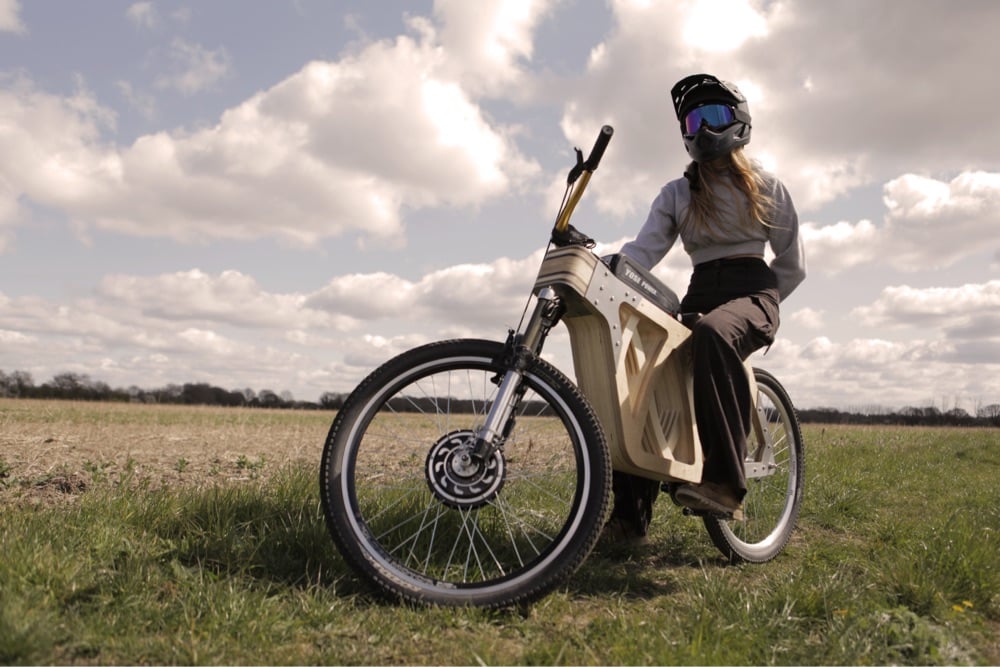
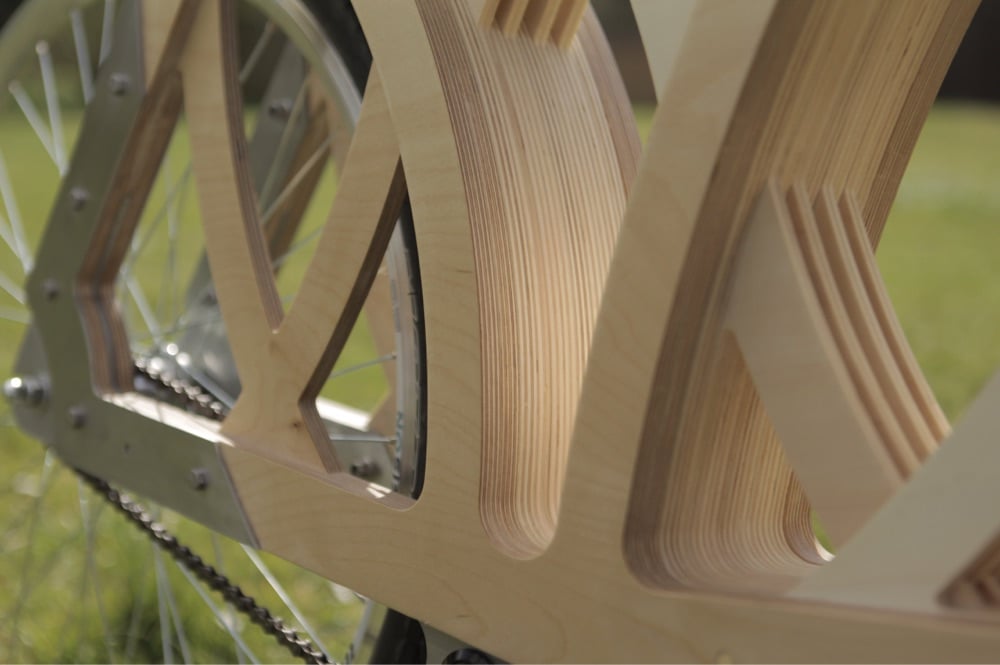
Self-described “maker of things” Evie Bee has made a cool thing indeed: an e-bike with a frame constructed mostly from sustainably sourced poplar and birch plywood called the Electraply.
Here’s a video of the bike in action:
The design of the bike was inspired by my love for the cafe racer and scrambler motorcycles of the past (the Great Escape anyone?) and the desire to honour and continue this iconic design through a modern interpretation.
Bee has released a pair of PDFs (one, two) to guide you through the entire process of building your own plywood e-bike. (via design milk)
From steel scrap to testing the final product with a ton of water pressure, here’s how Japanese manhole covers are made. The video is perhaps a little long in parts, so I would not blame you for skipping ahead to ~12:10 to see how some of the covers are hand-painted in brilliant color.
See also Japanese Manhole Covers Are Beautiful.
The length of winter near the northern 45th parallel requires events to look forward to in order to feel like you’re not forever adrift in cold and dark. Big things like vacations and reunions with friends & family as well as small things like getting outside in the afternoon, having something delicious planned for dinner, or just, like, getting to the end of the day having consumed enough water.
One of the things I am looking forward to in the early spring is March 1st because a) the sun will set at an almost respectable 5:38pm instead of the current 4:40pm, and b) season three of The Mandalorian starts. This is the way.
Based in Dubai, video artist André Larsen spends a lot of time shooting the Burj Khalifa which, at 2,722 feet and 163 floors, is the world’s tallest building. In this video, a drone piloted by Larsen dives the entire height of the building…and it’s kind of astounding just how much of it there is. Floors whiz past by the dozen and still there’s so far to go.
The Art of the Title, Print magazine, Slashfilm, and Salon have each compiled their picks for the best film and TV opening title sequences for 2022. There’s quite a bit of overlap, with the opening titles for Severance (which I added to the Unskippable Intros Hall of Fame earlier this year), The White Lotus, Peacemaker, and Pachinko making multiple lists. I haven’t seen After Yang yet, but I love that title sequence. Always a fan of lots of creativity and expression packed into small times and spaces.
This video is a simulation of a rogue wave 58 feet tall recorded by a buoy off the coast of Vancouver Island in 2020.
For centuries, rogue waves were considered nothing but nautical folklore. It wasn’t until 1995 that myth became fact. On the first day of the new year, a nearly 26-meter-high wave (85 feet) suddenly struck an oil-drilling platform roughly 160 kilometers (100 miles) off the coast of Norway.
At the time, the so-called Draupner wave defied all previous models scientists had put together.
Since then, dozens more rogue waves have been recorded (some even in lakes), and while the one that surfaced near Ucluelet, Vancouver Island was not the tallest, its relative size compared to the waves around it was unprecedented.
Scientists define a rogue wave as any wave more than twice the height of the waves surrounding it. The Draupner wave, for instance, was 25.6 meters tall, while its neighbors were only 12 meters tall.
In comparison, the Ucluelet wave was nearly three times the size of its peers.
Watching the video is surprising…the wave you think is the tall one isn’t and when it comes, you’re like, ok, WOW. (via damn interesting)
This is such a trip to see the familiar original version of Nintendo’s The Legend of Zelda being played as a VR first-person shooter. You only get one screen at a time with the top-down 2D view, but in this version, you get as much of the map as you can see - it looks like it stretches off into the distance for miles.
I just went to Wikipedia to look at the release date for Zelda and it came out February 21, 1986. I remember getting Zelda for my birthday that year, which means I somehow waited seven whole months to play that game and, boy was it worth it. I have a Switch now and still fire up the original Zelda sometimes, just to make sure the ol’ reflexes still work. (via digg)
Sure, the James Webb Space Telescope and ok, the Hubble, but the Solar Dynamics Observatory has to be right up there for producing some of the most jaw-dropping space photography around. This 4K video from NASA’s Goddard Space Flight Center condenses 133 days of the SRO’s observations of the Sun into a soothing hour-long time lapse.
See also The Highest Resolution Photo of the Sun Ever Taken, A Decade of Sun, Epic Time Lapse Videos of Mercury’s Transit of the Sun, and Thermonuclear Art.
People running “unconventional miles” is a thing now (see the beer mile) and during the pandemic, when meets and other usual track activities were cancelled, running a mile while dribbling a basketball became part of the human competitive story.
What started out as a curiosity-driven gimmick on YouTube eventually transpired into a competitive record among plenty of athletes, to the point where very experienced milers are now the only candidates that can pull this off.
The record for the basketball mile is 4:28, which also happens to be the current record for the aforementioned beer mile. It’s interesting that dribbling a basketball while running is equally as time-consuming as stopping to chug four beers and then running; I would have guessed the beer mile would take longer.
I love me a good speedrunning video, so I’m interested in seeing Running with Speed, a new feature-length documentary about people who strive to finish video games as fast as they can. You can find the movie on Amazon, Apple TV, and other such places. (thx, rex)
At the height of the Roman empire, over 250,000 miles of roadway criss-crossed present-day Europe, western Asia, and northern Africa. These roads were built using a variety of techniques, but many of them were built as shown in these two short videos:
First, a wide area would be deforested in order to clear all vegetation. Then, in the strip where the track had been projected, the topsoil would be removed until a solid base was found. Then on this base, the curbs were placed appropriate to the chosen width for the road. Large stones were placed between the curbs to serve as foundations, and on top of them, smaller stone layers all mixed up with fine aggregates to fill the gaps. Finally, the surface layer: a mixture of gravel, sand, and clay was added.
Tipper carts moved along the already compacted layers to deposit the material for the next layer. After tipping out heaps of material, it had to be spread out with planks, watered from barrels, and, finally, compacted with rollers.
If you’re like me and want to know just a little bit more about Roman roads in general after watching those, you can check this one out:
And if you want to know a lot more (and can read Spanish), check out this 245-page PDF.
See also How Did Roman Aqueducts Work? and A Subway-Style Map of Roman Roads Circa 125 A.D. (via open culture)
I know I’ve posted this before, but with the new Avatar movie out in theaters, it’s a good time to revisit the SNL sketch where Ryan Gosling is driven mad by the typeface choice for the movie’s logo.
I had forgotten about the title card at the end. Perfection.
Update: From Jake Kring-Schreifels at The Ringer last month: The Intertwining History of the ‘Avatar’ Papyrus Font and the ‘SNL’ Sketch That Spoofed It.
There actually is one single person responsible for Avatar’s Papyrus-esque logo: Peter Stougaard. The former senior vice president of creative advertising for 20th Century Fox willingly takes credit for selecting and tweaking the movie’s much-maligned font, but he doesn’t mince words. “I didn’t aimlessly pick Papyrus,” he insists. “I chose it very strategically.”
I can’t believe they got it off of the cover of Cameron’s copy of the script. (thx, matt)
I am not entirely sure I liked Noah Baumbach’s adaptation of Don DeLillo’s White Noise (nor am I sure I disliked it), but I’m 100% positive that the grocery store dance scene that plays while the end credits roll was my favorite part of the film. The scene is set to a new LCD Soundsystem track called new body rhumba and Netflix has uploaded the whole thing to YouTube so you can enjoy it whenever you would like. Also, André 3000 with the cookie box!
When Spider-Man: Into the Spider-Verse came out in 2018, it had a very different look than most other animated feature-length films. Since the release of Toy Story in the mid-90s, digitally animated films made by the large studios had taken their cues from Pixar. “The Pixar Look” was “extremely high quality, physically based, and in some cases almost photorealistic”. Spider-Verse introduced a different style and since then, digital animation studios have been experimenting with non-photorealism. This video looks at how that shift is happening.
Jon Lefkovitz has created a video montage of moments from movies and TV where characters “do or say the same thing at the same time”. As you might imagine, it’s a little bit mesmerizing.
This reminded me of Synchronized Basketball.
After her guide dog runs off after a thief who takes her bag, a girl navigates a world guided by her powerful senses of touch, hearing, and smell. Super charming and inventive. From the YouTube comments:
For those who don’t know, blind people will clap their hands and listen for the echo to get a sense of how big a space they are in, if it’s wide open or a tightly enclosed space.
(via peterme)
This YouTube channel has been going for seven years and 150 episodes now but I just recently ran across it via Open Culture: You Suck at Cooking. The emphasis here is on being dryly funny while cooking but the actual techniques are solid as well. If you follow their advice — well some of it anyway — you will get a tasty loaded baked potato or smashburger:
Update: I no longer mix things, I wangjangle them together.
See also The Katering Show and Hilarious Recipe Videos in the Style of Famous Directors.
This is delightful: a group of five friends who grew up on a predominantly Italian block of Union St. in Brooklyn reminisce about their childhood and the neighborhood in this animated video.
Imagine a whole block where 75-80% of the kids spoke Italian. We all lived there.
A lot of families were first generation Italians in America. Everybody was poor.
It was an open concept where, in the evening, the mothers and the grandmothers would take their chairs, sit outside, while we’re playing in the street. People were out the window watching their kids from the fourth floor. It was tight-knit.
And whenever a stranger walked on the block, like the whole block knew that there was a stranger on the block. That’s how tight-knit it was.
We’ve been together since, forget about it, since we were infants. Like brothers. Paisanos.
The names of the games they played in the street are amazing; I’ve only actually heard of a couple of these: stoopball, cracktop, red light green light one-two-three, ringolevio, buck buck, old mother witch, slapball, skelsies, boxball, stick ball, and hot peas & butter. The rules for hot peas & butter, which Eddie Murphy remembers playing as a kid:
It involved a long leather belt with a sharp edge. As kids gathered on the stoop or base, one person was selected from the group to hide the belt in our community’s parking lot. The belt was usually tucked away in a car bumper or under a loose hubcap or something.
After hiding it, the child returned to base and said, “Hot peas and butter, come and get your supper!” With that call, dozens of eager children ventured out to find the belt. The person who hid it constantly screamed who’s “hot” or near the belt and who’s “cold” or far away from it. This could go on for 15 even 20 minutes, and then the climax! The person who located the belt got to whip and thrash every child until they ran hurriedly back to base.
When I was a kid, we played a game with a homophobic name where one kid would have the football and the rest of us would try to take it from them using any means necessary; it was a violent version of keep-away. Being a small bookish sort, I don’t think I ever got the football and if I did, I threw it down the second anyone got close.
Anyway, back to the video…it’s really charming; here’s how it was produced.
The result is a vivid film that plays out on an intricately detailed model of a single block of brownstone Brooklyn. The childhood friends, now in late middle age, remember not just the games they played but also the prevalence of organized crime that shaped the neighborhood, and, to some degree, their own lives. And they talk, of course, about how the neighborhood has changed, laughing about the influx of “yuppies” who don’t return hellos on the street.
Hulu and the NY Times are teaming up to bring Nikole Hannah-Jones’ The 1619 Project to television.
In keeping with the original project, the series seeks to reframe the country’s history by placing the consequences of slavery and the contributions of Black Americans at the very center of our national narrative. The episodes — “Democracy,” “Race,” “Music,” “Capitalism,” “Fear,” and “Justice” — are adapted from essays from The New York Times No. 1 bestselling “The 1619 Project: A New Origin Story” and examine how the legacy of slavery shapes different aspects of contemporary American life.
The six-episode limited series will premiere January 26 on Hulu.
I woke up this morning and, for some reason, needed Sarah “Smac” McCreanor’s hydraulic press interpretive dances to be the first thing you saw on this site in 2023. I’ve watched these on Instagram many times before (see the whole set here) but I think it’s worth stopping to appreciate just how great these are: the wardrobe, the inventiveness in interpretation, the physicality, the comedic timing, and the precise choreography with the press. It’s something completely ridiculous pulled off with unbelievable skill — more of that energy in 2023 please!
In just 7 minutes, Vox takes a visual look back at the biggest events of 2022, including Ukraine, inflation, Musk/Twitter, tech layoffs, Serena retires, TikTok, the World Cup, the pandemic continues, the climate crisis intensifies, mass shootings, no more Roe, Iranian protests, the death of Queen Elizabeth, and more.
See also 2022 in Review (AP), 2022 Year in Review (Reuters), 50 Wonderful Things from 2022 (NPR), 2022 Year in Review (United Nations), 2022 in Review (New Yorker), and the Year in Search 2022 (Google).
I ran across this video this morning on Instagram and I haven’t stopped laughing about it, so I thought I’d share it with you. It’s an improv by Ross Bryant from a show called Game Changer in which he makes up a commercial for a new McDonald’s product: the Macbeth sandwich.
It’s perhaps a liiiittle bit of a softball prompt for Bryant, who is a member of The Improvised Shakespeare Company, but to pull it off, he needs to be fluent in both fast food advertising and Shakespeare. The accent, timing, and delivery are perfect — somehow in the space of a minute, he does two or three highbrow/lowbrow shifts and oh, just watch the damn thing. (via rachel lopez)
As part of a British reality TV series in the late 2000s, two sets of 11-to-12-year-old children, one group of 10 boys and another group of 10 girls, were left by themselves in a house for 5 days. They had food, bedding, games, paint, toys, bikes, furniture, etc. They had each taken a cooking course beforehand. None of the children had met before. At any time, they could ring a bell to talk to the production team, a parent, or a child psychiatrist. They were free to leave at any time. To produce the videos above, camera crews were in the house to film, but they were not allowed to speak to the kids and could only intervene for safety reasons. (Content warning: both videos include a few instances of homophobic slurs.)
So what happened?
Initially, there’s a bit of chaos in each house but then things diverge — but not as much as you might expect. After a brief attempt at cleaning, the boys completely trash their house, eat mostly sugar, divide into factions, and somehow trash the house even more. A representative bit of narration about the boys:
The atmosphere is becoming hysterical and aggressive. Almost everything has been destroyed.
The girls also somewhat trash their house, have trouble eating regularly, and two of the girls leave early. But they also, IMO, are more successful than the boys at living together.
Two of the children have left and eight have stayed. Close friendships have grown and split apart and then re-formed. Though the girls have argued and fought, they’ve also been able to forgive each other, to comfort each other when upset, to help each other.
Some reflections and observations:
- I wonder how much the presence of cameras and their operators influenced their behavior. Clearly there was some initial showing off and pushing of boundaries, but after a couple of days, the surveillance may have receded into the background.
- Individual kids can be smart, clever, and kind but a group of them often is not. I believe this often applies to adults as well.
- Both good and bad actions are contagious within groups like this, but bad actions are easier to do and their results more difficult to undo. Like, it’s much easier to squirt ketchup all over the carpet than it is to clean it up.
- Some would watch these videos and say, “well, boys are like that and girls are like this, it’s just nature”. Others might say that girls and boys are socialized differently, resulting in more violent behavior in boys, and more relational behavior in girls, etc. I am not sure this experiment offers any clarity into what the balance is here.
- Everyone in the houses was able to exercise a high degree of personal freedom during their stay, but doing so often greatly impacted the group as a whole in a negative way. Sure, you can trash the living room if that’s what you feel like, but it ruins it for everyone, not just you.
- Watching this, I remember why I hated middle and high school so much.
- Were these “experiments” ethical? For that matter, is sending kids to American middle school ethical?
Anyway, fascinating to watch.
Newer posts
Older posts




Socials & More