kottke.org posts about photography
The New York City Department of Records has put a huge portion of the Municipal Archive’s collection of photos online, more than 870,000 in all. The server is overwhelmed at times due to heavy usage, the searching/browsing interface is not what you’d call cutting edge, and many of the photos are available in thumbnail size only, but this is still an incredible resource.
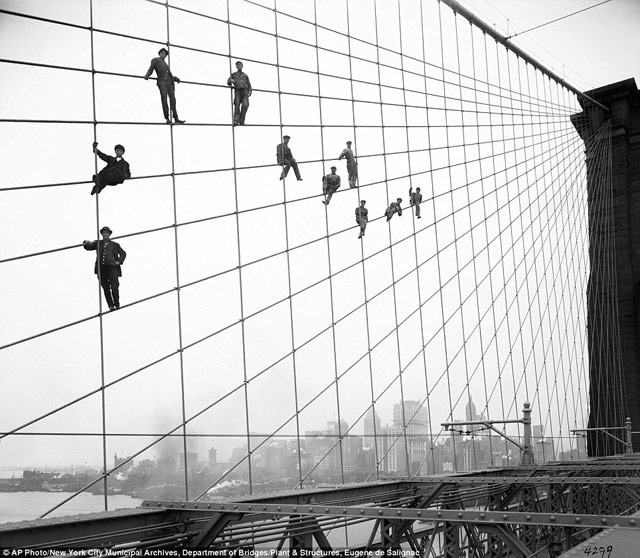
Painters on the Brooklyn Bridge in 1914:
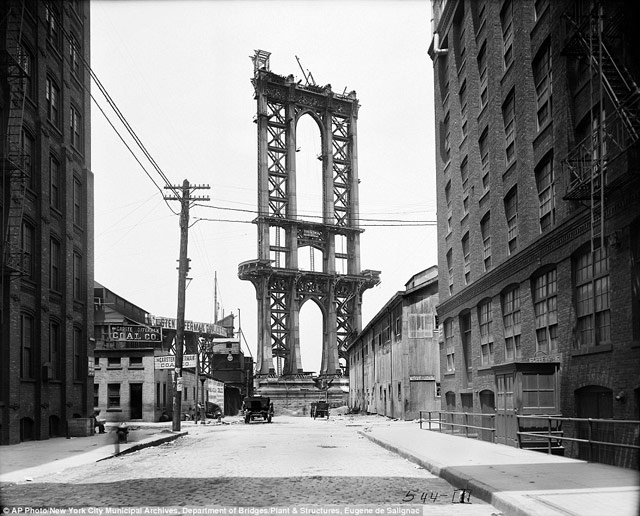
The unfinished Manhattan Bridge in 1908:
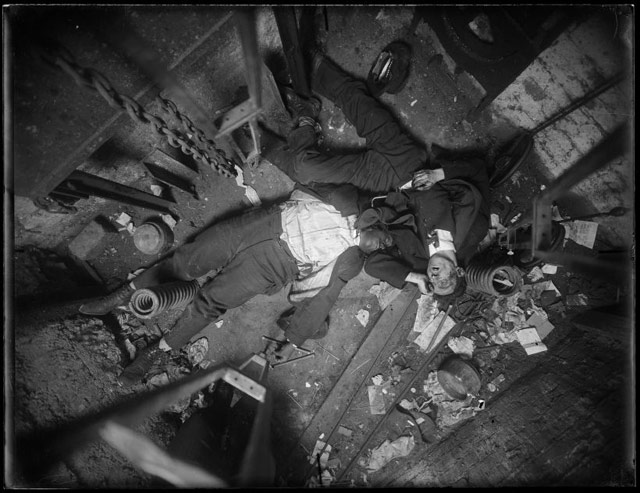
A pair of men lay dead in an elevator shaft after a failed robbery attempt:
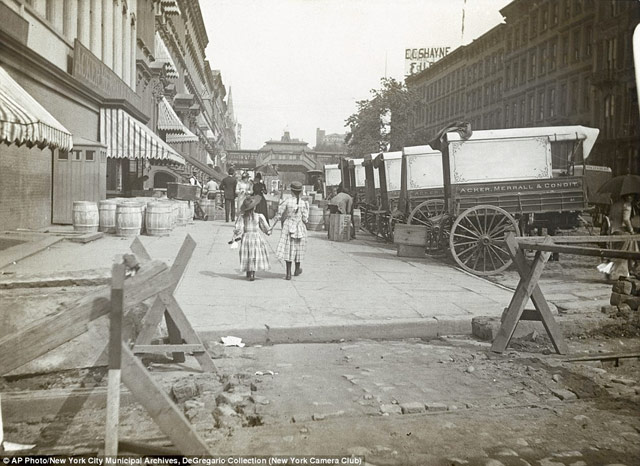
Looking east on 42nd Street, circa 1890:
More of these photos can be seen at The Daily Mail. (thx, miro)
Using a digital camera, Mechanical Turk, and a thermal printer, Matt Richardson’s Descriptive Camera outputs descriptions of photos instead of the photos themselves.

After the shutter button is pressed, the photo is sent to Mechanical Turk for processing and the camera waits for the results. A yellow LED indicates that the results are still “developing” in a nod to film-based photo technology. With a HIT price of $1.25, results are returned typically within 6 minutes and sometimes as fast as 3 minutes. The thermal printer outputs the resulting text in the style of a polaroid print.
This seems like a distant cousin of Unphotographable. (via hacker news)
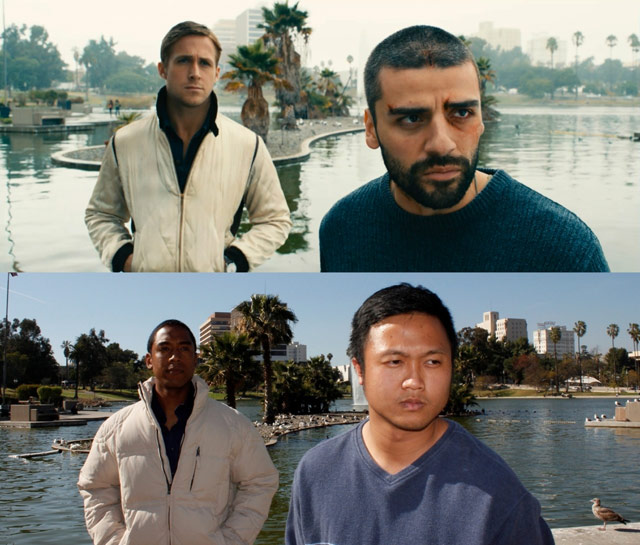
As Allen Fuqua travels around, he looks for movie locations and attempts to duplicate scenes from them. For instance, here’s Allen and a friend reenacting a scene from Drive:
(thx, stephen)
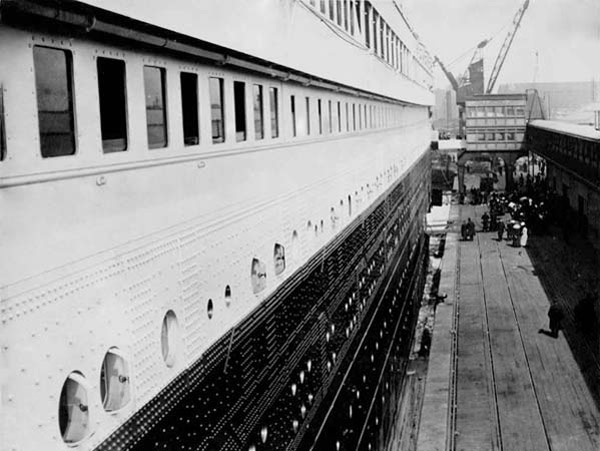
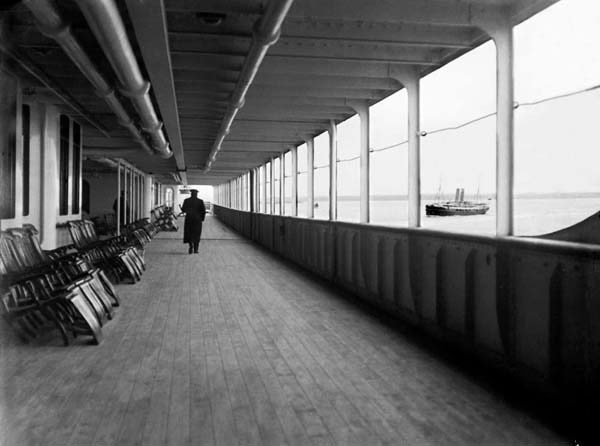
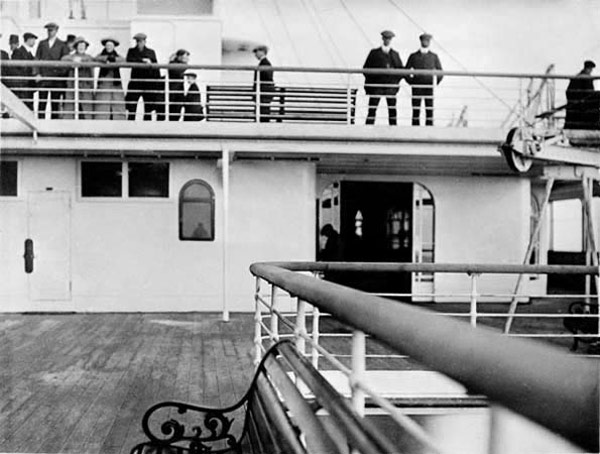
I was under the impression that not many photographs of the Titanic existed…especially those taken on the ship. But amateur photographer Francis Browne was aboard the Titanic from Southampton to Cobh, Ireland and captured many images of the ship’s interior, exterior, and voyage. The photos were widely known in the aftermath of the sinking but have been little seen since then.
Browne took this as he was boarding the ship:
The infamous deck chairs:
Browne traveled on a first class ticket…this is a view of some passengers on the second class promenade:
This was taken shortly after the ship dropped anchor in Cobh. Browne obviously did not take this photo because he was still aboard the ship…he acquired it from a photography friend after the fact:
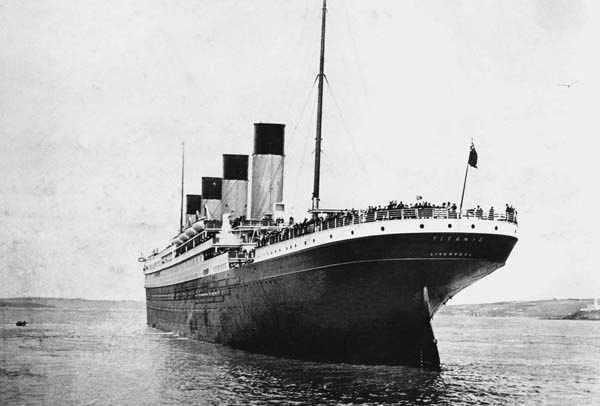
And this is one of the last photos taken of Titanic before Bob Ballard and his team found the wreckage in the mid-80s:
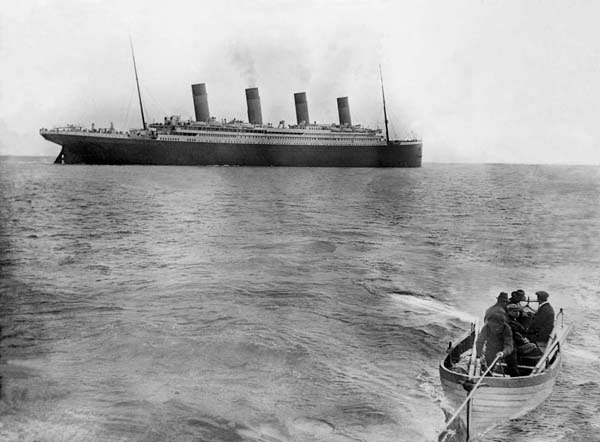
These photos will be a big blow to the remaining folks who believe that the Titanic was fictional:

The Collective Snapshot is a photographic series by Spanish photographer Pep Ventosa which blends “together dozens of snapshots to create an abstraction of the places we’ve been and the things we’ve seen.” He layers multiple pictures from several angles to create one image familiar and foreign at the same time.
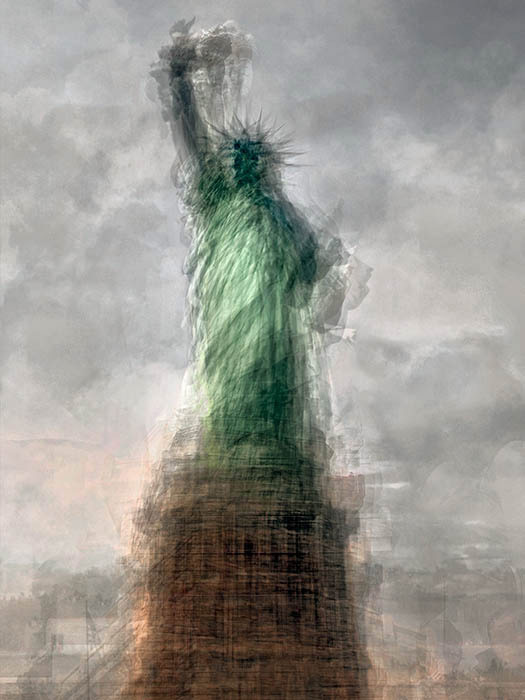
His ‘Reconstructed Works’ aren’t bad either. And, oh, look at these carousels. (via My Modern Met)
If you’re an aspiring photographer, here are ten photographers that you should ignore, presumably so that you can develop your own voice and style instead.
Robert Frank was a one-man revolution. Before him pictures for the most part were pretty and clean and pre-visualized, and shot from a tripod. Frank came along and tore a new A-hole in that aesthetic. Fortunately he had something to replace it with: a strong personal vision. Most young photographers who follow in his footsteps don’t. They mistake grain, guts, and verve with substance. Sorry folks, but hitting three out of four doesn’t count. I know it took cajones to shoot that cowboy bar at 1 am pushing your film to 3200, but that doesn’t keep your photo from being boring. Time to shoot something you care about, and don’t try to convince me it’s flags or the underclass.
This follows a list of “harmful” novels for aspiring writers.
The Catcher in the Rye by J.D. Salinger.
Mark Twain made the American vernacular a literary language; Salinger tried to do the same for the American adolescent whine. We who read Catcher as teenagers in the 1950s and ’60s at once considered ourselves free to babble on paper just the way we did over coffee and cigarettes. It was certainly easier than learning how to write a straightforward sentence expressing something more than teen angst.
I wonder if there might be a similar list for designers or artists?
For her project My Pie Town, Debbie Grossman modified Depression-era photos to depict all-female families.
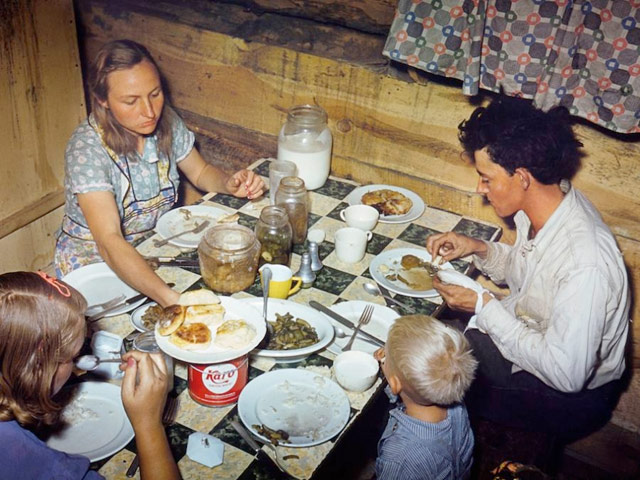
Joan Myers’ biography of Doris Caudill (Doris is in many of the pictures), Pie Town Woman, describes her husband, Faro, as less than helpful on the homestead. I had downloaded a portrait of Doris and Faro from the Library of Congress website, and because it was so high-resolution, it occurred to me that I had enough pixels to work with that I could alter the image. I removed Faro, and I loved the opportunity to look at Doris on her own and imagine a different life for her. I thought it would be fun to remake the whole town in a way that reflected my own family, and I imagined a Pie Town filled with women.
The main reason for doing so was to give us the unusual experience of getting to see a contemporary idea of family (female married couples as parents, for example) as if it were historical. But I am also very interested in using Photoshop to create imaginary or impossible images-this is something I have done in other work as well.
(via @riondotnu)
This is the Buzludzha monument in Bulgaria, built in 1981 in honor of Communism. After Bulgaria turned away from Communism in 1989, it fell to ruin.
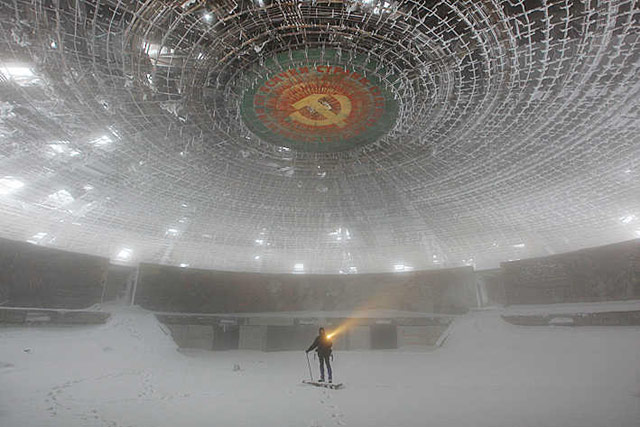
I first heard about the Buzludzha monument (pronounced Buz’ol’ja) last summer when I was attending a photo festival in Bulgaria. Alongside me judging a photography competition was Alexander Ivanov, a Bulgarian photographer who had gained national notoriety after spending the last 10 years shooting ‘Bulgaria from the Air’. Back then he showed me some pictures of what looked to me like a cross between a flying saucer and Doctor Evil’s hideout perched atop a glorious mountain range.
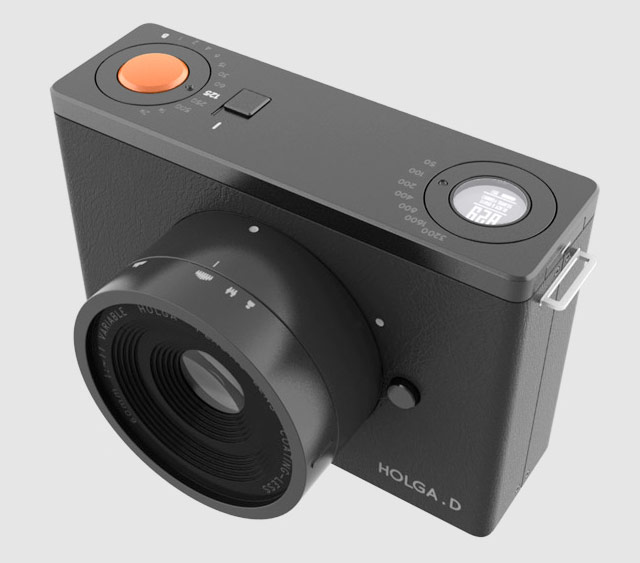
The Holga is a cheap toy camera with a simple lens that takes pictures prized by some for their happy accidents (light leaks, distortions, etc.). The Holga D is a concept that translates the Holga experience to digital.
From the front it may look like just another digital camera, may be a bit minimal, but the backside is surprising, as it does not have a display!
Even though Holga D is a digital camera, in order to achieve its simplicity, it reduces the feature set to absolute minimum.
Even the display is not there! So your photographs remain mysterious until you download the images. This makes the experience quite similar to the good old film based cameras.
(via buzzfeed fwd)
When Stefani Germanotta was working as a waitress in the West Village in the summer of 2005 (anyone know where?), her coworker Malgorzata Saniewska shot a series of photos of her at Germanotta’s parents’ apartment.
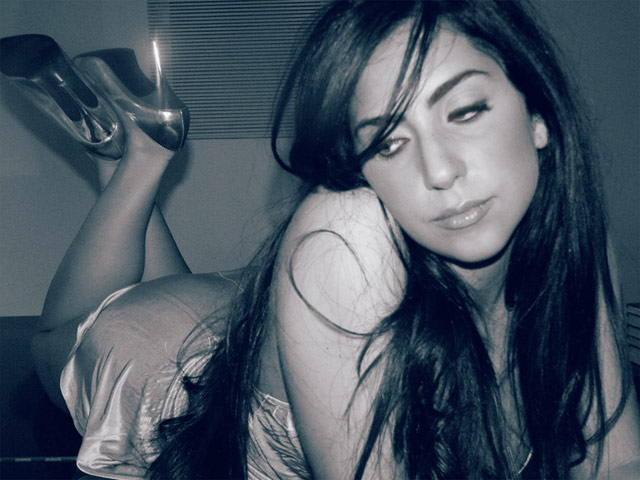
A year or two later, Germanotta became Lady Gaga.
Well, not quite. But the specifications are quite impressive:
The headline specifications are a new 22.3 Megapixel full-frame sensor with 100-25600 ISO sensitivity (expandable to 102,400 ISO), 1080p video at 24, 25 or 30fps and 720p at 50 or 60fps, a 61-point AF system (with 41 cross-type sensors), 6fps continuous shooting, a viewfinder with 100% coverage, 3.2in screen with 1040k resolution, 63-zone iCFL metering, three, five or seven frame bracketing, a new three-frame HDR mode, microphone and headphone jacks and twin memory card slots, one for Compact Flash, the other for SD; the control layout has also been adjusted and the build slightly improved. So while the resolution and video specs remain similar to its predecessor, the continuous shooting speed, AF system, viewfinder, screen and build are all improved, and again there’s the bonus of twin card slots.
DP Review and the Verge also have reviews and it’s available for preorder on Amazon for, whoa, $3500 (the kit lens is $800 more)..
What you may have heard: This new kind of camera from Lytro allows you to take pictures without worrying about focusing until after the photos have been taken.
What’s totally cool that I didn’t know until this morning when I followed a link to Heather Champ’s Lytro photos: you can focus and refocus the photos on Lytro’s web site as much as you want. What a fun thing! Try it out with Heather’s photos or Lytro’s default picture gallery.
Taken by some of the world’s most iconic photographers, a selection of the best photographs ever published in Life magazine from 1936 to 1972. Here’s a photo of Mickey Mantle from 1965:
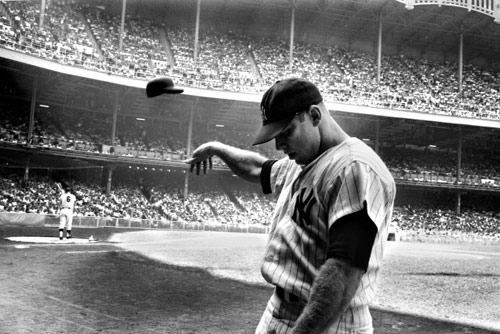
The caption reads:
In one of the most eloquent photographs ever made of a great athlete in decline, Yankee star Mickey Mantle flings his batting helmet away in disgust after another terrible at-bat near the end of his storied, injury-plagued career.
Mantle was only 33 when that photo was taken but he’d already had 13 extremely productive seasons under his belt and his last four seasons from ‘65 to ‘68 were not nearly as good.
Buzzfeed has a collection of every World Press Photo Contest winner from 1955 to the present. Some amazing photos but in general they do not paint a very kind picture of humanity.
A list of all the winners of the 2012 World Press Photo Photo Contest. I’m not particularly fond of the overall winner but there’s lots of great photography here.
I love these cauliflower explosions done by Brock Davis…you can find them in his Food Stuff set on Flickr. Here’s the Challenger explosion in cauliflower:
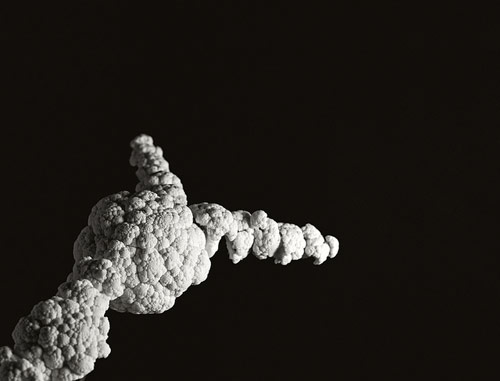
(via @josephholmes)
Camera shutters used to be verrrry slow so to help young kids stay still during the long exposure, the photographer would have the mother be in the frame but typically covered by a blanket or cloth. Like so:

(via cup of jo)
Fotoshop is a new beauty product from Adobé (say aah-DOE-bay) that slims, gets rid of wrinkles, and can even lighten your skin color.
(via stellar)
Inspired by a video of a chain-smoking two-year-old from Indonesia, photographer Frieke Janssens took a series of portraits of kids smoking.
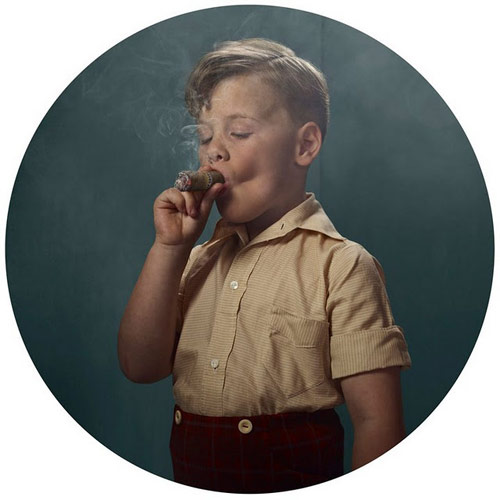
A video shows how Janssens made the photos…the cigarettes were made of cheese.
From The Verge, a new-ish tech site, a mega-guide on everything you need to know about buying a camera. It starts at the beginning with the basics of photography, goes over ISO, aperture, shutter speed, megapixels, white balance, and the major types of camera.
If you’re new to digital photography, the three things you should acquaint yourself with first are the ISO, aperture, and shutter speed. The three work in concert, and if you can manipulate and control them all, you’ll take fabulous photos without even touching the rest of your camera. Together, they’re known as the Exposure Triangle, because they control how much light you’re exposing the camera to (aperture), how sensitive the camera is to that light (ISO), and how long your exposure lasts (shutter speed).
I love everything about this…I scrolled through the entire list. This one was my favorite:
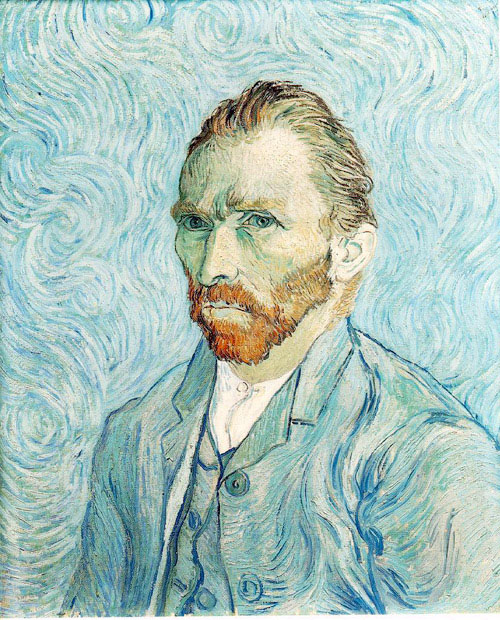
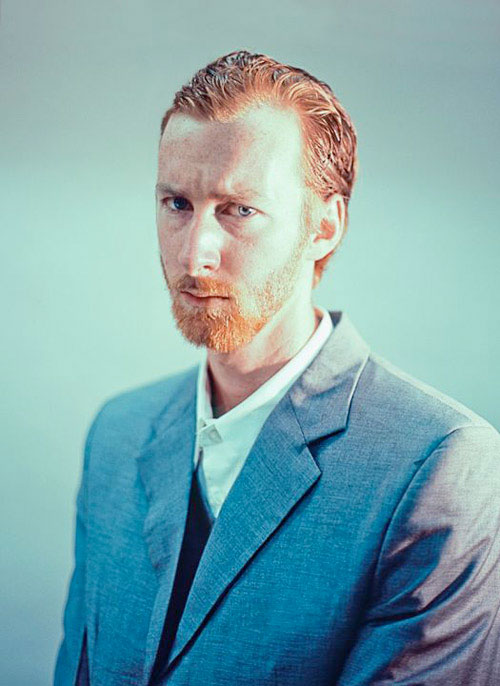
(via waxy)
In an excerpt from the introduction to Subway, his collection of photographs of the NYC subway, Bruce Davidson recalls how he came to start taking photos on the subway in the 1980s.
As I went down the subway stairs, through the turnstile, and onto the darkened station platform, a sinking sense of fear gripped me. I grew alert, and looked around to see who might be standing by, waiting to attack. The subway was dangerous at any time of the day or night, and everyone who rode it knew this and was on guard at all times; a day didn’t go by without the newspapers reporting yet another hideous subway crime. Passengers on the platform looked at me, with my expensive camera around my neck, in a way that made me feel like a tourist-or a deranged person.
At the beginning of this video, Ramesh Raskar, associate professor at the MIT Media Lab, announces calmly:
We have built a virtual slow-motion camera where we can see photons, or light particles, moving through space.
Yeah, no biggie.
Newer posts
Older posts






Socials & More