



Average Noah Kalina
Than Tibbetts took all the frames from Noah Kalina’s Everyday video and averaged them into one photo.

Those are some of the yearly averages…you’ll have to click through to see the overall average.

This site is made possible by member support. 💞
Big thanks to Arcustech for hosting the site and offering amazing tech support.
When you buy through links on kottke.org, I may earn an affiliate commission. Thanks for supporting the site!
kottke.org. home of fine hypertext products since 1998.
Beloved by 86.47% of the web.
Than Tibbetts took all the frames from Noah Kalina’s Everyday video and averaged them into one photo.
Those are some of the yearly averages…you’ll have to click through to see the overall average.
In a photo slideshow with jazz accompaniment, narrator Adam Gopnik takes us on a short tour of NYC’s A train, which runs from the top of Manhattan all the way out to the beaches of Rockaway.
From Harlem and upper Manhattan to Brooklyn, Queens and the Atlantic Ocean - New York city’s A Line subway route covers over 30 miles, takes two hours to ride from end to end, and is the inspiration for one of jazz’s best known tunes.
Here — with archive images and vibrant present-day photographs from Melanie Burford — New Yorker columnist Adam Gopnik takes a ride on one of today’s A trains, and explores the communities living along the route.
(via @davehopton)
For his Yakuza project, photographer Anton Kusters spent two years documenting some members of the Japanese mafia.
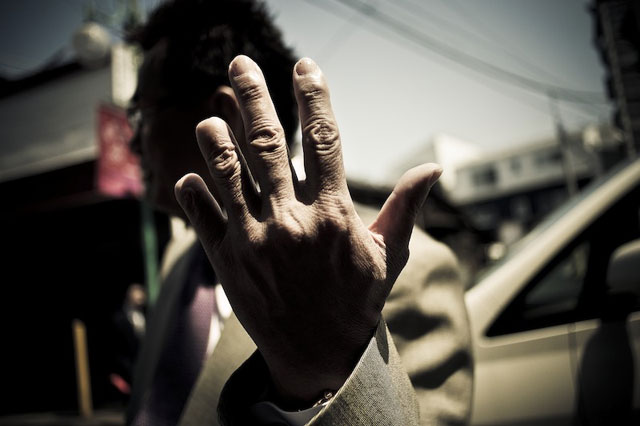
A limited edition of a book containing the photos is available. Steward Mag recently did an interview with Kusters:
The values were almost comparable to general Japanese workplace values, actually. Most yakuza gangs actually have neighborhood offices, and the plaques they have on the door state core values like “respect your superiors,” “keep the office clean,” and so on.
One thing I noticed early on with gang life was how subtle everything was. Everything was unspoken, and will was expressed through group pressure. A pressure was constantly there. There was this innate understanding of form — if someone did something wrong, no one would say anything; he would simply be expected to apologize. And the fact everyone would be so silent about it made the pressure really intense.
(thx, david)
Noah Kalina, one of my favorite photographers, has taken a self-portrait of himself every day for the past 12 and a half years. After six years, he released a video of the results, which video went crazy viral and brought the attention of the world to Kalina’s door. Now he’s released the 12.5 year version.
I hope I live to be 100 to see the 75th anniversary edition.
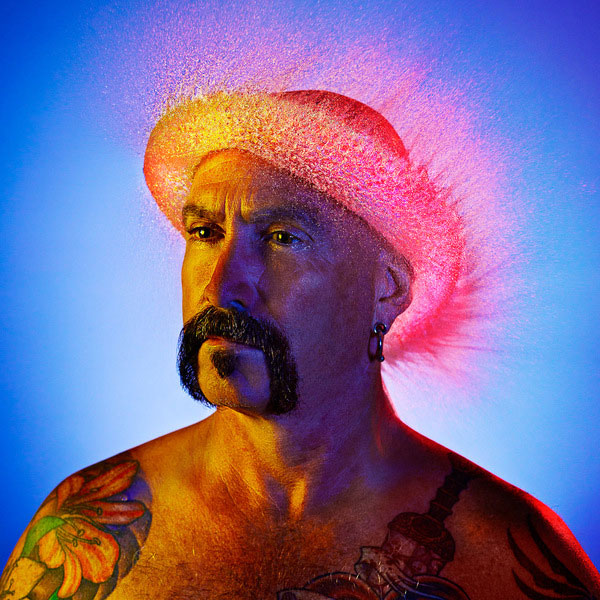
Water Wigs is a project from LA artist Tim Tadder, introducing the heads of bald men to water balloons. The Water Wig Club for Men, I’m not only the president…
We just finished shooting a new project we call Water Wigs. The concept is simple and it is another visual exploration of something new and totally different. We found a bunch of awesome bald men and hurled water balloons at their heads, to capture the explosion of water at various intervals. The result a new head of of water hair! We used a laser and sound trigger to capture the right moments for each subject to create just the head of hair that fit best with the face.
(via dangerous minds)
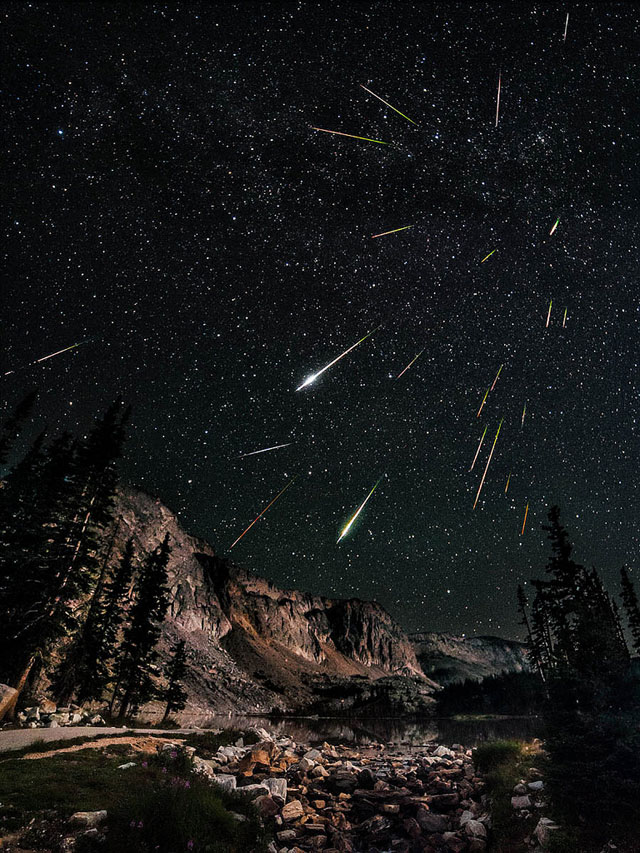
There’s nothing like a composite photo of the Perseids meteor shower to hammer home the realization that the Earth is hurtling through space like the Millennium Falcon making the Kessel Run. Photo by David Kingham.
Where have I seen this before, a massive long-lasting Arctic storm that looks a lot like a hurricane? Oh right, The Day After Tomorrow.
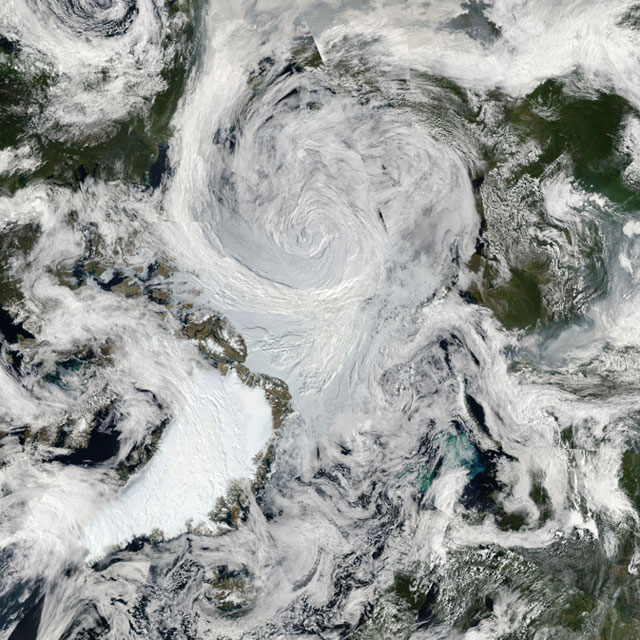
The storm had an unusually low central pressure area. Paul A. Newman, chief scientist for Atmospheric Sciences at NASA’s Goddard Space Flight Center in Greenbelt, Md., estimates that there have only been about eight storms of similar strength during the month of August in the last 34 years of satellite records. “It’s an uncommon event, especially because it’s occurring in the summer. Polar lows are more usual in the winter,” Newman said.
Arctic storms such as this one can have a large impact on the sea ice, causing it to melt rapidly through many mechanisms, such as tearing off large swaths of ice and pushing them to warmer sites, churning the ice and making it slushier, or lifting warmer waters from the depths of the Arctic Ocean.
I love The Day After Tomorrow. I know it’s a cheeseball disaster movie (which is pretty much why I love it) but it’s also looking more than a little prescient. Well, as prescient as a cheeseball disaster movie can be anyway. In the Washington Post the other day, prominent climatologist James Hansen wrote that human-driven climate change is responsible for an increase in extreme weather.
My projections about increasing global temperature have been proved true. But I failed to fully explore how quickly that average rise would drive an increase in extreme weather.
In a new analysis of the past six decades of global temperatures, which will be published Monday, my colleagues and I have revealed a stunning increase in the frequency of extremely hot summers, with deeply troubling ramifications for not only our future but also for our present.
This is not a climate model or a prediction but actual observations of weather events and temperatures that have happened. Our analysis shows that it is no longer enough to say that global warming will increase the likelihood of extreme weather and to repeat the caveat that no individual weather event can be directly linked to climate change. To the contrary, our analysis shows that, for the extreme hot weather of the recent past, there is virtually no explanation other than climate change.
In many ways, the phrase “global warming” is grossly misleading. “Oh,” we think, “it’s gonna be a couple degrees warmer in NYC in 20 years than it is now.” But the Earth’s climate is a chaotic non-linear system, which means that a sudden shift of a degree or two — and when you’re talking about something as big as the Earth, a degree over several decades is sudden — pushes things out of balance here and there in unpredictable ways. So it’s not just that it’s getting hotter, it’s that you’ve got droughts in places where you didn’t have them before, severe floods in other places, unusually hot summers, and even places that are cooler than normal, all of which disrupts the animal and plant life that won’t be able to acclimate to the new reality fast enough.
But pretty Arctic cyclone though, right?
The main imaging cameras on the Mars Curiosity rover have only 2-megapixel sensors with 8 GB of flash memory — compare that to a maxed-out iPhone 4S with an 8-megapixel sensor and 64 GB of flash memory (not to mention 30-fps 1080p video). Planning timeframes and communications bandwidth contributed to the chosen camera size.
‘There’s a popular belief that projects like this are going to be very advanced but there are things that mitigate against that. These designs were proposed in 2004, and you don’t get to propose one specification and then go off and develop something else. 2MP with 8GB of flash [memory] didn’t sound too bad in 2004. But it doesn’t compare well to what you get in an iPhone today.’
The cameras were also supposed to be outfitted with zoom lenses but that part of the project was scrapped.
Nate Jones was disappointed about how women’s Olympic beach volleyball has been photographed at the Olympics so he decided to show us what other sports look like through the lens of women’s Olympic beach volleyball photographer’s lens. The results are hilarious.

(via ★mathowie)
Belgian photographer Kurt Stallaert’s “Bodybuilders’ World” is a project showing a world where children are more ripped than you. It’s creepy as hell imagining these kids lifting weights every day since they were born.
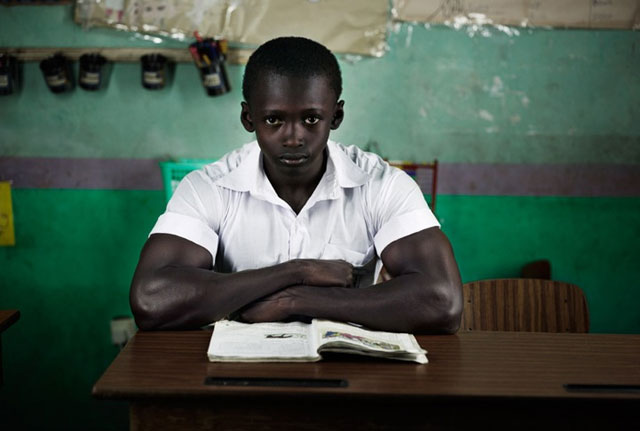
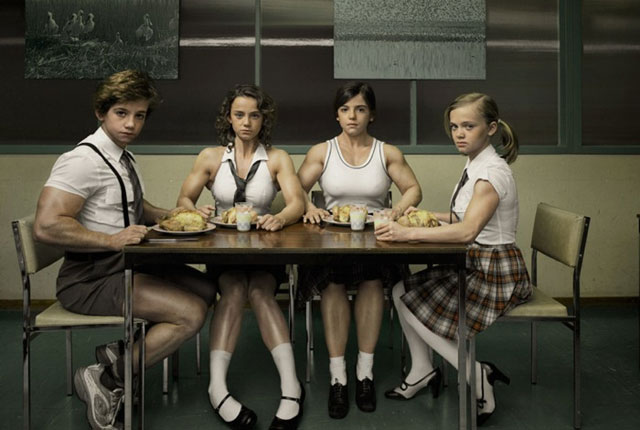
More examples here and here. (via ★scottwilliams)
Yesterday In Focus featured new work from photographer Camille Seaman: storm clouds in the skies of the Midwest.
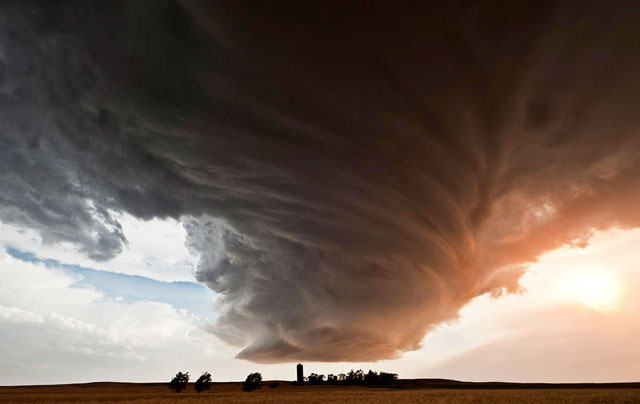
Nice cumulonimbus mammatus in #s 4, 14, and 16. And by coincidence, the NY Times Lens blog also featured Seaman’s work yesterday, an earlier project that entailed shooting portraits of icebergs.
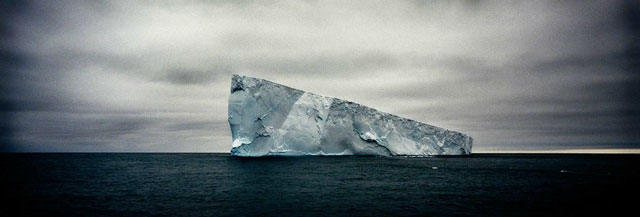
I like Seaman’s portraiture approach to things like clouds and icebergs:
“They are like humans in that each one reacts to its environment and its circumstances in its own way,” Camille Seaman, 42, said. “I’ve come across icebergs that were very stalwart and just refused to dissolve or break up. And there were others — massive, massive icebergs — that were like ‘I can’t take it anymore’ and in front of my eyes would just dissolve into the sea. There’s so many unique personalities. There’s a sadness to them.”
I love McLean Fahnestock’s series of modified photos of rocket launches without the rockets:

Fahnestock also did the video of all 135 Space Shuttle launches at once.
Artist Angelica Dass pairs photographs of people with the Pantone colors of their skin colors.

More of the project can be found on her Tumblr. (via designboom)
In an interview with Nicola Twilley and Geoff Manaugh, photographer Edward Burtynsky talks about his use of film and drones, his current big project photographing water, and the challenges of finding ways to photograph the ubiquitous.
I’d say, actually, that I’ve been careful not to frame the work in an activist or political kind of way. That would be too restrictive in terms of how the work can be used in society and how it can be interpreted. I see the work as being a bit like a Rorschach test. If you see an oil field and you see industrial heroism, then perhaps you’re some kind of entrepreneur in the oil business and you’re thinking, “That’s great! That’s money being made there!” But, if you’re somebody from Greenpeace or whatever, you’re going to see it very differently. Humans can really reveal themselves through what they choose to see as the most important or meaningful detail in an image.
Burtynsky is a favorite around these parts.
Photographer John Clang is using projected Skype video to make portraits of Singaporean families whose members are scattered around the globe.

In Singapore, it is a common practice for entire families to gather on special occasions for a formal picture, often at a studio, with the resulting image framed and prominently displayed at home. The growing tendency of younger family members to take jobs abroad, however, has left many modern portraits missing a relation or two. So the Singaporean photographer John Clang devised a solution, piggybacking on the video-calling technology that already helps ease the dislocation of separated family members: Skype.
(via @bdeskin)
If you make a series of horrifying photos of little girls dressed like Vegas cocktail waitresses, I will apparently always click through. First it was Susan Anderson’s High Glitz, a series of child beauty pageant contestants.

And then the last issue of the NY Times Magazine had a series of photos by Kenneth O Halloran of contestants at the World Irish Dancing Championships.

All I can think of when I see those spray tans is Homer’s makeup gun.
Why does McDonald’s food look so much better in the ads than at the restaurant? Watch as the director of marketing for McDonald’s Canada buys a Quarter Pounder at McDonald’s and compares that to a burger prepared by a food stylist and retouched in post by an image editor.
Short answer: the burger at the restaurant is optimized for eating and the photo burger is optimized for looking delicious. (via ★interesting)
From the NYPL’s digital collection, a selection of odd photos of baseball players from the 19th century.
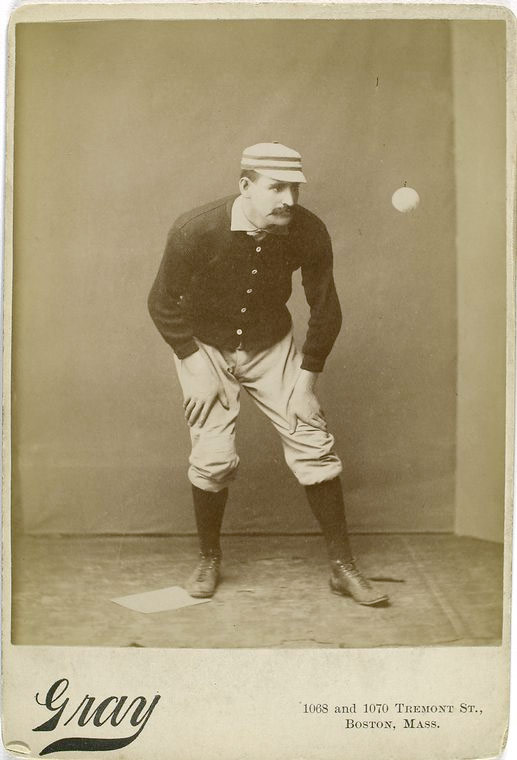
Baseball gloves used to be a lot smaller:

BTW, the site I got this from is fascinating…on the front page right now are posts about patent drawings of mazes and puzzles, slave bells, and a shoe-leather map of a cow’s hide.
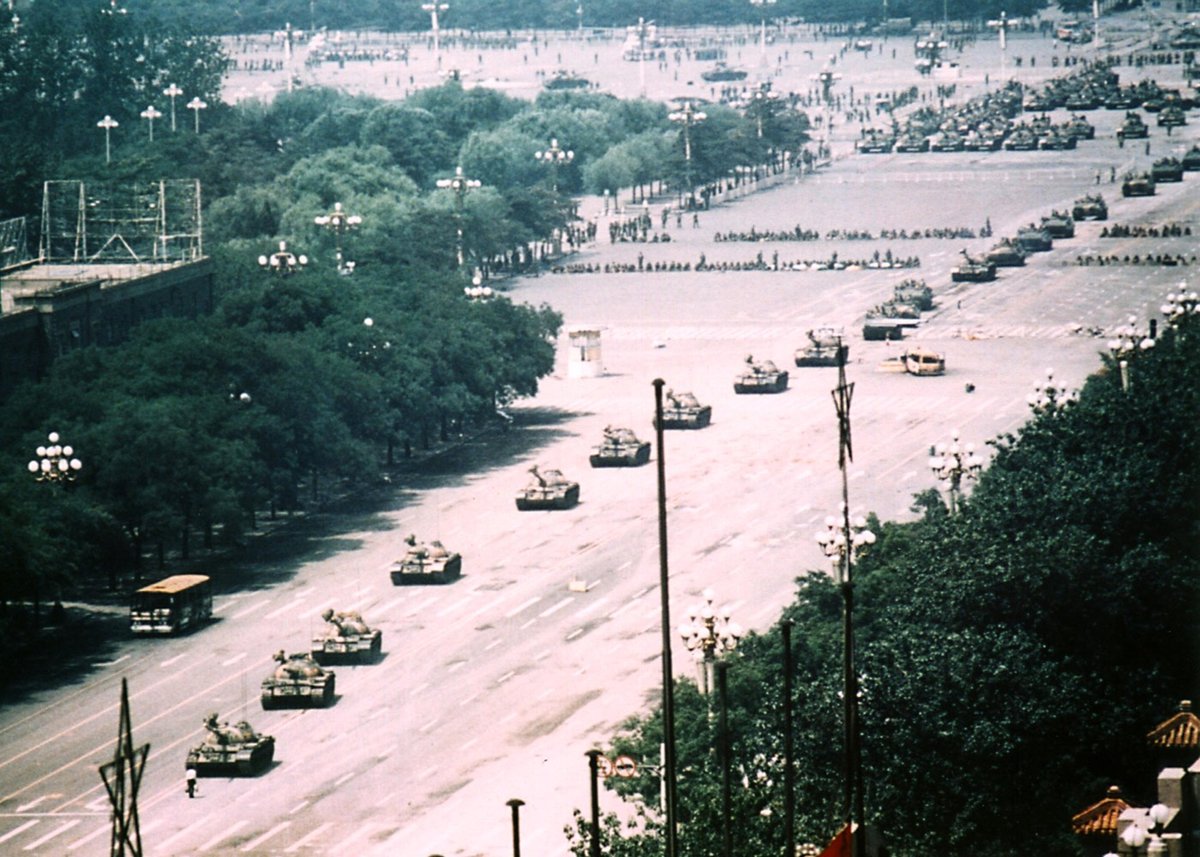
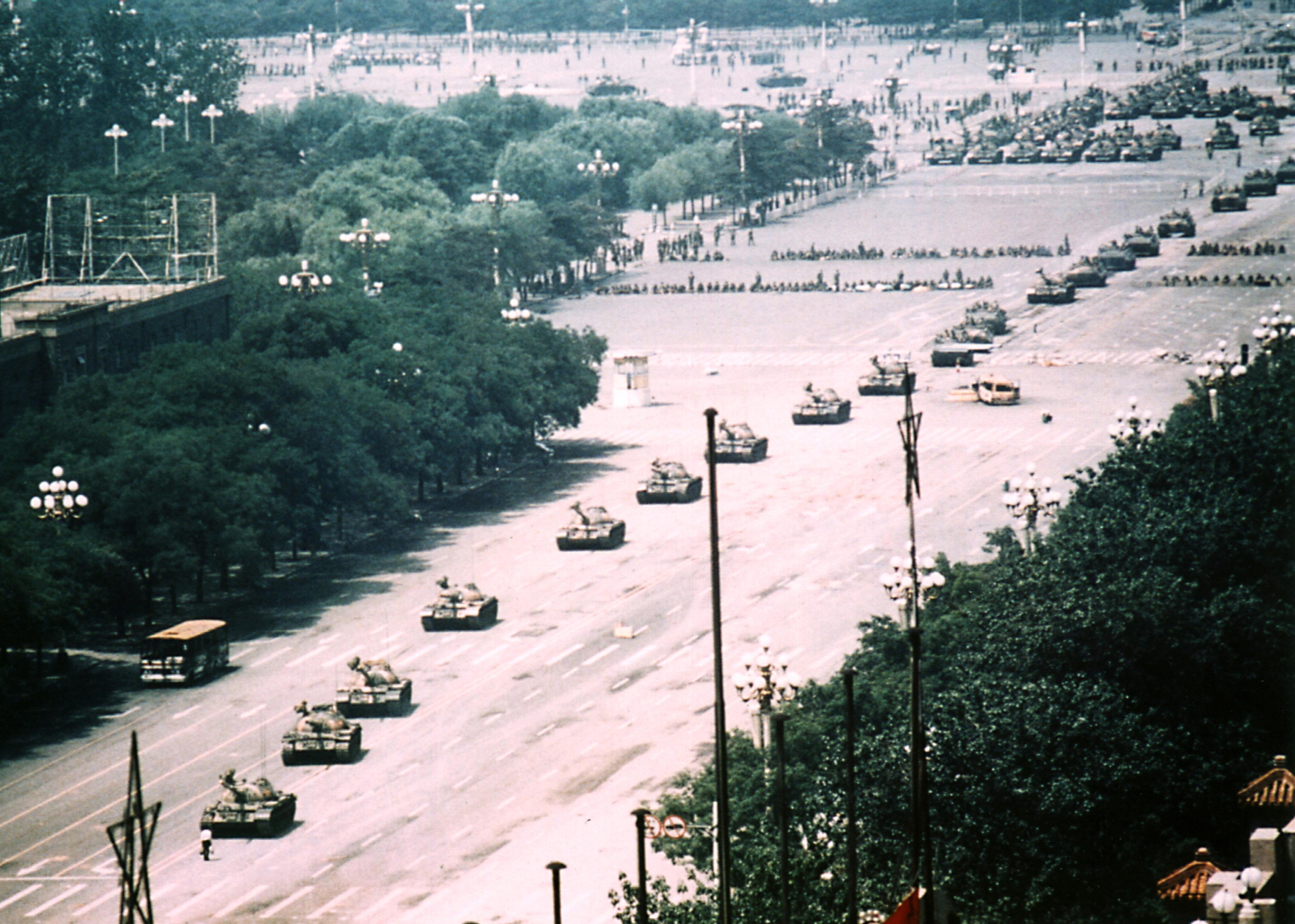
I’ve seen several versions of the iconic Tank Man photo but here’s a little-known wider view that shows just how many tanks the guy was holding up. Larger version here. There is also, amazingly, video of the incident:
You’ll note at the end that the man is hustled off by a group of people. See also the Tank Man of Tiananmen (via @polarben)
Update: There is also this view of Tank Man, taken from the ground level:
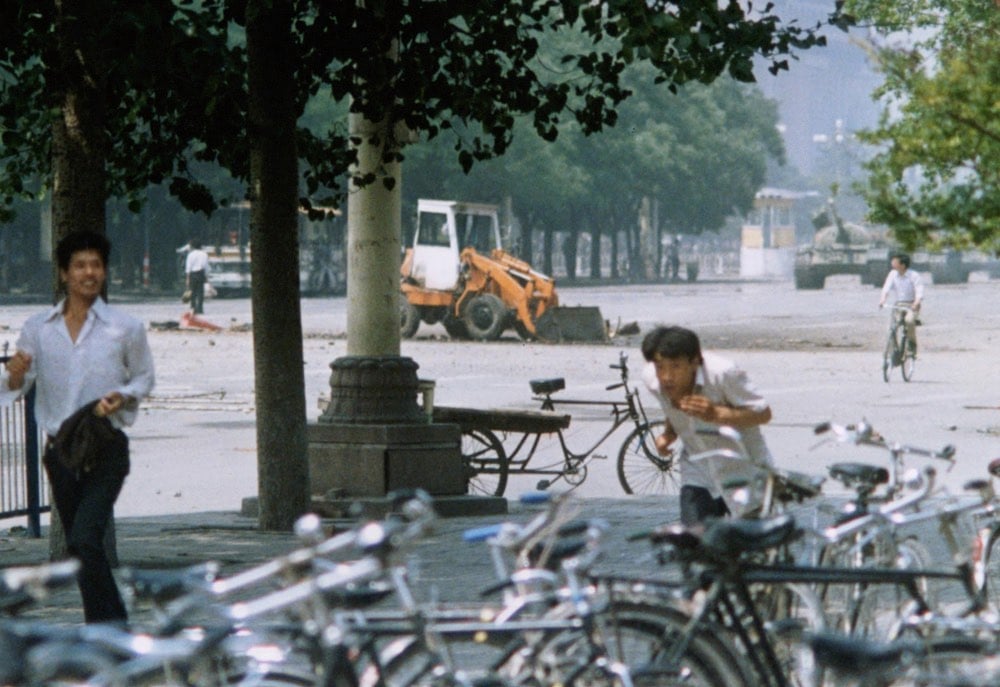
You can see how long he was standing there waiting for the arrival of the tanks.
One of the most memorable images of the Vietnam War is Nick Ut’s photo of a naked Kim Phuc running from her just-napalmed village.
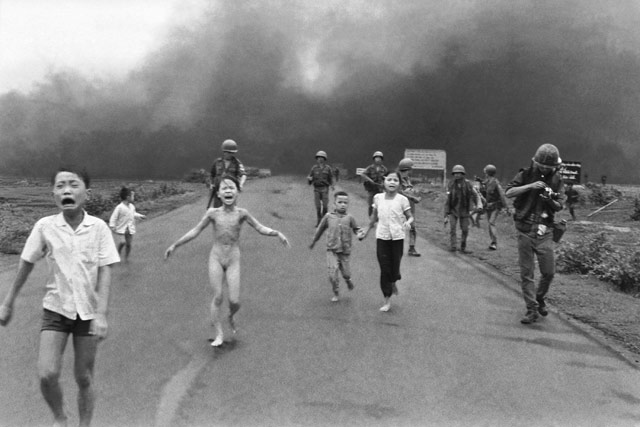
I’ve seen that photo hundreds of times but I had no idea that video footage of the event also exists. In this clip shot by Alan Downes and Le Phuc Dinh, you see the napalm dropped on the village and then a bunch of people, Phuc among them, come running down the road. [Warning, this footage is graphic…severe burns and burnt skin hanging off of young children.]
Wow. Ut won the Pulitzer for the photo but Phuc took much longer to make her peace with the image.
The photo was famous, but Phuc largely remained unknown except to those living in her tiny village near the Cambodian border. Ut and a few other journalists sometimes visited her, but that stopped after northern communist forces seized control of South Vietnam on April 30, 1975, ending the war.
Life under the new regime became tough. Medical treatment and painkillers were expensive and hard to find for the teenager, who still suffered extreme headaches and pain.
She worked hard and was accepted into medical school to pursue her dream of becoming a doctor. But all that ended once the new communist leaders realized the propaganda value of the “napalm girl” in the photo.
She was forced to quit college and return to her home province, where she was trotted out to meet foreign journalists. The visits were monitored and controlled, her words scripted. She smiled and played her role, but the rage inside began to build and consume her.
“I wanted to escape that picture,” she said. “I got burned by napalm, and I became a victim of war … but growing up then, I became another kind of victim.”
Phuc now lives in Ontario with her husband and has two children.
Since the companies mining the oil from the sands of Alberta wouldn’t provide access to their operations to a reporter, he rented a plane and took a bunch of photos.

As Stewart said, “Better than I thought”.
Cory Poole made this video of the annular solar ecplise yesterday using 700 photographs from a telescope with “a very narrow bandpass allowing you to see the chromosphere and not the much brighter photosphere below it.”
Cory says: “The filter only allows light that is created when hydrogen atoms go from the 2nd excited state to the 1st excited state.” Very cool.
Tadao Cern sets people up in front of powerful fans and takes their pictures. Instant fun house:

Many more of Cern’s photos are available on Facebook. (via colossal)
A group photograph of MGM’s stars and starlets under contract, taken for the studio’s 20th anniversary in 1943.
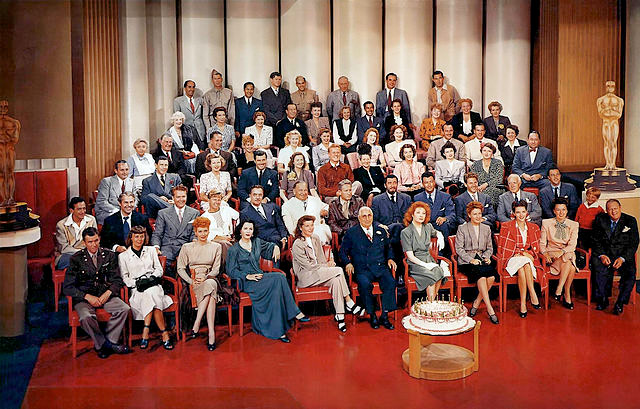
The full-size photo is available at Mlkshk or at Wikipedia for stargazing. Here’s who’s in the photo:
Front Row: James Stewart, Margaret Sullavan, Lucille Ball, Hedy Lamarr, Katharine Hepburn, Louis B Mayer, Greer Garson, Irene Dunne, Susan Peters, Ginny Simms, Lionel Barrymore
Second Row: Harry James, Brian Donlevy, Red Skelton, Mickey Rooney, William Powell, Wallace Beery, Spencer Tracy, Walter Pidgeon, Robert Taylor, Pierre Aumont, Lewis Stone, Gene Kelly, Jackie Jenkins
Third Row: Tommy Dorsey, George Murphy, Jean Rogers, James Craig, Donna Reed, Van Johnson, Fay Bainter, Marsha Hunt, Ruth Hussey, Marjorie Main, Robert Benchley
Fourth Row: Dame May Whitty, Reginald Owen, Keenan Wynn, Diana Lewis, Marilyn Maxwell, Esther Williams, Ann Richards, Marta Linden, Lee Bowman, Richard Carlson, Mary Astor
Fifth Row: Blanche Ring, Sara Haden, Fay Holden, Bert Lahr, Frances Gifford, June Allyson, Richard Whorf, Frances Rafferty, Spring Byington, Connie Gilchrist, Gladys Cooper
Sixth Row:
Ben Blue, Chill Wills, Keye Luke, Barry Nelson, Desi Arnaz, Henry O’Neill, Bob Crosby, Rags Ragland
Not sure if these are straight photos or digital composites or whatever, but I like the images from Paul Octavious’ Puffin Clouds series.
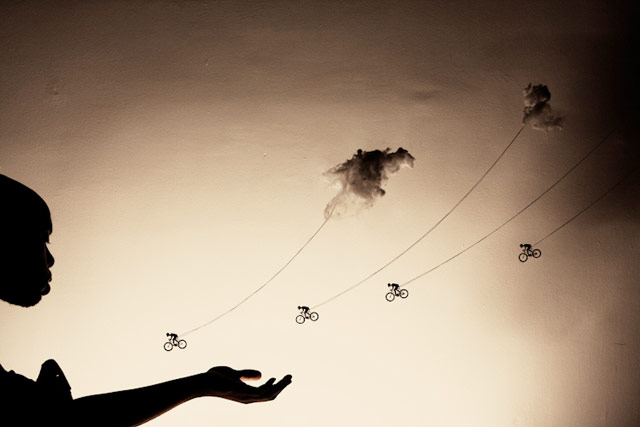
(via @itscolossal)
A collection of vintage mugshots from the 1920s. Crime used to be a lot more civilized.
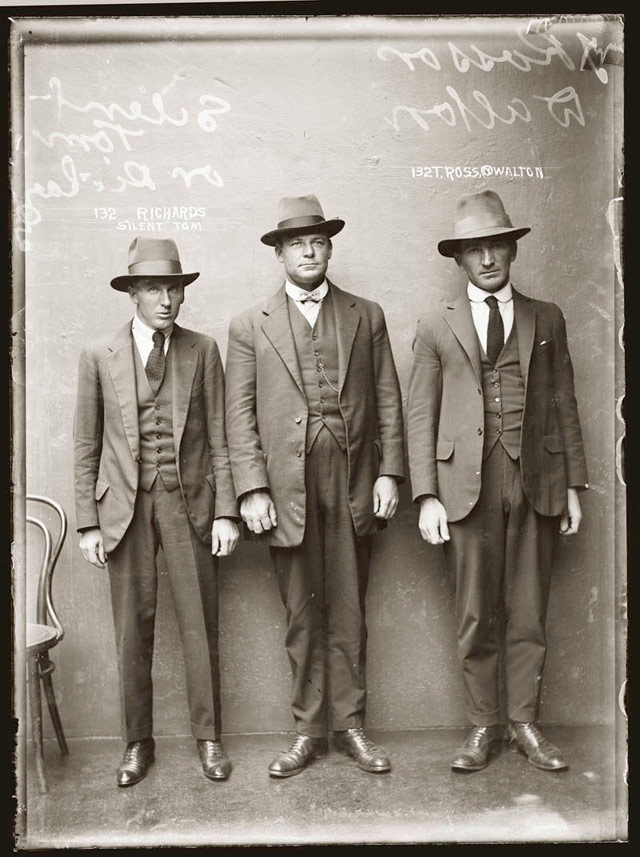
(thx, david)
Yesterday I linked to the massive trove of photos recently put online by the NYC Department of Records. Alan Taylor from In Focus went through a large chunk of the archive and pulled out some real gems. Great stuff.
From the Museum of the City of New York, a collection of photos taken by Stanley Kubrick in 1946 of New York City subway passengers.
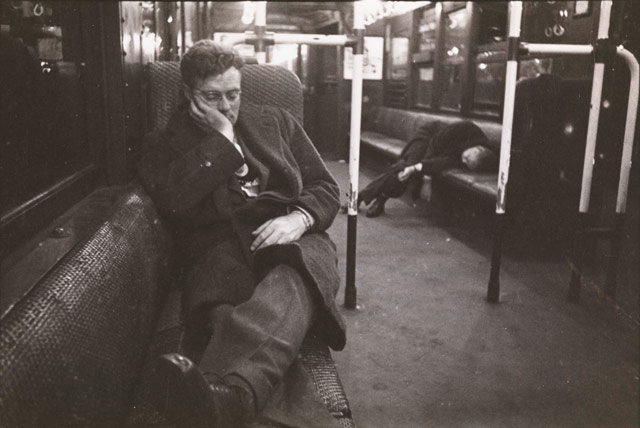
The museum has in its collection more than 7200 photos taken by Kubrick of NYC while he worked as a photographer for Look Magazine. (via coudal)



Socials & More