kottke.org posts about Wes Anderson
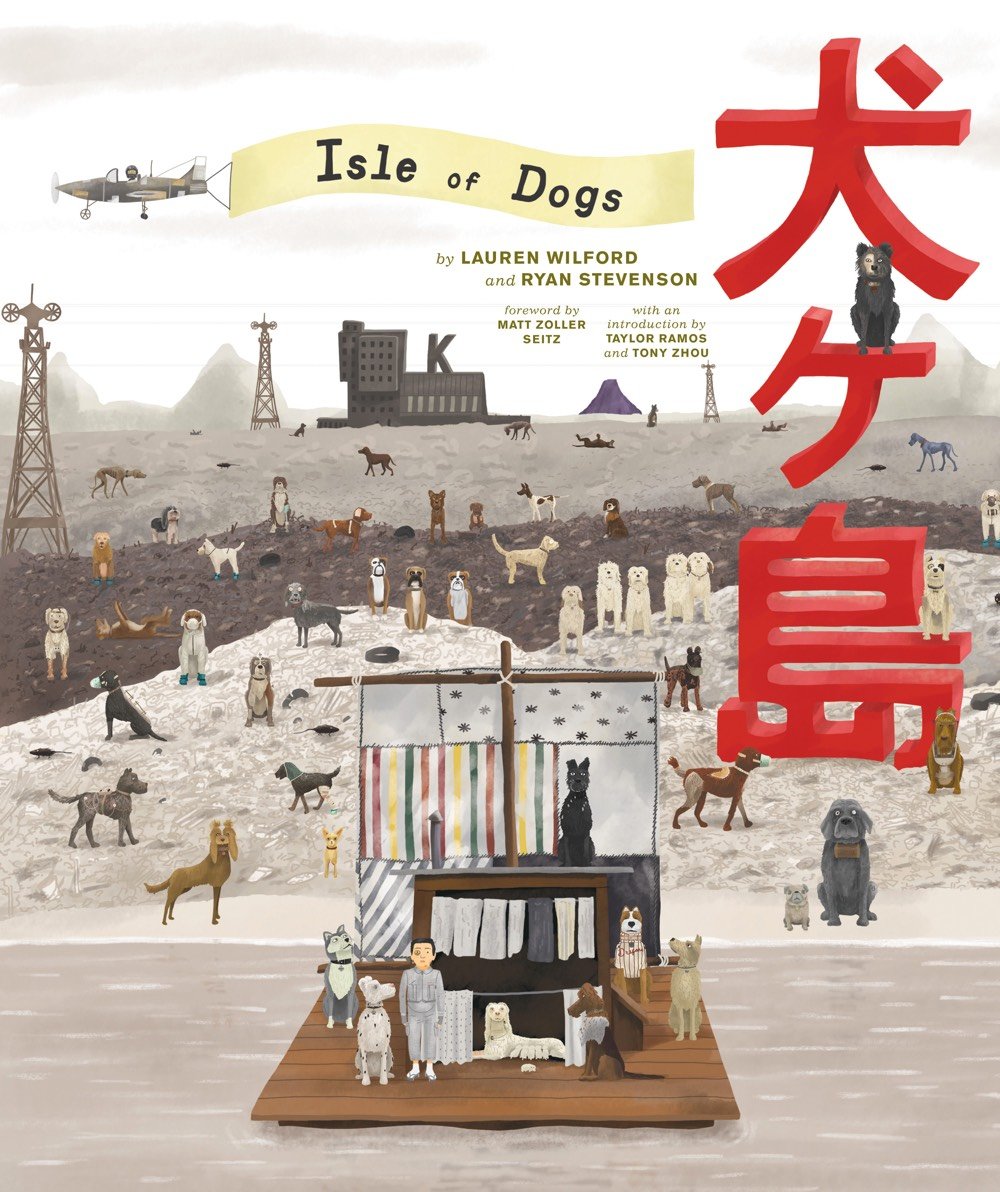
From a visual design standpoint, Isle of Dogs might be my favorite Wes Anderson movie yet. Each frame of the film is its own little work of art — I could have watched a good 20 minutes of this guy making sushi:
The Wes Anderson Collection: Isle of Dogs offers a behind-the-scenes look at how Anderson and his collaborators made the film.
Through the course of several in-depth interviews with film critic Lauren Wilford, writer and director Wes Anderson shares the story behind Isle of Dogs’s conception and production, and Anderson and his collaborators reveal entertaining anecdotes about the making of the film, their sources of inspiration, the ins and outs of stop-motion animation, and many other insights into their moviemaking process. Previously unpublished behind-the-scenes photographs, concept artwork, and hand-written notes and storyboards accompany the text.
The introduction is written by Taylor Ramos and Tony Zhou of the dearly missed Every Frame a Painting.
See also the other books in this series: The Wes Anderson Collection, The Wes Anderson Collection: The Grand Budapest Hotel, and The Wes Anderson Collection: Bad Dads: Art Inspired by the Films of Wes Anderson.
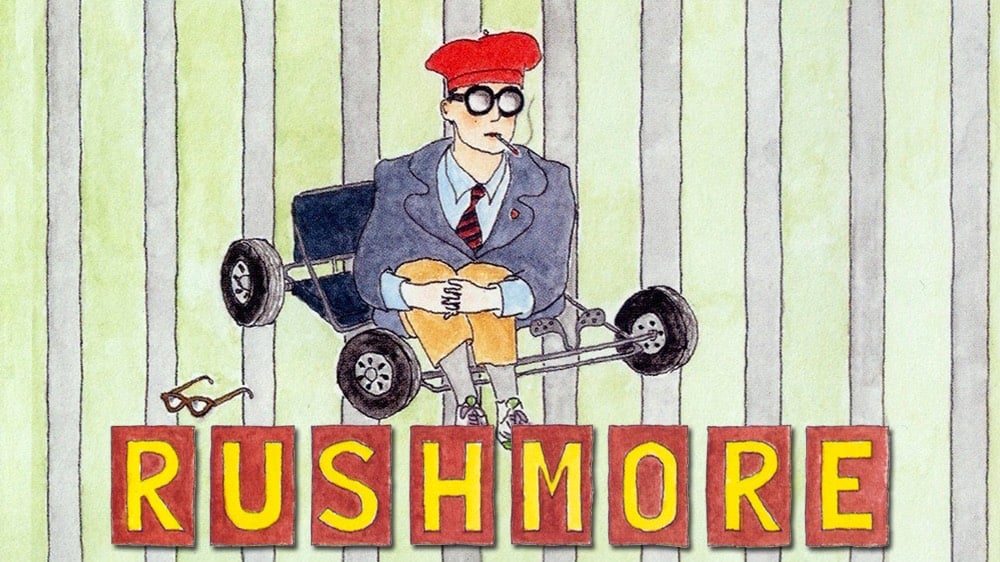
For NME, Sophie Charara ranks Wes Anderson’s nine feature films in order of greatness. Her top 3 picks are correct, I think, but I’d shift the order a little. Here’s my list, which is a tiny bit objective but mostly really really subjective.
1. Rushmore
2. The Royal Tenenbaums
3. The Grand Budapest Hotel
4. Fantastic Mr Fox
5. The Life Aquatic with Steve Zissou
6. Isle of Dogs
7. Bottle Rocket
8. Moonrise Kingdom
9. The Darjeeling Limited
Honestly, 4-8 could have gone in any order for me and The Darjeeling Limited is not that far off.
When you’re watching a Wes Anderson movie, you are never not aware that you’re watching a Wes Anderson movie. In this video, ScreenPrism examines the 13 aspects common to most of the director’s films. There’s the art-directed microworlds (the sub in The Life Aquatic, the house on Archer Avenue in Tenenbaums), the distinctive camera language (wide-angle shots, symmetry), the extensive use of musical deep cuts from the 60s and 70s (These Days by Nico in Tenenbaums), performances within the films (the plays in Rushmore, Tenenbaums, and Moonrise Kingdom), the exacting & deadpan dialogue, and children who act like adults and adults who act like children (which Anderson got from Charles Schulz).
If you remember the honest trailer for every Wes Anderson movie from last week, this is the nicer version of that.
As Isle of Dogs prepares to enter theaters,1 Honest Trailers created a bitingly truthful trailer for all of Wes Anderson’s films, in which they ding the director for symmetry, nostalgia, whimsey, whip pans, the overwhelming maleness of his ennui-suffering & disaffected protagonists, and Bill Murray on a tiny motorcycle in a profile shot. The description of his films as “meticulously crafted awkward family fables that make you kinda happy, kinda sad, and kinda unsure when you’re supposed to laugh or not” is pretty much spot-on and the reason I like them so much.
In 2012, before the release of Moonrise Kingdom, Anderson talked about his approach to movies on NPR’s Fresh Air:
I have a way of filming things and staging them and designing sets. There were times when I thought I should change my approach, but in fact, this is what I like to do. It’s sort of like my handwriting as a movie director. And somewhere along the way, I think I’ve made the decision: I’m going to write in my own handwriting. That’s just sort of my way.
And that’s why he’s “your barista’s favorite director”.
As a promo for Wes Anderson’s Isle of Dogs, snippets from the cast interviews were animated using the dog characters played by Tilda Swinton, Bill Murray, Scarlett Johansson, Bob Balaban, and others. It’s amazing how much some of the dogs’ features & expressions mirror those of the actors who provide the voices. The bit starting at 2:30 with Jeff Goldblum is just straight flames.
Here’s the first real look at Wes Anderson’s new stop motion animated movie, Isle of Dogs, out in March 2018.
Isle of Dogs tells the story of Atari Kobayashi, 12-year-old ward to corrupt Mayor Kobayashi. When, by Executive Decree, all the canine pets of Megasaki City are exiled to a vast garbage-dump called Trash Island, Atari sets off alone in a miniature Junior-Turbo Prop and flies across the river in search of his bodyguard-dog, Spots. There, with the assistance of a pack of newly-found mongrel friends, he begins an epic journey that will decide the fate and future of the entire Prefecture.
Prediction: Anderson is going to get some criticism on the cultural context of this movie. (via trailer town)
David Ma is a food artist and director who recently made a series of four short recipe videos in the style of famous directors. There’s spaghetti and meatballs a la Quentin Tarantino (my favorite):
S’mores in the style of Wes Anderson:
What if Michael Bay made waffles?
And finally, here’s a pancake recipe in the style of Alfonso Cuaron’s Gravity:
Hopefully round 2 of Ma’s project will include the likes of Sofia Coppola, Ava DuVernay, Spike Lee, or Yimou Zhang.


Born into wealth, Jacques Henri Lartigue got his first camera at age seven and began documenting the world around him: his friends and family at play in the world. His work presaged the “prolonged adolescence” of the “leisure class” readily on display on Instagram these days.
Taking pictures gave Lartigue a hobby and a purpose. His immediate surroundings and leisure class milieu provided the subject matter and Lartigue, a native user, wielded his camera with technical mastery almost from the beginning. He also brought a child’s whimsy to photography’s staid practice of posing and composing. Lartigue had a low vantage, a wandering eye, and a loose frame that was far ahead of his time. He also had the resources and time to experiment. Lartigue continued photographing prolifically into his teens and early adulthood, finding muses in his wives and mistresses and the diversions of prolonged adolescence.
Lartigue’s photography was an influence on director Wes Anderson, particularly in Rushmore and The Life Aquatic. If you can’t see Rushmore’s Max Fischer in the top photo of the homemade go-kart, you certainly can in this one:

And the kid in the tire boat in the other photo? That is Lartigue’s older brother, Maurice. Everyone called him Zissou. (Curiously, none of this is in The Wes Anderson Collection. Come on! The photo of Zissou’s mentor Lord Mandrake in The Life Aquatic? That’s a self portrait of Jacques Henri Lartigue!)
We’ve known for awhile that Wes Anderson is doing another stop-motion animated movie, but in this video, Anderson himself shares the name of the film — Isle of Dogs — and shows a very tiny clip of the character played by Edward Norton.
Also appearing in the film are Bill Murray, Tilda Swinton, Yoko Ono, Scarlett Johansson, and possibly you. Anderson is doing a fundraiser for a favorite charity and if you donate, you’re entered to win a trip to London to meet Wes, get a tour of the production, and record the voice of a character for the movie (“barking, howling & whimpering may be required”).
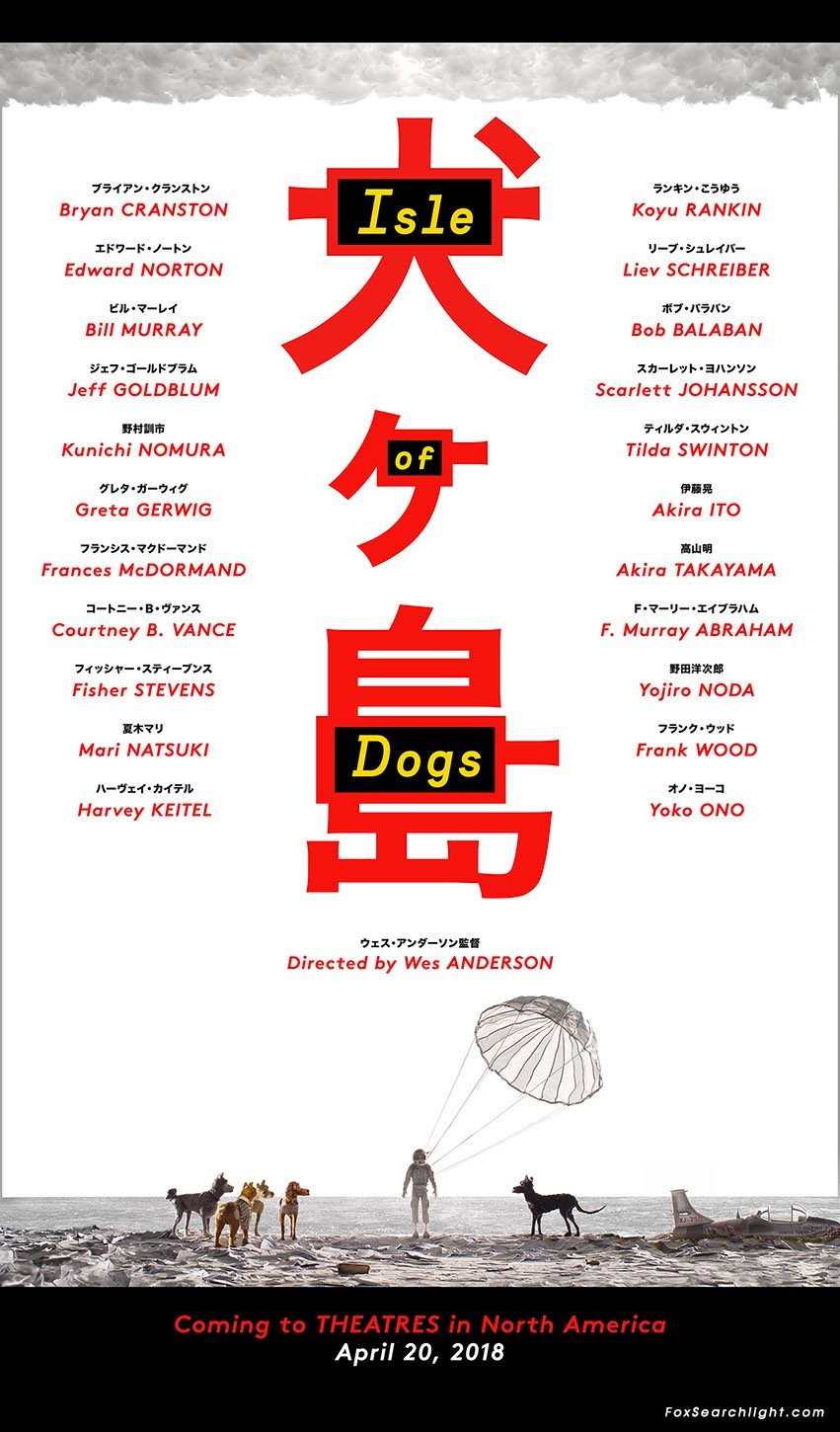
Update: The poster for the movie is out. WWII?
Wes Anderson directed a short holiday film starring Adrien Brody for H&M. It is delightful. You can criticize the twee formality in his work,1 but this is a reminder that Anderson can bring the emotion when he wants.
Music is an essential aspect of Wes Anderson’s films. Michael Park has created a 9-hour playlist of music from Anderson’s movies, from Bottle Rocket (Artie Shaw & Chet Baker) to The Royal Tenenbaums (Elliott Smith & Nico) to Fantastic Mr. Fox (Burl Ives & The Rolling Stones) to The Grand Budapest Hotel (mostly by Alexandre Desplat).
In an interview with Alexander Olch, founder of the cool new Metrograph theater in NYC, Wes Anderson just casually reveals that he’s doing another stop-motion animated movie that’s currently in production.
I’ve got an animated movie I’m doing that’s happening across the room from me right now. So I can see a long list of e-mails from people on the set whom I now need to address.
We know from about a year ago that dogs are involved, as are Bryan Cranston, Bob Balaban, Edward Norton, and Jeff Goldblum. Looking forward to this one…Fantastic Mr. Fox is Anderson’s most underrated film.
P.S. In the same interview, Anderson and Olch briefly discuss Powers of Ten. :)
A visual comparison of Wes Anderson’s movies with some of the films that influenced him, including The 400 Blows, The Graduate, The French Connection, Star Wars, and Last of the Mohicans. (thx, luis)
Update: Here’s another short video from Candice Drouet that shows more of Anderson’s references, with almost none repeated from the video above by Luís Azevedo.
Drouet used “references claimed by Anderson himself” while Azevedo’s pulled its references from Matt Zoller Seitz’s work, most notably from The Wes Anderson Collection. Azevedo explains some of the connections made in his video.
Wes Anderson saw Truffaut’s “The 400 Blows” on Beta tape at when he was 17 or 18. When discussing his love for Truffaut with Matt Zoller Seitz, Anderson said that movie “made a huge, rock band-type impression on me when I saw it. It’s one of those films where you say, ‘not only did I just enjoy this experience, now I think I would like to model my future on this somehow.’”
He also felt a unique voice from “The 400 Blows”: “There’s one name you can put to on the whole thing.”
I am not alone in saying that The Darjeeling Limited is perhaps my least favorite Wes Anderson movie (even though Ebert liked it). But it’s Evan Puschak’s favorite and he does an admirable job in raising my appreciation for the film.
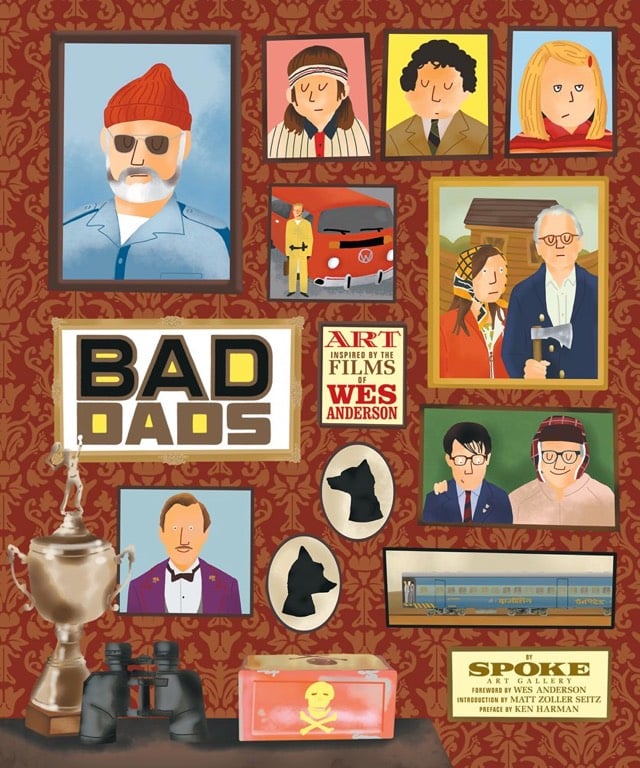
Wes Anderson’s films are chock full of bad fathers and father figures. Bad Dads, the third book in the Wes Anderson Collection, showcases some of the art from the annual Bad Dads art show (prints!) at the Spoke Art Gallery in San Francisco.
Newer posts
Older posts





Socials & More