kottke.org posts about NYC
For CBS News in 1985, Charles Kuralt profiled bike messenger David Leopold.
I don’t go slow. I don’t stop for red lights. I go against traffic. I disobey every traffic law there is.
Great street footage of NYC from 40 years ago. You might think that Leopold ended up as a stain on the pavement. In 2010, CBS News did a follow-up on him:
See also Leopold on David Letterman from 1985.
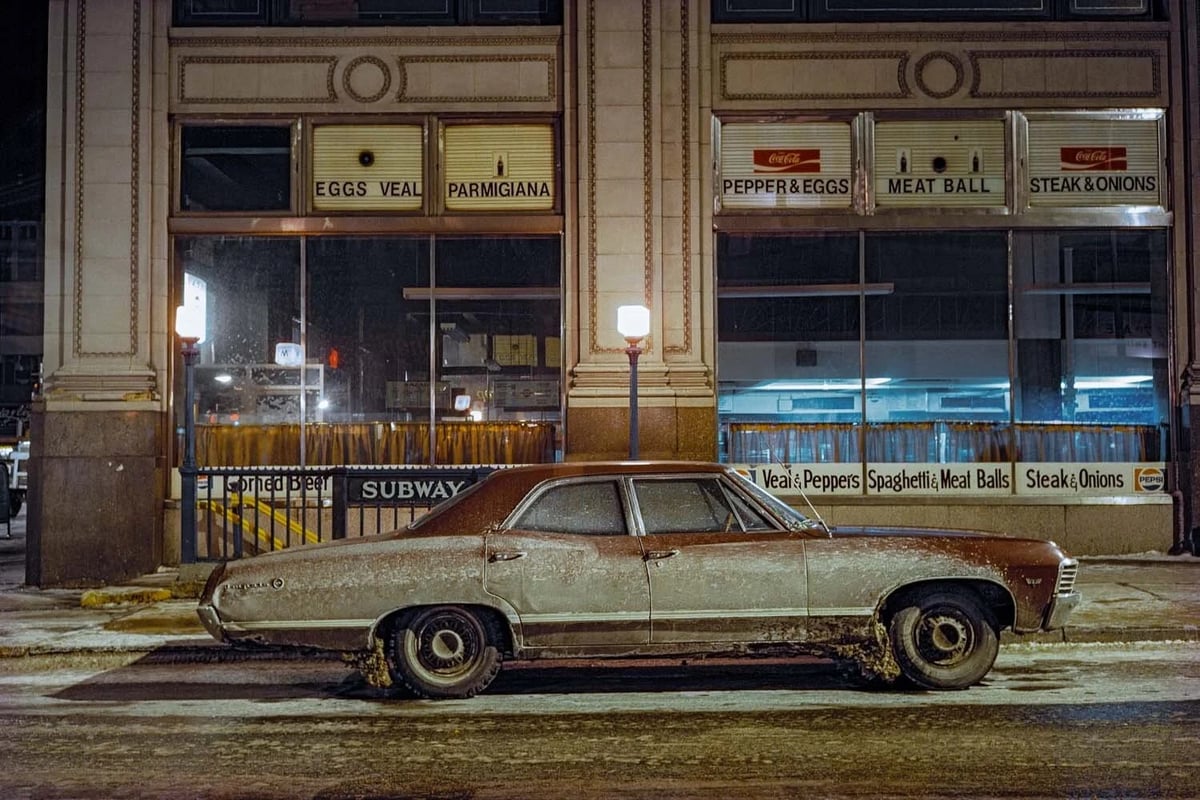
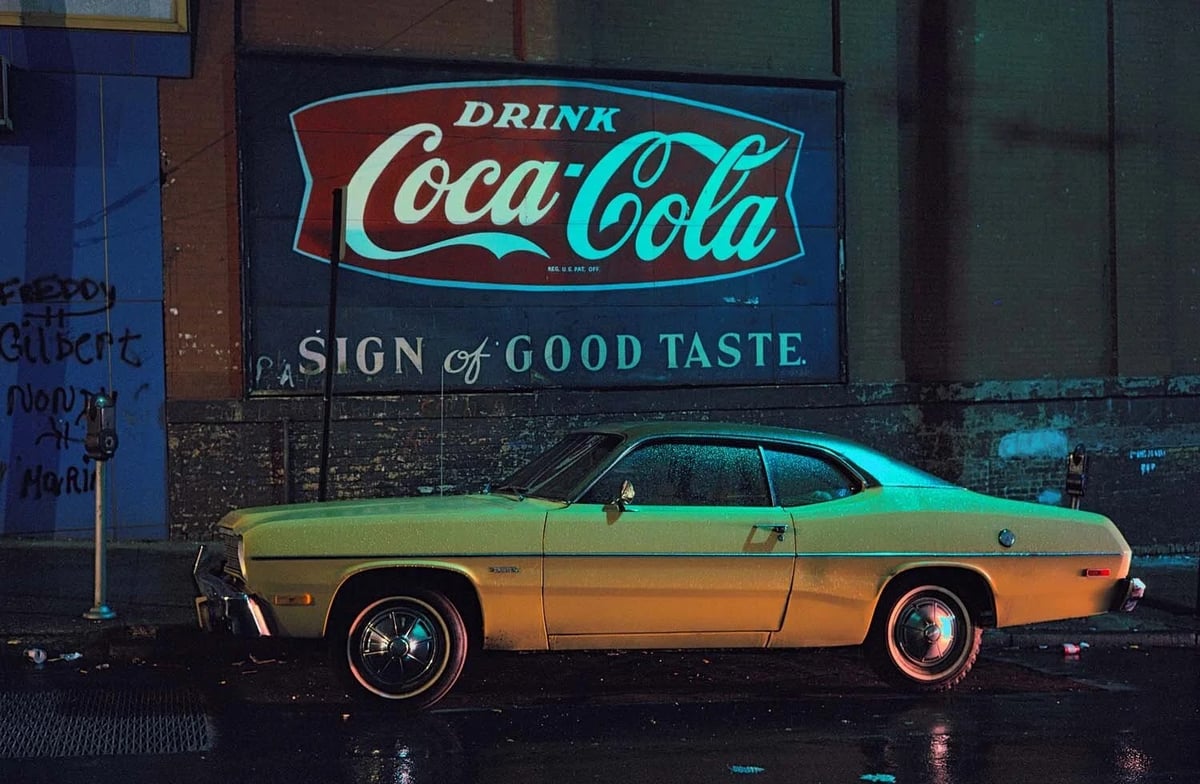
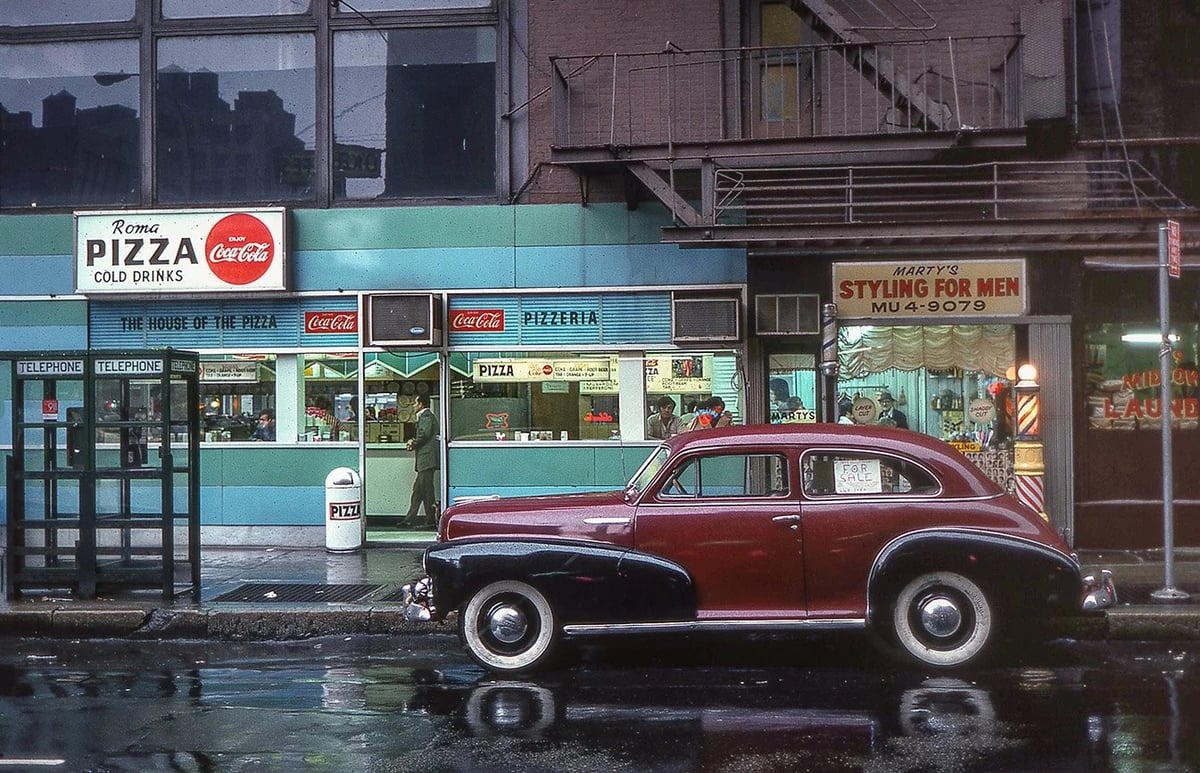
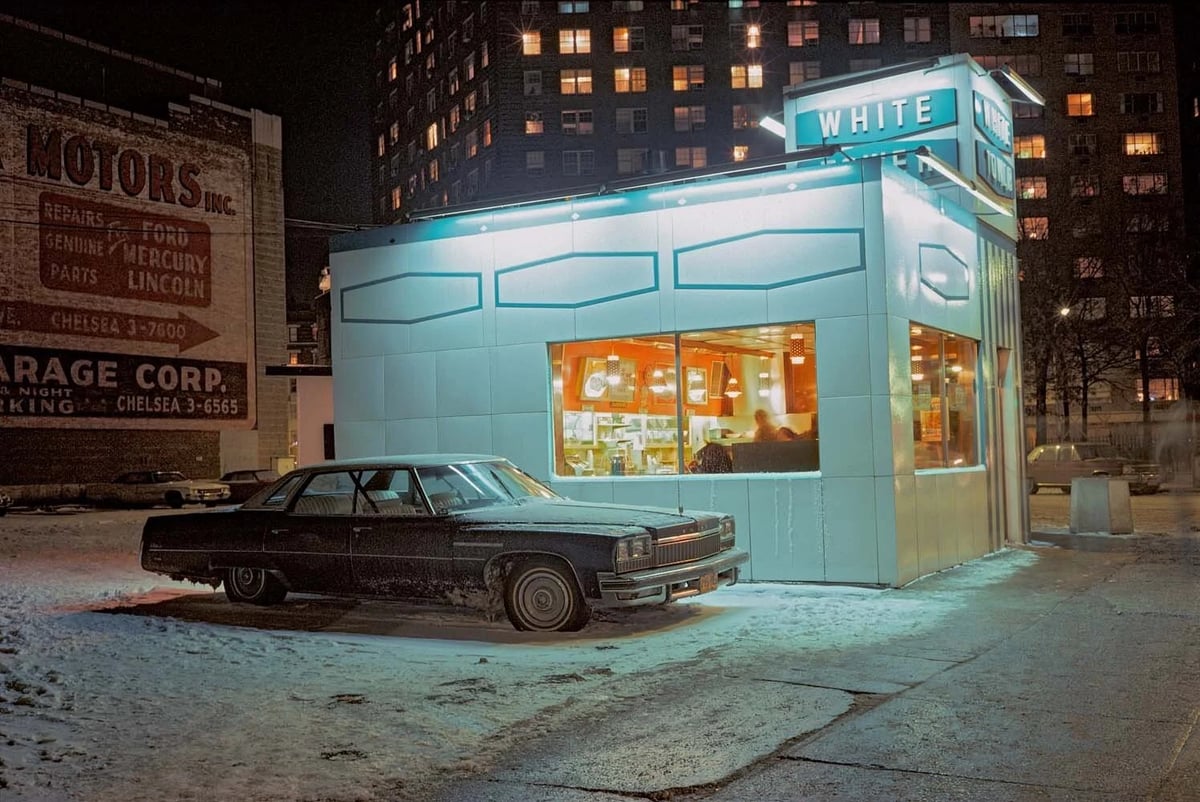
In the 70s, photographer Langdon Clay took photos of cars parked on NYC streets at night and compiled them into a project: Cars, New York City | 1974-1976.
Using his Leica CL, Kodachrome 25, and a 40 millimeter lens, Clay traversed the streets of 1970’s Manhattan finding automobiles that paralleled their environment. The cinematic images are a result of time exposure, sodium vapor street lights, and the tenacity of youth.
Luc Sante wrote about Clay’s car photographs for the New Yorker:
One of the things that used to make America so distinctive was its cars. If you lived there, you would really have to go abroad for a while and then come back to appreciate the difference. In most countries of the world, cars were modest things, little bean-shaped units designed to take two or three people from here to there. In America, cars were real estate. They were enormous boats in which you could eat, sleep, make love, change clothes, throw parties, maintain an office, practice unlicensed dentistry—or take your six best friends out for a spin. They were a testament to America’s unlimited natural resources: oil, steel, rubber, naugahyde, and, above all, space. American cars could be so huge because the nation’s highways were endless, its city streets were wide, and there was abundant free parking everywhere you went. And that included New York City then, since most of its population took the subway.
A 2016 book featuring these images is out of print, but you can find copies for several hundred dollars. (via atlas obscura)
This might be my new favorite skate video? It follows a pair of young skaters around the city as they chat about their friendship, share tips about living life, and try skating everything that is even remotely skateable.
Best friends, Ari and Luca are two of the most promising NYC talents right now. They are consistently street skating, crushing events, and are keeping skateboarding exciting for a generation we seemingly missed.
If these two stick with it, we have no problem betting that they’ll be the next big names out of the city, and we were lucky enough to catch them right before they arrive.
(via craid mod)
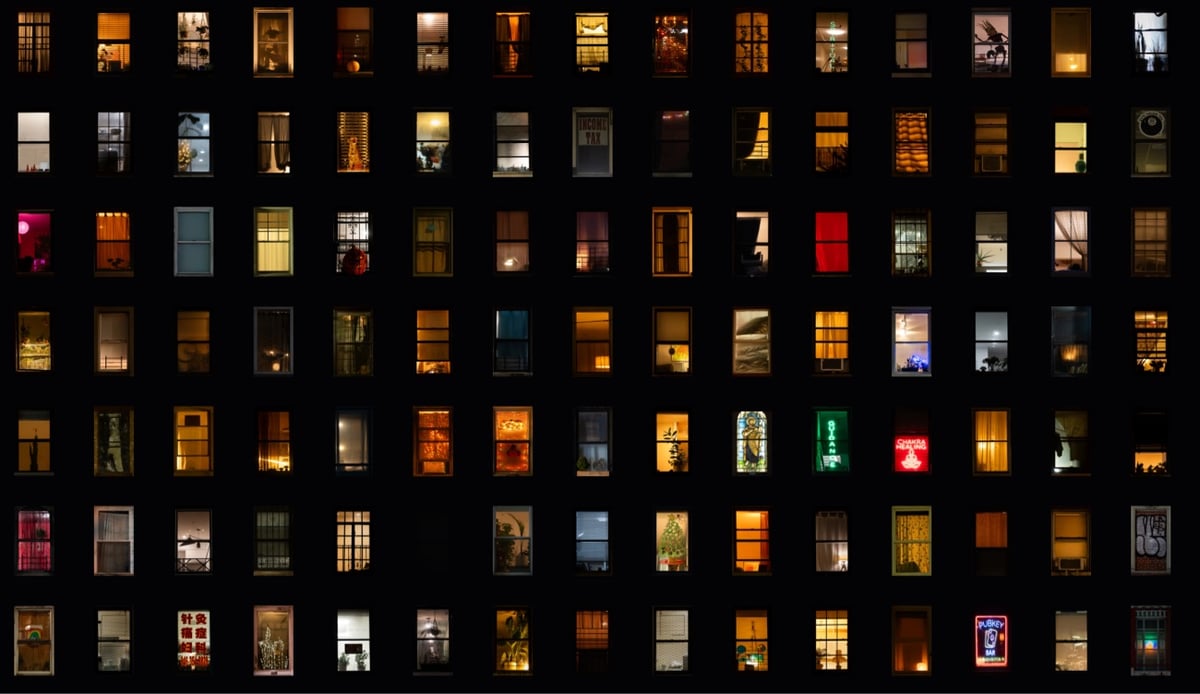
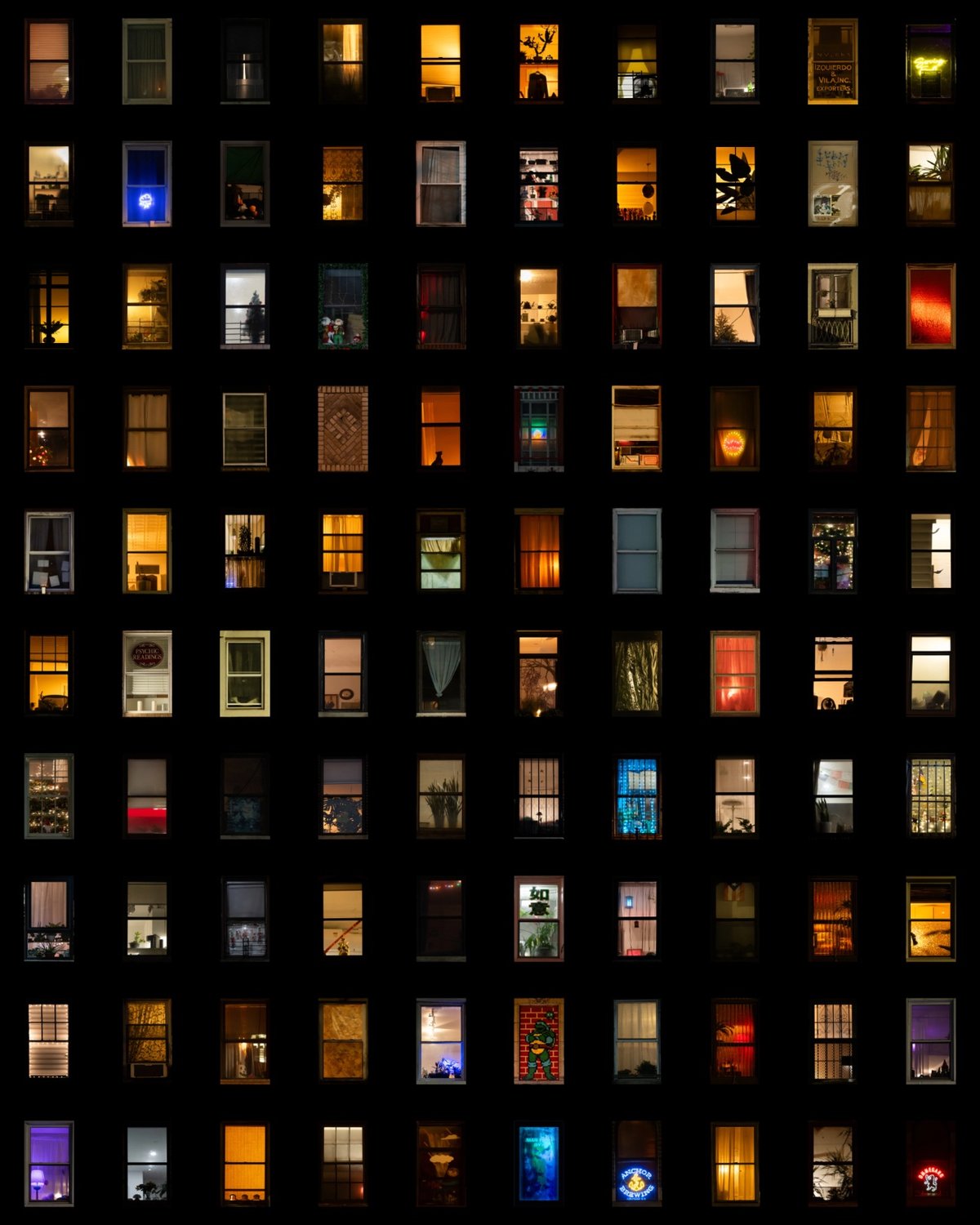
For his project Windows, Dave Krugman took photos of hundreds of NYC apartment windows at night and stitched them together into ever-shifting typologies. What’s going on in each of those apartments?
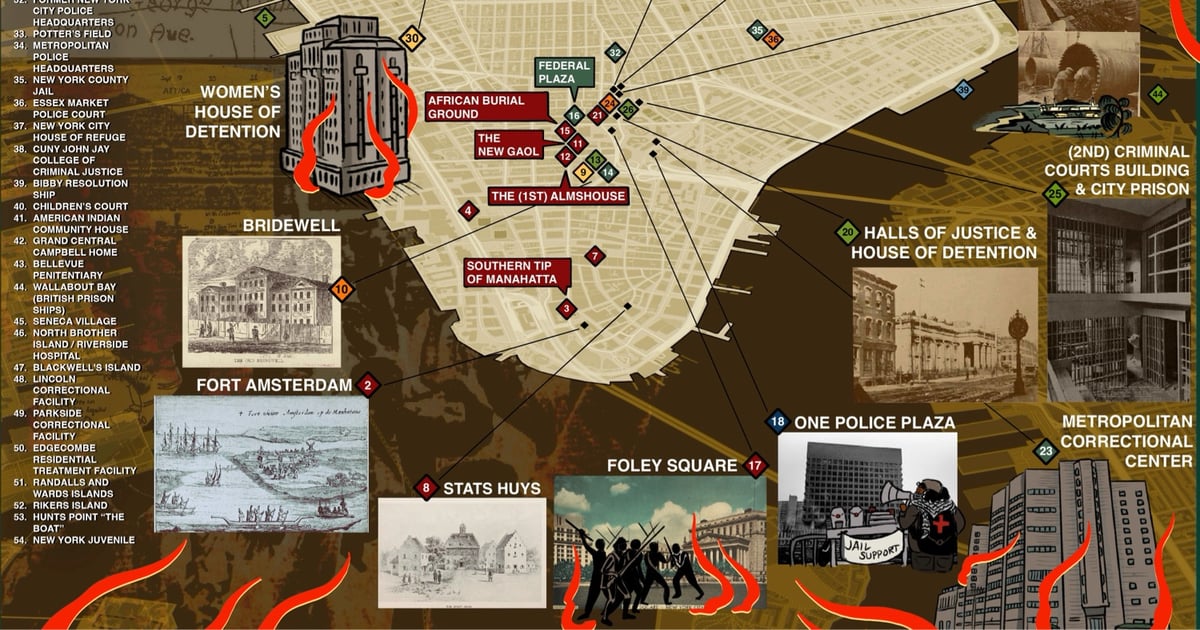
The website for the Abolitionist Guide to NYC is just getting started, but the site does house an Abolitionist Map of NYC.
The Abolitionist Map of NYC offers a geographic survey of incarceration and anti-carceral resistance in Manahatta from the Dutch colonization of Lenapehoking to the present day. The map highlights some of the first jails and prisons to exist in the area, the movement of facilities from one place to the next, and sites of rebellion against the expansion of the prison industrial complex.
It is meant to serve as a tool for abolitionist resistance grounded in a long view of the struggle, tactics, and goals.
The map is available as a PDF and as an interactive version. (via @prisonculture.bsky.social)
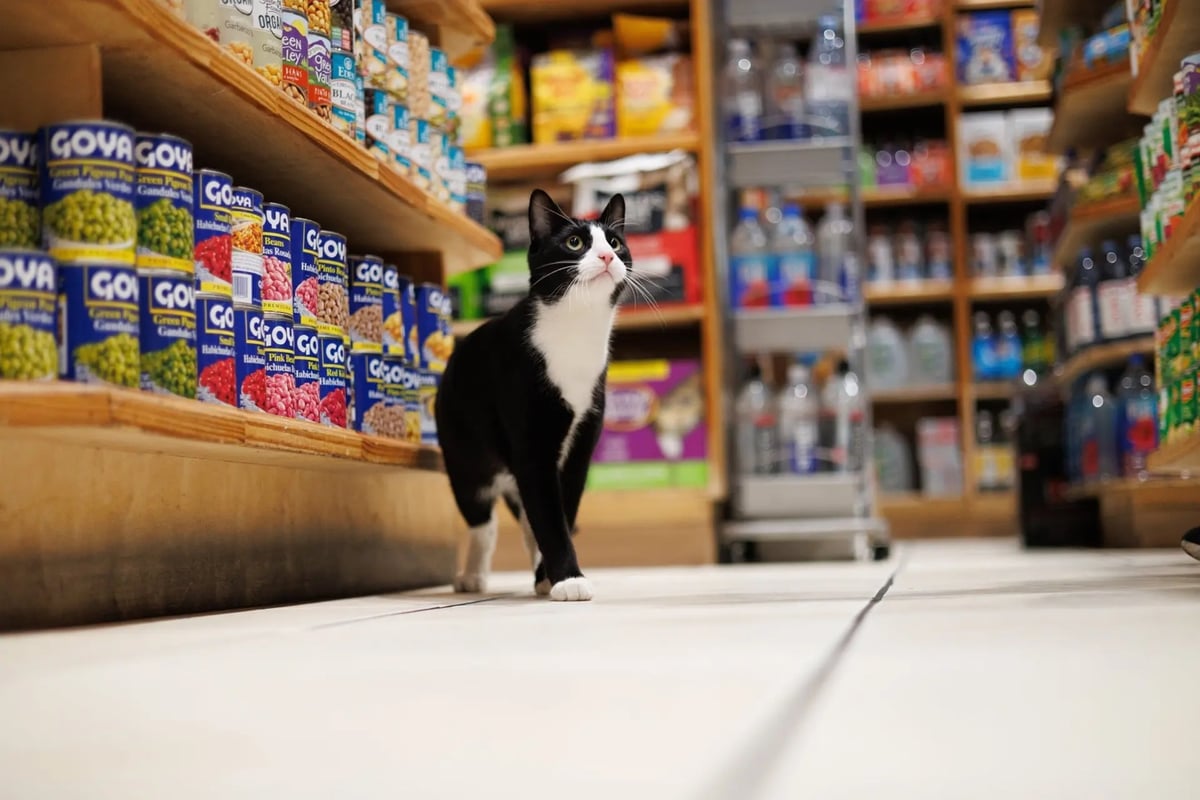
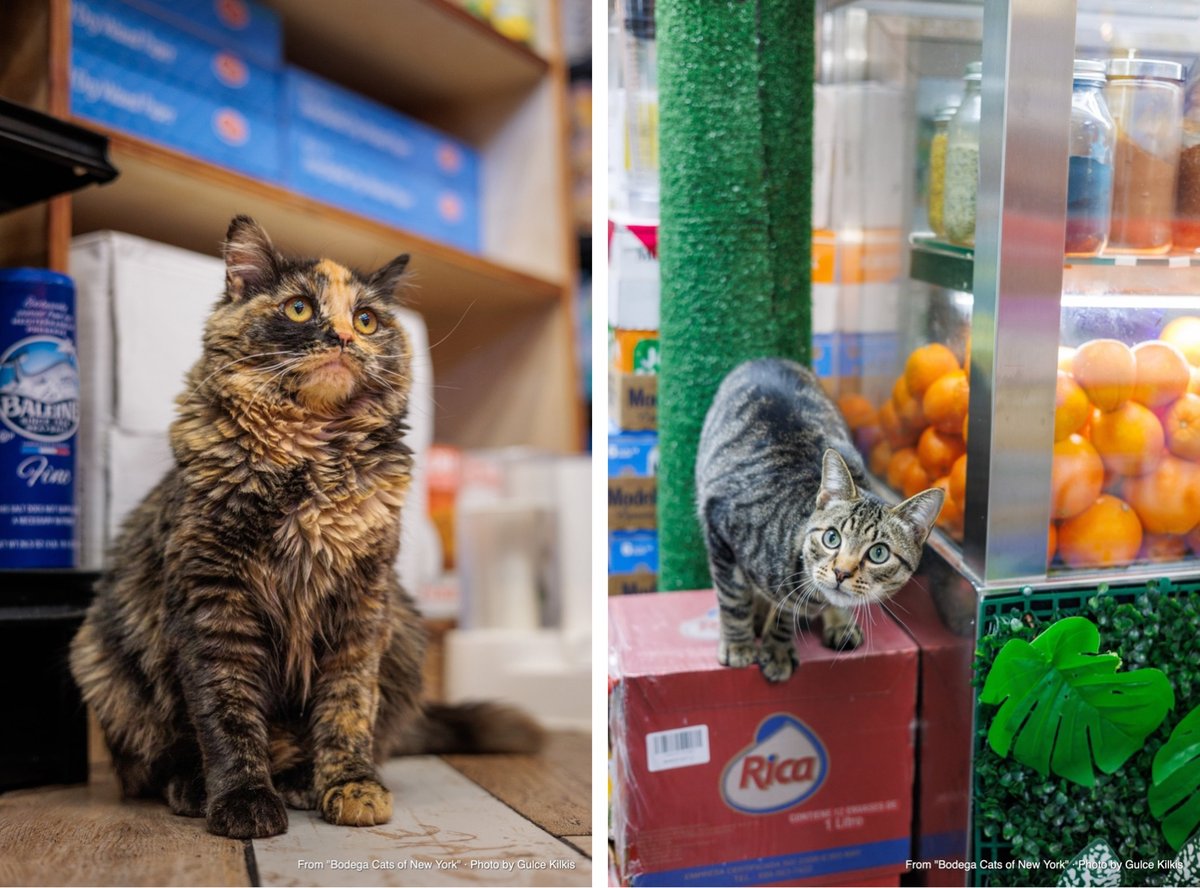
The Bodega Cats of New York project documents the working cats of NYC’s delis, bodegas, and corner stores.
The cat at the local deli wasn’t a pet. She knew the regulars. She kept the mice out. She gave people a reason to walk an extra block. And she was technically a violation of city health code.
That was six years ago. Since then, the project has documented over 150 shops, collected 13,500 petition signatures, and helped introduce the first legislation in New York City history to classify bodega cats as working animals.
Available soon in book form.
This is a mindblowing time capsule of ordinary life: video of a group of friends taking the NYC subway to Coney Island in 1987. Because it was before mobile phones, they had to arrange to meet one of the group members in the first car of the train along the way.
The film was shot by Nelson Sullivan, a videographer who recorded the arts, music, and LGBTQ+ communities in NYC in this same ur-vlogging style.
Viewed today, Sullivan’s video record of his life represents a pre-Internet form of vlogging, while his frequently used technique of turning the camera to face himself clearly anticipates the modern selfie.
You can watch hundreds more of Sullivan’s films on YouTube, including a trip to McDonald’s (the most popular video on the channel), several RuPaul videos, a holiday party at Michael Alig & DJ Keoki’s apartment, and Keith Haring’s NYE party. Sullivan sadly died of a presumed heart attack two years later at the age of 41. (thx, caroline)
Ann Ballentine bought an old candy factory building in Brooklyn in 1979. She filled it with working artists and became something of a fairy godmother to them all.
It entails someone who’s not as money driven, because you’re not gouging people for huge rents, and it requires being determined to do that over a long stretch of time.
This is a lovely little short film.
The Merchant’s House Museum was NYC’s first landmarked building, but until this year, the function of a small hidden passageway in the house was unknown. When historians and preservationists examined it in detail, they found that it was built by the first owner of the house, abolitionist Joseph Brewster, as a hiding place for enslaved people escaping from the South.
But when visitors head upstairs to the bedrooms on the second floor, there’s something strategically hidden within the walls of Manhattan’s first landmarked building: a link to the Underground Railroad.
“We knew it was here, but didn’t really know what we were looking at,” Camille Czerkowicz, the curator for the Merchant’s House Museum, said.
Now they know that the Merchant’s House was also a “safe house” for enslaved Africans who escaped bondage in the South.
Architects and preservationists recently investigated the building’s hidden vertical passageway along the west wall and examined it for themselves.
“I’ve been practicing historical preservation law for 30 years, and this is a generational find. This is the most significant find in historic preservation in my career, and it’s very important that we preserve this,” Michael Hiller, a preservation attorney and professor at Pratt Institute, said.
Underneath those built-in drawers is the path to freedom.
In addition to his great series Subway Takes, Kareem Rahma does another series called Keep the Meter Running where he hops into NYC cabs, interviews the drivers, and asks them to take him to their favorite places.
In the run-up to the NYC mayoral election last year, Rahma jumped into a cab driven by Mouhamadou Aliy, who wanted to pick up his friend along the way to his favorite spot. That friend was now-mayor Zohran Mamdani, who tells the story of how the two of them protested & went on a hunger strike together. It’s a great conversation and video…I watched a snippet of it on Instagram (I missed it last year) and had to track down the whole thing:
I’m sorry, how can you not vote for this guy? The real deal, indeed — and voters could tell. There are so many politicians, particularly on the left, who talk a good game, push all the right buttons, and then they sputter or freeze or about-face when the rubber meets the road. It feels hollow; no wonder voters and activists find it hard to get behind the calculation of politicians who they know, deep down, are just saying certain things to get a vote. At least with Republicans, they tell you they’re going to run the country into the ground and then they go out and try to do it.
From NY Times reporter Anna Kodé (whose “intersection of culture and real estate” reporting I’ve been enjoying lately), a short video on the increasingly hostile architecture of NYC.
The spread of the leaning bench and the lack of seating at places like Moynihan or around the city signals to homeless individuals that they are not welcome in these places. It signals to all New Yorkers that these are not social places. These are places to simply pass through.
Here’s a video Vox did on the subject seven years ago.
Being in Japan is offering me such a contrast to so many things in the US. There are benches in public places here and they don’t have spikes all over them. Japan has the world’s lowest rate of homelessness, probably because they take care of people.
In America, we don’t provide housing or much of anything else for people (including a living wage or affordable health care) and the result is that no one can sit down in Penn Station or in a subway station and oh by the way, lots of people have nowhere to live. Why do we do this to ourselves? We could live better lives but we choose not to….for reasons?
Giorgia Lupi and her team at Pentagram have created a data-driven animation for the MTA called A Data Love Letter to the Subway.


More from Lupi (who calls this an “absolute dream project”):
The project, “A Data Love Letter to the Subway,” visualizes each train line as a character whose unique qualities are extracted from MTA data. Data like length, location, and transfers were abstracted into train behaviors and attributes. Imaginatively animating each train line’s age, length, and path, we wrote a poetic story that explores the trains’ interwoven encounters with commuters and one another.
Our “Love Letter” draws on the elemental nature of picture books to unpack the visual system of the subway with curiosity and wonder. Drawing from the MTA’s Open Data Program, with my team we translated train data into a narrative made of attributes and behaviors, providing a rich view of the interactions, roles, differences, and the connections made and sometimes missed within the subway ecosystem.
Maps, NYC, the subway, data visualization…I am not sure how much more in my wheelhouse a thing could be.

Speaking of Benito Mussolini and fascism, the excellent Poster House museum in NYC has a new exhibition on for the next few months: The Future Was Then: The Changing Face of Fascist Italy. It features “some of the best posters produced during the worst period in modern Italian history”.
In a fascist movement inspired by art, how does the fascist government influence the artists living in its grasp? This exhibition explores how Benito Mussolini’s government created a broad-reaching culture that grew with and into the Futurist movement to claw into advertising, propaganda, and the very heart of the nation he commanded.


That Lubrificanti Fiat poster is incredible. The Future Was Then is on view at Poster House until Feb 22, 2026.

Whoa, look at the interior of this new Japanese restaurant in NYC called Shirokuro — all of the surfaces (floors, chairs, walls, counters, etc.) are painted to look like a 2-dimensional drawing. From Colossal:
“Shirokuro” translates to “white-black.” The New York Times shares that proprietor James Lim was inspired by an immersive, 2D restaurant he visited ten years ago in Korea, and he envisioned one of his own, now open in the East Village. To make the interior pop, he invited his friend, real estate agent and artist Mirim Yoo, to transform the space into an all-encompassing environment.
Here’s what it looks like with people and other non-b&w objects:

This reminds me of Alexa Meade’s work — it would be amazing to see a collab where Meade does up the servers (or guests) for a performance piece.
P.S. I want these 2-D Nikes. (via colossal)

Craig Mod is currently on a book tour for his new walking memoir, Things Become Other Things. While in NYC, he stopped by one of his favorite bookstores in the world, Three Lives & Company, located on the corner of W 10th and Waverly Place in the West Village, to sign some copies of his book. He wrote about Three Lives and what it means to see his book in the window of the shop:
I know of no other store (book or otherwise) with nicer, more knowledgable people working there. It’s uncanny, the amount of unharried, chill, giving-a-shitness you feel as soon as you walk in. The space is small, sure, but every millimeter is covered in arguably one of the best curated selections of books in the world. I dare you to visit and not buy something (I bought Eliza Barry Callahan’s The Hearing Test today). The taste is unparalleled. I’ve been to enough bookstores in the world now to say this with some confidence. No, they don’t have every book. But we don’t want every book. We want great books chosen by people whose adoration of books stems from a life committed to books.
Like Craig, I’ve been visiting Three Lives for probably 20 years, first as my neighborhood bookstore and now as one of the NYC touchstones I visit every time I’m in town (even when they moved several blocks west a few years ago during the renovation of their building). It’s my favorite bookstore and the place against which I mentally compare every other bookstore I’ve ever been to — my personal mètre étalon for booksellers.
If I ever write a book, the only place I really care about seeing it is in the window or on the front table at Three Lives. When I visit, I always daydream a little about that, my book in that window. Like Craig said: “It’s not about seeing it in every window, just the windows of places I respect the most.”
Older posts





Socials & More