
How Disney mismanaged the Star Wars universe and how The Mandalorian can restore the true power of George Lucas’s galaxy. “When Star Wars is bad, its galaxy feels like a thing on a screen – not a place you can go.”

Advertise here with Carbon Ads
This site is made possible by member support. 💞
Big thanks to Arcustech for hosting the site and offering amazing tech support.
When you buy through links on kottke.org, I may earn an affiliate commission. Thanks for supporting the site!
kottke.org. home of fine hypertext products since 1998.
Beloved by 86.47% of the web.
Entries for June 2021
The Alt Tour, a Self-Supported Tour de France
Professional road racing cyclist Lachlan Morton is attempting to complete the Tour de France this year. Except: He’s doing it entirely on his own, without teammates, support vehicles, and transportation from the previous day’s finish to the next day’s start (which might be dozens or even hundreds of miles apart). That means he’ll be riding an extra 1500 miles, climbing an additional 50,000 feet in elevation, shopping for his own meals, and still trying to beat the peloton to Paris. Here’s a quick explanatory trailer:
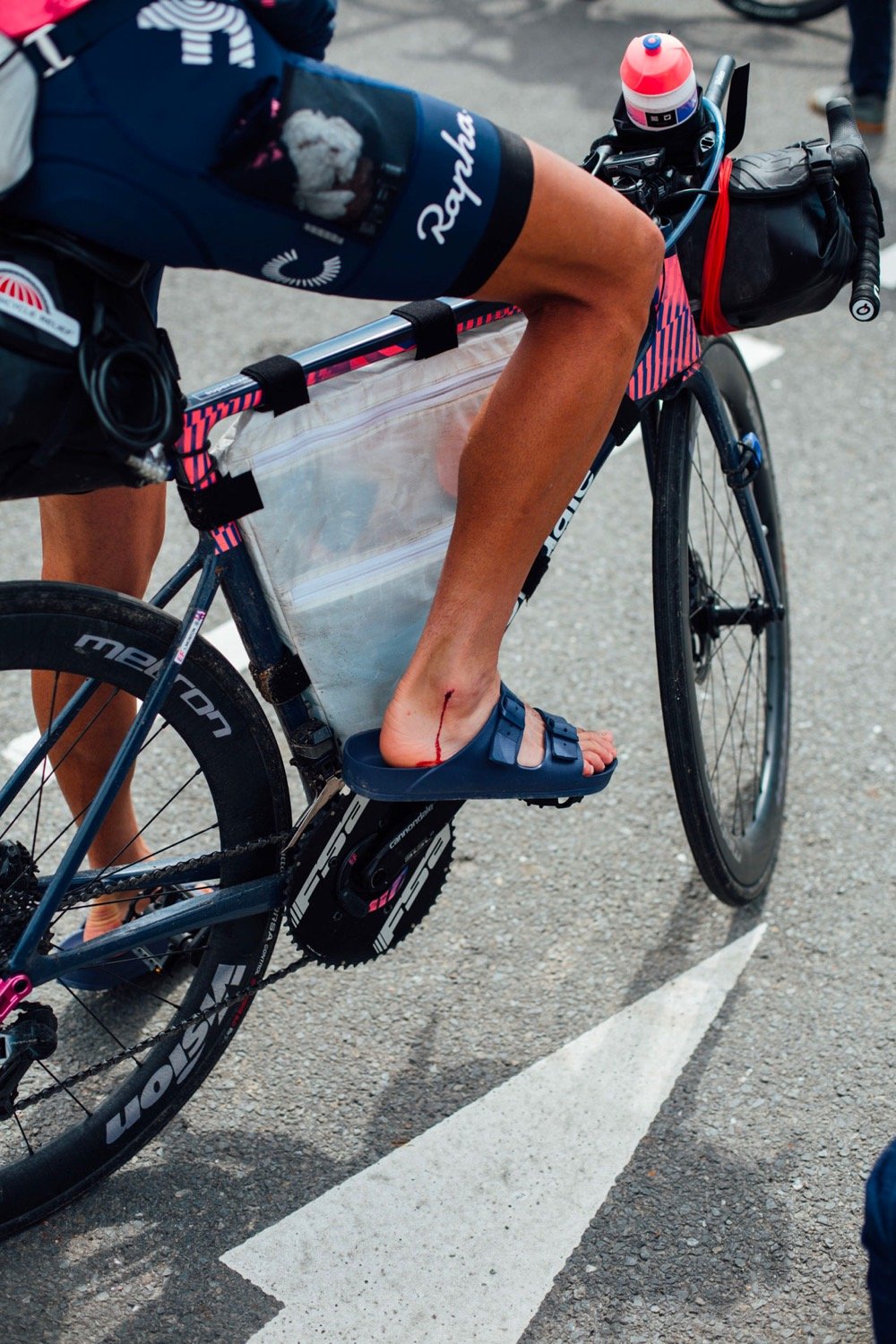
You can follow his progress on Rapha’s site and check out updates in this Instagram Story. He’s currently ahead of the peloton, even riding day four in Birkenstocks:
Ah, but — the day three press release had an ominous note in it. Right after telling us that Morton had “picked up a tub of couscous and a couple of bags of nuts for dinner” came the real kicker: our protagonist had a bad knee, and had bought new pedals to allow a switch to flat shoes.
So on day four, Morton set off with his new pedals and covered both stage four and stage five of the actual Tour de France — in a pair of Birkenstocks. Despite his sensible sandals, Morton managed to average the same speeds as the day prior, getting through the time trial in 1:17.
(via matt)
The WHO says that China has eliminated malaria. “The eradication of malaria in the world’s most populous nation offers lessons in how innovative treatments and aggressive tracking can keep the disease in check.”
Great Art Explained: Michelangelo’s David
Great Art Explained is one of my favorite newish YouTube channels and I’ve been slowly working my way through their back catalogue. Today’s watch was a 15-minute explanation of one of the signature masterpieces of the Renaissance, Michelangelo’s David. The details related to the carving of the swollen jugular vein and the variable visibility of the veins in the hands is fantastic. (via open culture)
David Marchese interviews LeVar Burton. “That which is mine, no one can take away. That which is not meant for me, no amount of wishing or stamping my feet will make it so.”
American Gothic + 1 and Other Restored Masterpieces
Last week I posted about the digital “restoration” of Rembrandt’s The Night Watch with the help of an AI program.
Using a contemporary copy of the full scene painted by Gerrit Lundens and an AI program for getting the colors and angles right, the Rijksmuseum has “restored” The Night Watch, augmenting the painting with digital printouts of the missing bits.
Edith Zimmerman got access to this technology and ran some of her own experiments of famous artworks. You may be shocked and delighted at what she found.

Sheep Herding Patterns from Above
Drone photographer Lior Patel has spent the last several months capturing the movements of a flock of sheep in Israel as they move from their winter to summer pastures. (via colossal)
“Kids are cute but they’re not really eco-friendly. One less baby helps the planet more than giving up meat, car.” Was surprised to learn this was actually published in a real newspaper and not The Onion or something.
Developing 120-Year-Old Photos Found in a Time Capsule
In a family house, Mathieu Stern found a box of treasures hidden away by a little girl some 120 years ago. Inside was a pair of glass plate negative images of some pets, which Stern developed using the cyanotype technique. Film development is just straight-up magic.
See also I Found a Mystery Film in a 60-Year-Old Camera.
Women Are Having Fewer Babies Because They Have More Choices. “Thanks to feminist cultural shifts, and better access to contraceptives, more women now approach childbearing…as a choice weighed against other desires, assessed in context.”
Where Did SARS-CoV-2 Come From?
Over the past several months, I’ve read several pieces about the possible origins of SARS-CoV-2 and have been frustrated with the certainty with which folks who should know better have embraced the “lab leak hypothesis”. So, I was happy to see Zeynep Tufekci’s characteristically even-handed and comprehensive overview of the evidence about the virus’s origins in the NY Times.
While the Chinese government’s obstruction may keep us from knowing for sure whether the virus, SARS-CoV-2, came from the wild directly or through a lab in Wuhan or if genetic experimentation was involved, what we know already is troubling.
Years of research on the dangers of coronaviruses, and the broader history of lab accidents and errors around the world, provided scientists with plenty of reasons to proceed with caution as they investigated this class of pathogens. But troubling safety practices persisted.
Worse, researchers’ success at uncovering new threats did not always translate into preparedness.
Even if the coronavirus jumped from animal to human without the involvement of research activities, the groundwork for a potential disaster had been laid for years, and learning its lessons is essential to preventing others.
Is it possible that SARS-CoV-2 came from a lab? Yes. Is it probable? We can’t know that right now. It’s a tantalizing puzzle involving a possible cover-up, but irresponsibly assigning certainty to the situation does no one but attention-seeking pundits any good.
YouTube’s complete disregard for the rights of people to use music that’s either allowed by fair use or in the public domain really sucks. Eventually, laws will either be changed to follow YT’s practice or (hopefully) prevent this garbage behavior.
According to LA’s public health department, since Dec 2020, 99.6% of the city’s Covid cases, 98.7% of Covid hospitalizations, and 99.8% of Covid deaths were among people who were unvaccinated. These safe vaccines work. Period.
Goodnight Moon Filmstrip (1984)
This is a filmstrip version of Margaret Wise Brown’s Goodnight Moon produced in 1984. Not sure what a filmstrip is? Boing Boing explains:
From the 1940s until the low-cost videocassette boom of the 1980s, audio filmstrips were commonly used in classrooms as an alternative to 16mm film projectors that were more expensive and fiddly to keep working.
This post doubles as one of those “say how old you are without saying how old you are” Twitter prompts. Here’s more on filmstrips from the Museum of Applied Arts & Sciences:
While the show was a welcome diversion from parsing, long division and dictation, what we didn’t realise was the filmstrips were an educational revolution in Australia akin to smart boards today. They were stored in neat little canisters which could be easily dispatched to schools. Accompanying them was a script read by the teacher describing the 25 or so images depicted in the films, which were manually advanced in the projector.
Until watching this Goodnight Moon video, I had totally forgotten about the beep used in filmstrip audio used to signal someone to switch to the next frame.
Just sent out the latest @kottke newsletter. It includes a story I shared on Instagram earlier this week (but not on the site).
A Rembrandt Masterpiece Uncropped by AI
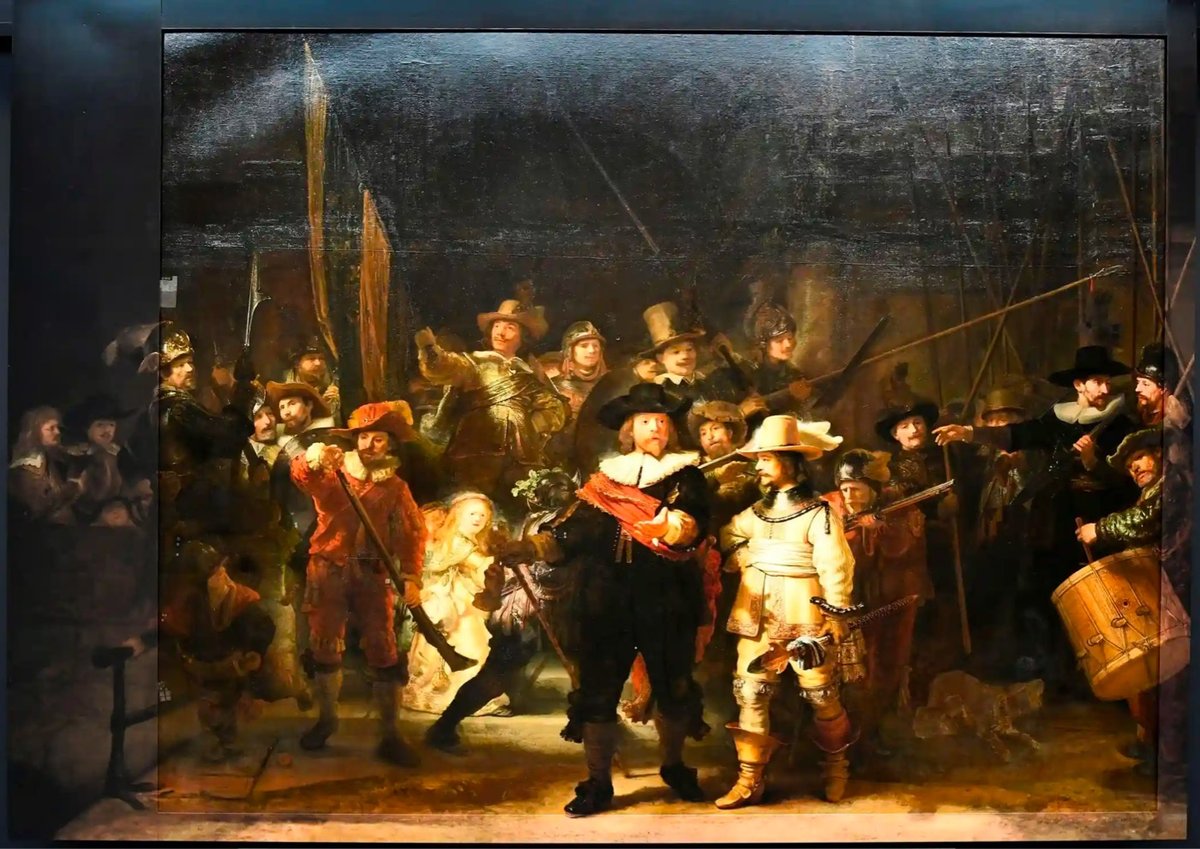
In 1715, a significant chunk of Rembrandt’s masterpiece The Night Watch, including a 2-foot-wide swath from the left side of the painting, was lopped off in order to fit the painting in a smaller space. (WTF?!) Using a contemporary copy of the full scene painted by Gerrit Lundens and an AI program for getting the colors and angles right, the Rijksmuseum has “restored” The Night Watch, augmenting the painting with digital printouts of the missing bits. The uncropped Rembrandt is shown above and here is Lundens’s version:
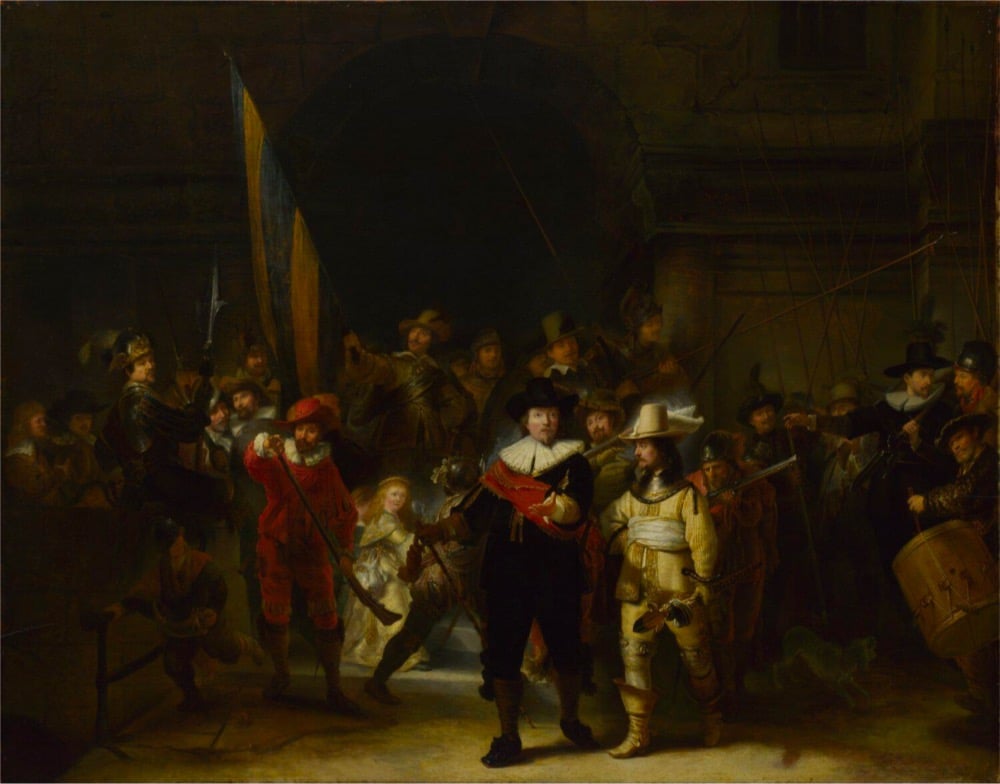
I’m not an expert on art, but the 1715 crop and the shift of the principal characters from right-of-center to the center appears to have radically altered the whole feel of the painting.
With the addition especially on the left and the bottom, an empty space is created in the painting where they march towards. When the painting was cut [the lieutenants] were in the centre, but Rembrandt intended them to be off-centre marching towards that empty space, and that is the genius that Rembrandt understands: you create movement, a dynamic of the troops marching towards the left of the painting.
(via @john_overholt)
Wow, this story! “On the morning after Juliane Diller fell to earth, she awoke in the deep jungle of the Peruvian rainforest dazed with incomprehension.”
See 1540 Paintings by Claude Monet in Two Hours
In just over two hours, this video presents 1540 paintings by impressionist master Claude Monet, a significant portion of his lifetime output. This is a really intriguing way to look at art. It’s not in-person and you don’t get a lot of time with each piece, but the video is HD, you can pause or slow the playback speed, and by seeing a lot of work over a short span of time, you can get a real sense of the stylistic choices and variations across Monet’s oeuvre — a view of the forest rather than the trees. (via open culture)
Bold & Colorful Minimalistic Portraits
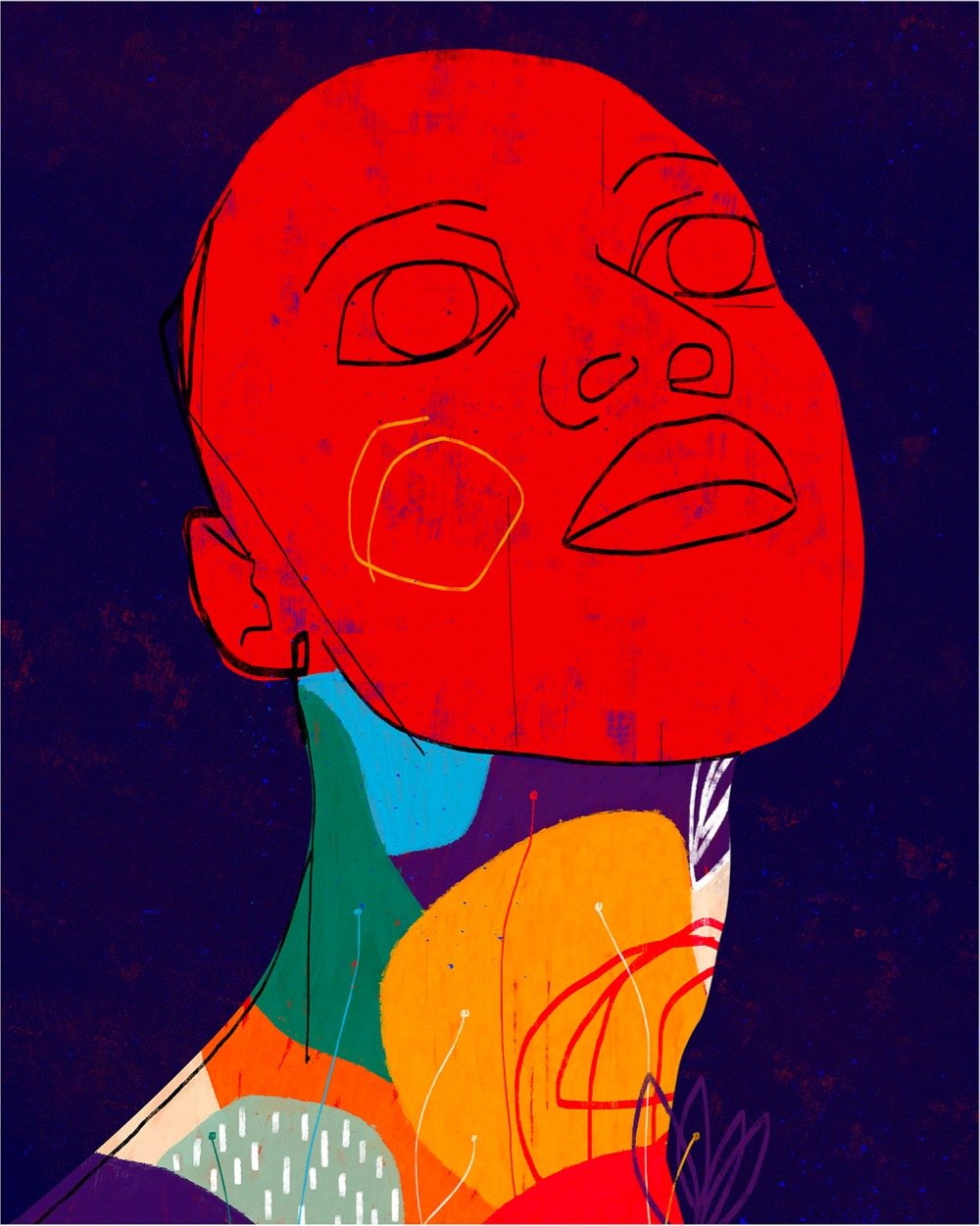
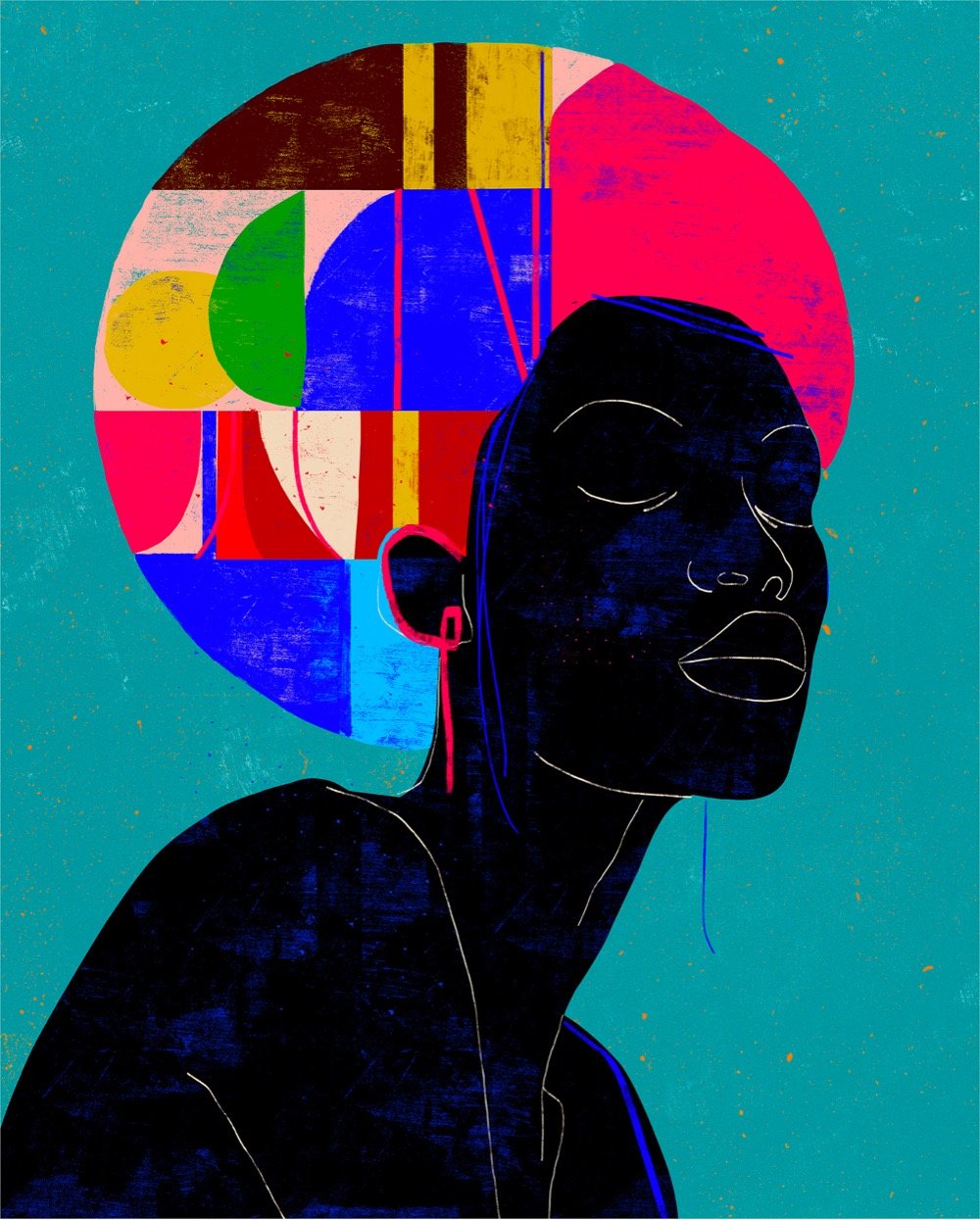
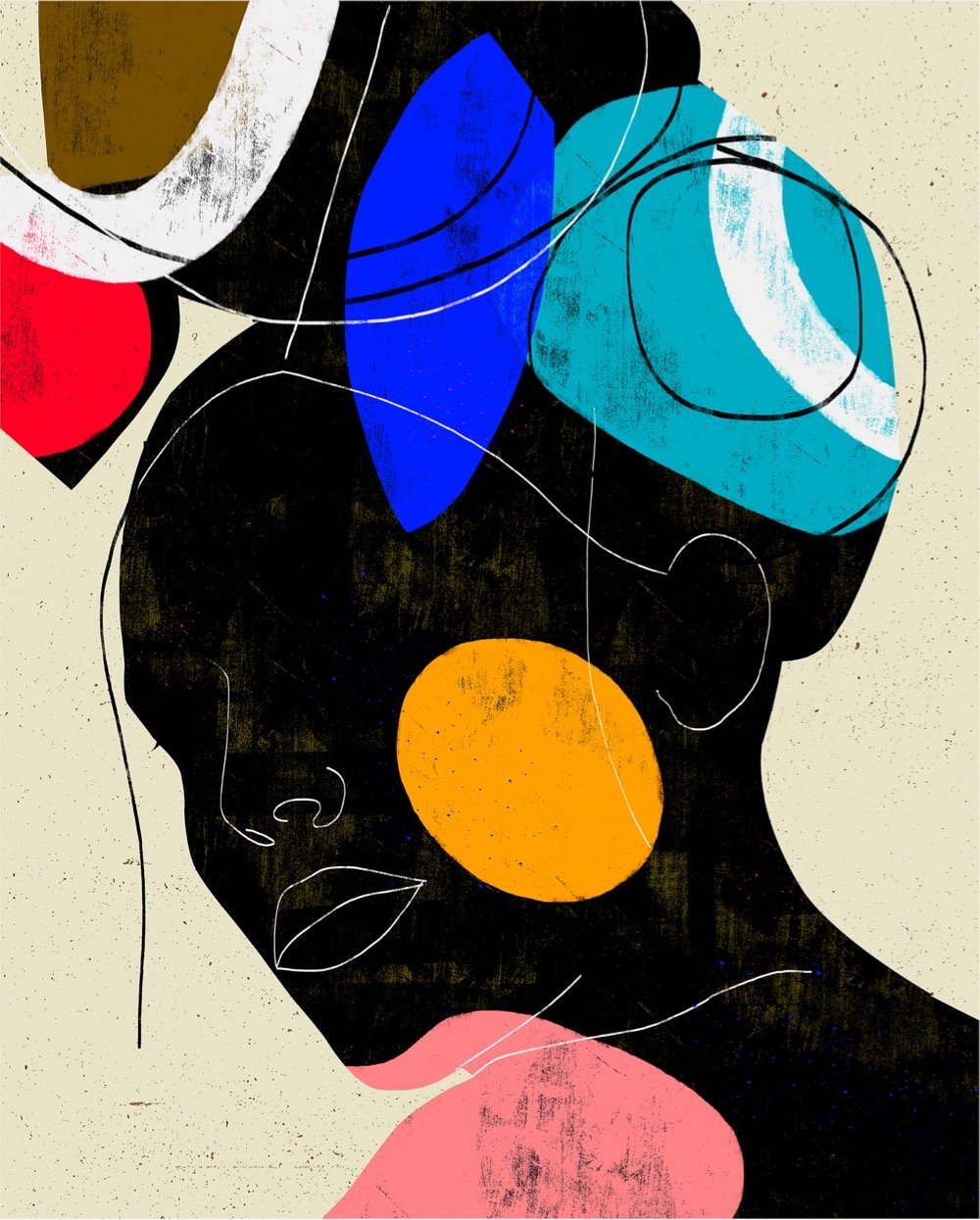
Check out these striking portraits by Brazilian artist Luciano Cian from his Magna and Kuhle projects. Find more on his website, Behance, and Instagram. (via colossal)
New USPS Stamps Celebrate the Sun
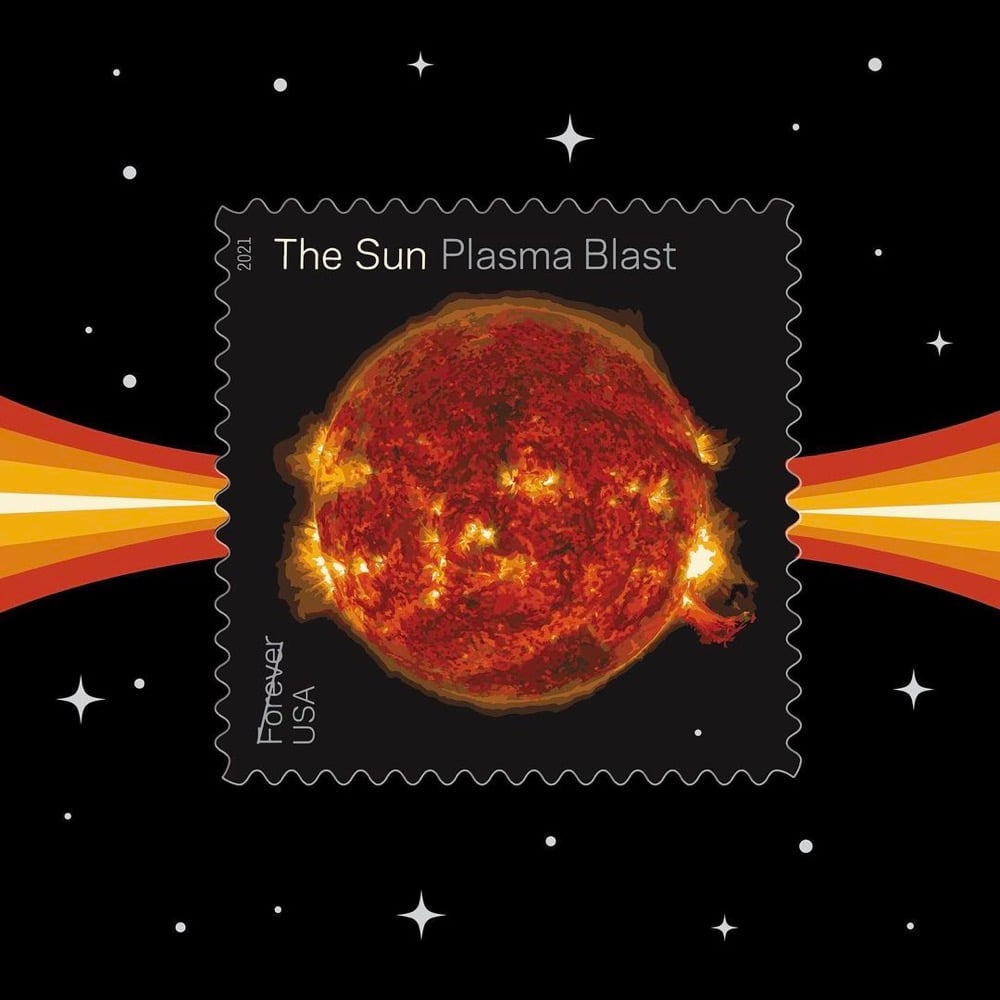
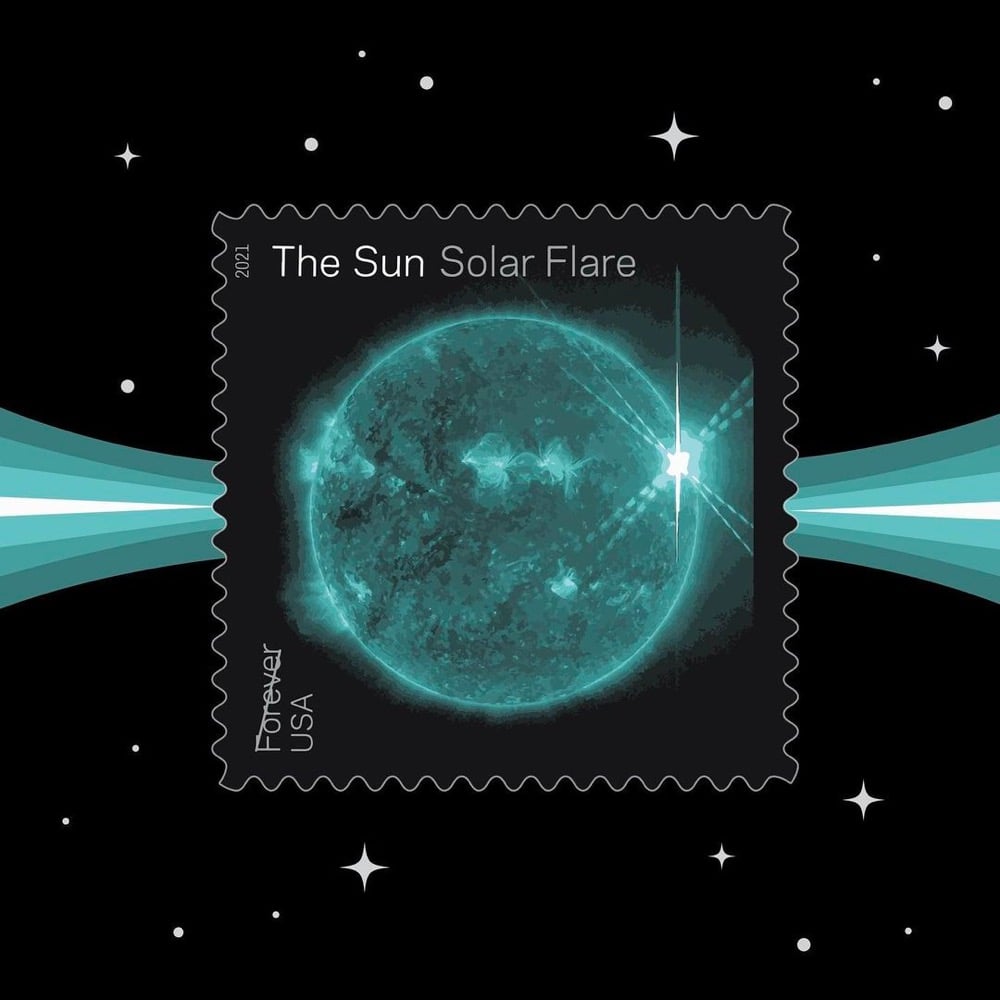
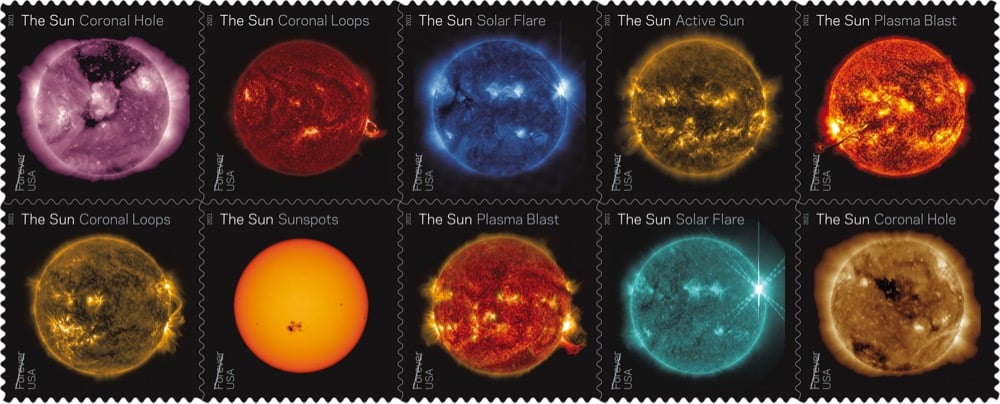
The US Postal Service has released a set of Sun Science stamps that use images from NASA’s Solar Dynamics Observatory to illustrate different solar phenomena like plasma blasts, sunspots, and solar flares.
Printed with a foil treatment that adds a glimmer to the stamps, the images on these stamps come from NASA’s Solar Dynamics Observatory, a spacecraft launched in February 2010 to keep a constant watch on the sun from geosynchronous orbit above Earth. The striking colors in these images do not represent the actual colors of the sun as perceived by human eyesight. Instead, each image is colorized by NASA according to different wavelengths that reveal or highlight specific features of the sun’s activity.
One of the stamps highlights sunspots, two feature images of coronal holes, two show coronal loops, two depict plasma blasts, one is a view of an active sun that emphasizes its magnetic fields, and two show different views of a solar flare.
NASA has more on the science behind the images on the stamps and the whole set of stamps are available for purchase online.
See also A Decade of the Sun.
“In the last four years, Costa Rica has generated 98.53% of its electricity from renewable sources.”
Dark Fish
Sometimes you run across an aspect of reality and it just completely blows your mind. You’ve heard of dark matter, right? Well, meet dark fish: biologists suspect that up to 95% of the world’s total fish population lives in a deep layer of the ocean that is difficult to detect and we know little about.
An international team of marine biologists has found mesopelagic fish in the earth’s oceans constitute 10 to 30 times more biomass than previously thought.
UWA Professor Carlos Duarte says mesopelagic fish — fish that live between 100 and 1000m below the surface — must therefore constitute 95 per cent of the world’s fish biomass.
“Because the stock is much larger it means this layer must play a more significant role in the functioning of the ocean and affecting the flow of carbon and oxygen in the ocean,” he says.
See also this thread from ocean scientist Andrew Thaler:
There’s a globe-spanning layer of mesopelagic fish that is so dense it distorts SONAR. For decades we had no idea what created the Deep Scattering Layer or why it moved. We still know almost nothing about it.
It’s astounding how much we don’t know about the ocean:
There’s an entire family of whales with at least 22 species that we know almost nothing about.
We know way more about stars that are billions of light years away than about some parts of the ocean a few hundred feet below the surface of our own planet.
See also dark fungi: “By one estimate, there are between 2.2 million and 3.8 million species of fungi — and more than 90% of them aren’t cataloged.”. (via @_zeets & @chadmumm)
The Inner Universe of Tropical Fruit
This stop motion animation takes us on a journey through various tropical fruits, as if we’re seeing animated MRI slices of them. If you’re wondering how it’s done, a behind-the-scenes immediately follows the animation. The sound design on this video is fantastic.
See also Hidden Patterns Inside Fruit (by the same creator) and WoodSwimmmer, a Gorgeous Stop Motion Journey Through Wood. (via moss & fog)
Mets pitcher Jacob deGrom is having an off-the-charts year. “Earth is 93M miles from the sun, and Jacob deGrom’s ERA in late June is 0.50: These are facts, we know them to be true, yet there is a very real difficulty in how to conceptualize them.”
The Freedom to Be: Black Surfers in the Rockaways
This short documentary takes a look at the Black surfing community in the Rockaways. These surfers are members of the Black Surfing Association (East Coast branch), which Surfer magazine profiled last summer:
“When you talk to kids here at Rockaway, they think of a surfer as John John Florence — blonde,” says Harris. “When I say, ‘Hey, I’m a surfer,’ they’re shocked. We’re trying to reach every kid, but we’re really trying to reach the kids that wouldn’t otherwise get the opportunity.
We just want to keep kids busy and active, and spread the message and spread the stoke of surfing, and go into schools and talk to kids about water safety.”
“There’s no racism out there”, says Harris of the ocean. “When you come out of that water, of course you go back to your life. But you lose yourself when you get into the waves.”
Black people are more likely to die in traffic accidents. Covid made it worse. “Drivers are less likely to slow down or stop for Black pedestrians than they are for white ones.”
Summer of Soul
Stevie Wonder. Mahalia Jackson. Nina Simone. Gladys Knight & the Pips. B.B. King. Sly and the Family Stone. Over six weeks in the summer of 1969, all of these legendary artists (and more!) performed at the Harlem Cultural Festival in NYC, drawing an estimated 300,000 people. The festival was filmed and broadcast on a local TV station, but the footage was never commercially released and so unlike that other 1969 festival, this event largely slipped from public memory.
Now, the Harlem Cultural Festival finally gets its due in the form of Summer of Soul, a forthcoming documentary directed by Questlove that uses that old footage to great effect. I’ve heard nothing but good things about this movie — it won both the Grand Jury Prize and the Audience Award at the Sundance Film Festival earlier this year. Summer of Soul is out in theaters and on Hulu July 2.
100 Visions of Fatherhood



Just as they did last month in capturing motherhood, The Luupe has curated a collection of photos taken by women and non-binary photographers called 100 Visions of Fatherhood. Photos above by Amanda Addison, Kari Grimsby, and Hanifa Haris.
EVs Won’t Save Us from Our Car Culture’s Ill Effects
From Electric Vehicles Won’t Save Us by Coby Lefkowitz:
This isn’t a story about Elon Musk, or Tesla, or a contrarian take about how “oil is good, actually.” I unconditionally support electric vehicles in their quest to take over the primacy of gasoline-powered vehicles in the market. But I don’t save that enthusiasm for their prospects on society broadly. From the perspective of the built environment, there is nothing functionally different between an electric vehicle and a gasoline propelled one. The relationship is the same, and it’s unequivocally destructive. Cars, however they’re powered, are environmentally cataclysmic, break the tethers of community, and force an infrastructure of dependency that is as financially ruinous to our country as it is dangerous to us as people. In order to build a more sustainable future and a better world for humanity, we need to address the root problems that have brought us to where we so perilously lie today.
Believe
The second season of Ted Lasso starts on July 23rd and this new trailer has me all fired up. The first season was a very welcome diversion during the height of the pandemic and was an almost magical unicorn of a TV thing.
Is America finally rethinking its disastrous, racist, ineffectual, and deadly War on Drugs? “Drugs should be handled by doctors and therapists, not cops and prison guards.”
Socials & More