Entries for January 2019
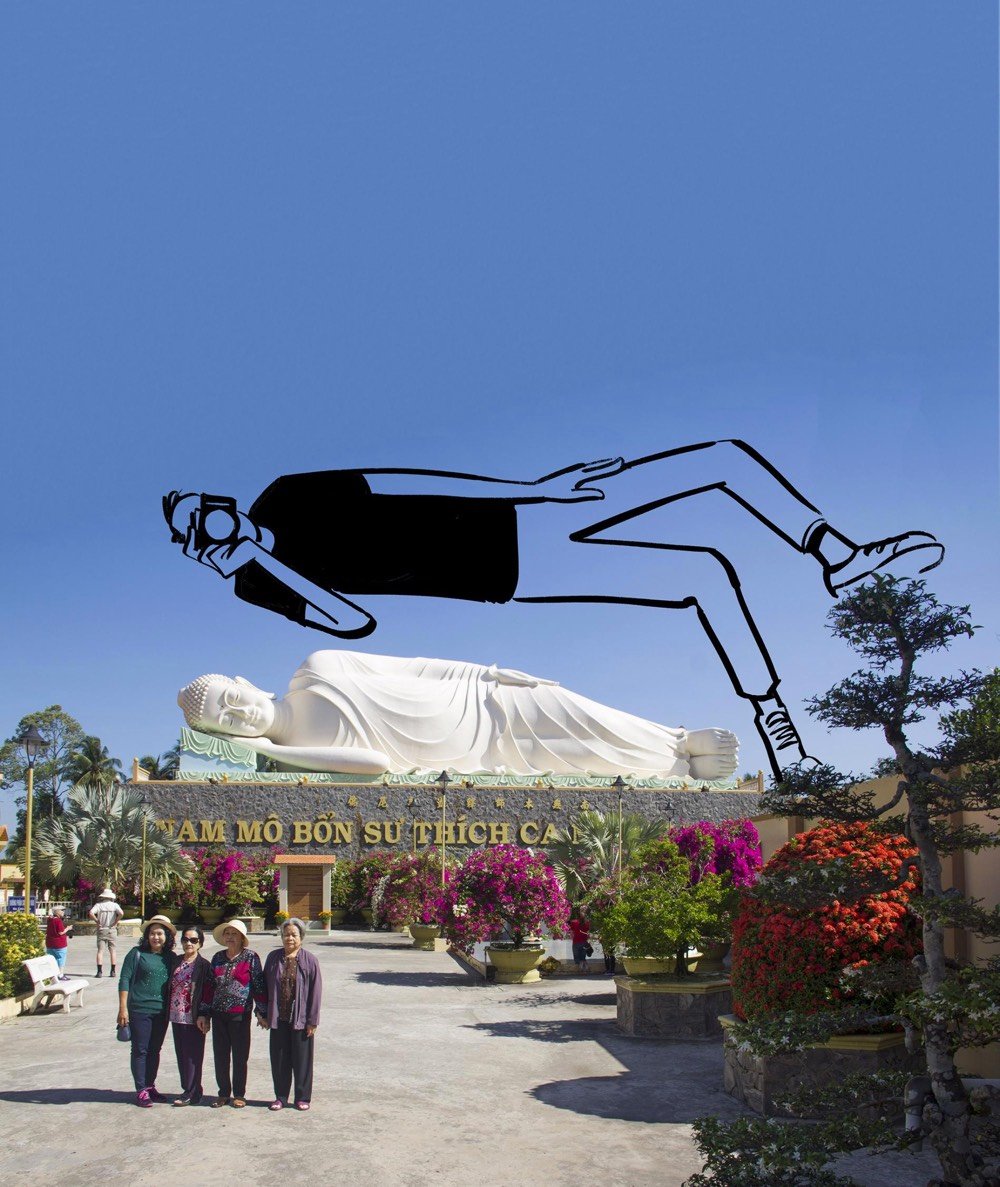
National Geographic sent illustrator Christoph Niemann to Cambodia and Vietnam and he returned with this series of drawings and observations. He talked about the trip in this behind-the-scenes video.
In a region with so much natural beauty, ancient architecture, and vibrant culture, travelers can easily get stuck behind their viewfinders — consumed with capturing the most vivid moments for their photo albums and Instagram feeds. But over the years, Niemann has developed a different method of documenting his trips.
“I always drew when I traveled … I draw just to calm down essentially, so I’m not constantly checking my phone,” he says.
Niemann believes that painting and drawing his experiences creates a dialogue between his mind and a place — this process ultimately allows him to turn the lens on himself. “Essentially the drawing is like a visual filter,” he explains. “You take the world — and you take it through the abstraction of your drawing — and you start seeing differently.”
Some my favorite posts I’ve written over the past few years have been about my travel: my western roadtrip, Berlin, Istanbul, the solar eclipse. Aside from the eclipse post (which gives me goosebumps every time I reread it), I hadn’t intended to start writing about travel. Ostensibly these trips are supposed to be vacations, my time off from constantly sifting through culture for observations. But Niemann is right…there’s something about applying the creative process to unfamiliar places that that makes the experience more worthwhile. For me, photographing and taking notes for a later post gives me a much better sense of a place, forces me to pay more attention & be more open, causes me to learn about myself, and produces a written document of my trip that I can go back to and experience again.
In the first couple of minutes of this video, Roald Dahl introduces us to the writing hut behind his house that he used to write all of his famed children’s books like Charlie and the Chocolate Factory and Danny the Champion of the World. Dahl describes his working routine and details how he’s designed his writing environment, his “nest”, to be as free from distraction as possible.
The Guardian used to run a series about writers’ rooms and in 2008, illustrator Quentin Blake, who worked with Dahl on many of his books, wrote a piece about Dahl’s shed.
The whole of the inside was organised as a place for writing: so the old wing-back chair had part of the back burrowed out to make it more comfortable; he had a sleeping bag that he put his legs in when it was cold and a footstool to rest them on; he had a very characteristic Roald arrangement for a writing table with a bar across the arms of the chair and a cardboard tube that altered the angle of the board on which he wrote. As he didn’t want to move from his chair everything was within reach. He wrote on yellow legal paper with his favourite kind of pencils; he started off with a handful of them ready sharpened.
I like that he tied the footrest to the chair to keep it from sliding away when he rested his feet on it.
As someone who sits down daily to write, nothing seems so luxurious to me as a separate writing hut that is off limits to everyone and everything else. George Bernard Shaw and Mark Twain both had separate houses in which to write; Shaw’s shed could even rotate to catch the light throughout the day. Someday I’ll have one of my own…
P.S. Ernest Hemingway used a standing desk, as did Winston Churchill, Charles Dickens, and Virginia Woolf, among others. I got this one a few weeks ago and am still getting used to it. (via @ftrain)
Ever since the Huffington Post struck SEO gold in 2011 with their post about what time the Super Bowl started, pretty much every online publication now runs a similar article in an attempt to squeeze some of Google’s juice into their revenue stream. My “attempt” from last year: What Time Isn’t the Super Bowl?
For this year’s contest, Sports Illustrated decided to ask theoretical physicist Carlo Rovelli, author of The Order of Time, his thoughts on time and Super Bowls.
6:30 p.m. is the time the Super Bowl will start in Atlanta. Most of us are not in Atlanta. So for us, the game will start later than that. You need the time for the images to be captured by the cameras, be broadcasted to air or cable, be captured by my TV screen, leave my TV screen, get to my eyes (not to mention the time my brain needs to process and decode the images). You may say this is fast — of course this is fast. But it takes some time nevertheless, and I am a physicist, I need precision. For most of us, the game will actually start some time later than the kickoff in Atlanta.
Not only that, but time moves at different speeds for each of us:
We have discovered that clocks run at different speed depending on how fast they are moved, and depending on how high they are positioned. That’s right, it is a fact: Two equal clocks go out of time with respect each other if one is moved and the other is kept fixed. The same will happen if one is kept, say, above your head, and the other lower, say, at your feet. All this was discovered by Einstein a century ago; for a while it was just brainy stuff for nerds, but today we are sure it is true. A good lab clock can check this, and it is truly true. Your head lives a bit longer than your feet (unless you spend a lot of time upside down).
So, the clock of the guy up in the high sections of the stadium runs faster than the clock of the referee on the field. And Tom Brady’s clock (if he were to wear one) runs slower, because Tom moves fast (okay, maybe not “fast,” but faster than the people sitting and watching him).
P.S. The Super Bowl starts at approximately 6:30pm EST on Feb 3, 2019. (via laura olin)
The Dictator’s Playbook series on PBS looks interesting. “Learn how six dictators, from Mussolini to Saddam Hussein, shaped the 20th century.”
The 50 Greatest Film Scores Of All Time. My own personal list would place “Tron: Legacy” higher, but this is a solid list.
What It Felt Like to Almost Die. “As I lay on that concrete, unable to breathe, my heartbeat taking full liberty, the truth revealed itself.”
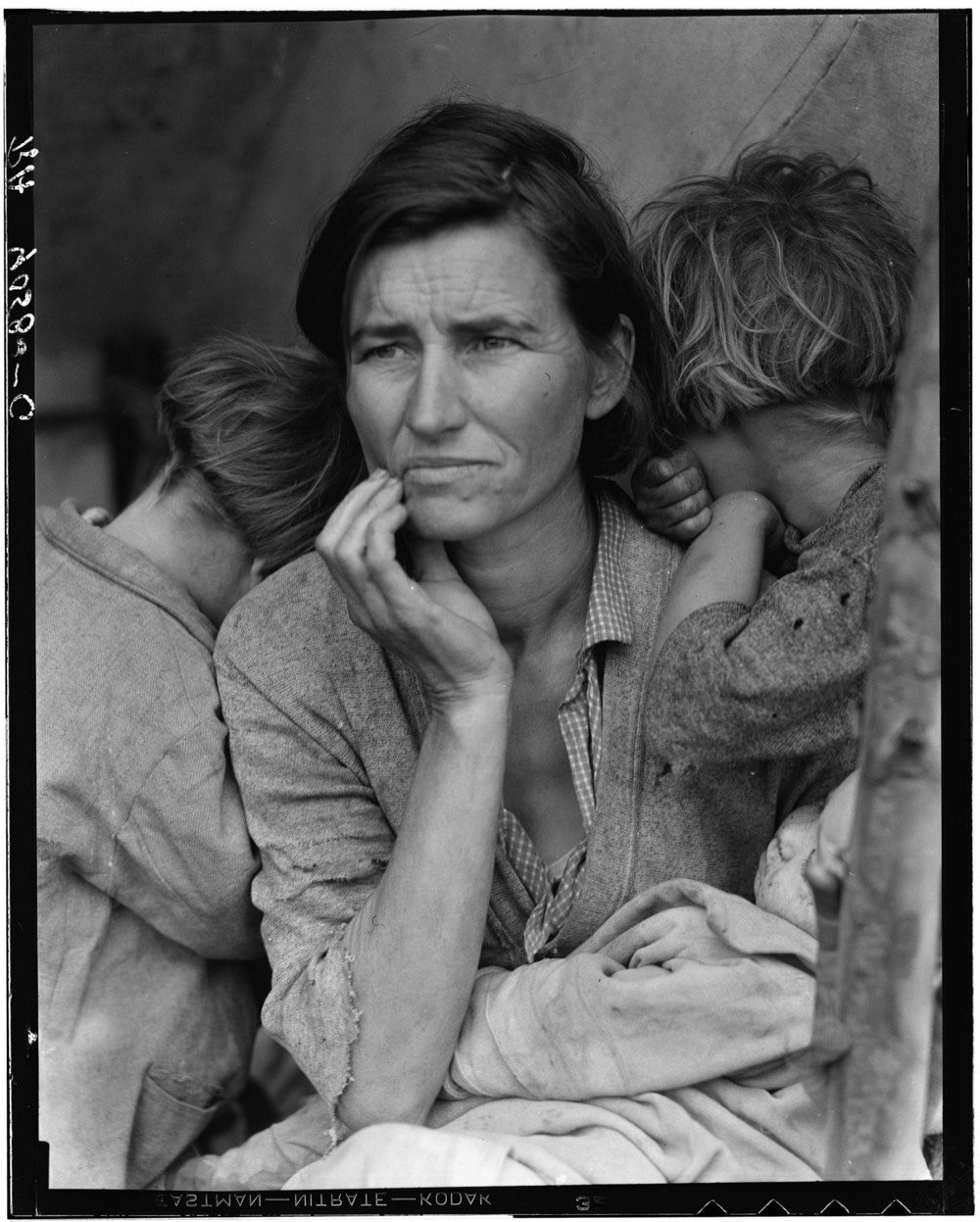
At the end of a long day in March 1936, Dorothea Lange stopped in a migrant workers camp in California for just 10 minutes and took six photos of a woman and her children. The final photo, known as Migrant Mother, became one of the most iconic photographs of the Great Depression.
In this video, Evan Puschak details not only the context the photo was created under (FDR’s administration wanted photos that would shift public support towards providing government aid) but also how Lange stage-managed the scene to get the shot she wanted.
As Puschak notes, the photo we are all familiar with was retouched three years after its initial publication to remove what Lange saw as a detriment to the balance of the scene: the thumb of the woman’s hand holding the tent post in the lower right-hand corner.
It is easy to tell whether a print of “Migrant Mother” was made before 1939, because that year Ms. Lange had an assistant retouch the negative and remove Ms. Thompson’s thumb from the bottom right corner, much to the chagrin of Roy Stryker, her boss at the Farm Security Administration. While that was a fairly common practice at the time, Mr. Stryker thought it compromised the authenticity not just of the photo but also of his whole F.S.A. documentary project, Ms. Meister said. But Ms. Lange considered the thumb to be such a glaring defect that she apparently didn’t have a second thought about removing it.
Here’s what it looked like before the alteration:

There are some other things about the photo that may prompt us to think about the objectivity of documentary photography. The cultural story of Migrant Mother is that this is a white woman who came west during the Great Depression for migrant work. The real story is more complicated. The woman was identified in the late 1970s as Florence Owens Thompson, and as she told her story, we learned some things that Lange didn’t have time to discover during her fleeting time at the camp:
1. Thompson was a full-blooded Cherokee born in Indian Territory (which later became the state of Oklahoma). As this NY Times review of Sarah Meister’s book on the photograph says, if people had known the woman wasn’t white, the photo may not have had the impact it did.
“We have never been a race-blind country, frankly,” Ms. Meister said. “I wish that I could say that the response would have been the same if everyone had been aware that she was Cherokee, but I don’t think that you can.”
2. The family were not recent migrants to California and had actually moved from Oklahoma in 1926, well before the Depression started. The family briefly moved back to Oklahoma because Thompson was pregnant and afraid the father’s family would take the baby from her, but returned to California in 1934.
3. Thompson’s first husband died in 1931 of tuberculosis while she was pregnant with her sixth child. A seventh child resulted from a brief relationship with the father mentioned above. An eighth child followed by a new husband in 1935. But it was Thompson who provided for the family while taking care of 8 kids:
By all accounts, Jim Hill was a nice guy from a respectable family who never could seem to get his act together. “I loved my dad dearly,” Norma Rydlewski said, “but he had little ambition. He was never was able to hold down a job.” The burden of supporting the family, and of keeping it together, fell on Florence.
4. The ultimate goal of Lange taking Thompson’s photo for the FSA was to stimulate public support for government aid to people who were out of work because of the Depression. But Thompson herself didn’t want any aid:
“Her biggest fear,” recalled son Troy Owens, “was that if she were to ask for help [from the government], then they would have reason to take her children away from her. That was her biggest fear all through her entire life.”
5. Thompson and her family weren’t actually living at the pea pickers camp when Lange photographed them there. They had just stopped temporarily to fix their car and were only there for a day or two.
In the field notes that she filed with her Nipomo photographs, Lange included the following description: “Seven hungry children. Father is native Californian. Destitute in pea pickers’ camp … because of failure of the early pea crop. These people had just sold their tires to buy food.”
Owens scoffed at the description. “There’s no way we sold our tires, because we didn’t have any to sell,” he told this writer. “The only ones we had were on the Hudson and we drove off in them. I don’t believe Dorothea Lange was lying, I just think she had one story mixed up with another. Or she was borrowing to fill in what she didn’t have.”
“Mother always said that Lange never asked her name or any questions, so what she [Lange] wrote she must have got from the older kids or other people in the camp,” speculates daughter Katherine McIntosh, who appears in the Migrant Mother photo with her head turned away behind her mother’s right shoulder. “She also told mother the negatives would never be published — that she was only going to use the photos to help out the people in the camp.”
So what are we to make of what we thought we knew about this photograph and what we know now? In 2009, Errol Morris wrote of the FSA photos:
Rothstein, Lange and Evans have been accused of posing their photographs, in short, of manipulating them to some end. And yet all photographs are posed. There is no such thing as pure documentary photography. The problem is not in what any of them have done, but in our misunderstanding of photography. No crimes were committed by the F.S.A. photographers. They labored as employees of an organization dedicated to providing propaganda for the Roosevelt administration. And they created some of the greatest photographs in American history. Photographs can be works of art, bearers of evidence, and a connection with the past for individuals, families and society as a whole. It should not be lost on any of us that these controversies are still with us. The Photoshop alteration of a photograph “documenting” the launching of Iranian missiles, the cropping of a Christmas get-together at the Cheney ranch. These are just the latest iterations. In 1936, Roosevelt was reelected in a contentious election. Photography played a controversial role, reminding us that wherever there are intense disagreements, particularly political disagreements, there will be disagreements about photography, as well.
The stories we tell about photographs change as we change and as our culture changes. Yes, Migrant Mother is a symbol of the hardship endured by many during the Great Depression. But Migrant Mother is also the portrait of a fiercely independent Native American single mother who fought to provide for her family and keep them together during the most difficult time in our nation. That’s a story worth hearing today.
Both prints above are courtesy of the Library of Congress, Prints & Photographs Division: with thumb and without. You can also explore the rest of the LOC’s FSA collection.
As part of their YouTube series on how the Saturday Night Live sausage is made, this short video details how the cue cards that the actors read from during the show are made and used. There’s even a tiny little bit in there about how they use whitespace (between words and lines) to make sure the cards are readable from a distance.
I am kind of amazed that the cue card process is still done by hand. I don’t want to see any hard-working staffers or interns getting fired, but it seems like a couple of fast large-format color printers capable of printing on poster stock and a block letter handwriting font could dramatically streamline the workflow, particularly when late-stage changes are needed.
I loved this “digested read” of Nassim Nicholas Taleb’s Skin in the Game. “If you take just one thing away from this book, make it this: Big Nick knows best and is doing you a favour by writing it.”


These are photographs by Edward Burtynsky from The Anthropocene Project, a multimedia undertaking that showcases the effect humans have had on our planet. Top: a palm oil plantation in Malaysia. Bottom: a coal mine in Germany.
In addition to the photographs, there’s also a book and a film among other things.
I’ve been a fan of Burtynsky’s photography for years and I’m hoping to see both the film and the photos somewhere soon.
Peter Jackson is set to direct a documentary on the Beatles’ final album, “Let It Be”. The source material will include 55 hours of never-released video and 140 hours of recording audio.
In this video, Vox takes a look at how El Chapo leveraged his use of tunnels for transporting drugs into the United States and became one of the richest and most powerful drug lords of all time.
Throughout his career as a drug trafficker, tunnels have been the common theme in El Chapo’s story. When he gained control of a major drug trafficking corridor in the late 1980s, Joaquin Guzman Loera — then known as “el Rapido” — was the first to create super tunnels for transporting drugs across the border.
At the time, a crackdown by the U.S. Drug Enforcement Agency (DEA) meant Colombian cocaine was in decline and the Mexican narcotrafficker saw an opportunity. By using tunnels to facilitate fast transport, El Chapo leveraged his role as a trafficker to claim new responsibilities as a cultivator and distributor of drugs.
El Chapo is currently on trial in the US and the proceedings thus far indicate that the Trump administration’s proposed border wall likely wouldn’t stop the flow of drugs into the US from Mexico. Most of the drugs shipped by El Chapo into the US went through regular old border crossings on trucks and trains, hidden in truck panels, packed into fake plastic bananas, or surrounded by food.
At one point, testimony at the trial has shown, Mr. Guzmán sent tons of cocaine across the border in cans of jalapeños marked with the label La Comadre chiles. The cans were stacked on pallets in the backs of commercial tractor-trailers, which simply drove through official border entry points. To protect his product from being found, witnesses said, Mr. Guzmán often placed the cans filled with cocaine in the middle of the pallets, surrounded by cans with actual chiles.
The NY Times link is via Geoff Manaugh, whose take on this tunnelling I’d love to read.
Kenji López-Alt on The Truth About MSG. Does eating it really give you a headache? According to the studies: not often but it depends.
I *love* these simple visualizations of how different kinds of relationships change over time by writer and cartoonist Olivia de Recat.
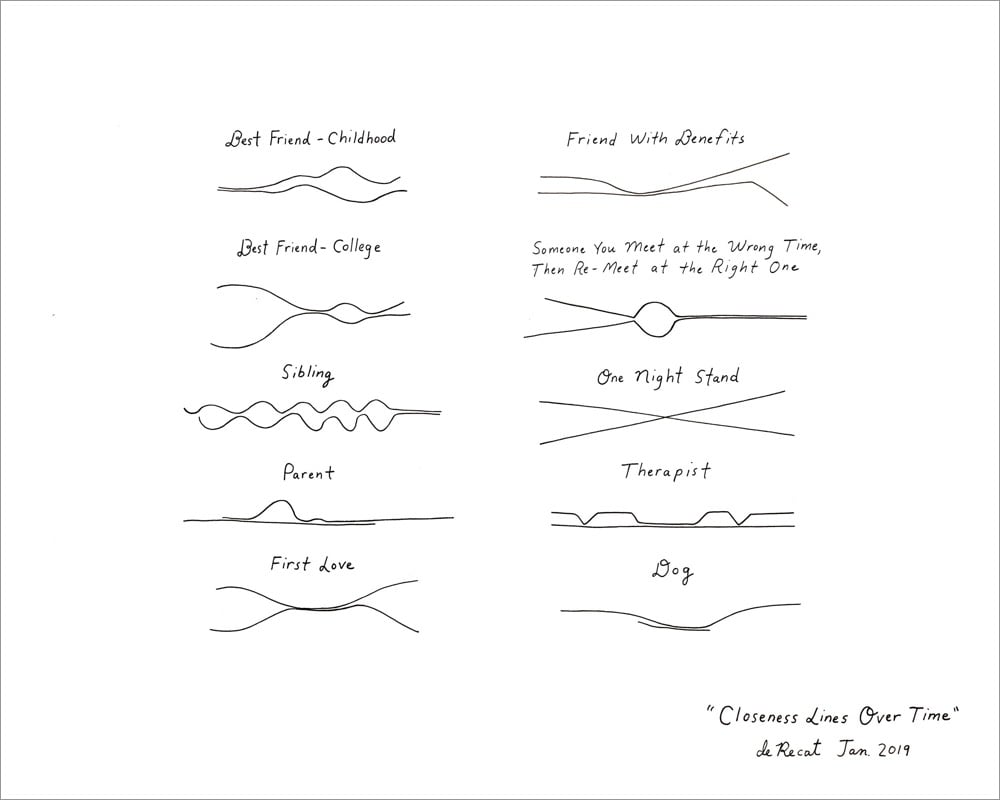
My pal Jesse James Garrett called them “Feynman diagrams of the heart” that depict “the vast entanglement of humanity”.
The illustration is available as a print but currently sold out. :( Hopefully it’ll be back in stock soon? In the meantime, you can take a look at some of her other cartoons (mostly for the New Yorker), peruse her shop, or follow her stuff on Insta.
After enduring years of rape, Lorena Bobbitt chopped off her husband’s penis and the media pilloried her for it. “‘I don’t even buy that he was raping her,’ [Howard] Stern said on one segment with John. ‘She’s not that great looking.’”
In what is now an annual tradition, when the temperatures in some part of the US plunge below zero degrees on the Fahrenheit scale, some nitwit Republican climate change-denier live-tweets from the back pocket of industry something like “It’s so cold out where’s the global warming when we need it???? #OwnTheLibs”. This time around, it was our very own Shitwhistle-in-Chief who tweeted merrily about the current polar vortex bearing down on the Midwest:
In the beautiful Midwest, windchill temperatures are reaching minus 60 degrees, the coldest ever recorded. In coming days, expected to get even colder. People can’t last outside even for minutes. What the hell is going on with Global Waming? Please come back fast, we need you!
Some time ago, Randall Munroe addressed what severe cold in the US has to do with climate change on XKCD: it used to be colder a lot more often but we don’t really remember it.
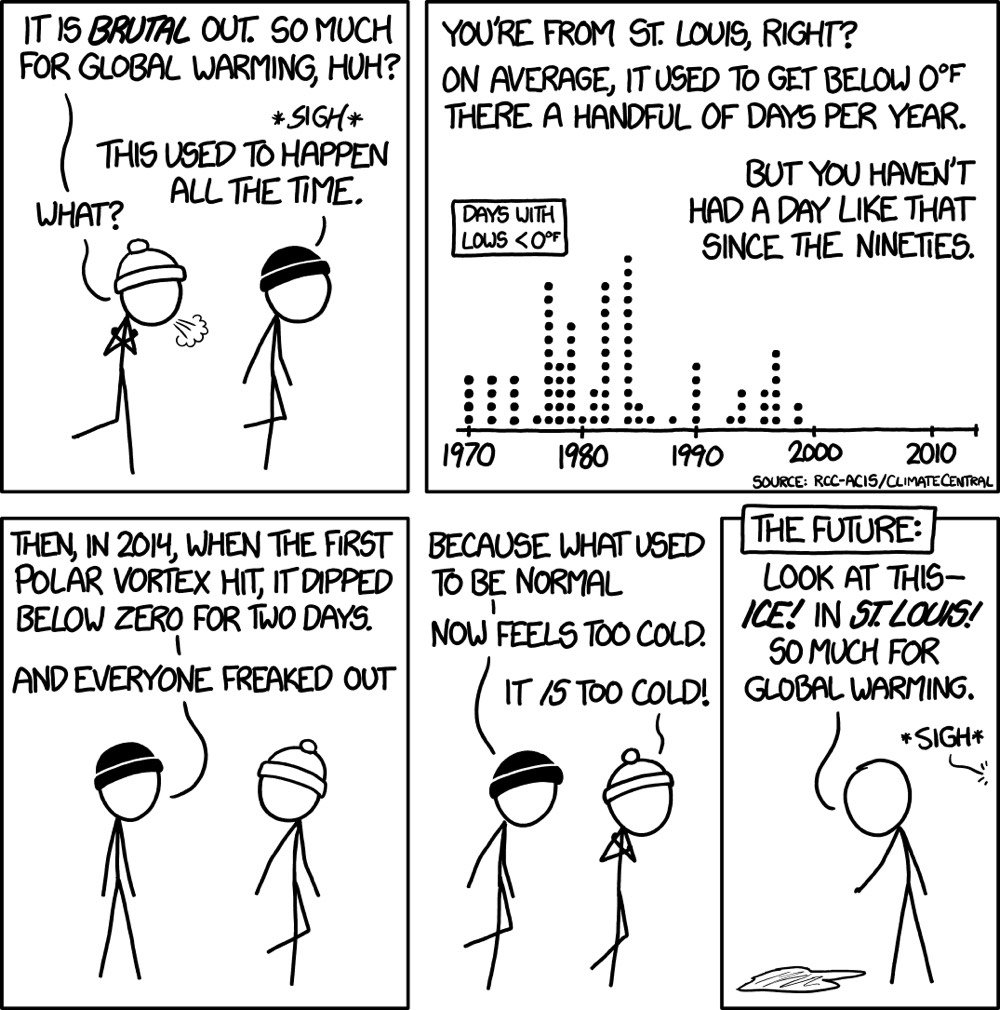
When I was a kid growing up in Wisconsin, I recall experiencing overnight low temperatures in the -30°F to -40°F range several times and vividly remember being stranded in my house for a week in 1996 when the all-time record low for the state (-55°F) was established in nearby Couderay.
Munroe’s observation isn’t even the whole story. Jennifer Francis, senior scientist at the Woods Hole Research Center, writes that the polar vortex bringing cold air into the Midwest is connected to the rapidly warming Arctic.
Because of rapid Arctic warming, the north/south temperature difference has diminished. This reduces pressure differences between the Arctic and mid-latitudes, weakening jet stream winds. And just as slow-moving rivers typically take a winding route, a slower-flowing jet stream tends to meander.
Large north/south undulations in the jet stream generate wave energy in the atmosphere. If they are wavy and persistent enough, the energy can travel upward and disrupt the stratospheric polar vortex. Sometimes this upper vortex becomes so distorted that it splits into two or more swirling eddies.
These “daughter” vortices tend to wander southward, bringing their very cold air with them and leaving behind a warmer-than-normal Arctic.
(via @mkonnikova)
Queueing theory is the scientific study of waiting in line. It can apply to familiar lines like those at the grocery store or bank but also to things like web servers, highway traffic, and telecommunications…basically any situation where you have things entering a system, being processed by a system for a certain period of time, and leaving the system.
The study of queueing is necessary because the effects of waiting in line often run counter to our intuition (which causes people to get cranky about it). Take this example from John Cook of tellers serving customers at a bank:
Suppose a small bank has only one teller. Customers take an average of 10 minutes to serve and they arrive at the rate of 5.8 per hour. What will the expected waiting time be? What happens if you add another teller?
We assume customer arrivals and customer service times are random (details later). With only one teller, customers will have to wait nearly five hours on average before they are served.
Five hours?! I would not have guessed anywhere close to that, would you? Now, add a second teller into the mix. How long is the average wait now? 2.5 hours? 1 hour? According to Cook, much lower than that:
But if you add a second teller, the average waiting time is not just cut in half; it goes down to about 3 minutes. The waiting time is reduced by a factor of 93x
Our lack of intuition about queues has to do with how much the word “average” is hiding…the true story is much more complex.
Aside from the math, designers of queueing systems also have to take human psychology into account.
There are three givens of human nature that queuing psychologists must address: 1) We get bored when we wait in line. 2) We really hate it when we expect a short wait and then get a long one. 3) We really, really hate it when someone shows up after us but gets served before us.
The boredom issue has been tackled in myriad ways — from the mirrors next to elevator banks to the TVs in dentist’s waiting rooms. Larson mentions a clever solution from the Manhattan Savings Bank, which once hired a concert pianist to play in its lobby as customers waited for tellers. “But Disney has been the absolute master of this aspect of queue psychology,” says Larson. “You might wait 45 minutes for an 8-minute ride at Disney World. But they’ll make you feel like the ride has started while you’re still on line. They build excitement and provide all kinds of diversions in the queue channel.” Video screens tease the thrills ahead, and a series of varied chambers that the queue moves through creates a sense of progress. Another solution: those buzzing pagers that restaurants in malls sometimes give you while you’re waiting for a table. Instead of focusing on the misery of the wait, you can go off and entertain yourself-secure in the knowledge that you’ll be alerted when it’s your turn.
Whole Foods had to work around our expectations when it switched to “serpentine” lines that seemed longer but actually served customers more quickly.
By 7 p.m. on a weeknight, the lines at each of the four Whole Foods stores in Manhattan can be 50 deep, but they zip along faster than most lines with 10 shoppers.
Because people stand in the same line, waiting for a register to become available, there are no “slow” lines, delayed by a coupon-counting customer or languid cashier. And since Whole Foods charges premium prices for its organic fare, it can afford to staff dozens of registers, making the line move even faster.
“No way,” is how Maggie Fitzgerald recalled her first reaction to the line at the Whole Foods in Columbus Circle. For weeks, Ms. Fitzgerald, 26, would not shop there alone, assigning a friend to fill a grocery cart while she stood in line.
When she discovered the wait was about 4 minutes, rather than 20, she began shopping by herself, and found it faster than her old supermarket.
See also How to Pick the Fastest Line at the Supermarket, Queue Theory and Design from 99% Invisible, and this paper from Bob Wescott, Seven Insights Into Queueing Theory. One of his insights:
It’s very hard to use the last 15% of anything. As the service center gets close to 100% utilization the response time will get so bad for the average transaction that nobody will be having any fun. The graph below is exactly the same situation as the previous graph except this graph is plotted to 99% utilization. At 85% utilization the response time is about 7x and it just gets worse from there.
For grocery stores or call centers, that means you’re going to have operators or cashiers sitting there “doing nothing” sometimes because if you don’t, you’re gonna be in trouble when a rush hits.
Update: John Frost shares an anecdote about his grandfather’s team designed the queueing system for the Matterhorn Bobsleds at Disneyland:
Another fun family story is the invention of the Matterhorn’s first of its kind switchback queue. Vic Greene and his team of Imagineers developed a system that would have the entrance to the switchback part of the queue be lower than the exit. When you stood at the entrance, the exit would appear closer to you in an optical illusion. The idea was to make your wait seem less cumbersome by visually shortening the queue.
These visualizations of the speed of light I posted last week somehow demonstrate both how fast light speed is and how slow it is compared the vastness of the galaxy & universe. Science fiction often bends the rules of physics as we currently understand them, with fictional spacecraft pushing beyond the speed of light. In Star Trek, the measure of a ship’s velocity is warp speed. Warp 1 is the speed of light, Warp 6 is 392 times the speed of light, etc. In this Warp Speed Comparison video, EC Henry compares the top speeds of various Star Trek vessels (the original Enterprise, Voyager, the Defiant), racing them from Earth to the edge of the solar system.
Once again, you get a real sense of how fast these ships would be if they actually existed but also of the vastness of space. It would take 10 seconds for the fastest ship to reach the edge of the solar system at maximum warp and just over 6 hours to get to the nearest star, Proxima Centauri. Wikipedia lists a few dozen stars that are within a day’s journey at full warp…a trip that takes light more than 16 years. The mighty speed of light is no match for the human imagination. (thx, jim)
We’re coming up on the 50th anniversary of the Apollo 11 mission, which means an increase in Apollo 11 media. This is a strong early entrant: “Apollo 11”, a feature-length documentary on the mission, featuring “a newly discovered trove of 65mm footage” of starting clarity.
Miller and his team collaborated with NASA and the National Archives (NARA) to locate all of the existing footage from the Apollo 11 mission. In the course of sourcing all of the known imagery, NARA staff members made a discovery that changed the course of the project — an unprocessed collection of 65mm footage, never before seen by the public. Unbeknownst to even the NARA archivists, the reels contained wide format scenes of the Saturn V launch, the inside of the Launch Control Center and post-mission activities aboard the USS Hornet aircraft carrier.
The find resulted in the project evolving from one of only filmmaking to one of also film curation and historic preservation. The resulting transfer — from which the documentary was cut — is the highest resolution, highest quality digital collection of Apollo 11 footage in existence.
The film is 100% archival footage and audio. They’ve paired the footage with selections from 11,000 hours of mission audio.
The other unexpected find was a massive cache of audio recordings — more than 11,000 hours — comprising the individual tracks from 60 members of the Mission Control team. “Apollo 11” film team members wrote code to restore the audio and make it searchable and then began the multi-year process of listening to and documenting the recordings. The effort yielded new insights into key events of the moon landing mission, as well as surprising moments of humor and camaraderie.
This. Sounds. Amazing. The film premiered at the Sundance Film Festival a few days ago and the reviews have been overwhelmingly positive. Here’s David Erhlich writing for Indiewire:
It’s rare that picture quality can inspire a physical reaction, but the opening moments of “Apollo 11,” in which a NASA camera crew roams around the base of the rocket and spies on some of the people who’ve come to gawk at it from a beach across the water, are vivid enough to melt away the screen that stands between them. The clarity takes your breath away, and it does so in the blink of an eye; your body will react to it before your brain has time to process why, after a lifetime of casual interest, you’re suddenly overcome by the sheer enormity of what it meant to leave the Earth and land somewhere else. By tricking you at a base sensory level into seeing the past as though it were the present, Miller cuts away the 50 years that have come between the two, like a heart surgeon who cuts away a dangerous clot so that the blood can flow again. Such perfect verisimilitude is impossible to fake.
And Daniel Fienberg for The Hollywood Reporter:
Much of the footage in Apollo 11 is, by virtue of both access and proper preservation, utterly breathtaking. The sense of scale, especially in the opening minutes, sets the tone as rocket is being transported to the launch pad and resembles nothing so much as a scene from Star Wars only with the weight and grandeur that come from 6.5 million pounds of machinery instead of CG. The cameraman’s astonishment is evident and it’s contagious. The same is true of long tracking shots through the firing room as the camera moves past row after row after row of computers, row after row after row of scientists and engineers whose entire professional careers have led to this moment.
There will be a theatrical release (including what sounds like an IMAX release for museums & space centers) followed by a showing on TV by CNN closer to July.
The “Tolkien: Maker of Middle-earth” exhibition at NYC’s Morgan Library & Museum is “the most extensive public display of original Tolkien material for several generations”. Running from January 25 through May 12, the exhibition includes drafts, drawings, maps, and memorabilia related to J.R.R. Tolkien’s books, including hand-drawn maps done by Tolkien of Middle-earth.
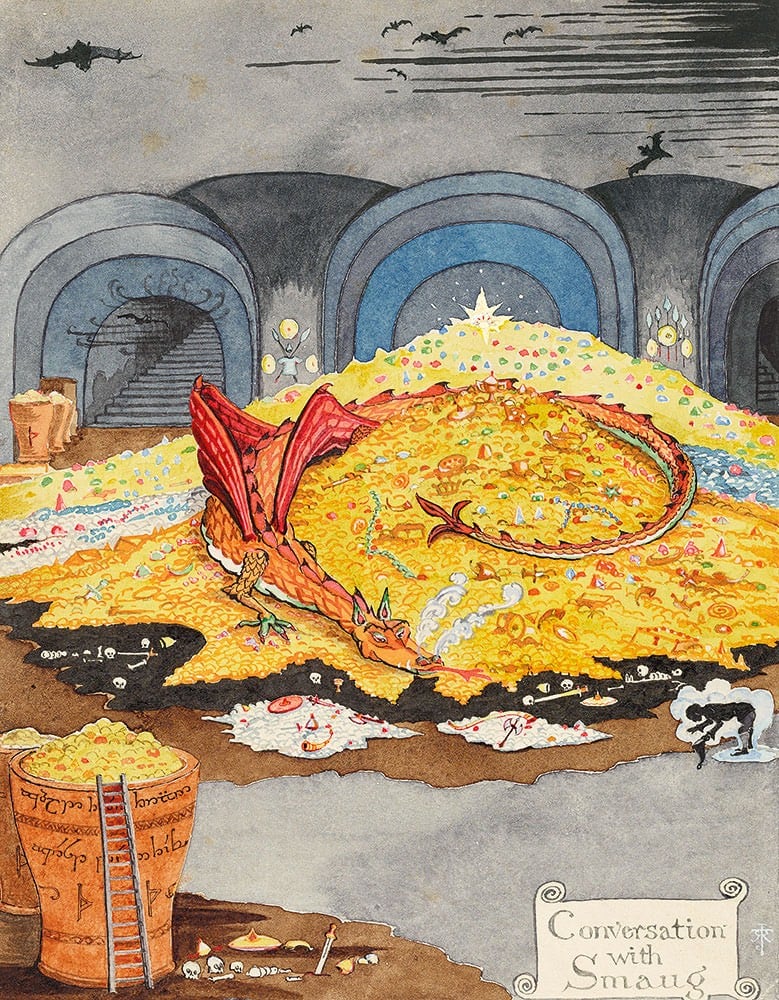
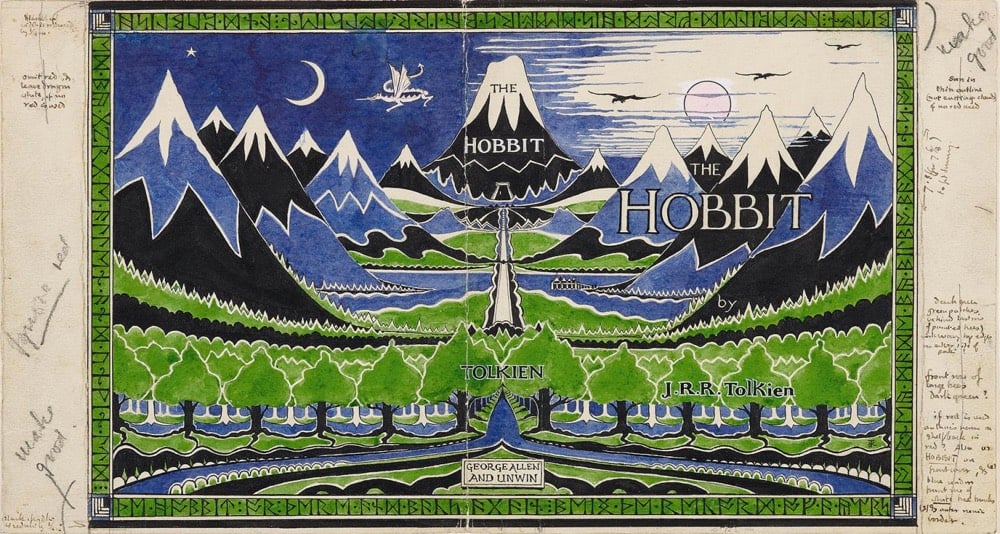

I’m totally going to this the next time I’m in NYC.
Update: Note to those who are heading to exhibition: cosplaying your favorite LoTR character at the Morgan Library is totally permissible.
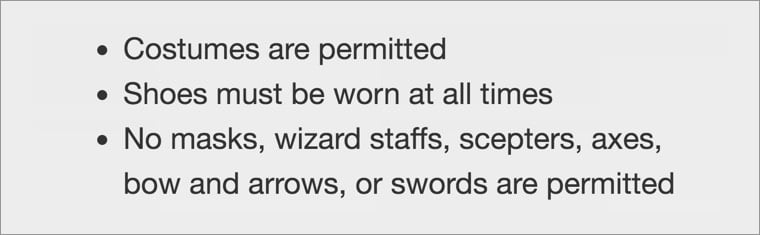
But all Gimlis, Legolases, and Gandalfs, leave your weaponry at home. (via @arbesman)
One of the most popular recurring features on Gothamist is Jake Dobkin’s “Ask A Native New Yorker” column (which I’ve mentioned here more than once). In the column, Dobkin gives advice related to NYC issues like cycling in the city, dealing with problematic roommates, coping with bedbugs, and strangers sitting on your stoop.
Now Dobkin has turned that column into a book with all-new material: Ask a Native New Yorker: Hard-Earned Advice on Surviving and Thriving in the Big City.
The book version features all original writing and aims to help newbies evolve into real New Yorkers with humor and a command of the facts. In 48 short essays and 11 sidebars, the book offers practical information about transportation, apartment hunting, and even cultivating relationships for anyone fresh to the Big Apple. Subjects include “Why is New York the greatest city in the world?,” “Where should I live?,” “Where do you find peace and quiet when you feel overwhelmed?,” and “Who do I have to give up my subway seat to?” Part philosophy, part anecdote collection, and part no-nonsense guide, Ask a Native New Yorker will become the default gift for transplants to New York, whether they’re here for internships, college, or starting a new job.
Instant pre-order.
For this video, freelance animator Nick Murray Willis took the audio from football commentators and made these little animated vignettes to go along with each line. Here’s a sample:
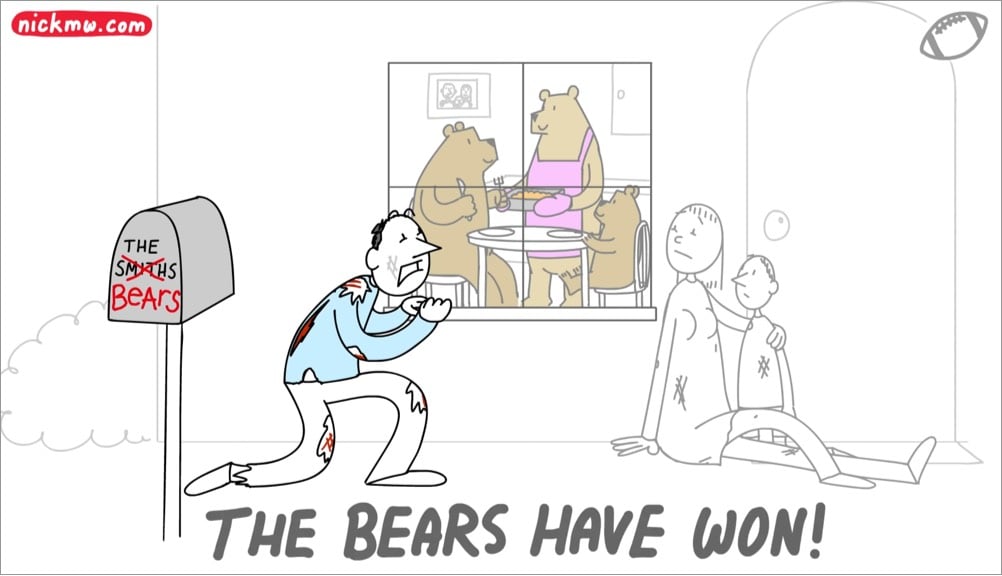
My only complaint about this video is that it was over too quickly. Luckily Willis has done the same thing in videos for NBA, soccer, movie lines, etc.
Meet the spider-tailed horned viper, native to western Iran. As the name suggests, the snake has a tail that, when moved about in the right way, looks like a spider crawling on a rock. The crawling “spider” attracts small birds who eat insects…and then the viper eats the birds:
Sweeeeeeet Fancy Moses! If an animal with venomous snake jaws on one end and a spider on the other isn’t everyone’s idea of a nightmare animal, I don’t know what is.
But what an incredible evolutionary adaptation. This mimicry is right up there with the bee orchid. (via @jasonfried)
My pal and collaborator Tim Carmody is launching a newsletter all about Amazon called Amazon Chronicles. You can subscribe here and read the statement of purpose here. I’m thinking of it as Daring Fireball but for Amazon instead of Apple.
There’s no shortage of good Amazon stories, and good Amazon coverage. I loved Kashmir Hill’s story for Gizmodo about trying (somewhat unsuccessfully) to block Amazon from her life. I loved John Herrman’s exposé on Vine reviewers. I think stories like this are just as important and just as interesting (more so, actually) as the latest on Jeff Bezos’s sex life or speculation about Amazon’s earnings and stock price. I like stories that help me see how a company like Amazon, with its tangled web of services and products, entwines itself into our lives, both consumer and commercial.
But who is going to gather stories like these and help put them into context? Who, really, is able to take the time to get the big picture when it comes to what’s intermittently the biggest and most influential company in the world?
Tim has been covering the Amazon beat from all angles since before the company became one of the most valuable in the world (including recently on kottke.org), so he’s well-positioned to take up this gathering challenge.1 Tim is also applying the Unlocking the Commons approach that has worked well for the kottke.org membership program with a slight wrinkle:
So, here’s the deal. This newsletter — which I’m calling The Amazon Chronicles — will sell paid memberships. These will be $5/month, or $50/year. It will also offer free subscriptions. These will cost nothing.
As long as I get at least 200 paid subscribers (let’s call them “members”), free subscribers will get all the same newsletters members get (give or take housekeeping emails that will only make sense to folks who are paying money).
Essentially, the whole site will be free to anyone who signs up. That will be a newsletter a week, rounding up the biggest and best Amazon coverage, plus original reporting and analysis. The same newsletter, for everybody.
I just subscribed at the annual level…join me, won’t you?
Kashmir Hill is a remarkable and inventive reporter. She came up with a great concept called “Goodbye Big Five”: one by one, she’d try to cut out the biggest digital companies in the world from her life (Amazon, Apple, Facebook, Google, and Microsoft). She started with the toughest: Amazon.
Amazon is not just an online store—that’s not even the hardest thing to cut out of my life. Its global empire also includes Amazon Web Services (AWS), the vast server network that provides the backbone for much of the internet, as well as Twitch.tv, the broadcasting behemoth that is the backbone of the online gaming industry, and Whole Foods, the organic backbone of the yuppie diet.
Keeping myself from walking into a Whole Foods is easy enough, but I also want to stop using any of Amazon’s digital services, from Amazon.com (and its damn app) to any other websites or apps that use AWS to host their content. To do that, I enlist the help of a technologist, Dhruv Mehrotra, who built me a custom VPN through which to route my internet requests. The VPN blocks any traffic to or from an IP address controlled by Amazon. I connect my computers and my phone to the VPN at all times, as well as all the connected devices in my home; it’s supposed to weed out every single digital thing that Amazon touches.
How’d it work? Well, things got rough.
On the second morning of the block, I hear my daughter in the living room with my husband screaming “Alessa, Alessa!” They forgot that the voice of the Amazon Echo, Alexa, has been banished from the house. The block is especially tough on my one-year-old daughter, Ellev, both because the Echo provides the sole source of music in our household and because Ellev is obsessed with three movies (Coco, Monsters Inc., and The Incredibles), all of which we usually watch either through Netflix or through videos purchased via Amazon.
Ellev is not happy about my experiment particularly because my long-winded explanations about why she can’t listen to “E-I-E-I-O” or watch “Incwedibles” make zero sense to her. The low point of the week is when she cries for the Incredibles for a solid five minutes one afternoon, though I manage to distract her, eventually, with puzzle pieces.
It’s not just entertainment, though; a good deal of fundamental communications tools run on AWS, including Signal and Slack. Hill soon discovers, though, that there are some benefits to being less online.
My husband and I break our habit of watching shows on Netflix at the end of the day, opting to read instead or indulge our newfound obsession with cribbage, a card game I had assumed was boring until I started playing it. Also, since we mostly use Signal to text each other, I find myself sending him fewer texts and instead talk to him about things IRL.
We also wean our daughter from much of her screen time, which means quality time playing with her or taking her to a playground rather than giving her a “movie treat.” I go running outside rather than doing my three miles on a treadmill watching Netflix. In general, having access to fewer parts of the internet makes me use technology less, which is increasingly my goal in life.
Less internet also means less surveillance—from coworkers (via Slack and other tools) and from Amazon itself, which could be mining the sheer amount of data it manages for insights into consumer and commercial usage, both individually and in the aggregate. In short, Hill concludes, Amazon’s indispensability is itself tremendously troubling.
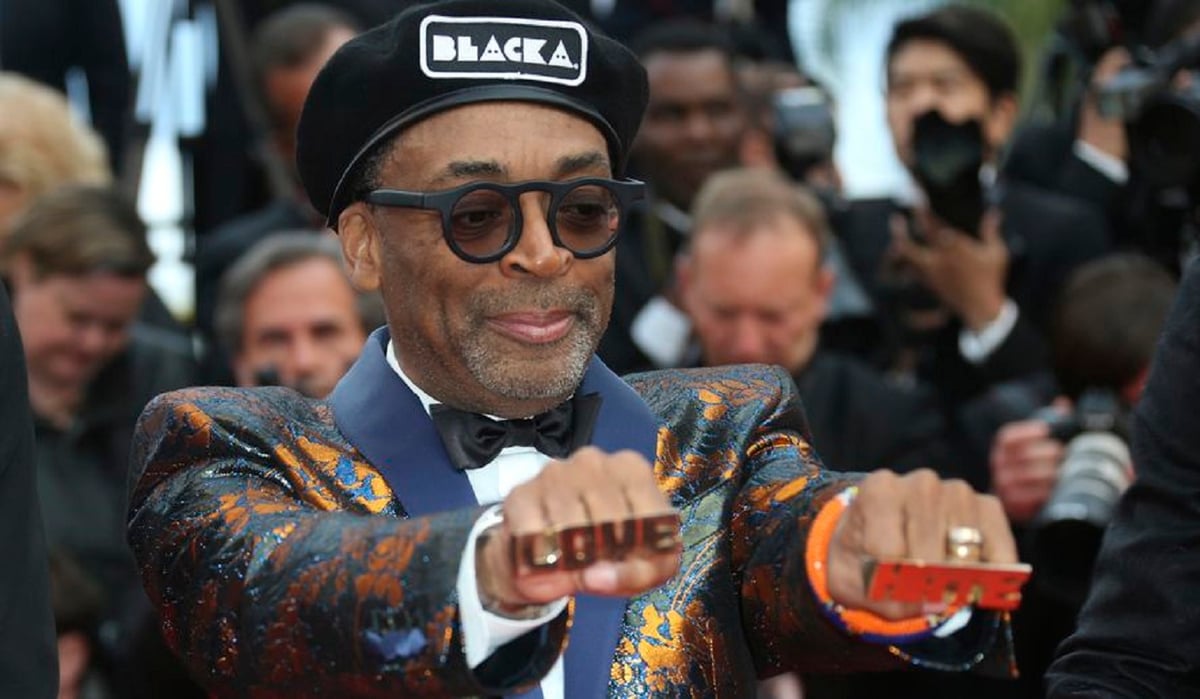
Spike Lee’s first film, She’s Gotta Have It, came out in 1986, but the writer/director/actor’s best film, the one that made him famous, Do the Right Thing, celebrates its thirtieth anniversary this summer. It’s worth reading contemporary reactions to Lee’s film—Joe Klein’s infamous “Spiked?” is the classic example—if only to see how terrified Lee made people.
Lee’s Q&A in Cannes in 1989 is also required viewing:
Lee still does should-be-shocking things—last year at Cannes, he repeatedly called Donald Trump a “motherfucker”—but the reaction to him is very different. He’s become an elder statesman, part of the fraternity, an academy nominee for Best Director and Best Picture thirty years after his best work got shut out from award consideration.
It’s all about timing. Lee thinks the Academy has come a long way from where it was thirty years ago, but warns against becoming complacent:
“Hollywood has really ramped it up,” he said. “They are making more diverse films. But in order to make sure this is something that is steady and not a trend is for us to see diversity among the gatekeepers, the rarified individuals that decide what we’re making and not making. That’s the only way to ensure against more cyclical droughts, that’s the new frontier. We’ve got a lot of stuff now, but what films are coming out next year? I’m not going to have a film. Who’s going to be there next in the marketplace? The only way to ensure this does not become a trend is that it should be commonplace.”
He used saltier language with the New York Times, but still suggested that the different treatment of his newer film is largely a matter of good timing:
Does any part of you feel like it’s overdue?
I mean, look, it’s no secret. 30 years is a long [expletive] time. But I’m not complaining! It’s a joyous day. I’m blessed for this day. Blessed for the recognition. And there’s a feeling that it’s not just the people that worked on this film [that have earned recognition], it’s the people that have been working on my films since 1986.
You’ve made all kinds of films — some independent, some with studios, some that you wrote, some that were written by others — was there anything about “BlacKkKlansman” that you thought had the potential to resonate in a different way?
Well, when Jordan Peele called me up and gave me the pitch “Black man infiltrates the Ku Klux Klan,” I was intrigued, because with the absurdity of that premise comes humor. Kevin Willmott [a co-writer of the film] and I knew that if we could use the movie to connect the past with the present, we could do something that connected with people. And it was a tough thing to do. But it was successful, and it speaks directly to the world we live in today with this guy in the White House. Today, when 800,000 Americans need a break as we go into another week of this temper tantrum about how this guy wants his money for his wall. A wall he wants to be built upon the border of a country that he says [is home to] rapists, murders and drug dealers. And that they’re gonna pay for! Which is not true.
This film deals directly with the madness and the mayhem of this Looney Tunes, cuckoo for Cocoa Puffs world [laughs]. And I feel that many years to come, when historians search for a piece of art that clearly shows what is happening today, “BlacKkKlansman” will be one of the first things they look at. Because this film is on the right side of history.
But if you really want to use Do the Right Thing to understand contemporary film, the best example is this magisterial essay by Wesley Morris, “Why Do the Oscars Keep Falling for Racial Reconciliation Fantasies?”
From Driving Miss Daisy (which won the Best Picture Oscar the year Do the Right Thing wasn’t nominated) to the past year’s Green Book, pictures about race the Academy loves tend to have a common structure, where racism is somehow not enabled by capitalism (and vice versa) but abated by it:
The white characters — the biological ones and somebody supposedly not black enough, like fictional Don — are lonely people in these pay-a-pal movies. The money is ostensibly for legitimate assistance, but it also seems to paper over all that’s potentially fraught about race. The relationship is entirely conscripted as service and bound by capitalism and the fantastically presumptive leap is, The money doesn’t matter because I like working for you. And if you’re the racist in the relationship: I can’t be horrible because we’re friends now. That’s why the hug Sandra Bullock gives Yomi Perry, the actor playing her maid, Maria, at the end of “Crash,” remains the single most disturbing gesture of its kind. It’s not friendship. Friendship is mutual. That hug is cannibalism.
Do the Right Thing blows up that structure, which is why it was so threatening:
Closure is impossible because the blood is too bad, too historically American. Lee had conjured a social environment that’s the opposite of what “The Upside,” “Green Book,” and “Driving Miss Daisy” believe. In one of the very last scenes, after Sal’s place is destroyed, Mookie still demands to be paid. To this day, Sal’s tossing balled-up bills at Mookie, one by one, shocks me. He’s mortally offended. Mookie’s unmoved. They’re at a harsh, anti-romantic impasse. We’d all been reared on racial-reconciliation fantasies. Why can’t Mookie and Sal be friends? The answer’s too long and too raw. Sal can pay Mookie to deliver pizzas ‘til kingdom come. But he could never pay him enough to be his friend.
Roald Dahl’s oldest daughter Olivia died from the measles when she was seven years old. She died because there wasn’t a reliable measles vaccine then, and in this heartfelt letter he wrote years later, Dahl wants everyone to know that there is such a vaccine now.
Olivia, my eldest daughter, caught measles when she was seven years old. As the illness took its usual course I can remember reading to her often in bed and not feeling particularly alarmed about it. Then one morning, when she was well on the road to recovery, I was sitting on her bed showing her how to fashion little animals out of coloured pipe-cleaners, and when it came to her turn to make one herself, I noticed that her fingers and her mind were not working together and she couldn’t do anything.
‘Are you feeling all right?’ I asked her.
‘I feel all sleepy,’ she said.
In an hour, she was unconscious. In twelve hours she was dead.
The measles had turned into a terrible thing called measles encephalitis and there was nothing the doctors could do to save her. That was twenty-four years ago in 1962, but even now, if a child with measles happens to develop the same deadly reaction from measles as Olivia did, there would still be nothing the doctors could do to help her.
On the other hand, there is today something that parents can do to make sure that this sort of tragedy does not happen to a child of theirs. They can insist that their child is immunised against measles. I was unable to do that for Olivia in 1962 because in those days a reliable measles vaccine had not been discovered. Today a good and safe vaccine is available to every family and all you have to do is to ask your doctor to administer it.
I feel so tired when I think about parents not vaccinating their children against easily preventable fatal diseases. It’s child abuse and the kids know better! Here’s a tweet from Erin Faulk sharing some screenshots of teens asking how they can get vaccinated over their parents’ objections.

“Vaccines. And now my kids don’t die.”

Buying vintage and collectible sneakers online has become so complicated that a secondary industry has sprung up. Programmers create bots to outbid humans at auction. Initially, these were used just to snap up shoes to be sold at a markup on secondary markets. Eventually, though, enterprising botmakers realized they could avoid having to deal with shoes altogether by selling their bots to thirsty sneakerheads directly. At Complex, Tommie Battle breaks it down:
It’s now seen as a must that you need a bot. Copping “manually” is a risky endeavor—a misstep in entering credit card info or your address could mean that the item that was once on its way to being delivered to your door is now swept from under your virtual feet. That very sequence has happened to so many customers at this point that it’s now a part of the release date experience, and there is seemingly no light at the end of the tunnel.
The exclusivity will always be there in the world of streetwear, and it’s quite possible that the exclusivity is what drives brands to stay the course in regards to how they handle not only the availability, but the probability of purchasing their product. After all, the hype doesn’t follow every sneaker. The issue remains that the playing field must be even, especially in the digital realm. The old phrase is that the customer is always right, but what happens if the customer is a mindless bot?
The main question I have is this: what other economies have been disrupted by bots? Presumably, the rest of the collectors’ markets haven’t been untouched by this. The fundamental technologies and principles are basically the same. Entertainment, too, in the form of tickets to events, anything else sold by auction or to the first bidder. But how deep does it go? How far has the rot spread?
Light is fast! In a recent series of animations, planetary scientist James O’Donoghue demonstrates just how fast light is…and also how far away even our closest celestial neighbors are. Light, moving at 186,000 mi/sec, can circle the Earth 7.5 times per second and here’s what that looks like:
It can also travel from the surface of the Earth to the surface of the Moon in ~1.3 seconds, like so:
That seems both really fast and not that fast somehow. Now check out light traveling the 34 million miles to Mars in a pokey 3 minutes:
And Mars is close! If O’Donoghue made a real-time animation of light traveling to Pluto, the video would last over 5 hours. The animation for the closest undisputed galaxy, Seque 1, would last 75,000 years and 2.5 million years for the Andromeda galaxy animation. The farthest-known objects from Earth are more than 13 billion light years away. Light is slow!
See also The Leisurely Pace of Light Speed.
Older posts





Socials & More