


Advertise here with Carbon Ads
This site is made possible by member support. 💞
Big thanks to Arcustech for hosting the site and offering amazing tech support.
When you buy through links on kottke.org, I may earn an affiliate commission. Thanks for supporting the site!
kottke.org. home of fine hypertext products since 1998.
Beloved by 86.47% of the web.
Entries for May 2016
“Our hot list of 20 influential NYC babies” SERIOUSLY!?? NO NO NO
How Gromit from Wallace and Gromit is built
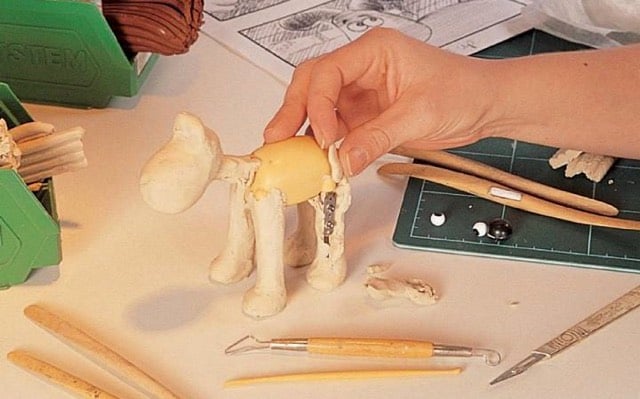
Aardman’s films and shows (particularly Shaun the Sheep) are some of my favorite things to watch with the kids. Animator Merlin Crossingham shares how the Gromit character is built, from his stainless steel skeleton on up.
In the first film, A Grand Day Out, Nick was going to make Gromit speak and had planned a whole mouth design. The first time he animated Gromit, however, he found that the way the character could communicate using body language and expressive eyebrows was much more powerful than by speaking. So he made a snap decision not to give Gromit a voice, which he’s stuck to. Our good animators are able to let you know instantly what the model is thinking or doing.
(via @bdeskin)
Are you your body? And which half of your brain is you?
Kurzgesagt and CGPGrey collaborated on a pair of videos about the self. The first video considers the human being as a collection of cells. How many of those cells can you take away before you stop being you? And does that question even make sense? The second video notes that if you sever the connection between the two halves of the human brain, they will each seemingly continue to operate as separate entities. But which of those entities is you? Are there two yous?
When designers die. “Vignelli had two custom crematory urns. One was inscribed in Optima, the other in Helvetica.”
How do stealth aircraft avoid radar detection?
The B-2 stealth bomber has a length of 69 feet and a wingspan of 172 feet but possesses the radar profile of a large bird. How does the plane evade radar so effectively?
“Frog and Toad and the Self”
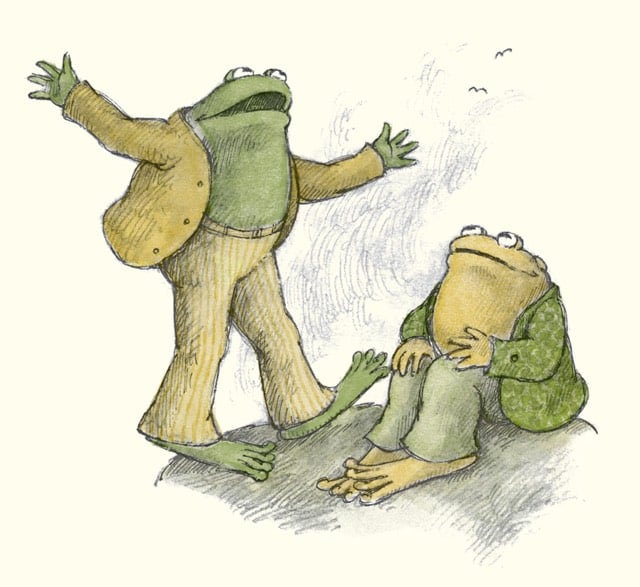
Bert Clere wrote a nice appreciation for the children’s books of Arnold Lobel, among them the Frog and Toad series and Owl at Home. Clere says Lobel’s stories offered insights for children about, yes, friendship but also about the importance of individuality.
Lobel’s Frog and Toad series, published in four volumes containing five stories each during the 1970s, remains his most popular and enduring work. Frog and Toad, two very different characters, make something of an odd couple. Their friendship demonstrates the many ups and downs of human attachment, touching on deep truths about life, philosophy, and human nature in the process. But it isn’t all about relationships with others: In the series, and in his lesser-known 1975 book Owl at Home, Lobel offers a conception of the self that still resonates decades later. Throughout his books, he reminds readers that they are individuals, and that they shouldn’t be afraid of being themselves.
Frog and Toad are favorites at our house. I’m going to read them to the kids this weekend with a new appreciation. Wanting to fit into the group is a powerful impulse for children, reinforced these days by the increased focus on group work in schools, so it’s nice to have a counterpoint to share with them.
Update: From the New Yorker’s Colin Stokes, another appreciation of Arnold Lobel. Lobel’s daughter Adrianne suspects the Frog & Toad books were “the beginning of him coming out” of the closet.
Adrianne suspects that there’s another dimension to the series’s sustained popularity. Frog and Toad are “of the same sex, and they love each other,” she told me. “It was quite ahead of its time in that respect.” In 1974, four years after the first book in the series was published, Lobel came out to his family as gay. “I think ‘Frog and Toad’ really was the beginning of him coming out,” Adrianne told me.
The article also sadly notes that Lobel died at age 54, “an early victim of the AIDS crisis”. (via @bdeskin)
Tips and tricks for street photography
Thomas Leuthard takes us around Salzburg and demonstrates a number of tricks you can employ to take photos on the street. Tricks sounds too gimmicky…think of these as potential approaches to being creative with a camera. Watching this made me want to start taking photos again. Before I had kids, I carried a camera pretty much everywhere.1 I still do (in the form of an iPhone 6s) but I’m not hunting for photos in the same way.
And, somewhere on my hard drive, I have dozens of photos I took in Salzburg with that camera during a 2006 trip.↩
Exploring flyover country on your phone

The app Flyover Country, built by a team at the University of Minnesota, uses GPS to tell you what interesting features you’re currently flying over.
Learn about the world along the path of your flight, hike, or road trip with GPS tracking. Offline geologic maps and interactive points of interest reveal the locations of fossils, core samples, and georeferenced Wikipedia articles visible from your airplane window seat, road trip, or hiking trail vista.
More on the app from Fast Company. (via @feltron whose book came out the other day!)
How the Seinfeld Theme Song Was Made
This 90s TV interview with Seinfeld theme song composer Jonathan Wolff is more interesting than you’d think. He talks through how he matched the theme to Jerry’s standup delivery tempo and how each episode’s song had to be customized the match the pacing of Jerry’s particular monologue that week. (via digg, which is particularly good today)
Update: The Sideshow podcast featured Wolff on an episode last year.
The show’s producers were having difficulty finding music that wouldn’t overpower the comedian’s opening routines. “Jerry, you’ve already given me the melody and theme,” Wolff told Seinfeld. “My job is going to be to support you and the organic nature of your voice.” Wolff sampled his own mouth noises and slapped some funky bass over it and the rest is history. He built the theme to be manipulated - the rhythm of the mouth pops, shakers, and bass notes changed ever so slightly to fit the different monologues that opened every show.
(via @TheFarceur)
Update: Here’s a recent video about Wolff and how the Seinfeld theme came to be.
Of course the network hated the song. Of course.
Pub fare gets the fancy food TV treatment
From CBC Radio show This Is That, which previously did a bit on Artisanal Firewood, comes a spoof on fancy shows about chefs like Chef’s Table called Cooks.
What do I want people to think of my food? Well, that it’s fast, it’s cheap, it’s a little salty, and most importantly, that it was cooked all the way through.
Nailed it.
Slow guitar sped up sounds like a violin
The Samurai Guitarist recorded himself playing the Beatles’ Here Comes the Sun reeeeally slowly for 30 minutes and then sped the audio up by 20 times, which made his guitar sound like a violin. He explains how on Reddit.
Ok so my original plan was to rerecord the guitar normally when the video was done. I have a musical notation software that I plugged in everything exactly how I wanted to play it. I then added a metronome to trigger every 1/32nd note and set the tempo to 7 bpm, knowing that when sped up 20x that would be a nice tempo. It would also take 30 minutes or so which should be about the perfect time for a sunrise.
(via digg)
The dance number in Ex Machina works well with pretty much any song
In Ex Machina, Oscar Isaac’s Nathan Bateman performs a dance number with one of his AI robots, played by Sonoya Mizuno. It’s the scene where I decided I was going to like the movie. Mizuno is a ballerina as well as an actress, but Isaac has no problem keeping up with her as the pair dance to Get Down Saturday Night.
Now, Twitter account @oscardances is showing how you can plug pretty much any song into that scene and the dance still works. Here’s Michael Jackson’s Thriller:
thriller - michael jackson pic.twitter.com/JabWfGd49N
— oscar dances (@oscardances) April 29, 2016
Intergalactic by the Beastie Boys:
intergalactic - beastie boys pic.twitter.com/OxrVZNbPX4
— oscar dances (@oscardances) May 25, 2016
And Oops I Did It Again by Britney Spears:
oops i did it again - britney spears pic.twitter.com/ewnqRhSVHz
— oscar dances (@oscardances) May 26, 2016
And there are dozens more here. (via @gavinpurcell)
Killers of the Flower Moon by David Grann
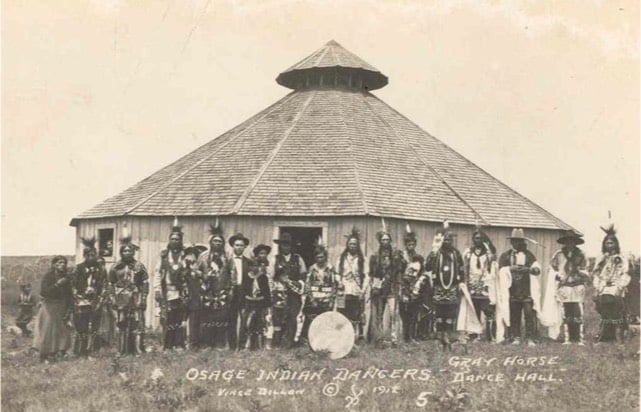
David Grann has been relatively quiet lately on Twitter and at the New Yorker, where he is a staff writer; he hasn’t written anything for them in more than four years. I figured he was busy writing a book and so he was. Killers of the Flower Moon: The Osage Murders and the Birth of the FBI is about the murders of the members of the Osage Indian Nation in the 1920s.
In the 1920s, the richest people per capita in the world were members of the Osage Indian Nation in Oklahoma. After oil was discovered beneath their land, the Osage rode in chauffeured automobiles, built mansions, and sent their children to study in Europe.
Then, one by one, they began to be killed off. One Osage woman, Mollie Burkhart, watched as her family was murdered. Her older sister was shot. Her mother was then slowly poisoned. And it was just the beginning, as more Osage began to die under mysterious circumstances.
Sounds fantastic. Grann’s previous books are The Devil and Sherlock Holmes and The Lost City of Z, which should be out in movie form sometime soon.
Hollywood movies: too much fan service
In his latest video, Evan Puschak argues that intertextuality in movies — you know, fan service: “hey look, that thing you know from the previous thing!” — is increasingly doing the heavy lifting of creating drama and excitement, resulting in weaker stories.
I loved seeing the Millennium Falcon for the first time in The Force Awakens, the use of the original Jurassic Park vehicles in Jurassic World, and hearing Dumbledore’s name in the trailer for Fantastic Beasts and Where to Find Them, but yeah, those things have to be the cherry on top of good storytelling elements, not the whole sundae.
Neanderthal-built structures found in French cave are astonishingly old

In the 90s, Bruniquel Cave was discovered to have a chamber containing an interesting human-built structure made from broken stalagmites. Carbon dating of a burnt bear bone within the chamber put the age of the activity at 47,600 years ago, smack dab in the Neanderthal era in that area. But recently, after a lull in research about these cave structures, analysis of uranium levels in the broken stalagmites resulted in a much older date for the construction: 176,500 years ago.
Nor is it clear how the Neanderthals made the structures. Verheyden says it couldn’t have been one lone artisan, toiling away in the dark. Most likely, there was a team, and a technically skilled one at that. They broke rocks deliberately, and arranged them precisely. They used fire, too. More than 120 fragments have red and black streaks that aren’t found elsewhere in the chamber or the cave beyond. They were the result of deliberately applied heat, at intensities strong enough to occasionally crack the rock. “The Neanderthal group responsible for these constructions had a level of social organization that was more complex than previously thought,” the team writes.
American white male anxiety
In Trump Taps Into the Anxiety of American White Males, Anand Giridharadas writes:
Yet there is some evidence that a sizable number of white men see the push toward diversity, along with the larger changes it telegraphs, as less about joining and more about replacement, and a country that is less hospitable to them.
That sentiment is perhaps expressed in a quote widely circulated online in these discussions, though the origin is unknown: “When you’re accustomed to privilege, equality feels like oppression.”
This is perhaps what Tyler Cowen was getting at with his highly speculative and provocative What the hell is going on?
The contemporary world is not very well built for a large chunk of males. The nature of current service jobs, coddled class time and homework-intensive schooling, a feminized culture allergic to most forms of violence, post-feminist gender relations, and egalitarian semi-cosmopolitanism just don’t sit well with many…what shall I call them? Brutes?
Quite simply, there are many people who don’t like it when the world becomes nicer. They do less well with nice. And they respond by in turn behaving less nicely, if only in their voting behavior and perhaps their internet harassment as well.
I wouldn’t recommend it, but a spin through the comments on Cowen’s piece provides some examples of what he’s talking about.
Tesla Model X beats sports car while towing another car
If you skip to around 3:15 in this video, you’ll see a race between the Tesla Model X, the company’s electric SUV, and an Alfa Romeo 4C Spider sports car. The Model X easily beats the Alfa Romeo to 60 mph while towing another Alfa Romeo 4C Spider behind it. Here’s Keanu with a comment: “Whoa.” How can you not love a car outfitted with something called Ludicrous Mode? (via a proud @elonmusk)
Satellite imagery search engine
Terrapattern is a search engine for satellite images. You click on a specific feature of interest on a map and the site returns results that match it. For instance, here are the locations of solar panels in NYC.

You can also use Terrapattern to find school bus depots, fracking wells, Air Force bombers, baseball diamonds, train tracks, and much more.
There are only four cities currently represented (Pittsburgh, New York, San Francisco, and Detroit) but this is already super cool to play around with. (via @genmon)
This Sliding Door Sounds Like a Screaming R2-D2
My therapist and I have yet to figure out why, but I have a soft spot for objects that do unexpected impressions of other things and people. Like this sliding door that sounds like R2-D2 screaming. Or the falling shovel that plays Smells Like Teen Spirit. Or the door that can do a wicked Miles Davis impression. Or the nightstand door that sounds like Chewbacca. I even found one of my own a few months ago: the elevator door at the old Buzzfeed office sounded like Chewbacca as well. (via @williamlubelski)
Update: Here’s a video full of things that sound like Chewbacca.
Live reading of the terms of service for apps

In the latest Slow TV experiment, the Norwegian Consumer Council is doing a live read of the terms of service for a number of different apps, including Instagram, YouTube, Kindle, Spotify, and Snapchat. It’s in Norwegian and it looks like they’re on the last app, but the total time elapsed so far is 1 day, 7 hours, 49 minutes. (via @Rudien)
Update: The live reading is over, and there was wide variation in reading times. The iTunes TOS took almost 200 minutes to read while those for an app called Vipps took only 3 minutes. The terms for Candy Crush, which is just a game, took more than an hour and a half to read aloud. Absurd.
Demonstration of a working Gutenberg printing press
The Crandall Historical Printing Museum has the “most complete and functioning Gutenberg Press in the world” and in this video you can see one of the museum’s guides demonstrating it for some visitors. (via digg)
The 100 greatest American films
In 2015, BBC Culture polled critics around the world and came up with a list of the best 100 American films. The video above offers a visual look at the list. Hitchcock, Kubrick, and Spielberg each have several films on the list. Although many of the films were edited by women, only one was directed by a woman.
13 books recommended by Ta-Nehisi Coates
In a conversation last year with Nikole Hannah-Jones, Ta-Nehisi Coates recommended that readers of his acclaimed Between the World and Me check out a baker’s dozen other books, including his mentor David Carr’s The Night of the Gun, The Half Has Never Been Told (previously mentioned here), and James Baldwin’s The Fire Next Time.
I could have imagined Isabel Wilkerson’s excellent The Warmth of Other Suns on this list too; it’s the most eye-opening American history book I’ve read in years. (Paging Lin-Manuel Miranda to make a play out of this.)
A rare live performance of Creep by Radiohead
Creep is perhaps Radiohead’s best known song, especially in the US. But the band is a bit ashamed of it, so they don’t play it all that often. They played it last night at a show in Paris for the first time since 2009. When I saw them in 2001, they played it for the first time since 1998 (and it was awesome).
There’s a certain point in everyone’s life when they’re unable to appreciate their younger selves. Between this and putting True Love Waits on their latest album, perhaps Radiohead has become more accepting of the band they used to be. The genie’s out of the bottle, mates, you might as well use the wishes.
How highways wrecked American cities
As part of the Interstate Highway System project, expressways were run right through the heart of many American cities, disrupting neighborhoods and displacing hundreds of thousands of people.
The 48,000 miles of interstate highway that would be paved across the country during the 1950s, ’60s, and ’70s were a godsend for many rural communities. But those highways also gutted many cities, with whole neighborhoods torn down or isolated by huge interchanges and wide ribbons of asphalt. Wealthier residents fled to the suburbs, using the highways to commute back in by car. That drained the cities’ tax bases and hastened their decline.
So why did cities help build the expressways that would so profoundly decimate them? The answer involves a mix of self-interested industry groups, design choices made by people far away, a lack of municipal foresight, and outright institutional racism.
Here’s some homework: think about Uber/Lyft and the coming self-driving cars (Tesla, Apple, Google, Ford, etc.) in the context of the highways’ effect on the American city. Who benefits most from these services? (The wealthy? Huge companies?) How will they affect the funding and use of public transportation? What will happen to cities? To urban sprawl? To the economically disadvantaged?
Guns replaced with selfie sticks
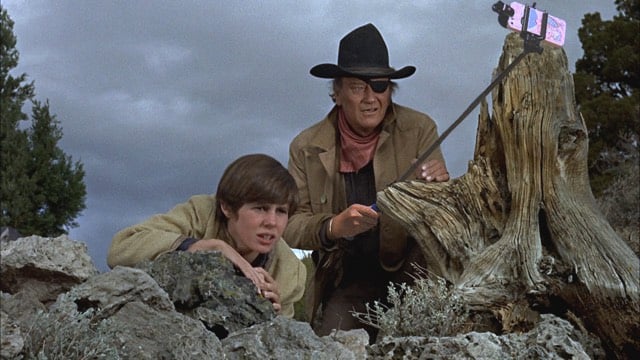
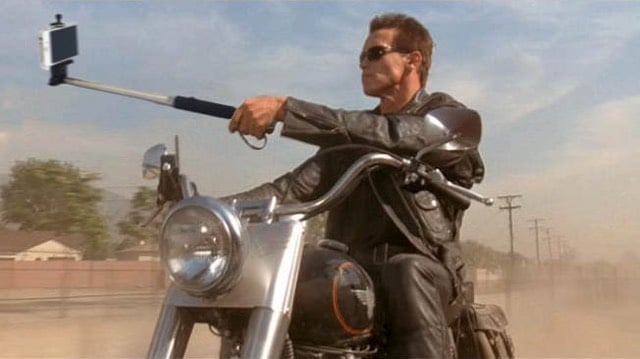
The John Wayne one made me LOL. Many more here. See also Matt Haughey’s conservatives holding dildos.
Update: Some prior art, also from Matt, who loves to Photoshop guns into other things.
Bill Gates’ summer reading list
Microsoft founder Bill Gates, in addition to attempting to save the world, is also a voracious reader. He recently recommended five books that you should read this summer. On the list is Seveneves by Neal Stephenson, which I might finally try, having absolutely loved Snow Crash and Cryptonomicon when I read them a few years ago. Gates also recommends Yuval Noah Harari’s Sapiens, which I read earlier this year and think about every few days. I wrote a bit about Sapiens and the invention of farming, which is a topic about which Gates disagreed with Harari.
Things both the world’s most and least privileged people say. “My children aren’t vaccinated!”
A robotic rocks sorter
Jller is a machine that sorts stones from a specific river according to their geologic age.
The machine works with a computer vision system that processes the images of the stones and maps each of its location on the platform throughout the ordering process. The information extracted from each stone are dominant color, color composition, and histograms of structural features such as lines, layers, patterns, grain, and surface texture. This data is used to assign the stones into predefined categories.
See also the robotic pancake sorter. (via colossal)
The Simpsons couch gag in the style of an Ikea instruction manual
The couch gag on last night Simpsons episode was illustrated in the style of an Ikea instruction manual. See also the Ikea instructions for making Dick in the Box.
Drive 2: The Uber Years
In Drive 2, Ryan Gosling trades his robbery getaway driving gig for driving for Uber.
Hyper-Reality
Keiichi Matsuda’s Hyper-Reality “presents a provocative and kaleidoscopic new vision of the future, where physical and virtual realities have merged, and the city is saturated in media”. This is like a 5-minute episode of Black Mirror. Do not want. See also these previous videos about augmented reality overload, including an earlier video by Matsuda.
Captain America: Hamilton’s Federalists vs. the Jeffersonian Republicans
I was just thinking about Hamilton1 and Captain America: Civil War, two of pop culture’s current obsessions, and thought, hmm, what if you made a superhero movie about the early years of American democracy? And then I quickly realized that Civil War in some ways echoes the political battle between Hamilton’s Federalists and Jeffersonian Republicans.
In the film (or at least the first part of it), Tony Stark is a Federalist; he realizes the need for regulation and oversight of the Avengers by the government. Captain America is a Republican; he believes in the rights of the smaller group (states’ rights!) and that regulation comes at the cost of essential freedoms. Karen Walsh wrote much more about the parallels between the two.
Captain America: Civil War begins with a focus on the Sokovia Accords. As the Avengers split into two groups, Iron Man and his cronies focus on granting the Accords validity in order to remain a unified front and gain popular trust. Cap and his cohorts determine that sacrificing their freedom to the government allows for errors that overshadow the purpose of their ability to protect the people who most need them.
In essence, Iron Man and his team represent the Federalist belief that a strong central government is essential to aggregating the trust and the will of the people.
Update: Two more takes on the parallels between Hamilton and Captain America: Captain America, Aaron Burr, And The Politics Of Killing Your Friends and Best of Frenemies. (via @Chan_ing)
The play, not the man so much. The play that I’m not going to get a chance to see before [EVENT HAPPENS] without splashing out an impossible amount of cash. Has anyone written a script for entering the Hamilton ticket lottery yet?↩
In a game of big words, brevity triumphs
If you love reading about unusual Moneyball-esque strategies in sports, check out how a player on the Nigerian team won the Scrabble World Championship last year.
So while Scrabblers still fancy bingos, they increasingly hold off on other high-scoring moves, such as six-letter words, or seven-letter terms that only use six tiles from the rack. Instead, by spelling four- or five-letter words, a player can keep their most useful tiles — like E-D or I-N-G — for the next round, a strategy called rack management. The Nigerians rehearse it during dayslong scrimmage sessions.
Also, thanks to a design quirk, the board is oddly generous to short words. Most of the bonus squares are just four or five letters apart.
“The geometry of the Scrabble board rewards five-letter words,” said Mr. Mackay, who lost to Mr. Jighere in the world championship final, during which the Nigerian nabbed a triple word score with the antiquated adjective KATTI, meaning “spiteful.” “It’s a smart tactic.”
Woman is enraptured with talking Chewbacca mask
This woman in the talking Chewbacca mask is really feeling her Friday. FRIDAY!!! She’s not making the noise, the mask is! Get your own mask here and have your own fun. (It’s been a long week. This was delightful.)
Socials & More