

The top 10 film/TV title sequences of 2014
From the excellent Art of the Title (which had a great year), the top 10 title sequences of 2014. So awesome to see Halt and Catch Fire take the top spot. And Too Many Cooks!

This site is made possible by member support. 💞
Big thanks to Arcustech for hosting the site and offering amazing tech support.
When you buy through links on kottke.org, I may earn an affiliate commission. Thanks for supporting the site!
kottke.org. home of fine hypertext products since 1998.
Beloved by 86.47% of the web.
From the excellent Art of the Title (which had a great year), the top 10 title sequences of 2014. So awesome to see Halt and Catch Fire take the top spot. And Too Many Cooks!
Wonderful piece on Laura Hillenbrand, author of Seabiscuit and Unbroken. Hillenbrand has suffered from chronic fatigue syndrome for more than 25 years and can barely leave her own house, but she has turned her illness into an advantage in some ways.
Somehow, through the dizziness and disorientation, Hillenbrand has managed to produce two of the most critically and commercially successful nonfiction books in recent decades. “Seabiscuit” and “Unbroken” have together sold more than 10 million copies, and the hardcover edition of “Unbroken” remained on The Times’s best-seller list for 185 continuous weeks, which by some accounts is the fourth-longest reign of all time. In fact, the hardcover was so successful that Hillenbrand’s publisher, Random House, waited nearly four years before releasing a paperback edition this summer; since then, the paperback has held the top position on The Times’s list every week except one. Sallye Leventhal, the book buyer for history and politics at Barnes & Noble, told me that Hillenbrand’s commercial success is unparalleled. “There are other phenomenal best sellers, but not this phenomenal,” she said. “Not with this velocity, year after year after year.”
What’s startling to consider is that Hillenbrand has done this with little access to the outside world. She is cut off not only from basic tools of reporting, like going places and seeing things, but also from all the promotional machinery of modern book selling. Because of the illness, she is forced to remain as secluded from the public as the great hermetic novelists. She cannot attend literary festivals, deliver bookstore readings or give library talks and signings. Even the physical act of writing can occasionally stymie her, as the room spins and her brain swims to find words in a cognitive haze. There have been weeks and months — indeed, sometimes years — when the mere effort to lift her hands and write has been all that she can muster. “In the middle of working on ‘Unbroken,’” she told me, “I went just off a cliff and became very suddenly totally bedridden — I didn’t get out of the house for two years.” To function as an author, Hillenbrand has been forced to develop a unique creative process. Everything in her working life is organized around the illness: the way she reads, the way she thinks about language, even the way she describes familiar places. When Hillenbrand writes about the “rough, rasping tremor” of the Pacific and the “smoky brown oval” of Pimlico, her readers feel closer to the ocean and the racetrack than Hillenbrand is ever likely to be again.
After you read that, check out Hillenbrand’s piece on her illness written for the New Yorker in 2003.
You’ve probably seen many of these images pop up on FB and Twitter this year. And they are amazing! But actually totally fake!
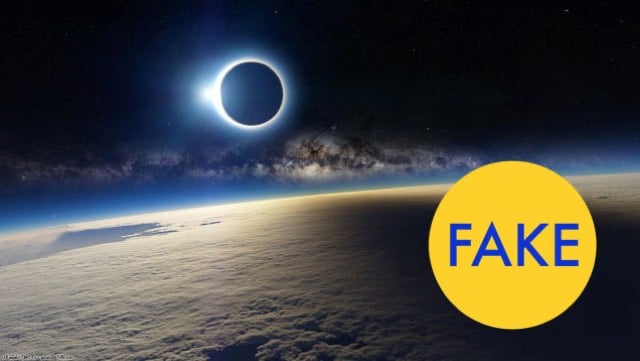
No, this isn’t a solar eclipse as seen from the International Space Station.
Space photo researcher @FakeAstropix keeps debunking this one, but it keeps popping up in every corner of the internet. Which is why it’s earned our top spot today. It’s actually a rendering from DeviantArt user A4size-ska. Beautiful, but totally fake.
Does “even if it’s fake it’s real” apply here? (via @john_overholt)
Quora is giving their best writers an interesting care package: an anthology of the site’s best writing from 2014.
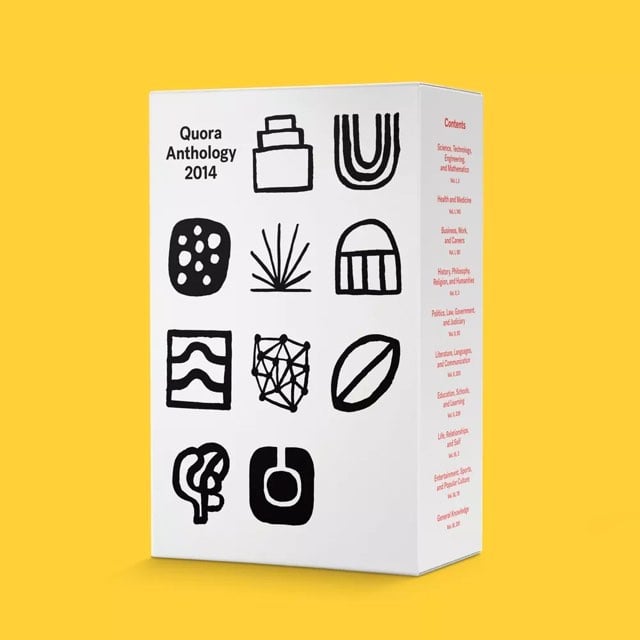
But why isn’t this an actual book that you can buy in stores, etc.? Seems like a great way to introduce the non-SV part of the world to Quora. (via @pieratt)
Software developer and free software advocate Richard Stallman lists several reasons why using Uber is not a good idea. Stallman is definitely a hardliner1, but I agree with several of his points here. (via hacker news)
Indeed, all iOS and Android apps run afoul of some of Stallman’s points, particularly those that use location services or store user data.↩
Richard Rhodes, who wrote two of my favorite nonfiction books ever (The Making of the Atomic Bomb and Dark Sun), is coming out with a new book in February. Hell and Good Company is a history of the Spanish Civil War.
The Spanish Civil War (1936-1939) inspired and haunted an extraordinary number of exceptional artists and writers, including Pablo Picasso, Joan Miro, Martha Gellhorn, Ernest Hemingway, George Orwell, and John Dos Passos. The idealism of the cause-defending democracy from fascism at a time when Europe was darkening toward another world war-and the brutality of the conflict drew from them some of their best work: Guernica, For Whom the Bell Tolls, Homage to Catalonia, The Spanish Earth.
The war spurred breakthroughs in military and medical technology as well. New aircraft, new weapons, new tactics and strategy all emerged in the intense Spanish conflict. Indiscriminate destruction raining from the sky became a dreaded reality for the first time. Progress also arose from the horror: the doctors and nurses who volunteered to serve with the Spanish defenders devised major advances in battlefield surgery and front-line blood transfusion. In those ways, and in many others, the Spanish Civil War served as a test bed for World War II, and for the entire twentieth century.
Are you ready for a new level of discomfort in air travel? A major US airline is considering a seating class called Economy Minus, which would offer smaller seats at a lower price.
Now a major airline may be considering another breakthrough idea: “Economy Minus,” a seat that offers less legroom at a discount price.
Before you scoff, consider that a new survey found that 42% of airline travelers said they would be very likely or somewhat likely to book a seat with less legroom if it means getting a cheap fare.
See also Why Airlines Want to Make You Suffer. (A: maximizing shareholder value)
And now some potential good news about climate change. Efforts to restore the world’s rainforests have gained traction and are having small but definite effects on the amount of carbon dioxide in the atmosphere.
Over just a few decades in the mid-20th century, this small country chopped down a majority of its ancient forests. But after a huge conservation push and a wave of forest regrowth, trees now blanket more than half of Costa Rica.
Far to the south, the Amazon forest was once being quickly cleared to make way for farming, but Brazil has slowed the loss so much that it has done more than any other country to limit the emissions leading to global warming.
And on the other side of the world, in Indonesia, bold new promises have been made in the past few months to halt the rampant cutting of that country’s forests, backed by business interests with the clout to make it happen.
In the battle to limit the risks of climate change, it has been clear for decades that focusing on the world’s immense tropical forests — saving the ones that are left, and perhaps letting new ones grow — is the single most promising near-term strategy.
I wish Arbor Day was still a bigger thing. Parts of the US used to be covered by vast forests as well and an effort to encourage the planting of more trees might have an impact not only on our climate but also on the wellbeing of people. It might not seem like much in comparison to the Amazon rain forest, but planting millions of trees each year in the US, if you did it consistently over 20-25 years, would be a wonderful thing. (via @riondotnu)
Update: According to this publication by The Forest History Society, American forests are in better shape today than they’ve been in decades.
Today about one-third of the land area of the U.S. is forested. This is about two-thirds of the forest area that existed in 1600. The area of forestland today is about the same as it was in 1920.
The average volume of wood per acre in U.S. forests today is 50 percent greater than it was in 1953. In the eastern United States, average volume per acre has almost doubled since 1953.
(via @tieguy)
The end credits for The Boxtrolls, a stop motion animation film by Laika, is a clever time lapse sequence showing the work that goes into moving the characters. You can tell how long it takes by how often the animator’s outfit changes.
Christopher Jobson of Colossal writes:
I first saw Boxtrolls in the theater last September with my son, and this single scene caused a more vocal response from the audience than any other moment in the entire movie. People were literally gasping, myself included.
The Boxtrolls is already available for purchase on Amazon…might have to watch this with the kids soon.
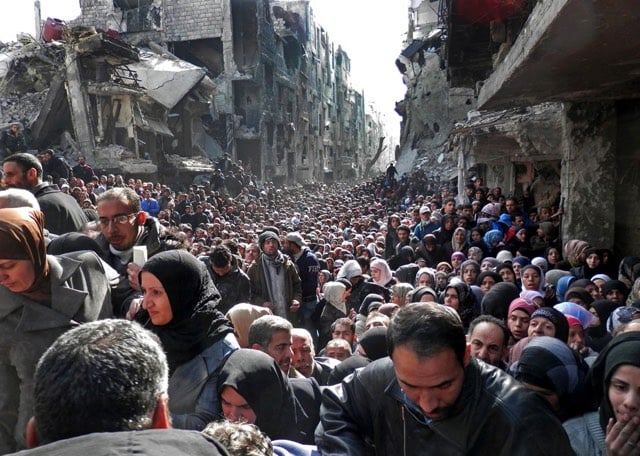

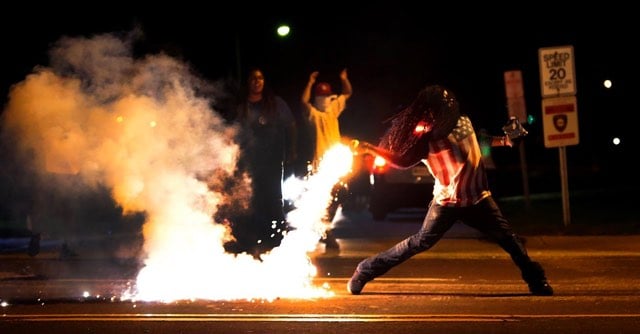
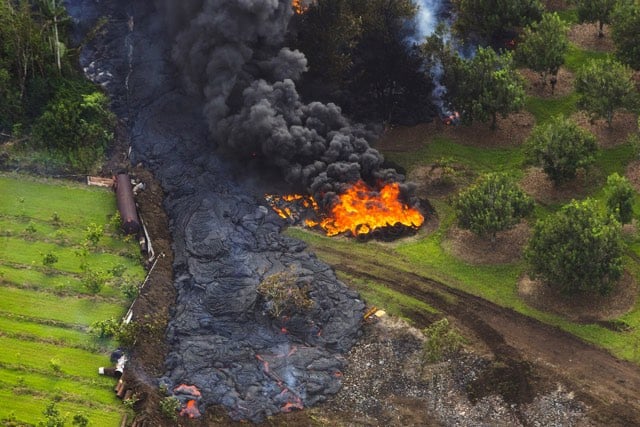
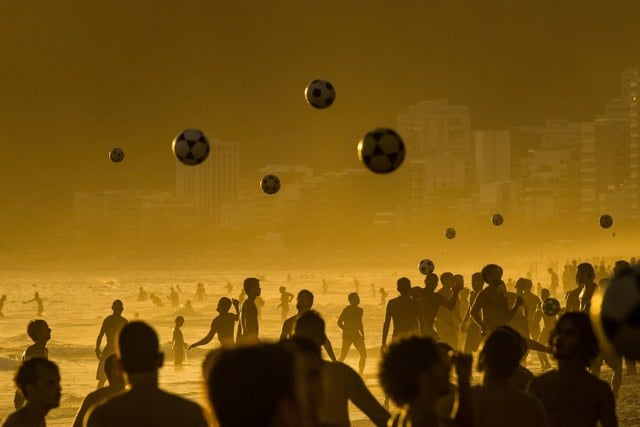

Photos by AP Photo/UNRWA, Justin Sullivan/Getty Images, Robert Cohen/MCT/St. Louis Post-Dispatch, Andrew Hara/Getty Images, Yasuyoshi Chiba/Agence France-Presse, and ESA/Rosetta/MPS for OSIRIS Team, respectively.
Many many more photos of the year at In Focus, Reuters, Buzzfeed, Agence France-Presse, the NY Times, Time, and The Big Picture.
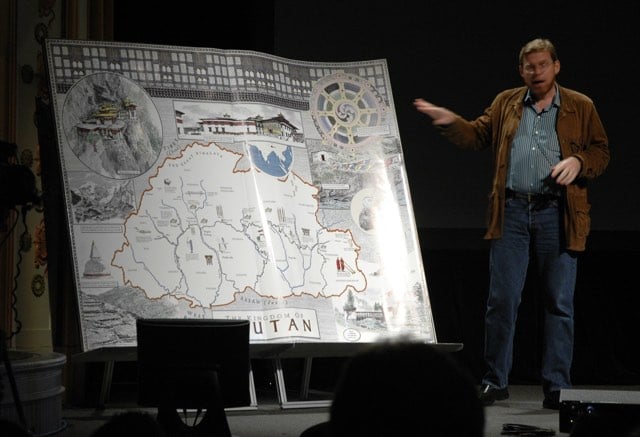
When I went to the Poptech conference 10 years ago, one of the talks featured one of the world’s largest books, a book of photographs of Bhutan. The book used to fetch $10,000 a copy, but Amazon now sells it for just under $300. Something is fishy though…many of the vendors selling the book are shipping it for only $3.99, which seems unlikely for a book that weighs 133 pounds. (via cory)
Update: Long story short, there were two versions of this book made: the big one and a smaller one that’s only a foot and a half tall. That Amazon link used to go to the big book but it’s the little one now. Make sense? Anyway, here’s a link to the big one if you want to buy it for $5,824.34 with free shipping. (thx everyone)
2014 was a year that humans treated each other horribly. But we continue to treat the natural world even worse. Living Alongside Wildlife has a list of 22 species of animal declared extinct in 2014, extending humanity’s long streak of causing plant and animal extinctions.
The last known Christmas Island Forest Skink (Emoia nativitatis) died alone in a zoo on May 31st, 2014. It is unknown why the species disappeared from its natural habitat of Christmas Island (an Australian territory) but invasive species may have played a key role.
The St. Helena Giant Earwig (Labidura herculeana) is extinct. This species is notable for being fairly large (over three inches) and was found on the island of St. Helena in the southern Atlantic Ocean.
Plectostoma sciaphilum was a snail that lived entirely on one Malaysian hill. A cement company wiped them all out.
Earlier this month, one of the last remaining northern white rhinos died; only 5 remain. The western black rhino was declared extinct in 2011, wiped out by poaching.
If you weren’t watching the new HD remaster of The Wire over the holidays, you may have been tuning in to Black Mirror on Netflix. Charlie Brooker’s dystopian sci-fi series was broadcast in Britain beginning in 2011 but only recently became available in the US on Netflix. Emily Nussbaum reviews the show for the New Yorker’s latest issue.
Still, for all the show’s inventive storytelling, its true provocation is its righteous outrage, which shares something with Mike White’s whistle-blower series “Enlightened,” although it’s overlaid with a dark filter. Like “Enlightened,” “Black Mirror” is about love in the time of global corporate hegemony. It’s a bleak fairy tale that doubles as an exposé. An anthology series, it consists of six one-hour episodes spanning two seasons (plus a Christmas special), each with a new story and a different cast. In various future settings, Brooker’s characters gaze into handhelds or at TV-walled cells, using torqued versions of modern devices. In one episode, a couple has sex while stupefied by virtual visions of earlier, better sex. In another, a woman builds a replica of her husband from his photos and posts on social media. In a third, workers watch streaming schlock and are docked points if they shut their eyes. Some plots deal with political terrorism (or performance art-on this show, there’s little difference) and the criminal-justice system; there are warped versions of reality TV. Though the episodes vary in tone, several have a Brechtian aggression: the viral video “Too Many Cooks” would fit right in. But, in even the most perverse installments, there’s a delicacy, a humane concern at how easily our private desires can be mined in the pursuit of profit. The worlds can be cartoonish, but the characters are not.
Like Nussbaum, I also watched the show “through occult means”1 and it’s fun hearing from friends who are catching up on it. Too bad the show couldn’t have found a way over here earlier.
Update: From Josh Dzieza at The Verge, I can’t stop comparing everything to Black Mirror:
A friend recently told me that his favorite thing about the show Black Mirror is that he finally has a term for a certain type of technological anxiety. It’s a type of anxiety that seemed everywhere this year. The Sony hack could have been an episode of Black Mirror, as could Gamergate. In the same way that we refer to Blade Runner as shorthand for gritty dystopian cityscapes, Gattaca for worries about corporate use of genetic information, and Terminator for ominously powerful AI, Black Mirror has become shorthand for a certain type of contemporary internet-age creepiness.
It’s interesting to hear the TV critic for the New Yorker all but admit to pirating shows off the internet.↩
Susan Schneider, professor of philosophy at UConn, is among those researchers and scientists who believe that the first alien beings we encounter will be “postbiological in nature”…aka robots.
“There’s an important distinction here from just ‘artificial intelligence’,” Schneider told me. “I’m not saying that we’re going to be running into IBM processors in outer space. In all likelihood, this intelligence will be way more sophisticated than anything humans can understand.”
The reason for all this has to do, primarily, with timescales. For starters, when it comes to alien intelligence, there’s what Schneider calls the “short window observation” — the notion that, by the time any society learns to transmit radio signals, they’re probably a hop-skip away from upgrading their own biology. It’s a twist on the belief popularized by Ray Kurzweil that humanity’s own post-biological future is near at hand.
“As soon as a civilization invents radio, they’re within fifty years of computers, then, probably, only another fifty to a hundred years from inventing AI,” Shostak said. “At that point, soft, squishy brains become an outdated model.”
To use Elon Musk’s language, biological beings would be a “biological boot loader for digital superintelligence”. Schneider’s full paper on the topic is here: Alien Minds.
Hiro teaching Baymax how to fist bump in Big Hero 6.
Update: Jason Porath smartly speculates that Big Hero 6’s fist bump scene was a social media snack sized moment inserted into the movie for marketing purposes, which is part of a larger industry trend.
I don’t have a good word to describe this phenomenon, so I’m going to term it “hashgags.” This is a joke in an animated movie, usually input at the behest of marketing forces, that is used to sell the movie. It’s usually inserted late into production and test screened to within an inch of its life. Some are used repeatedly, some are one-offs that do well with trailers. And it is crippling the entire industry.
The Pew Research Center shares some of the most interesting findings from the reports they published in 2014. The increasing gap in wealth between white and non-white households since the 2007 recession was the most shocking to me.
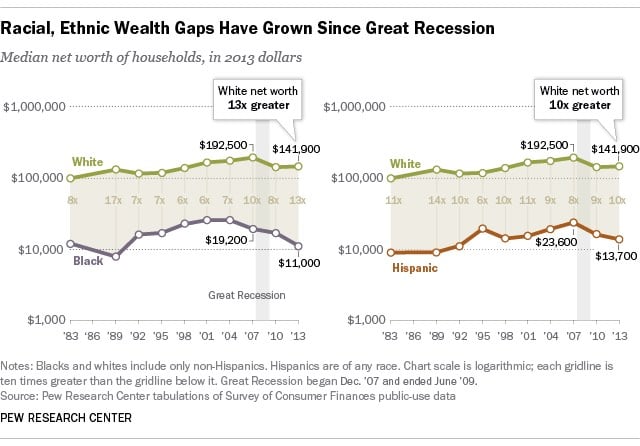
Over the past 10 years, the net worth of black households has been cut in half.
A project called Maximum Distance. Minimum Displacement. analyzed the lyrics of several popular rappers for geographical mentions and had an industrial robot draw each rapper’s lyrical journey through the world. At a glance, you can see how worldly (N***as in Paris) or locally oriented (Straight Outta Compton) each rapper is. Compare world-traveller Jay Z:

with Kendrick Lamar:
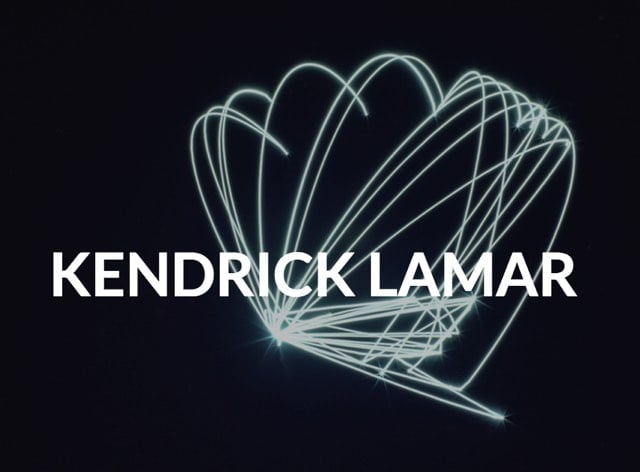
Kendrick Lamar’s analysis is culled from the lyrics of his underground & independent albums and is heavy with Compton references. Over the next few years it will be interesting to see how mainstream successes and personal experience change the travel of his lyrics.
Kazuo Ishiguro wrote his excellent novel, The Remains of the Day, in only four weeks (more or less).
So Lorna and I came up with a plan. I would, for a four-week period, ruthlessly clear my diary and go on what we somewhat mysteriously called a “Crash”. During the Crash, I would do nothing but write from 9am to 10.30pm, Monday through Saturday. I’d get one hour off for lunch and two for dinner. I’d not see, let alone answer, any mail, and would not go near the phone. No one would come to the house. Lorna, despite her own busy schedule, would for this period do my share of the cooking and housework. In this way, so we hoped, I’d not only complete more work quantitively, but reach a mental state in which my fictional world was more real to me than the actual one.
If you’ve read The Hobbit and the Lord of the Rings trilogy (and/or watched the movies1) but didn’t delve into the appendices or, shudder, The Silmarillion, this is the video for you. It explains about the Gods who created Middle Earth, what wizards are (not men, but angels), and the specialness of Men and Elves.
I saw all three of The Hobbit movies and the last one really isn’t worth watching. Jackson never gets close to making us care about Thorin or the dwarves. Bilbo, played wonderfully by Martin Freeman, should have been the focus…which he was, to a greater extent, in the second movie (which was the best of the three by a wide margin). The problem is, The Hobbit isn’t so much a story about Bilbo as it is a story told *by* Bilbo. Anyway. ↩
From Every Frame a Painting, an appreciation of Jackie Chan and his particular and excellent brand of action comedy.
I love old Jackie Chan movies. When I lived in Minneapolis, a theater there showed them on Saturday nights, late. Drunken Master II is a particular favorite…the final fight scene is AMAZING. The part about how the camera never moves and shoots wide-angle during his scenes is why action in contemporary Hollywood films leaves me yawning.
From the New Yorker’s Vauhini Vara, four charts that defined the world in 2014.
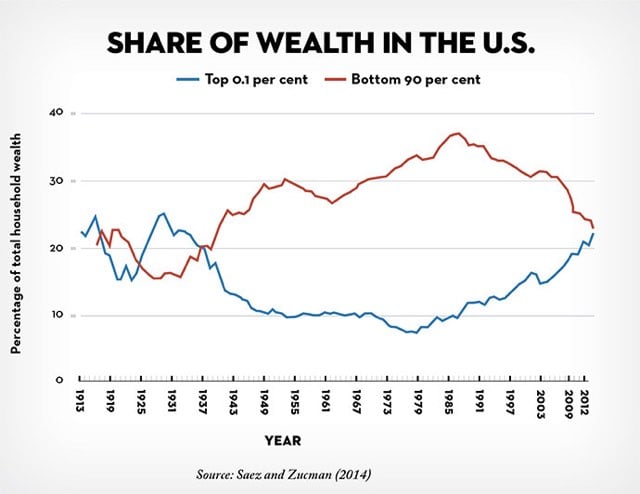
One of the most talked-about charts of the year, tucked inside a National Bureau of Economic Research working paper published in October by the economists Emmanuel Saez and Gabriel Zucman, isn’t, strictly speaking, about 2014. The chart stops in 2012, which is the last year for which relevant data was available. Saez and Zucman found that wealth in the U.S. has been distributed increasingly unequally over the past three decades, and that almost the entire increase in inequality has to do with the rising share of wealth held by the 0.1 per cent — from seven per cent, in 1978, to twenty-two per cent, in 2012, a level comparable to what the richest families held in the early twentieth century.
So, if the trend held over the past two years, the top 0.1% of Americans have more wealth than the bottom 90% for the first time since right before WWII. When that data comes out, we’ll see a ton of think- and trend-pieces about it…but unless the US government gets serious about redistributing that wealth, not much will be done about it.
Update: From Co.Design, The 18 Best Infographics Of 2014. And on Medium, Eleven Stunning Graphs From 2014 That You Should See.
io9 collected a bunch of the most amazing science images of 2014. I posted several of these this year, including the monkey selfie, the marble harvesting video, the volcanic blast, the giant red leech eating a worm, feather vs. bowling ball in a vacuum, and beautiful chemistry. One they missed that I would have included: 4K time lapse video of the Sun.
As a young graduate student, Brian Greene caught the very beginning of the superstring revolution in physics. 30 years later, Greene provides an accessible overview of string theory’s current status.
While spectacularly successful at predicting the behavior of atoms and subatomic particles, the quantum laws looked askance at Einstein’s formulation of gravity. This set the stage for more than a half-century of despair as physicists valiantly struggled, but repeatedly failed, to meld general relativity and quantum mechanics, the laws of the large and small, into a single all-encompassing description.
Such was the case until December 1984, when John Schwarz, of the California Institute of Technology, and Michael Green, then at Queen Mary College, published a once-in-a-generation paper showing that string theory could overcome the mathematical antagonism between general relativity and quantum mechanics, clearing a path that seemed destined to reach the unified theory.
The idea underlying string unification is as simple as it is seductive. Since the early 20th century, nature’s fundamental constituents have been modeled as indivisible particles-the most familiar being electrons, quarks and neutrinos-that can be pictured as infinitesimal dots devoid of internal machinery. String theory challenges this by proposing that at the heart of every particle is a tiny, vibrating string-like filament. And, according to the theory, the differences between one particle and another — their masses, electric charges and, more esoterically, their spin and nuclear properties — all arise from differences in how their internal strings vibrate.

When I first saw it during the magical movie year of 1999, Hayao Miyazaki’s Princess Mononoke completely blew me away. Now that it’s (finally!) out on Blu-ray1, I can’t wait to see it again. Bonus: the ability to watch in the original Japanese with English subtitles.
Who out there is still buying Blu-ray? I buy one occasionally but only when I really really care about the picture quality. Otherwise, streaming off of Amazon, iTunes, or Netflix is fine. ↩
It is nearly inconceivable how small we are in comparison to the size of the universe, but this video may make it a little less inconceivable. Do you know that the Sun is tiny compared to some other stars?
The first part of this video, the bit with the molten sugar and cooling table, is the most interesting, but the whole thing is worth a watch.
Reminds me of the lettered rock made at Teddy Grays.
A major study conducted by the Harvard School of Public Health has found a significant link between autism and the exposure of the mother to high levels of air pollution during the third trimester of pregnancy.
Researchers focused on 1,767 children born from 1990 to 2002, including 245 diagnosed with autism. The design of the study and the results rule out many confounding measures that can create a bias, Weisskopf said. The researchers took into account socioeconomic factors that can influence exposure to pollution or play a role in whether a child is diagnosed with autism.
The fact that pollution caused problems only during pregnancy strengthened the findings, since it’s unlikely other factors would have changed markedly before or after those nine months, he said in a telephone interview.
The ultimate cause of autism remains a mystery in most cases, said Charis Eng, chairwoman of the Lerner Research Institute’s Genomic Medicine Institute at the Cleveland Clinic in Ohio. While the Harvard study isn’t definitive and the findings could be coincidental, it’s not likely given the large size and the precise results, she said in a telephone interview.
“The truth is there has to be gene and environmental interactions,” said Eng, who wasn’t involved in the study. “I suspect the fetus already had the weak autism spectrum disorder genes, and then the genes and the environment interacted.”
It would be a huge help (and I am not in any way being facetious about this) if Jenny McCarthy and all the other celebrity “vaccines cause autism” folks threw their weight behind cleaning up pollution the way they attacked vaccination. Redeem yourselves. (via @john_overholt)
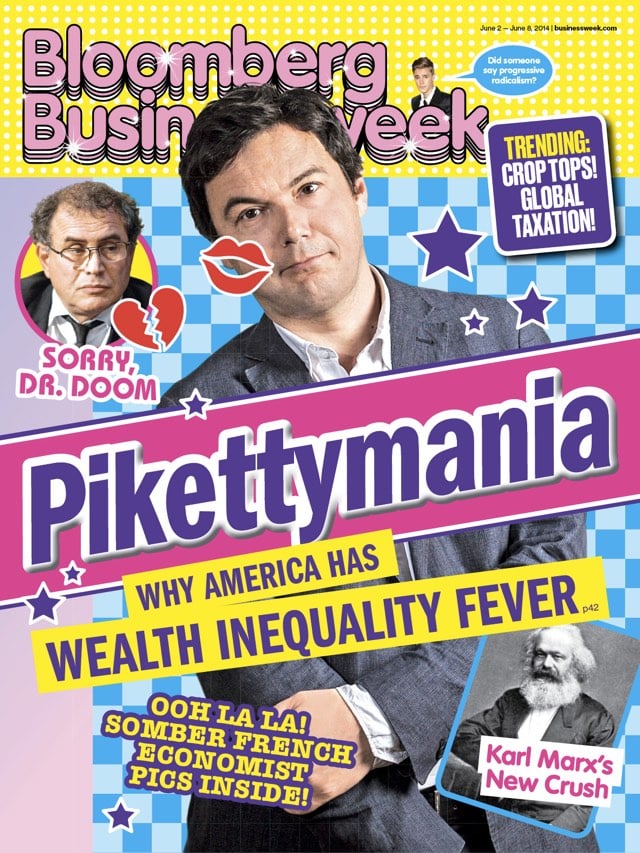
The picks for the finest magazine covers of the year are starting to trickle out. Coverjunkie is running a reader poll to pick the most creative cover of 2014. Folio didn’t pick individual covers but honored publications that consistently delivered memorable covers throughout the year; no surprise that The New York Times Magazine and Bloomberg Businessweek were at the top of the heap.
See also the best book covers of 2014.
From Mallory Ortberg, some reviews of children’s movies penned by objectivist Ayn Rand.
“Mary Poppins”
A woman takes a job with a wealthy family without asking for money in exchange for her services. An absurd premise. Later, her employer leaves a lucrative career in banking in order to play a children’s game. -No stars.
During the production of 2001: A Space Odyssey, Stanley Kubrick commissioned well-known film score composer Alex North to do the score for the film. North had previously done scores for A Streetcar Named Desire, Spartacus, Cleopatra, and Who’s Afraid of Virginia Woolf? and later received an honorary Oscar for his lifetime of work. As production progressed, Kubrick began to feel that the temporary music he used to edit the film was more appropriate. From an interview with Kubrick by Michel Ciment:
However good our best film composers may be, they are not a Beethoven, a Mozart or a Brahms. Why use music which is less good when there is such a multitude of great orchestral music available from the past and from our own time? When you’re editing a film, it’s very helpful to be able to try out different pieces of music to see how they work with the scene. This is not at all an uncommon practice. Well, with a little more care and thought, these temporary music tracks can become the final score. When I had completed the editing of 2001: A Space Odyssey, I had laid in temporary music tracks for almost all of the music which was eventually used in the film. Then, in the normal way, I engaged the services of a distinguished film composer to write the score. Although he and I went over the picture very carefully, and he listened to these temporary tracks (Strauss, Ligeti, Khatchaturian) and agreed that they worked fine and would serve as a guide to the musical objectives of each sequence he, nevertheless, wrote and recorded a score which could not have been more alien to the music we had listened to, and much more serious than that, a score which, in my opinion, was completely inadequate for the film.
And so the temporary music became the iconic score we know today. For comparison, the embedded video shows how North’s original score would have sounded over the opening credits and initial scene.
Selections from North’s original score were later released publicly. Here’s a 38-minute album on Spotify:
Kubrick was absolutely right to ditch North’s score…it’s perfectly fine music but totally wrong for the movie, not to mention it sounds totally dated today. The classical score gives the film a timeless quality, adding to the film’s appeal and reputation more than 45 years later. (via @UnlikelyWorlds)
Update: Two additional facets to this story. North first learned that Kubrick ditched his score at the NYC premiere of the film; he was reportedly (and understandably) “devastated”. And even when Kubrick was artistically satisfied with the music he chose, negotiations to procure the rights weren’t necessarily smooth.
2) Kubrick’s associates did obtain licenses from Ligeti’s publishers and from record and radio companies, although they were not forthcoming about the pivotal role assigned to the music in the film; 3) Ligeti learned about the use of his music not from his publishers but from members of the Bavarian Radio Chorus; 4) he attended a showing of the film with stopwatch in hand, furiously scribbling down timings — thirty-two minutes in all;
Kubrick was undoubtably of the “shoot first, ask questions later” school of negotiation. (via @timrosenberg)
There’s no blue pigment present in the wings of the morpho butterfly. So where does that shimmering brilliant blue color come from? It’s an instance of structural color, where the physical structure of the surface scatters or refracts only certain wavelengths of light…in this case, blue.
Eye color is another example of structural color in action. Eyes contain brown pigments but not blue. Blue, green, and hazel eyes are caused by Rayleigh scattering, the same phenomenon responsible for blue skies and red sunsets. Blue eyes and blue skies arise from the same optical process…that’s almost poetic. (thx, jared)
An exhibition by Danny Lyon of color photos he took in the NYC subway is being staged by the MTA. The photos have never been publicly shown before.


The trains shown in these two photos still run occasionally: just catch the M between 2nd Ave and Queens Plaza between 10am and 5pm on the two remaining Sundays in Dec.
The Kingdom of Dreams and Madness is a documentary which presents a year in the life of Studio Ghibli and its famed director, Hayao Miyazaki. The year in question was a particularly interesting one during which Miyazaki announced his retirement. The trailer:
Granted near-unfettered access to the notoriously insular Studio Ghibli, director Mami Sunada follows the three men who are the lifeblood of Ghibli — the eminent director Hayao Miyazaki, the producer Toshio Suzuki, and the elusive and influential “other director” Isao Takahata — over the course of a year as the studio rushes to complete two films, Miyazaki’s The Wind Rises and Takahata’s The Tale of The Princess Kaguya. The result is a rare “fly on the wall” glimpse of the inner workings of one of the world’s most celebrated animation studios, and an insight into the dreams, passion and singular dedication of these remarkable creators.
(via @garymross)
Update: The Kingdom of Dreams and Madness is now available for rent/buy on Amazon and iTunes.
Somehow I didn’t know that Zoolander (which Terrence Malick and I both love and Roger Ebert hated) began as a short clip Ben Stiller did for the 1996 VH1 Fashion Awards.
(via the dissolve)
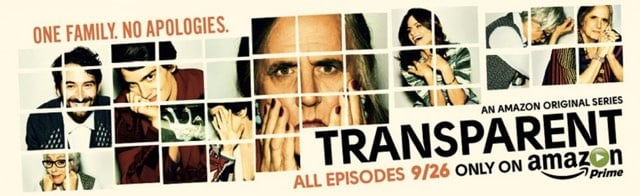
I’m adding mine to the chorus of voices praising Transparent, the Amazon Original Series starring Jeffrey Tambor, aka Arrested Development’s Pop Pop. Tambor plays a retired college professor who is transitioning to living as a woman. Each episode is 30 minutes long and the pacing is sitcom-like, but the show is equally comedic and dramatic. The show started off kind of slow for me but got better and better as the season went on. Here’s a trailer.
The first episode is free to watch but for the rest you’ll need an Amazon Prime subscription1 (for which they offer a 30-day trial). Highly recommended, Tambor is amazing. Oh, and they’re doing a second season.
I wonder how effective this tactic is in driving new Prime subscriptions. It’s weird that you can’t just buy the whole season of the show for $20 or something. I would love to see their internal analysis of how much revenue each Prime member brings in over X number of years versus potential lost revenue from direct sales by non-members. ↩
The soundtrack for PT Anderson’s Inherent Vice is now on Spotify, well all except for one song. The album is even more partially on Rdio. For the whole thing, you’ll have to head to Amazon.
The fifth track, Spooks, is a variation of a Radiohead song that’s never been officially released. (via @naserca)
Legal scholar Cass Sunstein presents his annual list of the movies that best showcased behavioral economics for 2014.
Best actor: In 1986, behavioral scientists Daniel Kahneman and Dale Miller developed “norm theory,” which suggests that humans engage in a lot of counterfactual thinking: We evaluate our experiences by asking about what might have happened instead. If you miss a train by two minutes, you’re likely to be more upset than if you miss it by an hour, and if you finish second in some competition, you might well be less happy than if you had come in third.
“Edge of Tomorrow” spends every one of its 113 minutes on norm theory. It’s all about counterfactuals — how small differences in people’s actions produce big changes, at least for those privileged to relive life again (and again, and again). Tom Cruise doesn’t get many awards these days, or a lot of respect, and we’re a bit terrified to say this — but imagine how terrible we’d feel if we didn’t: The Top Gun wins the Becon.
(via @tylercowen)
Mobile devices and software advances have helped to create a burgeoning on-demand economy that — in some places — makes it possible to live your life without leaving your house (and if you do decide to leave, it’s easy to order a car). But that’s only part of the story. In Quartz, Leo Mirani explains how he experienced the on-demand economy long before tech revolution:
These luxuries are not new. I took advantage of them long before Uber became a verb, before the world saw the first iPhone in 2007, even before the first submarine fibre-optic cable landed on our shores in 1997. In my hometown of Mumbai, we have had many of these conveniences for at least as long as we have had landlines — and some even earlier than that. It did not take technology to spur the on-demand economy. It took masses of poor people.
Following in the footsteps of Too Many Cooks is Unedited Footage of a Bear. It aired for the first time on Adult Swim this week in their 4am infomercial slot. It starts off as a nature thing with a bear which is interrupted by a fake infomercial and then. Gets. WEIRD.
Update: Adult Swim has a site set up for Claridryl. There might be some answers there to some questions you might have? About stuff? (via devour & @veganstraightedge)
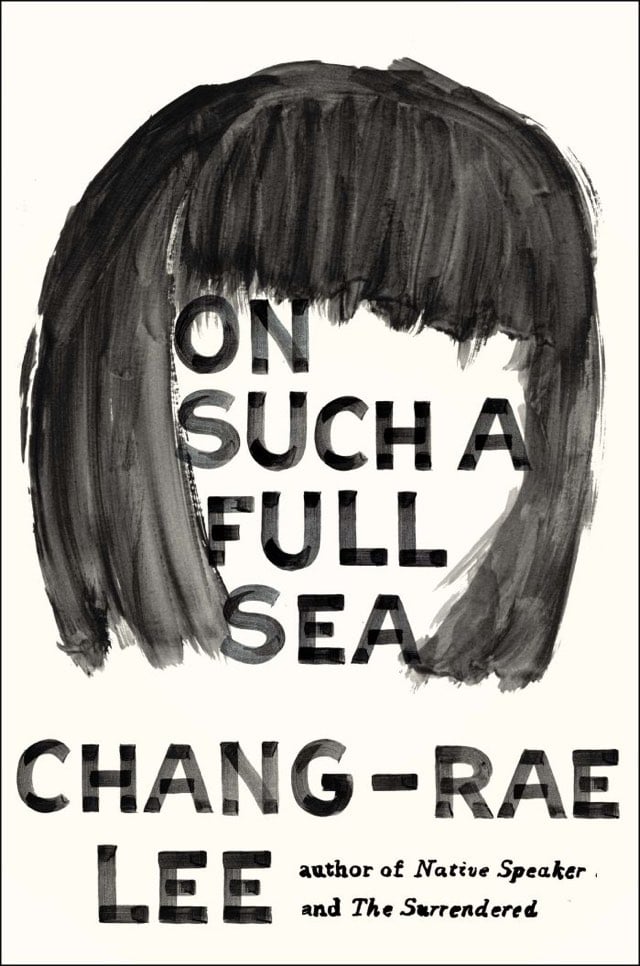
At the NY Times, Nicholas Blechman weighs in with his picks for the best book covers of 2014.
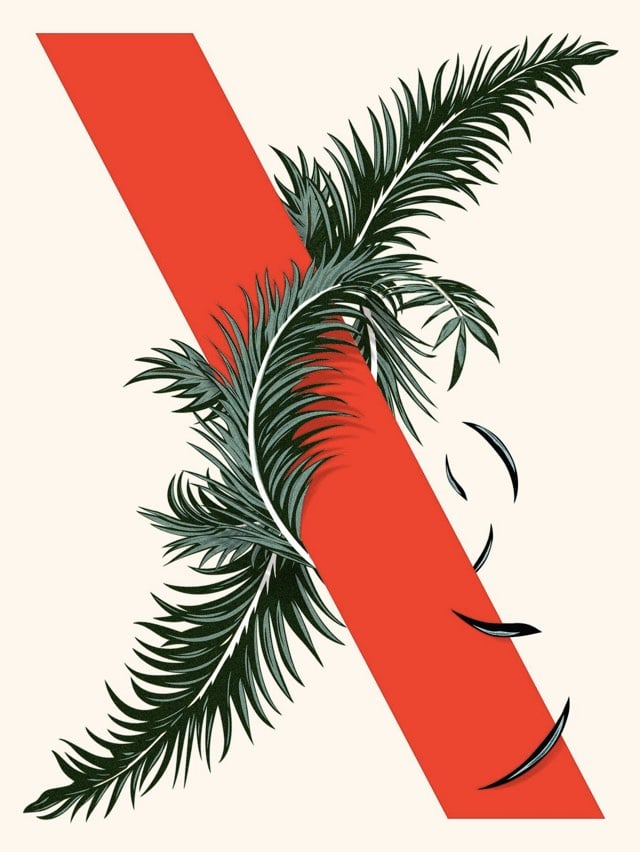
Dan Wagstaff, aka The Casual Optimist, picked 50 Covers for 2014.
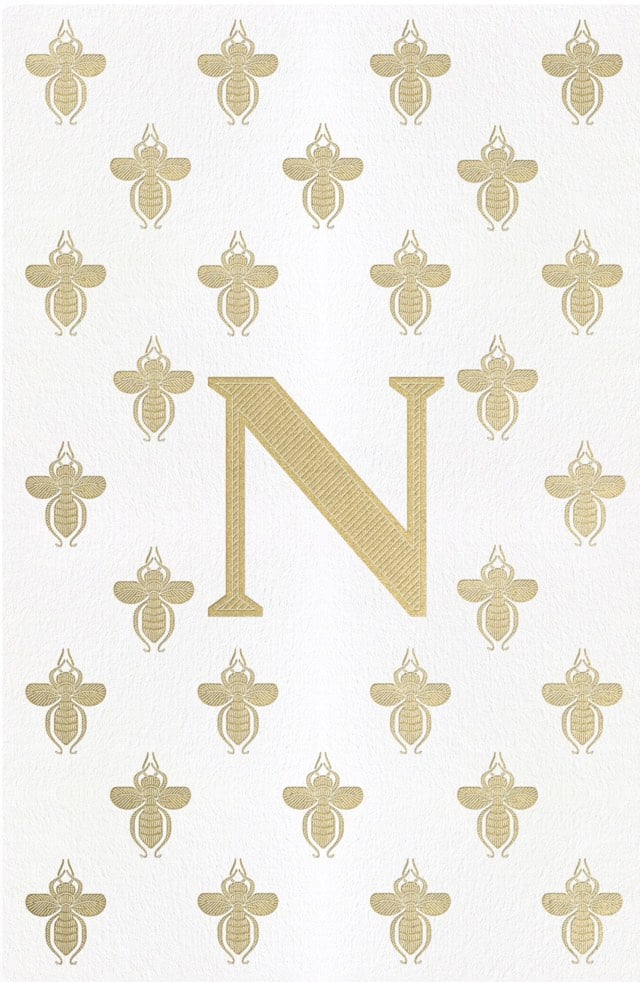
From Jarry Lee at Buzzfeed, 32 Of The Most Beautiful Book Covers Of 2014.
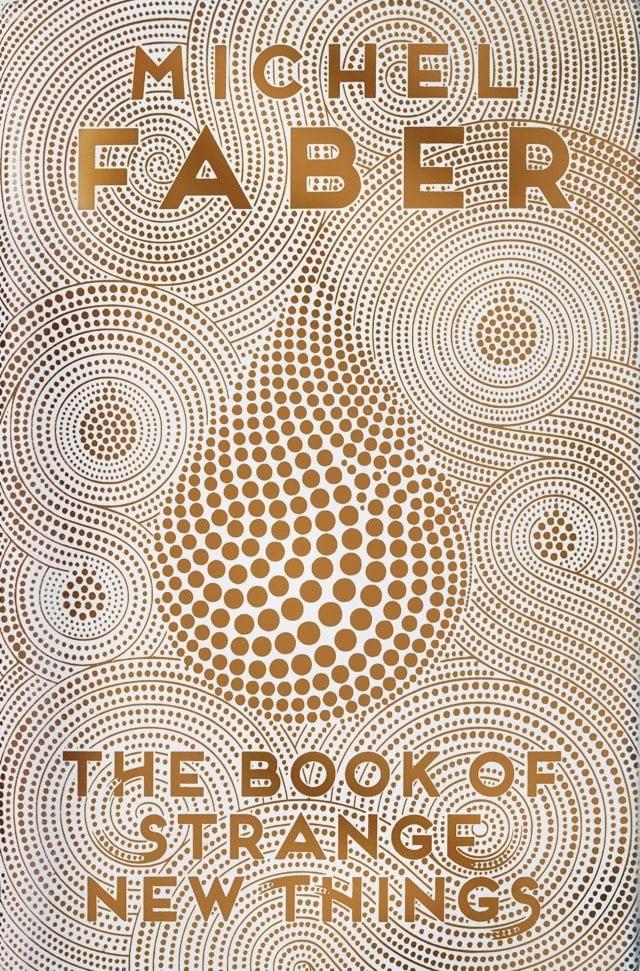
Paste’s Liz Shinn and Alisan Lemay present their 30 Best Book Covers of 2014.
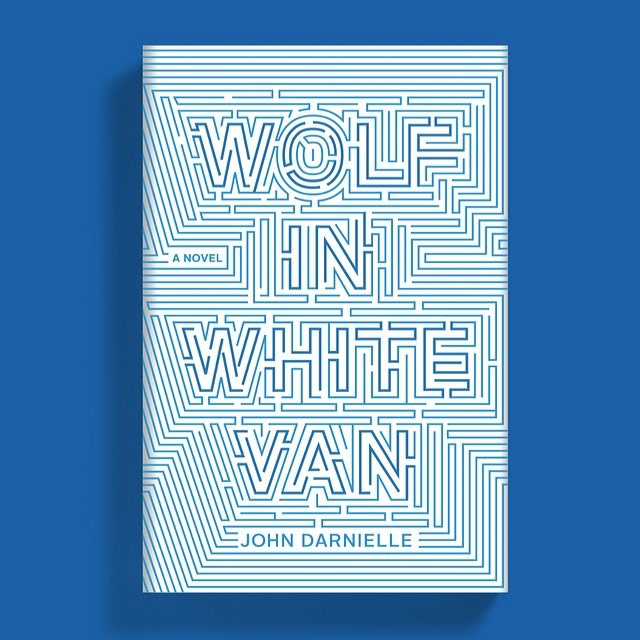
And from much earlier in the year (for some reason), Zachary Petit’s 19 of the Best Book Covers of 2014 at Print.
Michael Lewis has Eight Things I Wish for Wall Street.
2. No person under the age of 35 will be allowed to work on Wall Street.
Upon leaving school, young people, no matter how persuasively dimwitted, will be required to earn their living in the so-called real economy. Any job will do: fracker, street performer, chief of marketing for a medical marijuana dispensary. If and when Americans turn 35, and still wish to work in finance, they will carry with them memories of ordinary market forces, and perhaps be grateful to our society for having created an industry that is not subjected to them. At the very least, they will know that some huge number of people — their former fellow street performers, say — will be seriously pissed off at them if they do risky things on Wall Street to undermine the real economy. No one wants a bunch of pissed-off street performers coming after them.
(via nextdraft)
Quick three minute video about how they made the Millennium Falcon hyperdrive malfunction noise for Star Wars.
Favorite detail: one of the sounds is from the clanking pipes in the studio’s bathroom. (via df)
Finally, courtesy of the Auralnauts, we get the Terminator trailer that we deserve. Time travel is hilarious.
I wish we could send you back with pants, but the technology just isn’t there yet. So as soon as you hit the ground, you’re going to want to find some pants. I know you can do it…because you already did it.
Like the old wives’ tale says, if you want to fix the future, just keep sending Terminators back in time. (via @mouser_nerdbot)
Adrian Curry selects his favorites for the best movie posters of 2014. This one, for Gabe Polsky’s Red Army, caught my eye:
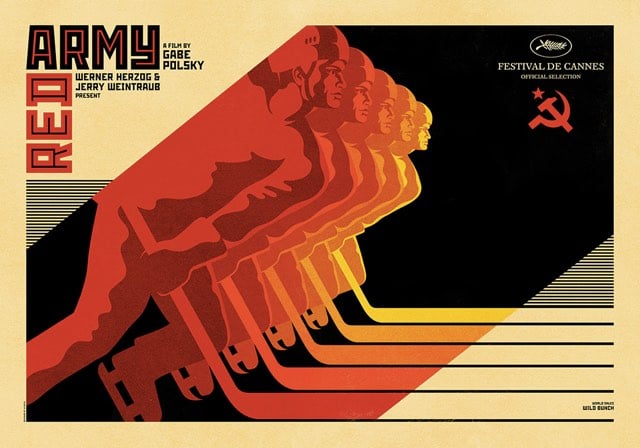
See also the best poster lists from Empire, Entertainment Weekly, and Indiewire. (via subtraction)
Woo! New Terrence Malick film! Knight of Cups stars Christian Bale, Cate Blanchett, and Natalie Portman with cinematography by Emmanuel Lubezki, who also did Children of Men, Gravity, Birdman, and Malick’s The Tree of Life. Here’s the trailer:
The Tree of Life *wrecked* me.
The American Museum of Natural History is planning on expanding.
The American Museum of Natural History, a sprawling hodgepodge of a complex occupying nearly four city blocks, is planning another major transformation, this time along Columbus Avenue: a $325 million, six-story addition designed to foster the institution’s expanding role as a center for scientific research and education.
The new Richard Gilder Center for Science, Education and Innovation would stand on a back stretch of the museum grounds near West 79th Street that is now open space.
The addition, to be completed as early as 2019 — the museum’s 150th anniversary — would be the most significant change to the museum’s historic campus since the Art Deco Hayden Planetarium building became the glass-enclosed Rose Center for Earth and Space 14 years ago.
According to a recent paper, as little as 12 seconds of video is enough to identify a particular shooter’s personal “motion signature”.
Here’s a way to shake off anonymity - literally. Footage from wearable cameras contains a “motion signature” unique to you. The discovery could identify police wearing body cameras, but also let authorities single out protesters uploading footage, say.
(via @buzz)

Wait, how did I miss this…Hilary Mantel’s excellent pair of novels about Thomas Cromwell & Henry VIII, Wolf Hall and Bring Up the Bodies, are being turned into a six-part BBC miniseries. Outstanding! Noted Shakespearian actor Mark Rylance will play Cromwell with Homeland’s Damian Lewis as Henry VIII.
BBC One will be airing the show in Britain in January while American audiences without access to BitTorrent will have to wait until PBS airs it in April.
I’ve read a lot about introverts and extroverts over the years (posted this back in Feb 2003 for example), but this list (found here) of how to care for introverts still hit me like a pile of bricks.
1. Respect their need for privacy.
2. Never embarrass them in public.
3. Let them observe first in new situations.
4. Give them time to think; don’t demand instant answers.
5. Don’t interrupt them.
6. Give them advance notice of expected changes in their lives.
7. Give them 15 minute warnings to finish whatever they are doing.
8. Reprimand them privately.
9. Teach them new skills privately.
10. Enable them to find one best friend who has similar interests & abilities.
11. Don’t push them to make lots of friends.
12. Respect their introversion; don’t try to remake them into extroverts.
It’s just dawned on me that when something goes wrong in my life, it’s often one of the things on this list that’s the culprit, especially #4 and #6. And #2 pretty much explains my middle and high school experience. Has anyone read Susan Caine’s Quiet: The Power of Introverts in a World That Can’t Stop Talking? I’ve heard great things about it, but haven’t had a chance to read yet. Thinking I should bump it to the top of my queue. Holy crap, it’s only $2.99 for Kindle…BOUGHT. (via @arainert)
Socials & More