Entries for December 2011
A thick black fungus growing near a whiskey distillery warehouse in Ontario prompted mycologist James Scott to track the fungus all the way back to its discovery in France in 1881.
When he arrived at the warehouse, the first thing he noticed (after “the beautiful, sweet, mellow smell of aging Canadian whiskey,” he says) was the black stuff. It was everywhere — on the walls of buildings, on chain-link fences, on metal street signs, as if a battalion of Dickensian chimney sweeps had careened through town. “In the back of the property, there was an old stainless steel fermenter tank,” Scott says. “It was lying on its side, and it had this fungus growing all over it. Stainless steel!” The whole point of stainless steel is that things don’t grow on it.
David Fincher explains why he chose to make each of his films.
The Social Network (2010): “You don’t get scripts like that every day. You don’t get a studio coming to you saying, ‘We just fucking love this script. Let’s make it into a movie.’ So often people are mitigating against the disaster or trying to cover the downside and saying, ‘Well, OK, look, the script is great, but…’ [‘Can you make something out of it?’] Yeah.
I have given Fincher shit about the films he’s chosen to make but it turns out that he’s better at spotting good material than I am. Go figure. (via @khoi)
Men hate shopping so they buy their favorite shoes/coats/pants/shirts in bulk. Here are interviews with some of those men. Guess who this might be:
I hate to shop. For the last 20 years I only shopped once every two or three years. I would go to the big and tall store and buy only what I could find in 20 minutes, tops - usually a few dozen briefs, T-shirts and sweaters. If there was time left, I would try on a jacket. Nothing needed to be perfect: just fit and be black.
Now I am buying African block-print shirts and pants in a riot of colors and patterns from an African street merchant. I visit him every few weeks to see what’s new. I buy 10 or 15 at a time.
Roger Ebert takes a crack at explaining why fewer and fewer people are going to see movies in theaters.
The message I get is that Americans love the movies as much as ever. It’s the theaters that are losing their charm. Proof: theaters thrive that police their audiences, show a variety of titles and emphasize value-added features. The rest of the industry can’t depend forever on blockbusters to bail it out.
This and the maximizing shareholder value thing seem to be related.
A short time lapse of Comet Lovejoy appearing in the pre-dawn sky over the Andes. Wait for the last sequence…it’s the best one.
Lovejoy was only discovered in Nov 2011 by an amateur astronomer. (via ★interesting)
Steve Denning, writing in Forbes:
In today’s paradoxical world of maximizing shareholder value, which Jack Welch himself has called “the dumbest idea in the world”, the situation is the reverse. CEOs and their top managers have massive incentives to focus most of their attentions on the expectations market, rather than the real job of running the company producing real products and services.
Denning is summarizing the ideas contained in Roger Martin’s new book, Fixing the Game: Bubbles, Crashes, and What Capitalism Can Learn from the NFL.
In Fixing the Game, Roger Martin reveals the culprit behind the sorry state of American capitalism: our deep and abiding commitment to the idea that the purpose of the firm is to maximize shareholder value. This theory has led to a massive growth in stock-based compensation for executives and, through this, to a naive and wrongheaded linking of the real market — the business of designing, making, and selling products and services — with the expectations market — the business of trading stocks, options, and complex derivatives. Martin shows how this tight coupling has been engineered and lays out its results: a single-minded focus on the expectations market that will continue driving us from crisis to crisis — unless we act now.
(thx, david)
A lovely short film by Ben Proudfoot about a letterpress company and a paper company who are scraping by next door to each other in Los Angeles.
Writing on his Tumblr blog (!!), former Secretary of Labor Robert Reich makes the case for a Clinton/Biden swap that would lead to an unstoppable Obama/Clinton presidental ticket in 2012.
My political prediction for 2012 (based on absolutely no inside information): Hillary Clinton and Joe Biden swap places. Biden becomes Secretary of State - a position he’s apparently coveted for years. And Hillary Clinton, Vice President.
So the Democratic ticket for 2012 is Obama-Clinton.
Why do I say this? Because Obama needs to stir the passions and enthusiasms of a Democratic base that’s been disillusioned with his cave-ins to regressive Republicans. Hillary Clinton on the ticket can do that.
(via ★djacobs)
In an excerpt from the introduction to Subway, his collection of photographs of the NYC subway, Bruce Davidson recalls how he came to start taking photos on the subway in the 1980s.
As I went down the subway stairs, through the turnstile, and onto the darkened station platform, a sinking sense of fear gripped me. I grew alert, and looked around to see who might be standing by, waiting to attack. The subway was dangerous at any time of the day or night, and everyone who rode it knew this and was on guard at all times; a day didn’t go by without the newspapers reporting yet another hideous subway crime. Passengers on the platform looked at me, with my expensive camera around my neck, in a way that made me feel like a tourist-or a deranged person.
In October 2009, William Deresiewicz delivered a lecture at West Point on Solitude and Leadership. In it, he argues that leaders need to spend some time alone with their thoughts and ideas so they know why and where they are leading. It is worth reading in its entirety.
My title must seem like a contradiction. What can solitude have to do with leadership? Solitude means being alone, and leadership necessitates the presence of others-the people you’re leading. When we think about leadership in American history we are likely to think of Washington, at the head of an army, or Lincoln, at the head of a nation, or King, at the head of a movement-people with multitudes behind them, looking to them for direction. And when we think of solitude, we are apt to think of Thoreau, a man alone in the woods, keeping a journal and communing with nature in silence.
Leadership is what you are here to learn-the qualities of character and mind that will make you fit to command a platoon, and beyond that, perhaps, a company, a battalion, or, if you leave the military, a corporation, a foundation, a department of government. Solitude is what you have the least of here, especially as plebes. You don’t even have privacy, the opportunity simply to be physically alone, never mind solitude, the ability to be alone with your thoughts. And yet I submit to you that solitude is one of the most important necessities of true leadership. This lecture will be an attempt to explain why.
The internet’s Go Daddy issues orig. from Dec 22, 2011
* Q: Wha? A: These previously published entries have been updated with new information in the last 24 hours. You can find past updates here.
On last week’s This American Life podcast, chef Dan Barber shared the story of Eduardo Sousa, who is producing foie gras in Spain by natural means (i.e. not through force-feeding). Barber also gave a talk about this at Taste3 a few years ago.
You can still get build-your-own kits for the Altair 8800, one of the first personal computers ever sold.

What a beaut. (via @pomeranian99)
Earlier on Twitter I posted:
Seeing who still has domains to transfer away from Go Daddy is the internet’s walk of shame.
Several people asked what the problem was with Go Daddy, so here goes. (Note: I’ve never used Go Daddy for anything…just passing along information here.) Go Daddy is a domain registrar and also sells web hosting, simple web sites, and a bunch of other stuff. Some don’t like Go Daddy for the following reasons:
The sexist advertising. The company uses scantily clad women to sell domain names and whatnot.
Go Daddy’s founder, Bob Parsons, goes to Africa every year to kill elephants who he says are ruining crops. Others say he’s a rich idiot American who likes shooting elephants for fun.
Most recently, Go Daddy came out in support of SOPA, the Stop Online Piracy Act, which will give copyright holders greater latitude in shutting down web sites accused of infringement. Opponents of the bill say that it can be used to shut down entire swaths of the web (YouTube, Twitter, Flickr, Facebook, Tumblr, etc.) due to potentially infringing material. Here’s a post that lays out why SOPA is bad for the internet.
You can read about these and other complaints against the company on Wikipedia. If any or all of these reasons resonate with you, here’s a step-by-step guide for migrating your domains away from Go Daddy.
Update: A couple other reasons you might want to avoid Go Daddy:
In 2005, founder Bob Parsons suggested that the interrogation methods at the Guantanamo Bay detention camp weren’t that bad compared to methods in the Middle East. (via @dtetto)
Several people suggested that the number one reason not to use Go Daddy is the bad web site and poor customer service.
Update: According to Boing Boing, Go Daddy has withdrawn their support for SOPA. (via @joffley)
Charles Mann visits the airport with security expert Bruce Schneier and a fake boarding pass. What he finds is a lot of security theater and not much security.
“The only useful airport security measures since 9/11,” he says, “were locking and reinforcing the cockpit doors, so terrorists can’t break in, positive baggage matching” — ensuring that people can’t put luggage on planes, and then not board them — “and teaching the passengers to fight back. The rest is security theater.”
(via df)
If I made New Year’s resolutions, one of them would be to play more table tennis. (via stellar)
Louis C.K. recently put out a self-produced comedy album that he sold exclusively from his web site for only $5. The album has sold 200,000 copies, grossing him $1,000,000. He’s keeping a bit less than a quarter of that, a quarter is going towards recouping production costs, but the rest is going to charity and for bonuses for his employees.
I’ve never had a million dollars all of a sudden. and since we’re all sharing this experience and since it’s really your money, I wanted to let you know what I’m doing with it. People are paying attention to what’s going on with this thing. So I guess I want to set an example of what you can do if you all of a sudden have a million dollars that people just gave to you directly because you told jokes.
What a wonderful thing.
If you drop a bunch of neodymium magnets down through a thick-walled copper pipe, an effect called eddy current braking will slow the magnets’ fall even though there’s no direct magnetic attraction between the copper and the magnets.
Science! (via make)
Geoff Manaugh of BLDGBLOG took some photos yesterday of a curious townhouse in Brooklyn Heights.

Curious in that the facade is 100% NYC rowhouse but it’s actually a secret subway exit. Here it is one Google Maps.
This is a fascinating article from The Economist about how Lutheranism spread through 16th century social networks & media.
The media environment that Luther had shown himself so adept at managing had much in common with today’s online ecosystem of blogs, social networks and discussion threads. It was a decentralised system whose participants took care of distribution, deciding collectively which messages to amplify through sharing and recommendation. Modern media theorists refer to participants in such systems as a “networked public”, rather than an “audience”, since they do more than just consume information. Luther would pass the text of a new pamphlet to a friendly printer (no money changed hands) and then wait for it to ripple through the network of printing centres across Germany.
Unlike larger books, which took weeks or months to produce, a pamphlet could be printed in a day or two. Copies of the initial edition, which cost about the same as a chicken, would first spread throughout the town where it was printed. Luther’s sympathisers recommended it to their friends. Booksellers promoted it and itinerant colporteurs hawked it. Travelling merchants, traders and preachers would then carry copies to other towns, and if they sparked sufficient interest, local printers would quickly produce their own editions, in batches of 1,000 or so, in the hope of cashing in on the buzz. A popular pamphlet would thus spread quickly without its author’s involvement.
And the bit on news ballads is especially interesting:
The news ballad, like the pamphlet, was a relatively new form of media. It set a poetic and often exaggerated description of contemporary events to a familiar tune so that it could be easily learned, sung and taught to others. News ballads were often “contrafacta” that deliberately mashed up a pious melody with secular or even profane lyrics. They were distributed in the form of printed lyric sheets, with a note to indicate which tune they should be sung to. Once learned they could spread even among the illiterate through the practice of communal singing.
Auto-tune the News anyone? And I thought this sounded an awful lot like Tom Standage (The Economist doesn’t use bylines)…turns out this article was adapted from a chapter of his upcoming book on the history of social media.
Three guys ride on tiny paths next to steep rock faces and over narrow wooden bridges. I could only manage watching a minute of this…I almost threw up in fear.
(via ★interesting)
Been grooving on Pretty Lights lately. I recommend downloading one of several EPs from his site (for free + suggested donation) or getting disc two of Filling Up the City Skies.
And if you were a Chicago Bulls fan in the 90s, don’t miss his remix of the Bulls intro music in the Unreleased 2010 Remixes collection (find it on the downloads page).
Amazon is somewhat of an unusual company for American investors because it focuses on the long-term (10- 20-year timelines) instead of the short-term (quarterly earnings).
“If everything you do needs to work on a three-year time horizon, then you’re competing against a lot of people,” Mr. Bezos told reporter Steve Levy last month in an interview in Wired. “But if you’re willing to invest on a seven-year time horizon, you’re now competing against a fraction of those people, because very few companies are willing to do that. Just by lengthening the time horizon, you can engage in endeavors that you could never otherwise pursue. At Amazon we like things to work in five to seven years. We’re willing to plant seeds, let them grow-and we’re very stubborn.”
Like Apple, Amazon is one of those large market cap growth stocks that investors don’t really know what to do with. Both stocks are still undervalued compared to much of the rest of the market, IMO.
First trailer for The Hobbit orig. from Dec 20, 2011
* Q: Wha? A: These previously published entries have been updated with new information in the last 24 hours. You can find past updates here.
Apple’s got the exclusive first trailer for The Hobbit. I am irrationally excited about this movie!
Update: And here’s a YouTube embed…I’m sure this won’t last too long though.
(thx, david)
One of my favorite things on the internet is footage of old styles of dancing set to contemporary music. Like this:
See also Daft Punk Charleston and Russian dancing (w/ Run DMC). (via ★dunstan)
Up until very recently, Glasgow’s gang culture made the city one of the most violent in western Europe. Then a program led by Karyn McCluskey turned the city in a better direction.
The unit’s big moment, McCluskey says, was understanding that violence works “like an infectious disease. It’s passed on. You can catch it. You might live and die in a square mile. Your life is not predictable or manageable. You may have alcoholic parents, suffer domestic violence. Nobody cares about you. You’re incapable of empathy: hard-wired for violence.”
They coined a phrase: recreational violence. “There’s also the thrill, the sensation-seeking,” McCluskey says. “You look at their faces on the CCTV, they’re loving it. They’re young guys just not equipped to make good decisions for themselves, caught up in the gang dynamic.”
So, if they see themselves as a group, treat them as a group, reasoned McCluskey. She went to the United States and met a man called David Kennedy, whose model for tackling gang violence had worked in Boston since the late 1990s. In the jargon, it’s known as a “focused deterrence strategy”, harnessing a multitude of different agencies plus resources from within the community. McCluskey set about bringing it to Glasgow.
Since late 2008, the program has cut the rate of violent offending by 46%. John Seabrook wrote about David Kennedy and his program for the New Yorker in 2009. (via @jcn)
I like Mike but his wardrobe is pure WTF. Like these jeans:
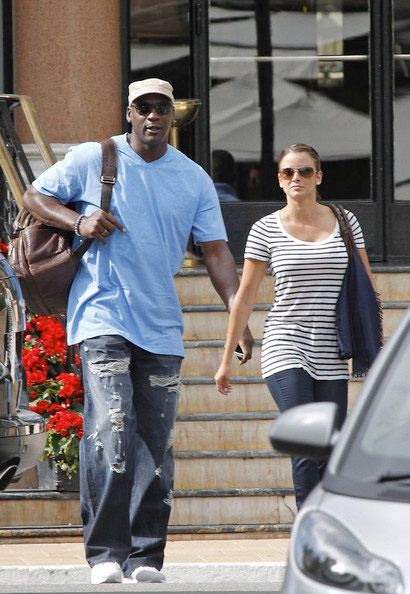
This is sort of the opposite of the NBA fashion nerds.
In a short essay about The Unintended Effects of Driverless Cars (like the kind being tested by Google), Koushik Dutta guesses at what they might mean for the future of transportation.
Currently, a car spends 96% of its time idle. Compare that with planes which spend almost their entire lifetime in operation/airborne. Idle planes aren’t making money, and they need to recoup their hefty $120M price tag. There is an unforgiving economic incentive to make sure it is always in use.
The proliferation of driverless cars will have a similar effect. Cars will spend less time idle: why would a household buy 2 (or even 3) cars, when they only need 1? Ride to work, then send the car home to your spouse. Need to go grocery shopping, but your kid also needs a ride to a soccer game? No problem, a driverless car can handle that.
Most people don’t need cars most of the time but pay for the convenience of having one nearby when they do. Schedule-able on-demand driverless cars could eliminate that need, with the added bonus of expanding effortlessly to fit current capacity (e.g. imagine a family of four needing to go in four different directions at four different times…just schedule four Hertz Driverless pickups from your phone). Of course, people said similarish things about the Segway…
The North Korean leader died two days ago and now no one knows who’s in charge or what’s going to happen, which is pretty much par for the course for North Korea.
Kim Jong-il, the North Korean leader who realized his family’s dream of turning his starving, isolated country into a nuclear-weapons power even as it sank further into despotism, died on Saturday of a heart attack while traveling on his train, according to an announcement Monday by the country’s state-run media.
Whatever else might be said about him, Kim sure liked to look at things.
From Penn Jillette’s book, God, No!: Signs You May Already Be an Atheist and Other Magical Tales:
There is no god and that’s the simple truth. If every trace of any single religion died out and nothing were passed on, it would never be created exactly that way again. There might be some other nonsense in its place, but not that exact nonsense. If all of science were wiped out, it would still be true and someone would find a way to figure it all out again.
(via mlkshk)
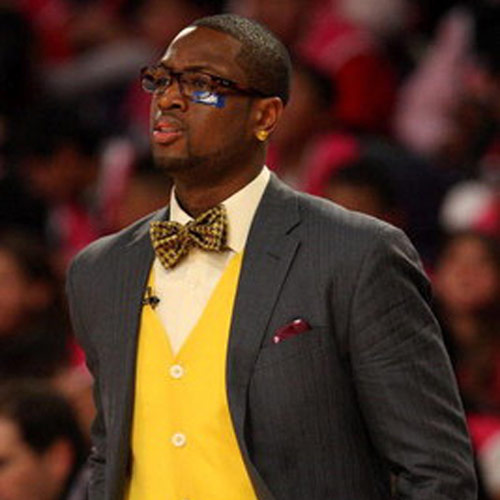
NBA players, especially the younger ones, are dressing like nerds.
In their tandem press conferences, LeBron James and Dwyane Wade, of the Miami Heat, alternate impeccably tailored suits with cardigans over shirts and ties. They wear gingham and plaid and velvet, bow ties and sweater vests, suspenders, and thick black glasses they don’t need. Their colors conflict. Their patterns clash. Clothes that once stood as an open invitation to bullies looking for something to hang on the back of a bathroom door are what James now wears to rap alongside Lil Wayne. Clothes that once signified whiteness, squareness, suburbanness, sissyness, in the minds of some NBA players no longer do.
If you happen to be someone who looks at Durant, James, or Amar’e Stoudemire’s Foot Locker commercials — in which he stalks along a perilously lit basketball court wearing a letterman’s cardigan, a skinny tie, and giant black glasses (his are prescription) — and wonders how the NBA got this way, how it turned into Happy Days, you’re really wondering the same thing about the rest of mainstream black culture. When did everything turn upside down? Who relaxed the rules? Is it really safe to look like Carlton Banks?
See also Kanye West and his entourage circa 2009. (thx, sveinn)
Starting today and continuing for the next four weeks, IFC Center in NYC is showing a “comprehensive retrospective” of films (Princess Mononoke, Spirited Away, My Neighbor Totoro) made by Studio Ghibli. Most of the films are new 35mm prints and some will be screened in dubbed and subtitled Japanese versions.
Oh, and IFC is also doing midnight showings of Raiders of the Lost Ark this month.
Critic and writer Christopher Hitchens died last night at the age of 62 from complications of esophageal cancer.
“My chief consolation in this year of living dyingly has been the presence of friends,” he wrote in the June 2011 issue. He died in their presence, too, at the MD Anderson Cancer Center in Houston, Texas. May his 62 years of living, well, so livingly console the many of us who will miss him dearly.
Although I suspect there will be posthumous writings to come, Hitchens’ final piece for Vanity Fair, published in the January 2012 issue, is a rumination on pain and death.
Before I was diagnosed with esophageal cancer a year and a half ago, I rather jauntily told the readers of my memoirs that when faced with extinction I wanted to be fully conscious and awake, in order to “do” death in the active and not the passive sense. And I do, still, try to nurture that little flame of curiosity and defiance: willing to play out the string to the end and wishing to be spared nothing that properly belongs to a life span. However, one thing that grave illness does is to make you examine familiar principles and seemingly reliable sayings. And there’s one that I find I am not saying with quite the same conviction as I once used to: In particular, I have slightly stopped issuing the announcement that “Whatever doesn’t kill me makes me stronger.”
Nike has designed a soccer shoe for Real Madrid’s Cristiano Ronaldo that uses a striped pattern on one side of the shoe designed to confuse opponents as to which way Ronaldo might be moving his feet.

The cleats look remarkably different from each side of Ronaldo. From the right, they have a clean look with pinstripes. From the left, though, there are thick stripes with a red accent line. Furthermore, the asymmetrical design makes a defender’s judgment that much harder, as the visual effect of Ronaldo turning his foot in one direction may not come across exactly the same as reality.
Reminds me of the dazzle camouflage used on military ships in WWI and WWII.
Published just a few days after what would become George Orwell’s most well-known novel in 1949, here’s what the New York Times had to say about Nineteen Eighty-Four.
In the excesses of satire one may take a certain comfort. They provide a distance from the human condition as we meet it in our daily life that preserves our habitual refuge in sloth or blindness or self-righteousness. Mr. Orwell’s earlier book, Animal Farm, is such a work. Its characters are animals, and its content is therefore fabulous, and its horror, shading into comedy, remains in the generalized realm of intellect, from which our feelings need fear no onslaught. But ”Nineteen Eighty-four” is a work of pure horror, and its horror is crushingly immediate.
Get it while you can: an hour-long BBC documentary about Steve Jobs with on-camera interviews with Woz, Stephen Fry, Tim Berners-Lee, John Sculley and many others.
(thx, jteve)
Daniel Craig, star of the two most recent Bond films, in an interview with Time Out London:
Q: It seems that the script is sometimes an after-thought on huge productions.
A: ‘Yes and you swear that you’ll never get involved with shit like that, and it happens. On “Quantum”, we were fucked. We had the bare bones of a script and then there was a writers’ strike and there was nothing we could do. We couldn’t employ a writer to finish it. I say to myself, “Never again”, but who knows? There was me trying to rewrite scenes - and a writer I am not.’
Q: You had to rewrite scenes yourself?
A: ‘Me and the director [Marc Forster] were the ones allowed to do it. The rules were that you couldn’t employ anyone as a writer, but the actor and director could work on scenes together. We were stuffed. We got away with it, but only just. It was never meant to be as much of a sequel as it was, but it ended up being a sequel, starting where the last one finished.’
I wonder how many other movies that happened with? io9 and Screenrant speculated on this very question after the strike ended. (via df)
From Jennifer Daniel, a caveman phone:

An increasingly frustrated lizard plays a game called Ant Crusher on an Android phone. He’s pretty good, but is no less hungry than before he started.
(via stellar)
The Millions presents their annual A Year in Reading for 2011, where they ask a bunch of people their favorite reads of the year.
With this in mind, for an eighth year, we asked some of our favorite writers, thinkers, and readers to look back, reflect, and share. Their charge was to name, from all the books they read this year, the one(s) that meant the most to them, regardless of publication date. Grouped together, these ruminations, cheers, squibs, and essays will be a chronicle of reading and good books from every era. We hope you find in them seeds that will help make your year in reading in 2012 a fruitful one.
Contributors include Duff McKagan, Mayim Bialik, Jennifer Egan, Colum McCann, and Rosecrans Baldwin.
These are from the Longreads Tumblr. You’ll never want for 3000-word reading material ever again.
Vocal fry orig. from Dec 13, 2011
* Q: Wha? A: These previously published entries have been updated with new information in the last 24 hours. You can find past updates here.
College-age women end sentences in the lowest vocal register, a creaky vibration called vocal fry, possibly to broadcast themselves as part of a social group.
Vocal fry…great term! Here’s a demo of how the effect is used in singing.
Update: About a minute into this clip from Louie, there’s a great example of vocal fry used by “college-age women [to] end sentences”:
(via @dalton)
At the beginning of this video, Ramesh Raskar, associate professor at the MIT Media Lab, announces calmly:
We have built a virtual slow-motion camera where we can see photons, or light particles, moving through space.
Yeah, no biggie.
Russian scientists are seeing dramatically increased levels of methane coming from melting permafrost in the East Siberian Ice Shelf. If enough methane is released, that could really put a foot on the gas pedal with this whole global warming thing.
“Earlier we found torch-like structures like this but they were only tens of metres in diameter. This is the first time that we’ve found continuous, powerful and impressive seeping structures, more than 1,000 metres in diameter. It’s amazing,” Dr Semiletov said. “I was most impressed by the sheer scale and high density of the plumes. Over a relatively small area we found more than 100, but over a wider area there should be thousands of them.”
Scientists estimate that there are hundreds of millions of tonnes of methane gas locked away beneath the Arctic permafrost, which extends from the mainland into the seabed of the relatively shallow sea of the East Siberian Arctic Shelf. One of the greatest fears is that with the disappearance of the Arctic sea-ice in summer, and rapidly rising temperatures across the entire region, which are already melting the Siberian permafrost, the trapped methane could be suddenly released into the atmosphere leading to rapid and severe climate change.
Elephants were the “perfect food package” for pre-human hominids (they were slow with a good fat-to-protein ratio) and their extinction in the Middle East (and Africa) caused those hominids to evolve to be more like modern humans.
When elephants began to die out, Homo erectus “needed to hunt many smaller, more evasive animals. Energy requirements increased, but with plant and protein intake limited, the source had to come from fat. He had to become calculated about hunting,” Ben-Dor says, noting that this change is evident in the physical appearance of modern humans, lighter than Homo erectus and with larger brains.
(via @daveg)
Older posts






Socials & More