kottke.org posts about video
The Claudia Kishi Club is a short documentary by Sue Ding about the impact of the Claudia Kishi character from The Baby-Sitters Club book series on a group of Asian-American creatives. They read the books when they were kids and in the film, they reflect on the importance of Claudia in shaping their perceptions of themselves in an era where Asian-American characters were rare in books, movies, and TV.
The six people interviewed in the film are novelist Sarah Kuhn, YA author CB Lee, Naia Cucukov (executive producer of the Netflix series The Babysitter’s Club), comic book artist & author Yumi Sakugawa, blogger Phil Yu, and Gale Galligan (author of The Baby-Sitter’s Club graphic novels, which my daughter loves).
The Claudia Kishi Club is now streaming on Netflix, the trailer is embedded above, and here’s a clip.
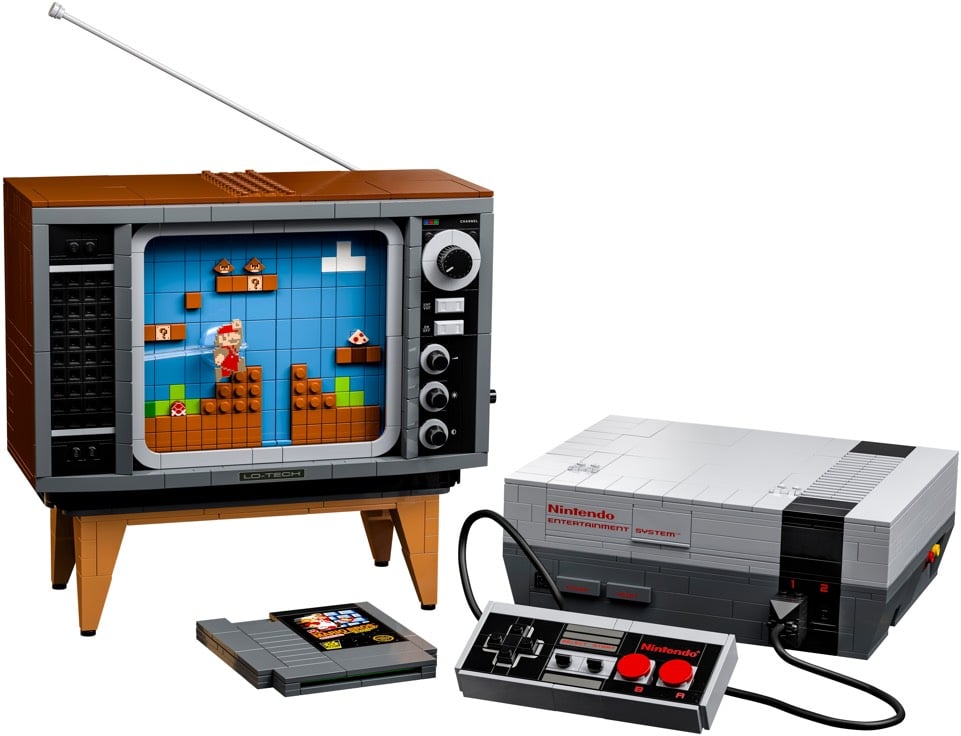
As a child of the 80s, this Lego set of the Nintendo Entertainment System activates a very ancient and primal region of my brain. As you can see in this short video, the set includes a controller, a cartridge that you can put into the machine, and a vintage TV with a hand-crank that you can use to “play” Super Mario Bros.
Taking a page from The Up Series, director John Sutter is making a series of films that revisit four geographic locations every 5 years until 2050 in order to document the effects in those areas due to climate change. The name of the series is Baseline and it’s a reference to the concept of shifting baselines, which the trailer above defines as “a phenomenon of lowered expectations in which each generation regards a progressively poorer natural world as normal”. The four areas the films will focus on are Alaska, Utah, Puerto Rico, and the Marshall Islands.
Sutter did a TEDx Talk about shifting baselines and climate change — the clip he shows right at the beginning featuring the shifting sizes of fish caught in Key West, Florida is astonishing.
He also wrote a piece about the series and the Alaskan village featured in it.
From BBC Ideas, the story of three people who pioneered the science of climate change — Eunice Foote, Guy Stewart Callendar, and Charles Keeling — each of whom was under-recognized for their achievements at the time.
In particular, Eunice Foote demonstrated the greenhouse effect all the way back in 1856, but her contribution was lost to time and science until very recently.
Looking back on Earth’s history, Foote explains that “an atmosphere of that gas would give to our earth a high temperature … at one period of its history the air had mixed with it a larger proportion than at present, an increased temperature from its own action as well as from increased weight must have necessarily resulted.” Of the gases tested, she concluded that carbonic acid trapped the most heat, having a final temperature of 125 °F. Foote was years ahead of her time. What she described and theorized was the gradual warming of the Earth’s atmosphere — what today we call the greenhouse effect.
(via the morning news)
From director Marjane Satrapi, who made the acclaimed animated film Persepolis, comes Radioactive, a film about Marie Curie, who was the first woman to win a Nobel Prize, the first person to win two Nobel Prizes, and the only person to ever win Nobel Prizes in two different scientific disciplines. Curie is played by Rosamund Pike and the film is based on a graphic novel of the same name by Lauren Redniss, a finalist for the National Book Award.
Radioactive debuts on Amazon Prime on July 24.
How is it that I am sitting here writing this right now and you are sitting there reading this at some later point which seems like now to you? These behaviors are the result of a series of interconnected processes that have evolved over billions of years that we collective call “intelligence”.
In this video, Kurzgesagt takes a crack at explaining the simple view of intelligence as “a mechanism to solve problems” that involves several aspects: information, memory, learning, knowledge, creativity, the use of physical tools, the ability to plan for the future, and culture. As usual, their extensive list of sources provides more details and opportunities for further exploration.
On September 16, 1991, about a week before the band’s breakthrough album Nevermind was released, Nirvana played a 45-minute in-store set at Beehive Records in Seattle. When I watch videos like this (here’s the Notorious BIG rapping on a street corner at 17 and a 17-year-old LL Cool J playing to a mostly empty gym1), I look at the crowd just as much or more than the performers. Do the people in that music shop audience know they’re witnessing an early performance of one of the last great consequential rock songs or do they only realize it later?
Hell, I suppose you could ask the same question of the performers: did Cobain or Biggie or LL Cool J know at the time that they were going to blow up in a matter of weeks and months? In Cobain’s case, he may have. From a biography called Heavier Than Heaven:
Two days later, Nirvana held an “in-store” at Beehive Records. DGC expected about 50 patrons, but when over 200 kids were lined up by two in the afternoon — for an event scheduled to start at seven — it began to dawn on them that perhaps the band’s popularity was greater than first thought. Kurt had decided that rather than simply sign albums and shake people’s hands — the usual business of an in-store — Nirvana would play. When he saw the line at the store that afternoon, it marked the first time he was heard to utter the words “holy shit” in response to his popularity. The band retreated to the Blue Moon Tavern and began drinking, but when they looked out the window and saw dozens of fans looking in, they felt like they were in the movie A Hard Day’s Night. When the show began, Beehive was so crowded that kids were standing on racks of albums and sawhorses had to be lined up in front of the store’s glass windows to protect them. Nirvana played a 45-minute set — performing on the store floor — until the crowd began smashing into the band like the pep rally in the “Smells Like Teen Spirit” video.
Kurt was bewildered by just how big a deal it had all become. Looking into the crowd, he saw half of the Seattle music scene and dozens of his friends. It was particularly unnerving for him to see two of his ex-girlfriends — Tobi and Tracy — there, bopping away to the songs. Even these intimates were now part of an audience he felt pressure to serve. The store was selling the first copies of Nevermind the public had a chance at, and they quickly sold out. “People were ripping posters off the wall,” remembered store manager Jamie Brown, “just so they’d have a piece of paper for Kurt to autograph.” Kurt kept shaking his head in amazement.
Kurt retreated to the parking lot for a smoke and some downtime. But there, the day became even more freakish when he saw two of his old Montesano schoolmates, Scott Cokely and Rick Miller, holding copies of “Sliver.” Though Kurt signed signed hundreds of autographs that day, none made him feel more surreal than putting his signature on a single about his grandparents for two guys from the town his grandparents lived in. They talked about their mutual friends from the harbor, but the conversation made Kurt wistful — Cokely and Miller were a reminder of a past Kurt thought he had left behind. “Do you get back to the harbor much?” Cokely asked. “Not very often,” Kurt replied. Both Cokely and Miller were confused when they looked at their singles and noticed Kurt had signed them “Kurdt.”
Kurt later cited this exchange as one of the first moments he realized he was famous. Yet rather than comfort him, this realization set off something just short of a panic. Though he had always wanted to be famous — and back when he was in school in Monte, he had promised his classmates one day he would be — the actual culmination of his dreams deeply unnerved him. Krist would recall this particular show — a free show in a record store a week before the album’s official release date — as a turning point in Kurt. “Things started to happen after that,” Krist said. “We weren’t the same old band. Kurt, he just kind of withdrew. There was a lot of personal stuff that was going on. It got complicated. It was more than we bargained for.”
If you live in the US and Canada, you might have the opportunity to check out Comet NEOWISE over the next few weeks with a good pair of binoculars or even with the naked eye. EarthSky has the skinny.
By mid-July (around July 12-15), the comet will also become visible at dusk (just after sunset), low in the northwest horizon, for observers in the mid- and northern U.S. How can it be visible in both dawn and dusk? The answer is that the comet is now very far to the north on the sky’s dome. For those at latitudes like those in the southern U.S. (say, around 30 degrees north latitude), the comet is very nearly but not quite circumpolar, that is, it’s nearly in the sky continually, but it isn’t quite … that’s why we at southerly latitudes will have a harder time spotting it in the evening.
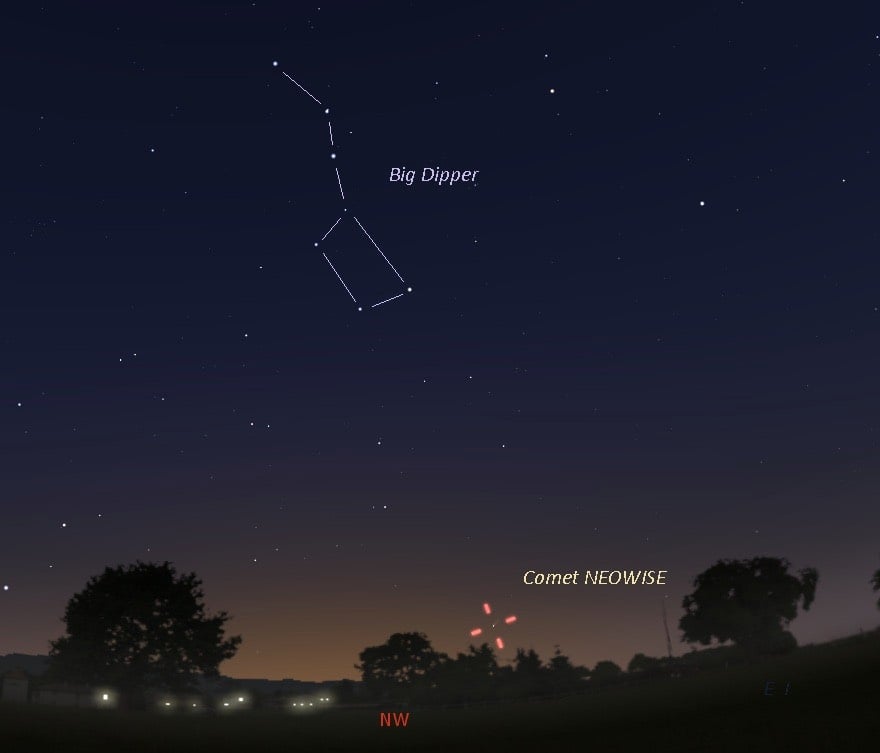
It appears this comet is holding up better than Comet ATLAS did earlier in the year. Here’s a beautiful time lapse of NEOWISE rising over the Adriatic Sea in the early dawn:
And a time lapse of the comet from the International Space Station (it starts rising around the 3-minute mark):
You’ve probably seen the photograph: Tommie Smith and John Carlos each raising a black-gloved fist during the playing of the US nation anthem during the medals ceremony at the 1968 Summer Olympic Games in Mexico City. But as this video explains, their protest was a part of a larger effort to use the Olympics to highlight racial inequality in American sports and society.
After watching the video, you might be interested in reading about the aftermath of the protest. Smith and Carlos were both suspended from the US team and expelled from the Games. They were both subject to abuse from the American press and received death threats. Australian Peter Norman, who had come in second and supported the protest, was ostracized in his own country. But when Norman died in 2006, both Smith and Carlos were pallbearers at this funeral.
After producing over 220 art history videos in 6 years, YouTube channel The Art Assignment is going to take an extended break to “reassess what educational art content should look like in 2020 and beyond”. In the video above, creator Sarah Urist Green reflects on her experience so far and what’s happening next. I’m always interested in what people have to say about their projects at inflection points like this, but I was blindsided by the almost total resonance of Green’s remarks with my own thoughts about the advantages & limitations of how I’ve chosen to work here at kottke.org. Here’s an extended quote from the transcript of the particularly resonant bit:
I don’t actually enjoy being on camera, but individual authentic voices have always been at the core of what makes YouTube great. And I’ve been glad to be able to lend my own voice in the hopes of making art and art history more accessible.
Over time I’ve learned to appreciate the specificity of my own point of view — but also its limitations. I’m a person who’s more interested in art from the 1960s than the 1560s. I have a deeper background in art from North America than South America.
Making this channel has been a hugely rewarding way to stretch beyond my formal education and natural inclinations. But any channel on YouTube, and indeed any experience, is shaped by bias and perspective — both the content itself and the way that each of us interprets and responds to it. The fact that my voice sounds grating to some and comforting to others is a reminder of that.
I’ve also learned that these biases are often reinforced by the recommendation algorithms that govern the platforms we frequent. Whether we want to or not, we citizens of the internet work in collaboration with these algorithms to curate information feeds for ourselves. And even if our feeds feel objective, they never are.
The Art Assignment isn’t, and has never been, the history of art or an introduction to the art world. It’s always been my history of art and a glimpse into my art world. I hope that’s been part of what makes it good, but it’s also part of what makes it limited, subjective, and necessarily incomplete.
The more videos we make, the more aware I am of the vast amount we haven’t covered. Trying to make content on this platform that is both educational and also clickable can be a challenging task with many pitfalls.
We’ve used what I think of as a buckshot technique — making a huge variety of kinds and formats of episodes to see what might possibly stick.
In doing so, we’ve discovered that more people click on names of art movements they’ve already heard of, artworks they’ve seen before, and already famous artists (mostly male).
More people watch when I do a hot take about those rare moments when art hits the wider news, like a Banksy stunt or a banana duct-taped to a wall.
I’ve also learned what YouTube viewers are less likely to click on, which is artists they’ve never heard of, artworks they haven’t seen before, and topics that don’t court controversy or outrage. This says something about the YouTube algorithm, but it also says something about what kinds of information we’re all drawn to online. Who wants to watch an educational video when you can watch The Try Guys eat 400 dumplings? (Seriously, I just watched it, it’s great.)
But because I know what tends to get clicked on more and watched for longer stretches, I’ve been more likely to try to serve that to you. Not all the time of course, but even when served in moderation that’s not really good for art history. It reinforces dominant narratives and offers up the same boring old menu of famous artists again and again.
However, I’ve also learned that you all are willing to dive down lesser-known and unexpected rabbit holes of research and bear with me as I simultaneously cook poorly and attempt to understand the eating and cooking lives of artists. You’ve taught me you’re willing to reconsider art and artists you didn’t think you liked, and you’ve tried approaches to art that are far outside of your comfort zones and made beautiful and vulnerable work in response. You’ve tackled really difficult questions with me and been willing to linger in grey zones and leave questions unanswered. I mean we’ve never even established a definition of art on this channel.
Because of your capacity for the abstract and lesser-known, we’ve been able to keep going all these years. And, with the incomparable backing of PBS, we’ve been able to make content not just for the most people, but for an open-minded and discerning audience like you.
I can’t adequately relate to you how unnerving it was for me to hear her say all that — change a few specific references and I very easily could have written it (but not as well). Doing kottke.org is this constant battle with myself: staying in my comfort zone vs. finding opportunities for growth, posting what I like or find interesting vs. attempting to suss out what “the reader” might want, celebrating the popular vs. highlighting the obscure, balancing the desire to define what it is I do here vs. appreciating that no one really knows (myself included), posting clickable things vs. important things I know will be unpopular, protecting myself against criticism vs. accepting it as a gift, deciding when to provoke & challenge vs. when to comfort & entertain, feeling like this is frivolous vs. knowing this site is important to me & others, being right vs. accepting I’ll make mistakes, and saying something vs. letting the content and its creators speak for themselves.
I know that all sounds super dramatic — I don’t intensely feel all of that when I’m working, but that video made me reflect on it hard. And I suspect that many people who do creative work in public struggle in similar ways. Like Green with respect to PBS, I am grateful to kottke.org’s members (“an open-minded and discerning audience” if there ever was one) for their support of my work and trust in the limited & imperfect human who does it.
In this meditative short film, Etsuro Sotoo talks about what made him want to spend 41 years working as a sculptor in an attempt to finish Antoni Gaudí’s Sagrada Família basilica in Barcelona. From a website dedicated to Sotoo:
In 1978 Etsuro Sotoo arrived in Barcelona. He had just graduated in Fine Arts, he had just one year of experience as an Art teacher. When impressed by the unfinished temple: “It was the most fabulous pile of stones I had ever seen” …He asked for a job as a stonecutter. He wanted to continue the Nativity façade (the only façade that, thanks to his work, would be declared by Unesco World Heritage). He did a test and they gave him the position. Since then, he has completed what Gaudí did not even have time to think about. When he finished with the gaps, he started with the architect’s notes. When the tracks are over, it’s up to him to make decisions.
According to the video, Sotoo even converted to Catholicism as a way for him “to know Gaudí”. (via craig mod)
This video provides a quick overview of the history of policing in America through the lens of race, from the slave patrols in the South to the violent and discriminatory policing of Black migrants in the North in the midst the Great Migration. At its conclusion, historian Khalil Gibran Muhammad, author of The Condemnation of Blackness, asks a very direct question:
And so the question that has to be asked in the wake of George Floyd — and I think this question is being asked and answered by more white people than I’ve seen in my lifetime is — do white people in America still want the police to protect their interests over the rights and dignity and lives of Black and, in too many cases, brown, Indigenous, and Asian populations in this country?
This video is a snippet from an hour-long podcast episode of NPR’s Throughline called American Police (transcript here). (via @GeeDee215)
From January to the end of June, over 500,000 people died of confirmed cases of Covid-19. In order to demonstrate the magnitude of the pandemic, James Beckwith made a time lapse map of each Covid-19 death.
Each country is represented by a tone and an expanding blip on the map when a death from Covid-19 is recorded. Each day is 4 seconds long, and at the top of the screen is the date and a counter showing the total numbers of deaths. Every country that has had a fatality is included.
As was the case with the pandemic, the video starts slow but soon enough the individual sounds and blips build to a crescendo, a cacophony of death. The only way this could be made more ominous & upsetting is by including the first song off of Cliff Martinez’s Contagion soundtrack as a backing track. As Beckwith notes in the description: “It is likely a sequel will need to be made.” (via open culture)
Quechua is an indigenous language family spoken by millions of people in the Andean region of South America, primarily in Peru, Ecuador, and Bolivia. It was the main language of the Inca empire and today is the most widely spoken pre-Columbian language in the Americas. In her music, Peruvian singer/songwriter Renata Flores combines modern forms like hip hop, electronic, and trap music with native instruments and vocals sung in Quechua. Here’s the video for one of her most popular songs, Tijeras:
Flores also does covers of pop songs (Billie Eilish’s Bad Guy, Fallin’ by Alicia Keys) and she first captured people’s online attention with a Quechua cover of Michael Jackson’s The Way You Make Me Feel performed when she was 14 years old:
Rosa Chávez Yacila wrote an article for Vice about Flores and her music last year. Her use of Quechua in pop music brought the language out of private spaces into the public.
It’s very common for many Quechua speakers to not teach their children or grandchildren the language because they consider this knowledge as a burden. To explain the shortage of active bilingualism in Peru, the linguist Virginia Zavala uses the concept of “linguistic ideologies,” which are the ideas that people have about languages. For example: French is the language of love; German sounds rough; Italian, Portuguese, and Spanish are similar.
Quechua, similarly to other indigenous languages, is associated with poverty, rural life, and illiteracy. These ideas have been shaped by history and society to the point that people hold on to these beliefs as if they were universal truths. And these “truths” are deeply embedded in their conscious thought process. Value hierarchies also exist with languages. Some are “worth” more than others.
The end result is that many native Quechua speakers believe that using Quechua in public is unnecessary after learning Spanish. Either by shyness or shame, they reserve their maternal tongue for private spaces and intimate conversations.
Trials rider Danny MacAskill (one of our favorite athletes around these parts) has recently started sharing some behind-the-scenes looks at some of the coolest tricks he’s done for his videos. The video above shows him trying to barrel roll his bike with a trailer attached, which he likens to “doing a rally [race] with a caravan on the back”. What’s fascinating is that it takes him forever to get the maneuver down, but once he does, he’s able to do it over and over again — “gradually, then suddenly” in action. You can see the finished product in his Danny Daycare video.
Two more behind-the-scenes videos he’s done so far: the backwards roll and the log slide (which also takes him forever to do but he’s then able to repeat three more times in a row).
Linguist William Lutz, former editor of the Quarterly Review of Doublespeak, went on CSPAN in 1989 to promote his book, Doublespeak. The video above is a 7-minute distillation of his thoughts on what he calls “language designed to mislead while pretending not to”. (Watch Lutz’s full interview here.)
You can read the first chapter of Doublespeak; an excerpt:
Doublespeak is not the product of carelessness or sloppy thinking. Indeed, most doublespeak is the product of clear thinking and carefully designed and constructed to appear to communicate when in fact it doesn’t. It is language designed not to lead but mislead. It is language designed to distort reality and corrupt thought… In the world created by doublespeak, if it’s not a tax increase, but rather “revenue enhancement” or “tax base broadening”, how can you complain about higher taxes? If it’s not acid rain, but rather “poorly buffered precipitation”, how can you worry about all those dead trees?
See also On Bullshit and Donald Trump. (via dunstan)
A Mind Sang is an inventive short film about “perception, rebirth, and transformation”. What I most liked about watching was how effortless it was to see the transitions between all the optical illusions — but it wasn’t too easy. A great sense of pacing by filmmaker Vier Nev. Read an interview with Nev about his film on Vimeo’s blog. (via @mikeindustries)
In a powerful video for the Movement For Black Lives, Daveed Diggs asks: “What, to My People, is the Fourth of July?”
What, to my people, is the Fourth of July? My people, who are failed every day by every country, sleepless in the long night, terrorized by fireworks, we who have cried salt baths for our kin.
Look at all we have borne for you: arms, armistice, the sweetest fruits, flesh of children hidden away from the ugly summer of their own blood — we are on the front lines. Help me, tell me, what do we tell the children of your Fourth of July? What is death to a daughter? What is river to a sea? Where is the country where my people are safe?
Ancestors set the table send dream mares in high supply. Too heavy, too spent, too hot to cook, no promise beyond the sparkly simple bombs. Keep your holiday, your hunger, the blood in your teeth. Police parade down streets, proud descendants of the slave patrol. Theater of denial, a propaganda pageant, and we are on the front lines all summer. My uncle can’t sleep and he was born free. And he ain’t never been.
The text performed by Diggs — written by Safia Elhillo, Danez Smith, Lauren Whitehead, W. Kamau Bell, Angel Nafis, Idris Goodwin, Pharoahe Monch, Camonghne Felix, and Nate Marshall — was inspired by Frederick Douglass’ July 5, 1852 speech, in which he asked, “What, to the American slave, is your Fourth of July?”
Fellow-citizens, pardon me, allow me to ask, why am I called upon to speak here to-day? What have I, or those I represent, to do with your national independence? Are the great principles of political freedom and of natural justice, embodied in that Declaration of Independence, extended to us? and am I, therefore, called upon to bring our humble offering to the national altar, and to confess the benefits and express devout gratitude for the blessings resulting from your independence to us?
Optical Arts conceived this video as a “live action musical animation” of cups, plates, and glasses smashing and un-smashing accompanied by the toccata section of Johann Sebastian Bach’s famous organ piece, Toccata and Fugue in D Minor. I thought it was fully CGI at first (as The Morning News reported), but then I found the making of video on the project page and it’s not — they filmed all the glasses and dished smashing at extremely high speeds between 1000 and 5000 frames/second on Phantom cameras.
I don’t know about you, but this video is what it looks like inside my head lately. Smash smash smash! (via the morning news)
A group of creative folks recently came together to produce a 40-day-long Big Read of Samuel Taylor Coleridge’s 18th century epic poem, The Rime of the Ancient Mariner. Readings on sections of the poem from people like Jeremy Irons, Tilda Swinton, Hilary Mantel, and Iggy Pop were paired with artworks from Marina Abramovic, William Kentridge, Cornelia Parker, and Yinka Shonibare. I was struck right off the bat by the first piece, Glenn Brown’s The Shallow End.
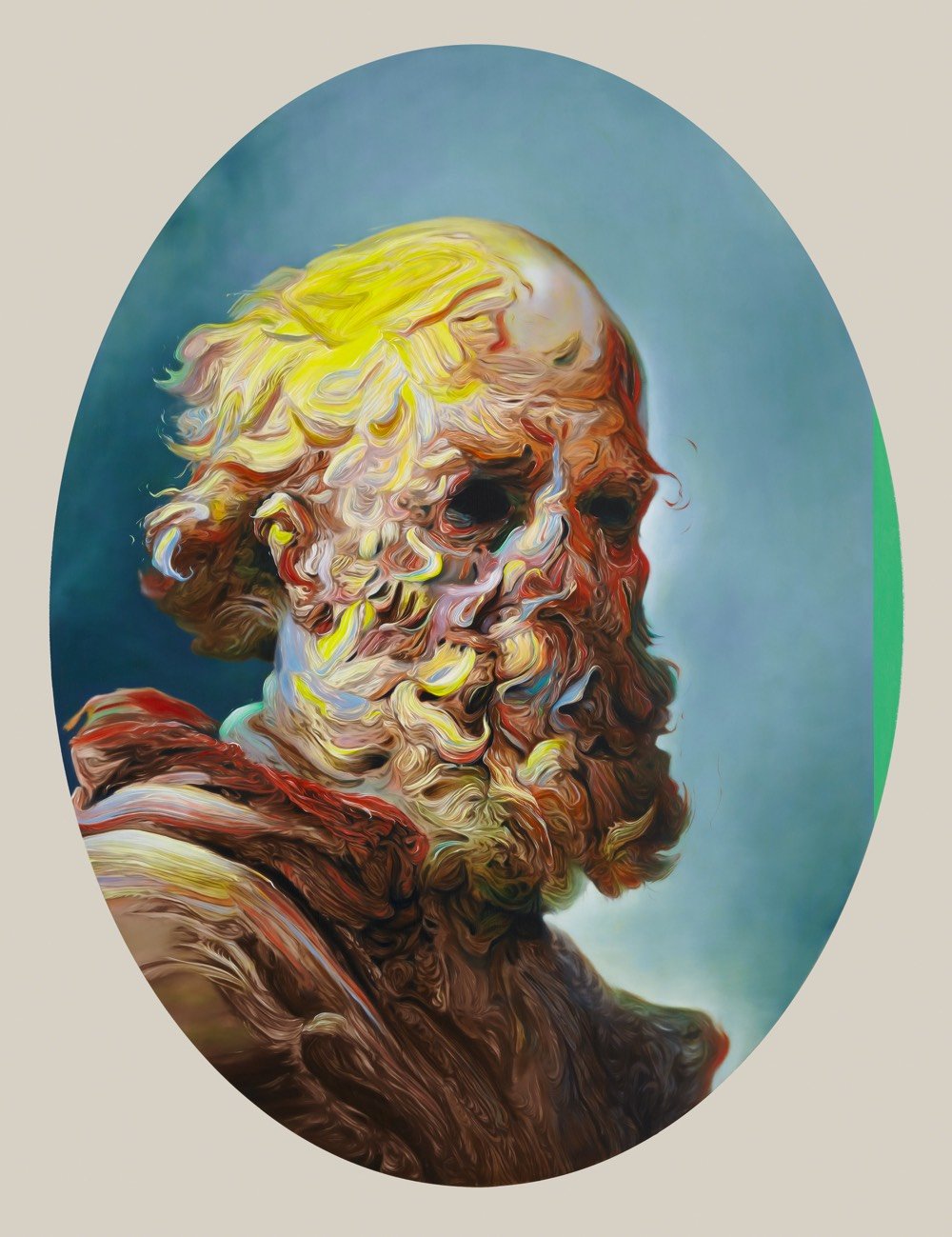
As one of the organizers, writer Philip Hoare, writes in The Guardian, Coleridge’s poem is particularly suited for the present situation, with its subject matter touching on isolation, plague, abolition, and the human impact on the natural world.
Roaring out of the radical 1790s, The Rime of the Ancient Mariner is a founding fable for our time. A fable must by definition revolve around an animal, and in Samuel Taylor Coleridge’s nightmare the slain albatross hangs around the fated sailor’s neck like a broken cross, an emblem of his sin against nature. It is all too relevant today, as a statement of isolation and despair: “Alone, alone, all, all alone, / Alone on a wide, wide sea!” Yet in that forlorn expression is great power; the power of art to change us.
You can watch the entire 41-minute read in this video (embedded above).
In this hauntingly beautiful video, Jonna Jinton performs an ancient Nordic herding call called kulning to summon a herd of cows.
The herds grazed during the daytime, wandering far from the cottages, and thus needed to be called in each night. Women developed kulning to amplify the power of their voices across the mountainous landscape, resulting in an eerie cry loud enough to lure livestock from their grazing grounds.
One should always take caution when hanging out with someone kulning, as it can’t be done quietly. Rosenberg, who’s researched the volume of kulning, says it can reach up to 125 decibels — which, she warns, is dangerously loud for someone standing next to the source. Comparable to the pitch and volume of a dramatic soprano singing forte, kulning can be heard by an errant cow over five kilometers away.
(via moss & fog)
This clip is from a 1947 French film about the imagined future of television called “Télévision œil de demain”. The film is based on a premise by science fiction author René Barjavel and directed by J.K. Raymond-Millet. It predicts not only handheld smartphone-like devices but also, with uncanny accuracy, the behavior that comes with them — like people walking around looking at screens, people on screens bumping into each other, oblivious screen users walking out in front of cars, etc. I mean, just look at this:
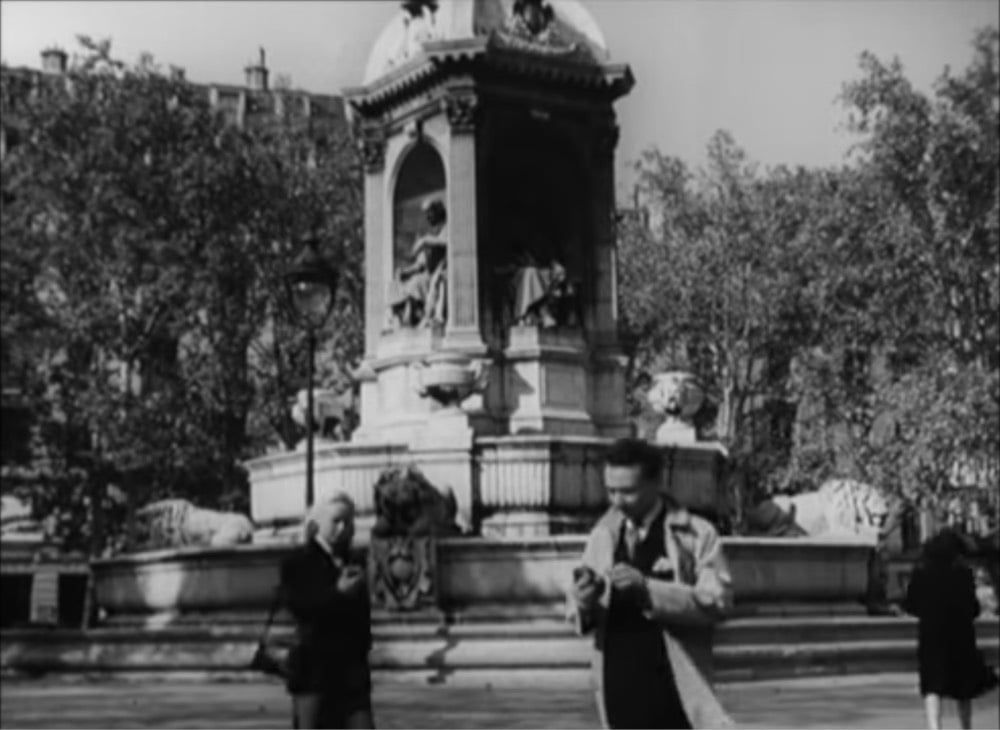
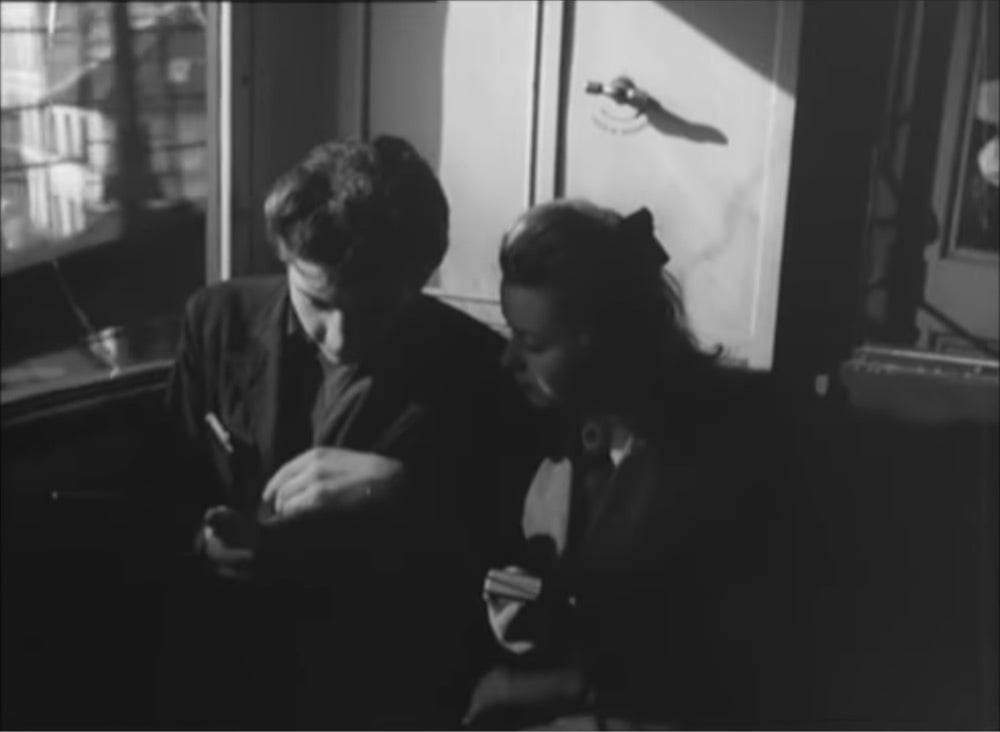
And a bit later in the clip, the film shows a car crash resulting from distracted driving.
See also some early smartphone predictions by Nikola Tesla (1926), W.K. Haselden (1919), and L. Frank Baum (1914):
When wireless is perfectly applied the whole earth will be converted into a huge brain, which in fact it is, all things being particles of a real and rhythmic whole. We shall be able to communicate with one another instantly, irrespective of distance. Not only this, but through television and telephony we shall see and hear one another as perfectly as though we were face to face, despite intervening distances of thousands of miles; and the instruments through which we shall be able to do his will be amazingly simple compared with our present telephone. A man will be able to carry one in his vest pocket.
And also from Mark Sullivan (1953):
In its final development, the telephone will be carried about by the individual, perhaps as we carry a watch today. It probably will require no dial or equivalent, and I think the users will be able to see each other, if they want, as they talk.
For the past 10 years now, NASA’s Solar Dynamics Observatory (SDO) has been capturing an image of the Sun every 0.75 seconds. To celebrate, NASA created this 61-minute time lapse video of all ten years, with each second representing one day in the Sun’s life. They have helpfully highlighted some noteworthy events in the video, including solar flares and planetary transits.
12:24, June 5, 2012 — The transit of Venus across the face of the Sun. Won’t happen again until 2117.
13:50, Aug. 31, 2012 — The most iconic eruption of this solar cycle bursts from the lower left of the Sun.
43:20, July 5, 2017 — A large sunspot group spends two weeks crossing the face of the Sun.
See also Gorgeous Time Lapse of the Sun.
For her series Counternarratives, artist and media critic Alexandra Bell takes newspaper articles and layouts from the NY Times that demonstrate racial bias and fixes them. For example, Bell took the notorious double profile of Michael Brown and his killer Darren Wilson and placed the focus entirely on Brown:
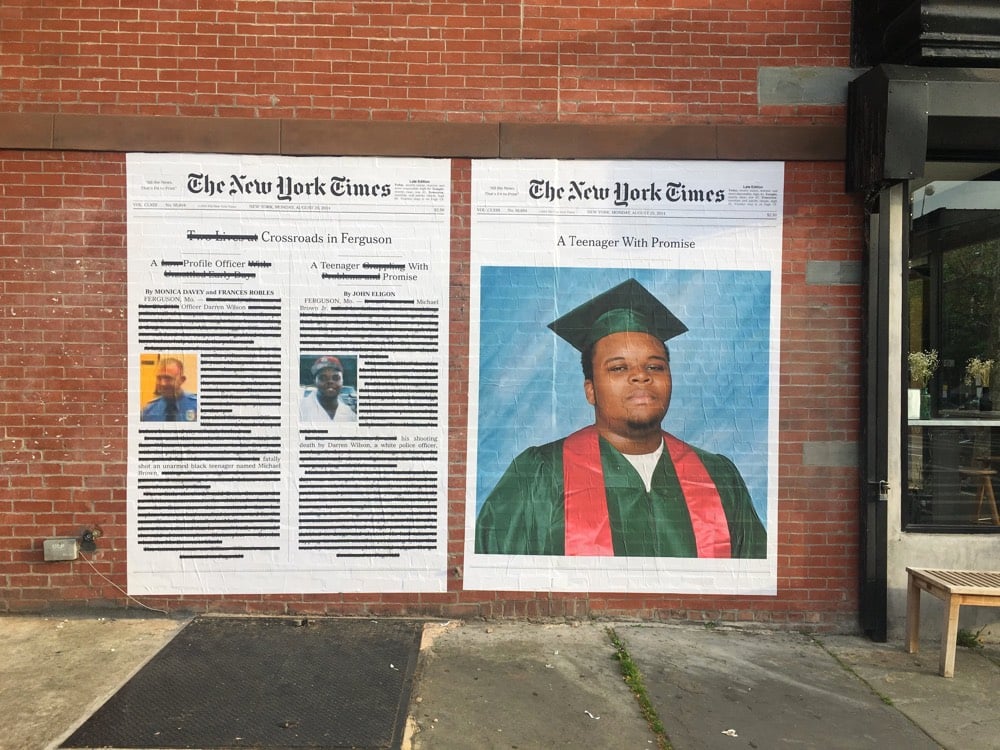
In this video, Bell explains her process:
I think everything is about race. Black communities, gay communities, immigrant communities feel a lot of media representations to be inadequate, biased. There’s a lot of reporting around police violence and black men, and I realized a lot of the arguments that we were having were about depictions. I started to wonder how different would it be if I swapped images or changed some of the text.
See also Kendra Pierre-Louis’ recent article for Nieman Lab: It’s time to change the way the media reports on protests. Here are some ideas.
Season four of The Handmaid’s Tale is coming to Hulu in 2021. I found season 3 to be increasingly outlandish — not in terms of the depicted fascist policies and behaviors of Gilead (Atwood has stated that in her books & the TV series, all events have a precedent) but just in terms of “How the hell is June still alive and working in Gilead?!” Also, the use of closeups of Elisabeth Moss’s facial expressions to convey emotion was overused to the point of cliche. But I will definitely give season four a shot, especially now that we know where the series is ultimately headed.
In this video from Vox, Estelle Caswell talks to Bethany Heck and Steven Heller about the seemingly ubiquitous typeface Cooper Black.
There’s a typeface that has made a resurgence in the last couple of years. It’s appeared on hip hop album covers, food packaging, and advertising. Perhaps you know it from the Garfield comics, Tootsie Roll logo, or the Pet Sounds album cover by the Beach Boys. It’s called Cooper Black, and its popularity and ubiquity has never waned in the hundred years since it was first designed.
Cooper Black tends to get a bad rap from type aficionados (too popular, too cartoony) but this video — and Heck’s comments in particular — have given me a new appreciation for it.
Well, this is a treat. In February, before the pandemic lockdown, Alicia Keys recorded a Tiny Desk Concert and NPR released the video earlier this week.
As she approached her piano, a bit surprised at the amount of people in the room, she smiled and remarked over her shoulder, “Gee, the Tiny Desk is tiny!” She kicked off the set with an uncanny ode to combat the darkness of this moment in American history: “Show Me Love,” a single she released in 2019. No one could have predicted then how much her lyrics and musical healing would be crucial during this emotionally fraught time of unprecedented political and racial unrest, heightened by three months of quarantine due to a global pandemic.
The stand-out moment during her Tiny Desk was the premiere of “Gramercy Park”, a song from her upcoming self-titled album, ALICIA, which is set to be released this fall. It’s one of those timeless songs that will transcend radio formats and genres, with lyrics that address how utter selflessness and worrying about making everyone happy but yourself can throw your own center askew. The song’s spiritual refrain is sure to be a sing-along moment for the rest of Keys’s career.
As an encore, she and her band played Fallin, her first big single. As someone in the comments said:
Can we all just appreciate the fact that she can pull fallin out her back pocket, dust it off like an old record, and make us fall in love all over again.
Keys’ almost casual brilliance blew me right away here. Wow.
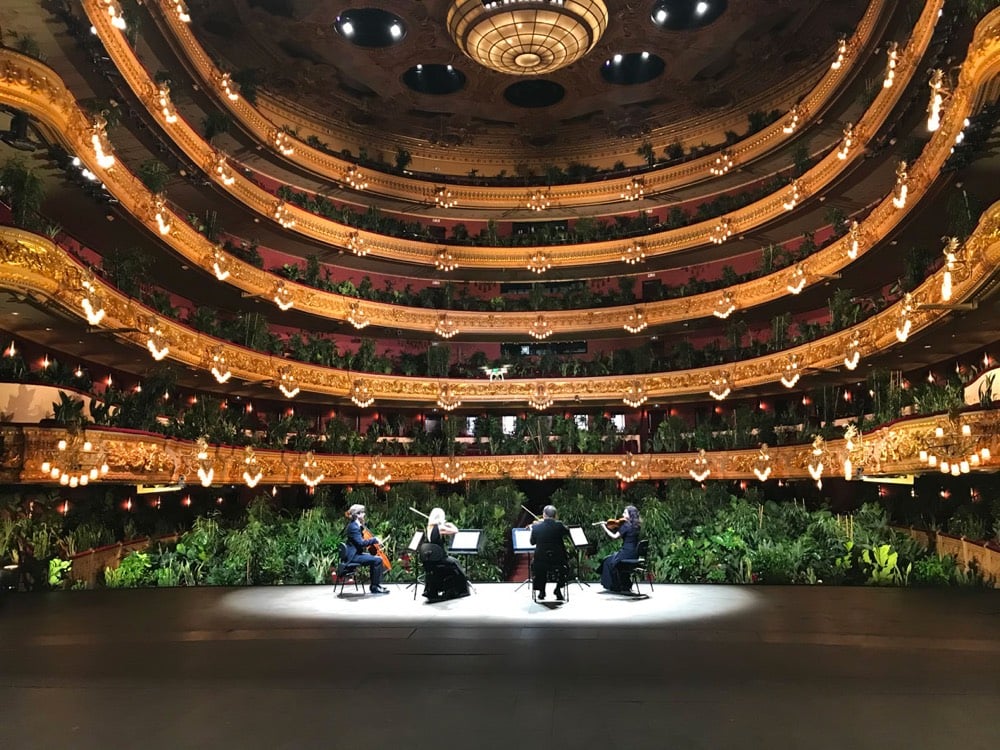
As promised last week, Barcelona’s Gran Teatre del Liceu reopened on Monday with a string quartet performance of Puccini’s Crisantemi played before a packed house of 2,292 plants. You can watch the performance here:
A strange & beautiful performance. I love that they did the “please silence your mobile phones and no pictures please” announcement before beginning.
The performance was the brainchild of artist Eugenio Ampudia, who wanted to “offer us a different perspective for our return to activity, a perspective that brings us closer to something as essential as our relationship with nature”. Afterwards, the plants were donated to healthcare workers who have been battling Covid-19 for the past few months.
See also A Forest Grows on an Austrian Soccer Pitch.
Former NFL linebacker and sports media personality Emmanuel Acho has started a video series on YouTube called Uncomfortable Conversations with a Black Man. From the first episode (of two), here’s his mission statement:
In the midst of all this chaos in our world, so many of y’all have reached out to me. And by y’all, I mean white people have reached out to me asking, “How can I help? How can I join in? How can I stand with you?” So I’ve created this for you because in order to stand with us and people that look like me, you have to be educated on issues that pertain to me. And fully educated so that you can feel the full level of pain so that you can have full understanding. I fervently believe that if the white person is your problem only the white person can be your solution. And so this is made for you my white brothers and sisters to increase your level of understanding so that you can increase your level of compassion and lead ultimately to change.
For the second episode, Acho sat down with fellow Austin resident Matthew McConaughey and yes, the conversation is a little cringe-y at times:
After watching that, you might be interested in reading Langston Hughes’ poem Let America Be America Again.
O, let America be America again-
The land that never has been yet-
And yet must be-the land where every man is free.
The land that’s mine-the poor man’s, Indian’s, Negro’s, ME-
Who made America,
Whose sweat and blood, whose faith and pain,
Whose hand at the foundry, whose plow in the rain,
Must bring back our mighty dream again.
In this video from Fender, the legendary producer/composer/guitarist Nile Rodgers sits down with his iconic Stratocaster and talks about how he took a folky tune that David Bowie came up with and turned it into the jazzy backbone of the pop song Let’s Dance, arguably Bowie’s biggest hit. Listening to where the song started off before Rodgers started tweaking, it’s hard for this musical simpleton to recognize that it’s even the same tune.
Update: Rodgers told a variation of this story in 2015.
Newer posts
Older posts

Socials & More