kottke.org posts about remix
A mashup of I Can’t Go For That (No Can Do) by Hall & Oates and Closer by Nine Inch Nails. It’s perfect, absolutely perfect, like dipping french fries into a Frosty or rolling in the snow after the sauna. It shouldn’t be, but it is.
I want to fuck you like an animal
(I can’t go for that)
I want to feel you from the inside
(No can do)
I got this from Dave Pell at Nextdraft — he said simply “trust me” and I’m glad I did.
See also Taylor Swift × Nine Inch Nails and Carly Rae Jepsen × Nine Inch Nails, both of which are better than they should be.
From a YouTube channel called There I Ruined It, this is NWA’s Straight Outta Compton reimagined as a Bavarian polka. You’re….welcome? (via digg)
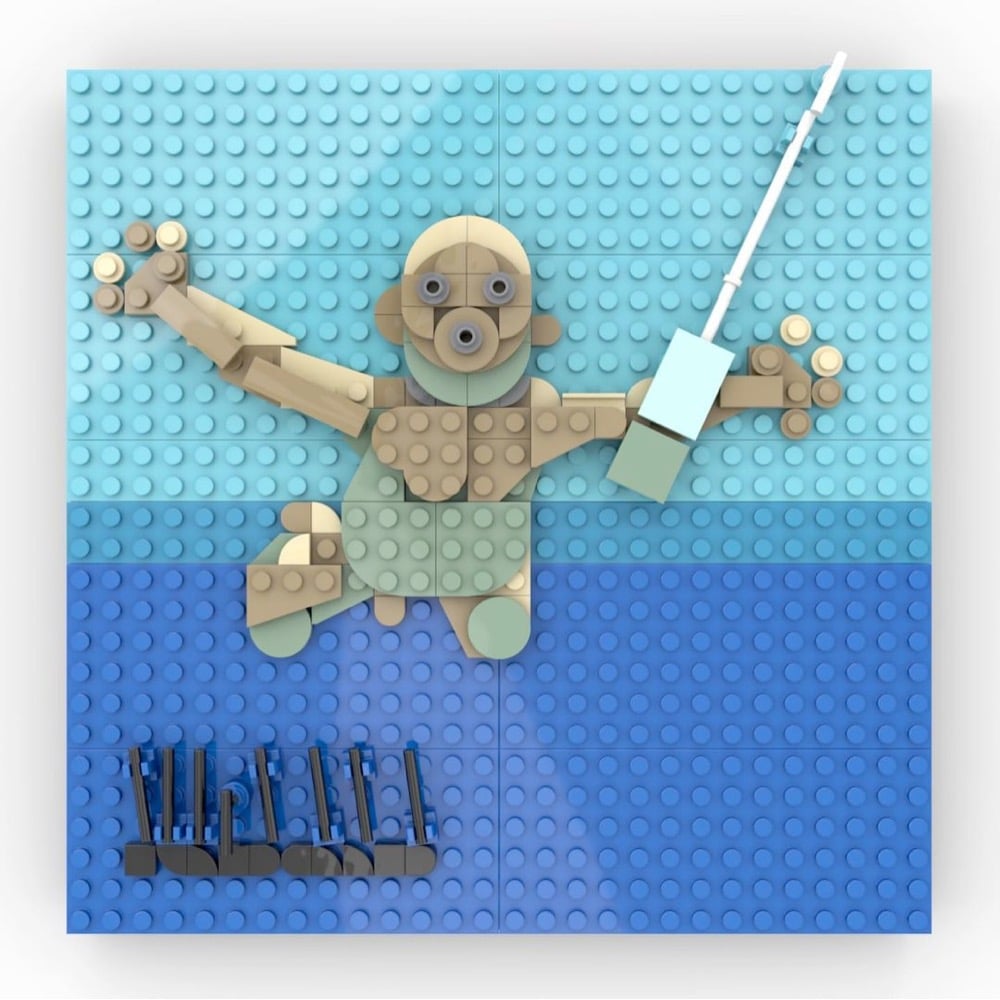
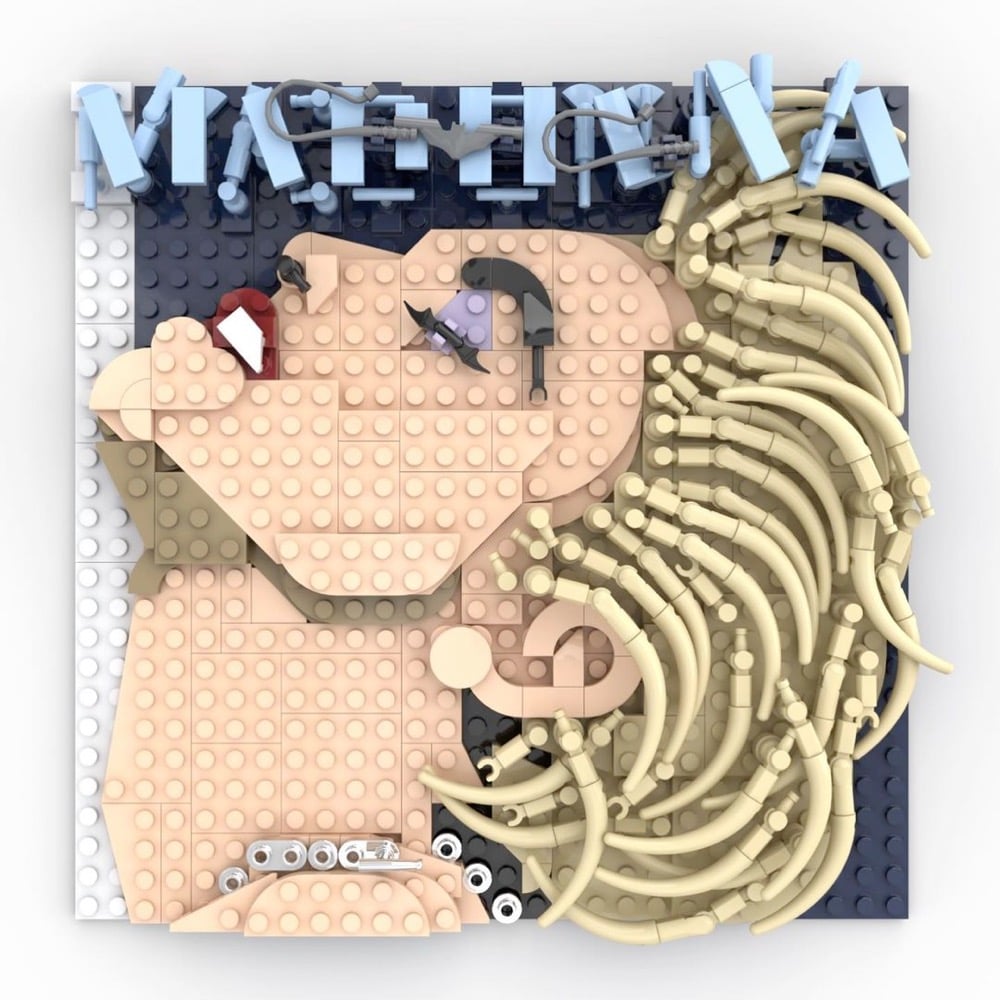
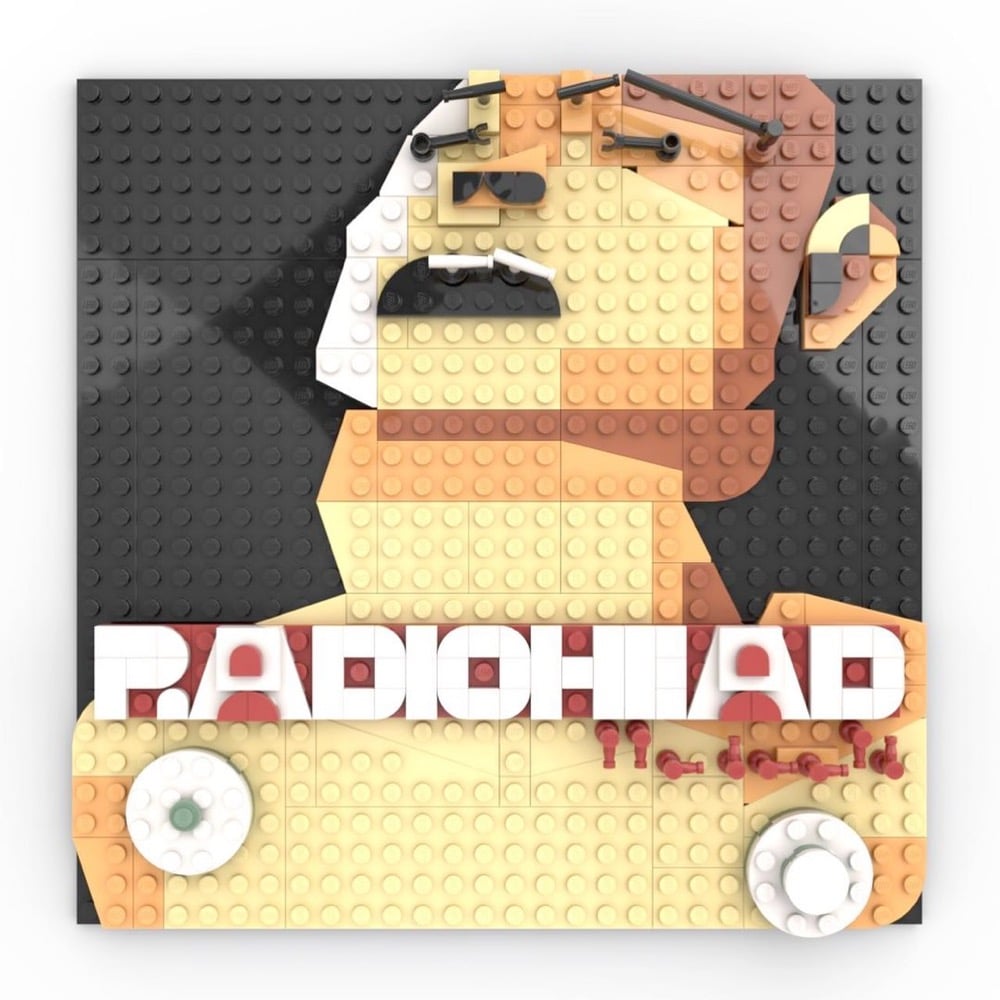

Check out these iconic album covers rendered in Lego by Adnan Lotia on Instagram. (thx, jenni)
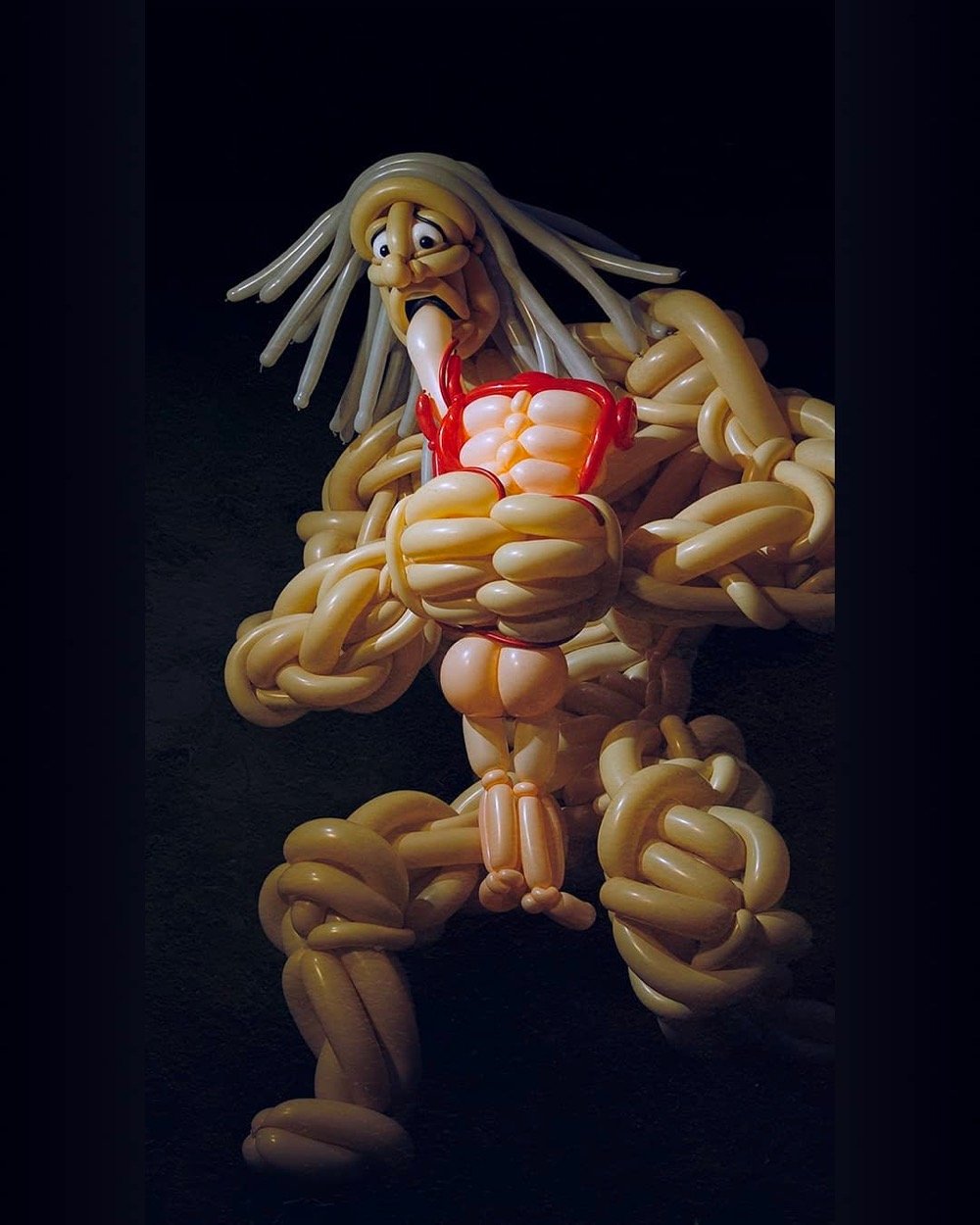
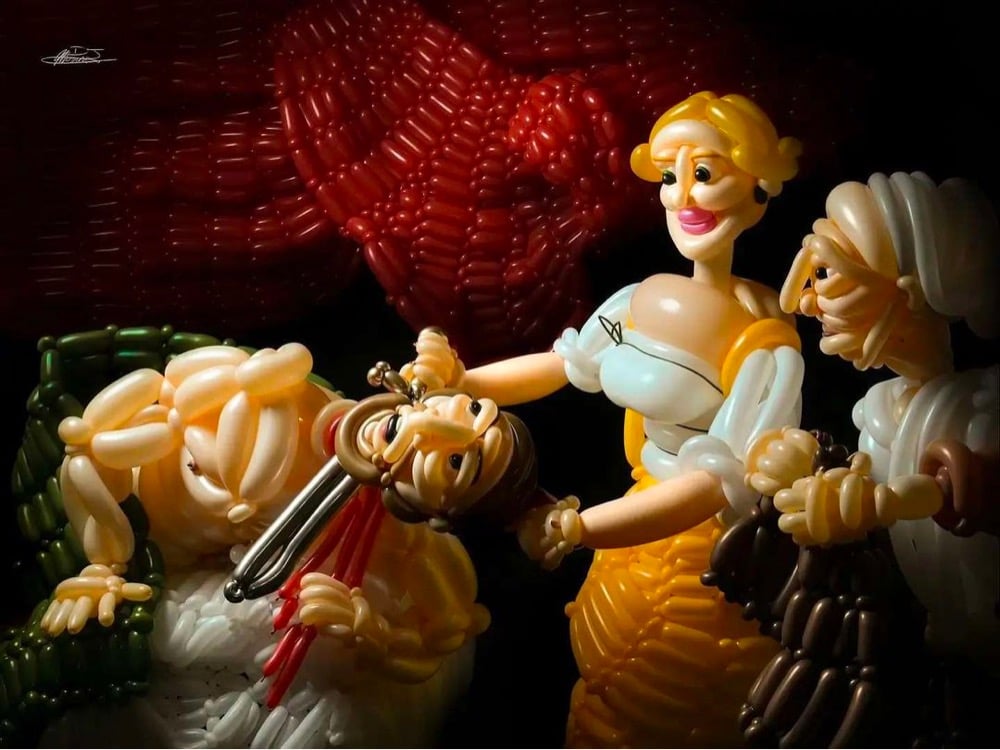
Balloon artist DJ Morrow has been branching out recently. Morrow makes elaborate balloon animals and other things but two of his latest creations are his amazing interpretations of Francisco Goya’s Saturn Devouring His Son and Judith Beheading Holofernes by Caravaggio. I can’t stop looking at these. And prints are available! (thx, caroline)


For his City Portraits series, Victor Enrich digitally modified photos to create absurdist and surrealist buildings that look like a lot of fun to live in.
See also 13 Jaw-Dropping Examples of Photoshopped Architecture.
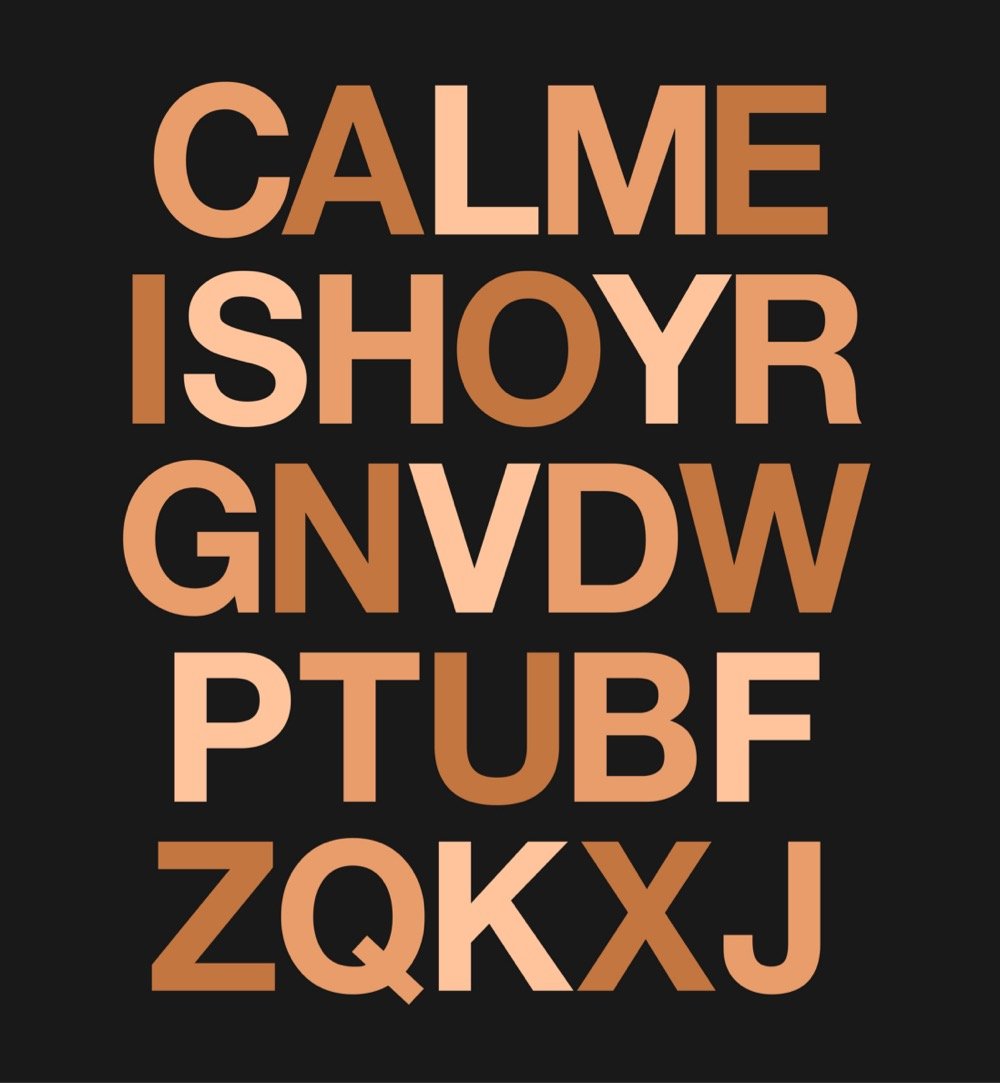
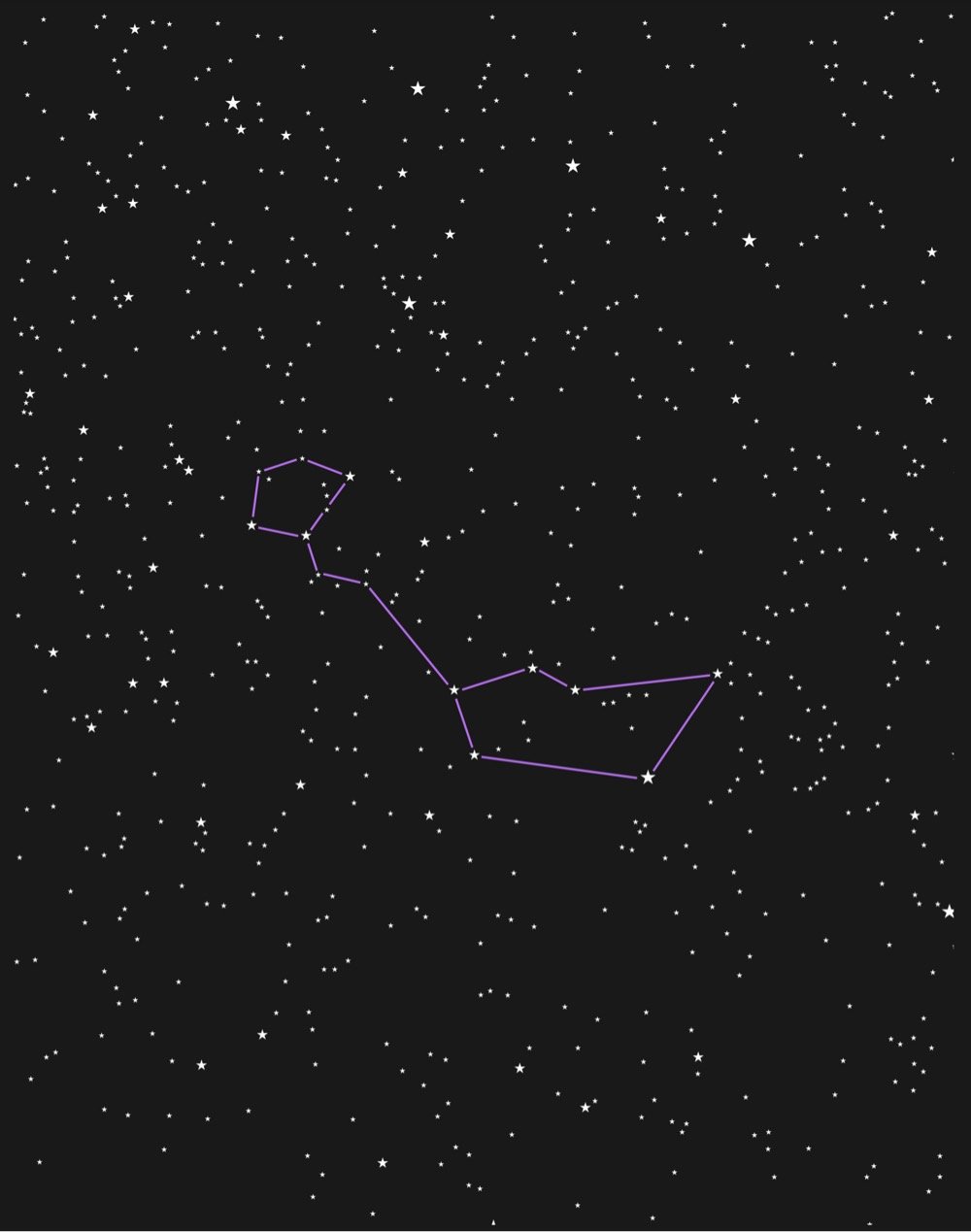
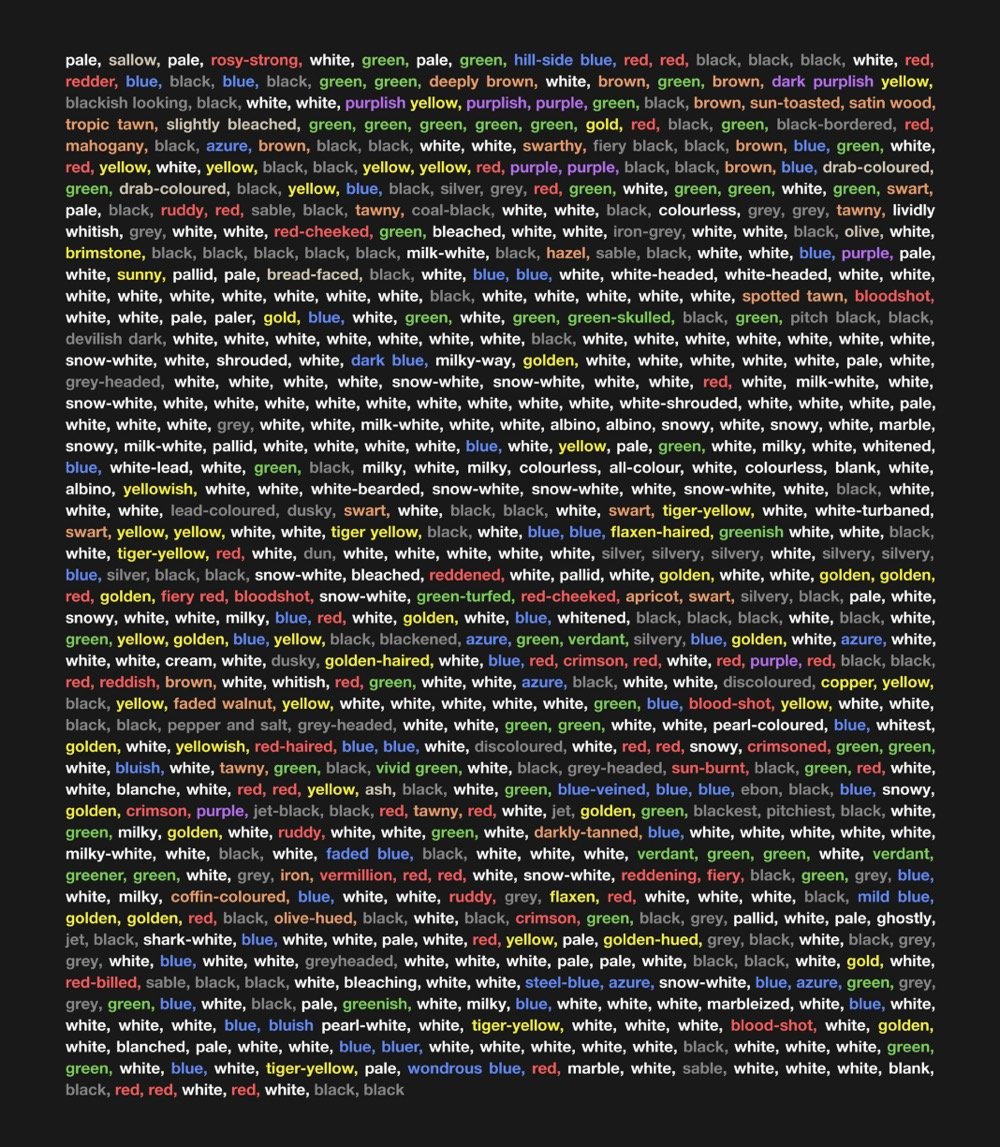
Peter Gorman of Barely Maps has published a wonderful little book called Kaleidoscope Brain that contains 100 visualizations of Moby-Dick. Gorman read Herman Melville’s masterpiece last year and made these maps & graphics to help him make sense of it.
I read Moby-Dick in April 2020. For weeks afterward, I couldn’t stop thinking about it. I started making maps and diagrams as a way to figure it out.
Moby-Dick is infamous for its digressions. Throughout the book, the narrator disrupts the plot with contemplations, calculations, and categorizations. He ruminates on the White Whale, and the ocean, and human psychology, and the night sky, and how it all relates back to the mystery of the unknown. His narration feels like a twisting-turning struggle to explain everything.
Reading Moby-Dick actually made me feel like that-like I’d mentally absorbed its spin-cycle style. I developed a case of “Kaleidoscope Brain.” The maps I was making were obsessive and encyclopedic. They were newer and weirder and they digressed beyond straightforward geography.
The book is available as a free download on Gorman’s Patreon — support his efforts if you find them valuable!
Above, from top to bottom: the letters of the alphabet in order of their appearance in the book, the constellation Cetus (aka “The Whale”), every color in the book.
To celebrate the 30th anniversary of their 16x platinum Black Album, Metallica is releasing an album on Sept 10th called The Metallica Blacklist, which contains Black Album covers featuring 53 different artists. One of those covers is Enter Sandman by Weezer, which you can watch above. Some of the other songs on the album include:
St. Vincent — Sad but True
The Hu — Through the Never
Phoebe Bridgers — Nothing Else Matters
Miley Cyrus Feat. Watt, Elton John, Yo-yo ma, Robert Trujillo, Chad Smith — Nothing Else Matters
Darius Rucker — Nothing Else Matters
Rodrigo y Gabriela — The Struggle Within
All profits from the album will be donated to charity. You can listen to the songs that have already been posted on Spotify, pre-save or pre-order the album, or check out this album trailer to hear what you’re getting into:
I’ve been listening to the Black Album a little bit recently (it came out my freshman year in college and so hits me right between the eyes) so I’m looking forward to checking this out.
I have been trying not to read too much about Morgan Neville’s documentary Roadrunner: A Film About Anthony Bourdain before I have had a chance to watch it, but the few things I have read about it have given me some pause. From Helen Rosner’s piece about the film drawn from an interview with Neville:
There is a moment at the end of the film’s second act when the artist David Choe, a friend of Bourdain’s, is reading aloud an e-mail Bourdain had sent him: “Dude, this is a crazy thing to ask, but I’m curious” Choe begins reading, and then the voice fades into Bourdain’s own: “…and my life is sort of shit now. You are successful, and I am successful, and I’m wondering: Are you happy?” I asked Neville how on earth he’d found an audio recording of Bourdain reading his own e-mail. Throughout the film, Neville and his team used stitched-together clips of Bourdain’s narration pulled from TV, radio, podcasts, and audiobooks. “But there were three quotes there I wanted his voice for that there were no recordings of,” Neville explained. So he got in touch with a software company, gave it about a dozen hours of recordings, and, he said, “I created an A.I. model of his voice.” In a world of computer simulations and deepfakes, a dead man’s voice speaking his own words of despair is hardly the most dystopian application of the technology. But the seamlessness of the effect is eerie. “If you watch the film, other than that line you mentioned, you probably don’t know what the other lines are that were spoken by the A.I., and you’re not going to know,” Neville said. “We can have a documentary-ethics panel about it later.”
Per this GQ story, Neville got permission from Bourdain’s estate:
We fed more than ten hours of Tony’s voice into an AI model. The bigger the quantity, the better the result. We worked with four companies before settling on the best. We also had to figure out the best tone of Tony’s voice: His speaking voice versus his “narrator” voice, which itself changed dramatically of over the years. The narrator voice got very performative and sing-songy in the No Reservation years. I checked, you know, with his widow and his literary executor, just to make sure people were cool with that. And they were like, Tony would have been cool with that. I wasn’t putting words into his mouth. I was just trying to make them come alive.
As a post hoc ethics panel of one, I’m gonna say this doesn’t appeal to me, but I bet this sort of thing becomes common practice in the years to come, much like Errol Morris’s use of reenactment in The Thin Blue Line. A longer and more nuanced treatment of the issue can be found in Justin Hendrix’s interview of Sam Gregory, who is an “expert on synthetic media and ethics”.
There’s a set of norms that people are grappling with in regard to this statement from the director of the Bourdain documentary. They’re asking questions around consent, right? Who consents to someone taking your voice and using it? In this case, the voiceover of a private email. And what if that was something that, if the person was alive, they might not have wanted. You’ve seen that commentary online, and people saying, “This is the last thing Anthony Bourdain would have wanted for someone to do this with his voice.” So the consent issue is one of the things that is bubbling here. The second is a disclosure issue, which is, when do you know that something’s been manipulated? And again, here in this example, the director is saying, I didn’t tell people that I had created this voice saying the words and I perhaps would have not told people unless it had come up in the interview. So these are bubbling away here, these issues of consent and disclosure.
Update: From Anthony’s ex-wife Ottavia Bourdain about the statement that “Tony would have been cool with that”:
I certainly was NOT the one who said Tony would have been cool with that.
(via @drawnonglass)
In collaboration with Jun Takahashi, Thom Yorke has released a “Very 2021” remix of his band’s iconic Creep. Slow and reverby, the singer’s perhaps-least-favorite Radiohead song takes on new life for this (second?) oddest of years. On first listen, I like but maybe don’t love this version, but some of the YT comments are worth reading:
Can’t believe Thom Yorke finally collaborated with Radiohead. Two of my favorite artists making a song together
Thom has went so far into artistic discovery he looped back on himself. It’s like post-post-irony, but musically
I can’t believe Thom made a doomer wave version of his own fucking song
Thom nailed this one, he sounds just like the originals singer!
You can find the song on a variety of platforms.
Last week I posted about the digital “restoration” of Rembrandt’s The Night Watch with the help of an AI program.
Using a contemporary copy of the full scene painted by Gerrit Lundens and an AI program for getting the colors and angles right, the Rijksmuseum has “restored” The Night Watch, augmenting the painting with digital printouts of the missing bits.
Edith Zimmerman got access to this technology and ran some of her own experiments of famous artworks. You may be shocked and delighted at what she found.
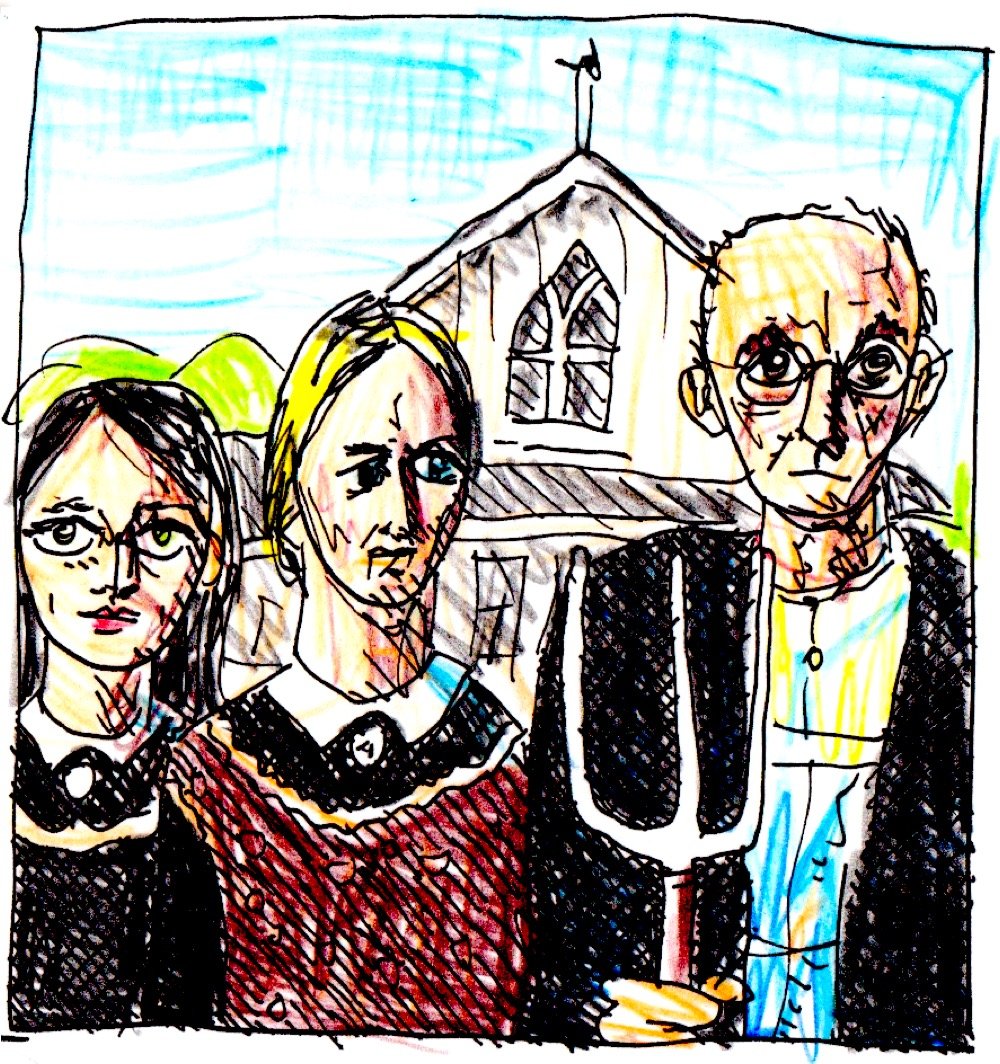
Well this is peak…something: last night surprise guest Dave Chappelle led fans in a singalong of Radiohead’s Creep at the Foo Fighters’ Madison Square Garden show (which you had to be vaccinated to get in to). Not much more to say about it — you’re either going to watch it or not based on that info. Nature is healing?!
Patrick Stewart, displaying the Shakespearian acting chops that landed him the role of Captain Picard on Star Trek: The Next Generation, appeared on Sesame Street in 1996, performing a parody of Hamlet’s soliloquy with the letter “B”. Stewart never doesn’t give it his all when acting.
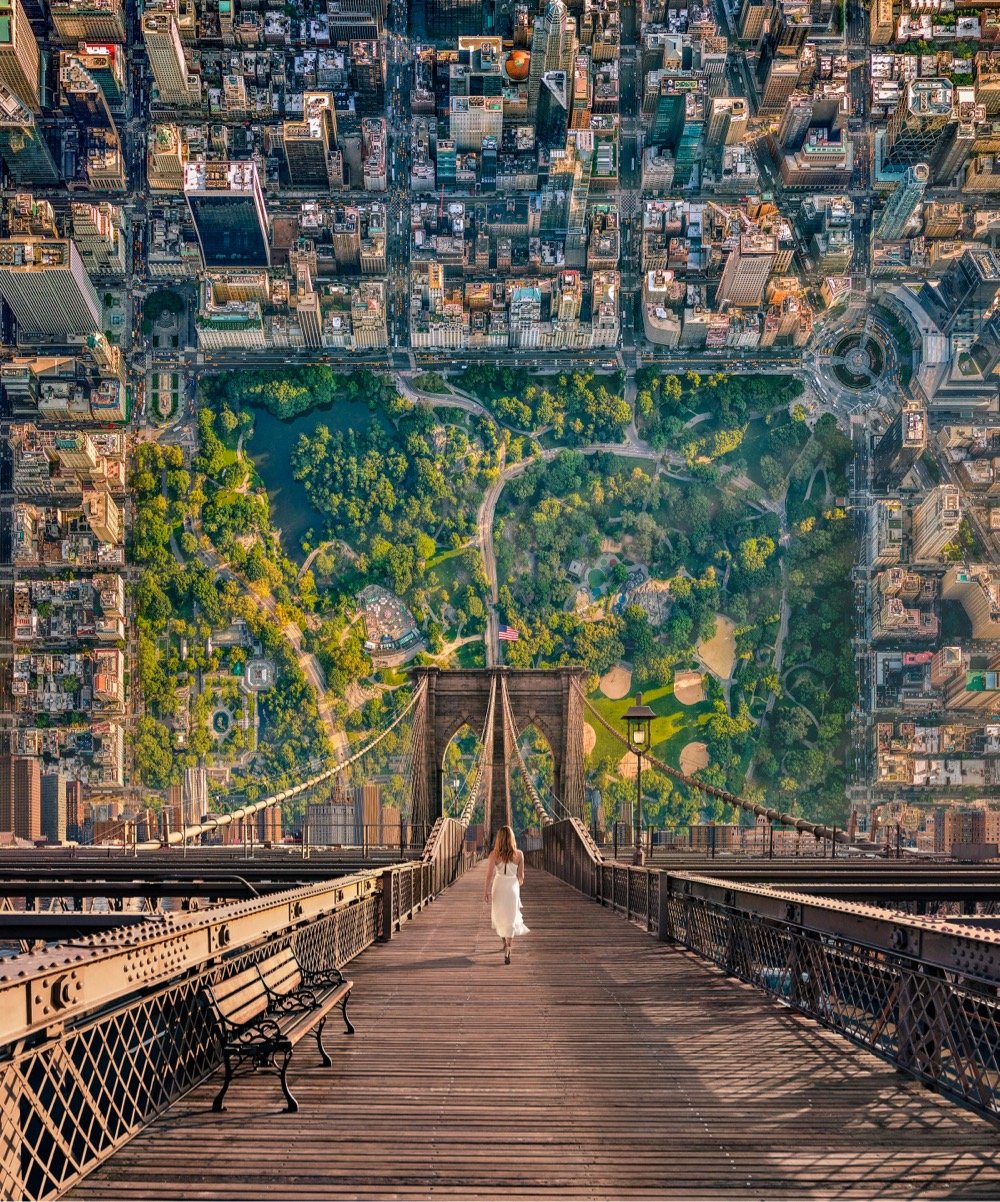

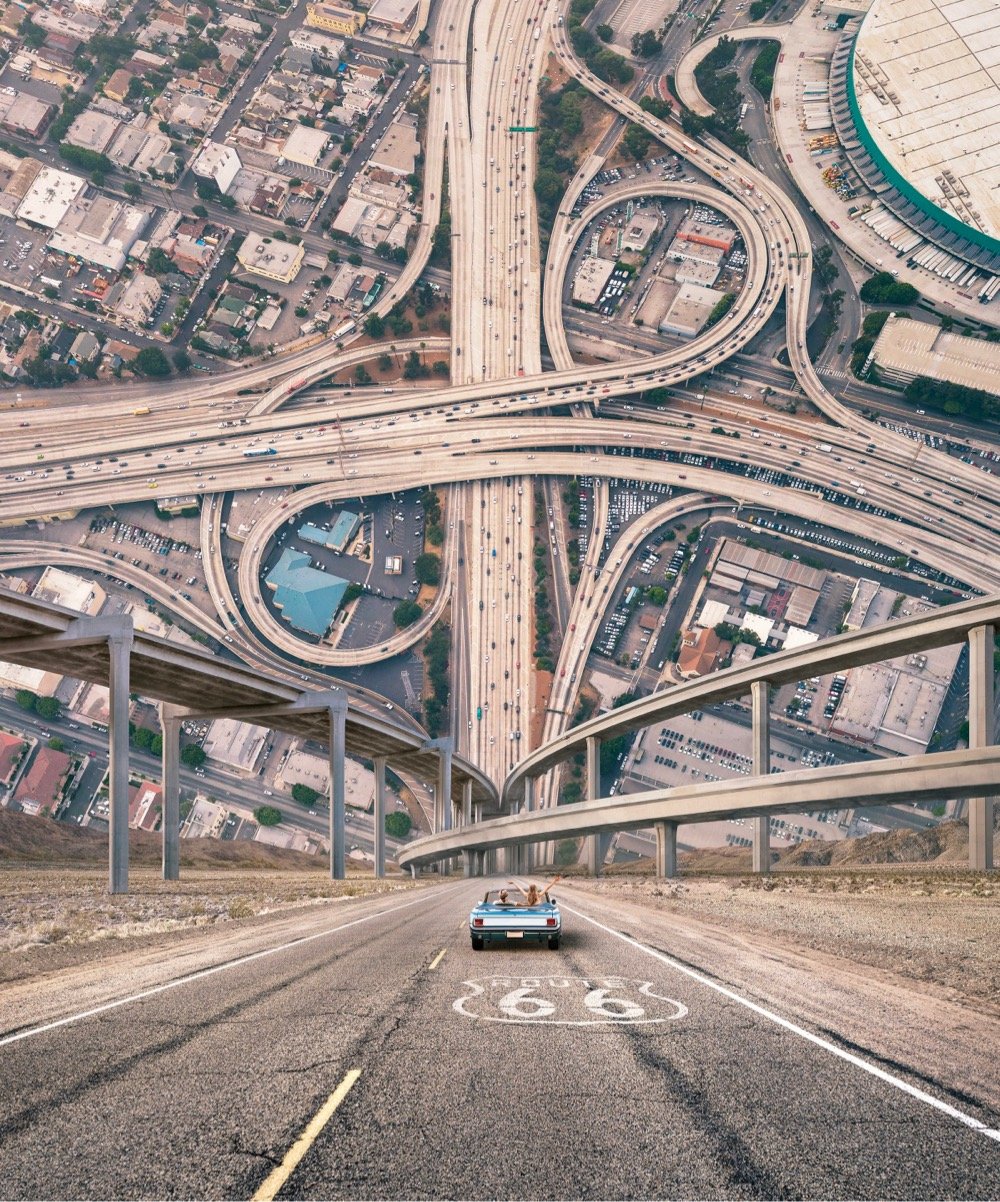
These surrealistic images were created by Cream Electric Art for a United Airlines ad campaign. Here’s a quick behind-the-scenes on how the Route 66 image was constructed. Prior art: Berg’s Here & There map of Manhattan, Inception, and these curved cityscape panoramas. (via moss & fog)
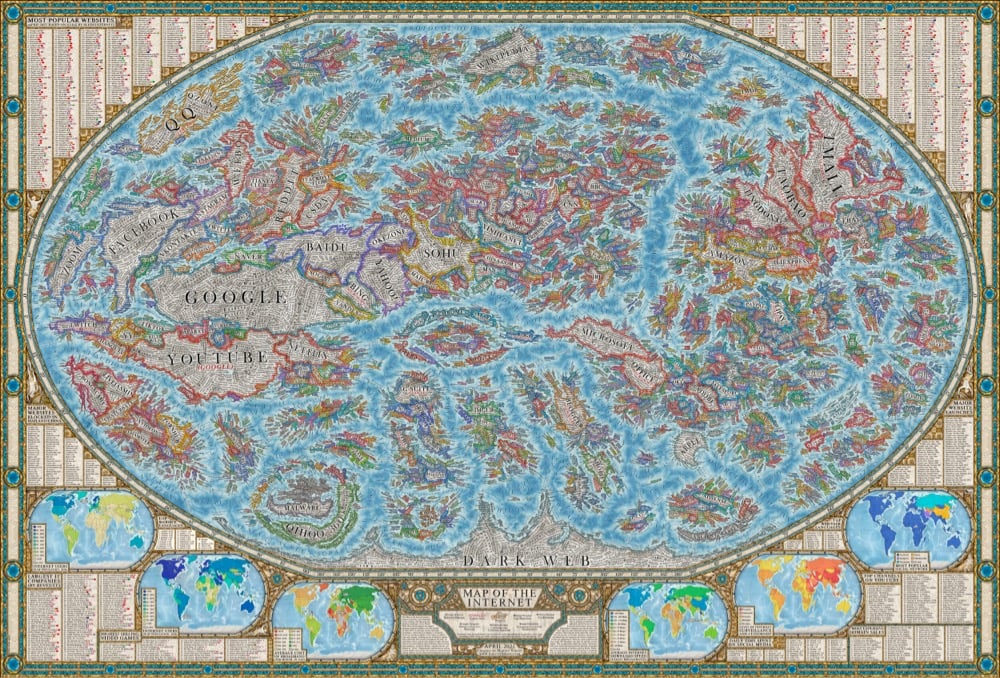
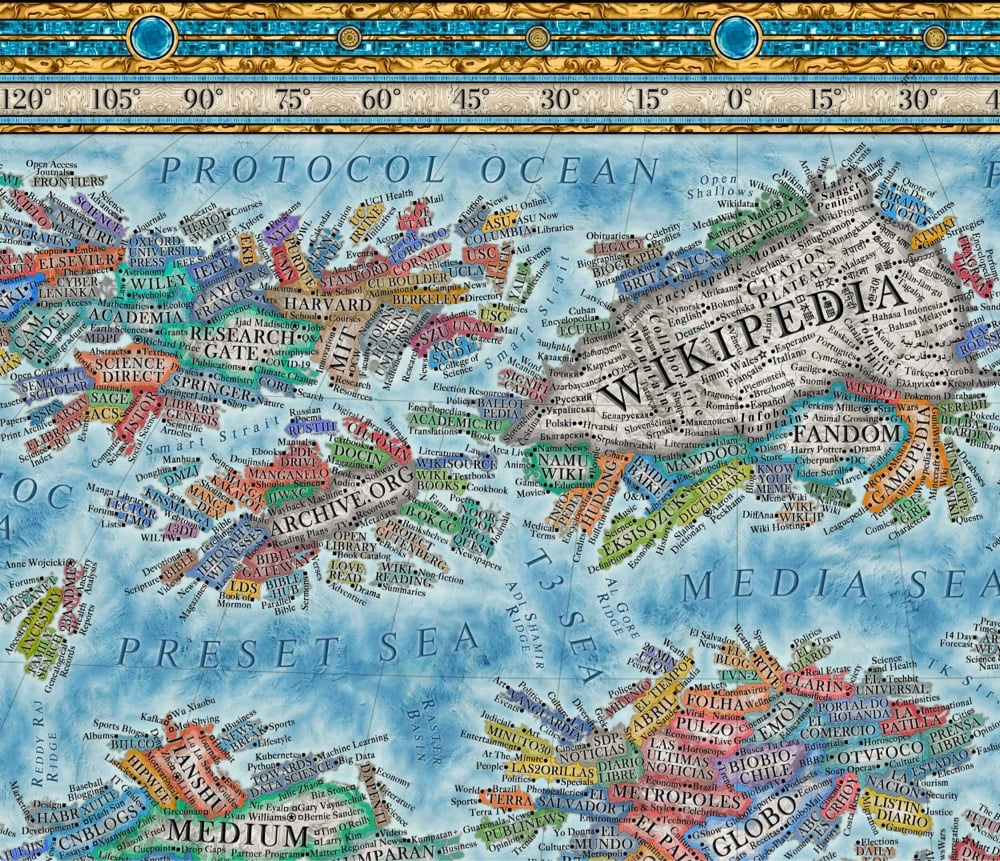
Translating sites, search engines, social networks, browsers, ISPs, and other internet entities into geographic features, Martin Vargic has created a map of the internet circa 2021.
It includes several thousand of some of the most popular websites, represented as distinct “countries”, which are grouped together with others of similar type or category, forming dozens of distinct clusters, regions and continents that stretch throughout the map, such as “news sites”, “search engines”, “social networks”, “e-commerce”, “adult entertainment”, “file sharing”, “software companies” and so much more. In the center of it all can be found ISPs and web browsers, which form the core and backbone of the internet as we know it, while the far south is the domain of the mysterious “dark web”.
See also an actual map of the known internet from May 1973.
Newer posts
Older posts





Socials & More