The Black List is the collection of scripts that got movie executives most excited in 2009. Here’s #1:
1. The Muppet Man By Christopher Weekes
What it’s about: The life and times of the late Jim Henson, the man behind Sesame Street and The Muppets.
What it’s like: The Andy Kaufman biopic Man on the Moon, but with puppets. This moving story depicts the life of a creative genius, with occasional surreal appearances by the likes of Kermit and Miss Piggy.
I’m ashamed of Rosebud. I think it’s a rather tawdry device. It’s the thing I like least in Kane. It’s kind of a dollar book Freudian gag. It doesn’t stand up very well.
Even calmly answering interview questions and sipping on tea from fine china, Welles is an imposing presence. (via clusterflock)
Between the Folds is a documentary about people who really really like origami.
Between the Folds chronicles the stories of ten fine artists and intrepid theoretical scientists who have abandoned careers and scoffed at hard-earned graduate degrees — all to forge unconventional lives as modern-day paperfolders.
Watching Stanley Kubrick’s Barry Lyndon is a pleasure, like eating a very good soup. It is very stylised and then suddenly comes some emotion [when the child falls off the horse]. There is not a lot of emotion. There are a lot of moods and some fantastic photography, really like these old paintings.
Thank God he didn’t have a computer. If he had a computer at that time, you wouldn’t care, but you know he has been waiting three weeks for this mountain fog or whatever. It is overwhelming with the boy, because it is suddenly this emotional thing. The character Barry Lyndon is not very emotional. In fact, he is the opposite. He is an opportunist.
I saw the film when it came out. I was in my early twenties. The first time I saw it, I slept. It was on too late and it is a very, very long film. What is interesting is that Nicole Kidman told me Kubrick hated long films. If you have seen Barry Lyndon, the last scene of the film, where she is writing out a cheque for him, is extremely long. It goes on and on and on, but it’s beautiful.
The good thing is that Kubrick always sets his standards. Barry Lyndon to me is a masterpiece. He casts in a very strange way, Kubrick. It is a very strange cast. But that is how the film should be, of course. This thing that he liked short films was very surprising. And he liked Krzysztof Kieslowski very much. He was crazy about Kieslowski.
I don’t know if Kubrick saw any of my films, but I know Tarkovsky watched the first film I did and hated it! That is how it is supposed to be.
“The first time I saw it, I slept” will be my go-to answer for lots of things from now forward.
Scenes from several movies that depict New York being destroyed (Day After Tomorrow, Ghostbusters, Independence Day, etc.) accompanied by George Gershwin’s Rhapsody in Blue, which famously accompanies a similar but less violent montage at the beginning of Woody Allen’s Manhattan.
Cooking, perhaps more than any activity, lets an actor exude absolute physical and intellectual mastery without seeming domineering or smug. Why is that? It’s probably because, while cooking is a creative talent that has a certain egotistical component (what good cook isn’t proud of his or her skills?), there’s something inherently humbling about preparing food for other people. It doesn’t matter whether you’re a workaday gangster footsoldier giving lessons on how to cook for 20 guys, like Richard Castellano’s Clemenza in The Godfather, or a hyper-articulate, super-fussy kitchen philosopher like Tony Shalhoub in Big Night, (“To eat good food is to be close to God…”), when you’re cooking, it’s ultimately not about you; it’s about the people at the table. Their approval and pleasure is the end game.
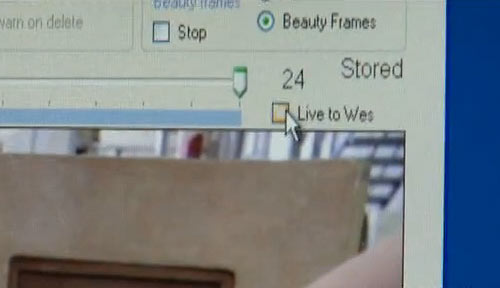
From Making Of, a further look at how the animation of Fantastic Mr. Fox was coordinated through the use of a custom-built software system that allowed for remote direction.
The best part about the setup is that the software interface for the cameras has a “Live to Wes” button that will stream the live feed from a particular camera to Wes Anderson for immediate viewing.
In this feature-length documentary, Troy James Hurtubise goes face to face with Canada’s most deadly land mammal, the grizzly bear. Troy is the creator of what he hopes is a grizzly-proof suit, and he repeatedly tests his armour — and courage — in stunts that are both hair-raising and hilarious.
Prompted by my post about how few non-adapted/sequel/franchise films there are on the list of the top-grossing films of the 2000s (9 out of 50), kottke.org reader Keith took a look at the Best Picture Oscar nominees for the decade and noticed that the percentage of original properties was actually lower (7 out of 45). From his email:
This leaves 7 that are original. Gladiator, Gosford Park, Lost in Translation, Crash, Babel, Little Miss Sunshine, Juno, and Michael Clayton.
You’ll note that 7/45 (15.556%) is worse than 9/50 (18%). So it seems that the box office appreciates originality more than the Academy. Take from this what you will. I might suggest that this is a poor way to truly gauge originality, as the top 50 box office grossers of the decade is a pretty high bar (500 million+), and seems to demand some kind of familiarity in order to attract the rapid widespread viewing needed for a big theatrical run. Alternately, it builds into the argument that most creativity is follow-on. I would venture a guess that if we dove deeper, into say, every movie that made at least $100 million in the decade, the ratio of original properties would be a bit more palatable.
Thanks, Keith! Also interesting is a comparison between the top grossing films of the 2000s and those for the 1990s and the 1980s. You don’t have to delve too far to see how much has changed. Of the top 15 films in the 1990s, 7 are original properties: Independence Day, The Lion King, Sixth Sense, Armageddon, Home Alone, Ghost, and Twister. For the 1980s, a consensus on the top 10 grossing films is difficult to come by, but using the Wikipedia one yields 5 original properties out of the top 10: ET, Raiders of the Lost Ark, Ghostbusters, Beverly Hills Cop, and Back to the Future (other lists I saw included Top Gun and Rain Man but also Who Framed Roger Rabbit? (adapted)).
Clearly sequels, adaptations, and franchises ruled in the 2000s much more than in the 1990s or 1980s. But if you go back to the 1970s, only 2 or 3 of 10 top-grossing films are original: Star Wars, Close Encounters of the Third Kind, and perhaps The Sting. So maybe the 2000s were a return to old ways for Hollywood?
In stop motion animation, Wes Anderson has found the perfect medium for telling his special brand of precise yet fanciful tales. I won’t go so far as to say that it’s his best film — Rushmore will be difficult to dislodge from its perch — but there are some pretty special moments in Fantastic Mr. Fox.
While the film deviates from Roald Dahl’s book quite a bit — only the middle third is straight from the book — the story holds true to the sense of playful mischieviousness evident in Dahl’s books for children. (I especially liked the drugged blueberry bit that Anderson purloined from Danny, the Champion of the World, my favorite Dahl story.) I can’t say for sure whether or not the movie is good for kids, but the two nine-year-old boys sitting next to me in the theater loved it…although they also loved the Tooth Fairy and the Alvin and the Chimpmunks: the Squeakquel trailers, so YMMV.
Wikipedia gets into the 2000s roundup game with a main article and a number of topic-based summaries, including fashion, film, and sports. From the fashion page:
In hip hop, the throwback jersey and baggy pants (popular in the ’90s to 2004) look was replaced with the more “grown man” look which was highly popularized by Kanye West around the year 2005.
If you say so. More interesting is the chart of the 20 highest grossing movies from the film page (the top 3 each grossed $1 billion+ worldwide):
1. The Lord of the Rings: The Return of the King
2. Pirates of the Caribbean: Dead Man’s Chest
3. The Dark Knight
4. Harry Potter and the Philosopher’s Stone
5. Pirates of the Caribbean: At World’s End
6. Harry Potter and the Order of the Phoenix
7. Harry Potter and the Half-Blood Prince
8. The Lord of the Rings: The Two Towers
9. Shrek 2
10. Harry Potter and the Goblet of Fire
11. Spider-Man 3
12. Harry Potter and the Chamber of Secrets
13. Ice Age: Dawn of the Dinosaurs
14. The Lord of the Rings: The Fellowship of the Ring
15. Finding Nemo
16. Star Wars Episode III: Revenge of the Sith
17. Transformers: Revenge of the Fallen
18. Spider-Man
19. Shrek the Third
20. Harry Potter and the Prisoner of Azkaban
Only one movie on the list was made from an original screenplay: Finding Nemo…the rest are all sequels or adapted from books, TV shows, amusement park rides, etc. Out of the top 50, only nine are not franchise films.
3. The Rock - Director Michael Bay, 1996 Ugh. That’s right. I failed to mention up top that there are not one, but two Michael Bay films in the Criterion Collection. It’s the kind of shock-inducing information you need delivered in increments. If they wanted to include an Alcatraz movie, uh, why not Escape from Alcatraz? Perhaps Criterion felt they needed a couple of signature “explosion” films to represent the genre. But given that logic, why not throw in Every Which Way but Loose to represent the “truck driver with an orangutan sidekick” genre too?
Also, Michael Bay is doing a remake of Hitchcock’s The Birds? What? WHAT??
I was watching The Perfect Storm on The Weather Channel the other night and witnessed the worst cut to commercial in the history of television.
If you’re not familiar with the film, this is *the* scene in the movie, the climax…when this huge wave overwhelms the Andrea Gail and all souls are lost at sea. Bravo, Weather Channel. Next time, have somebody view the movie before you chop it up randomly for ads.
Update:This one might be worse. With about two minutes remaining in extra time of a 0-0 match between Everton and Liverpool, ITV cut away to commercial and back just in time…to see the players celebrating the winning goal. I think “wankers!” is the appropriate response here.
This cut to commercial during Battlestar Galactica (spoilers! or so I’m told) is pretty bad as well. (thx, michael & gerald)
The thing is, truth is always at the center of Morris’ films, as you’d expect of a documentary filmmaker, but he also acknowledges that truth is a complicated thing; he’s always toying with questions of truth and fiction. Morris’ films aren’t about The Truth; they’re about our personal, private truths, as well as the lies and rationalizations we create for our actions. So fiction and lies and manipulation are also at the center of Morris’ films. Fiction is as much the spine of his work as truth.
A short video about the making of Fantastic Mr. Fox.
In it, you can see a brief glimpse of one of the emailed videos that Wes Anderson sent his London-based crew from Paris.
As well, for reference, the director would send short films of himself enacting certain scenes. “It’s kind of embarrassing,” Anderson said, laughing. “For most of these things, the performance is just a few seconds. Somebody hearing a noise and looking at their watch. The simplest way to relate how to do it is to make these little movies.”
The making of video is from a site called, uh, Making Of, which was co-founded by Natalie Portman and contains a bunch of interesting stuff: a bunch of on-the-set stuff from A Serious Man, Where the Wild Things Are, The Lovely Bones, etc., director interviews from the likes of Aronofsky, Neill Blomkamp, Michel Gondry, Mira Nair, etc., and all sorts of other stuff. (via @akstanwyck)
After doing the script, working with the actors, and supervise the set design, Wes Anderson directed Fantastic Mr. Fox over email. He also didn’t want to use many contemporary stop-motion animation techniques. Both of these decisions ruffled some feathers.
“It’s not the most pleasant thing to force somebody to do it the way they don’t want to do it,” Anderson said. “In Tristan’s case, what I was telling him was, ‘You can’t use the techniques that you’ve learned to use. I’m going to make your life more difficult by demanding a certain approach.’
“The simple reality is,” Anderson continued, “the movie would not be the way I wanted it if I just did it the way people were accustomed to doing it. I realized this is an opportunity to do something nobody’s ever seen before. I want to see it. I don’t want afterward to say, ‘I could have gone further with this.’”
Note: If you are a member and tried to log in, it didn't work, and now you're stuck in a neverending login loop of death, try disabling any ad blockers or extensions. Or try logging out and then back in. Still having trouble? Email me!






Socials & More