kottke.org posts about movies
I tend not to like superhero movies as a genre — they take themselves far too seriously for something that’s supposed to be fun — but I really enjoyed Deadpool and it looks like Deadpool 2 is going to be more of the same so, yeah, I’ll see that when it comes out.
(This trailer was attached to the front end of Logan, which I also really liked. Yes, the movie took itself very seriously, but it was also a reminder that modern blockbuster movies are stuffed with acting talent and if you give those underutilized actors good material and let them go, good things happen.)
To The Right is a collection of left-to-right tracking shots from movies assembled by Candice Drouet. Included are films like Jackie Brown, Fight Club, Little Miss Sunshine, Psycho, The Shining, and The Grand Budapest Hotel.
Ezra Edelman’s fantastic documentary OJ: Made in America won the Oscar for best documentary this year. In a video for Fandor, Joel Bocko explains while the film’s focus is on Simpson, it also explores seven broader themes about contemporary America: sports, the media, Los Angeles, class, domestic abuse, policing, and race.
OJ: Made in America emerges not simply as a brilliant biography, it’s also a stunning social portrait that can stand beside any novel, epic film, or piece of longform journalism.
And in this video for The Atlantic, Edelman explains how, before murdering his ex-wife, Simpson was an advertising pioneer, the first black athlete to become a nationally known product pitchman, appearing in commercials for Hertz, Chevy, and Schick.
One of the most interesting aspects of Edelman’s film is how Simpson’s feelings about being black shifted after his arrest. For most of his life, he distanced himself from the black community, famously declaring “I’m not black, I’m OJ.” He didn’t get involved in the politics of the day or speak out like Muhammed Ali and other prominent black athletes did. He enjoyed preferential treatment by the LAPD, who help him keep his abuse of women under wraps. Black America had nothing to offer a man who enjoyed being rich and famous in white America. But then the trial happened and he hired Johnny Cochran, who made race into the central issue of the case, deftly aligning Simpson with a black community who had endured decades of racism and brutality in LA at the hands of society and the police.
Every time I watch or read something about how Rogue One was made, I come away more intrigued. And it’s not about how they made the film…it’s about the tools they built to help them make the film. A few weeks ago, I posted about the full-length story reel they made from bits of old movies so that director Gareth Edwards could determine the pacing:
There was no screenplay, there was just a story breakdown at that point, scene by scene. He got me to rip hundreds of movies and basically make ‘Rogue One’ using other films so that they could work out how much dialogue they actually needed in the film.
It’s very simple to have a line [in the script] that reads “Krennic’s shuttle descends to the planet”, now that takes maybe 2-3 seconds in other films, but if you look at any other ‘Star Wars’ film you realise that takes 45 seconds or a minute of screen time. So by making the whole film that way — I used a lot of the ‘Star Wars’ films — but also hundreds of other films too, it gave us a good idea of the timing.
In this video, we see a couple more tools the team used to facilitate the making of the film. The first is a VR video game of sorts that ILM built so that Edwards could move a virtual camera around in a virtual set to find just the right camera angles to capture the action, resulting in a process that was more flexible than traditional storyboarding.
The second tool jumped around a virtual set — a complete digital model of Jedha City — and rendered hundreds of street views from it at random. Then the filmmakers would look through the scenes for interesting shots and found scenes that looked more “natural” than something a digital effects artist might have come up with on purpose — basically massively parallel location scouting.
Both are attempts to introduce more serendipity and possibility into a digital filmmaking process that sometimes feels a little stilted. I think animation studios like Pixar have been using these techniques for years, but it’s interesting to see them applied to live-action films like Rogue One.
Update: The Verge’s Bryan Bishop talked to Edwards and visual effects supervisor John Knoll and came away with more interesting details about how they used technology in filming Rogue One.
Typically, you’d have to storyboard these things, and that means you’re pulling from some default, subconscious idea in your head, probably based on another film you’ve seen, where you feel like it should be this shot. I find you get much better, more unique, shots when you are in a real environment, trying to find something that’s unfolding in front of you. You get inspired because of the light and shapes and things. It was like being in the real world more, and like the way we shot a lot of the rest of the movie.
I think if I ever do a big film again, and there’s a big digital set piece in it, whatever that is, I would definitely want to pre-animate it and then go in with a camera and try and film it like it was real.
Read the whole thing…the bit about the LED screens is fascinating. Prior to the 1980s, aside from some relatively minor editing tricks, effects in movies were mainly done during shooting. More recently, most of the production happens after the cameras stop rolling: extensively green-screened footage of the actors is combined with entire sets and worlds that are completely digital. With Rogue One, they tried to move some of that production back into the shooting phase in order to give the director more control over the scenes and the actors a more immersive environment in which to act. (via @sippey)
The Japan Times is reporting that legendary director Hayao Miyazaki has un-retired and is currently working on a new feature-length animated film for Studio Ghibli!
The decision comes nearly 3 1/2 years after Miyazaki, 76, announced his retirement amid persistent calls for him to make a comeback from his fans both in and outside Japan.
“He is creating it in Tokyo, working hard right now,” Toshio Suzuki, a producer at the major Japanese animation company, said Thursday on a talk show, adding he was presented by the animation maestro with the storyboard of the new film at the end of last year.
“(The storyboard) was quite exciting,” 68-year-old Suzuki said, adding, “but if I’d told him it was good, I know it would ruin my own retirement,” as making the film would dominate his life, Suzuki told the audience.
(via @garymross)
Update: Miyazaki is working on a film called Boro the Caterpillar (Kemushi no Boro), which was originally going to be a short film before the director decided it would work better at a feature length. Here are some clips and sketches from the film, which won’t be out for another couple of years.
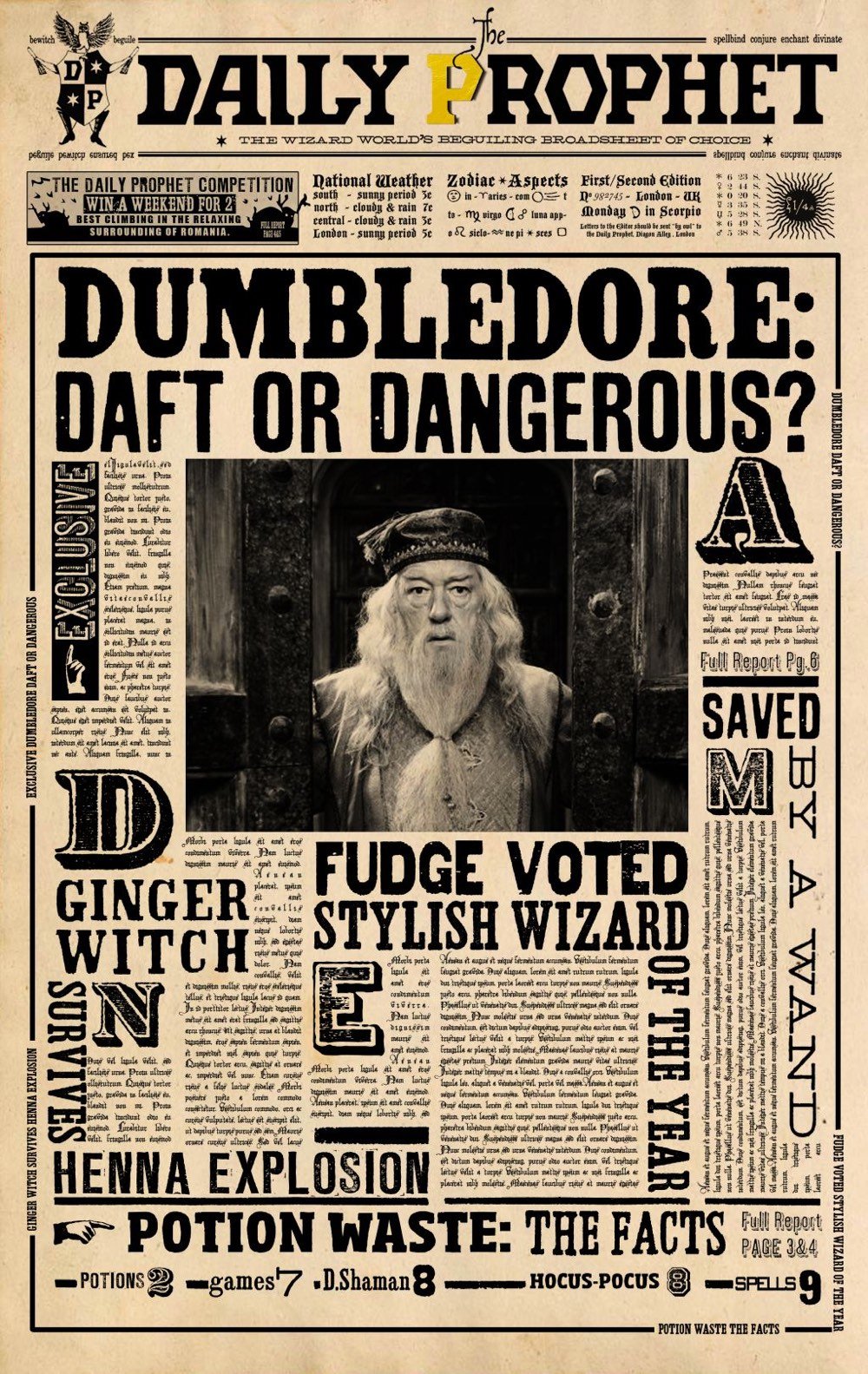
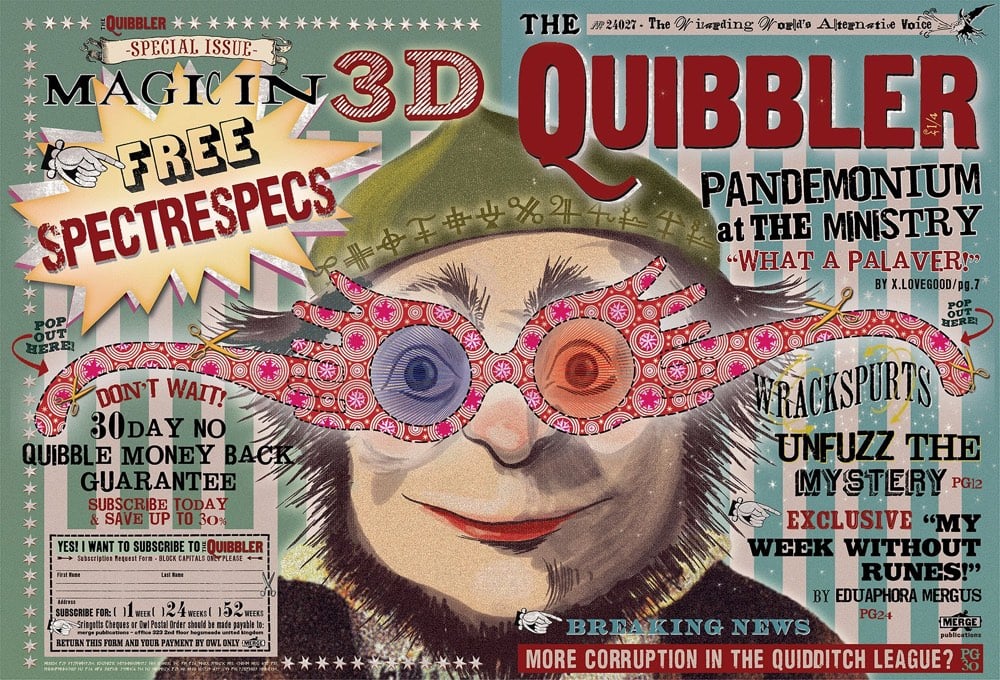
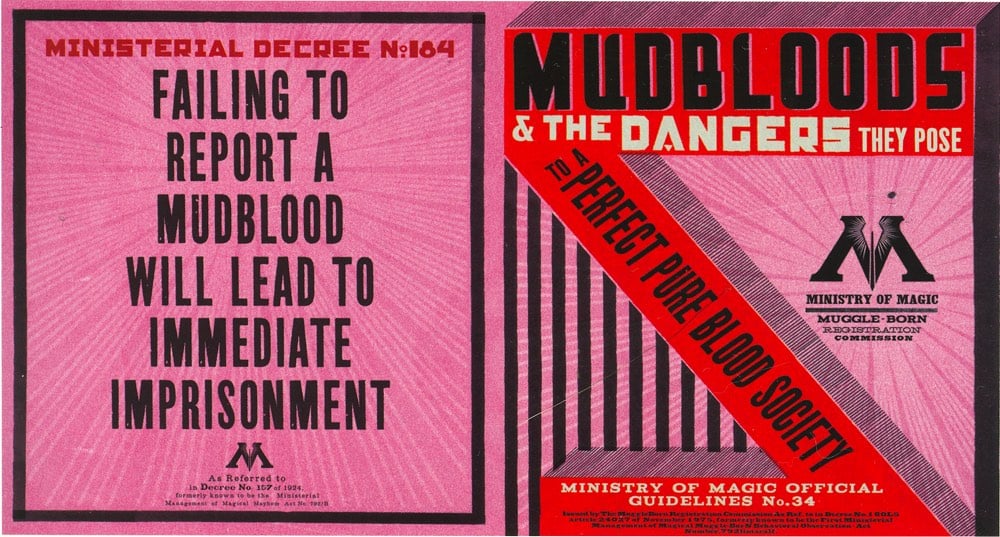
MinaLima (aka Miraphora Mina and Eduardo Lima) is the design studio that designs all of the graphics, signs, newspapers, decrees, posters, labels, maps, book covers, and packaging that you see in the Harry Potter movies.
The range of design styles on display is impressive and captures the films’ combination of humour, horror and fantasy.
On one wall, packaging and adverts for products in a shop owned by the Weasley family combine early 20th century print advertising with humorous taglines and garish colours, while posters promoting the fictional game of Quidditch (below) reference 1950s Olympics adverts.
Official notices and letters use hand written fonts, and pamphlets demonising ‘mudbloods’ — a wizard born to non-wizard parents — are inspired by Soviet progaganda (top).
“One of the best things about working on the Harry Potter films was being able to try out so many different styles, from Victorian letterpress to modern design,” says Lima.
“The Daily Prophet was designed to look very Gothic, as did the architecture of Hogwarts [the boarding school for wizards where the film is set]. When an organisation called the Ministry of Magic takes control in later films, the school becomes a kind of totalitarian state, so we started looking to Russian constructivist design to reflect that,” says Mina.
They also worked on the Fantastic Beasts movie. You can follow their work on Instagram and a bunch of the best stuff is available for purchase on their site.
Since 2001, the Oscars have awarded The Academy Award for Best Animated Feature. The video above shows a scene from each of the winning movies: Shrek, Spirited Away, Finding Nemo, The Incredibles, Wallace & Gromit: The Curse of the Were-Rabbit, Happy Feet, Ratatouille, Wall-E, Up, Toy Story 3, Rango, Brave, Frozen, Big Hero 6, and Inside Out….as well as 2016’s five nominees: Kubo and the Two Strings, Moana, My Life as a Zucchini, The Red Turtle, and Zootopia. Pixar has dominated the category with 8 wins (and 10 nominations) out of 15 years, but the strong field this year meant the studio’s critically acclaimed blockbuster Finding Dory wasn’t even nominated, joining Cars 2, Monsters University, and The Good Dinosaur as the only Pixar films made during that period not to be nominated.
In the first of a three-part video series, Vox’s Joss Fong looks at how the technology used to film nature documentaries has changed over the past 50 years and how the producers of Planet Earth II used contemporary image stabilization techniques to make the series with a more cinematic style.
In the 1970s and ’80s, it was enough for the NHU to show people a creature they’d never seen before and provide the details in the narration. The films were illustrated zoology lectures. Since then, the producers have become sticklers for capturing specific behaviors, and in Planet Earth II, they showcase the drama of those behaviors. Each scene sets up the characters to perform something - something brave, something brutal, something bizarre. They’ve made room for our emotions; that’s what cinematic storytelling means.
And visually, the cinematic approach means the camera is often moving.
Hollywood filmmakers have kept the camera in motion for decades, but for obvious reasons, it’s much more difficult when your subject is wildlife. As we explain in the video at the top of this post, NHU producers used new stabilization tools throughout the production of Planet Earth II to move the camera alongside the animals.
The program doesn’t make you wait long to showcase this new approach. The tracking shot of a lemur jumping from tree to tree is one of the first things you see in the first episode and it put my jaw right on the floor. It’s so close and fluid, how did they do that? Going into the series, I thought it was going to be more of the same — Planet Earth but with new stories, different animals, etc. — but this is really some next-level shit. The kids were more excited after watching it than any movie they’ve seen in the past 6 months (aside from possibly Rogue One). The Blu-ray will be out at the end of March1 but there’s also a 4K “ultra HD” version that had me researching new ultra HD TVs I don’t really need.
Oh, and remember that thrilling sequence of the snakes chasing the newly hatched iguanas? Here’s a short clip on how they filmed it.
Update: The second video in the series is an ode to the BBC’s pioneering use of slow motion and time lapse photography in their nature programs.
Fong also explains one of my favorite things to come out of the first Planet Earth show, the slow motion buffer capture system used by the crew to catch great white sharks leaping out of the water.
But also, digital high-speed cameras came with a continuous recording feature. Instead of pressing a button to start recording and then pressing it again to stop, they could press the button as soon as they saw some action, and the camera would save the seconds that happened before the button was pressed. That’s how the cameraman captured this great white shark coming out of the water, not just in the air, for this sequence in the 2006 Planet Earth series.
I hope the third program is on sound, which has been bugging me while watching Planet Earth II. I could be wrong, but they seem to be using extensive foley effects for the sounds the animals make — not their cries necessarily, but the sounds they make as they move. Once you notice, it feels deceptive.
Update: The concluding video in the series shows how the filmmakers use thermal and infrared cameras to capture scenes at night.
The bit at the end about the Sony a7S is interesting — as cameras go, this one is much cheaper than the professional high-def cameras used for most of the scenes but is way better in low light.
In partnership with Khan Academy, Pixar is offering a number of free online lessons in making 3D animated movies and storytelling called Pixar in a Box. Here’s a video introduction of what courses are available:
There are lessons on rendering, shading, crowds, virtual cameras, and many other topics, but the most accessible for people of all ages/interests is probably the lessons on The Art of Storytelling, which were just posted earlier this week. Here’s the introductory video for that, featuring Pete Docter, director of Up and Inside Out.
This is pretty cool. I’m hoping to spend some more time with this over the weekend.
In his newest video, Evan Puschak talks about Arrival, calling it “a response to bad movies”. Arrival was perhaps my favorite film of 2016, and I agree with him about how well-made this film is. There’s a top-to-bottom attention to craft on display, from how it looks to how it was cast (Amy Adams was the absolute perfect choice for the lead) to the integration of the theme with story to how expertly it was adapted from Ted Chiang’s Story of Your Life. The whole thing’s tight as a drum. If you happened to miss it, don’t watch this video (it gives the whole thing away) and go watch it instead…it’s available to rent/buy on Amazon.
Looking back through the archives, I’m realizing I never did a post about Arrival even though I collected some links about it. So, linkdump time!
Wired wrote about how the movie’s alien alphabet was developed.
Stephen Wolfram wrote about his involvement with the science of the film — his son Christopher wrote Mathematica code for some of the on-screen visuals. 1
Science vs Cinema explored how well the movie represented actual science:
Screenwriter Eric Heisserer wrote about how he adapted Chiang’s short story for the screen.
Jordan Brower wrote a perceptive review/analysis that includes links to several other resources about the film.
Update: The director of photography for Arrival was Bradford Young, who shot Selma and is currently working on the Han Solo movie for Disney. Young did an interview with No Film School just before Arrival came out.
I’m from the South, so quilts are a big part of telling our story. Quilting is ancient, but in the South it’s a very particular translation of idea, time, and space. In my own practice as an image maker, I slowly began to be less concerned with precision and more concerned with feeling.
Quiltmakers are rigorous, but they’re a mixed media format. I think filmmaking should be a mixed media format. I’m just really honoring what quiltmakers do, which is tell a story by using varying texture within a specific framework to communicate an idea. For me, with digital technology, lenses do that the best. The chips don’t do it now-digital film stock is basically all captured the same, but the lenses are how you give the image its textural quality.
(thx, raafi)
Update: James Gleick, author of Time Travel, wrote about Arrival and Story of Your Life for The New York Review of Books.
What if the future is as real as the past? Physicists have been suggesting as much since Einstein. It’s all just the space-time continuum. “So in the future, the sister of the past,” thinks young Stephen Dedalus in Ulysses, “I may see myself as I sit here now but by reflection from that which then I shall be.” Twisty! What if you received knowledge of your own tragic future-as a gift, or perhaps a curse? What if your all-too-vivid sensation of free will is merely an illusion? These are the roads down which Chiang’s story leads us. When I first read it, I meant to discuss it in the book I was writing about time travel, but I could never manage that. It’s not a time-travel story in any literal sense. It’s a remarkable work of imagination, original and cerebral, and, I would have thought, unfilmable. I was wrong.
(via @fquist)


In Focus is featuring some of the winning shots from the 2017 Underwater Photographer of the Year awards. The top one is Dancing Octopus taken by Gabriel Barathieu and the bottom one is by Qing Lin, who took the photo near Lembeh, Indonesia, which is home to some of the strangest marine life in the world.
If you look at Lin’s photo of the clownfish for more than a second or two — pay attention…this is the nightmarish side to living on the reef that Pixar kept from you in Finding Nemo — you will notice not just three pairs of eyes but six pairs of eyes. In the mouth of each clownfish is a parasitic isopod looking right at the camera. The isopod enters the fish through the gills, attaches itself to the fish’s tongue, feeds on the blood in the tongue until it falls off, and then attaches itself to the tongue stump. And the fish uses the isopod as a replacement tongue! Cool! And gross!
I finally got the chance to see Hidden Figures the other day. Recommended. It’s a science/space story in the vein of Apollo 13, but the twin engines of the film are the three excellent lead actresses — Taraji P. Henson, Octavia Spencer & Janelle Monáe — and the persistent portrayal of the systemic biases of segregation and sexism. You watch this movie and think, how much higher could the human race have flown if women and people of color had always had the same opportunities as white men?1 How many Katherine Johnsons never got the chance to develop and use their skills in math, science, or technology because of their skin color or gender? Our society wastes so much energy and human lives telling people what they can’t do rather than empowering them to show everyone what they can do.
Hidden Figures was adopted from Margot Lee Shetterly’s book of the same name. The film takes some dramatic license with the timing of certain events but overall is historically accurate.
The film primarily focuses on John Glenn’s 1962 trip around the globe and does add dramatic flourishes that are, well, Hollywood. However, most of the events in the movie are historically accurate. Johnson’s main job in the lead-up and during the mission was to double-check and reverse engineer the newly-installed IBM 7090s trajectory calculations. As it shows, there were very tense moments during the flight that forced the mission to end earlier than expected. And John Glenn did request that Johnson specifically check and confirm trajectories and entry points that the IBM spat out (albeit, perhaps, not at the exact moment that the movie depicts). As Shetterly wrote in her book and explained in a September NPR interview, Glenn did not completely trust the computer. So, he asked the head engineers to “get the girl to check the numbers… If she says the numbers are good… I’m ready to go.”
You can view Johnson’s published reports on NASA’s site, including her initial technical report from 1960 on the Determination of Azimuth Angle at Burnout for Placing a Satellite Over a Selected Earth Position.
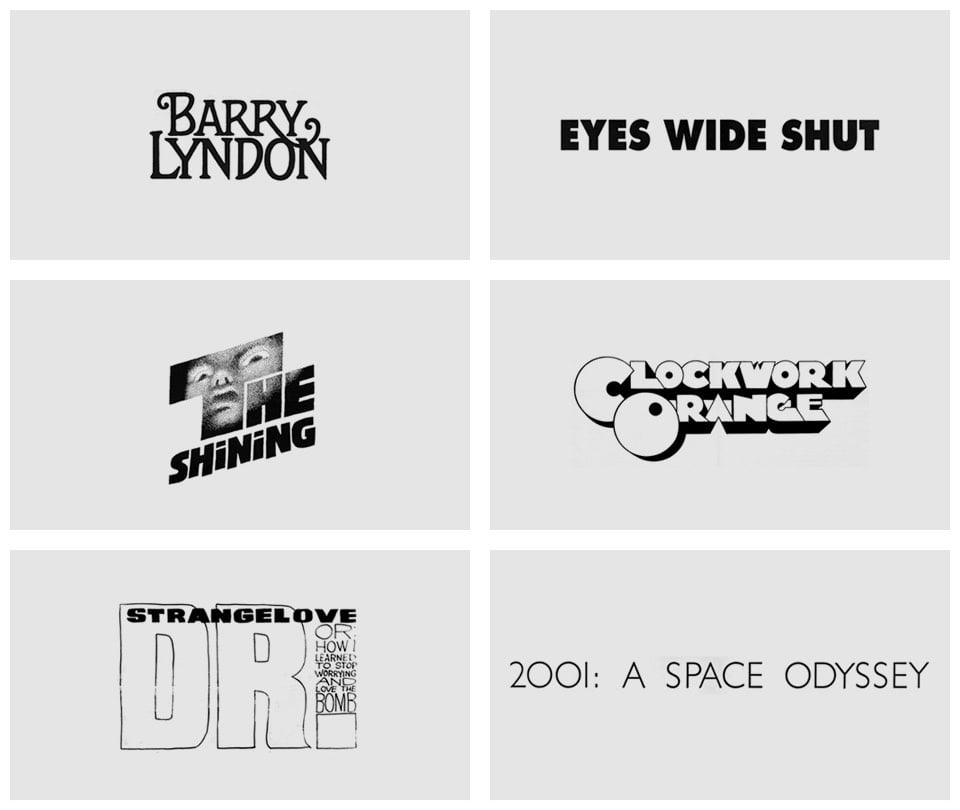
From designer Christian Annyas, an overview of the typography used in the titles and posters of Stanley Kubrick’s movies. Click on each graphic to see the poster or title sequence it was sourced from.
I really like Keanu Reeves. He’s one of my favorite actors and seems like a genuinely nice person who has dealt well with his stardom. But after watching this collection of clips from every single movie he’s ever been in, I can’t tell if Reeves is actually a good actor or not. He definitely gets better as his career progresses, but many scenes where emotion or nuance are called for are just…oof. It’s like he’s reading the dictionary sometimes. But I still like him! Why is that?
See also: Danny Bowes believes Reeves belongs on the Mount Rushmore of Hollywood Action Stars along with John Wayne, Tom Cruise, and Harrison Ford.
Update: From Peter Suderman, Why Keanu Reeves is a perfect action star:
This may come off hyperbolic, or flat-out inaccurate, to those who don’t see Reeves as a great screen actor. And granted, his performance style doesn’t capture the tiny nuances of human reactions that are usually associated with great acting; he’s often characterized as a big-screen blank, and that’s not an entirely faulty statement.
But while it’s not wrong to label Reeves a blank, it’s also not enough. For nearly three decades, Reeves has proven himself one of Hollywood’s most durable and entertaining action stars, and the John Wick films show why: His total physical commitment to his action roles makes him a perfect avatar for the visions of ambitious action directors. At his very best, he becomes inseparable from the cinematic visions he embodies.
Using PT Anderson’s 2012 film The Master as a jumping off point, Evan Puschak discusses how Scientology’s audit process works. You can take the Oxford Capacity Analysis test he mentions right here.
Newer posts
Older posts



Socials & More