kottke.org posts about movies
It’s Groundhog Day — again. Once a year, our nation turns its eyes to an offbeat existential romantic comedy that thoroughly outperforms its sharpie-on-an-index-card premise, thanks to a brilliant collection of character actors, a thoroughly memorizable script, and the then-underrated, now-maybe-a-smidge-overrated acting talents of Bill Murray.
Four years ago, Jason hosted a 20th anniversary Groundhog Day liveblog with three of his regular guest editors: me, Sarah Pavis, and Aaron Cohen. It was a lot of fun. (I talked too much.)
Some of the questions we considered:
- Is Groundhog Day a time-travel movie?
- If you were recasting it, who would you pick?
- Does Phil’s behavior mid-movie predict creepy pick-up-artist culture?
- Does the time loop stop because Rita falls in love with Phil, or because Phil finally manages to live one day sincerely?
- Wouldn’t it be better to predict the weather by doing the opposite of what the groundhog indicates?
The answer to that last question is almost definitely yes.
It’s been a (very!) eventful two weeks, but I still can’t stop thinking about Hanif Willis-Abdurraqib’s terrific appreciation of Ernest Dickerson’s 1992 film Juice. That’s as good a reason as any to share it here.
Juice might be Tupac Shakur’s signature performance as an actor: he’s charming and frustrating, thoughtful and thoughtless — accelerating through emotions and personalities like an athlete changing speed mid-play — beautiful and wrathful and doomed, like Achilles or James Dean. Or, like Tupac.
Willis-Abdurraqib zeroes in a key part of the story, and of the best art from the era in which the film was made — “what so rarely happens with black people who live and die and do wrong today: an ability to visualize a complete life behind simply a finger that pulls a trigger, and a willingness to understand what drove them there.”
Juice came at a time when the black nihilist was being visualized and reconsidered onscreen in ways that had traditionally been afforded to and reheated for white actors and their stories. Movies like New Jack City, Menace II Society, and Boyz n the Hood showed black characters who either gained things with no moral code, or who were deeply aware of how little they had to live for, and conducted themselves in a manner that showed that awareness regardless of whom it hurt. These characters were sometimes sympathetic and complex, but none were like Tupac’s Bishop — in part because it was Tupac playing the role, but also because of the way we find Bishop, and how he ends up. By the time I was old enough to understand the emotion of his narrative, when I watched Bishop fall from the rooftop and heard the sound of a body hitting concrete that followed, I felt like I had lost a friend — a friend who, like some of my actual friends, had drifted into the machinery of some vice and had not felt loved or seen enough to shake their way out of it…
A tragedy is defined by the fatal flaw that plagues its central character, and the ways in which that flaw echoes down to all the other characters, leading to a brief and immediate reversal of fortune. The Greeks referred to this kind of flaw as hamartia — literally, a missing of the mark. Hamartia is to aim for a target and not hit it, and to have yourself end up on the other side of tragedy. It is, perhaps, to aim a gun at someone you want to kill and then pull the trigger, hitting them instead in an arm that they will soon need to pull your body back to safety. The true reversal of fortune rests in the brief moment before Bishop falls to the ground, when you realize that Quincy wants to save him, but can’t.
I should add, especially for readers who’ve never seen it, that Juice is beautiful. Dickerson was/is one of the best cinematographers alive before he became a director, and it shows. And the soundtrack is amazing. You could say it was a forgotten movie, but it’s just so unforgettable.
In an interview with Yahoo Movies UK, Rogue One editor Colin Goudie shares how he made a full-length story reel for director Gareth Edwards from similar scenes from 100s of other movies so that Edwards could work out the pacing for the action and dialogue.
There was no screenplay, there was just a story breakdown at that point, scene by scene. He got me to rip hundreds of movies and basically make ‘Rogue One’ using other films so that they could work out how much dialogue they actually needed in the film.
It’s very simple to have a line [in the script] that reads “Krennic’s shuttle descends to the planet”, now that takes maybe 2-3 seconds in other films, but if you look at any other ‘Star Wars’ film you realise that takes 45 seconds or a minute of screen time. So by making the whole film that way — I used a lot of the ‘Star Wars’ films — but also hundreds of other films too, it gave us a good idea of the timing.
For example the sequence of them breaking into the vault I was ripping the big door closing in ‘Wargames’ to work out how long does a vault door take to close.
So that’s what I did and that was three months work to do that and that had captions at the bottom which explained the action that was going to be taking place, and two thirds of the screen was filled with the concept art that had already been done and one quarter, the bottom corner, was the little movie clip to give you how long that scene would actually take.
Then I used dialogue from other movies to give you a sense of how long it would take in other films for someone to be interrogated. So for instance, when Jyn gets interrogated at the beginning of the film by the Rebel council, I used the scene where Ripley gets interrogated in ‘Aliens’.
So you get an idea of what movies usually do.
That’s super interesting! Like a moving Pinterest mood board or something. Oh, what I wouldn’t give to see that story reel.
I watched Finding Dory with my daughter this weekend. It was our second time through and while I’d enjoyed it when we saw it in the theater, this time the theme really hit home. At the most basic level, Finding Dory is about animals with disabilities, how their supposed weaknesses can be strengths, and the challenges faced and strategies employed by parents of children with disabilities. The characters from the movie use their varying abilities in many different to help their friends.
Hank is an octopus who is missing a tentacle and struggles with anxiety about the open ocean. He’s able to fight through that anxiety to form a fast bond with Dory and return to the ocean.
Becky is a loon who appears unbalanced but is a very loyal friend once you’ve made a personal connection with her. Nemo believes in Becky and she comes through in a crucial moment in the movie. (Note that “loon” is a bird but is also slang for someone who is mentally ill.)
One of Nemo’s fins is smaller than the other. It doesn’t slow him down. In this film as well as in Finding Nemo, Nemo journeys across the ocean and helps his friends out of numerous scrapes.
Marlin, Nemo’s father, struggles with anxiety related to parenthood1 after he lost his mate and all but one of his children in a terrible accident. In Finding Nemo, that anxiety fuels him as he searches an entire ocean for his missing son, but at a crucial moment he also realizes that it’s damaging his relationship with his son and holding him back. In this movie, he comes to accept Dory and her full abilities and, with the help of his son, is able to put himself in her shoes — “What would Dory do?” — to make a timely escape.
Destiny is a nearsighted whale shark who nevertheless has a keen ability to help people find their way using her superior verbal communication skills. With the help and encouragement of friends, she is able to escape her tank and help rescue her friend Dory.
Bailey is a beluga whale who temporarily loses his echolocation and struggles with a lack of confidence. With their friends in need, Destiny encourages Bailey to rediscover his ability to help. (Basically, Bailey and Destiny help each other “see” in different ways.)
Jenny and Charlie are Dory’s parents. When Dory was young, they taught her to face her disability head-on and spent countless hours providing her with the encouragement and skills that she needed to become self-sufficient. And after Dory disappeared, they escaped to the ocean, built an elaborate display designed to help Dory find her way back to them, and waited years for her to return.
And Dory, the hero of the story, has short-term memory loss. Her inability to remember things for more than a minute or two has equipped her with a fierce sense of loyalty for her friends & family, a canny impulse for action when they are in need, and an infectious enthusiasm. Again and again, she acts when something needs to be done without the burden of past or future holding her back. In the end, with the help of Nemo and Marlin, she comes to see that her disability is a great strength and uses it to save her friends and find her parents.
Yeah, Pixar makes movies for children that are fun and full of gags & engaging characters. But time and again, from The Incredibles to Wall-E to Ratatouille to Inside Out, Pixar challenges audiences of all ages with larger themes relevant to society at large. If you missed it the first time around or just left your kids to watch it alone, I encourage you to give Finding Dory a chance. Bona fide blockbuster movies 1 that deal intelligently and with care about marginalized issues like disability are hard to come by.
The Pixar Theory is an idea forwarded by Jon Negroni that all of Pixar’s movies take place in the same universe and are all connected to each other somehow. (Negroni turned the theory into a 100-page book.)
Centuries later, the animals from Brave that have been experimented on by the witch have interbred, creating a large-scale population of animals slowly gaining personification and intelligence on their own.
There are two progressions: the progression of the animals and the progression of artificial intelligence. The events of the following movies set up a power struggle between humans, animals, and machines.
The stage for all-out war in regards to animals is set by Ratatouille, Finding Nemo, and Up, in that order. Notice I left out A Bug’s Life, but I’ll explain why later.
Last week, the official Toy Story account released a video on Facebook that make explicit many of the connections between the films:
One of the dinosaurs from The Good Dinosaur shows up in Inside Out, a Monsters Inc. character is pictured in Brave, a Lightning McQueen toy is in Toy Story 3, a moped from Ratatouille is in Wall-E’s junkyard, etc. etc. This is a perfect bit of superfan trolling from the Pixar team. Kudos.
Jorge Luengo Ruiz has collected what he calls the most beautiful shots in the history of Disney. The scenes are pulled from nearly every Disney feature-length animation ever made, including Snow White, Peter Pan, The Lion King, and Moana. There’s a simple shot early on of Dumbo’s shadow passing over the ground that I really liked.
Buzzfeed did some stills of the best shots from Studio Ghibli movies, but it would be great to see a video collection. Both studios have produced amazing work, but Ghibli might best Disney in terms of sheer artistry and beauty.
Cinefix takes a look at what makes ending credit sequences effective, the different techniques used to end movies, and picks a number of films with the best end credits.
The shape of the narratives movies tend to tell lend themselves to an emotional climax that hits right as the screen fades to black for the last time. Be it triumphant, tragic, bittersweet, or thoughtful, the most important feeling is often the last. So, wisely, one of the most common functions of the creative end title sequence is what we’re going to call the coda credits. They grab on to the final emotional note and let it ride out in a long sustain, letting the audience hold onto the final feeling and carry the echoes out with them as the credits roll.
Back in the days of silent film, directors and cinematographers had to be exceedingly clever to pull off visual effects that appeared real. There were obviously no computers so they had to rely on skewed perspectives, glass matte paintings, and double exposures. That famous clip of Harold Lloyd hanging off of a clock…here’s how that was done:

Here are several more examples. See also Disney’s multiplane camera. (via @mccanner)
This is the trailer for I Am Not Your Negro, a film that “finishes” a book that writer James Baldwin was working on when he died.
In 1979, James Baldwin wrote a letter to his literary agent describing his next project, Remember This House. The book was to be a revolutionary, personal account of the lives and successive assassinations of three of his close friends — Medgar Evers, Malcolm X and Martin Luther King, Jr.
At the time of Baldwin’s death in 1987, he left behind only thirty completed pages of his manuscript.
Now, in his incendiary new documentary, master filmmaker Raoul Peck envisions the book James Baldwin never finished. The result is a radical, up-to-the-minute examination of race in America, using Baldwin’s original words and flood of rich archival material. I Am Not Your Negro is a journey into black history that connects the past of the Civil Rights movement to the present of #BlackLivesMatter. It is a film that questions black representation in Hollywood and beyond. And, ultimately, by confronting the deeper connections between the lives and assassination of these three leaders, Baldwin and Peck have produced a work that challenges the very definition of what America stands for.
The reviews so far are uniformly positive.
I don’t know about you, but those clips of Baldwin speaking in the trailer piqued my interest, so I’m going to make some time tonight to watch some Baldwin talks, speeches, and debates on YouTube: a 1969 talk in London, a 1963 debate with Malcolm X (audio only), a 1963 panel on civil rights w/ Sidney Poitier, Harry Belafonte, Marlon Brando, and Charlton Heston, and his 1965 debate with William F. Buckley on the question “Is the American Dream at the expense of the American Negro?”
In a short film shot in 1957, Walt Disney described the multiplane camera, one of the many inventions and innovations his company had developed in order to produce more realistic and affecting animations. Instead of shooting single cels of animation on a single movable background, the multiplane camera could shoot several independently moving backgrounds, creating a sense of depth and perspective. A 1938 article in Popular Mechanics explained how the camera works.
Disney wanted to increase the eye value of the many paintings making up a picture by achieving a soft-focus effect on the backgrounds, illuminating the various levels of each scene individually, and separating” background from foreground, thus keeping background objects to their proper relative size.
His production crew labored for three years to perfect the novel picture-taking device to achieve these results. It consists of four vertical steel posts, each carrying a rack along which as many as eight carriages may be shifted both horizontally and vertically. On each carriage rides a frame containing a sheet of celluloid, on which is painted part of the action or background.
Resembling a printing press, the camera stands eleven feet tall and is six feet square. Made with almost micrometer precision, it permits the photographing of foreground and background cels accurately, even when the first is held firmly in place two feet from the lens and the lowest rests in its frame nine feet away. Where the script calls for the camera to “truck up” for a close-up, the lens actually remains stationary, while the various cels are moved upward. By this means, houses, trees, the moon, and any other background features, retain their relative sizes.
After being deployed on a short film as a test, the multiplane camera was used to film Snow White and the Seven Dwarfs, the first feature-length animated film. In the chapter on “Illusion” in his newest book Wonderland: How Play Made the Modern World, Steven Johnson writes that the use of the multiplane camera (along with other innovations in animation developed since the days of Steamboat Willie) had a profound effect on audiences.
All of these technical and procedural breakthroughs summed up to an artistic one: Snow White was the first animated film to feature both visual and emotional depth. It pulled at the heartstrings in a way that even live-action films had failed to do. This, more than anything, is why Snow White marks a milestone in the history of illusion. “No animated cartoon had ever looked like Snow White,” Disney’s biographer Neil Gabler writes, “and certainly none had packed its emotional wallop.” Before the film was shown to an audience, Disney and his team debated whether it might just be powerful enough to provoke tears — an implausible proposition given the shallow physical comedy that had governed every animated film to date. But when Snow White debuted at the Carthay Circle Theatre, near L.A.’s Hancock Park, on December 21, 1937, the celebrity audience was heard audibly sobbing during the final sequences where the dwarfs discover their poisoned princess and lay garlands of flowers on her. It was an experience that would be repeated a billion times over the decades to follow, but it happened there at the Carthay Circle first: a group of human beings gathered in a room and were moved to tears by hand-drawn static images flickering in the light.
In just nine years, Disney and his team had transformed a quaint illusion — the dancing mouse is whistling! — into an expressive form so vivid and realistic that it could bring people to tears. Disney and his team had created the ultimate illusion: fictional characters created by hand, etched onto celluloid, and projected at twenty-four frames per second, that were somehow so believably human that it was almost impossible not to feel empathy for them.
Interestingly, the multiplane camera also seems to be an instance of simultaneous invention (a concept also covered by Johnson in an earlier book, Where Good Ideas Come From). In addition to Disney’s multiplane camera, there were a few earlier earlier efforts and it’s unclear whether they were invented independently or how one inventor influenced another. But one thing is for certain: only Disney’s camera was deployed so skillfully and artfully that it changed cinema and our culture forever.1
For what it’s worth: it’s never too late or, in my case, too early to be whoever you want to be. There’s no time limit, stop whenever you want. You can change or stay the same, there are no rules to this thing. We can make the best or the worst of it. I hope you make the best of it. And I hope you see things that startle you. I hope you feel things you never felt before. I hope you meet people with a different point of view. I hope you live a life you’re proud of. If you find that you’re not, I hope you have the courage to start all over again.
Attributed to F. Scott Fitzgerald, but was actually written by screenwriter Eric Roth for the film adaptation of The Curious Case of Benjamin Button.
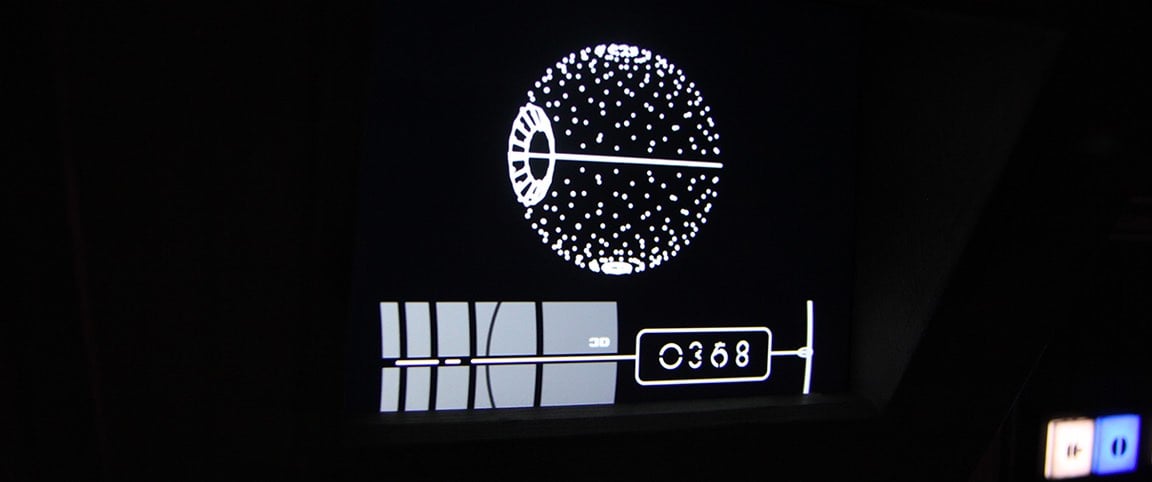

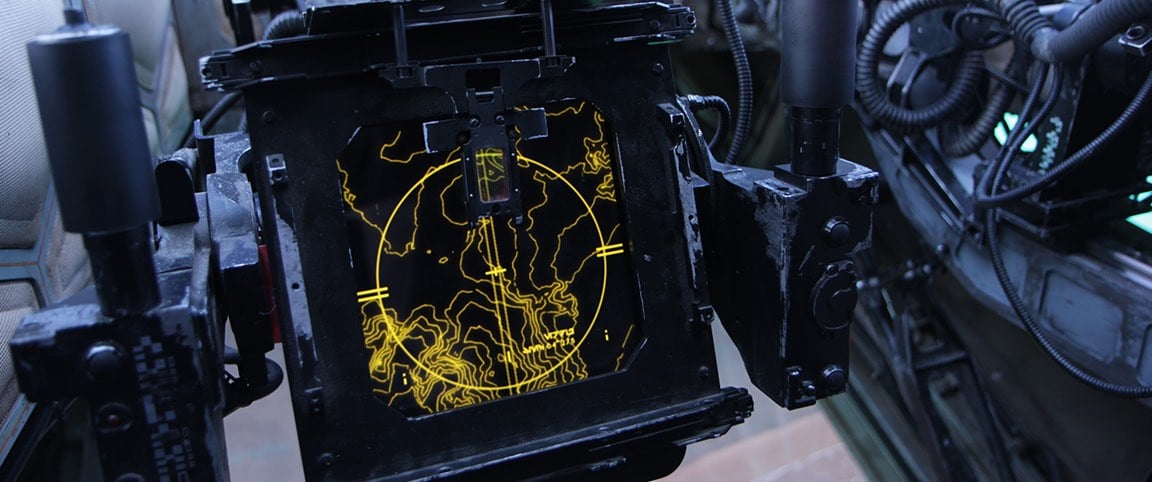
From design firm Blind Ltd, the user interface graphics they did for Rogue One. They had some graphics from the original Star Wars to play off of, but this is still really nice work. Blind also did onscreen interfaces for The Force Awakens, the Batman films, and some recent Bond films. (via @pieratt)
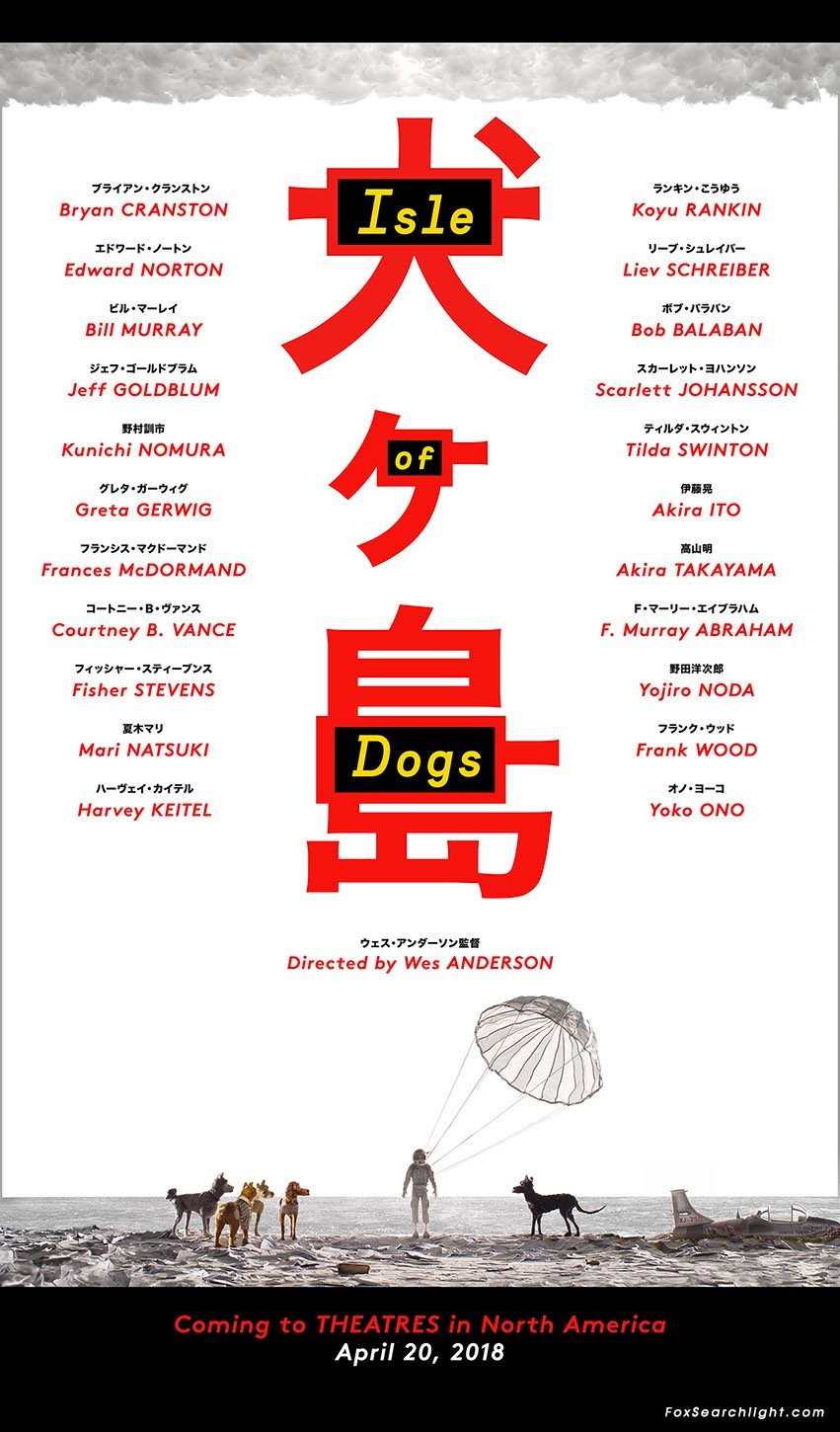
We’ve known for awhile that Wes Anderson is doing another stop-motion animated movie, but in this video, Anderson himself shares the name of the film — Isle of Dogs — and shows a very tiny clip of the character played by Edward Norton.
Also appearing in the film are Bill Murray, Tilda Swinton, Yoko Ono, Scarlett Johansson, and possibly you. Anderson is doing a fundraiser for a favorite charity and if you donate, you’re entered to win a trip to London to meet Wes, get a tour of the production, and record the voice of a character for the movie (“barking, howling & whimpering may be required”).
Update: The poster for the movie is out. WWII?
Scifi Policy reviews Rogue One as an engineering ethics case study (spoilers!).
The film also makes its engineering ethics explicit. Before the opening scene, Galen Erso had escaped the Death Star project because of his moral objections, likely against the Empire as well as the concept of making such a terrifying weapon at all. After Krennic captures him, Galen later tells his daughter Jyn that he had a choice: he could have continued abstaining, and let someone else build the Death Star, or he could dive deep into the project, become indispensable to it, and find a way to stop it. He chooses to dive deep, and succeeds in building a subtle flaw in the Death Star design. Then 15 years later, he sends a messenger to the Rebellion informing them of the weapon’s existence, power and most importantly, its fatal flaw.
Part of the point of the review is that resistance can take many forms. Erso resists by working within the system to help bring about a better outcome. The problem, for the outside observer, is that for such resistance to be effective, it needs to be indistinguishable from collaboration. Something to think about in relation to the incoming Trump administration and how best to work against it, particularly in the area of technology. (via mr)
The words “Blade Runner sequel” have inspired equal parts excitement and dread in my heart. Some things, you just shouldn’t mess with, particularly if you’re Ridley Scott (see the Alien5 franchise). But with Ryan Gosling and Harrison Ford headlining, Denis Villeneuve directing (he did the pitch-perfect Arrival), and this teaser trailer, the scale has tipped towards excitement.
Thirty years after the events of the first film, a new blade runner, LAPD Officer K (Gosling), unearths a long-buried secret that has the potential to plunge what’s left of society into chaos. K’s discovery leads him on a quest to find Rick Deckard (Ford), a former LAPD blade runner who has been missing for 30 years.
Newer posts
Older posts





Socials & More