kottke.org posts about design
The ballots are being recounted in the Senate race in Minnesota between Norm Coleman and Al Franken because the initial tally was almost too close to call. MPR has a look at some of the ballots that are being challenged…it’s amazing how many weird ways people can mark a ballot that uses a simple fill-in-the-circle design.
Inspired by Emmett Williams, a practitioner of concrete poetry, Rob Giampietro has written three poems: Wastebasket, Snowflakes, and Spraypaint.
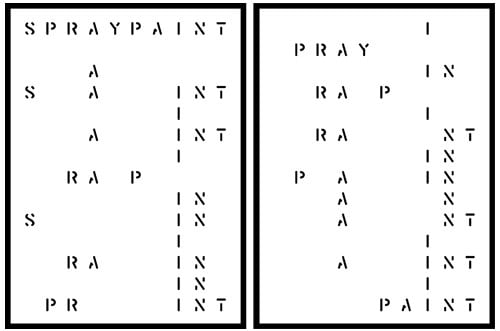
Giampietro has put out a call for someone to develop a Williams Word Generator. Drop him a line if you can help out…shouldn’t be too much different than the many “words within words” generators scattered around the web.
I enjoyed these visual movie reviews, especially There Will Be Blood (“this is just pretentious afterbirth”) and The Darjeeling Limited.
Lovely design for Penguin’s book of Bond short stories, Quantum of Solace.
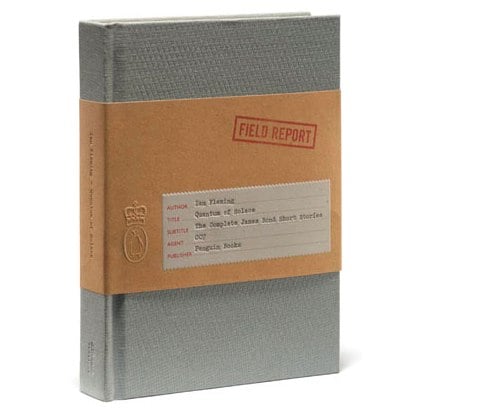
The book collects together all of Ian Fleming’s Bond short stories in a single volume for the first time and includes stories that inspired the Bond film classics From a View to a Kill, For Your Eyes Only, Octopussy, The Living Daylights and of course, Quantum of Solace, the latest in the series.
I love the Penguin logo incorporated into the 007 on the back cover.
Pictures of Numbers is infrequently updated, but the subject matter is timeless and the archives are worth a look.
Pictures of Numbers is a book-project-in-progress, consisting of practical tips and techniques for busy researchers on improving their data presentation.
Matthew Dent’s new coinage for the UK was pretty great, but this Dutch commemorative coin is a fully contemporary chunk of wow.
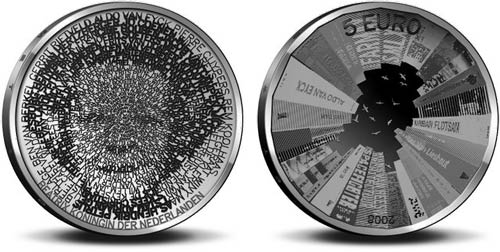
On the front, the names of famous Dutch architects form an image of the queen while some Dutch architecture books on the back form an outline of The Netherlands. The design was done using free software running on Ubuntu/Debian. (via design observer)
I added 16 new maps to the 2008 Election Maps page in what is probably the final update. Big thanks to everyone who sent in maps.
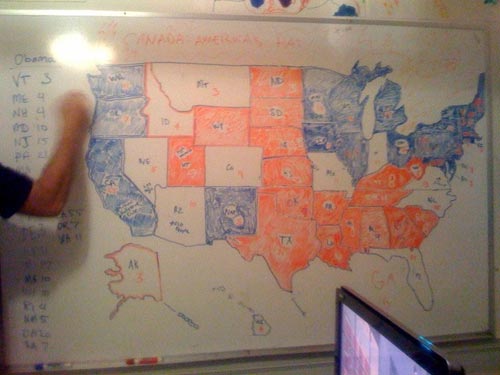
I added ten more maps to the 2008 Election Maps page, including one drawn on a dry erase board.
Both Michael Sippey and Kane Jamison collected screenshots of media sites as they declared Obama’s victory last night. Here are the front pages of all the newspapers today…I particularly enjoyed The Sun’s take on the historic night: One Giant Leap For Mankind. See also: the electoral maps.
Update: Electioneering ‘08 took screencaps of some of the big media sites throughout the evening. (thx, jason)
Update: Jim Ray also collected screencaps of media sites that night.
Update: Kristen Borchardt made an awesome video that takes a number of Nov 5th newspaper front pages and animates through them using each papers’ Obama photo as the focal point…very much like YTMND’s Paris Hilton doesn’t change facial expressions.
Last night as the election results were coming in online, I took screenshots of a bunch of the now-familiar red/blue electoral maps being used by the larger media sites to show election results and posted them all on this page. (There are currently 25 maps…I’m adding more in a few minutes.)
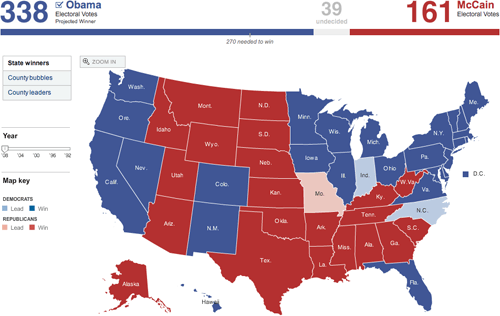
Hit me on my burner if you run across any others. A couple of quick notes:
1. No one strayed from the red and blue. The red/blue combo is overwhelmingly symbolic but there are plenty of other colors in the crayon box; I would like to have seen someone try something different.
2. In the 2000 and 2004 elections, the red/blue map was the focal point of the media coverage. People were fixated by it. This time around, it didn’t matter so much. The maps were interesting for 3-4 hours until the overwhelming nature of Obama’s victory became apparent and then, not so much. By this morning, the maps are already shrinking or disappearing from the home pages of the Times, CNN, and the like.
3. Nate Silver and the rest of the 538 guys nailed it. They got Indiana wrong and there are a couple more states that are still too close to call, but they got the rest of the map right. Their final projection had Obama getting 348.6 electoral votes and they currently have him at 349.
The Virgil O. Stamps Letterpress Laboratory prints business cards on all sorts of papers and surfaces, including children’s coloring book pages, duct tape, old National Geographic pages, antique book pages, and any sort of cardboard scraps. Pretty cool.
Nice look at the evolution of the front page of the LA Times from 1881 to 2003.
I selected a front page from every other decade, starting with the very first edition of the paper in 1881. Note the shifting hierarchy of images (yellow), advertising (orange) and editorial content (blue). The small black arrows are links to related content elsewhere within the paper.
They also look at the front pages of the web site from 1996 - 2006.
What do I think about the new Pepsi logo? Eh. Companies spend way too much time, effort, and money building up feelings about logos — like decades and billions of dollars — and then they just go and change it all. Of course the new logo and colors are similar to the old ones and it’s variations on a theme but the new designs feel like someone’s idea of what packaging is going to look like 10 years from now, an approach that never seems to work out well (see Back to the Future II). Coca-Cola had such success refreshing their brand with a simple take on their classic look and logo, why can’t Pepsi do the same with this classic look?
BibliOdyssey has collected a number of charts which compare the heights of mountains and lengths of rivers by laying them all out next to each other. (Ok, kinda difficult to explain…just go take a look.) I had a chance to buy a copy of one of these maps a few years ago (not sure if it was an original print or what; it looked old) but passed it up because I didn’t have the money. Wish I would have bought it anyway. (via quips)
Someday I’m going to make my own book, from start to finish. It’s something that I’ve wanted to do for awhile, a physical parallel to building a web site from scratch. When I do, Ellen Lupton’s Indie Publishing will be my guide. At 170-some pages it’s not exhaustive, but the book does briefly touch all the bases: typography, cover design, binding types, and examples of several different types of books. There’s also a section on handmade books with hands-on directions for making your own book — folded books, stitched pamphlets, or stab bound — without having to visit the printer.
Truthful TV title cards. Heroes becomes No One Dies Ever, Mad Men is Drink Smoke Fuck, and Lost is Winging It.
Nice 25-minute documentary on the London Tube map, “the pinnacle of London Transport’s modernist design”.
Goodness blog asked a bunch of designers about books that they found helpful in their development as creative people, no graphic design books allowed.
The eyeballing game tests how good you are at lining things up. I got a 4.46 on my first try, but my hand slipped on one of them so I’m going to try again… Leave your best (or worst) score in the comments. (via core77)
Update: 4.34. I suck at parallelograms and triangle centers.
Apple announced new MacBooks and MacBooks Pro today and as Apple’s new releases always seem to do, the new models make the old ones look like a pile of puke. (My year-old MacBook Pro suddenly looks like an antique.) To show off their new lineup and manufacturing process, they’ve produced a little video. Jonathan Ive is one earnest dude.
The Muji Chronotebook combines the flexibility of a plain paper notebook with the utility of a daily planner.
For each function or feature you add, you lose a purpose. A blank sheet that could’ve been used in a million different ways can now only be used for a few. Artists aren’t going to buy a calendar if they’re looking for something to sketch on. Writers aren’t going to pick up to-do lists to use as a journal. This isn’t a bad thing per se — by narrowing down on a purpose, a blank sheet of paper can become more useful and relevant to certain people.
Each page of the Chronotebook has a analog clock in the middle, around which you can freely form appointments (just draw a line to the time for the meeting), sketch, make lists, or anything else the mostly blank page beckons you to do. Fantastic idea.
Update: Here’s the same idea in whiteboard form. (thx, michael)
The Atlantic is getting a redesign. Changes are already afoot over at the web site and Pentagram’s blog has an extensive look at the magazine’s new look, designed by Michael Bierut, Luke Hayman, and their team. I love the proposed Helvetica cover. The inspiration for the throw-back logo came in part from an appearance of an old issue of the magazine on Mad Men (Bierut is a fan).
BTW, the new cover tells of an article on blogs — Will Blogs Kill Writing? — that you will likely be hearing about from all corners of the web when the issue is released next week.
Mark Simonson takes an extensive look at the typography of Mad Men and concludes that a surprising amount of the type is set in fonts that either weren’t around in the early 60s or weren’t yet popular in the US.
Then there is the Gill Sans (c. 1930) problem. Gill is used quite a lot in the series, mainly for Sterling Cooper Advertising’s logo and signage. Technically, this is not anachronistic. And the way the type is used — metal dimensional letters, generously spaced — looks right. The problem is that Gill was a British typeface not widely available or popular in the U.S. until the 1970s. It’s a decade ahead of its time in American type fashions.
There’s also the Arial problem in the ending credits.
The AIGA has posted their 50 Books/50 Covers selections from 2007. It’s worth fighting through the stupid Flash interface to check out these covers (click “View the 365:AIGA Year in…” and then on “Book design”). The covers are on display in NYC until 11/26/2008. (via book design review)
Illustrator Bob Staake explains the process behind his cover on this week’s politically themed New Yorker, including rejected alternatives and a video progression of the finished design. Staake still uses a copy of Photoshop 3.0 on MacOS 7 to do his illustrations. That was a great version of Photoshop…I remember not wanting to switch myself. (via df)
Update: Staake uses OS X with MacOS 9 running in the background:
Let me clear up today’s rumor: I do NOT work in OS 7. I use OSX and run classic (9.0) in the background. Photoshop 3.0? Yes, STILL use that.
We’ve seen personal annual reports, but now Christopher Doyle has devised a set of personal identity guidelines for himself.
The image above is from a spread marked Full Colour Vertical_Private. The following ‘key identity formats’ are, of course, Full Color_Vertical, Full Colour Seated_Casual and Full Colour Seated _Formal.
The incorrect uses are hilarious.
Newer posts
Older posts



Socials & More