kottke.org posts about Star Wars
50 unknown facts about Star Wars, many gleaned from How Star Wars Conquered the Universe. I’ve heard some of these before, but not many…the list doesn’t include low-hanging fruit like Harrison Ford’s carpentry.
Favorite facts: 1. Early on, Luke Skywalker’s nickname was “Wormy”. Wormy! 2. The actor who portrayed Vader, David Prowse, spoke his dialogue on set not knowing he would be dubbed over. Because of his West Country accent, the other cast members referred to Prowse as Darth Farmer.
Speaking of Harrison Ford’s carpentry, the new biography of Joan Didion has a good story about that time Didion and her husband John Dunne hired Ford to do some construction for them.
Off and on, for over six month, the Dunnes engaged a construction crew to expand the waterside deck, install waxed pine bookshelves, and lay terra-cotta floor tiles. The men tore out prefabricated plywood walls and pulled up “icky green” flooring. Harrison Ford headed the crew. “They were the most sophisticated people I knew,” Ford said. “I was the first thing they saw in the morning and the last thing they saw before cocktails.”
In Vegas, Dunne wrote, “[W]hat had started as a two-month job … [stretched] into its sixth month and the construction account was four thousand dollars overdrawn… I fired the contractor. ‘Jesus, man, I understand,’ he said. He was an out-of-work actor and his crew sniffed a lot of cocaine and when he left he unexpectedly gave me a soul-brother handshake, grabbing my thumb while I was left with an unimportant part of his little finger.” The next day, Dunne realized the only thing separating him and his family from the Pacific Ocean was a clear sheet of Pliofilm where the French doors were supposed to go. “I rehired the contractor,” he wrote. “‘Jesus, man, I understand,’ the contractor said.”
Much later, when Didion’s daughter was ill, Ford did the family a further service.
The following day, Didion flew from Teterboro to Los Angeles on Harrison Ford’s private plane, along with her friend Earl McGrath. Ford “happened to be in New York and heard about Q’s condition … and called to offer to take Joan,” said Sean Michael. “I find that to be a beautiful thing,” he said. “A man you hire to build cabinets, thirty years later is flying you in his private jet to your daughter’s hospital bedside.”
Jesus, man, I understand.
Update: Some of Ford’s comments from the book were taken from Carolyn Kellogg’s reporting on an awards festival.
As if to make up for her absence, a parade of stars was in attendance. Harrison Ford, who was prepared to present her the award, spoke somewhat extemporaneously instead. “I just want to tell you all how much her friendship has meant to me,” he said. Forty years ago, Didion and her husband, John Gregory Dunne, were “The most sophisticated people I knew.”
Then a carpenter, Ford was hired by Didion and Dunne to build their beach house in Malibu. “I was the first thing they saw in the morning and the last thing they saw” — he paused — “before cocktails.”
Kent Jones has directed a documentary on the 1962 meeting where a young François Truffaut interviewed a seasoned Alfred Hitchcock about his films (the output of which was a beloved book). As the narration from the trailer says, “[Truffaut] wanted to free Hitchcock from his reputation as a light entertainer”, to which Peter Bogdanovich adds, “it conclusively changed people’s opinions about Hitchcock”.
In 1962 Hitchcock and Truffaut locked themselves away in Hollywood for a week to excavate the secrets behind the mise-en-scène in cinema. Based on the original recordings of this meeting — used to produce the mythical book Hitchcock/Truffaut — this film illustrates the greatest cinema lesson of all time and plummets us into the world of the creator of Psycho, The Birds, and Vertigo. Hitchcock’s incredibly modern art is elucidated and explained by today’s leading filmmakers: Martin Scorsese, David Fincher, Arnaud Desplechin, Kiyoshi Kurosawa, Wes Anderson, James Gray, Olivier Assayas, Richard Linklater, Peter Bogdanovich and Paul Schrader.
Truffaut’s recontextualization of Hitchcock and his work reminds me of the point Matt Daniels recently made about younger generations deciding how work from older artists is remembered in his post about timeless music:
Biggie has three of the Top 10 hip-hop songs between 1986 and 1999. This is a strong signal that future generations will remember Biggie as the referent artist of 80s and 90s hip-hop. And there’s No Diggity at the top — perhaps it’s that glorious Dr. Dre verse.
Hip hop heads will lament the omission of Rakim, Public Enemy, or Jay-Z’s Reasonable Doubt. It’s a depressing reality that exists for every genre and generation: not every artist will be remembered. The incoming generation will control what’s relevant from the 90s and carried into the future, independent of quality and commercial success. For rock, that might be Blink-182. For electronica, that might be Sandstorm.
Take Star Wars as another example. I’ve had conversations recently with other parents whose young kids are really into the series. The way they experience Star Wars is different than my generation. We saw Episodes IV-VI in the theater, on VHS, and on DVD and then saw Episodes I-III in the theater accompanied by various degrees of disappointment and disregard. Elementary school-aged kids today might have watched the prequels first. They read the comics, play the video games, and watch the Clone Wars animated series. To many of them, the hero of the series is Anakin, not Luke.1 And Generation X, as much as we may hate that, there’s not a damn thing we can do about it.2 Unless… there is… another… (via subtraction)
The Auralnauts provide an alternate soundtrack and dialogue for Star Wars.
(via @waxpancake)
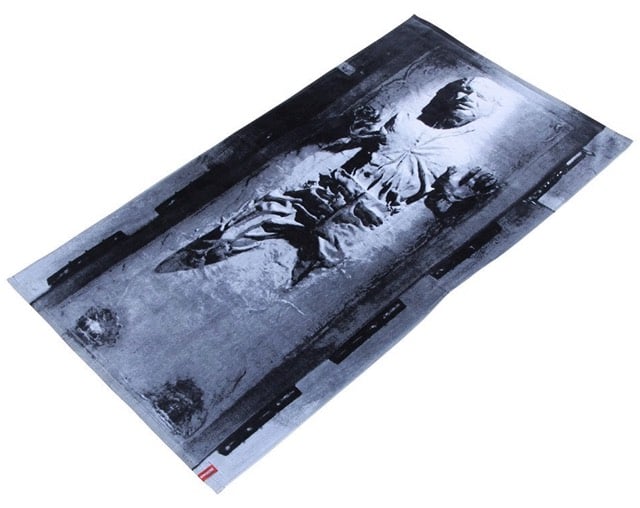
This beach towel featuring Han Solo frozen in carbonite is the only Star Wars merch I want in my life. (thx, meg)
Update: Ok, I had forgotten about the Han Solo frozen in carbonite ice cube tray, which is slightly more awesome. (via @ajsheets)
From Back to the Future’s DeLorean to Dr. Who’s Tardis, here’s a listing of sci-fi vehicles ranked from slowest to fastest.
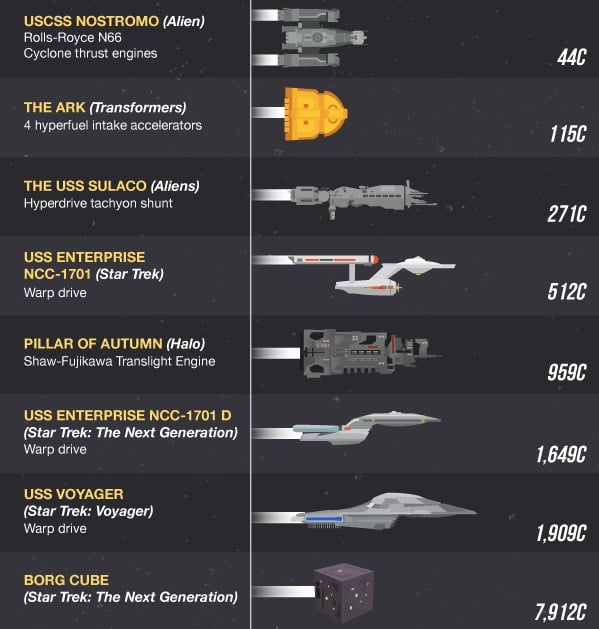
In the ongoing struggle of Star Wars vs. Star Trek, Wars is the clear winner in the speed category: the Millennium Falcon is thousands of times faster than the Enterprise. Also, I didn’t know the Death Star was so fast!
If you are a fan of Raiders of the Lost Ark — and who isn’t? — then this is your holy grail: a feature-length commentary on the movie by Jamie Benning that includes seemingly every tidbit related to the film, including deleted scenes, audio commentary from the cast and crew, behind the scenes video, and much more. An incredible resource in understanding the film.
Benning has also done similarly excellent commentaries for Jaws, Star Wars, Empire Strikes Back, and Return of the Jedi. (via @drwave)
Every day, a program written by Julien Deswaef selects a war-related news item from the NY Times, formats it in the style of the infamous Star Wars opening crawl (complete with John Williams’ score), and posts the results to YouTube.
Published yesterday, the crawl for Episode XXVII was taken from a NY Times article about an Obama speech about the Iranian nuclear deal.
Here’s how the project was made and if you’d like to try it yourself, grab the source code. (via prosthetic knowledge)
They showed this 3 minute 30 second behind the scenes video of Star Wars: The Force Awakens at Comic-Con yesterday.
Fans at San Diego Comic-Con’s Hall H were treated to a special look behind the scenes of Star Wars:The Force Awakens by director J.J. Abrams, producer and Lucasfilm President Kathleen Kennedy and writer Lawrence Kasdan. The filmmakers were joined on stage by cast members Daisy Ridley, John Boyega, Adam Driver, Oscar Isaac, Domhnall Gleeson, Gwendoline Christie, Mark Hamill, Carrie Fisher and Harrison Ford to the surprise and delight of fans.
At the end of the Hall H presentation, the entire Hall H audience of more than 6,000 fans were all invited to continue the celebration and join cast and filmmakers at a surprise Star Wars Fan Concert. The San Diego Symphony performed the classic Star Wars music from John Williams at the Embarcadero Marina Park South.
I have zero interest in Comic-Con, but that would have been pretty cool to see.
Disney is proceeding at full steam in delivering more Star Wars to your eyeballs. Today they announced that Christopher Miller and Phil Lord, the duo behind The Lego Movie, will direct a movie about a young Han Solo.
The screenplay is written by Lawrence Kasdan and Jon Kasdan. The story focuses on how young Han Solo became the smuggler, thief, and scoundrel whom Luke Skywalker and Obi-Wan Kenobi first encountered in the cantina at Mos Eisley.
Release date is May 2018. As Princess Leia once said, “Disney, I hope you know what you’re doing.”
All six films1 from the Star Wars series played at the same time, superimposed on top of each other.
Watch this while you can…I imagine it’ll get taken down in a few hours/days.
Star Wars was a film that literally couldn’t be made; the technology required to bring the movie’s universe to visual life simply didn’t exist.
So George Lucas did what any enterprising young director who was destined to change the movie business would do. He invented a company to invent the technology. Wired’s Alex French and Howie Kahn take you inside the magic factory with the untold story of ILM.
Watch all the way to the end for some sounds that didn’t make it into the movies.
From an alternate universe in 1985, a Star Wars crossover with Star Trek that never happened in which Lord Vader has the Genesis Device.
Paging JJ Abrams. Mr. Abrams to the white courtesy phone please. (via @khoi)
When the first trailer for JJ Abrams’ new Star Wars movie came out, we all assumed the rolling ball droid was CGI (and perhaps based on this 2008 xkcd post). Then an actual working model of the droid, called BB-8, showed up on stage at Star Wars Celebration. Minds blew. Industrial design student Christian Poulsen figured out how to make his own version of BB-8 by hacking a Sphero:
Update: It looks like Sphero will be manufacturing an official BB-8 droid toy, which will likely be a massive success.
Update: Sphero is selling a smartphone-controlled BB-8 droid. This is the droid you’re looking for.
Authentic Movement: Guide your BB-8 with a smartphone or tablet
Listens & Responds: BB-8 recognizes and reacts to your voice
Holographic Messaging: Record and view virtual holographic videos with BB-8
Autonomous Behavior: BB-8 has a mind of its own - explore the Star Wars galaxy together
Adaptive Personality: Your BB-8’s unique attitude and actions evolve as you interact
It’s also available at Amazon, although they are currently out of stock.
In 1977, only a few months after the movie came out, a hour-long television special called The Making of Star Wars aired on ABC. It was the first documentary about Star Wars.
LOL to the rehearsal shot at 4:10 of Han going “bang, bang, bang, bang, bang” while shooting his blaster, the reaction of Luke, Han, and Leia to a boom mic blowing the 18th take of a scene at 34:20, and the description of Princess Leia as “royalty of a very liberated kind”. (via kung fu grippe)
Ok, this one gave me goosebumps. I hope this is good.
These crayon sculptures by Hoang Tran are amazing.
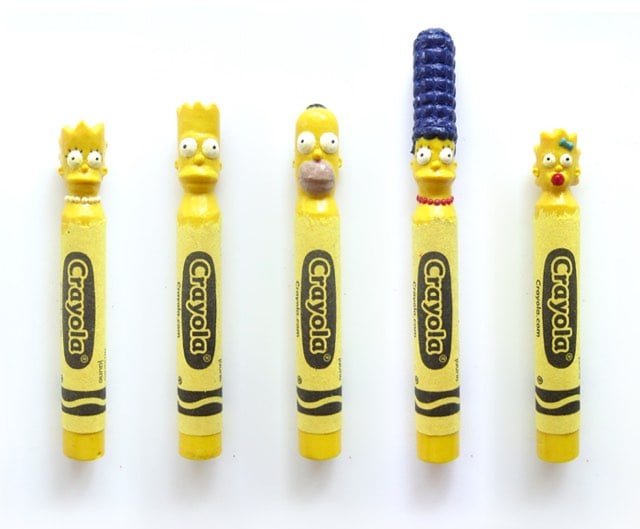
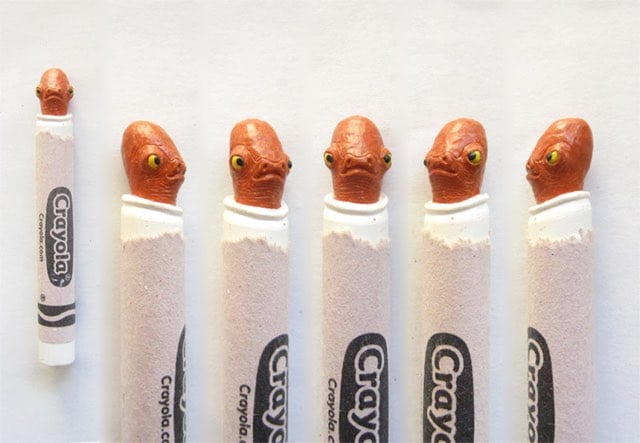
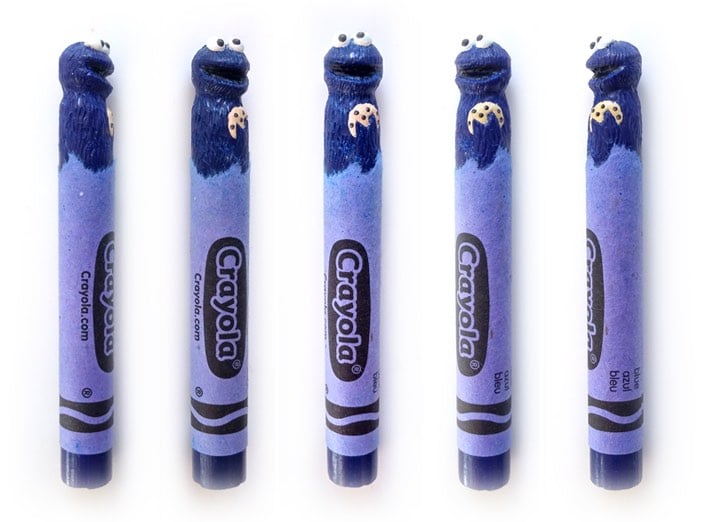
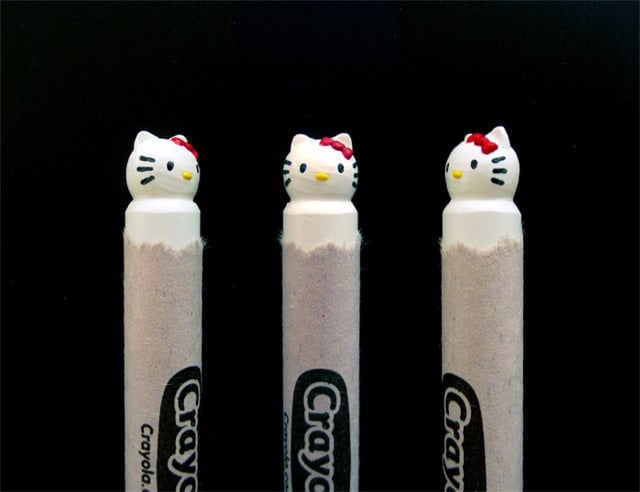
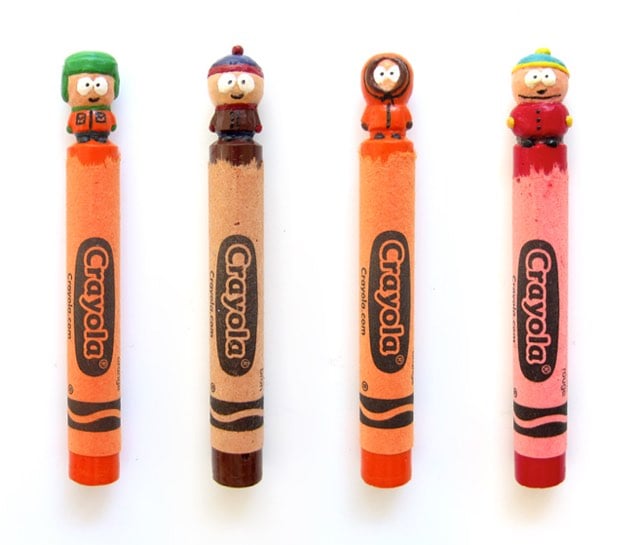
Select sculptures are available on Etsy. (via ignant)
Quick three minute video about how they made the Millennium Falcon hyperdrive malfunction noise for Star Wars.
Favorite detail: one of the sounds is from the clanking pipes in the studio’s bathroom. (via df)
SWAPI is a new web service will use a RESTful interface to return JSON about the “Planets, Spaceships, Vehicles, People, Films and Species” from all six of the Star Wars movies. This API would be really useful if Disney would have done as Matt Webb suggested and turned Star Wars into a genre rather than a franchise.
Imagine, imagine if Disney had said: Star Wars isn’t a franchise, it’s a genre.
The legendary galaxy, a long time ago, far far away, is well understood: What’s true is what’s in the Holocron continuity database.
Open the Holocron. Show everyone what’s in it. Let it become history.
Then let anyone make movies and books that share the Star Wars world. Not like all those other franchises that argue about what’s canon and what’s not… rise above it, become a new shared set of conventions, formulas, history and myth, just like the western but for the 21st century.
My friend David suggested something similar with Harry Potter a few years ago…open it up and let any director take a shot at making Potter movies. Open source franchises.
What if George Lucas was making the new Star Wars movie instead of JJ Abrams? This recut trailer offers a glimpse of the cheesy CG madness.
So so good.
Here it is, the very first look at JJ Abrams’ new Star Wars movie.
Not ashamed to say I felt chills down my spine when the music kicked in. Please please please let this not suck.
Update: From the teaser, it’s a little early to tell whether Abrams is following these four rules to make Star Wars great again (1. The setting is the frontier. 2. The future is old. 3. The Force is mysterious. 4. Star Wars isn’t cute.) but there are hints of 1&2 in there…they’re still driving those old rust-bucket X-Wings and wearing beat-up helmets.
In his recent book, How Star Wars Conquered the Universe, Chris Taylor tells the story of how avant garde cinema fan George Lucas built one of the biggest movie franchises ever.
How did a few notes scribbled on a legal pad in 1973 by George Lucas, a man who hated writing, turn into a four billion dollar franchise that has quite literally transformed the way we think about entertainment, merchandizing, politics, and even religion? A cultural touchstone and cinematic classic, Star Wars has a cosmic appeal that no other movie franchise has been able to replicate. From Jedi-themed weddings and international storm-trooper legions, to impassioned debates over the digitization of the three Star Wars prequels, to the shockwaves that continue to reverberate from Disney’s purchase of the beloved franchise in 2012, the series hasn’t stopped inspiring and inciting viewers for almost forty years. Yet surprisingly little is known about its history, its impact — or where it’s headed next.
(via mr)
Rex Sorgatz wonders what sort of robots we’ll build, R2-D2s or C-3POs.
R2-D2 excels in areas where humans are deficient: deep computation, endurance in extreme conditions, and selfless consciousness. R2-D2 is a computer that compensates for human deficiencies — it shines where humans fail.
C3-PO is the personification of the selfish human — cloying, rules-bound, and despotic. (Don’t forget, C3-PO let Ewoks worship him!) C3-PO is a factotum for human vanity — it engenders the worst human characteristics.
I love the chart he did for the piece, characterizing 3PO’s D&D alignment as lawful evil and his politics as Randian.
In a local Chicago TV segment from 1980, here’s film critic Gene Siskel reviewing The Empire Strikes Back.
Interesting that he spends most of his time commenting on the special effects. At the time of this review, Siskel had been doing a show with Roger Ebert called Sneak Previews, but they seemed to have missed reviewing the original Star Wars or Empire on the show. Ebert reviewed Empire in 1997, giving it four stars and calling it “the best of the three Star Wars films”.
“The Empire Strikes Back” is the best of three Star Wars films, and the most thought-provoking. After the space opera cheerfulness of the original film, this one plunges into darkness and even despair, and surrenders more completely to the underlying mystery of the story. It is because of the emotions stirred in “Empire” that the entire series takes on a mythic quality that resonates back to the first and ahead to the third. This is the heart.
The film was made in 1980 with full knowledge that “Star Wars” had become the most successful movie of all time. If corners were cut in the first film’s budget, no cost was spared in this one: It is a visual extravaganza from beginning to end, one of the most visionary and inventive of all films.
(via devour)
Amidala friendzones Anakin, Obi-Wan hunts for drugs, and Jango Fett pumps the bass in this hilarious Auralnauts reimagining of Star Wars: Attack of the Clones.
You may have also seen their recent video of the Throne Room scene at the end of Star Wars without John Williams’ score (reminiscent of these musicless musicvideos) or Bane’s outtakes from The Dark Knight Rises. Still champion though: bad lip reading of NFL players. (via @aaroncoleman0)
A remastered copy of the original 1977 Han-shoots-first version of Star Wars is out there and you can watch it but it’s probably illegal. But Disney is never going to show it to you, so maybe it’s ok to find it on Bittorrent?
The Despecialized Edition is the years-long work of a diverse group of people who have taken elements from many different sources and created the ultimate version of the first Star Wars film. It has also been upgraded to display properly on high definition screens, with high-quality sounds and a near perfect image.
The latest Blu-Ray release of the film serves as the skeleton for this edition, but elements of the 2006 bonus DVD that included the unaltered version of the film was also used to remove special effects and edits that were added by Lucas.
Here’s a short feature on the video sources used:
And here’s how to get the full film.
Update: Here’s an extensive side-by-side look at how dozens of shots were modified to make The Despecialized Edition.
Physicist Andy Howell recently gave a talk about the science of Star Wars and wrote up a summary of it for Ain’t It Cool News. Topics covered include binary star systems, droids, the Death Star, and lightsabers:
Of course, we still don’t know how to make a lightsaber. One big problem is confining plasma (if that is even what it is), into some tube. But a bigger problem is the amount of energy required. We can actually calculate this from clues in the movies!
In Episode I, Qui-Gon jabs his lightsaber into a door, and melts part of it. That’s just basic physics! To melt something, you have to raise its temperature to the melting point, and you can calculate how much energy that takes using the specific heat capacity of a material.
(thx, greg)
Hi, everybody! Tim Carmody here, guest-hosting for Jason this week.
Not everybody gives their computers, smartphones, or wireless networks distinctive names. You’re more likely to see a thousand public networks named “Belkin” or some alphanumeric gibberish than one named after somebody’s favorite character in The Hitchhiker’s Guide to the Galaxy.
But many, many people do name their machines — and ever since we slid into the post-PC era, we’re more likely to have a bunch of different machines of every different type living together on a network, each needing a name. So, how do you decide what to call them? Do you just pick what strikes your fancy at the moment, or do you have a system?
About three years ago, I asked my friends and followers on Twitter this question and got back some terrific responses. I don’t have access to all of their answers, because, well, time makes fools of us all, especially on Twitter. But I think I have the best responses.
Most people who wrote back did have unifying themes for their machines. And sweet Jesus, are those themes nerdy.
- A lot of people name their computers, networks, and hard drives after characters, places, and objects from Star Wars. Like, a lot of them.
- Even more of my friends name devices after their favorite books and writers. My favorite of these came from @DigDoug: “All of my machines are named after characters in Don Quixote. My Macbook is Dulcinea, the workhorse is Rocinante.” (Note: these systems are also popular among my friends for naming their cats. I don’t know what to make of that.)
- Science- and mythology-inspired names are well-represented. Mathias Crawford’s hard drives are named after types of penguins; Alan Benzie went with goddesses: “The names Kali, Isis, Eris, Juno, Lilith & Hera are distributed around whatever devices and drives I have at any time.” (When I first read this, I thought these might have been moons of Jupiter, which would both split the difference between science and mythology and would be a super-cool way to name your stuff.)
- Wi-fi networks might be named for places, funny phrases, or abstract entities, but when it comes to phones or laptops, most people seemed to pick persons’ names. Oliver Hulland’s hard drives were all named after muppets; Alex Hern named his computer’s hard drive and its time capsule backup Marx and Engels, respectively.
- Some people always stuck with the same system, and sometimes even the same set of names. A new laptop would get the same name as the old laptop, and so forth — like naming a newborn baby after a dead relative. Other people would retire names with the devices that bore them. They still refer to them by their first names, often with nostalgia and longing.
As for me, I’ve switched up name systems over the years, mostly as the kinds of devices on my network have changed. I used to just have a desktop PC (unnamed), so I started out by naming external hard drives after writers I liked: Zora, after Zora Neale Hurston, and then Dante. The first router I named, which I still have, is Ezra.
Years later, I named my laptop “Wallace”: this is partly for David Foster Wallace, but also so I could yell “where the fuck is Wallace?!?” whenever I couldn’t find it.
Without me even realizing it, that double meaning changed everything. My smartphone became “Poot.” When I got a tablet, it was “Bodie.” My Apple TV was “Wee-Bay,” my portable external drive “Stringer.” I even named my wi-fi network “D’Angelo” — so now D’Angelo runs on Ezra, which connects to Dante, if that makes sense.
As soon as it was Wallace and Poot, the rules were established: not just characters from The Wire, but members of the Barksdale crew from the first season of The Wire. No “Bunk,” no “Omar,” no “Cheese.” And when the machines died, their names died with them.
The first one to go, fittingly, was Wallace. I called the new machine “Cutty.” I was only able to justify to myself by saying that because he was a replacement machine, it was okay to kick over to Season 3. Likewise, my Fitbit became “Slim Charles.”
Now, for some reason, this naming scheme doesn’t apply at all to my Kindles. My first one was “Tlon, Uqbar, Orbis Tertius,” and its replacement is “Funes the Memorious.” I have no explanation for this, other than to say that while all my other devices commingle, the Kindles seem to live in a hermetic world of their own.
In the same vein as the Zinn/Chomsky Lord of the Rings commentary is A People’s History of Tattooine, a Twitter conversation that Jacob Harris kicks off thusly:
What if Mos Eisley wasn’t really that wretched and it was just Obi Wan being racist again?
Some other highlights:
“more civilized time?” Check your privilege, Obi Wan
the Tusken People. Raiders presumes some malevolent intent
all I’m saying is that I don’t blame the Tusken People for steering clear of the racist, violent and armed old man
like anybody forgets what Luke and his friends did to native womp rat populations at Beggars Canyon Park
Newer posts
Older posts





Socials & More