


Kung Fu Hustle 2? Yes!

Advertise here with Carbon Ads
This site is made possible by member support. 💞
Big thanks to Arcustech for hosting the site and offering amazing tech support.
When you buy through links on kottke.org, I may earn an affiliate commission. Thanks for supporting the site!
kottke.org. home of fine hypertext products since 1998.
Beloved by 86.47% of the web.
Entries for April 2022
The Discomfort of Self-Immolation
In the wake of climate activist Wynn Bruce setting himself on fire in front of the Supreme Court on Earth Day to protest political inaction on climate change, Jay Caspian Kang writes about the difficulty of figuring out how to think about self-immolation.
Self-immolation forces the witnesses, whether in person or through the news, to confront an intensity of conviction that goes well beyond what they may think is possible. In this way, self-immolators like Thich Quang Durc become almost inhuman, even holy. At the same time, the act establishes an entirely personal connection because the real question at hand isn’t really, “Why did he do that?” Rather, the self-immolator is asking you — with all the intimidation and self-righteousness a person can muster — “Why don’t you care even half as much as I do?”
The Pudding needs your help to replicate a study about how we perceive randomness. Does a person’s ability to be random peak around 25 years old and decline after 60?
Kevin Kelly: 103 Bits of Advice I Wish I Had Known
On the occasion of his 70th birthday (happy birthday!), Kevin Kelly shares 103 bits of wisdom he wished he had known when he was younger. Here are a few of my favorites:
Cultivate 12 people who love you, because they are worth more than 12 million people who like you.
Anything you say before the word “but” does not count.
When you forgive others, they may not notice, but you will heal. Forgiveness is not something we do for others; it is a gift to ourselves.
Efficiency is highly overrated; Goofing off is highly underrated. Regularly scheduled sabbaths, sabbaticals, vacations, breaks, aimless walks and time off are essential for top performance of any kind. The best work ethic requires a good rest ethic.
If winning becomes too important in a game, change the rules to make it more fun. Changing rules can become the new game.
The best way to get a correct answer on the internet is to post an obviously wrong answer and wait for someone to correct you.
Don’t wait for the storm to pass; dance in the rain.
We tend to overestimate what we can do in a day, and underestimate what we can achieve in a decade. Miraculous things can be accomplished if you give it ten years. A long game will compound small gains to overcome even big mistakes.
A wise man said, “Before you speak, let your words pass through three gates. At the first gate, ask yourself, “Is it true?” At the second gate ask, “Is it necessary?” At the third gate ask, “Is it kind?”
To rapidly reveal the true character of a person you just met, move them onto an abysmally slow internet connection. Observe.
Take note if you find yourself wondering “Where is my good knife? Or, where is my good pen?” That means you have bad ones. Get rid of those.
If you loan someone $20 and you never see them again because they are avoiding paying you back, that makes it worth $20.
Copying others is a good way to start. Copying yourself is a disappointing way to end.
The chief prevention against getting old is to remain astonished.
Ok that got out of hand…there’s a lot of good stuff on that list! I am definitely in receiving mode these days for wisdom.
The deadly accordion wars of Lesotho. “In 2004, after one Famo musician allegedly shot another, a cycle of revenge developed, fuelled by poisonous lyrics in songs.”
How We Do Money in America Is Insane
I enjoyed this roast of how we handle money in America by The Daily Show’s Ronny Chieng.
He goes after income & sales taxes:
America decided filing taxes should be as quick and painless as getting a root canal at the DMV. You got your 1099s, your Form 1040, your Schedule C, your R2-D2, your Blink-182. You spend days trying to figure out what you owe the government and then the government tells you if are you right because apparently they knew the whole frigging time. It is like the world’s most pointless game show.
Tipping:
Everywhere else, a tip is a show of appreciation, not a GoFundMe for someone who doesn’t earn a living wage. A waiter’s ability to pay rent shouldn’t be dependent on how generous Becky feels after three martinis.
And our currency:
In other countries, every denomination is a different size because it makes it easier to tell them apart, especially if you are blind. But apparently blind people don’t need to use money in America ‘cause look at this shit. Same exact size, all of it. You gotta look over each individual bill to figure out which slaveowner to hand over.
(thx, meg)
Hailey Bieber had a stroke last month; in this video she explains what happened. Know your stroke symptoms, folks: F.A.S.T. (face drooping, arm weakness, speech difficulty, time to call 911).
Mars Helicopter Spots Perseverance Rover’s Landing Debris

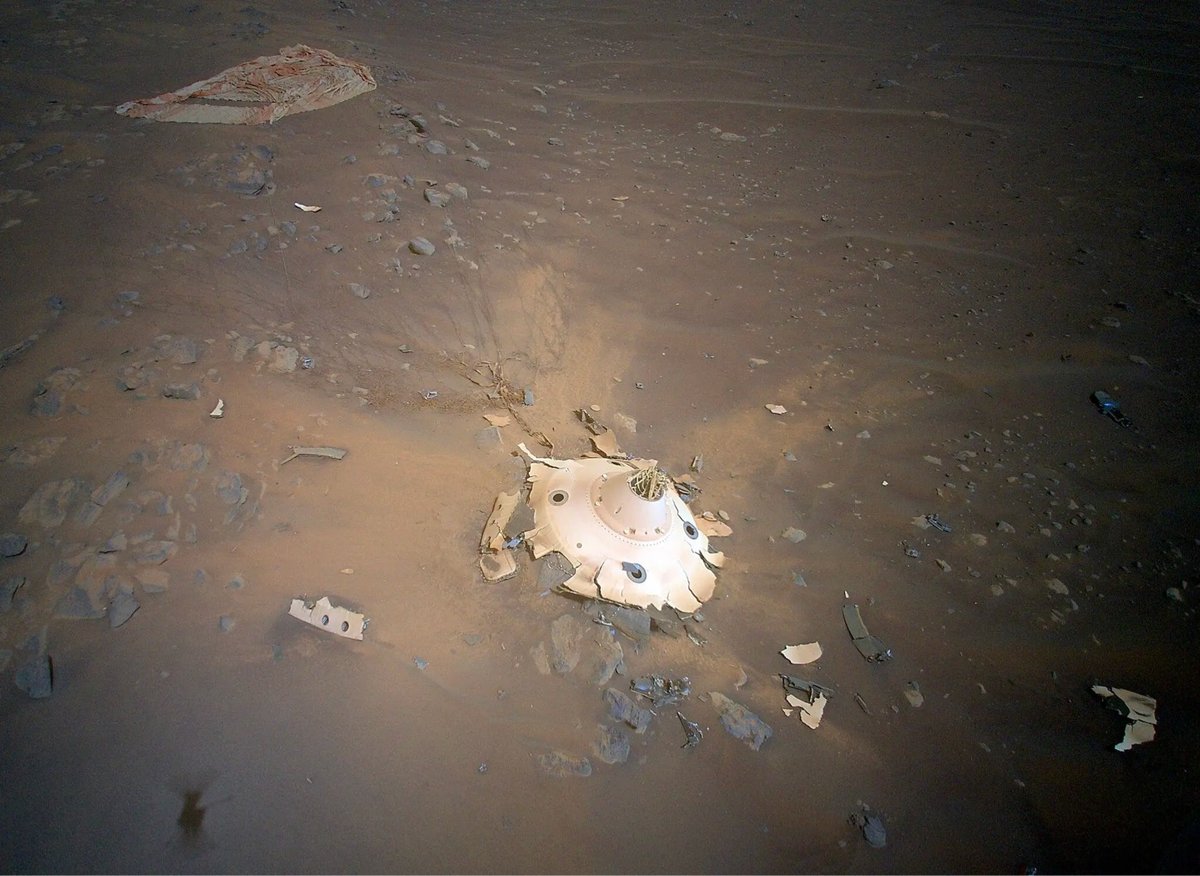
On the 26th flight of Ingenuity, NASA’s helicopter on Mars, it spotted and photographed the wreckage of the Perseverance rover’s landing gear, protective shell, and parachute. From a NY Times article on the photos:
“There’s definitely a sci-fi element to it,” Ian Clark, an engineer who worked on Perseverance’s parachute system, said of photographs released on Wednesday. “It exudes otherworldly, doesn’t it?”
Part of the reason NASA had Ingenuity go take a look is to see how all of that equipment held up during the landing process. Data from the photos will inform future missions.
“Perseverance had the best-documented Mars landing in history, with cameras showing everything from parachute inflation to touchdown,” said JPL’s Ian Clark, former Perseverance systems engineer and now Mars Sample Return ascent phase lead. “But Ingenuity’s images offer a different vantage point. If they either reinforce that our systems worked as we think they worked or provide even one dataset of engineering information we can use for Mars Sample Return planning, it will be amazing. And if not, the pictures are still phenomenal and inspiring.”
In the images of the upright backshell and the debris field that resulted from it impacting the surface at about 78 mph (126 kph), the backshell’s protective coating appears to have remained intact during Mars atmospheric entry. Many of the 80 high-strength suspension lines connecting the backshell to the parachute are visible and also appear intact. Spread out and covered in dust, only about a third of the orange-and-white parachute — at 70.5 feet (21.5 meters) wide, it was the biggest ever deployed on Mars — can be seen, but the canopy shows no signs of damage from the supersonic airflow during inflation. Several weeks of analysis will be needed for a more final verdict.
It is really remarkable, the images we’re seeing from Mars, taken by a robotic helicopter.
Clever Cutout Portraits
Rudy Willingham holds up paper cutouts of people (and Muppets!) against carefully chosen backgrounds and photographs the results, resulting in these witty portraits.
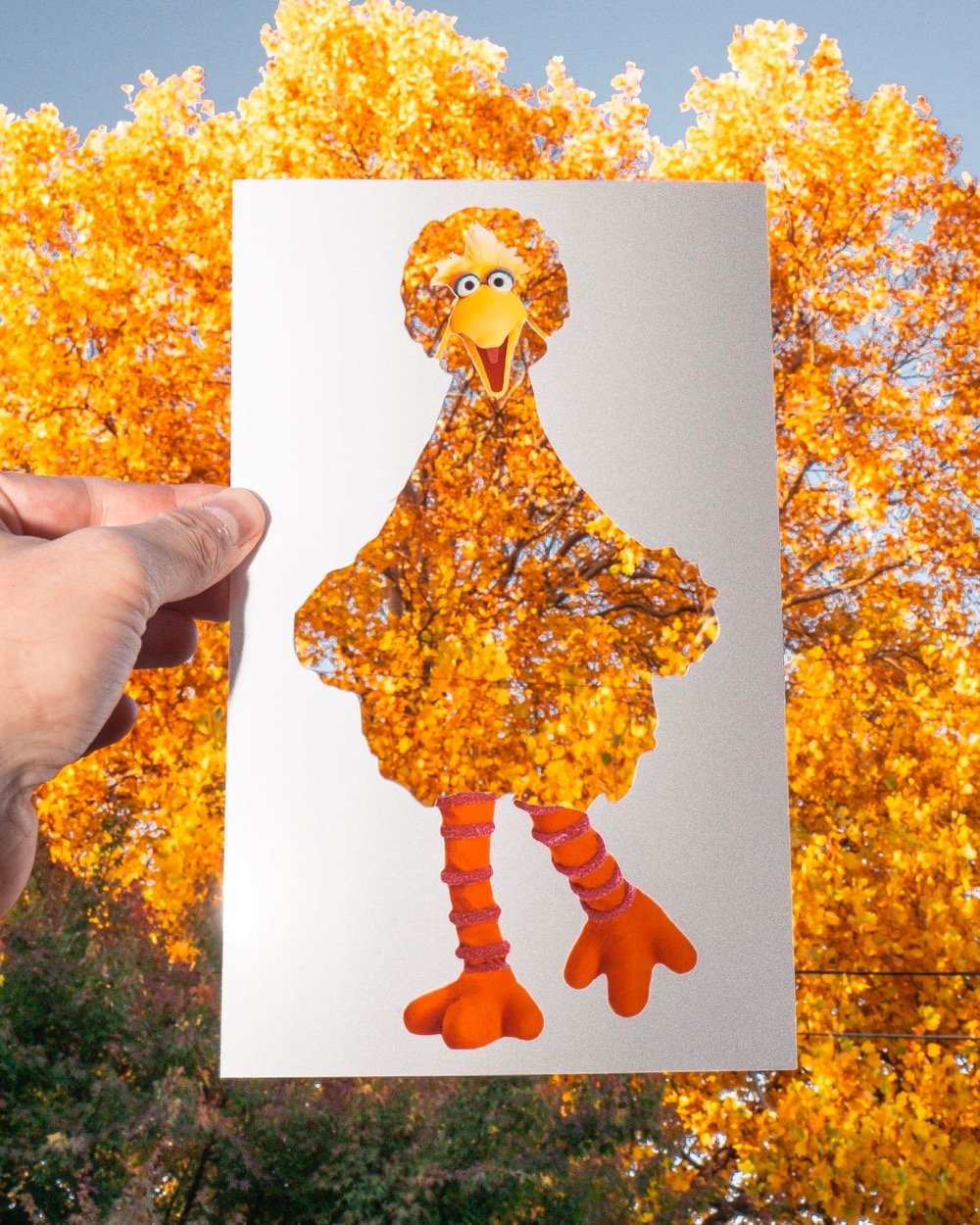

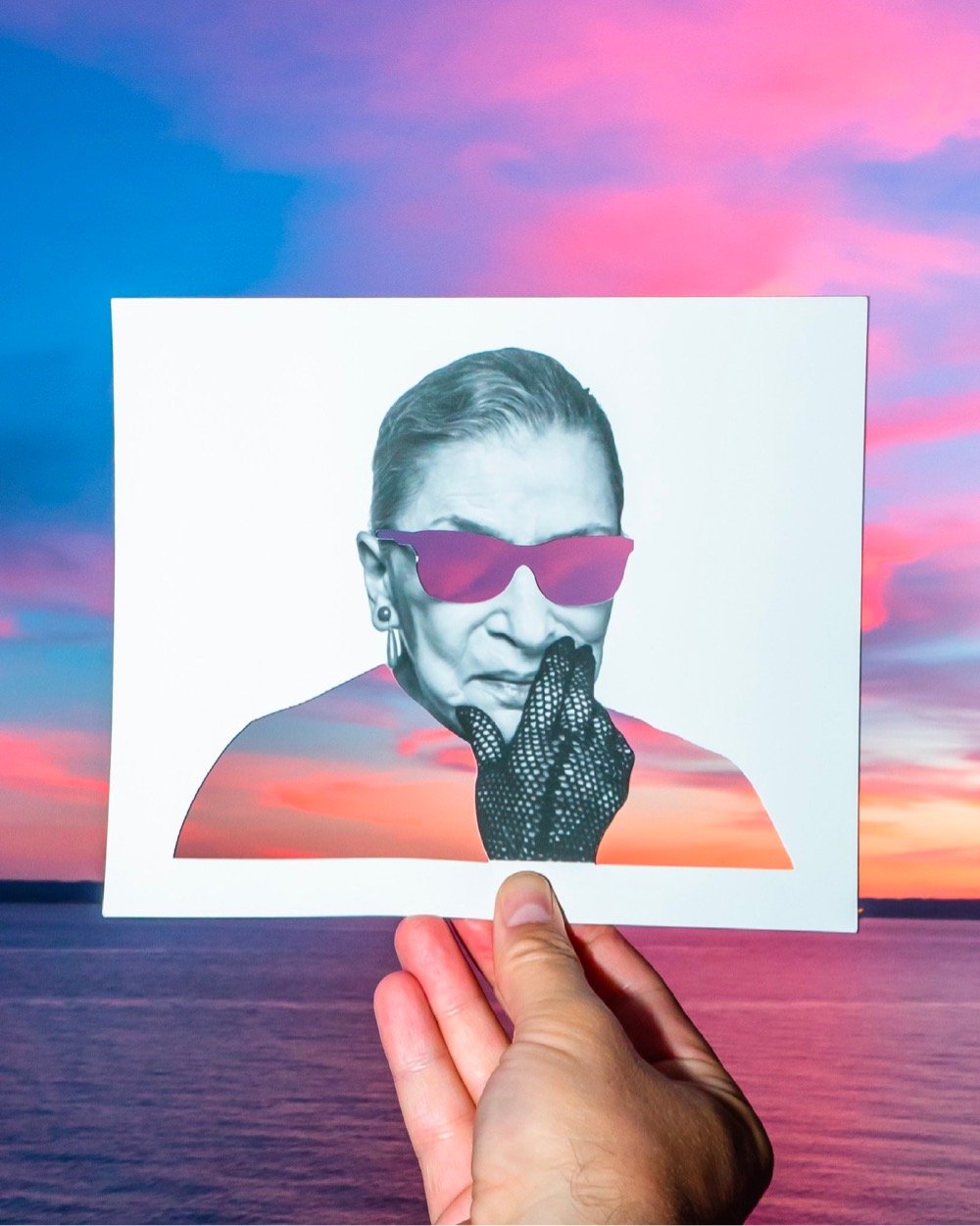

You can find more of Willingham’s work across his various social media platforms: website, Instagram, Twitter, Facebook, and TikTok.
Octopuses, Seahorses, and the Amazing Biodiversity of the Ocean
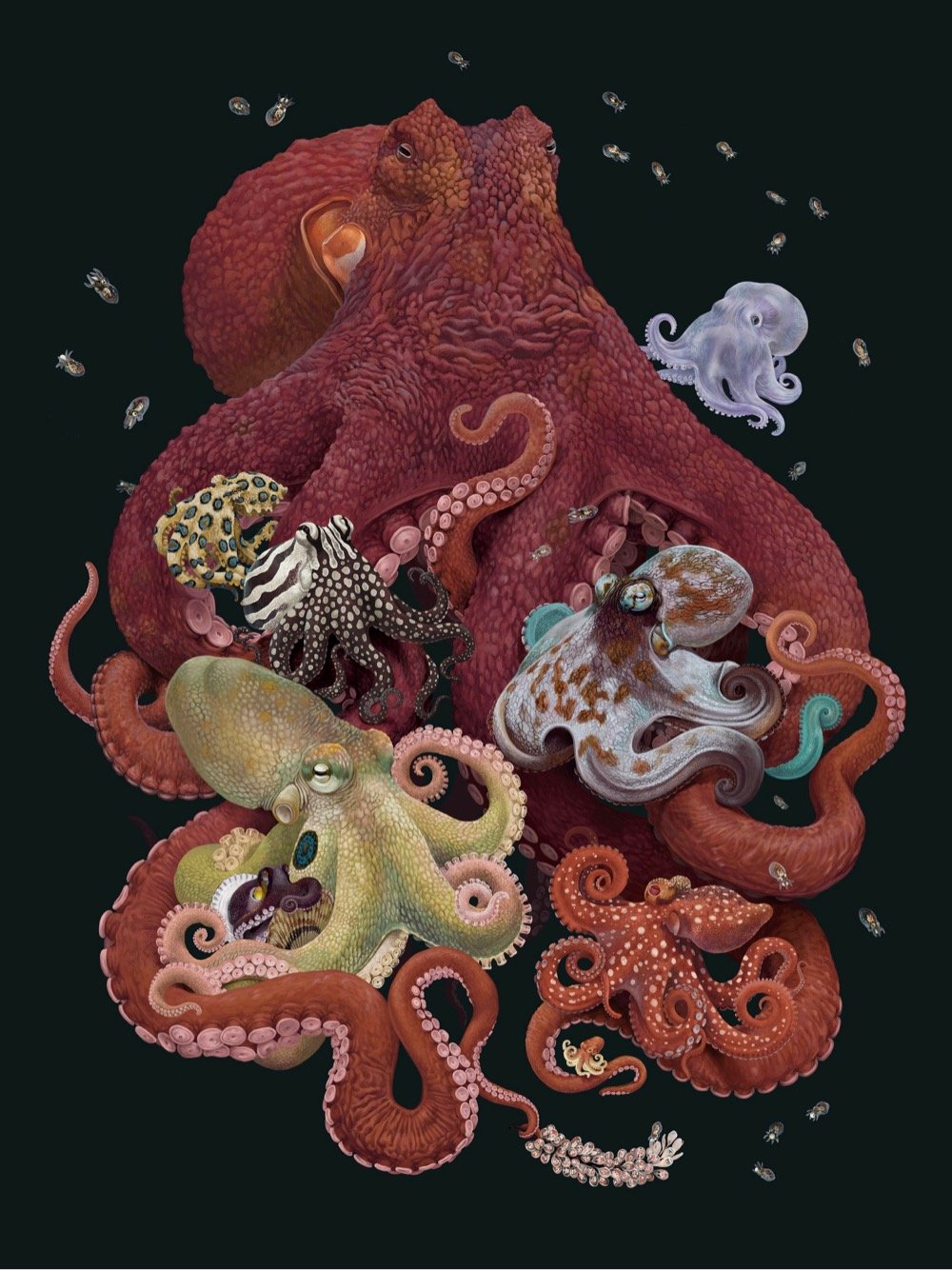
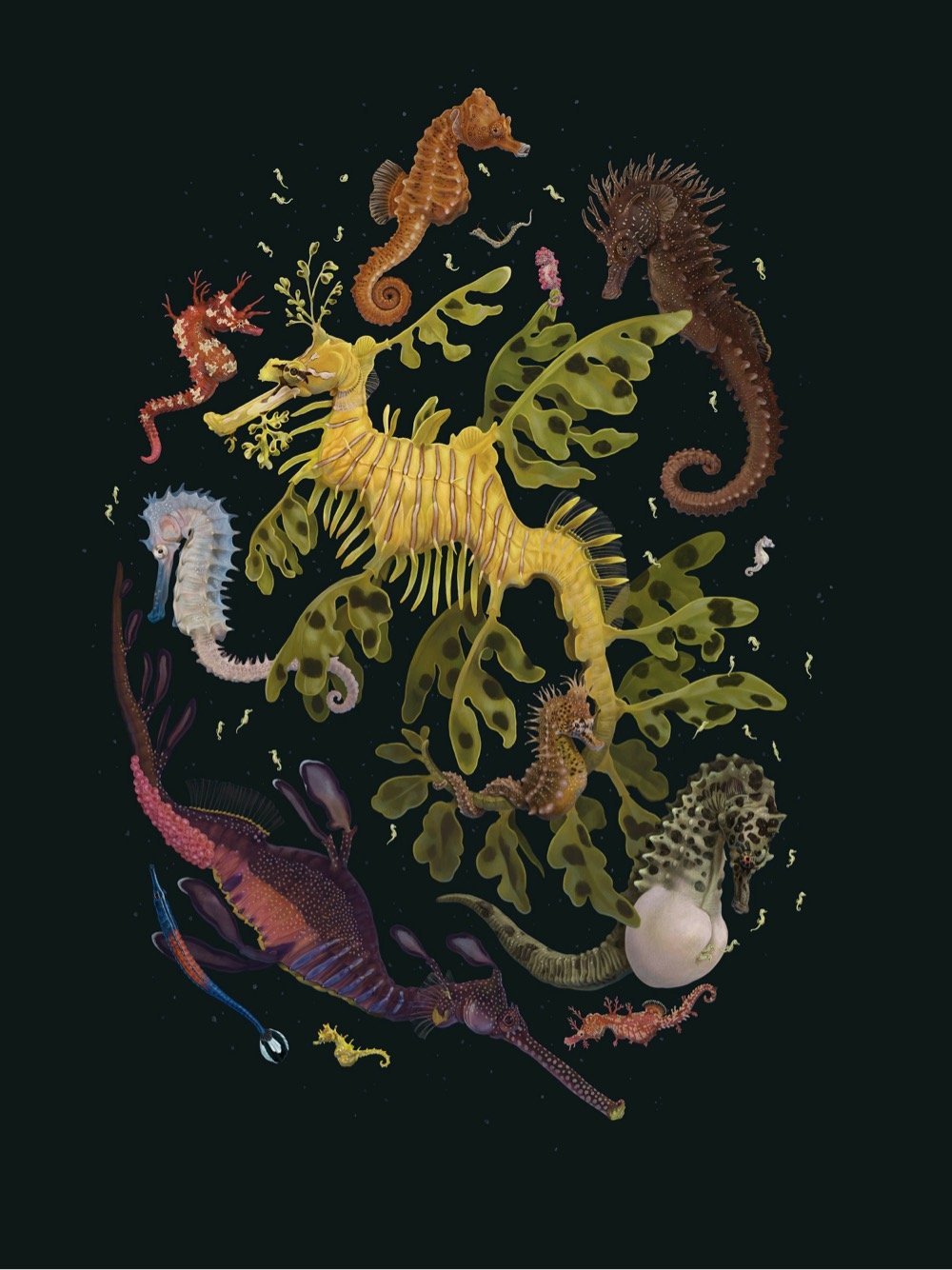
Zoe Keller’s Ocean Biodiversity Print Series celebrates the diversity of the animals that live in the sea. Each of the four prints concerns a different sea creature or region of the ocean: the octopus, the jellyfish, the seahorse, and the deep sea. (via dense discovery)
A History of Birth Control
From Lindsay Holiday, an engaging history of birth control, covering the ineffective and often dangerous methods used in the ancient world, the rhythm method, proto-condoms, actual condoms, Lysol (!!), and of course one of the modern world’s most impactful inventions, the hormonal birth control pill.
Through most of history pregnancy and childbirth were a very dangerous undertaking for women. In medieval Europe 1 in 3 women died in their child-bearing years and 1 in 4 children did not live to see their first birthday. Even when both mother and child survived the ordeal of birth women were not always able to provide for a child. And in most cultures pregnancy outside of wedlock was considered a great sin and often resulted in the shunning of the woman and child while the man often got away scot-free. It is no surprise therefore that women throughout history have been trying a wide variety of methods to prevent conception.
(via open culture)
The results of a new study suggest “that virtual interaction comes with a cognitive cost for creative idea generation”. In-person is better for the production of creative ideas.
Always worth reading an interview with Werner Herzog. Of a Buster Keaton moment in a film, he says: “I rejoice for having seen that. It’s one of the all-time best moments in a movie ever.”
Earth Clock
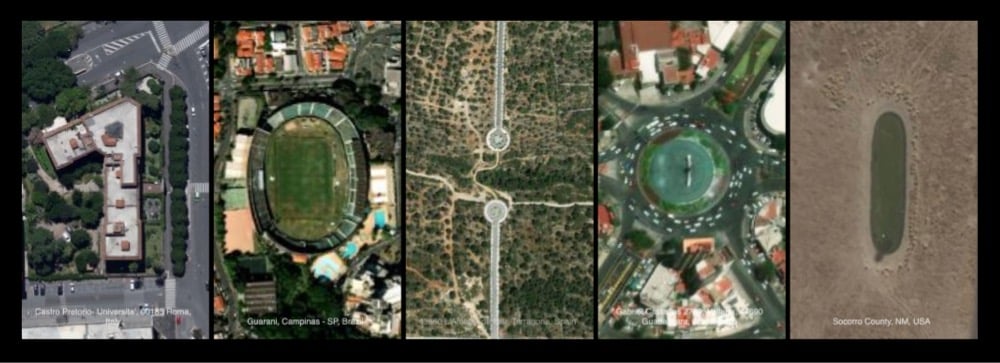
Earth Clock is a digital clock where the digits are satellite photos of geographic and architectural features that look like numbers, complete with a colon in the middle. A few screenshots from this morning…you get the idea:


This sort of thing always reminds me of Christian Marclay’s The Clock. (via @njvack)
Swirling Ink Cosmos
There is something deeply soothing to the human brain, at least to this human brain, about watching liquids flow. A burbling brook, cascading waterfall, crashing waves. Even better when it looks like outer space, like this video by Vadim Sherbakov of wonderfully whirling colorful inks with glitter. (via colossal)
P.S. A reminder if you’re into this sort of thing, there are dozens of similar videos in this mesmerizing collection.
A map of “New Prussia” on the cover of Life magazine, Feb 1916. “It was part of the effort of American internationalists to overcome isolationist sentiment insisting on continued neutrality in the ongoing European War.”
Robin Sloan on Twitter/Musk. “His substantial success launching reusable spaceships does nothing to prepare him for the challenge of building social spaces. The latter calls on every liberal art at once, while the former is just rocket science.”
Spoiler Paintings
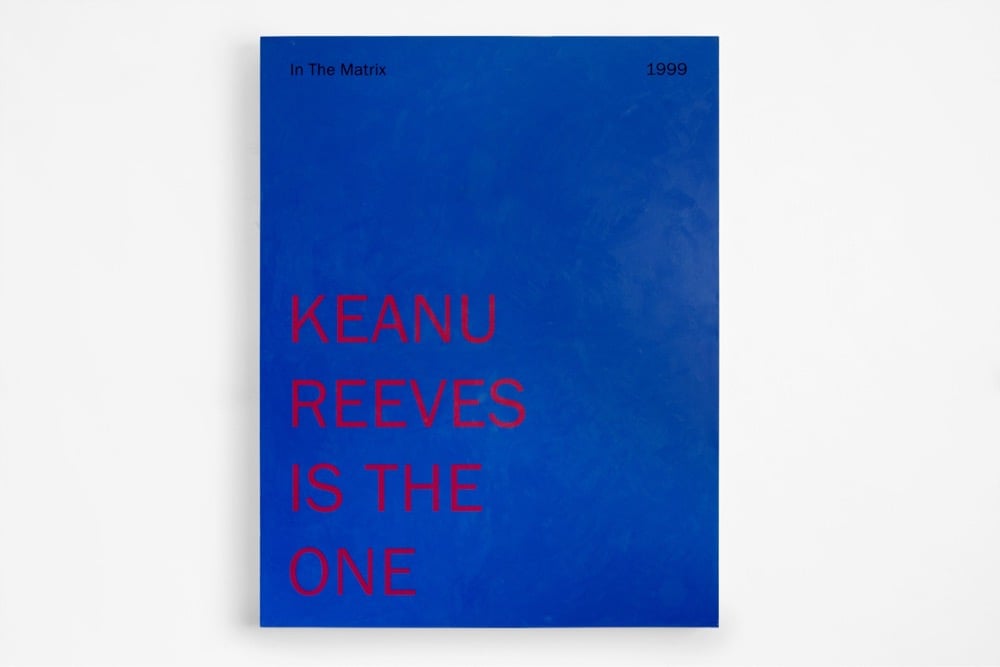
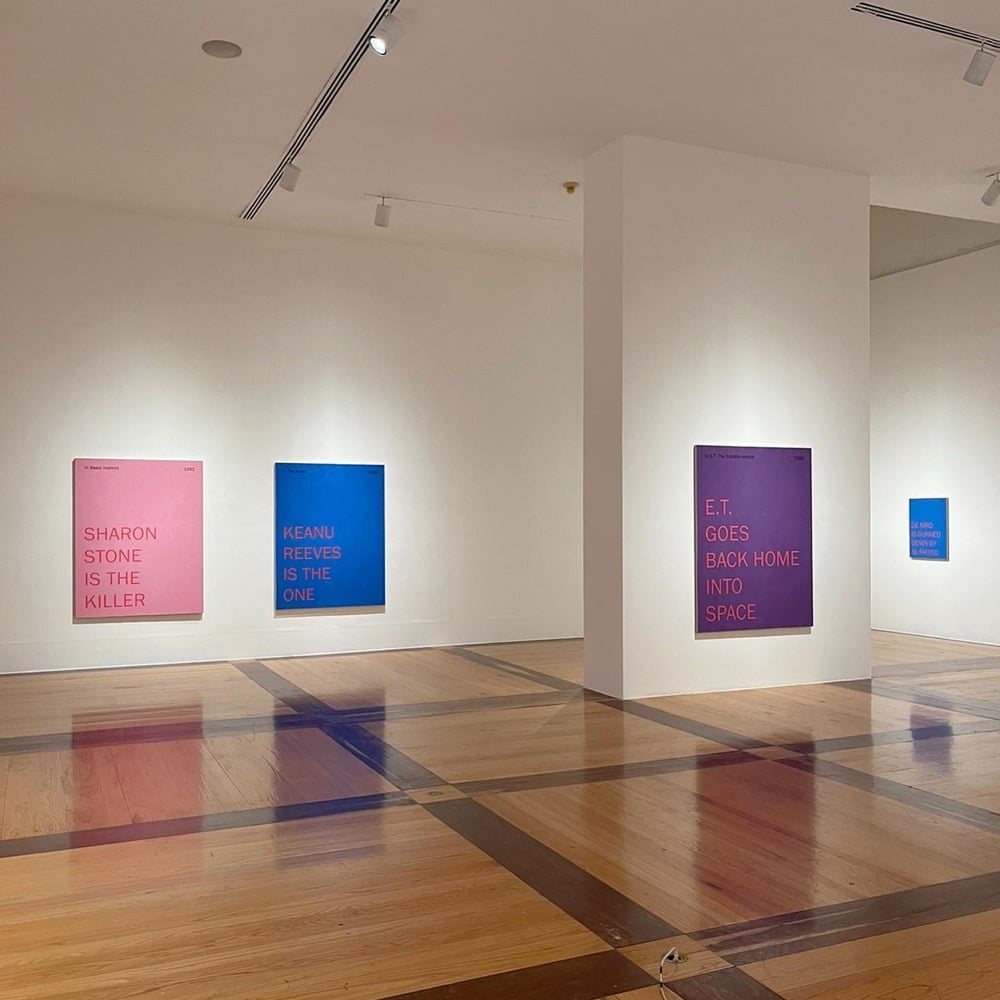
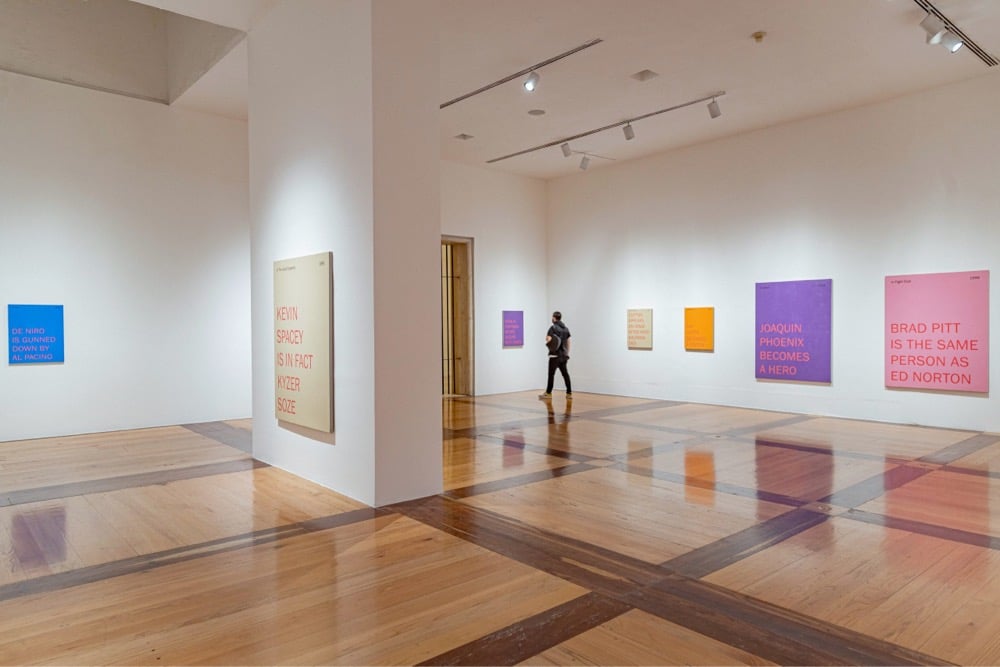
For his series of Spoiler Paintings, Mario García Torres silkscreened short texts on colorful backgrounds that reveal major plot points of movies like The Usual Suspects, The Matrix, E.T., Basic Instinct, Heat, and Fight Club.
Although the Spoiler Paintings may seem conventional and harmless, they were produced with the intention of displacing the reaction in a work of art by producing tension even before seeing the piece. This objective is achieved by using the widespread notion that knowing the end of a film destroys its experience.
Molten Iron Fireworks
In the small Chinese village of Nuanquan, they make fireworks displays by throwing molten iron against the wall, which causes it to explode in a shower of sparks.
For the past 30 years, Wang De has been practicing the ancient art of Da Shuhua, a 500-year-old tradition that first began with blacksmiths in the Nuanquan village of China. Wanting a way to celebrate Chinese New Year, but without the means to afford traditional fireworks, these blacksmiths devised a new form of entertainment. By tossing molten iron against the walls, they created beautiful showers of sparks, beginning a practice that would soon become a part of their cultural heritage. Now, it’s a special part of Nuanquan’s legacy as there’s no place else on Earth to witness the fiery spectacle.
This would be something to see in person — thousands of tiny sparks flying around at great speeds is exactly the sort of thing that compressed online video doesn’t depict that well.
Michelle Yeoh and the Daniels Break Down a Scene from Everything Everywhere All At Once
I saw Everything Everywhere All At Once a few weeks ago and absolutely loved it — best movie I’ve seen all year and I can’t remember having a better time seeing a film in the theater in the past 3-4 years. So watching this short making-of featurette of Michelle Yeoh and the Daniels was really nice. It’s not surprising how thoughtful yet open to creative chaos they are, given the magic of the end result.
Solving the World’s Hardest Puzzle Would Take You Until the Heat Death of the Universe
In an excerpt in The Atlantic from his new book about puzzles, A.J. Jacobs writes about the puzzle he commissioned from Dutch puzzle creator Oskar van Deventer, a “generation puzzle” that will take him almost literally forever to solve.
And then, on a Friday morning, I woke up to an email from Oskar. He had finished making the puzzle — and it worked. He had made a 55-pin Jacobs’ Ladder. Solving it would take 1.2 decillion moves1 (the number 1 followed by 33 digits). Written out, that’s: 1,298,074,214,633,706,907,132,624,082,305,023 moves.
We’d crushed the old record by 13 orders of magnitude. Oskar did some delightfully nerdy calculations on just how long it would take to solve this puzzle. If you were to twist one peg per second, he explained, the puzzle would take about 40 septillion years. By the time you solved it, the sun would have long ago destroyed the Earth and burned out. In fact, all light in the universe would have been extinguished. Only black holes would remain. Moreover, Oskar said, if only one atom were to rub off due to friction for each move, it would erode before you could solve it.
Here’s a video about the puzzle from the guy who designed and built it:
FYI: Jacobs’ book, The Puzzler, includes a “a hidden, super-challenging but solvable puzzle that will earn the first reader to crack it a $10,000 prize”. Good luck!
Small rounding error here…it’s actually 1.3 decillion moves.↩
Elon Musk is buying Twitter. I hope I’m wrong, but *sigh*
The Curious Afterlife of Pop Stars
For his forthcoming book Exit Stage Left: The Curious Afterlife of Pop Stars, journalist Nick Duerden interviewed pop stars who had made it big about what happened after the bright spotlight of fame moved on. Here are a few interesting bits from an adapted excerpt in The Guardian:
“The pain I feel from the Slits ending is worse than splitting up with a boyfriend,” Albertine wrote, “This feels like the death of a huge part of myself, two whole thirds gone … I’ve got nowhere to go, nothing to do; I’m cast back into the world like a sycamore seed spinning into the wind.”
So what’s it like, I wondered, to still be doing this “job” at 35, and 52, and beyond? What’s it like to have released your debut album to a global roar, and your 12th to barely a whisper? Why the continued compulsion to create at all, to demand yet more adulation? Frankly, what’s the point?
[Suzanne] Vega’s tour, haemorrhaging money, was cut short. When she arrived back at JFK, she looked out for the car her record label would always send to collect her. But there was no car. Not any more. “I took a taxi,” she says.
When Tanya Donelly, of 90s US indie darlings Belly, quit after winning a Grammy (and promptly suffering burnout), she craved normal work and became a doula. When 10,000 Maniacs’ Natalie Merchant grew tired of being a marketable commodity, she quit for the quieter life of a solo artist, and was then duly horrified when her debut album, 1995’s Tigerlily, sold 5m copies, because “then came the treadmill again”. The next time she tried to retire, she did so more forcefully, and now teaches arts and crafts to underprivileged children in New York state. “I look at people like Bob Dylan and Paul McCartney,” she says, referring to the way both legends continue to tour, “and I think to myself: ‘If I were you, I’d just go home and enjoy my garden.’ It’s a question of temperament, clearly.”
Our Friend the Computer is a new podcast “exploring alternative computing histories”. The first season focuses on pre-internet networks like Minitel, Project Cybersyn, and OGAS.
Photos and words in the NY Times about Japan’s Kii Peninsula by @craigmod. “Walk the peninsula, pay attention, and you’ll find yourself floating between worlds.”
The axe that Jack Nicholson used in The Shining is up for auction. Current top bid is $60,000.
Massive New Book Collection Offers Unprecedented Views of the Sistine Chapel
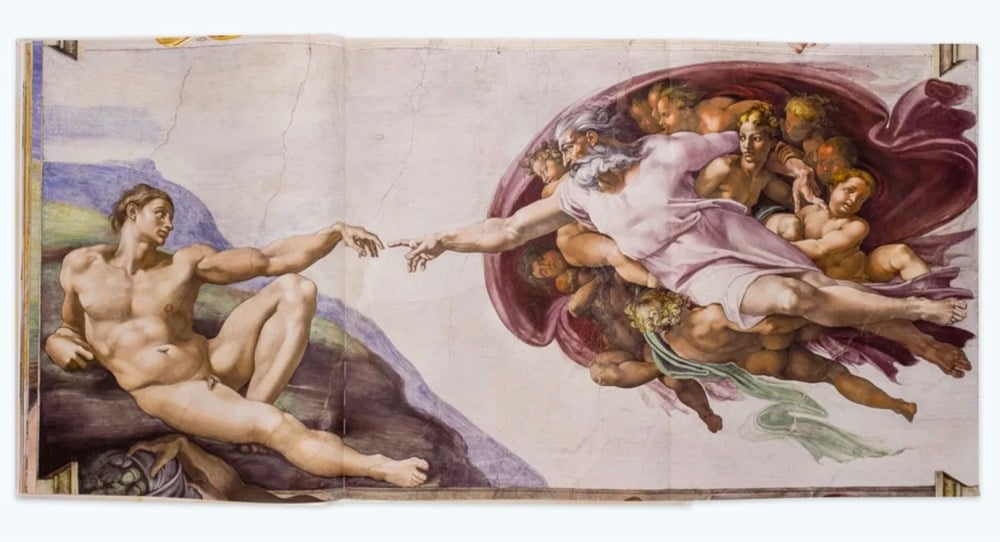
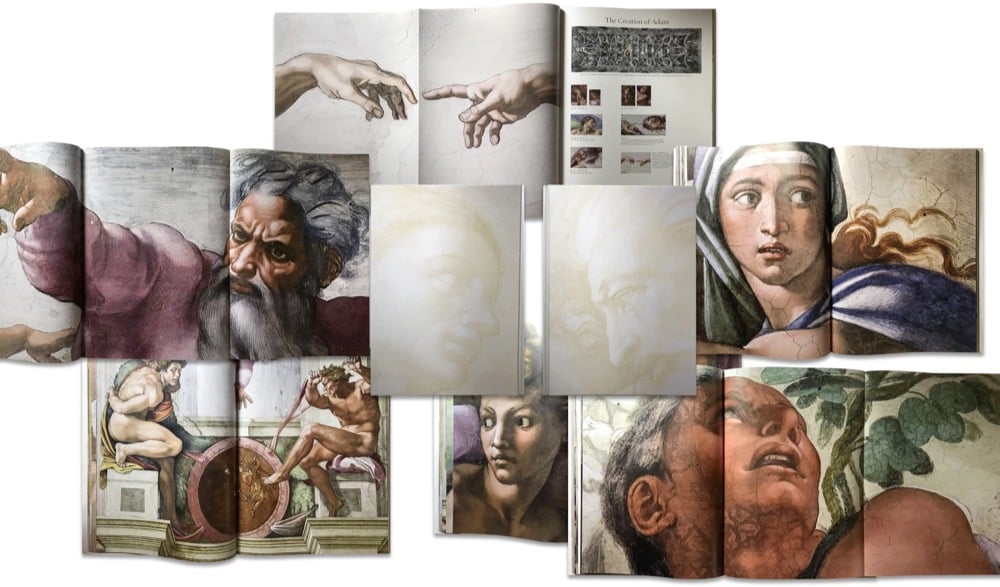
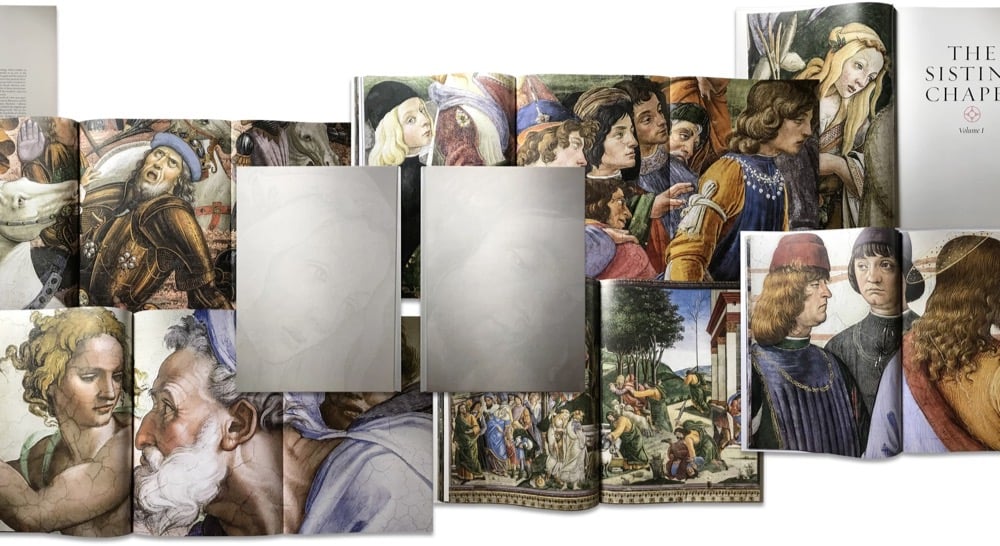
There are famously no photos allowed when visiting the Sistine Chapel in the Vatican. So, this new book series “that includes 1:1 scale images of the masterpieces by Michelangelo, Botticelli, and other Renaissance artists” from the chapel might be your best bet to enjoying this wonder of the art world at home. But here’s the bad news: the 20-pound volume costs $22,000 and has been limited to 1999 copies, no reprints.
Published by Callaway Arts & Entertainment and Italy’s Scripta Maneant, the book uses state-of-the-art color printing to ensure its colors match those used in the Chapel. The close-up detail of each image provides a perspective that cannot be obtained by visiting the Chapel in person. Readers can see the artist’s brush strokes and texture of the paint, as well as the small cracks and imperfections that line the walls and ceiling.
The publishing agreement with the Vatican stipulated that only 1,999 copies could be printed. Six hundred of them are in English. The Italian language copies have already sold out. The deal also stipulates no reprints.
This book looks incredible — two photographers took 270,000 images over 65 nights that were stitched together using 3D software to accurately portray the paintings done on the chapel’s curved surfaces. (via open culture)
Feynman’s Ode to the Wonder of Life
In the last installment of a video series called The Universe in Verse, Maria Popova, Yo-Yo Ma, and Kelli Anderson have collaborated on a video that features words spoken by Nobel Prize-winning physicist Richard Feynman in a 1955 speech, a poem of sorts on the wonder of life.
Deep in the sea, all molecules repeat the patterns of one another till complex new ones are formed. They make others like themselves… and a new dance starts.
Growing in size and complexity… living things, masses of atoms, DNA, protein… dancing a pattern ever more intricate.
Out of the cradle onto the dry land… here it is standing… atoms with consciousness… matter with curiosity.
Lovely. And of course I love the visuals by Kelli Anderson.
Man Self-Immolates in Front of the Supreme Court on Earth Day in Protest of Climate Change Inaction
Hoping to draw attention to the climate crisis, activist Wynn Bruce set himself on fire in front of the Supreme Court on Earth Day. He later died from his injuries.
A Colorado man who set himself on fire in front of the Supreme Court on Friday in an apparent Earth Day protest against climate change has died, police said.
The Metropolitan Police Department of Washington, D.C., said that Wynn Bruce, 50, of Boulder, Colo., had died on Saturday from his injuries after being airlifted to a hospital following the incident. Members of his family could not be reached immediately for comment.
Kritee Kanko, a climate scientist at the Environmental Defense Fund and a Zen Buddhist priest in Boulder, said that she is a friend of Mr. Bruce and that the self-immolation was a planned act of protest.
“This act is not suicide,” Dr. Kritee wrote on Twitter early Sunday morning. “This is a deeply fearless act of compassion to bring attention to climate crisis.”
It’s shocking and sad but perhaps not surprising how little media attention this has gotten. Bruce, a Buddhist, seems to have planned this action for several weeks or even months, leaving clues in a repeatedly edited comment on Facebook. His action mirrors that of Thích Quảng Đức in 1963, who self-immolated in Saigon in 1963 to protest the persecution of Buddhists in South Vietnam. Rest in peace, Wynn Bruce.
The Bagworm Caterpillar’s DIY Mobile Log Cabin
The bagworm caterpillar is quite the animal architect. In preparation for its transformation into a moth, the caterpillar builds itself a house that it carries around on its back out of materials it finds in its habitat, like sticks or leaves. When it enters the pupa stage, the caterpillar fastens the house to something solid and hunkers down inside.



I couldn’t source the top photo but the bottom two were taken by John Horstman, who has a bunch of incredible photos of bagworm caterpillar houses on Flickr. Nicky Bay has also taken many photos of bagworm caterpillar architecture.
The Birdsong of Printed Circuit Birds
As part of her Circuit Garden project, artist Kelly Heaton makes birds out of electronic circuitry that can be adjusted to produce a wide variety of birdsong. Here she demonstrated with a printed circuit bluejay:
As Heaton explains, the sounds made by the birds aren’t recordings…they’re generated by the electronics, like a synthesizer.
My “printed circuit birds” are self-contained sound generators. The electronics are [100%] analog: no audio recordings or software are involved. By “analog” I mean that the sound is dynamically produced by the bird’s body (circuit), like a vintage synthesizer. In this video, I adjust knobs to change resistance in the circuit, thereby altering the song quality. You can think of this like adjusting neurons in a bird’s brain to alter the impulse by which it vocalizes.

(via clive thompson)
A Custom-Built Moon Motorcycle

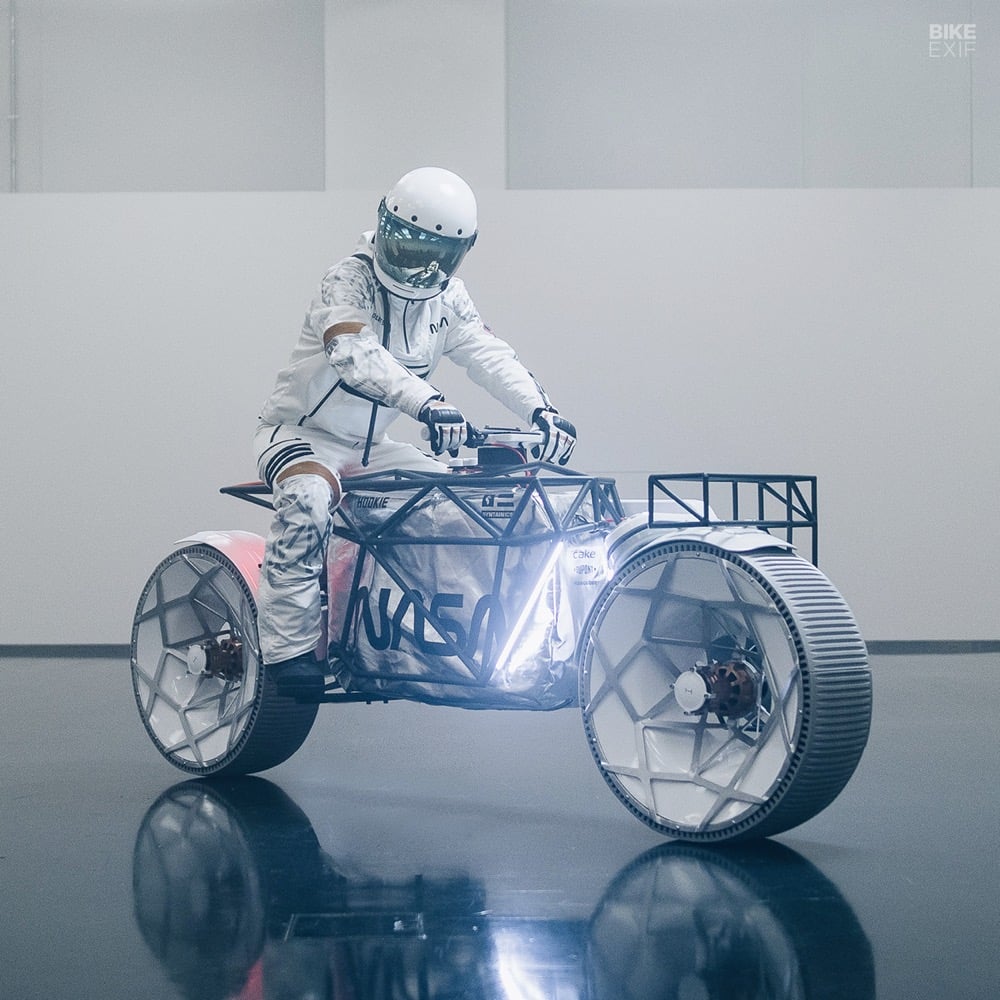
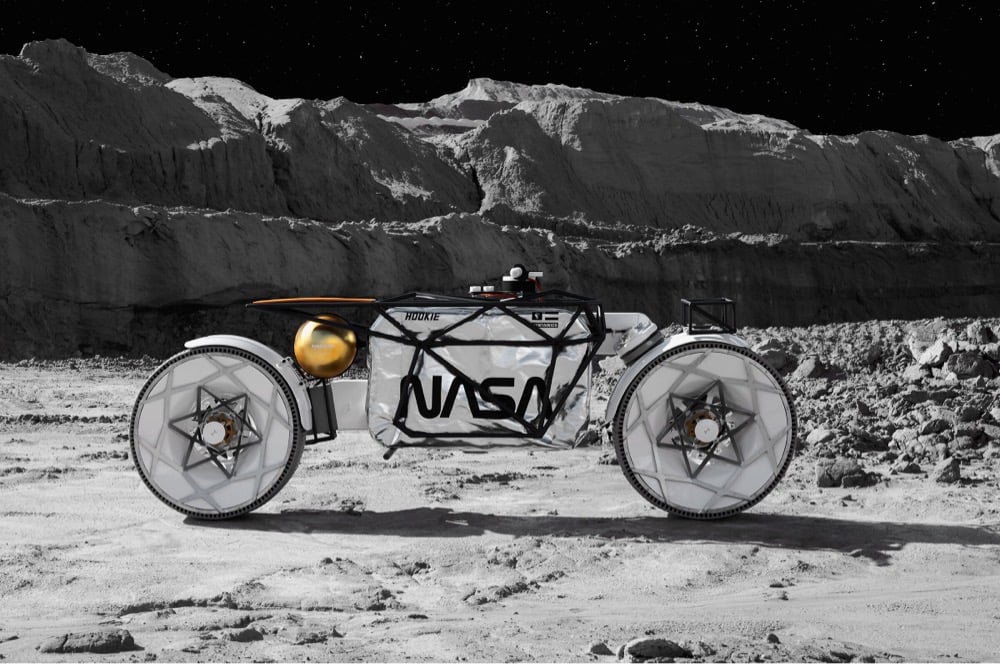
Based on a digital rendering by Andrew Fabishevskiy, motorcycle design company Hookie Co. built a real-life prototype of an electric motorcycle designed to be driven on the Moon. Named Tardigrade after the hearty micro-animal, the 2-wheeled rover weighs almost 300 pounds, is constructed out of aluminum, Kevlar, carbon fiber, and other materials, has a top speed of 9 mph, and a battery with a range of 62 miles. You can check out how it was built in this video. I want one! Electric motocross on the Moon does sound pretty fun:
Regarding flat track racing on the moon, I would prefer some big gaps and jumps more than turning left around an oval. With almost one-sixth of Earth’s gravity, I’d need only a small bump to jump 10 meters — that would be fun! Maybe the Tardigrade inspires space-addicted people and engineers for upcoming lunar missions, and I would be more than happy to be a tiny part of that.
Inside these LA dispensaries, Black women are redesigning what cannabis culture looks like. “Gorilla Rx founder Kika Keith wanted her dispensary to feel like a grocery store, but also a little like a roller skating rink.”
The Best Photos From the Shot on iPhone Macro Challenge


Apple recently announced the winners of a competition to highlight the best macro photos shot on the newest iPhones. Amazing photos from a phone. The camera is really the only reason I upgrade my iPhone every year…it just gets better and better.
The Mass Delusion of the Pandemic Being Over
Theater historian Debra Caplan published a Twitter thread yesterday about Eugene Ionesco’s 1959 play, Rhinoceros.
In 1959, Eugene Ionesco wrote the absurdist play Rhinoceros in which one by one, an entire town of people suddenly transform into rhinos. At first, people are horrified but as the contagion spreads, (almost) everyone comes to accept that turning into a rhinoceros is fine.
Rhinoceros is a play about conformity and mob mentality and mass delusion, about how easy it is for people to accept outrageous/unacceptable things simply because everyone else is doing it.
In the end, the protagonist Berenger is the only human left.
Even reading that first bit of the thread, my mind jumped immediately to the pandemic, particularly the present moment we’re in with falling mask mandates and other discarded and ignored public safety protections. And that’s Caplan’s take too:
Over the last few weeks, as mitigation measures drop, millions of Americans who were previously cautious about Covid (and millions more who never were) have decided that it’s time to move on and pretend that it’s 2019 again.
Bars and restaurants are packed with unmasked people, mask mandates hardly exist anywhere and are no longer tied to infection rates, the new CDC map makes it look like everything is under control, and we seem to have all collectively decided that Covid is “over.”
Let’s be clear about what is actually happening here.
The idea that we can live with Covid WITHOUT any mitigation measures and expect things to turn out ok (both for individuals and as a society) is a lie.
We are watching an astounding mass delusion unfold in real time.
See also The New Normal, about shifting baselines.
Fear tends to diminish over time when a risk remains constant. You can only respond for so long. After a while, it recedes to the background, seemingly no matter how bad it is.
Big feature from the NY Times with how various artists work and what advice they might have for other artists, feat. Yo-Yo Ma, Saweetie, Tony Kushner, Jacqueline Woodson, Eileen Myles, Annette Bening, and many others.
The KLF is on YouTube. Here’s Justified & Ancient feat. Tammy Wynette.
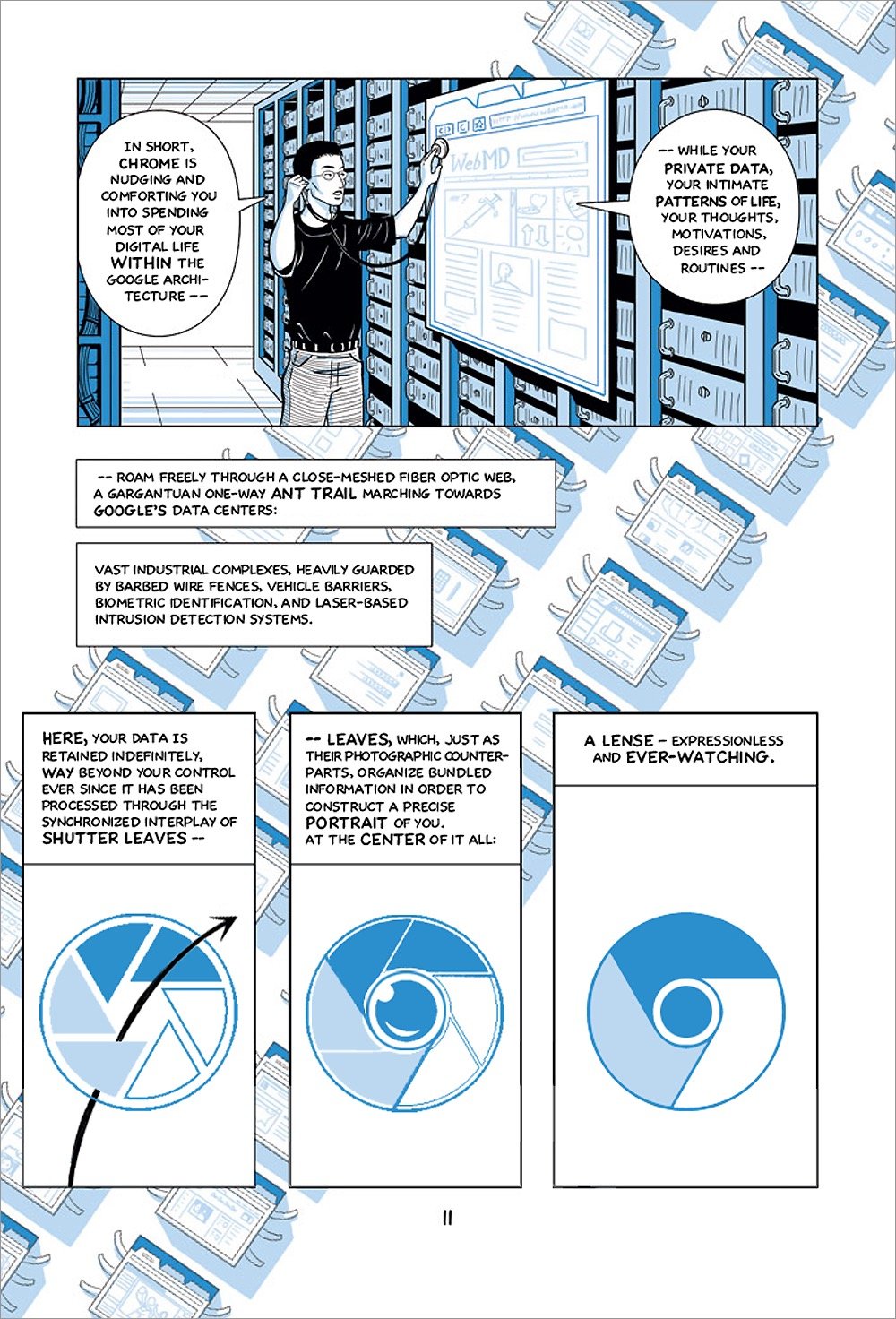
Contra Chrome
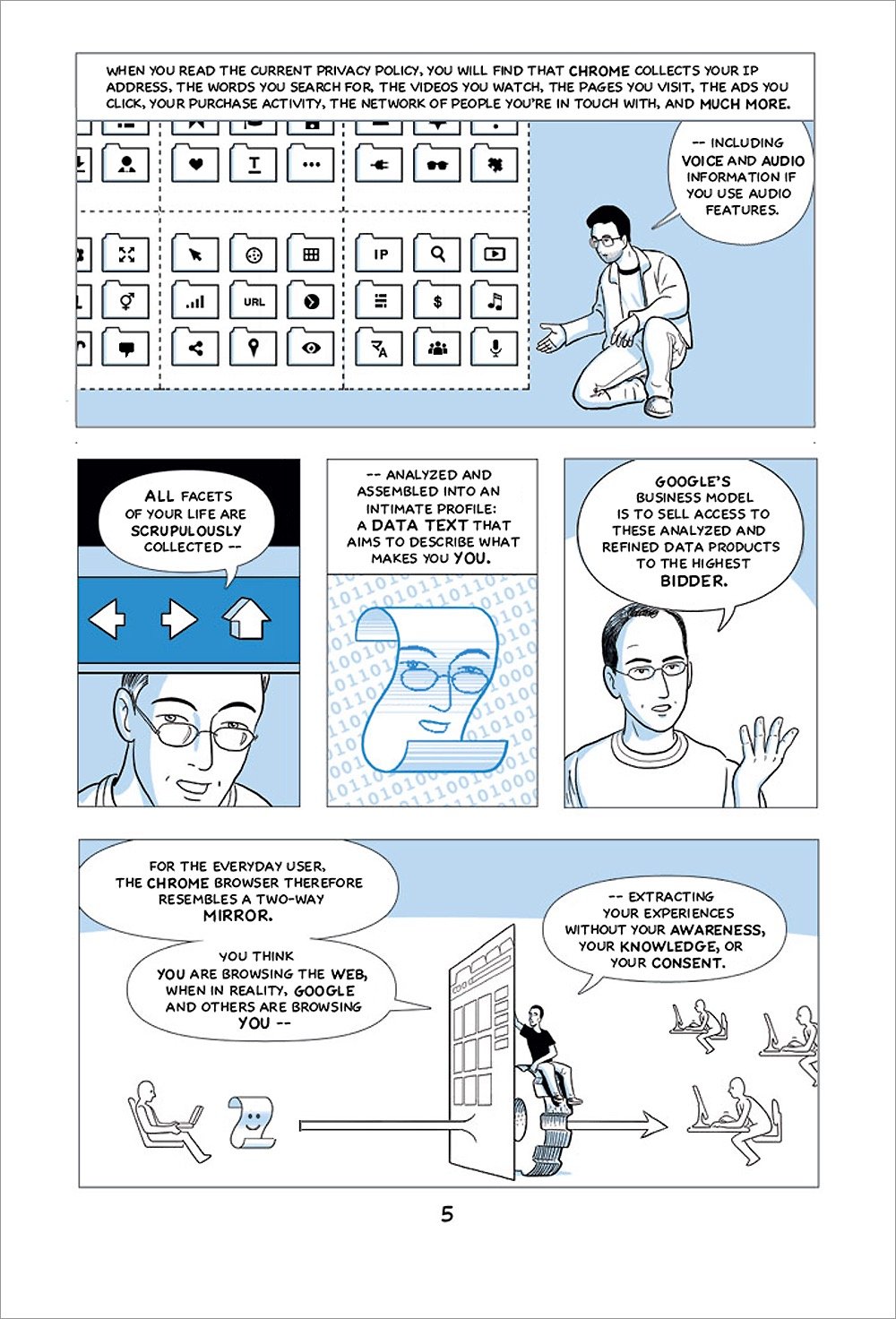
Back in 2008, Google commissioned comic artist Scott McCloud to create a comic book to celebrate/explain the launch of their Chrome web browser. Since then, Chrome has become a vital part of Google’s core business, an advertising juggernaut that works by tracking users and their interests across the entire web. To better reflect the reality that “Google’s browser has become a threat to user privacy and the democratic process itself”, comic artist and activist Leah Elliott has cheekily created an updated comic book in the style of the original. She calls it Contra Chrome.
A Stanford Psychologist Says He’s Cracked the Code of One-Hit Wonders. “Mass audiences are drawn to what’s familiar, but they become loyal to what’s consistently distinct.”
Socials & More