Entries for September 2020
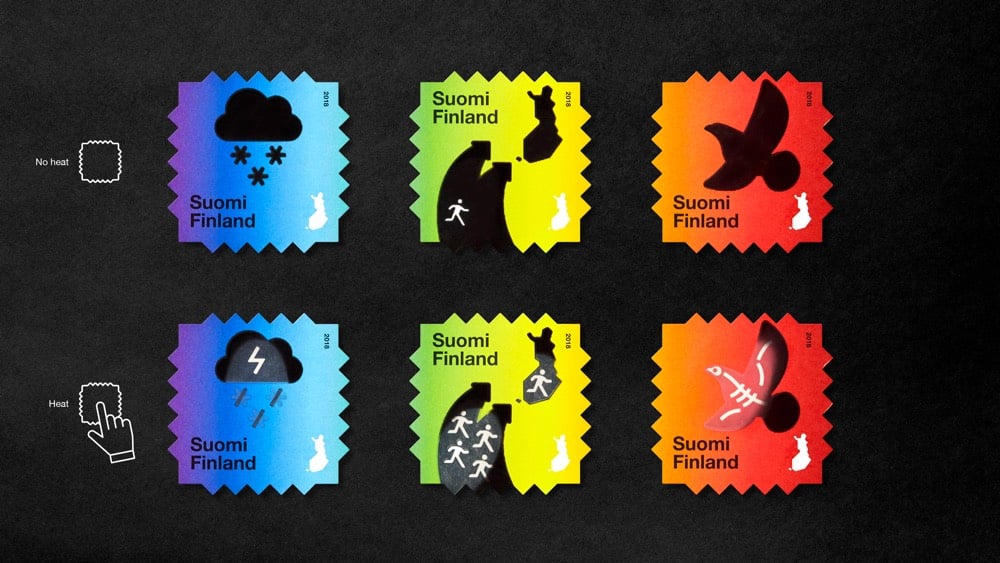
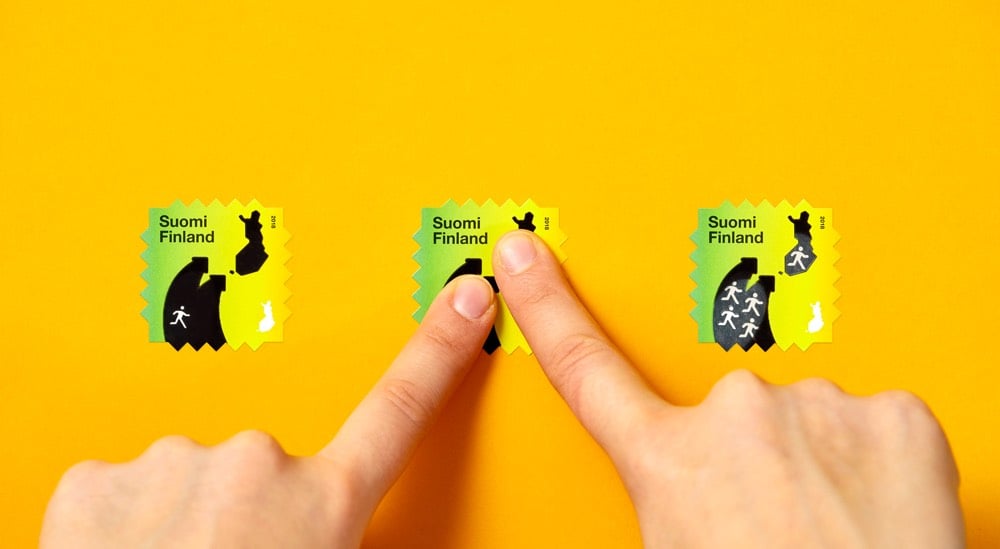
The Finnish Post Office tapped design firm Berry Creative to create this series of heat-reactive postage stamps that reveal messages about the effects of climate change when you activate them with heat (like a finger pressing on them). Each stamp tells a little two-act story about a different aspect of climate change: global temperature increase, climate refugees migrating, and endangered wildlife. Very clever design and I love the aesthetics too. (via moss & fog)
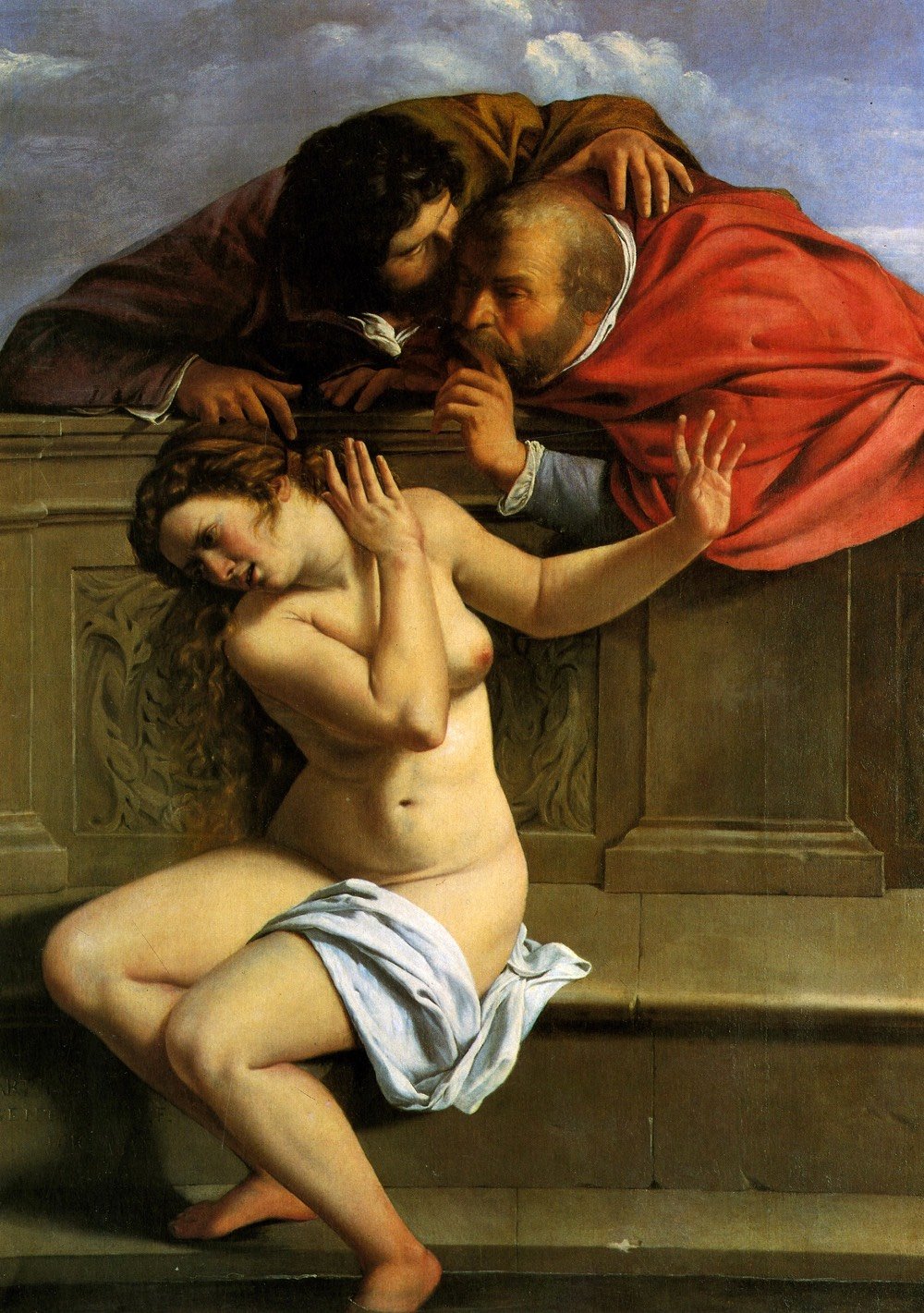
For the New Yorker, Rebecca Mead writes about the 17th-century Italian painter Artemisia Gentileschi, whose work has been growing in stature and popularity in recent years.
Increasingly, Artemisia is celebrated less for her handling of private trauma than for her adept management of her public persona. Throughout her career, she demonstrated a sophisticated comprehension of the way her unusual status as a woman added to the value of her paintings. On a formal level, her representation of herself in the guise of different characters and genders prefigures such postmodern artists as Cindy Sherman. Unlike Sherman, however, Artemisia had few female peers. She was not the only woman working as an artist during the early seventeenth century: a slightly older contemporary was the northern-Italian portraitist Fede Galizia, born in 1578, whose father, like Artemisia’s, was also a painter. But Artemisia must often have felt singular. In a series of letters written to one of her most important patrons, the collector Antonio Ruffo, she wittily referred to her gender: “A woman’s name raises doubts until her work is seen,” and, regarding a work in progress, “I will show Your Illustrious Lordship what a woman can do.” In 2001, the scholar Elizabeth Cropper wrote, “We will never understand Artemisia Gentileschi as a painter if we cannot accept that she was not supposed to be a painter at all, and that her own sense of herself — not to mention others’ views of her — as an independent woman, as a marvel, a stupor mundi, as worthy of immortal fame and historical celebration, was entirely justified.” On art-adjacent blogs, Artemisia’s strength and occasionally obnoxious self-assurance are held forth as her most essential qualities. She has become, as the Internet term of approval has it, a badass bitch.
An exhibition of Gentileschi’s work is set to open early next month at the National Gallery in London and is getting rave reviews. Man, I’d love to go see this in person!
BTW, when reading Mead’s piece, I kept stopping to search for the art she referenced and I recommend you do the same. It’s a) frustrating that the New Yorker doesn’t use hyperlinks for this purpose in the online version and b) still wondrous after all these years that this fantastic art is available to view online with a few quick clicks and keystrokes. Imagine reading a piece like this in 1989 and wanting to look at the art - it would take a trip to the library and then probably hours of searching.
Oh hell, I’ll just do this quick…here’s every painting referenced in Mead’s piece:
- “Susanna and the Elders”, Tintoretto: “…he portrayed Susanna as serene and abstracted, towelling a raised foot and regarding herself in a mirror, unaware of a bald man who is concealed behind a rose trellis and peering between her parted thighs.”
- “Susanna and the Elders”, Peter Paul Rubens: “…Susanna is shown reaching for a shawl, realizing with horror that she has been exposed to two leering men.”
- “Susannah and the Elders”, Ludovico Carracci: “Sometimes the violence threatened against Susanna is indicated in the tableau…”
- “Susanna and the Elders” (1610), Artemisia Gentileschi (pictured above): “Her head and her body torque away from the onlookers as she raises a hand toward them, in what looks like ineffectual self-defense.”
- “Self-Portrait as St. Catherine of Alexandria”, Artemisia Gentileschi: “…the subject gazes at the viewer, her brow dimpled in concentration, while wearing a gauzy turban and other finery.”
- “Judith and Her Maidservant with the Head of Holofernes”, Artemisia Gentileschi: “…offers a masterly execution of the technique, with its subjects illuminated, mid-action, by raking lamplight.”
- “Judith Beheading Holofernes”, Artemisia Gentileschi: “It shows the Biblical heroine with her sleeves rolled up over muscular arms, her mouth set, deftly butchering the Assyrian general.”
- “Crucifixion of Saint Peter”, Caravaggio: “…the elderly martyr is being raised, upside down, on a cross…”
- “The Conversion on the Way to Damascus”, Caravaggio: “…a young, muscled St. Paul is sprawled on the ground after receiving a heavenly vision.”
- “Young Woman with a Violin (Saint Cecilia)”, Orazio Gentileschi: “…shows a musician with a cleft chin, a rounded cheek, and an alert expression.”
- “David and Goliath”, Artemisia Gentileschi: “…a painting that shows David sitting triumphantly next to Goliath’s severed head…”
- “Cleopatra”, Artemisia Gentileschi: “…the ‘uncompromising sensuality’ of the recumbent nude…”
- “Danaë”, Artemisia Gentileschi: “Creases around the figure’s armpits and swells in the stomach reveal an awareness of the way a woman’s flesh settles and subsides.”
- “Danaë and the Shower of Gold”, Orazio Gentileschi: “…features bed linens so realistic that the viewer feels she could climb between them, but the princess’s breasts defy gravity with an almost comical perkiness.”
- “Self-Portrait as a Lute Player”, Artemisia Gentileschi: “…the delicacy and articulation of the hands, shown mid-strum on the instrument.”
- “Allegory of Inclination”, Artemisia Gentileschi: “…a female nude sitting on a tuft of cloud.”
- “Judith Slaying Holofernes”, Artemisia Gentileschi: “…a maidservant, Abra, forcefully holds Holofernes down while Judith confidently hacks away at his neck.”
- “Judith Beheading Holofernes”, Caravaggio: “She hardly seems to have the oomph required for decapitation.”
- “The Birth of Saint John the Baptist”, Artemisia Gentileschi: “…Artemisia’s version underlines her intimacy with the dynamics of the birthing room.”
- “Madonna and Child”, Artemisia Gentileschi: “Mary swoons, eyes closed, as the infant Jesus reaches for her cheek, his eyes locked on her face with palpably needy attachment.”
- “Susanna and the Elders” (1652), Artemisia Gentileschi: “…this Susanna draws the elders’ attention away from her body not by blocking their gaze but by meeting it with her own — staring at them just as they stare at her, and obliging them to acknowledge her as a human being.”
- “Mary Magdalene in Ecstasy”, Artemisia Gentileschi: “…her slight smile seems labile, indicating that Artemisia understood a woman’s sensuality from the inside out.”
- “Self-Portrait as the Allegory of Painting”, Artemisia Gentileschi: “Rather than looking out of the frame, as is typical with self-portraits, the figure is looking at a prepared canvas, with a raised brush in one hand and a palette in the other.”
Viewing, comparing, and contrasting these paintings is a great little tour through one brief moment in the long history of art. Have fun!
To celebrate the release of their latest limited edition memo books, Field Notes made a short documentary about The United States of Letterpress, featuring several letterpress practitioners from around the country.
I ran a pedal-powered letterpress machine for a few minutes several years ago and that huge machine whizzing away right in front of me was both magical (it stamps the ink right into the paper and it’s in your hands 2 seconds later) and terrifying (the massive flywheel could have ripped my arm clean off without slowing down). Danger and enchantment, what else do you need really?
Let Go or Be Dragged. “Why are you now somewhere you never wanted to go? How did you get here? Why are you bleeding from your soul? It’s because your belief about letting go kept you being dragged.”
Last night in a debate with Democratic presidential nominee Joe Biden, Donald Trump, the actual President of these United States, not only declined to condemn white supremacy, he gave an order to an openly white supremacist group on national television. Here’s the quote and the video:
Proud Boys, stand back and stand by. But I’ll tell you what, I’ll tell you what. Somebody’s got to do something about antifa and the left. Because this is not a right-wing problem. This is a left-wing problem.
Stand by. Somebody’s gotta do something about antifa and the left. Proud Boy members knew exactly what Trump was telling them — it’s as plain as day. (I’ve grown weary of pointing out the parallels to Nazism and Italian fascism, so I’ll leave that as an exercise to the reader in this case. The answer may involve shirt colors.)
We’ve long passed the point at which everyone should understand in no uncertain terms that Trump is an authoritarian, racist, white supremacist (among other things). Hell, this is what many of his supporters like about him. But it should also be clear to his supporters, all of his supporters (especially the ones who hold their nose and support him because of Christian values or fiscal policy or abortion), that by voting for this man knowing what we all clearly know about him, you are a white supremacist. Period. I understand the perfect candidate doesn’t exist and that our system of voting requires us to compromise some of our values in order to support progress towards bigger goals, but good luck explaining that you voted for an actual white supremacist to your grandchildren someday (if you can stomach telling them the truth). Some values cannot be compromised.
In this experimental feature-length film that played at Cannes in 2012, director György Pálfi constructed a love story using clips from 450 films that span nearly the entire history of cinema. I was afraid this would be gimmicky, but it’s so well constructed and so smoothly adheres to the tropes of romantic movies that I got totally sucked in. It reminded me a lot of Christian Marclay’s The Clock, a 24-hour film made from hundreds (thousands?) of other movies and TV shows where the on-screen action is synced to the viewer’s time of day. (via waxy)
For Kurzgesagt’s latest video, they explore the challenges the world faces in attempting to get the rate of climate change under control before it’s too late and how to get there.
Climate change is just too much. There is never any good news. Only graphs that get more and more red and angry. Almost every year breaks some horrible record, from the harshest heat waves to the most rapid glacier melt. It’s endless and relentless.
We have known for decades that rapid climate change is being caused by the release of greenhouse gases. But instead of reducing them, in 2019 the world was emitting 50% more CO2 than in the year 2000. And emissions are still rising. Why is that? Why is it so hard to just stop emitting these gases?
According to the video, global population growth and economic growth will be working against us over the next few decades and that increasing our energy efficiency and lowering emissions from energy sources are the main ways in which we will be able to slow things down. It’s worth noting that on the wizard vs. prophet continuum, this video is firmly in the wizard camp. That’s not wrong or bad; it’s just that other people have different ideas about how to combat climate change.
Oliver Sacks: His Own Life is a new documentary film by Ric Burns about famed author and neurologist Oliver Sacks.
A month after receiving a fatal diagnosis in January 2015, Oliver Sacks sat down for a series of filmed interviews in his apartment in New York City. For eighty hours, surrounded by family, friends, and notebooks from six decades of thinking and writing about the brain, he talked about his life and work, his abiding sense of wonder at the natural world, and the place of human beings within it. Drawing on these deeply personal reflections, as well as nearly two dozen interviews with close friends, family members, colleagues and patients, and archival material from every point in his life, this film is the story of a beloved doctor and writer who redefined our understanding of the brain and mind.
The film is playing in virtual cinemas around the country right now: you can check out the list at the end of this page for more information and showtimes.
Update: The film is debuting on PBS today and will be, I assume, available online as well.
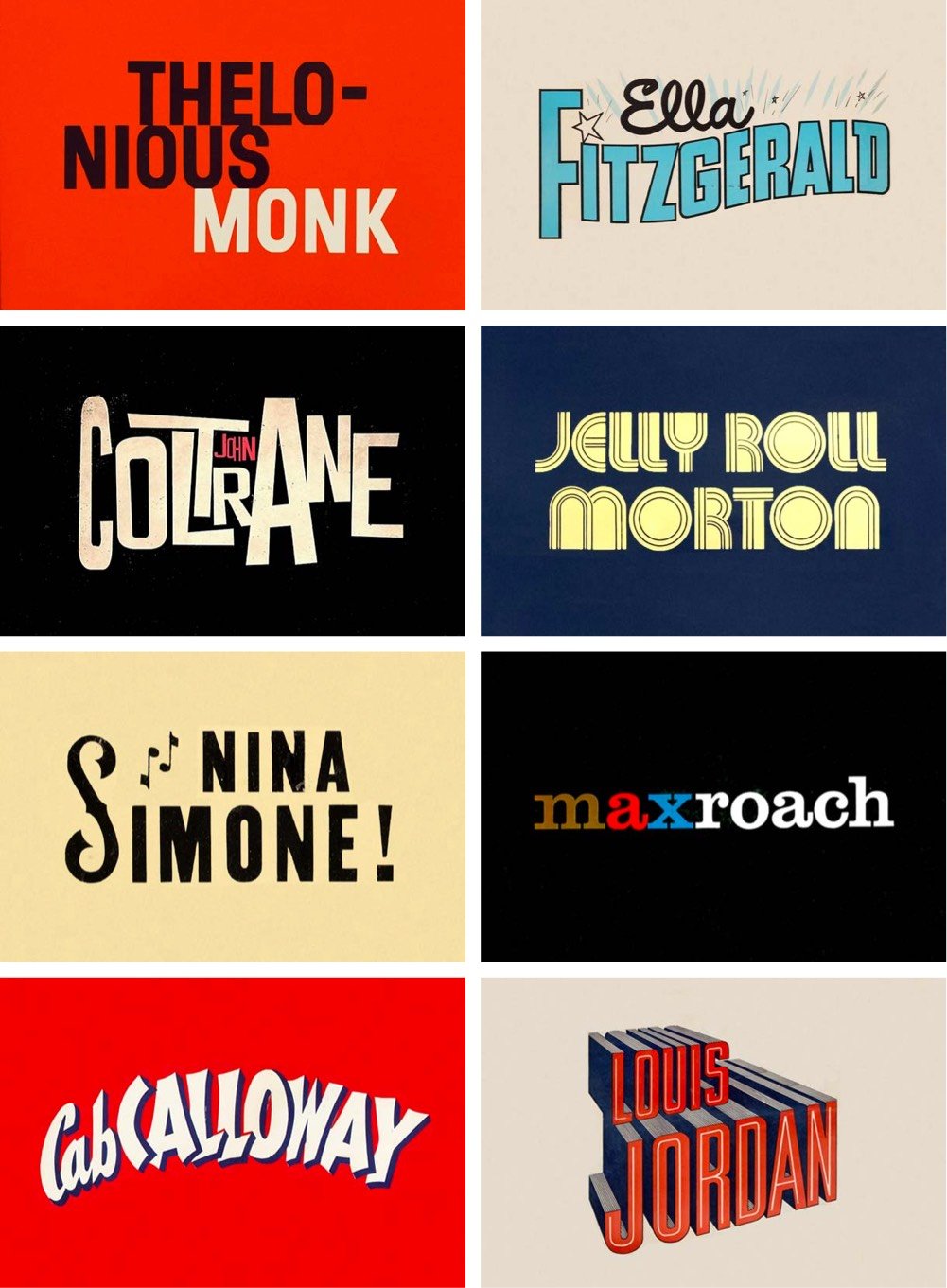
Reagan Ray (previously) surveyed 100s of iconic covers of jazz albums (Blue Note, anyone?) and isolated the lettering of the artists’ names. I love these sorts of compilations — this is like a mini-tour through the history of graphic design in the 20th century.
More than 1.1 million people have already voted in the 2020 US general election. In states reporting party affiliation (FL, IA, NC), participation is 54% Dem and 18% Rep (it’s usually the other way around).

I don’t know whether it’s our dry weather, my increased appreciation for Vermont due to our relative sanity during the pandemic, or just because I’ve been trying to spend as much time as I can outside appreciating nature before the snow flies, but this year’s foliage display seems extra good. Mother Nature just spilled her box of crayons everywhere.
I don’t want to give away too much about this movie but I’d recommend watching the trailer and then the movie (you can find it on Netflix). I watched it last night at Kevin Kelly’s urging:
This is one of the best documentaries I have ever seen. Nothing about its subject would suggest greatness, but it was perfectly crafted.
It’s such a simple movie but it packs a surprising emotional wallop and is philosophically rich. Even (or perhaps especially) the bits that seem problematic are thought-provoking. Highly recommended.
See also A Dreaming Octopus Changes Color.
From Khalil Gibran Muhammad and Chenjerai Kumanyika, a quick tour of the history of policing in America and how that history should shape our discussions around police reform, defunding, and abolition.
The story of policing in the United States is the story of systems meant to protect and serve only a fraction of Americans.
As Kumanyika says in closing, the police in America are fulfilling their purpose very well. But the public has other demands that are not being met.
See also A History of Policing in America and Why Police Reform Doesn’t Work In America.
Indi Samarajiva lived through the end of the civil war in Sri Lanka that killed an estimated 80,000-100,000 people over 30 years. He cautions that societal collapse can feel quite normal for many people — but that doesn’t mean that it isn’t happening. I Lived Through Collapse. America Is Already There.
I lived through the end of a civil war. Do you know what it was like for me? Quite normal. I went to work, I went out, I dated. This is what Americans don’t understand. They’re waiting to get personally punched in the face while ash falls from the sky. That’s not how it happens.
This is how it happens. Precisely what you’re feeling now. The numbing litany of bad news. The ever rising outrages. People suffering, dying, and protesting all around you, while you think about dinner.
If you’re trying to carry on while people around you die, your society is not collapsing. It’s already fallen down.
Hannah Beech reports on how the United States1 is perceived by the outside world these days due to our poor response to the Covid-19 pandemic and the continuing failure of our political system.
Myanmar is a poor country struggling with open ethnic warfare and a coronavirus outbreak that could overload its broken hospitals. That hasn’t stopped its politicians from commiserating with a country they think has lost its way.
“I feel sorry for Americans,” said U Myint Oo, a member of parliament in Myanmar. “But we can’t help the U.S. because we are a very small country.”
The same sentiment prevails in Canada, one of the most developed countries. Two out of three Canadians live within about 60 miles of the American border.
“Personally, it’s like watching the decline of the Roman Empire,” said Mike Bradley, the mayor of Sarnia, an industrial city on the border with Michigan, where locals used to venture for lunch.
And I had to chuckle at this part:
“The U.S.A. is a first-world country but it is acting like a third-world country,” said U Aung Thu Nyein, a political analyst in Myanmar.
I made a similar observation after a trip to Asia in January: “America is a rich country that feels like a poor country.” I got a bunch of pushback on that statement but after the past eight months, the pandemic has laid America’s deficiencies bare for the whole world to see clearly.
As winter approaches in North America and Europe, cities should be thinking about how to encourage and enable people to spend as much time outdoors as possible to help keep everyone sane and safe from Covid-19. From a great piece in CityLab by Alexandra Lange:
Dress in layers, invest in silk and wool long underwear, get over your prejudice against parkas. Many people do this as a matter of course when gearing up for a day of skiing or a turn around the ice rink. But in cities, people dress for the destination, not the journey. “People dress saying, I’m going from my home to this business. What’s the least amount of clothing I can wear for the tolerance of walking x feet?” says Simon O’Byrne, senior vice president of community development for global design consultancy Stantec. “We have to switch that, and dress to loiter.”
O’Byrne, who is also co-chair of the WinterCity Advisory Council, adds, “Stickiness encourages people outside. Moscow does year-round farmers markets. The artists’ community has been pulverized by Covid. As much as we can, we should embrace things to help the local artists, community.” He suggests commissioning visual artists to illuminate dark spaces, via murals or light installations, and hiring musicians for distanced outdoor concerts.
Cities should also invest in places to loiter. All of those outdoor restaurants that are supporting local businesses and bringing liveliness back to the streets? In New York City, at least, they are scheduled to shut down at the end of October, while the mayor and governor bicker over indoor dining. But cities need to catch up to ski areas, which long ago figured out how to make après ski activities like outdoor bars and music venues as much of an attraction as the slopes. Wind breaks (with openings above and below for ventilation), patio heaters and sun orientation can all take outdoor dining further into 2020. WinterCity’s Four Season Patio Design Tips also include higher insulation value materials, like wood or straw bales rather than metal seating, as well as simple solutions like blankets, which offer customers the winter equivalent of being able to reposition your chair in the sun — though that works year-round.
And indeed, NYC just announced that the increased outdoor dining that the city has allowed during the pandemic will become “permanent and year-round”.
Tens of thousands of parking spaces will be permanently repurposed from free private vehicle storage for use by the city’s struggling restaurant owners as part of a revolution in public space unleashed on Friday by Mayor de Blasio.
On WNYC’s “Ask the Mayor” segment, Hizzoner revealed that restaurants would be allowed to occupy curbside spaces - which more than 10,000 are already doing — for outdoor dining, not just through the coronavirus pandemic, but all year and, apparently, forever.
It may turn out to be the single biggest conversion of public space since, well, since car drivers commandeered the curbside lane for free overnight vehicle storage in the 1950s.
But whatever measures are taken, they need to be inclusive for the diverse populations that live in cities. Here’s Lange again, who spends several paragraphs in her piece on this issue:
Snow clearance has become an ongoing political issue for winter cities, with disabled people, the elderly, and parents and caregivers arguing that sidewalks and crossings deserve the same priority as cars, lest people be essentially trapped in their homes. Many physically disabled people have already had their mobility limited during quarantine due to pre-existing health risks, the inability to avoid using elevators and the difficulty of maintaining social distancing. Temporary urban design changes also need to be inclusive.
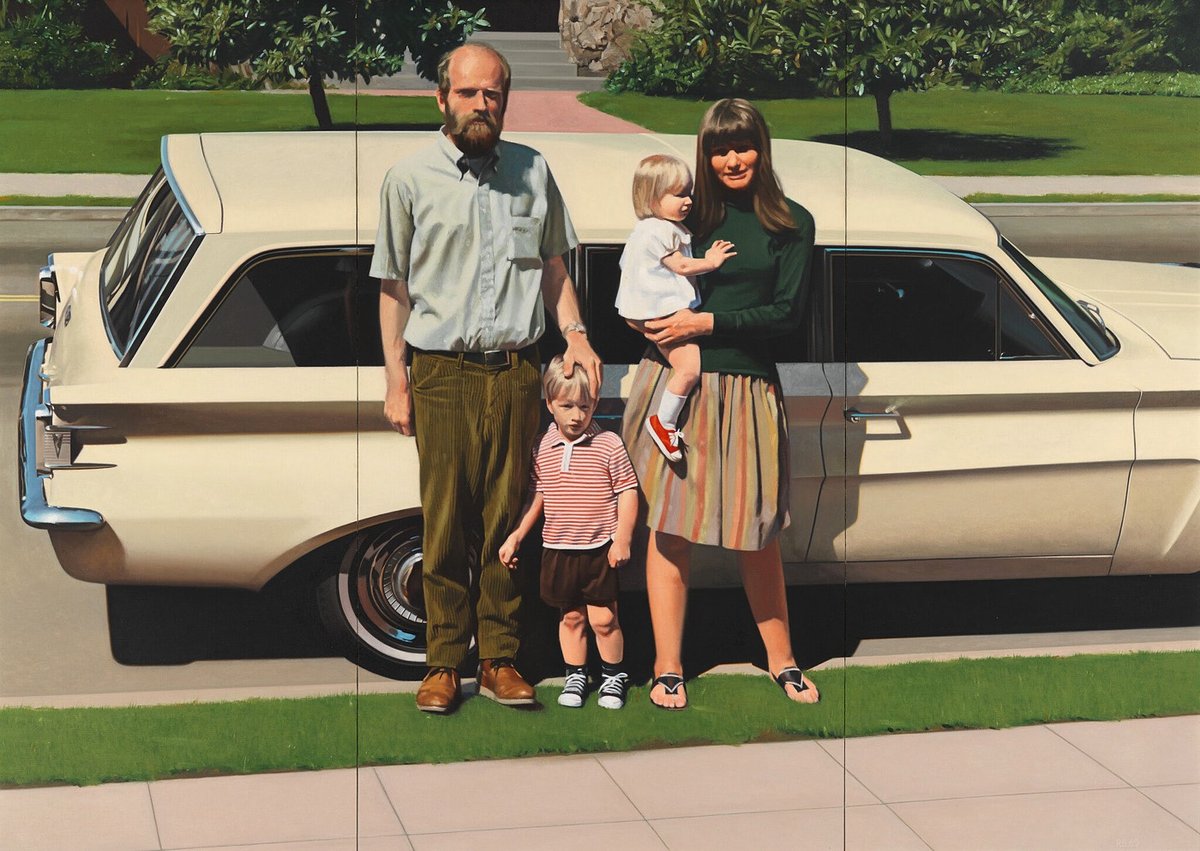

Speaking of realism, while researching this post on Arinze Stanley, I noticed that American realist painter Robert Bechtle died yesterday. I can’t exactly remember which of the paintings shown above (‘61 Pontiac at the Whitney, Alameda Gran Torino, 1974 at SFMoMA) I saw in person first, but I do remember being instantly drawn to his work. The level of detail combined with objects of such mundanity sent my mind spinning off into all kinds of interesting realms.
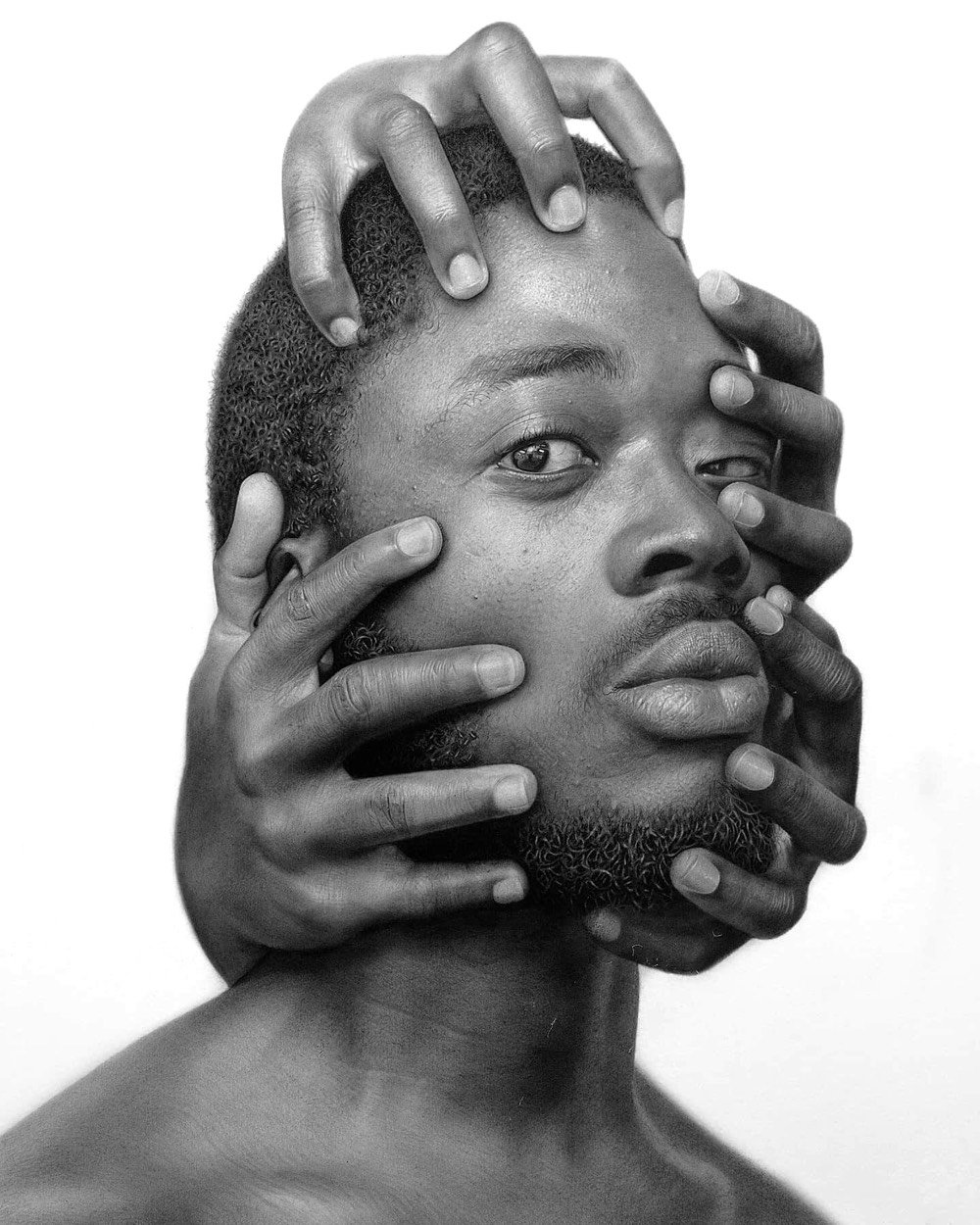

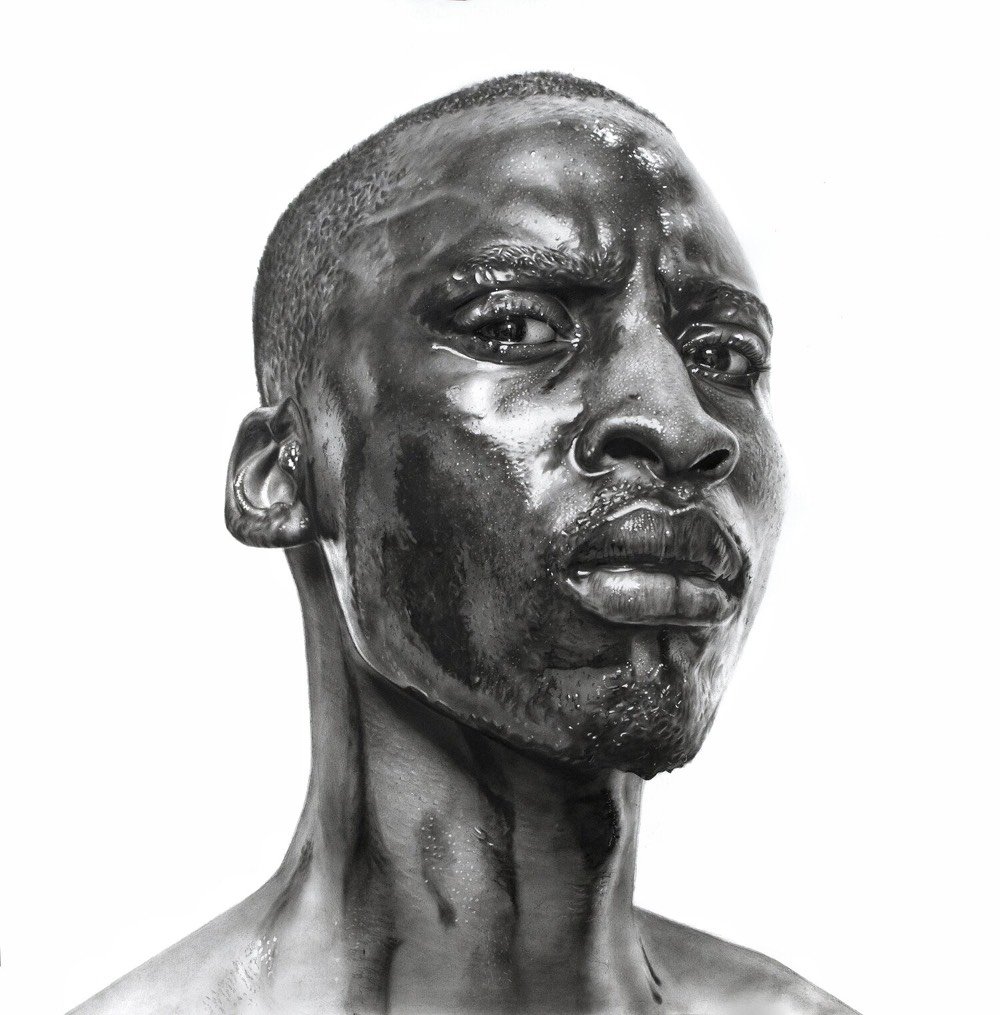
Nigerian artist Arinze Stanley uses hyperrealistic techniques to draw surreal portraits in stunning detail. From his artist statement:
I draw inspiration from life experiences and basically everything that sparks a feeling of necessity, I find myself spending countless hours working on an artwork to stimulate deep and strong emotions in order to connect more intimately with my viewers
Most times it’s almost like I lose control of my pencils and the art flows through me to the paper.
I work with my Principle of the Three P’s namely Patience, Practice and Persistence. These have guided me over the years towards perfecting my craft.”
Great Big Story did a feature on Stanley and his work last year that’s worth watching:
(via colossal)
From an American living there, a report on how Vietnam beat back a second wave of Covid-19 infections. They used localized lockdowns, test/trace/isolate everywhere else, and the gov’t has been clear and transparent in their actions and goals.
Tonight at 8pm ET: a livestreamed recording of Prince’s New Year’s Eve Benefit Concert from 1987 at Paisley Park. Prince fan @anildash says: “An amazing show, with perhaps Prince’s best live band…and *then* Miles Davis shows up.”
I’ve posted before about how the language we’ve been conditioned to use about slavery and the Civil War obscures reality. From historian Michael Todd Landis:
Likewise, scholar Edward Baptist (Cornell) has provided new terms with which to speak about slavery. In his 2014 book The Half Has Never Been Told: Slavery and the Making of American Capitalism (Basic Books), he rejects “plantations” (a term pregnant with false memory and romantic myths) in favor of “labor camps”; instead of “slave-owners” (which seems to legitimate and rationalize the ownership of human beings), he uses “enslavers.” Small changes with big implications. These far more accurate and appropriate terms serve his argument well, as he re-examines the role of unfree labor in the rise of the United States as an economic powerhouse and its place in the global economy. In order to tear down old myths, he eschews the old language.
@absurdistwords had a great thread on this recently, urging us to “stop obscuring the horror with detached, antiquated, euphemistic terms”.
Clear Language on Slavery:
Slaves = Hostages
Slave Owners = Human Traffickers
Slave Catchers = Police
Plantations = Death Camps
Mistresses = Rape Victims
Discipline = Torture/Murder
Overseers = Torturers
Trading = Kidnapping
Profit = Theft
Middle Passage = Genocide
For example:
“The prominent slave owner never publicly recognized the offspring of he and one of his slave romances but allowed him to serve in the house”
is really
“The rich human trafficker raped his female hostage and then held their son hostage as well at the death camp he owned”
And from an earlier thread:
When you replace
“Owned slaves” with
“Was an active and willing participant in a vast conspiracy to kidnap children from their families in order to force them into industrial and sexual servitude”
It becomes harder to write slave owning off as just a blot on one’s record.
For instance:
George Washington was our first President and was an active and willing participant in a vast conspiracy to kidnap children from their families in order to force them into industrial and sexual servitude
They continue:
America treats slavery like an oopsie rather than a centuries-long campaign of nightmarish, brutal terrorism.
America sees the systemic and sadistic destruction of Black families as an etiquette violation.
Which is why it will excuse slave owners so readily.
Fig/wasp codependent evolution is fascinating. “There are more than seven hundred species of fig, and each one has its own species of wasp. When you eat a dried fig, you’re probably chewing wasp mummies, too.”
This is an excellent piece in The Atlantic by Barton Gellman on The Election That Could Break America. Excellent and hair-raising. It outlines several of the ways that Donald Trump & the Republicans could disrupt the election process to produce an ambiguous outcome and use the chaos to retain the presidency.
The worst case, however, is not that Trump rejects the election outcome. The worst case is that he uses his power to prevent a decisive outcome against him. If Trump sheds all restraint, and if his Republican allies play the parts he assigns them, he could obstruct the emergence of a legally unambiguous victory for Biden in the Electoral College and then in Congress. He could prevent the formation of consensus about whether there is any outcome at all. He could seize on that un-certainty to hold on to power.
Trump’s state and national legal teams are already laying the groundwork for postelection maneuvers that would circumvent the results of the vote count in battleground states. Ambiguities in the Constitution and logic bombs in the Electoral Count Act make it possible to extend the dispute all the way to Inauguration Day, which would bring the nation to a precipice. The Twentieth Amendment is crystal clear that the president’s term in office “shall end” at noon on January 20, but two men could show up to be sworn in. One of them would arrive with all the tools and power of the presidency already in hand.
Read on for the details about how that could happen (voter suppression, mail-in voting, the “blue-shift”, the expired consent decree governing “ballot security” operations at polls, deploying the military to “Democrat-run cities” to “protect ballots”, hand-picked electors in Republican-controlled swing states). But Gellman is clear: some or all of this is going to happen.
Let us not hedge about one thing. Donald Trump may win or lose, but he will never concede. Not under any circumstance. Not during the Interregnum and not afterward. If compelled in the end to vacate his office, Trump will insist from exile, as long as he draws breath, that the contest was rigged.
Trump’s invincible commitment to this stance will be the most important fact about the coming Interregnum. It will deform the proceedings from beginning to end. We have not experienced anything like it before.
(As a quick aside, just yesterday, after Gellman’s piece was finalized, Trump again declined to commit to a peaceful transfer of power.)
I’m not a political scientist nor a therapist, but as someone who has been writing for years that Trump will never willingly leave office, I urge those of you who don’t want America to slide further into autocracy to acclimate yourself to the worst case scenario here so that you’re not completely devastated and immobilized when Election Day and then Inauguration Day comes and this shit happens. Don’t ignore this, optimistically rationalize it away, or stuff it deep down inside you; face it now, directly, and be prepared to assist in the fight for democracy and justice that’s coming.
Update: Here’s a thread by lawyer & author Teri Kanefield responding to The Atlantic piece that’s gotten some attention on Twitter.
First, remember that each state has rules that govern the certifying of their elections.
Yes, laws still matter.
The Trump legal advisor wants you to think they don’t.
Why? Because when enough people lose confidence in democracy, democracy will fail.
That’s why…a goal of active measures is to get you to lose confidence in democratic processes.
Trump is trying his best to get you to lose confidence in democratic processes.
He is trying to make you think he can pull this off.
New polls came out today showing that Trump is ten points behind nationally.
The Strongman needs you to think he’s strong. He doesn’t want you talking about the polls.
If he was winning, he’d want you talking about the polls.
There are some good details in there, but ultimately she’s really only talking about one aspect of the piece (the election certification) and it remains to be seen whether national polling during a pandemic and more than a month before the election will have anything to with reality when it comes to actual counted votes in a selection of swing states. As the 2016 election showed, all you really need is to bend things your way a little bit in a few states and you’ve got yourself an election or crisis or whatever. (via @heathr)
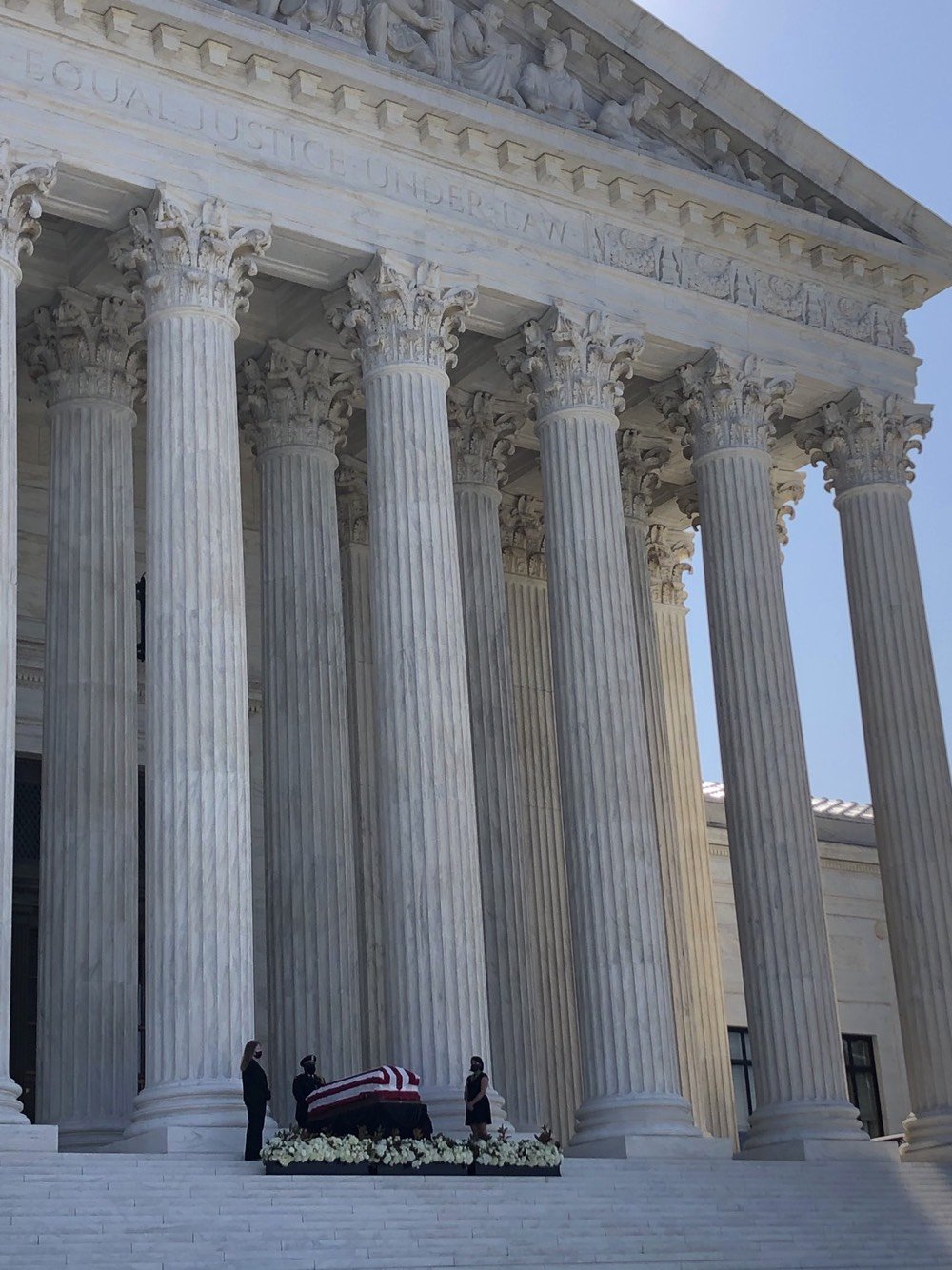
That’s the flag-draped casket of Justice Ruth Bader Ginsburg lying in repose on the portico of The Supreme Court Building. From the Washington Post (link is mine):
Her casket was placed on the Lincoln catafalque, built for President Abraham Lincoln’s casket in 1865, and surrounded by an arrangement of the justice’s favorite flowers, including white hydrangea, freesia and white tea roses.
Members of the public can pay their respects until 10pm today and from 9am-10pm tomorrow. On Friday, her casket will be moved to the US Capitol, where she will become the first ever woman to lie in state there.
Released on the heels of the success of Street Fighter II, Mortal Kombat was one of the earliest games to make extensive use of human actors as models for onscreen action. You can see this proto-motion capture in action in the video above, which features actors & martial artists performing the moves for each of the fighters in the first version of the game. Each pose or motion was recorded and then turned into actions by the onscreen avatars. In the first few seconds, you can even see the actor doing that subtle rocking motion thing that video game avatars do now. (Does this motion have a name? The ready stance?)
See also the making of several subsequent versions of the game — the capture techniques obviously get more sophisticated as the tech improves.
The World’s Most Expensive Potato Chips Will Run You $15 Per Chip. The phrase “hand-picked” comes up more than once in the description…



In an extended excerpt from his book Typeset in the Future: Typography and Design in Science Fiction Movies (Amazon), Dave Addey goes long on the typography and design of Star Trek: The Motion Picture (and Trek in general).
Alas, The Original Series’s inconsistent typography did not survive the stylistic leap into the 1970s. To make up for it, The Motion Picture’s title card introduces a new font, with some of the curviest Es known to sci-fi. It also follows an emerging seventies trend: Movie names beginning with STAR must have long trailing lines on the opening S.
Hey everybody stream of consciousness warning. I’m behind on most things in my life and this has been exacerbated recently by some medical drama of my own dumb making (not Covid) so I am going to beg your kind pardon if things continue to be a little slow and disjointed around here while I get some things sorted out. I don’t really know what kottke.org is supposed to be right now — an escape? the spearpoint of the resistance? hopeful? realistic? — but I do know that the site has been not that solid lately. I didn’t even post anything about RBG for pete’s sake. Didn’t get to write about a place in NYC that was very special to me, a place that changed my life, that has closed its doors forever. I have not talked enough about kottke.org’s great new podcast (or maybe I’ve mentioned it too much). In this moment it seems both completely irrelevant and absolutely necessary to share art and film and music and scientific wonder and frivolities and my feelings about this necessity changes from day to day. Anyway, if I default to easier topics or if things seem a little less stable than usual I hope you understand. Thank you as always for reading.
ps. I am personally fine, both in body and soul! Just strapped for time/energy/brainspace right now. And always confused/curious about what the future holds. Aren’t we all these days?
The Overlooked History of Race Barriers in the United States. Physical segregation walls and race barriers were built in cities & towns around America to separate white neighbors from Black neighborhoods and many of them still exist today.
Older posts





Socials & More