Entries for September 2019
In 2008, Japanese creative agency Hakuhodo created a campaign for the World Wildlife Federation that featured photos of endangered animals where the number of pixels in the photo matched the remaining population of the animal pictured.
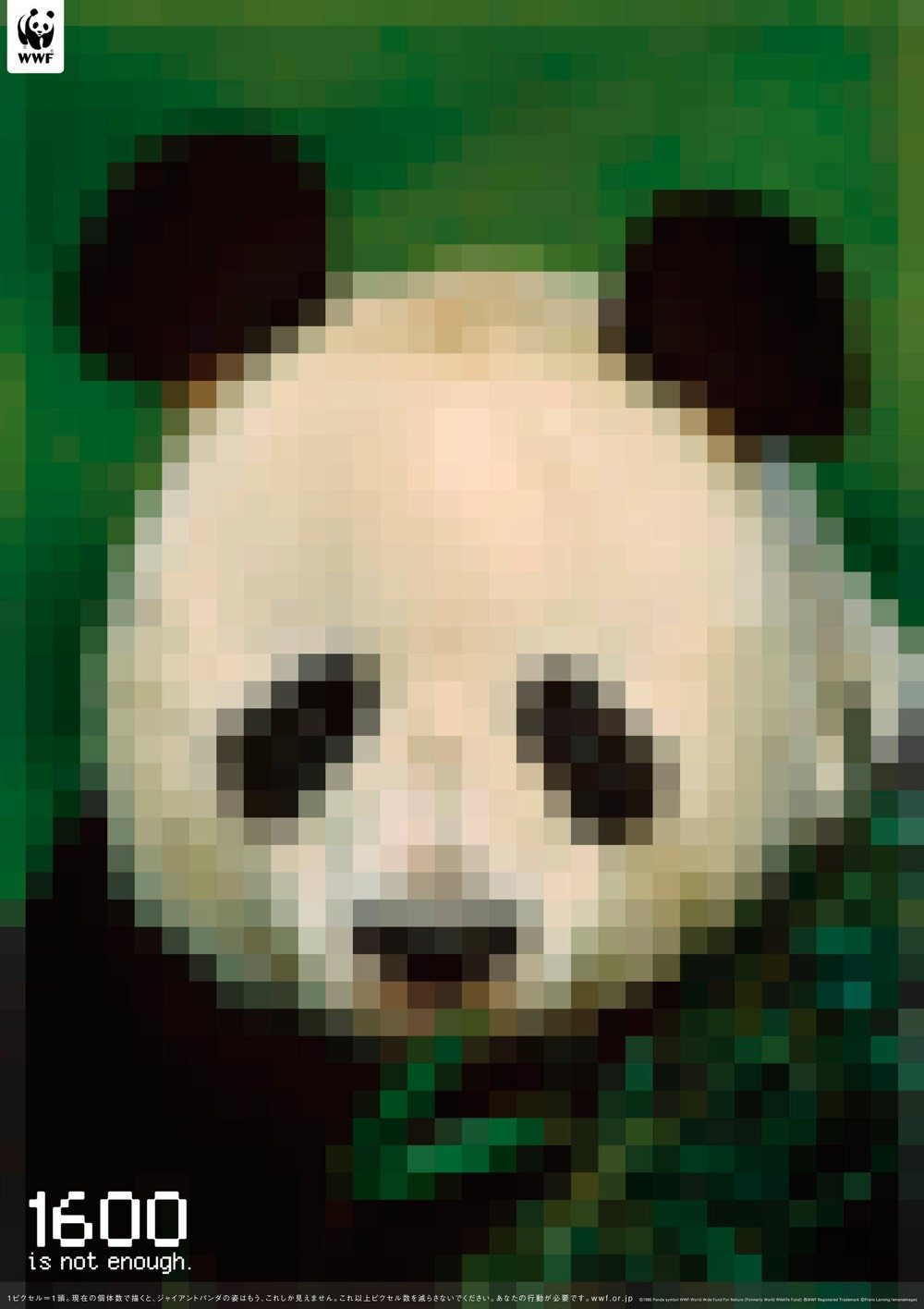
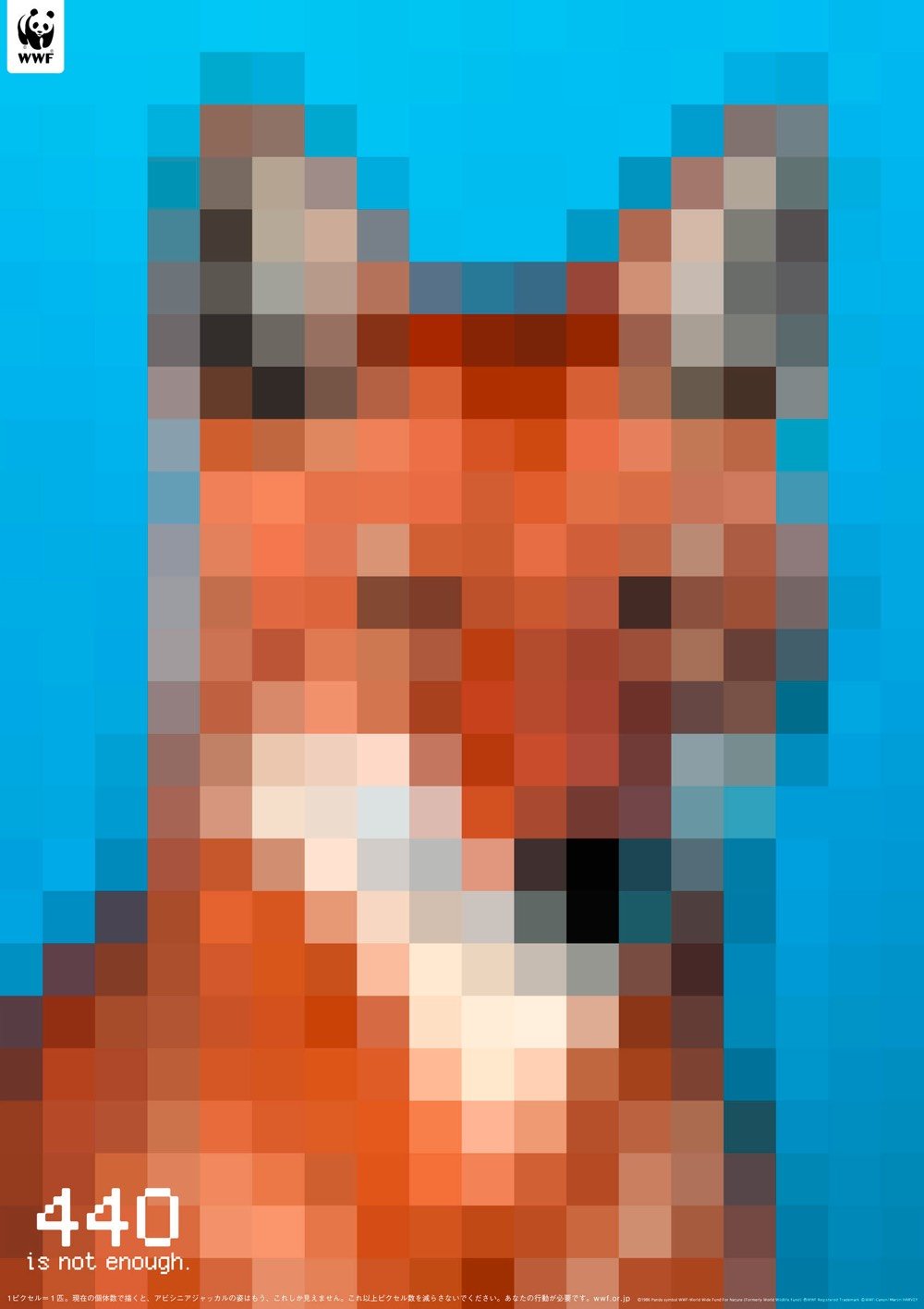
Imgur user JJSmooth44 recently updated the campaign to include many more animals, including the unrecognizable Javan rhino.
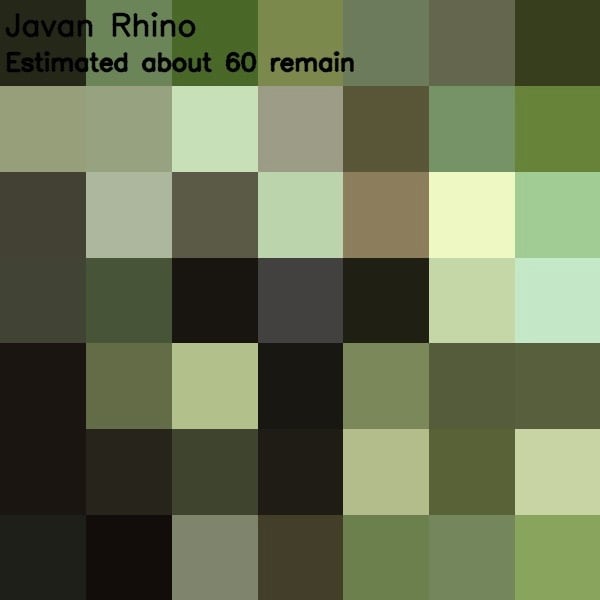
(via @UnlikelyWorlds)
In this quick animated excerpt of a longer talk, political philosopher Michael Sandel critiques the idea of the meritocracy, the notion that innate talent and hard work are the main drivers of personal success and “the smug conviction of those who land on top that they deserve their fate”.
A lively sense of the contingency of our lot conduces to a certain humility. The idea that ‘there but for the grace of God, or the accident of fortune, go I’. But a perfect meritocracy banishes all sense of gift or grace or luck; it diminishes our capacity to see ourselves as sharing a common fate. And so, it leaves little room for the solidarity that can arise when we reflect on the contingency of our talents and fortunes. This is what makes merit a kind of tyranny.
Sandel’s full talk, A New Politics of Hope, is available online here.
P.S. A reminder that the term “meritocracy” was originally a satirical term invented by writer Michael Young in 1958 to describe a dystopian society. He is disappointed to see how people now wear the term as a badge of honor.
The business meritocracy is in vogue. If meritocrats believe, as more and more of them are encouraged to, that their advancement comes from their own merits, they can feel they deserve whatever they can get.
They can be insufferably smug, much more so than the people who knew they had achieved advancement not on their own merit but because they were, as somebody’s son or daughter, the beneficiaries of nepotism. The newcomers can actually believe they have morality on their side.
(via open culture)
Watch as MoMA art conservator Diana Hartman repairs some weak spots of Paula Modersohn-Becker’s 1907 self-portrait. The painting is still on the artist’s original canvas stretchers, so Hartman can’t access the back of the canvas during the repair process. So she employs a tiny curved needle made for doing eye surgeries to gently darn with some linen thread.
The first thing I like to do when I sit down is just get my tools. No tools displayed on this tray were made specifically for conservation.
Watching someone tend to a treasured object with such devotion is quite relaxing, perhaps because it’s comforting to imagine ourselves being treated with equal concern by those around us. (via colossal)
Since the 1990s, Pulitzer prizewinning novelist Cormac McCarthy has been a fixture at the Santa Fe Institute, a transdisciplinary research institute in New Mexico. During that time, he’s helped edit scientific papers for many faculty and postdocs. A pair of biologists, Van Savage & Pamela Yeh, recently condensed McCarthy’s scientific writing advice into an article for Nature.
Use minimalism to achieve clarity. While you are writing, ask yourself: is it possible to preserve my original message without that punctuation mark, that word, that sentence, that paragraph or that section? Remove extra words or commas whenever you can.
Inject questions and less-formal language to break up tone and maintain a friendly feeling. Colloquial expressions can be good for this, but they shouldn’t be too narrowly tied to a region. Similarly, use a personal tone because it can help to engage a reader. Impersonal, passive text doesn’t fool anyone into thinking you’re being objective: “Earth is the centre of this Solar System” isn’t any more objective or factual than “We are at the centre of our Solar System.”
Finally, try to write the best version of your paper: the one that you like. You can’t please an anonymous reader, but you should be able to please yourself. Your paper — you hope — is for posterity. Remember how you first read the papers that inspired you while you enjoy the process of writing your own.
Most of this is good advice for the writing in general.
In a letter announcing his resignation from the MacDowell Colony, novelist Michael Chabon considers what art is for.
Or, I wonder if it’s possible that I was wrong, that I’ve always been wrong, that art has no power at all over the world and its brutalities, over the minds that conceive them and the systems that institutionalize them. Those folks I cited earlier, the ones who offer their grim reassurances that the world has always sucked as much as it does now, in particular for women, the poor, the disenfranchised, the enslaved, the downtrodden, and the exploited, these folks might point out that art and misery have coexisted for the whole span of human existence on earth, and suggest that perhaps the time to abandon hope for the redemptive power of art is long overdue.
Maybe the world in its violent turning is too strong for art. Maybe art is a kind of winning streak, a hot hand at the table, articulating a vision of truth and possibility that, while real, simply cannot endure. Over time, the odds grind you down, and in the end the house always wins.
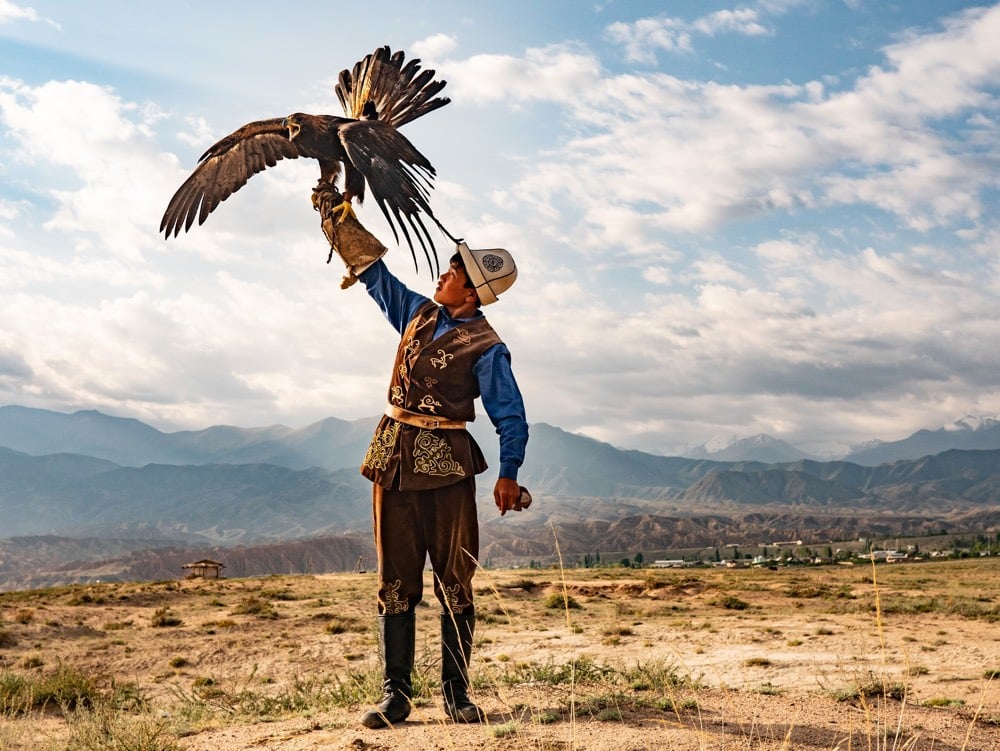
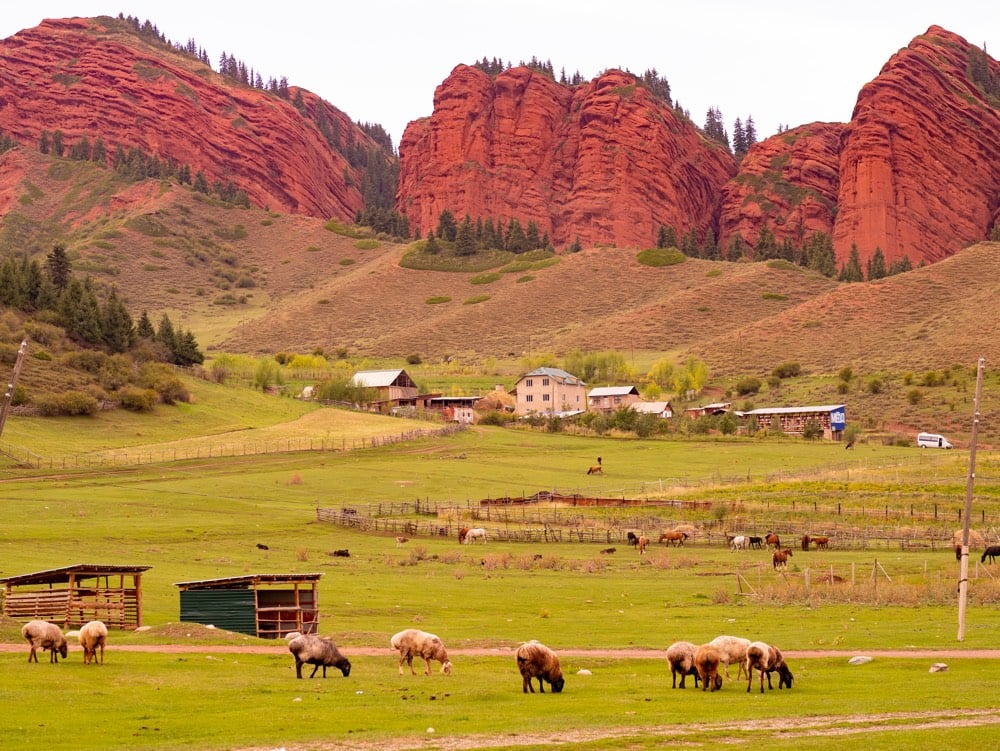
For decades, Kevin Kelly has been traveling in Asia documenting traditional cultures and environments while they still exist. Here are some photos from his recent visits to Kazakhstan and Kyrgyzstan .
Photos of descriptions of weeknight dinners from around the world. “We asked 18 families to show us what they have for dinner on a typical weeknight.”
In this video, CGP Grey investigates fast and not-so-fast methods for boarding commercial airline flights. Most airlines board passengers using the relatively slow back-to-front method — with a bit of the even slower front-to-back method at the start for first, business, premium economy, and frequent flying passengers — even though boarding in a random order would be quicker. In 2008, physicist Jason Steffen determined the optimal boarding method, which involves passengers boarding in a precise order to minimize people waiting for other people putting their luggage in the overhead bin.
The Gastropod podcast turns five years old this month and to celebrate they’ve compiled a list of 25 of their favorite fun food facts from the show’s archives. Here’s the entire list with links to each of the shows (shared with permission):
1. The Mafia got its start in the 1860s, in the lemon groves of Sicily. At the time, growing lemons was the most lucrative form of agriculture in Europe, thanks to scurvy and the British Navy. (Museums and the Mafia: The Secret History of Citrus)
2. Using gold (or gold-plated) cutlery makes food taste sweeter. (Episode 1: The Golden Spoon)
3. Olive oil is fruit juice. (Green Gold: Our Love Affair with Olive Oil)
4. Saliva is filtered blood. (Guts and Glory)
5. The enamel on our teeth is the hardest tissue in our entire bodies — at 95 percent mineral, it’s basically a rock. (The Truth is in the Tooth: Braces, Cavities, and the Paleo Diet)
6. The invention of forks changed the shape of our jaws. (Episode 1: The Golden Spoon)
7. Medieval nuns used to get high on saffron, to help them get through their prayer marathons. (Meet Saffron: The World’s Most Expensive Spice)
8. In the absence of kitchen timers or affordable clocks, recipes in the earliest cookbooks gave timings in the form of prayers, like two Lord’s Prayers or four Hail Marys. (Cooking the Books with Yotam and Nigella)
9. True wasabi (most wasabi in the U.S. is just colored horseradish) has a flavor “window”: it has no taste for the first five minutes after being grated, then the flavor explodes — but it fades after another ten to fifteen minutes. You have only a few minutes to enjoy wasabi at its peak! (Espresso and Whisky: The Place of Time in Food)
10. The word “avocado” comes from the Nahuatl word for testicle. (Ripe for Global Domination: The Story of the Avocado)
11. The word “cocktail” comes from the practice of putting a piece of ginger up a horse’s butt to make it cock its tail up, and seem younger and friskier. (The Cocktail Hour)
12. Jell-O was originally sold as a patent medicine that was good for hair and nails. (Watch it Wiggle: The Jell-O Story)
13. The earliest recorded recipe for ice-cream was flavored with ambergris, which is a salt- and air-cured whale excretion (no one is quite sure whether it’s vomit or poo). (The Scoop on Ice Cream)
14. New York City’s first soda fountains used marble scraps left over from building St. Patrick’s cathedral to produce their carbonation. (Gettin’ Fizzy With It)
15. The superiority of New York City’s bagels has nothing to do with the city’s water. (The Bagelization of America)
16. Donald Rumsfeld was the man behind the launch of Nutrasweet. (Sweet and Low (Calorie): The Story of Artificial Sweeteners)
17. George W. Bush and a trade deal involving Harley Davidsons were the reason that the Indian Alphonso, the so-called “king of mangoes,” can now finally be imported to the U.S. (Mango Mania: How the American Mango Lost its Flavor — and How it Might Just Get it Back)
18. Jack Daniel learned how to make whiskey from an enslaved African, Nearest Green, who went on to become the company’s first master distiller. (The Secret History of the Slave Behind Jack Daniel’s Whiskey)
19. The first pasta machine was designed by Leonardo da Vinci. (Remembrance of Things Pasta: A Saucy Tale)
20. In England in the 1600s, a special breed of dogs were used to turn spits of roasted meat in front of the open fire. These turnspit dogs are now extinct; their closest relation is thought to be a corgi. (Hotbox: The Oven from Turnspit Dog to Microwave)
21. In America in the early 1900s, the pawpaw was voted the native fruit most likely to succeed, ahead of the blueberry. (Pick a Pawpaw: America’s Forgotten Fruit)
22. The story that carrots are good for eyesight was World War II military disinformation, spread by the British to prevent the Germans from realizing that the Royal Air Force were shooting down so many enemy planes because their cockpits were now equipped with radar and red lighting. (How the Carrot Became Orange, and Other Stories)
23. Mustard became spicy over the course of a 90-million-year evolutionary arms race against caterpillars. (Cutting the Mustard)
24. Plants can hear themselves being eaten. (Field Recordings)
25. A raw human male contains, on average, 143,770 calories. (Cannibalism: From Calories to Kuru)
Jessica Wynne has been taking photos of mathematicians’ blackboards for the past year or so, some of which were featured recently in the NY Times. I love the variety in density, style, color, and tidiness.
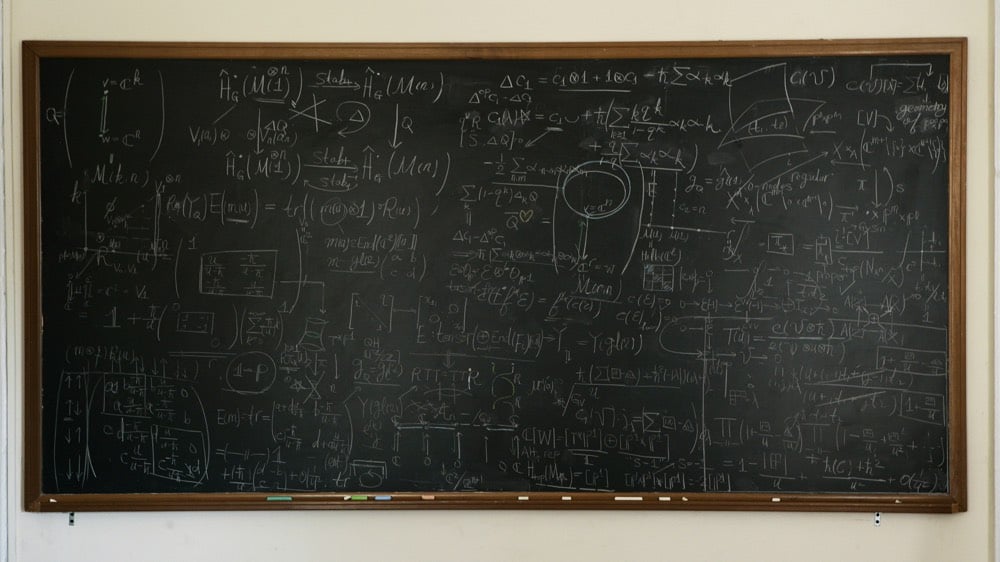
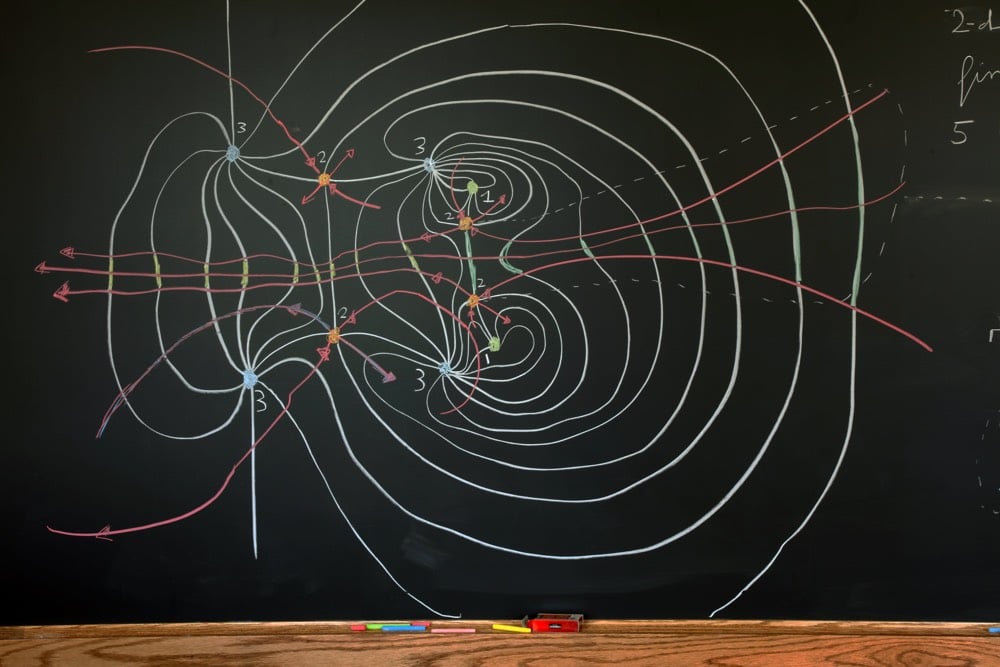
“I am also fascinated by the process of working on the chalkboard. Despite technological advances, and the creation of computers, this is how the masters choose to work.”
In their love of blackboards and chalk, mathematicians are among the last holdouts. In many fields of science and investigation, blackboards have been replaced with whiteboards or slide show presentations. But chalk is cheaper and biodegradable. It smells better than whiteboard markers and is easier to clean up, mathematicians say. It is also more fun to write with.
A book of Wynne’s chalkboard photos called Do Not Erase will be released next year.
Wait, wait, WAIT! Fleabag started as a Kickstarter campaign?! With only 54 backers?!!
For the Atlantic, Olga Khazan writes about an approach to physical fitness called “greasing the groove”, which some people have translated into the Michael Pollan-esque “lift weight, not too much, most of the days”.
One way to grease the groove is to just do the exercise whenever you think of it. Ben Greenfield, in Beyond Training, describes how he would do three to five pull-ups every time he walked under a pull-up bar installed in his office doorway. By the end of the day, he’d have performed 30 to 50 pull-ups with minimal effort.
McKay opted for something similar: He set up a pull-up bar in his door frame, and every time he walked under it, he would do one. “You’re allowing yourself to practice more without going to fatigue,” he says. “If you’re constantly thrashing your body, doing max sets every time you do a pull up, you’re gonna have a bad time.” Anyone who has tried to climb the stairs to their apartment on achy quads after an overly ambitious leg day knows the risks of overexertion. Within a month, McKay says, he went from being able to do about five pull-ups to about 15.
I read this piece with interest because I’ve been greasing the groove for the past several months without knowing what it was called or that it was even a thing. I work from home and sprinkle exercise throughout my day. Working at a standing desk makes it easy to walk away from the screen, do a few pull-ups, plank for a minute, do some jumping jacks, and then get right back into whatever I was doing. I also stretch and do a few exercises sometimes when I’m watching TV in the evening. It is almost never a full workout, but it keeps me active when I can’t get out to ski or hike or play sports with my kids.
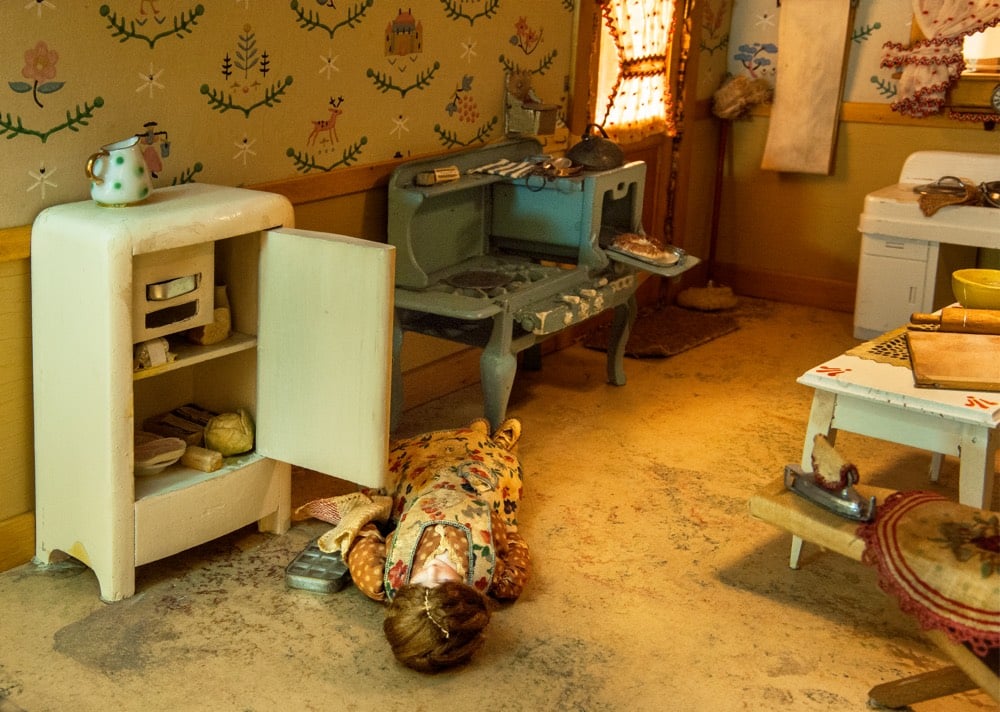
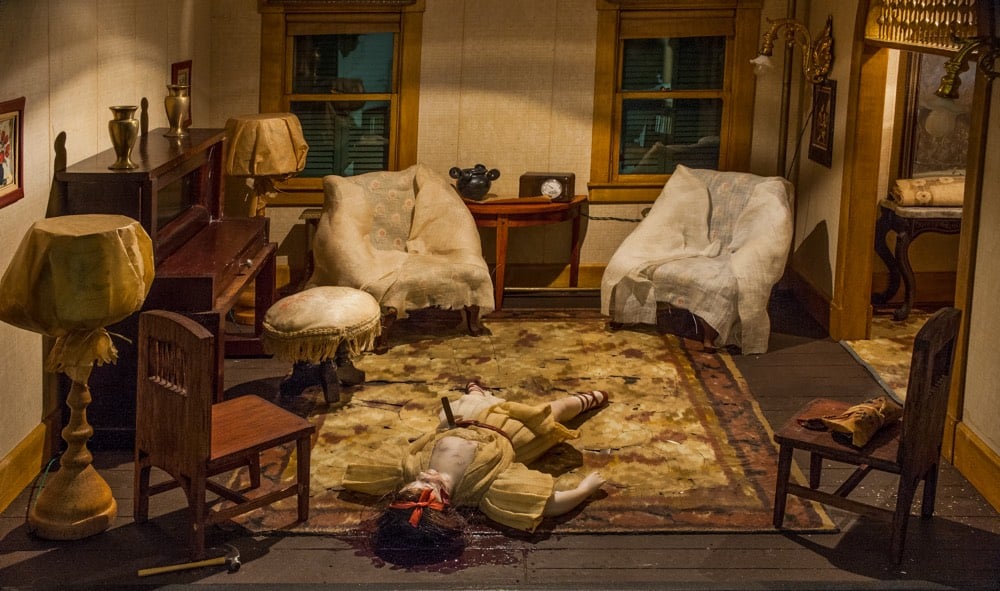
(Note: This post contains images of simulated crime scenes.) Frances Glessner Lee is known as “the mother of forensic science” for her role in revolutionizing how crimes were investigated. Starting in the 40s and using her skills in making miniature models that she learned as a young girl, Lee built detailed and intricate crime scene dioramas to help train homicide investigators to properly investigate and canvas a crime scene. From a Smithsonian exhibition of Lee’s work:
At the time, there was very little training for investigators, meaning that they often overlooked or mishandled key evidence, or irrevocably tampered with crime scenes. Few had any medical training that would allow them to determine cause of death. As Lee and her colleagues at Harvard worked to change this, tools were needed to help trainees scientifically approach their search for truth. Lee was a talented artist as well as criminologist, and used the craft of miniature-making that she had learned as a young girl to solve this problem. She constructed the Nutshells beginning in the 1940s to teach investigators to properly canvass a crime scene to effectively uncover and understand evidence. The equivalent to “virtual reality” in their time, her masterfully crafted dioramas feature handmade objects to render scenes with exacting accuracy and meticulous detail.
Every element of the dioramas — from the angle of minuscule bullet holes, the placement of latches on widows, the patterns of blood splatters, and the discoloration of painstakingly painted miniature corpses — challenges trainees’ powers of observation and deduction. The Nutshells are so effective that they are still used in training seminars today at the Office of the Chief Medical Examiner in Baltimore.
Here are some images of Lee’s surviving dioramas (found here):

In a video about the Smithsonian exhibition, curator Nora Atkinson explains that it shows how Lee “co-opted traditionally feminine crafts to advance the male-dominated field of police investigation”:
See also this Vox video about Lee’s work, which goes into detail about the evidence at a couple of the crime scenes:
Legendary skater Tony Hawk breaks down 21 increasingly complex skateboarding tricks, from a standard ollie to a kickflip to a McTwist to a 1080 to a couple of tricks that have never been done. As someone who has always been in awe of what skaters can do but hasn’t logged much on-board time myself, I learned a lot from this.
See also a beginning skater learning how to do a kickflip in under 6 hours.
STEM majors’ salaries are higher initially but liberal arts majors catch up. “[Liberal arts] skills are hard to quantify, and they don’t create clean pathways to high-paying first jobs. But they have long-run value in a wide variety of careers.”
Curious about the social behaviors of cephalopods, marine biologist David Scheel brought an octopus named Heidi home to live with him and his teenaged daughter. In this clip from an upcoming PBS show called Octopus: Making Contact, you can see the octopus changing colors while colors while she sleeps, which Scheel speculates is due to actions happening in the octopus’s dream.
If she is dreaming, this is a dramatic moment. You can almost just narrate the body changes and narrate the dream. So here she’s asleep and she sees a crab and her color starts to change a little bit. Then she turns all dark; octopuses will do that when they leave the bottom. This is a camouflage, like she’s just subdued a crab and now she’s going to sit there and eat it, and she doesn’t want anyone to notice her.
This program already aired in the UK with the much snappier title of The Octopus in My House; check out a review here.
Heidi loves to play. Given a toy (an old pill bottle, say), she hurls it round as if it were a swimming aid, and she a toddler newly out of water wings. Scheel has trained her so effectively to pull on a string that activates a buzzer that in the end he has to dismantle the thing if he wants to get a night’s sleep. She loves to touch and be touched, entwining her arms with those of Laurel for minutes at a time. Does she recognise her owners? Indubitably. When Scheel approaches the tank as himself, she rushes to its side, as if in greeting. But when he approaches disguised in a rubber mask, she hides.
(thx, dunstan)
A birdwatcher reviews Untitled Goose Game, the indie game of the moment. “The waddling, honking, and flapping all seemed properly goose-like to me.”
Chess is as physically demanding as many other sports due to stress and because the human brain uses a ton of energy. Many of today’s top chess players train and eat like pro tennis or soccer players.
In 2004, winner Rustam Kasimdzhanov walked away from the six-game world championship having lost 17 pounds. In October 2018, Polar, a U.S.-based company that tracks heart rates, monitored chess players during a tournament and found that 21-year-old Russian grandmaster Mikhail Antipov had burned 560 calories in two hours of sitting and playing chess — or roughly what Roger Federer would burn in an hour of singles tennis.
Robert Sapolsky, who studies stress in primates at Stanford University, says a chess player can burn up to 6,000 calories a day while playing in a tournament, three times what an average person consumes in a day. Based on breathing rates (which triple during competition), blood pressure (which elevates) and muscle contractions before, during and after major tournaments, Sapolsky suggests that grandmasters’ stress responses to chess are on par with what elite athletes experience.
“Grandmasters sustain elevated blood pressure for hours in the range found in competitive marathon runners,” Sapolsky says.
From Kenji Lopez-Alt, how to get your young children interested in food and cooking. “Your best bet is to serve them the food you want them to eat, give them a few options, and apply no pressure.”
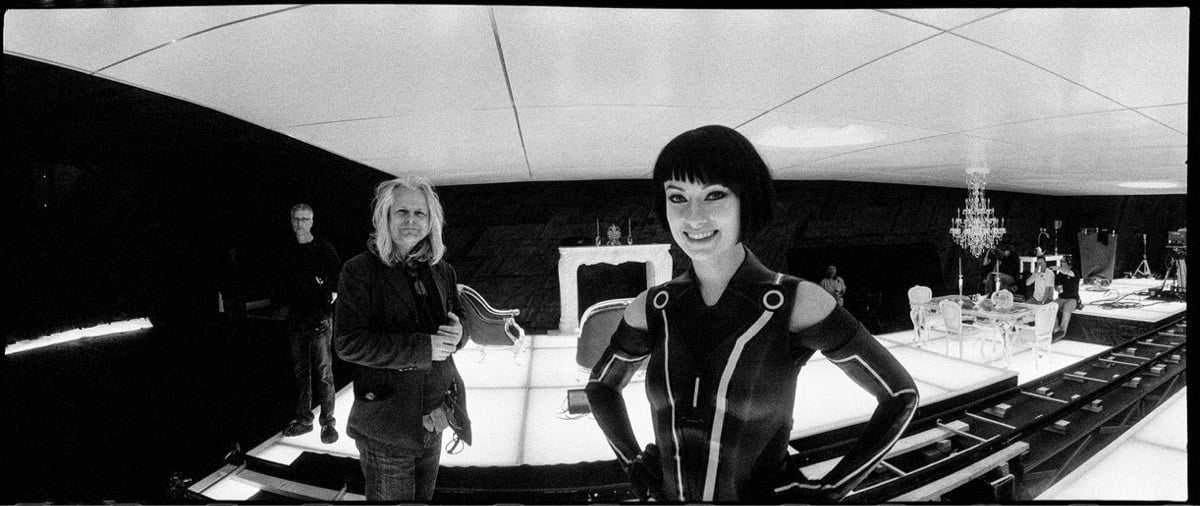
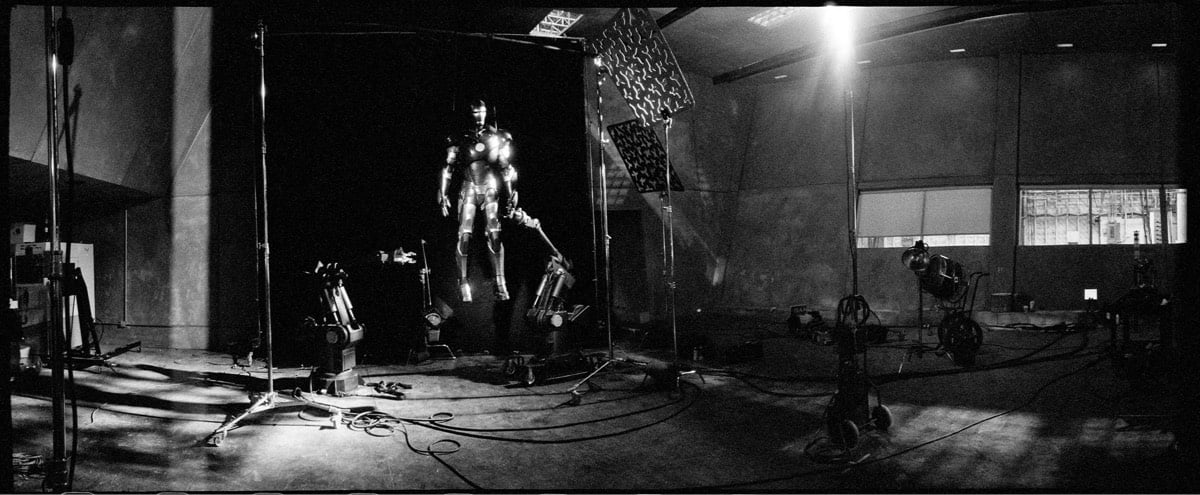
Ever since Starman in 1984, Jeff Bridges has taken photos on the set of every film he’s acted in using his Widelux F8 camera. Sometimes he compiles them into picture books for the cast and crew. Sometimes he posts them to his charmingly old school website. And sometimes he compiles them into coffee table books that you and I can have in our homes. Nick Chen recently interviewed Bridges about his photography.
Dazed: You did The Big Lebowski and True Grit with the Coen Brothers. What do they make of your photography?
Jeff Bridges: I think they get a kick out of it. They’re pretty cool cats. They don’t go overboard with praise or anything. They’re certainly wonderful to work with, and they’re true masters, so I was happy that they gave a stamp of approval on my book. That was nice.
Dazed: Does Roger Deakins ever want a co-credit for doing the lighting?
Jeff Bridges: (laughs) No, he did not ask me. But wow, talk about masters. Isn’t he terrific? My God, he does it just right.
Pictures by Jeff Bridges was released in 2003 and now a follow-up is coming out in mid-October 2019: Jeff Bridges: Pictures Volume 2. (thx, david)
Update: The International Center of Photography honored Bridges with an award in 2013 and produced this video about his photography.
Like many Americans, I have been hearing about climate change since the late 80s (or perhaps even longer). Back then, the story was mainly that we needed to act soon to avoid potential effects like sea level rise, dangerous heatwaves, disrupting animal habitats, etc. in some distant future. One of the things I currently struggle with when thinking about climate change is recalibrating that “some distant future” part. Because that future is now and shit is happening in these here United States as we speak. From Bloomberg, America’s Great Climate Exodus Is Starting in the Florida Keys:
The Great Climate Retreat is beginning with tiny steps, like taxpayer buyouts for homeowners in flood-prone areas from Staten Island, New York, to Houston and New Orleans — and now Rittel’s Marathon Key. Florida, the state with the most people and real estate at risk, is just starting to buy homes, wrecked or not, and bulldoze them to clear a path for swelling seas before whole neighborhoods get wiped off the map.
By the end of the century, 13 million Americans will need to move just because of rising sea levels, at a cost of $1 million each, according to Florida State University demographer Mathew Haeur, who studies climate migration. Even in a “managed retreat,” coordinated and funded at the federal level, the economic disruption could resemble the housing crash of 2008.
By not wanting to pay now to mitigate the effects of climate change, we’ll end up paying a whole lot more later. Those late fees are gonna be something else.
Boston Dynamics programmed their Atlas robot to do a gymnastics routine.
I lost it when it did that little jump split at about 13 seconds in. That looked seriously human in a deeply unsettling way.
Every month or two for the past couple of years, I’ve shared the movies, books, music, TV, and podcasts I’ve enjoyed (or not) recently. Here’s everything I’ve “consumed” since late June. I’d tell you not to pay too much attention to the letter grades but you’re going to pay too much attention to the letter grades anyway so… (p.s. This list was shared last week in Noticing, kottke.org’s weekly newsletter.)
Fiasco (season one). Slow Burn co-creator Leon Neyfakh explores the Florida recount in the 2000 Presidential election. My key takeaway is not that anyone stole the election but that any halfway close election in the US is fundamentally unfair, can easily be swayed in one direction or another, and violates our 14th Amendment rights. I didn’t enjoy this as much as either season of Slow Burn…perhaps it was too recent for me to emotionally detach. (B+)
The Impossible Whopper. All the people saying that the Impossible patty tastes just like a real burger have either never tasted meat before or don’t pay a whole lot of attention when they eat. It’s the best veggie burger patty I’ve ever had, but it sure ain’t beef. (B)
American Factory. Completely fascinating and straight-forward look at what happens when a Chinese company takes over an old GM factory in Dayton, Ohio. Give this just 5 minutes and you’ll watch the whole thing. (A)
XOXO Festival. Always a creative shot in the arm. (A)
Norman Fucking Rockwell! I tried with this, I really did. I don’t think Lana Del Rey is my cup of tea. (C)
The Handmaid’s Tale (season 3). The show’s producers noticed how much critics praised Elisabeth Moss’s emotional closeups and now season 3 is like 80% just that. Way too much of a good thing. Still, there’s still a good show in here somewhere. (B+)
Do the Right Thing. Somehow still bold and controversial after 30 years. But I confess…I am not sure exactly what the takeaway from this movie is supposed to be. (B+)
Tycho’s 2019 Burning Man Sunrise Set. Always a treat when the latest installment of this series pops online. (A-)
Spider-Man: Far From Home. It was fine but I kept waiting for an extra gear that never came. (B)
Existing Conditions. The drinks here are very precise and well-balanced. Hit ‘em up if you miss Booker & Dax. (B+)
In the Garden of Beasts by Erik Larson. Excellent and rhymes with the present in a number of ways. I previously shared a bunch of my highlights from the book. (A)
Keep Going by Austin Kleon. A timely little book. (A-)
Stranger Things (season 3). The best part of this show is the 80s nostalgia and they overdid it this season. (B)
Weather. Tycho switched it up with this album by adding vocals. I hated them at first but they’ve grown on me. (B+)
Apollo 11. The first time around I watched this in a terrible theater with bad audio and didn’t care for it. The second time, at home, was so much better. The footage is stunning. (A)
Apollo 11 soundtrack. Love the first track on this. (A-)
Ex Machina. Still gloriously weird. (A-)
Planet Money: So, Should We Recycle? I don’t 100% agree with their conclusions, but it was interesting to think that recycling might not be the most efficient use of our resources. Pair with an earlier episode on how recycling got started in the US. (B)
Chef’s Table (Virgilio Martinez). Central sounds absolutely bonkers. I hope to make it there someday. (B+)
Silicon Cowboys. Compaq took on IBM in the personal computer space and won. The first season of Halt and Catch Fire was inspired in part by their story. (A-)
Once Upon a Time in Hollywood. Needed more plot. (B)
To Kill a Mockingbird. I listened to this on audiobook and am convinced that Sissy Spacek’s narration made it like 20% more compelling. (A)
Metropolis II. I could have watched this for hours. (A)
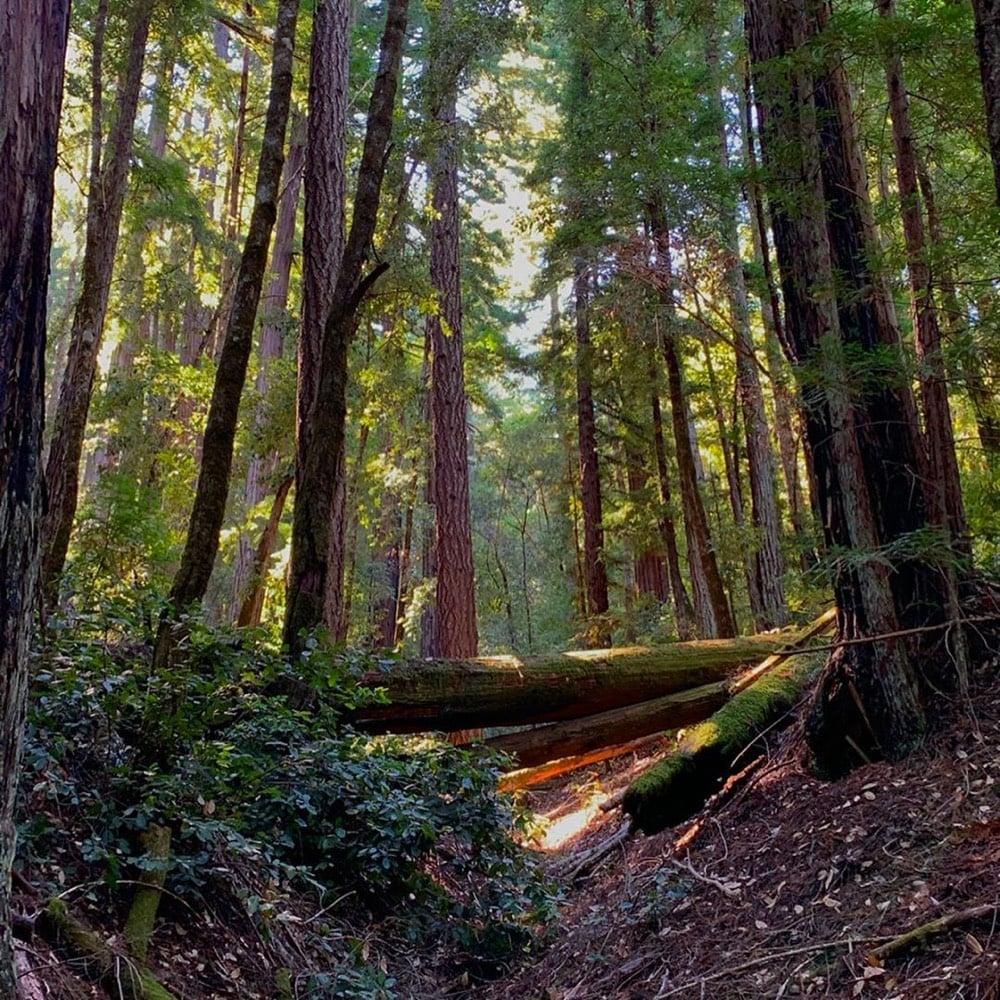
Redwood trees. (A+++)
The Dahlia Garden in Golden Gate Park. One of my favorite places on Earth. (A+)
Mindhunter (season 2). I love this show. (A)
The Clearing. Not the strongest true crime podcast but still worth a listen. (B)
5G. On my phone (iPhone XS, AT&T), anything less than 4 bars of “5GE” basically equals no service. And there’s no way to revert to LTE. (D+)
Atlanta Monster. Started this after watching Mindhunter s02. Too much filler and poor editing in parts. When they started talking to a conspiracy theorist who has been brainwashed by the convicted killer (or something), I had to stop listening. A pity…this story could use a good podcast. (C)
Booksmart. Second viewing and this may be my favorite movie of the year. So fun. (A)
I’ve also been watching Succession and rewatching all five seasons of The Wire (to test a hypothesis that with the hindsight of the past decade, the fifth season is not as outlandish as everyone thought it was at the time). I’ve slowed way down on listening to Guns, Germs, and Steel on audiobook and reading SPQR — both are interesting but not holding my attention so I may end up abandoning them. I watched the first episode of the second season of Big Little Lies when it was first released but might not finish the rest of it; the reviews of this season have not been great.
Past installments of my media diet are available here.
In light of the recent news of almost 30% of America’s birds disappearing in the past 50 years and the ongoing news of the climate crisis, it’s worth reading Rachel Carson’s Silent Spring, a serialized version of which was published by the New Yorker in 1962 in three parts (one, two, three). From the opening of the first NYer piece:
Then, one spring, a strange blight crept over the area, and everything began to change. Some evil spell had settled on the community; mysterious maladies swept the flocks of chickens, and the cattle and sheep sickened and died. Everywhere was the shadow of death. The farmers told of much illness among their families. In the town, the doctors were becoming more and more puzzled by new kinds of sickness that had appeared among their patients. There had been several sudden and unexplained deaths, not only among the adults but also among the children, who would be stricken while they were at play, and would die within a few hours.
And there was a strange stillness. The birds, for example — where had they gone? Many people, baffled and disturbed, spoke of them. The feeding stations in the back yards were deserted. The few birds to be seen anywhere were moribund; they trembled violently and could not fly. It was a spring without voices. In the mornings, which had once throbbed with the dawn chorus of robins, catbirds, doves, jays, and wrens, and scores of other bird voices, there was now no sound; only silence lay over the fields and woods and marshes.
On the farms, the hens brooded but no chicks hatched. The farmers complained that they were unable to raise any pigs; the litters were small, and the young survived only a few days. The apple trees were coming into bloom, but no bees droned among the blossoms, so there was no pollination and there would be no fruit.
The roadsides were lined with brown and withered vegetation, and were silent, too, deserted by all living things. Even the streams were lifeless. Anglers no longer visited them, for all the fish had died.
In the gutters under the eaves, and between the shingles of the roofs, a few patches of white granular powder could be seen; some weeks earlier this powder had been dropped, like snow, upon the roofs and the lawns, the fields and the streams.
No witchcraft, no enemy action had snuffed out life in this stricken world. The people had done it themselves.
To call Carson’s words prescient would be a huge understatement. “The people had done it themselves” indeed.
In 1965, Intel co-founder Gordon Moore predicted that the number of transistors in dense integrated circuits would double each year for the next decade. In 1975, he revised his prediction to a doubling once every two years. And for the past 45 years, Moore’s Law has more or less held. This clever bar chart race visualization shows Moore’s prediction competing through the years with hundreds of real microprocessors, from Intel’s 4004 in 1971 to 2019’s newest CPUs and GPUs.
Check out the lull in the 90s, where the microprocessor industry falls behind Moore’s Law all the way from Intel’s 486 in 1989 to the release of Intel’s Itanium 2 McKinley chip in 2002. And then in the 00s, the chipmakers put their foot on the gas again, more than doubling up on Moore’s Law at times. I wonder if the 90s slump was due more to a lack of industry competition against Intel’s near monopoly…they simply didn’t need to increase the count as quickly with no real competitors breathing down their necks. Then in the 00s, competition flourished. If so, perhaps Moore’s Law should be regarded as just as much of a business prediction (or goal) as one about technology.
Silicon Valley Is One of the Most Polluted Places in the Country. “Microchip manufacturers contaminated the groundwater in the 1980s. Almost 40 years later, the cleanup still isn’t complete.”
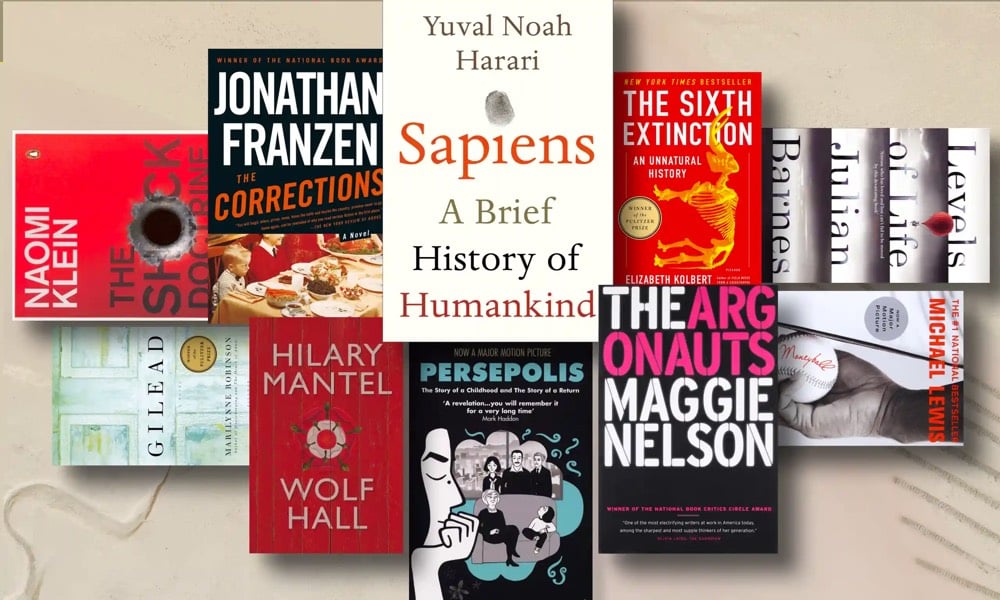
The Guardian recently compiled a list of the best books of the century (with a British bent). Here are a few of the picks that caught my eye:
87. Priestdaddy by Patricia Lockwood — “This may not be the only account of living in a religious household in the American midwest (in her youth, the author joined a group called God’s Gang, where they spoke in tongues), but it is surely the funniest. The author started out as the “poet laureate of Twitter”; her language is brilliant, and she has a completely original mind.”
82. Coraline by Neil Gaiman — “From the Sandman comics to his fantasy epic American Gods to Twitter, Gaiman towers over the world of books. But this perfectly achieved children’s novella, in which a plucky young girl enters a parallel world where her “Other Mother” is a spooky copy of her real-life mum, with buttons for eyes, might be his finest hour: a properly scary modern myth which cuts right to the heart of childhood fears and desires.”
78. The Fifth Season by NK Jemisin — “Jemisin became the first African American author to win the best novel category at the Hugo awards for her first book in the Broken Earth trilogy. In her intricate and richly imagined far future universe, the world is ending, ripped apart by relentless earthquakes and volcanoes. Against this apocalyptic backdrop she explores urgent questions of power and enslavement through the eyes of three women. ‘As this genre finally acknowledges that the dreams of the marginalised matter and that all of us have a future,’ she said in her acceptance speech, ‘so will go the world. (Soon, I hope.)’”
71. Jimmy Corrigan: The Smartest Kid on Earth by Chris Ware — “At the time when Ware won the Guardian first book award, no graphic novel had previously won a generalist literary prize. Emotional and artistic complexity are perfectly poised in this account of a listless 36-year-old office dogsbody who is thrown into an existential crisis by an encounter with his estranged dad.”
42. Moneyball by Michael Lewis — “The author of The Big Short has made a career out of rendering the most opaque subject matter entertaining and comprehensible: Moneyball tells the story of how geeks outsmarted jocks to revolutionise baseball using maths. But you do not need to know or care about the sport, because — as with all Lewis’s best writing — it’s all about how the story is told.”
32. The Emperor of All Maladies by Siddhartha Mukherjee — “‘Normal cells are identically normal; malignant cells become unhappily malignant in unique ways.’ In adapting the opening lines of Anna Karenina, Mukherjee sets out the breathtaking ambition of his study of cancer: not only to share the knowledge of a practising oncologist but to take his readers on a literary and historical journey.”
13. Nickel and Dimed by Barbara Ehrenreich — “In this modern classic of reportage, Ehrenreich chronicled her attempts to live on the minimum wage in three American states. Working first as a waitress, then a cleaner and a nursing home aide, she still struggled to survive, and the stories of her co-workers are shocking. The US economy as she experienced it is full of routine humiliation, with demands as high as the rewards are low. Two decades on, this still reads like urgent news.”
11. My Brilliant Friend by Elena Ferrante — “Powerfully intimate and unashamedly domestic, the first in Ferrante’s Neapolitan series established her as a literary sensation. This and the three novels that followed documented the ways misogyny and violence could determine lives, as well as the history of Italy in the late 20th century.”
Ok, that ended up being more than a few, but there’s so much good stuff on that list! You’ll have to click through to see the #1 choice but needless to say, I was pleased.
Types of Loneliness by Mari Andrew. “Loneliness when I was expecting solitude.”
Abstract: The Art of Design is back for a second season on Netflix beginning September 25. The folks featured this time around are artist Olafur Eliasson, architect & designer Neri Oxman, type designer Jonathan Hoefler (whose company provides the fonts for kottke.org), costume designer Ruth E Carter (did the costumes for Do the Right Thing and Black Panther), Ian Spalter (former head of design at Instagram), and toy designer Cas Holman.
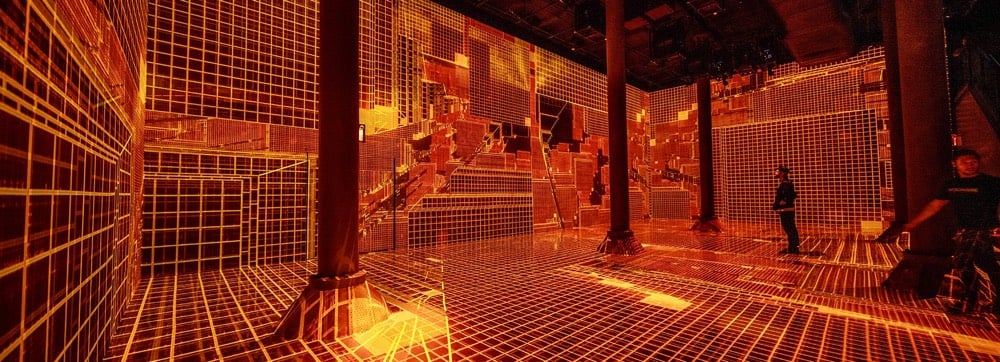
After seeing some videos on my pal Jenni’s Instagram of Refik Anadol’s immersive display at ARTECHOUSE in NYC, it’s now at the top of my list of things to see the next time I’m in NYC.
Machine Hallucination, Anadol’s first large-scale installation in New York City is a mixed reality experiment deploying machine learning algorithms on a dataset of over 300 million images — representing a wide-ranging selection of architectural styles and movements — to reveal the hidden connections between these moments in architectural history. As the machine generates a data universe of architectural hallucinations in 1025 dimensions, we can begin to intuitively understand the ways that memory can be spatially experienced and the power of machine intelligence to both simultaneously access and augment our human senses.
Here’s a video of Anadol explaining his process and a little bit about Machine Hallucination. Check out some reviews at Designboom, Gothamist, and Art in America and watch some video of the installation here.
Older posts

Socials & More