Entries for December 2016
Here are some things I liked this year: Arrival. Halt and Catch Fire. Hamilton. Swiss Army Man. Kurzgesagt. The Underground Railroad by Colson Whitehead. kottke.org. Westworld. The San Junipero episode of Black Mirror. Seveneves. Gravitational waves. Museums with friends. Sapiens: A Brief History of Humankind by Yuval Noah Harari. Hillary Clinton. The Neapolitan Novels. Game of Thrones. My kids. OJ: Made in America. Flat water with ample skipping stones. The Americans. Bruce Conner’s Crossroads at The Whitney. My baby momma. Wait But Why. Mad River Glen. Sunsets. Zero Days. Fleabag. My local (which is not so local anymore). Fall foliage. Transparent. Instagram. Swim holes on hot summer days. Lemonade. the lemons. The Power Broker by Robert Caro. The Obamas. Force Majeure. Snap peas from the farmer’s market. All of the kottke.org members, each and every damn one of you beautiful people. Reading Harry Potter to my kids. Jumping waves in Mexico. Story of Your Life by Ted Chiang. Steak for two. Dope. A bunch of stuff I’m forgetting. Picasso’s Bull’s Head at MoMA. A Moon Shaped Pool. The Crown. Journalism. Carol. The Auralnauts. Wonderland by Steven Johnson. SNL’s Black Jeopardy. Twitter. Epoch by Tycho. Every Frame a Painting. My friends, old and new, you know who you are.
Here are some things I didn’t like this year: Brexit. Trump. The media. Finishing reading the Harry Potter books to my kids. The 2016 election, every single fucking second of it. Leaving New York. Nino Sarratore. The continued retreat of the American public from reality. The demise of Gawker and sale of Gawker Media. Twitter. The unprecedented warming of both poles. Shutting down Stellar. Too many dinners for one. The continued inaction on gun deaths. Misogyny. Xenophobia. Fascism. Racism. White nationalism. Authoritarianism. Religiously motivated terrorism. Climate change denialism. Here’s to fewer isms in 2017.
Best Gothamist pieces of 2016. Lots of good NYC-centric journalism here.
2016: The Year in Space. It was a big year: Planet Nine, reusable rockets, gravitational waves, Starshot, etc.
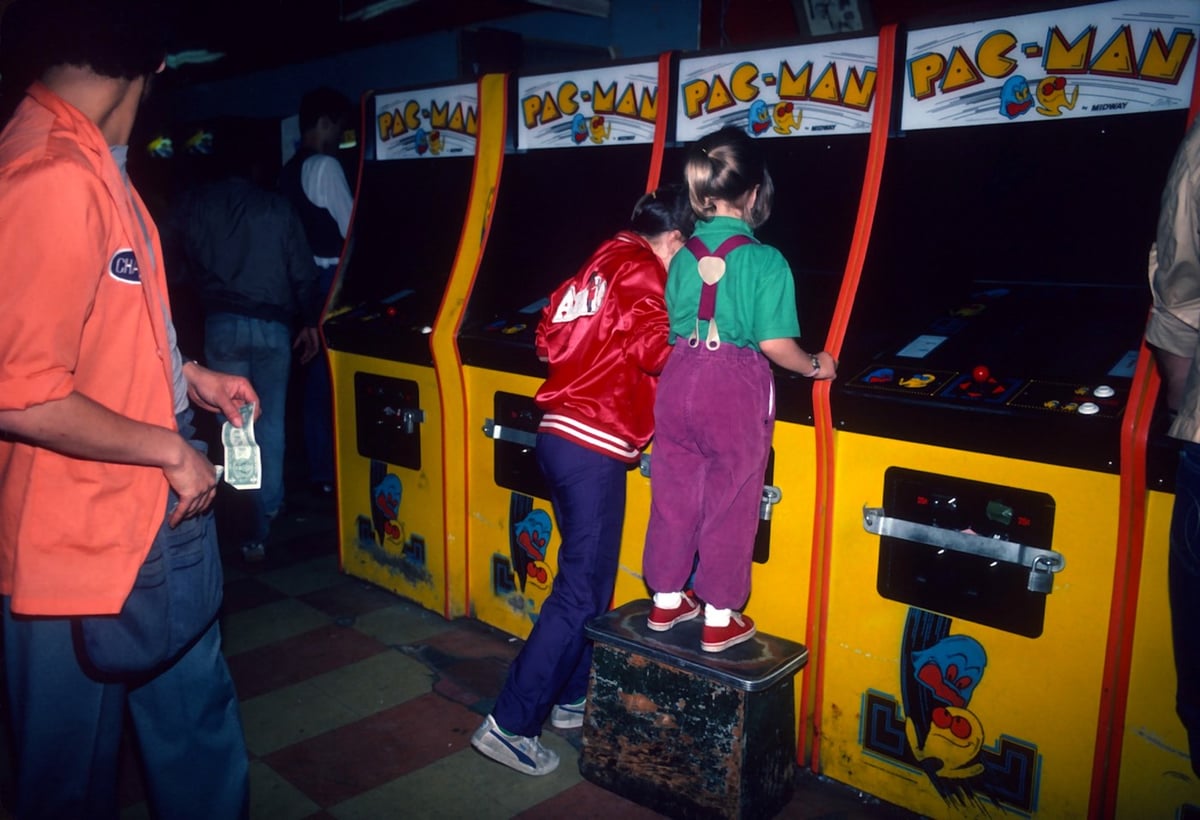
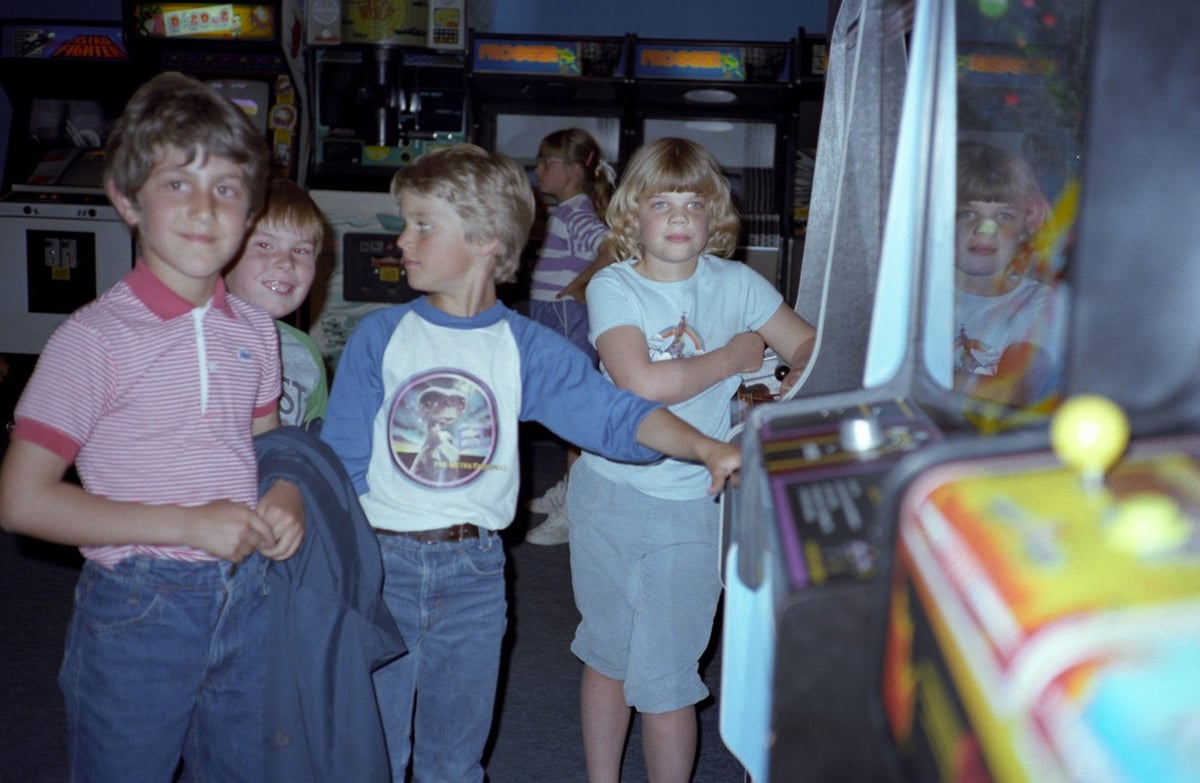
From Timeline, a collection of photos of video arcades in the 80s.
The years between 1978 and 1983 are generally considered the golden age of video games. Most recognize Space Invaders as the original, arcade game to reach mass audiences, quickly followed by Asteroids (1979), Centipede (1980), and Pac-Man (1980). Space Invaders was such a hit it was rumored that Japan suffered a shortage of ¥100 coins in its wake. But Pac-Man was the real game changer. Stateside, reception of the ground breaking character-driven game was ravenous, and by the end of the 20th century it was estimated that Pac-Man’s total gross consumer revenue had hit $2.5 billion (or 10 billion quarters).
I have an odd nostalgia for video arcades. They were very present in the media when I was a kid, but growing up in a small town, I never had the opportunity to actually visit a proper arcade in their heyday, aside from the one tucked into a corner of roller skating rink in a slightly larger nearby town. The best we had was a single Ms. Pac-Man machine in the entrance way of our local grocery store and the occasional Donkey Kong or Mr. Do machine we stumbled across in pizza places when we travelled later in the 80s. I was an arcade-era kid who had to wait for the Nintendo and Game Boy.
“I was strong,” he acknowledged. “Once I danced with six women in one night. September 17th, 1953.”
Some interesting speculation from Evan Puschak on what Amazon is up to with Amazon Go. Basically, Puschak thinks Amazon Go is Amazon Web Services but for retail stores. In the same way that AWS provides hosting for sites like Netflix and Reddit, Amazon Go will provide patent-protected technology infrastructure for “self-shopping” supermarkets and retail stores. But it remains to be seen whether it’s more like their one-click patent, which was licensed by a few others (notably Apple) but everyone else was able to do without it.
From psychotherapist Amy Morin, who expanded this list into a book of the same name, a list of 13 ways mentally strong people avoid negative behaviors.
1. They Don’t Waste Time Feeling Sorry for Themselves
2. They Don’t Give Away Their Power
3. They Don’t Shy Away from Change
4. They Don’t Waste Energy on Things They Can’t Control
5. They Don’t Worry About Pleasing Everyone
6. They Don’t Fear Taking Calculated Risks
7. They Don’t Dwell on the Past
8. They Don’t Make the Same Mistakes Over and Over
9. They Don’t Resent Other People’s Success
10. They Don’t Give Up After the First Failure
11. They Don’t Fear Alone Time
12. They Don’t Feel the World Owes Them Anything
13. They Don’t Expect Immediate Results
That’s all fine and those are worthy goals — and the book probably gets into more detail about this — but do you become more mentally strong by not doing these things or do you already need mental strength? Some of this seems to come down to personality or temperament, things that are difficult to change under even the best circumstances. And self-help lists like this always make me think of Simpsons pitchman Troy McClure’s introduction to a self-help video he’s hosting:
Oh hi, I’m Troy McClure. You might remember me from such self-help videos as Smoke Yourself Thin and Get Confident, Stupid!
It’s simple, just get confident! Just draw the rest of the fucking owl!
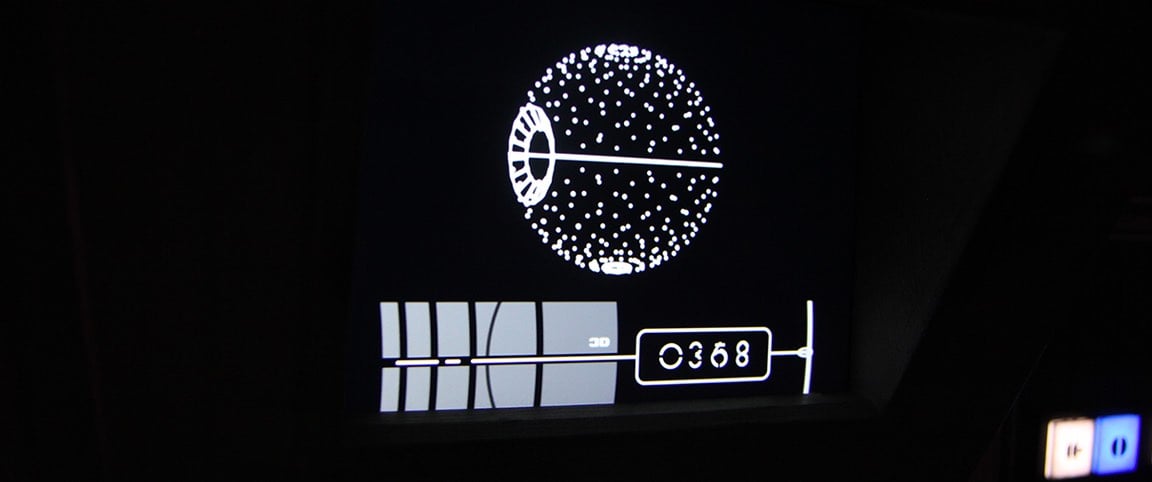

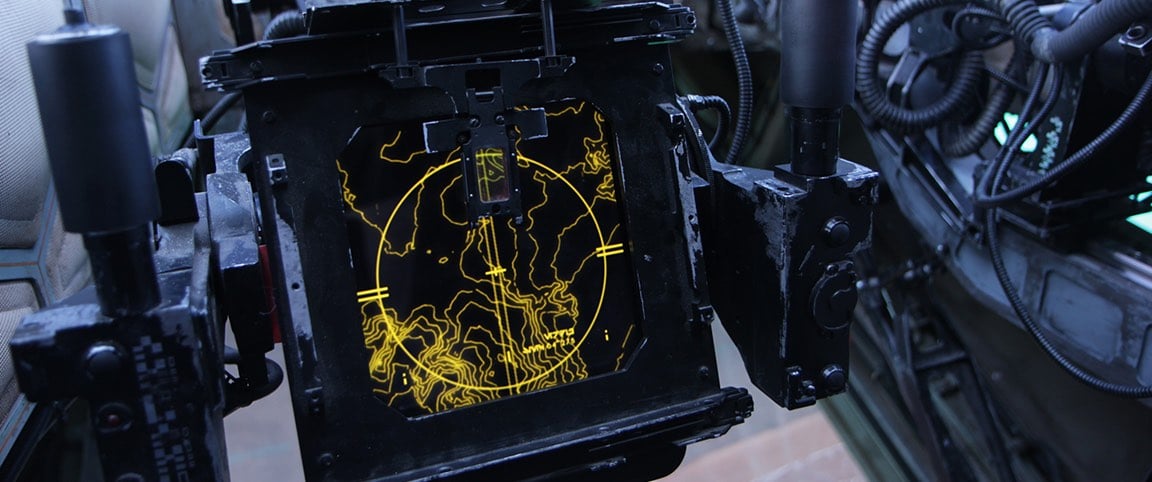
From design firm Blind Ltd, the user interface graphics they did for Rogue One. They had some graphics from the original Star Wars to play off of, but this is still really nice work. Blind also did onscreen interfaces for The Force Awakens, the Batman films, and some recent Bond films. (via @pieratt)
My Last Day As a Surgeon. Didn’t need a good cry this morning but got one anyway.
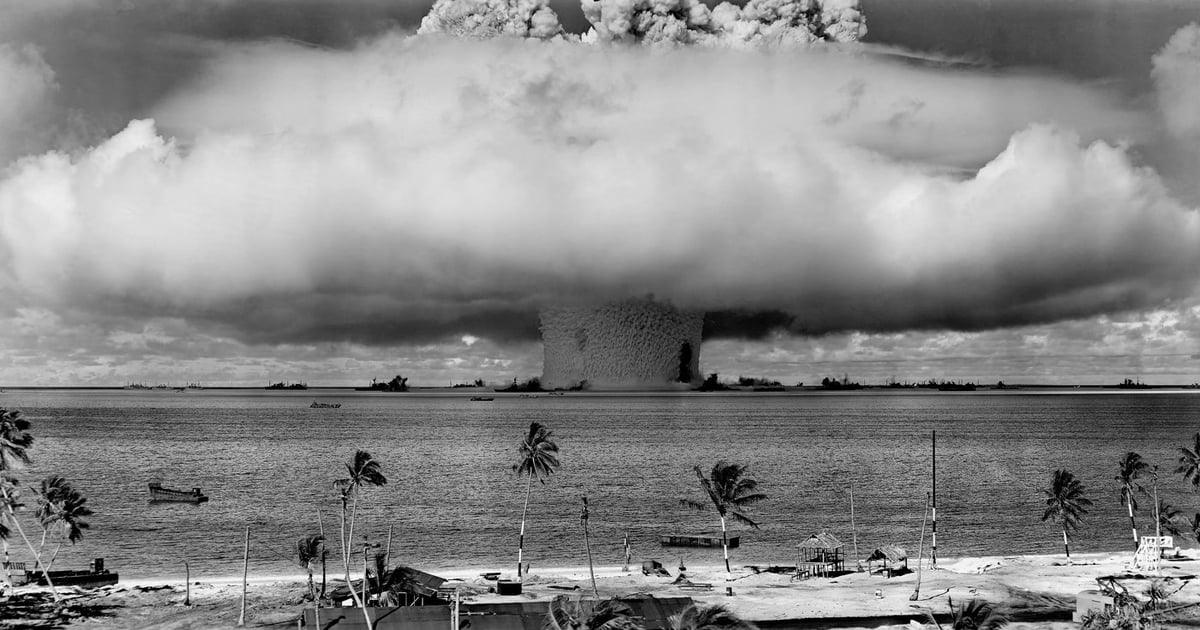
One of my favorite art experiences this year was seeing Bruce Conner’s short film Crossroads at The Whitney. (It’s part of the Dreamlands exhibition, on view until Feb 5, 2017.) The film pairs slow-motion clips of the 1946 nuclear tests at Bikini Atoll with music from composers Patrick Gleeson and Terry Riley. The result is mesmerizing…the film’s 37 minutes long and I sat through the entire thing and will likely go back once more before the show closes. Riley’s portion of the music was particularly memorable for me…I would love to have a recording of that. Neither the film or the music is available online, save for the short clip at the bottom of this page, so you’ll have to go to The Whitney or SFMOMA, where it also happens to be showing.
Update: It’s not an exact match, but this 51-minute song from Riley called Descending Moonshine Dervishes is quite close to the music he did for Crossroads.
In the NY Times Magazine, Gideon Lewis-Kraus reports on Google’s improving artificial intelligence efforts. The Google Brain team (no, seriously that’s what the team is called) spent almost a year overhauling Google’s translate service, resulting in a startling improvement in the service.
The new incarnation, to the pleasant surprise of Google’s own engineers, had been completed in only nine months. The A.I. system had demonstrated overnight improvements roughly equal to the total gains the old one had accrued over its entire lifetime.
Just after the switchover, Japanese professor Jun Rekimoto noticed the improvement. He took a passage from Ernest Hemingway’s The Snows of Kilimanjaro, translated it into Japanese, and fed it back into Google Translate to get English back out. Here’s how Hemingway wrote it:
Kilimanjaro is a snow-covered mountain 19,710 feet high, and is said to be the highest mountain in Africa. Its western summit is called the Masai “Ngaje Ngai,” the House of God. Close to the western summit there is the dried and frozen carcass of a leopard. No one has explained what the leopard was seeking at that altitude.
And here’s the AI-powered translation:
Kilimanjaro is a mountain of 19,710 feet covered with snow and is said to be the highest mountain in Africa. The summit of the west is called “Ngaje Ngai” in Masai, the house of God. Near the top of the west there is a dry and frozen dead body of leopard. No one has ever explained what leopard wanted at that altitude.
Not bad, especially when you compare it to what the old version of Translate would have produced:
Kilimanjaro is 19,710 feet of the mountain covered with snow, and it is said that the highest mountain in Africa. Top of the west, “Ngaje Ngai” in the Maasai language, has been referred to as the house of God. The top close to the west, there is a dry, frozen carcass of a leopard. Whether the leopard had what the demand at that altitude, there is no that nobody explained.
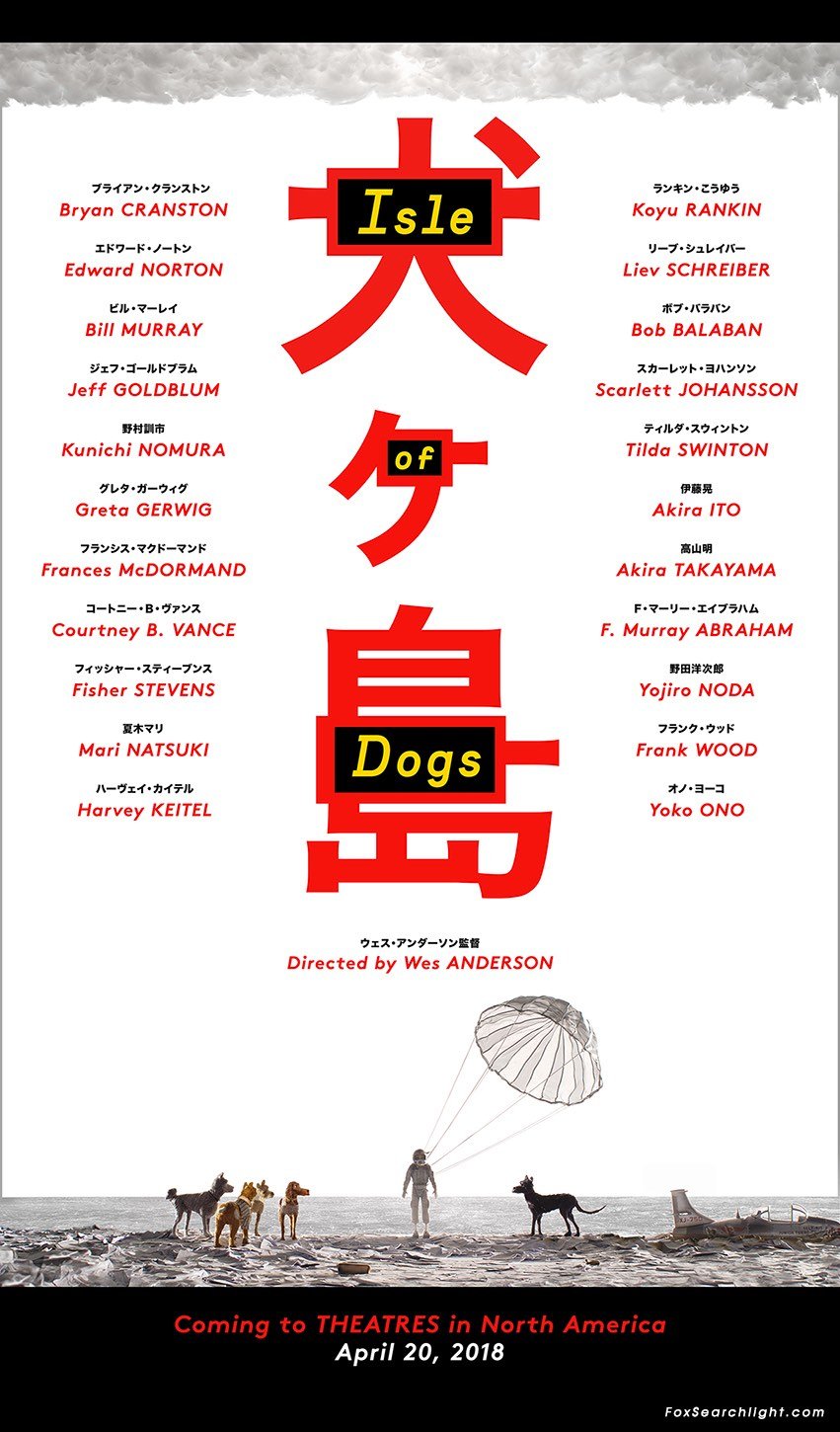
We’ve known for awhile that Wes Anderson is doing another stop-motion animated movie, but in this video, Anderson himself shares the name of the film — Isle of Dogs — and shows a very tiny clip of the character played by Edward Norton.
Also appearing in the film are Bill Murray, Tilda Swinton, Yoko Ono, Scarlett Johansson, and possibly you. Anderson is doing a fundraiser for a favorite charity and if you donate, you’re entered to win a trip to London to meet Wes, get a tour of the production, and record the voice of a character for the movie (“barking, howling & whimpering may be required”).
Update: The poster for the movie is out. WWII?
Art director Antonio Alcalá, one of four art directors employed by the USPS, talks a little bit about the history behind US postage stamps and how they are designed and produced.
The annual list of media errors and corrections by Poynter is always worth a read. Some favorites:
Because of an editing error, an article on Monday about a theological battle being fought by Muslim imams and scholars in the West against the Islamic State misstated the Snapchat handle used by Suhaib Webb, one of Muslim leaders speaking out. It is imamsuhaibwebb, not Pimpin4Paradise786.
No wonder people think the NY Times is untrustworthy. Another from the Times:
An article on March 20 about wave piloting in the Marshall Islands misstated the number of possible paths that could be navigated without instruments among the 34 islands and atolls of the Marshall Islands. It is 561, not a trillion trillion.
This one was only slightly wrong:
CORRECTION: Boris Johnson’s award-winning limerick about the Turkish president referred to Erdogan as a wanker who performed a sex act with a goat. A previous version of this article included the prompt for the poetry contest, which included a different sex act, also with a goat.
When in doubt, blame technology:
Correction at 9:58 a.m. on 3/09/2016: Due to an oversight involving a haphazardly-installed Chrome extension during the editing process, the name Donald Trump was erroneously replaced with the phrase “Someone With Tiny Hands” when this story originally published.
Scifi Policy reviews Rogue One as an engineering ethics case study (spoilers!).
The film also makes its engineering ethics explicit. Before the opening scene, Galen Erso had escaped the Death Star project because of his moral objections, likely against the Empire as well as the concept of making such a terrifying weapon at all. After Krennic captures him, Galen later tells his daughter Jyn that he had a choice: he could have continued abstaining, and let someone else build the Death Star, or he could dive deep into the project, become indispensable to it, and find a way to stop it. He chooses to dive deep, and succeeds in building a subtle flaw in the Death Star design. Then 15 years later, he sends a messenger to the Rebellion informing them of the weapon’s existence, power and most importantly, its fatal flaw.
Part of the point of the review is that resistance can take many forms. Erso resists by working within the system to help bring about a better outcome. The problem, for the outside observer, is that for such resistance to be effective, it needs to be indistinguishable from collaboration. Something to think about in relation to the incoming Trump administration and how best to work against it, particularly in the area of technology. (via mr)
You may have heard about the dumb old lady who was driving with a cup of McDonald’s coffee in her lap, spilled it, and then greedily sued McDonald’s, winning millions of dollars and setting off an epidemic of frivolous personal injury lawsuits that’s still alive and well today. Well, that’s not really what happened. Adam Conover explains what actually went down in this entertaining short video.
P.S. If you’re following along, what we have here is a video by CollegeHumor of a comedian debunking misinformation deliberately spread by a large multinational corporation (with publicly available sources!), packaged as a comedy bit but is every bit as informational as a piece in the Times or on Vox. If you’re being disingenuous, you might call this fake news. (See also Last Week Tonight, The Daily Show, The Colbert Report, etc.) (via subtraction)
Update: Hot Coffee is a feature-length documentary about the McDonald’s coffee case and tort reform in America. (via @aabhowell)
Update: Retro Report has a piece on the suit as well. (via @DavidGrann)
My friend Courtney Skott wrote an intense piece about the three miscarriages she’s had, including one just a couple of weeks ago. (Note: you may find the images disturbing, but that might also be a good thing.)
It wasn’t until after that miscarriage that I learned how common they are. But even if you know the statistics — that perhaps 20% of confirmed pregnancies miscarry — they are easy to dismiss. After all, it’s much more likely that you will be in the other 80%, isn’t it? But 1 in 5 is still pretty high, and once you start telling your friends that you had a miscarriage, all the miscarriages around you come out of the woodwork. “My sister had one. My best friend had one. I had two.”
Why didn’t I know that before?
Waaaay more people should know this — I didn’t until, well, you know. Like Courtney says, you don’t realize until you start talking to other people about it and…”out of the woodwork” is right.

The small town of Whitwell, Tennessee is home to The Children’s Holocaust Memorial. The memorial consists of eleven million paperclips, one for each Holocaust victim, housed in a German boxcar that was used to transport victims to camps. The project began when local middle school students studying the Holocaust had trouble imagining the enormity of the number of people who died.
In 1998, Principal Linda Hooper wanted to begin a project that would teach the students of Whitwell Middle School about the importance of tolerating and respecting different cultures. Mrs. Hooper sent David Smith, 8th grade history teacher and assistant principal to a teacher-training course in Chattanooga.
He returned and suggested an after school course that would study the Holocaust. Eighth grade Language Arts teacher Sandra Roberts held the first session in October of 1998. As the study progressed, the sheer number of Jews exterminated by the Nazis overwhelmed the students. Six million was a number that they could not grasp.
The school group decided to start collecting paper clips as a way to help students visualize that number. After the students wrote letters requesting people send them paper clips, donations poured in from around the country. In 2004, a documentary about the memorial was released. At the entrance to the car, there’s a sign that reads:
As you enter this car, we ask that you pause and reflect on the evil of intolerance and hatred.
I’ve never been to the Children’s Holocaust Memorial, but I once had the opportunity to stand in a German boxcar used to transport Holocaust victims and I will never ever forget it. (thx, jim)
The words “Blade Runner sequel” have inspired equal parts excitement and dread in my heart. Some things, you just shouldn’t mess with, particularly if you’re Ridley Scott (see the Alien5 franchise). But with Ryan Gosling and Harrison Ford headlining, Denis Villeneuve directing (he did the pitch-perfect Arrival), and this teaser trailer, the scale has tipped towards excitement.
Thirty years after the events of the first film, a new blade runner, LAPD Officer K (Gosling), unearths a long-buried secret that has the potential to plunge what’s left of society into chaos. K’s discovery leads him on a quest to find Rick Deckard (Ford), a former LAPD blade runner who has been missing for 30 years.

Bravo to National Geographic for putting a transgender girl on the cover of the magazine. Editor-in-chief Susan Goldberg explains why:
Today that and other beliefs about gender are shifting rapidly and radically. That’s why we’re exploring the subject this month, looking at it through the lens of science, social systems, and civilizations throughout history.
In a story from our issue, Robin Marantz Henig writes that we are surrounded by “evolving notions about what it means to be a woman or a man and the meanings of transgender, cisgender, gender nonconforming, genderqueer, agender, or any of the more than 50 terms Facebook offers users for their profiles. At the same time, scientists are uncovering new complexities in the biological understanding of sex. Many of us learned in high school biology that sex chromosomes determine a baby’s sex, full stop: XX means it’s a girl; XY means it’s a boy. But on occasion, XX and XY don’t tell the whole story.”
As part of their coverage, the magazine went out, asked kids from around the world their thoughts about being boys and girls, and came back with this video.
Watching these soap bubbles freeze in 5 °F weather is pretty much the coolest. What’s that? You want me to acknowledge that pun back there in a playfully knowing way? Ok, fine. (via @choitotheworld)
Collaborating with a number of different people from all over the place, filmmaker Oscar Boyson went out into the world and came back with this excellent 18-minute video on the future of cities. Among the cities profiles are Shenzhen, Detroit, Singapore, NYC, Copenhagen, Seoul, Lagos, and Mumbai.
What does “the future of cities” mean? To much of the developing world, it might be as simple as aspiring to having your own toilet, rather than sharing one with over 100 people. To a family in Detroit, it could mean having non-toxic drinking water. For planners and mayors, it’s about a lot of things — sustainability, economy, inclusivity, and resilience. Most of us can hope we can spend a little less time on our commutes to work and a little more time with our families. For a rich white dude up in a 50th floor penthouse, “the future of cities” might mean zipping around in a flying car while a robot jerks you off and a drone delivers your pizza. For many companies, the future of cities is simply about business and money, presented to us as buzzwords like “smart city” and “the city of tomorrow.”
A few tidbits from the video to whet your appetite:
- An estimated 70% of the world’s population will live in urban areas by 2050. (It’s currently 54%.)
- Buying a Toyota Corolla in Singapore costs $140,000.
- In 2012, 52% of the cost of US highways and roads was paid by general tax revenue rather than by drivers (through gas tax and tolls). In 1972, it was only 30%, which means car usage is much more heavily subsidized than it used to be.
- When you buy a car in Denmark, you pay a 150% tax, even if it’s electric.
- And a relevant quote from Jane Jacobs’ The Death and Life of Great American Cities: “Lowly, unpurposeful, and random as they may appear, sidewalk contacts are the small change from which a city’s wealth of public life may grow.”
And boy, listening to Janette Sadik-Khan talk about cities being for people and the importance of public transportation and then, directly after, having to listen to some dipshit from Uber was tough. (via @mathowie)
Older posts






Socials & More