

WOW. The Chicago Bulls’ official site has reverted to its 90s design, which I remember very clearly. Nostalgia bomb.

Advertise here with Carbon Ads
This site is made possible by member support. 💞
Big thanks to Arcustech for hosting the site and offering amazing tech support.
When you buy through links on kottke.org, I may earn an affiliate commission. Thanks for supporting the site!
kottke.org. home of fine hypertext products since 1998.
Beloved by 86.47% of the web.
Entries for February 2015
The Real Don Draper
Vice did a nice little feature on George Lois, the kind of 1960s big-egoed ad man on which Mad Men’s Don Draper was based.
Lois created a number of iconic ad campaigns as well as dozens of fantastic Esquire covers. Or at least he says he did. ;) (via devour)
Update: Here’s the transcript for the episode of This American Life in which Sarah Koenig interviews her father Julian Koenig about George Lois taking credit for some of his best ideas.
In my instance, the greatest predator of my work was my one-time partner George Lois, who is a most heralded and talented art director/designer, and his talent is only exceeded by his omnivorous ego. So where it once would’ve been accepted that the word would be “we” did it, regardless of who originated the work, the word “we” evaporated from George’s vocabulary and it became “my.”
Of course, Koenig also claims to have invented thumb wrestling and to have popularized shrimp in America, so… (via @kevinmeyers)
The world’s worst contract
In 1997, Max-Hervé George’s father bought a unique policy from a French insurance company that functions like Grays Sports Almanac from Back to the Future II, only for financial markets. The policy allows George to invest in investment funds offered by the insurance company at prices up to a week old, essentially traveling back in time with knowledge of which investments will increase in price the most.
For instance, he might have his money in an Aviva fund invested in the French stock market. Lets say the Nikkei 225 rises 5 per cent during the week. He’ll tell Aviva to move his investments into its Japanese fund, at the price before the market moved.
At last report, in 2007, George’s investments were worth €1.4 million and growing at a rate of 68.6% per year. Assuming that rate holds and he continues investing his entire allocation optimally, George will be a billionaire in five years, would be able to buy the insurance company in question by 2025, and be worth a whopping €234 billion by 2030.
See also how you could have turned $1000 into $167 billion by trading the S&P 500 perfectly last year.
Thanks to The Quarter Century Pant for sponsoring the site. Made in America w/ a 25-year guarantee; get yours today:
How BuzzFeed won #TheDress sweepstakes
The internet went crazy yesterday three separate times: when the FCC officially endorsed Net Neutrality, when two llamas escaped, and over the color of this dress.1 A solid three meme day. That scuffling sound you hear is the media scrambling to deliver all sorts of different takes on What It All Means™. The only one I really read, and the only one I’m going to link to, is Paul Ford on why Buzzfeed got 27 million pageviews for #TheDress2 and some other site didn’t.
What I saw, as I looked through the voluminous BuzzFeed coverage of the dress, is an organization at the peak of a craft they’ve been honing since 2006. They are masters of the form they pioneered. If you think that’s bullshit, that’s fine — I think most things are bullshit too. But they didn’t just serendipitously figure out that blue dress. They created an organization that could identify that blue dress, document it, and capture the traffic. And the way they got that 25 million impressions, as far as I can tell from years of listening to their people, reading them, writing about them, and not working or writing for them, was something like: Build a happy-enough workplace where people could screw around and experiment with what works and doesn’t, and pay everyone some money.
This is not said as an endorsement of BuzzFeed. BuzzFeed is utterly deserving of insanely paranoid criticism just like anyone who makes money from your attention, including me. But it’s worth pointing out that their recipe for traffic seems to be: Hire tons of people; let them experiment, figure out how social media works, and repeat endlessly; with lots of snacks. Robots didn’t make this happen. It was a hint of magic, and some science.
I’m reminded of a story about Picasso, possibly apocryphal:
Legend has it that Pablo Picasso was sketching in the park when a bold woman approached him.
“It’s you — Picasso, the great artist! Oh, you must sketch my portrait! I insist.”
So Picasso agreed to sketch her. After studying her for a moment, he used a single pencil stroke to create her portrait. He handed the women his work of art.
“It’s perfect!” she gushed. “You managed to capture my essence with one stroke, in one moment. Thank you! How much do I owe you?”
“Five thousand dollars,” the artist replied.
“B-b-but, what?” the woman sputtered. “How could you want so much money for this picture? It only took you a second to draw it!”
To which Picasso responded, “Madame, it took me my entire life.”
Similarly, designer Paula Scher took only a few seconds to come up with the new logo for Citibank for which Pentagram likely charged big money for:
How can it be that you talk to someone and it’s done in a second? But it is done in a second. it’s done in a second and in 34 years, and every experience and every movie and every thing of my life that’s in my head.
Ford is exactly right about BuzzFeed; they put in the work for years so that a post that took probably 3 minutes to write captured more traffic in one day than some media outlets get in an entire month. (thx, @DigDoug & @jayfallon)
Update: A post from BuzzFeed’s publisher, Dao Nguyen, explains how the company’s tech team reacted to the unexpected traffic.
We have a bunch of things going for us at this point. We have heavily invested in infrastructure provisioning and scaling. We know exactly how to scale fast from running drills.
Weirdly, I saw the dress as gold and a light blue. What a fucking cliche I am, needing to see even this dress as a different set of colors than anyone else.↩
I don’t think I’m betraying any confidences here in saying that BuzzFeed had to spin up a few extra servers to handle the intense burst of traffic from that post…everyone does it. That’s right, dedicated #TheDress servers. Move over, Bieber.↩
The Origin of Joy Division’s Unknown Pleasures Album Cover Art

For Scientific American, Jen Christiansen tracks down where the iconic image on the cover of Joy Division’s Unknown Pleasures came from. Designer Peter Saville found the image, a stacked graph of successive radio signals from pulsar CP 1919, in a 1977 astronomy encyclopedia but it actually originated in a 1970 Ph.D. thesis.
By now I had also combed through early discovery articles in scientific journals and every book anthology on pulsars I could get my hands on to learn more about early pulsar visualizations. The more I learned, the more this descriptor in the 1971 Ostriker caption began to feel significant; “computer-generated illustration.” The charts from Bell at Mullard were output in real time, using analogue plotting tools. A transition in technology from analogue to digital seemed to have been taking place between the discovery of pulsars in 1967 to the work being conducting at Arecibo in 1968 through the early 1970’s. A cohort of doctoral students from Cornell University seemed to be embracing that shift, working on the cutting edge of digital analysis and pulsar data output. One PhD thesis title from that group in particular caught my attention, “Radio Observations of the Pulse Profiles and Dispersion Measures of Twelve Pulsars,” by Harold D. Craft, Jr. (September 1970).
When a star gets old and fat, it explodes in a supernova, leaving a neutron star in its wake. Neutron stars are heavily magnetized and incredibly dense, approximately two times the mass of the Sun packed into an area the size of the borough of Queens. That’s right around the density of an atomic nucleus, which isn’t surprising given that neutron stars are mostly composed of neutrons. A teaspoon of neutron star would weigh billions of tons.
A pulsar is a neutron star that quickly rotates. As the star spins, electromagnetic beams are shot out of the magnetic poles, which sweep around in space like a lighthouse light. Pulsars can spin anywhere from once every few seconds to 700 times/second, with the surface speed approaching 1/4 of the speed of light. These successive waves of electromagnetic pulses, arriving every 1.34 seconds, are what’s depicted in the stacked graph. Metaphorical meanings of its placement on the cover of a Joy Division record are left as an exercise to the reader.
Arcade Intelligence
Then something happens. By the three hundredth game, the A.I. has stopped missing the ball.
The New Yorker’s Nicola Twilley on the computer program that learned how to play Breakout and other Atari games. All on its own. Artificial Intelligence Goes to the Arcade.
Messi scores 64 goals at once
Here are 64 goals scored by FC Barcelona legend Lionel Messi, presented simultaneously in one frame.
Fusion’s Cara Rose DeFabio has dubbed this type of video The Superfuse.
Karl Ove Knausgaard travels through America
The NY Times Magazine got Karl Ove Knausgaard (author of My Struggle) to “drive across America and write about it without talking to a single American”, like some sort of introverted Tocqueville. He came unprepared:
I dialed the number of the driver’s-license office at the Swedish Transport Agency, keyed in my personal identity number and sat down at the desk, scrolling through some Norwegian newspapers as I waited my turn.
A prerecorded voice came on and informed me about opening hours, then the line went dead.
What the hell?
Had they closed?
But it couldn’t be later than 1 p.m. in Sweden.
I looked at the Transport Agency website. To my dismay, I discovered that it was a holiday in Sweden tomorrow, Trettondagsafton, the Feast of the Epiphany, and a half-day today.
That meant I couldn’t get the driver’s-license confirmation letter until three days from now at the earliest, more likely four.
Oh, no.
I wasn’t even in the U.S. yet, I was just in Canada!
I lay back in bed and stared at the ceiling. I should email The Times and explain the situation. Maybe they had a solution. But I couldn’t. I just couldn’t bring myself to tell them that I’d undertaken this great road-trip assignment across the U.S. without my license. They’d think I was a complete idiot.
In any case, there was nothing I could do today.
And his thoughts on Detroit (emphasis mine):
I’d seen poverty before, of course, even incomprehensible poverty, as in the slums outside Maputo, in Mozambique. But I’d never seen anything like this. If what I had seen tonight - house after house after house abandoned, deserted, decaying as if there had been disaster - if this was poverty, then it must be a new kind poverty, maybe in the same way that the wealth that had amassed here in the 20th century had been a new kind of wealth. I had never really understood how a nation that so celebrated the individual could obliterate all differences the way this country did. In a system of mass production, the individual workers are replaceable and the products are identical. The identical cars are followed by identical gas stations, identical restaurants, identical motels and, as an extension of these, by identical TV screens, which hang everywhere in this country, broadcasting identical entertainment and identical dreams. Not even the Soviet Union at the height of its power had succeeded in creating such a unified, collective identity as the one Americans lived their lives within. When times got rough, a person could abandon one town in favor of another, and that new town would still represent the same thing.
Was that what home was here? Not the place, not the local, but the culture, the general?
Update: The Times has posted the second part of Knausgaard’s My Saga.
If there is something to be gained, if it is gainable, no power on earth can restrain the forces that seek to gain it. To leave a profit or a territory or any kind of resource, even a scientific discovery, unexploited is deeply alien to human nature.
Bingeclock tracks how long you’ll need if you plan on binge-watching various TV shows. Law and Order? 19 days.
Design Ah! introduces kids to design concepts
Ah-Ha to Zig-Zag

I’m a big fan of Maira Kalman but somehow missed a book she illustrated that came out in October, Ah-Ha to Zig-Zag: 31 Objects from Cooper Hewitt, Smithsonian Design Museum.
“A. Ah-ha! There you Are.” begins Maira Kalman’s joyfully illustrated romp through the treasures of Cooper Hewitt’s design collection. With her signature wit and warm humor, Kalman’s ABC book introduces children and adults to the myriad ways design touches our lives. Posing the question “If you were starting a museum, what would you put in your collection?”, Kalman encourages the reader to put pen to paper and send in personal letters — an intimate, interactive gesture to top off her unique tour of the world of design. Objects ranging from a thirteenth-century silk thinking cap to 1889 tin slippers with bows, all the way to Gerrit Rietveld’s Zig-Zag chair are brought to colorful life. Kalman’s hand-lettered text is whimsical and universal in turns, drawing lessons as easily from a worn old boot as a masterpiece of midcentury modernism. Irresistibly, we are led to agree, “Everything is design.”
(via tinybop)
Your father is a convicted serial killer. How do you forgive something like that?
A Few Silent Men
Someone edited the courtroom scene from A Few Good Men and took out all the dialogue, leaving just the reaction shots. It’s surprisingly coherent and dramatic.
See also Dr. Phil without dialogue and musicless music videos. (via @pieratt)
Errol Morris’ short films for ESPN
Director Errol Morris has directed six short films for ESPN collective titled “It’s Not Crazy, It’s Sports.” The films will air on March 1 and then be released online during the following week. The trailer:
The films’ subjects include Mr. Met, streakers, sports memorabilia fanatics, an electric football league, and Michael Jordan’s stolen jersey. I’ll post the films here as they’re released online. Morris previously did a film for ESPN about the sports-themed funerals of die-hard fans.
Update: Grantland has posted the first short film in the series about an electric football league that’s been running in a NY basement for over 30 years.
Update: All of the Morris’ shorts have now been posted on Grantland. Go. Watch.
How is Stephen Hawking still alive?
An Oscar presented to the actor who played him was just the latest honor presented to a man who has no shortage of amazing achievements. But Stephen Hawking’s most amazing — and mysterious — achievement could be the fact that he’s alive. From WaPo: How Stephen Hawking, diagnosed with ALS decades ago, is still alive.
Eating peanuts prevents peanut allergies
The results of a major new trial, published in the New England Journal of Medicine, indicate that for children who are at risk of developing a peanut allergy, eating peanuts greatly reduces the chance of an allergy. This is pretty huge news.
All the babies were between 4 and 11 months old when they were enrolled, and all had either an egg allergy, severe eczema, or both-putting them at high risk of a peanut allergy down the road. Indeed, 98 of them were already heading in that direction: They tested positive for mild peanut sensitivity in a skin-prick test. This meant that these babies were already churning out antibodies to the peanut protein. Eating peanuts in the future could set off an allergic reaction.
The team divided the babies into two groups. Half were to avoid eating peanut products until they were 5 years old. The other half received at least 6 grams of peanut protein a week, spread across at least three meals, until they were 5 years old. Bamba was the preferred offering, though picky eaters who rejected it got smooth peanut butter.
Around the 5th birthdays of the trial subjects came the big test. The children consumed a larger peanut portion than they were used to in one sitting, and the results were clear-cut. Among 530 children who had had a negative skin-prick test when they were babies, 14% who avoided peanuts were allergic to them, compared with 2% of those who’d been eating them. In the even higher risk group, the children who were sensitized, 35% of the peanut-avoiders were allergic versus just over 10% of the peanut eaters.
Even if further studies confirm these results, will American parents start feeding their infants peanuts? I don’t know…there are lots of similarities to vaccines in play here.
Update: Somewhat related: children in developed countries might be growing up too clean, making them more likely to develop allergies.
The findings are the latest to support the “hygiene hypothesis,” a still-evolving proposition that’s been gaining momentum in recent years. The hypothesis basically suggests that people in developed countries are growing up way too clean because of a variety of trends, including the use of hand sanitizers and detergents, and spending too little time around animals.
As a result, children don’t tend to be exposed to as many bacteria and other microorganisms, and maybe that deprives their immune system of the chance to be trained to recognize microbial friend from foe.
That may make the immune system more likely to misfire and overreact in a way that leads to allergies, eczema and asthma, Hesselmar says.
(thx,paul)
Finding Love After a Heart Transplant
Kellan Roberts died suddenly at 22. He had decided to be an organ donor and his heart went to a high school student from Minnesota, Connor Rabinowitz. After receiving the heart, Connor visited Kellan’s family in Seattle and met Kellan’s sister Erin. After a few years, Erin and Connor, well, just watch…this is a wonderful story well told.
The science of anti-vaccination
Host Hank Green of the SciShow looks at the anti-vaccination movement from a scientific perspective: why are US parents growing less likely to vaccinate their children?
In psychology, the search for these explanations is called “Explanatory Attribution” and different people have different “explanatory styles”. Some people are more prone to blame themselves, while others search for an external event to blame. But one thing is clear: we are very bad at not blaming anything. It’s not surprising that parents of children with autism, especially parents who notice a sudden loss of previous development, will search for a possible cause. And when the most significant recent event in the health of the child was a vaccination, as can be said for many moments in the life of a young American, we might identify that as a potential cause and deem that link worthy of further examination.
Now this, is completely logical. The problem is that over a dozen peer-reviewed papers have found no correlation between autism and the MMR vaccine, or any other vaccine for that matter. And yet, when you Google vaccines and autism, a fair number of the results claim that there is a link between the two, and that that link is being covered up either by the government or by big corporations. A parent, already experiencing frustration with the medical community’s inability to tell them why this thing has happened to their child, will, on the internet, find a vibrant community of similarly frustrated people who share their values and experiences. These communities are full of anecdotes that draw connections between vaccines and autism. And so, unsurprisingly, some people become convinced that they have found the reason for their child’s disability.
Once their mind has been made up, confirmation bias sets in. Confirmation bias is simply our tendency to more readily, and with less scrutiny, accept information, anecdotes, and world views that confirm our existing beliefs. And, again, it is a completely normal thing that every person does. Indeed, trying to convince someone that a previously held belief is incorrect has been proven to actually increase their affinity for that idea. And so a community is born, and the safety of vaccines is called into question. And once the procedure for getting a vaccine goes from the doctor telling you that it is now time for a vaccine — and 99% of parents agreeing because that person went through medical school — to it being a question to ponder, vaccination rates will go down.
Hunter S. Thompson calls customer service
This is allegedly a recording of a voicemail that Hunter S. Thompson left for the AV company that wrongly installed his home theater system.
If your setup is still here tomorrow night, I’m gonna destroy it and write about it. Yeah, I write a column, several, I write about a lot of things, you might of heard of the rest of my name somewhere, I write books, I write things that get out and people read! I’ll ruin your fucking name! You goddamn idiots, you fuck up my system!!
We’ve all been there, haven’t we? Perhaps with fewer illicit substances in our systems, but still. (via @davidgrann)
Update: Here’s an interview with someone who worked at the AV company at the time of the call.
The Design Audio/Video team got back to Thompson and fixed the problem which, it turned out, they hadn’t actually caused. The items had actually been sold to the author by another local dealer, which McCorkle knows but would not name.
“It turns out, we didn’t sell him the stuff, but we ended up fixing it for him,” McCorkle said. “In true Hunter style, he never apologized for it, but he was grateful.”
(via @StephenSilver)
Ten years ago yesterday, I started working on as my full-time job. Thanks for reading. -@jkottke
Philip Glass’ soundtrack for Errol Morris’ A Brief History of Time

Philip Glass did the soundtrack for A Brief History of Time, Errol Morris’ documentary on Stephen Hawking, but it was never released as an album. Until earlier this month. Huzzah! Appears to only be available on iTunes — couldn’t find it on Amazon, Rdio, or Spotify — and I wish they’d done more with that cover. Bleh.
The art of staying aloft
Photographer Gloria Wilson takes photos of birds in flight. A few favorites:



Wilson sells prints of this series in her Etsy shop. (thx, meg)
Space Probes
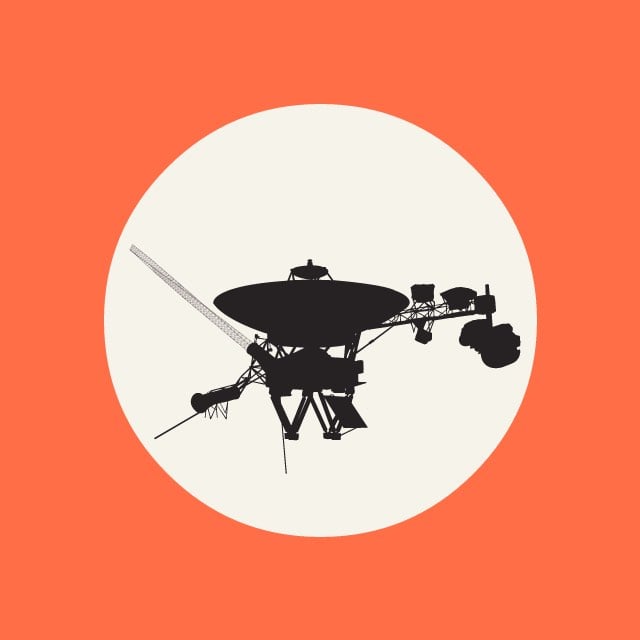
The Spaceprob.es site tracks the active probes in operation in and around our solar system, from Voyager I (19.56 billion km from Earth) to the Artemis probes (358,000 km away). (via @BadAstronomer)
Update: Spaceprob.es now has a shop with posters, pillows, t-shirts, and stickers.
Socials & More