kottke.org posts about video games
Long-time readers will recall that I used to link to Flash games pretty regularly. They were typically easy to play and hard to put down — I collected them under the addictive Flash games tag. The collective time and energy spent by kottke.org readers playing these games over the years is, well, I don’t even want to take a guess. So, it is with regret for the rest of your workday that I pass along this site that contains playable versions of tens of thousands of Flash games, including many of the ones I’ve collected. Here are several that you might remember:
Good luck with all that…I only escaped after an hour of poking around. 😬 (via waxy)
In the finals of the Classic Tetris Mega Masters Championship held at the end of last month, two of the top Tetris players in the world played what is probably the greatest 1-vs-1 Classic Tetris game of all time. And then they did it again…
Even if you only have a passing interest in Tetris or video games, this is worth a watch and just as exciting as watching a hard-fought soccer or tennis match.
Fun fact: one of the finalists, Alex T, managed to score zero points in a match at a previous tournament. (via @peterme)
Remember Line Rider? It’s a simple video game / physics toy where you draw slopes and curves for a person on a sled to navigate, pulled along by gravity. SineRider, a project started by Chris Walker and finished by a group of teen hackers at Hack Club, is a version of Line Rider where you use math equations to draw curves to maneuver the sledder through a series of points, sometimes in a certain order. Here’s a trailer with some gameplay examples:
Let me tell you, I haven’t had this much fun mucking around with an online game/toy since I don’t know when. My math is super rusty, but SineRider eases you into the action with some simple slopes (no cosines or tangents necessary) and before you know it, it’s 20 minutes later and you’re googling equations for parabolas.
Right now, there are two ways to play. You can start on the front page and go through a progression of puzzles that get more challenging as more concepts are introduced (such as the curve changing over time). Or you can do the challenges, which are posted daily to Twitter or Reddit. My son and I spent 10-15 minutes solving these two challenges and we were laughing and cheering when we finally got them. (The educational opportunity here is obvious…)
SineRider is currently in beta so some of the UI stuff is a little rough around the edges, but I was really charmed by the music, the animations…everything really. The project is open source — the code is available on GitHub and the Hack Club folks are looking for contributors and collaborators:
There’s a reason it’s open-source and written in 100% vanilla JavaScript. We need volunteer artists, writers, programmers, and puzzle designers. And, if you’re a smart teenager who wants to change education for the better, you should come join Hack Club!
Last month I posted a link to a story about a woman who discovered she was one of the world’s top Candy Crush players.
Since progress was tied to game score rather than PvP results, Rhoden kept getting pop-ups for milestones such as passing the quarterfinals, and then entering the semifinals as she was just casually taking part in her regular Candy Crush routine.
She was overwhelmed, so she texted the other esports athlete in the family: Her son. Xane was the best Meta Knight player in the midwest during the height of his Super Smash Bros. career. She asked him what a $250,000 prize pool was. After he explained that first place got half of the total pool, he asked why. “I’m in the semifinals accidentally,” she wrote.
In that vein, a reader sent me a link to this 2007 Boston Globe piece about a woman who discovers that she’s actually the world’s best Tetris player.
“It’s funny,” I told Flewin. “We have an old Nintendo Game Boy floating around the house, and Tetris is the only game we own. My wife will sometimes dig it out to play on airplanes and long car rides. She’s weirdly good at it. She can get 500 or 600 lines, no problem.”
What Flewin said next I will never forget.
“Oh, my!”
After I hung up the phone, I went to the bedroom and woke my wife, Lori.
“Honey,” I said. “You’re not going to believe this, but I just got off the phone with a guy who’s in charge of video game world records, and he said the world record for Game Boy Tetris is 327 lines, and he wants us to go to New Hampshire this spring so you can try to break the world record live in front of the judges at the world’s largest classic video game tournament.
Spoiler alert: she broke the record. Baker is still 5th on the all-time scoring list but her score was bested just three months later by Harry Hong, the original record holder, who achieved a score six times higher than Baker’s. (thx, euse42)

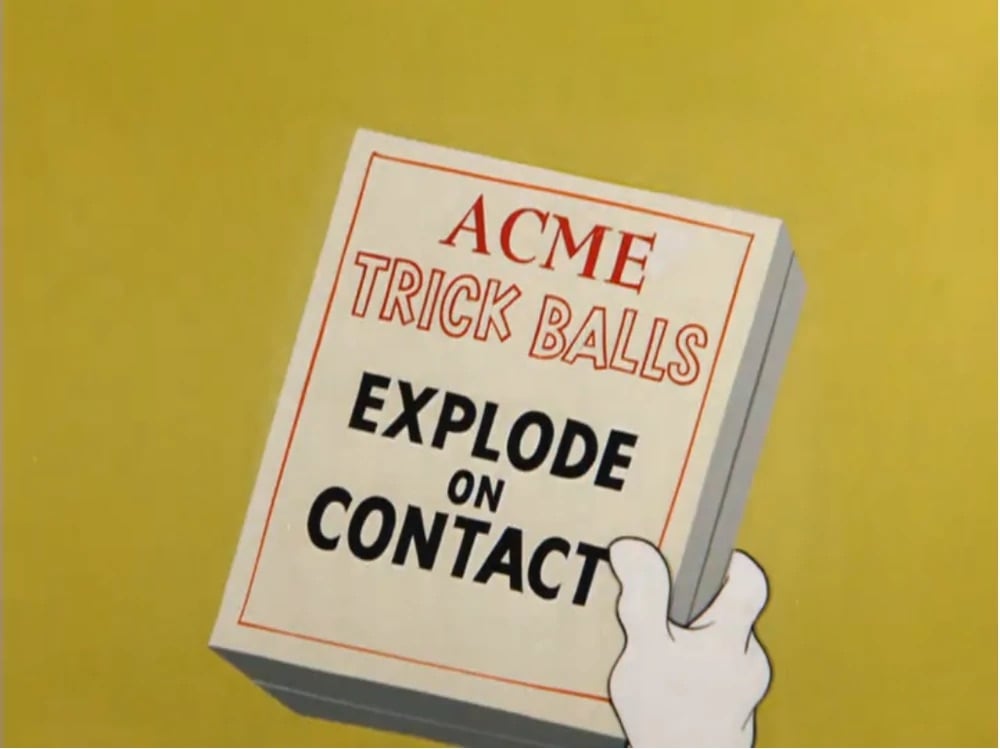

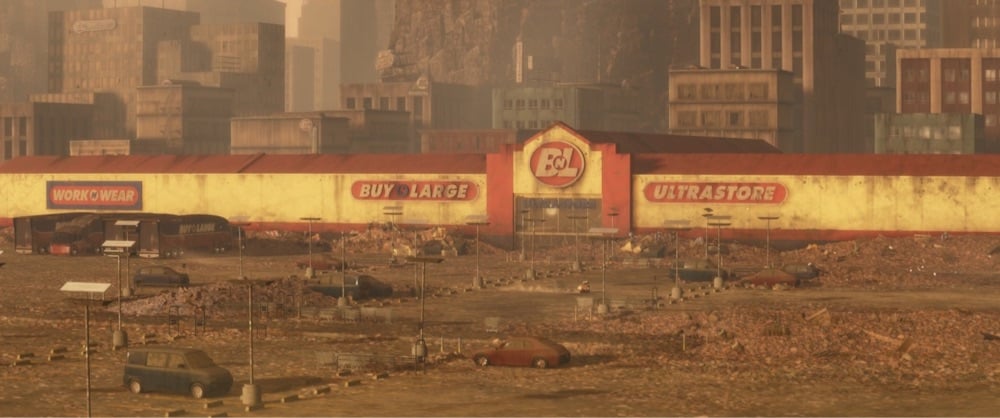
The Fictional Brands Archive is a collection of fictional brands found in movies, TV shows, and video games — think Acme in Looney Tunes, Pixar’s Monsters, Inc., and Nakatomi Corporation from Die Hard. Very cool. But gotta say though, the dimming mouseover effect makes this more difficult to use than it needs to be… (via sidebar)
This was me a couple of years ago when I first started playing Fortnite, as satirized by Adam Driver and the SNL gang:
I found this sketch via a piece that Tom Vanderbilt wrote about playing Fortnite with his daughter (and her friends).
It’s not as though Sylvie and I discussed the problem of free will as we dodged RPG rounds. For the most part, our interactions weren’t nearly so high-minded. We stole each other’s kills and squabbled over loot. She badgered me for V-Bucks so she could buy her character new baubles in the Item Shop. But sometimes, after playing, we’d go for a walk and analyze how we were able to notch a dub — Fortnite-speak for a win — or how we might have done better. We’d assess the quality of newly introduced weapons. (The best were OP, for “overpowering,” but often the makers of Fortnite would later “nerf” them for being too OP.) She’d chide me for trying to improve by battling more, rather than by practicing in Creative mode — which suddenly made her open to hearing about the late Swedish psychologist K. Anders Ericsson’s theories of “deliberate practice.” (Like many kids, she had a built-in filter against my teachable moments.) We actually were, per Adam Driver’s character, bonding.
And in our Fortnite games I saw her cultivate prowess. I’m not talking merely about the widely discussed perceptual and cognitive benefits of video games, which include an improved ability to track objects in space and tune out cognitive “distractors.” I’m talking about that suite of abilities sometimes referred to as “21st-century skills”: imaginatively solving open-ended problems, working collaboratively in teams, synthesizing complex information streams. “Unfortunately, in most formal education settings, we’re not emphasizing those very much,” argues Eric Klopfer, who directs the Education Arcade at MIT. “Just playing Fortnite doesn’t necessarily give you those skills — but playing Fortnite in the right way, with the right people, is certainly a good step in that direction.”
This is the plain and perhaps embarrassing truth: During my sabbatical, I didn’t pursue any activity (with the possible exception of mountain biking) as diligently as I did playing Fortnite. My kids have been playing it for awhile, both together and separately, and it was fun to watch them working together to complete quests and sometimes even win. I tried playing with them a few times the previous year, but the last shooter game I played was Quake III in the late 90s and so I was comically bad, running around firing my weapon into the sky or the ground and generally just embarrassing my kids, who left my reboot card where it landed after I’d died more often than not.
Early last year, even before I left on my sabbatical, I decided I wanted to learn how to play properly, so that I could do something with my kids on their turf. I played mostly by myself at first — and poorly. Slowly I figured out the rules of the game and how to move and shoot. I played online with my friend David, who was forgiving of my deficiencies, and we caught up while he explained how the game worked and we explored the island together. I finally got a kill and a win, in the same match — I’d found a good hiding place in a bush and then emerged when it was down to me and some other hapless fool (who was probably 8 years old or a bot) and I somehow got them. A friend who had arrived for dinner mid-game was very surprised when I started yelling my head off and running around the house.
Over the summer after I started the sabbatical, I played most days for at least 30 minutes. I got better and was having more fun. I won some matches and bought the Battle Pass so I could get some different skins and emotes. Even though I got a late start in the season, I grinded on quests to get the Darth Vader skin, which is amusing to wear while you’re trying out different emotes. (You haven’t lived until you’ve watched Vader do the death drop or dance to My Money Don’t Jiggle Jiggle, It Folds.1) When the kids got back from camp, I was good enough to at least not slow them down too much and get a couple of kills in the meantime. I learned the lingo and how to work as a team, with my kids leading the way.1 I’m still not great, but it’s become one of our favorite things to do together and I’m enjoying it while it lasts.
I randomly came across this YouTube video from an engineer (civil, not railroad) who was building virtual railroads using wooden toy tracks, you know from when you were a kid. Anyway, it turns out that he was playing an open-world game called Tracks, which is available on Steam, Nintendo Switch, and Xbox. Looks fun — if I ever get any free time again, I might give this one a shot.
Watch as Polish dance troupe Fair Play Crew brings the twitchy movements from old school martial arts video games into the real world with a funny and perfectly choreographed routine (it starts at the 3:50 mark in the video above. It seems like they’re riffing on a few different games here — Karate on the Atari 2600, Black Belt, Karate Champ, Karateka, International Karate, and even a little Mortal Kombat — instead of just a single game.
Well, I was not expecting the next video game to be turned into an edgy drama (an 80s Cold War techno-thriller, no less) to be Tetris, but here we are.
Taron Egerton stars in a new Apple Original Film inspired by the true story of how one man risked his life to outsmart the KGB and turn Tetris into a worldwide sensation.
If you’d have told me that this trailer was a Saturday Night Live sketch from 6 years ago, I would have believed you — and as it is, the release date of March 31 gives me pause.1 But I’ll give it a shot.
David Shariatmadari, an editor at The Guardian, was asked by a colleague to “have a go” at inventing a new game, a new viral sensation like Wordle. The game he came up with is called Wordiply (it’s fun!) and he wrote up the whole process of how he went about designing it. The idea behind the game is a simple one and the way in which Shariatmadari arrives at it is a familiar trope in discovery stories:
That’s where my older brother, Daniel, comes in. While I’m racking my brains about how to come up with a better version of Boggle, he’s with his partner Nic in a hospital waiting for their baby to be born. On the morning she is due for an induction, they arrive bright and early at 8am. I call at about 11am to see how things are going. “What about if you had a word,” Daniel says, “of three letters — and the point of the game is to find the longest word that still has those three letters.”
“You mean like an anagram, but you make it longer?” I ask, confused.
“No, you’ve got to keep them in order. So if you had ‘bid’, then maybe, er, ‘forbidden’ would be the longest word.”
“Or ‘ambidextrous’.”
“Right.”
This is typical. I’ve been thinking about this for weeks. Daniel is supposed to be having a baby today and instead he’s come up with something that just might be the next Wordle.
“I think that’s pretty good,” I tell him.
“Yeah, OK — gotta go.”
“What about the bab — “
It’s worth reading the whole thing — stories of invention and discovery are always interesting and the familiarity that most people have with word puzzles makes this one easy to follow and even to place yourself in the creator’s shoes. A key part of the design process is to look for the spark:
Next, I pitch the longest word game: “So if you have a word like ‘pit’, you could have ‘spit’, ‘spittoon’, ‘hospitable’.” “Amphitheatre!” Will exclaims, triumphantly. There’s a beat before we realise it doesn’t work. But I can hear an excitement in his voice — pride at having swung even if he missed. Maybe there is something to this. We do a paper prototype, and decide to play it against the clock — 15 seconds. I call out the word “cub” and everyone scribbles furiously. Time’s up before we know it, and all I managed is “scuba”. Someone gets “incubation”. Will has “cubism”. “You know what?” he says. “It’s a good game!” Entrancement? Unlocked. Well, possibly.
I found this via Clive Thompson, who riffs on Shariatmadari’s piece here.
Alas, there is no magic formula to finding the right mix of rules. You just have to tweak and tweak, and test and test.
Often the hardest part of finessing a design can be some incredibly weird thing you’d never predict.
For Shariatmadari, the hardest part was creating the list of allowable words. Since the goal of his game was - given a target word like “pop” (for example) - to find the longest possible word that contains the target, there are a ton of super-long medical and chemical words one could use, like “pseudopseudohypoparathyroidism”. But allowing words like that could break the feeling of fairness, giving an advantage to people who rote-memorize really long medical words. (As an aside, this is why I find competitive Scrabble rather dreary: Success hinges upon memorizing endless marginal two-letter words that normal people rarely ever use in daily speech; this does not feel, to me, like a particularly interesting skill.)
I have a weird relationship with word puzzles. I don’t like crossword puzzles but have been doing them recently with a friend over FaceTime, which has been enjoyable. Boggle is my jam and has been since childhood, but I dislike Scrabble with an intensity that is almost absurd. I’ve never played Wordle (I know!) but I do Spelling Bee every day. I’m not sure why I love some of these games and dislike others — all word games require pattern matching to some extent, which is something I enjoy and am good at, but for some reason Scrabble and Wordle don’t interest me at all while I cannot get enough Spelling Bee.
This is such a trip to see the familiar original version of Nintendo’s The Legend of Zelda being played as a VR first-person shooter. You only get one screen at a time with the top-down 2D view, but in this version, you get as much of the map as you can see - it looks like it stretches off into the distance for miles.
I just went to Wikipedia to look at the release date for Zelda and it came out February 21, 1986. I remember getting Zelda for my birthday that year, which means I somehow waited seven whole months to play that game and, boy was it worth it. I have a Switch now and still fire up the original Zelda sometimes, just to make sure the ol’ reflexes still work. (via digg)
I love me a good speedrunning video, so I’m interested in seeing Running with Speed, a new feature-length documentary about people who strive to finish video games as fast as they can. You can find the movie on Amazon, Apple TV, and other such places. (thx, rex)
As a former mini-golf champion, I am completely charmed by Alphaputt, an mini golf iOS game where the courses are shaped like letters of the alphabet.
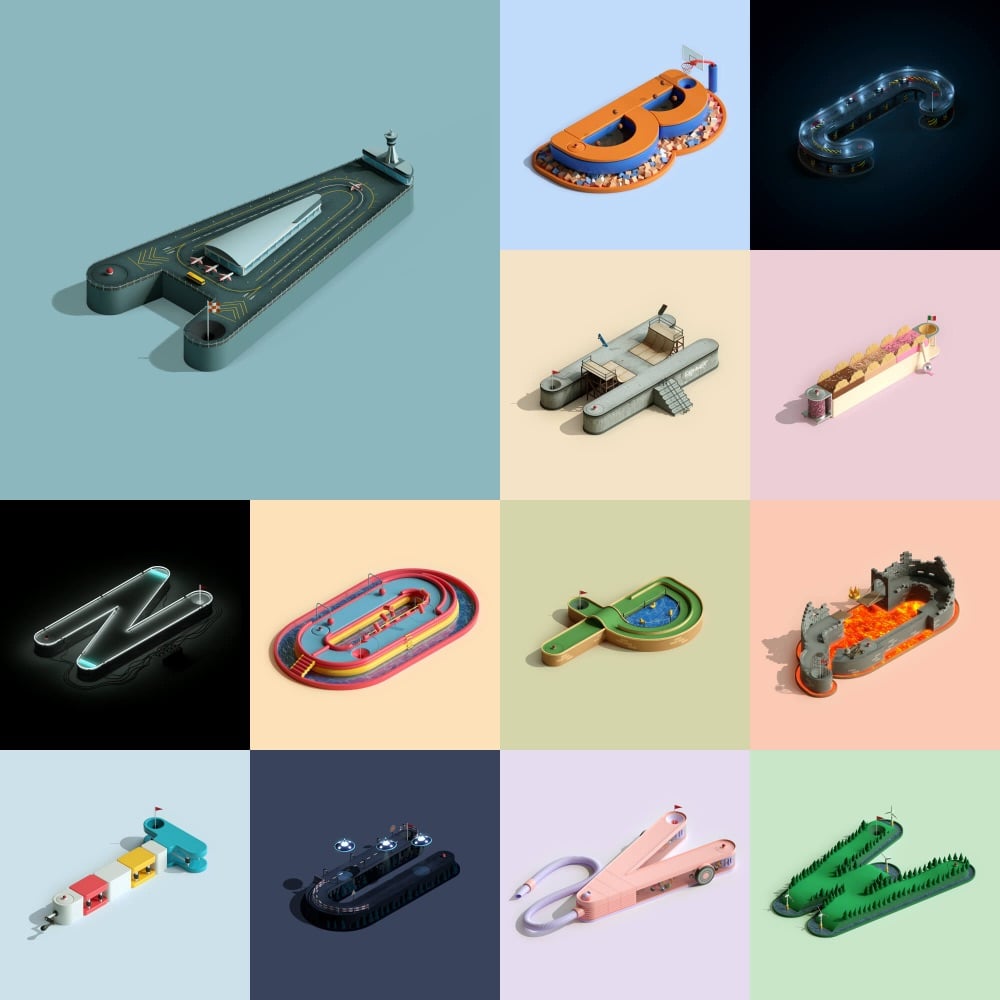


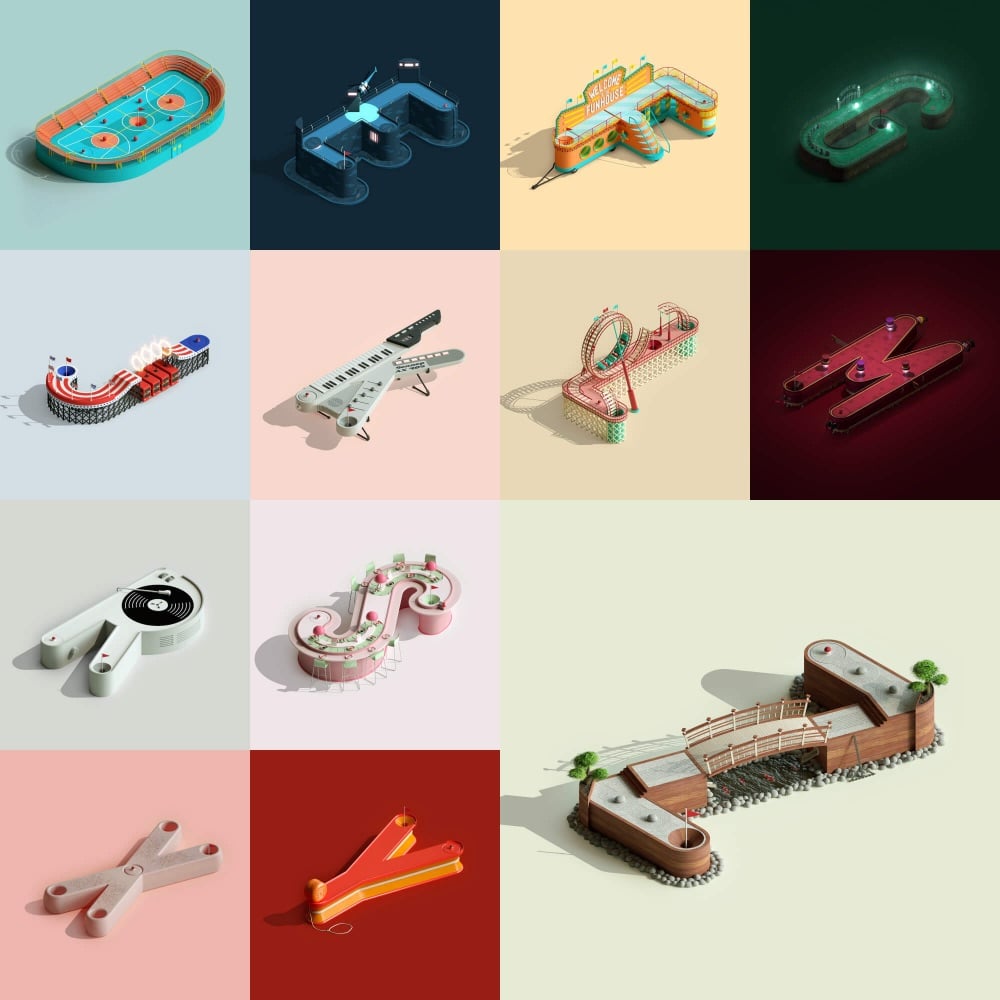
You can play through the alphabet or play a customized course by typing out a word (come on, that’s pretty cool). (via colossal)
It is Friday and this is the perfect Friday sort of post. BeamNG is a video game of sorts that’s “a dynamic soft-body physics vehicle simulator capable of doing just about anything”. In the simulator, you can quickly devise all sorts of situations with a variety of cars and then press play to see what happens, with (mostly) realistic physics and collisions. For instance, here’s Cars vs Big Bulge:
Chained Cars vs Bollards:
Cars vs 100 Fallen Trees:
Trains vs Giant Pit:
And many many more. My god if this simulator had been around when I was 12 years old, I might not have done anything else. Hell, if I downloaded and installed this right now, I might not ever get anything done ever again. (via @tvaziri)
When someone tells you that a particular video game (like Elden Ring) is hard, it can be tough to figure out what they might mean by that because games are hard in different ways. As Tolstoy might have said had he been a gamer: “All easy games are alike; each difficult game is difficult in its own way.”
Two recent articles have attempted to categorize the different ways in which players are challenged while playing games. Back in September 2021, Rhys Frampton outlined three main types of difficulty: comprehensive, executive, and strategic. Comprehensive difficulty relates to understanding the rules of the game while executive difficulty is about physicality (e.g. fast reflexes, coordination). Strategic difficulty relates to how to use your understanding of the rules and your reflexes to best master the game, your opponent, or yourself.
Once you understand a task’s goals, as well as the physical abilities required to perform the task’s actions, your final hurdle will be optimizing those actions to most effectively achieve those goals. This is strategic difficulty, the third and final category, and it is often the trickiest both to overcome and define. To demonstrate this, examine the difference between an intermediate Go player and a master. Both of them fully understand the game’s rules, while also being capable of reliably moving their pieces to any desired spot on the board — thus, they both have an equal mastery of Go’s comprehensive and executive difficulty. However, the Go master will always win against the intermediate player, because they have a superior understanding of Go’s strategic difficulty (i.e., the various tactics and divergent outcomes that will best lead them to victory). Go is a particularly important case subject for those interested in strategic difficulty, because despite being very simple to pick up and play, its strategic depths have still not been fully mastered even after thousands of years. Within the framework of “what,” “how,” and “why,” strategic difficulty represents “why,” and Go is one of the only examples of an activity whose difficulty is almost solely strategic.
I found Frampton’s piece via Clive Thompson, who riffs briefly on it here.
Earlier this month, Ars Technica’s Kyle Orland listed “five noncomprehensive subcategories” of gaming difficulty. Mechanical difficulty is about reflexes, punishing difficulty relates to how much of penalty you pay for mistakes (e.g. does the game make you start from the beginning when you die), arcane difficulty is about how much the game helps you learn to play, grindable difficulty is about the game giving you an option to power up via spending a lot of time performing tedious actions, and difficulty walls is about the presence of “impassable walls that fully impeded a player’s progress”. About grindable difficulty, Orland says:
Even the hardest mountain can be ground down by a gentle stream if given enough time. Similarly, some games that seem tough at first can eventually be completed if you’re willing to put in the time to grind out improvements to your character’s power level.
In a game like Super Meat Boy, there’s no item you can find to make a difficult series of jumps any easier. In Elden Ring, on the other hand, the game can become significantly easier as you put in more time collecting the runes and items needed to power up your character level, weapons, and spells.
It’s unclear whether Orland read Frampton’s piece or not (there’s no reference to it in the article), but there’s both overlap and not between the two systems. I am sure there is prior art here, both related to video games and in describing the various types of athletic or intellectual challenges — let me know if you know of anything I should read about. But anyway, it’s interesting to think about this stuff in the context of games I like to play and ones that I really really do not…and also in hobbies I like to do and don’t.
Newer posts
Older posts





Socials & More