I’m not sure I can bring myself to watch Free Solo (my hands are getting sweaty and I’m feeling faint just thinking about it), but watching Alex Honnold critique famous rock climbing scenes from movies like Mission Impossible II, Star Trek V, and Cliffhanger is pretty entertaining and informative.
It’s no surprise that with a few obvious caveats, Tom Cruise’s climbing scene in MI:2 gets high marks. The MI stunt work is always legit.
Comedian Miel Bredouw packed every single type of interaction you’re ever going to have with another human being on a hiking trail into a video less than 40 seconds long. As a semi-frequent Vermont hiker (including this recent winter hike), I can vouch for every single one of these. They’re all here: the friendly dog greeting, the sing-song “hello”, the running “excuse me”, and the classic “hey how ya doin?” My go-to is usually the panting “hey”.
Street photographer Patrick Barr has been out photographing NYC since the 1990s. Barr also goes by the name of Tiger Hood (or Nappy Gilmore) and when he’s out on the street selling prints of his photographs, he passes the time playing a street golf game of his own invention.
It’s a game that requires only three items: a golf club, a newspaper-stuffed milk carton, and a crate. What was initially just a way for Barr to pass time has gained traction from major news outlets and celebrities on a global scale. However, street golf seems to overshadow his true passion… photography. Barr’s archive consists of thousands of mind blowing film photographs of NYC from the 1990’s to 2000’s. His goal was to preserve a time and place that he predicted would dissolve in the coming years. With his archive as evidence, he predicted correctly.
You can find some of Barr’s photos on Flickr and Instagram but if you want to buy a print, you’ll have to catch him on the streets of lower Manhattan.
In this video, Wired’s Robbie Gonzalez talks to world record stone skipper Kurt Steiner, who achieved 88 skips with a stone in 2013. Steiner shares some of his techniques with Gonzalez and quickly gets him throwing better.
This video might be totally uninteresting to everyone reading this, but I just had to post it. I love skipping rocks. Ever since I was a little kid, it’s been one of my favorite things to do whenever I’m at a lake or quiet river. I may or may not have a stack of stones appropriate for skipping on the shelf next to my spare change jar. My personal record is somewhere in the mid-to-upper 20s…this throw was in that ballpark. After watching Steiner throw, I’m excited to get out in the spring and try hitting the water a little closer (and harder) than I normally do.

Beth Skwarecki has written the perfect Lifehacker post with the perfect headline (so perfect I had to use it for my aggregation headline too, which I try to never do):
When you’re new to a sport, you don’t yet know what specialized features you will really care about. You probably don’t know whether you’ll stick with your new endeavor long enough to make an expensive purchase worth it. And when you’re a beginner, it’s not like beginner level equipment is going to hold you back…
How cheap is too cheap?
Find out what is totally useless, and never worth your time. Garage sale ice skates with ankles that are so soft they flop over? Pass them up.
What do most people do when starting out?
If you’re getting into powerlifting and you don’t have a belt and shoes, you can still lift with no belt and no shoes, or with the old pair of Chucks that you may already have in your closet. Ask people about what they wore when they were starting out, and it’s often one of those options…
What’s your exit plan?
How will you decide when you’re done with your beginner equipment? Some things will wear out: Running shoes will feel flat and deflated. Some things may still be usable, but you’ll discover their limitations. Ask experienced people what the fancier gear can do that yours can’t, and you’ll get a sense of when to upgrade. (You may also be able to sell still-good gear to another beginner to recoup some of your costs.)
Wearing out your beginner gear is like graduating. You know that you’ve stuck with the sport long enough that you aren’t truly a beginner anymore. You may have managed to save up some cash for the next step. And you can buy the nicer gear now, knowing exactly what you want and need.
This is 100 percent the truth, and applies to way more than just sports equipment. Computers, cooking, fashion, cars, furniture, you name it. The key thing is to pick your spots, figure out where you actually know what you want and what you want to do with it, and optimize for those. Everywhere else? Don’t outwit yourself. Play it like the beginner that you are. And save some scratch in the process. Perfect, perfect advice.
Ever since the Huffington Post struck SEO gold in 2011 with their post about what time the Super Bowl started, pretty much every online publication now runs a similar article in an attempt to squeeze some of Google’s juice into their revenue stream. My “attempt” from last year: What Time Isn’t the Super Bowl?
For this year’s contest, Sports Illustrated decided to ask theoretical physicist Carlo Rovelli, author of The Order of Time, his thoughts on time and Super Bowls.
6:30 p.m. is the time the Super Bowl will start in Atlanta. Most of us are not in Atlanta. So for us, the game will start later than that. You need the time for the images to be captured by the cameras, be broadcasted to air or cable, be captured by my TV screen, leave my TV screen, get to my eyes (not to mention the time my brain needs to process and decode the images). You may say this is fast — of course this is fast. But it takes some time nevertheless, and I am a physicist, I need precision. For most of us, the game will actually start some time later than the kickoff in Atlanta.
Not only that, but time moves at different speeds for each of us:
We have discovered that clocks run at different speed depending on how fast they are moved, and depending on how high they are positioned. That’s right, it is a fact: Two equal clocks go out of time with respect each other if one is moved and the other is kept fixed. The same will happen if one is kept, say, above your head, and the other lower, say, at your feet. All this was discovered by Einstein a century ago; for a while it was just brainy stuff for nerds, but today we are sure it is true. A good lab clock can check this, and it is truly true. Your head lives a bit longer than your feet (unless you spend a lot of time upside down).
So, the clock of the guy up in the high sections of the stadium runs faster than the clock of the referee on the field. And Tom Brady’s clock (if he were to wear one) runs slower, because Tom moves fast (okay, maybe not “fast,” but faster than the people sitting and watching him).
P.S. The Super Bowl starts at approximately 6:30pm EST on Feb 3, 2019. (via laura olin)
In 1995, Fred Rompelberg set the record for the fastest speed on a bicycle: 167 mph. In September 2018, drafting behind the same custom-made dragster that Rompelberg used to set his record, Denise Mueller-Korenek smashed that record by almost 17 mph.
Mueller-Korenek mounted a specially equipped bike with a massive gear and tethered it to a race car, which then accelerated to 100-plus mph-the velocity necessary for the rider to turn over the cranks on her own volition. Then she unhooked from the car and stayed in the slipstream, smashing the pedals around to hit the highest speed possible under her own power.
Her speed on her final mile on the Bonneville Salt Flats was 183.93 mph. This short film from WSJ shows how Mueller-Korenek became the world’s fastest human on a bike. The salty maelstrom whipped up as she pushed past 180 is incredible. Tough. As. Nails.
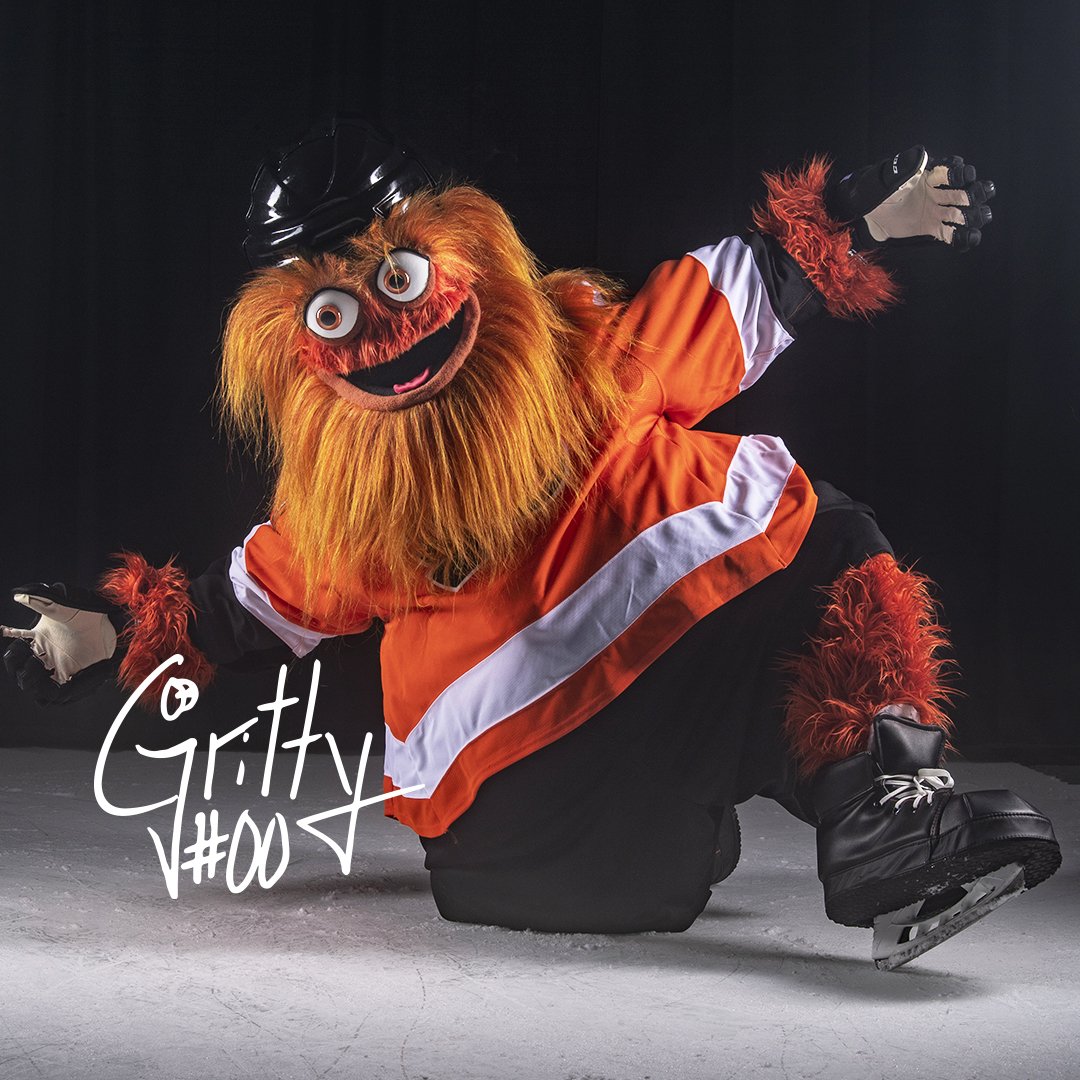
Like any once-and-hopefully-future resident of the great city of Philadelphia, I’m entranced by Gritty, the new mascot for the Philadelphia Flyers. Now, full disclosure: the Flyers were not one of the teams I initially adopted when I moved to Philadelphia, because my hometown Detroit Red Wings were still great in 2002, and so I was all set, hockey-wise. I picked up the New York Rangers when I moved to New York in 2012, when Henrik Lundqvist was winning Vezinas and stunting on fools. But Gritty is sufficiently compelling that I might have to add the Flyers to the Eagles, Phillies, and Sixers, becoming a full Philadelphia sports fan.
Why is Gritty captivating the world? Is it because or despite of his muppet-like googly eyes and shaggy appearance? I mean, when you really dig into it, it’s not like there’s a whole lot there. But a sufficiently advanced cipher can become a multilayered text to the devout, and that’s what’s happened with Gritty. Fans turned what was briefly an object of ridicule into an icon of devotion. And a legend was born.
For a deeper look into the Gritty phenomenon, seek no further than The Ringer, the website that was designed from its origins in the late, beloved Grantland to get to the bottom of sports questions like this. Michael Baumann’s “The Monster In The Mirror” is insightful, and nearly exhaustive, in answering why people inside and outside of Philadelphia have taken to Gritty so strongly. It also doubles as a psychological profile of one of my favorite cities and their sports fans.
Some excerpts:
In the past two and a half months, Gritty has proven to be an overwhelming success as a mascot. More than that, he’s become a legitimate cultural phenomenon, a weird and scary avatar for a weird and scary time. He is all things to all people.
“Gritty is fairly appalling, pretty insurrectionary for a mascot, and I don’t think there’s any question that that’s our kind of symbol,” says Helen Gym, an at-large member of the Philadelphia City Council. “There’s nothing more Philly than being unapologetically yourself.”
And:
The Flyers, Raymond says, had long resisted the idea of creating a mascot, at the insistence of founding owner Ed Snider, whom Raymond calls “old-school.” The Flyers unveiled a furry mascot called Slapshot in 1976 but quickly shelved it, leaving the team without a mascot for more than 40 years. But after Snider’s death in 2016, the team’s marketing department pushed ownership to reconsider, Raymond says, and after overcoming so much institutional inertia, they weren’t going to be half-hearted about their new mascot.
One part of doing a mascot right, Raymond says, is sticking to the bit no matter what, rather than submitting the mascot to the public for approval, a lesson learned from the Sixers’ failed mascot vote in 2011. Philadelphians, and people on the internet in general, can sense uncertainty and will punish it.
On Gritty’s Hensonian roots:
Mascots are always at least a little silly and ridiculous because at their core, they’re created more for children than adults. Gritty is no exception. His hands squeak, and his belly button—which Raymond calls a “woobie”—is a brightly colored outie. The woobie, says Raymond, was the brainchild of Chris Pegg, who plays Rockey the Redbird for the Triple-A Memphis Redbirds and is a mutual friend of Raymond and Flyers senior director of game presentation Anthony Gioia.
When the Flyers unveiled such a weird, menacing mascot, it brought to mind something Frank Oz said about his longtime collaborator and Muppets creator Jim Henson: “He thought it was fine to scare children. He didn’t think it was healthy for children to always feel safe.” According to Raymond, in any sufficiently large group of children, a mascot, even a familiar one, will make at least one of them cry. Not Gritty.
“I’d never seen a mascot rollout anywhere where I didn’t see at least one kid running, crying in terror, trying to grab on to their mother’s legs,” Raymond says of the Please Touch Museum rollout. “I didn’t see any of that [with Gritty]. The kids were dancing and hollering and calling for him to come over, but no kid looked terrified.”
And on Gritty’s additional incarnation as the subject and vehicle for leftist political memes:
Some Gritty memes, however, are not just funny or scary, but overtly political. Gym’s resolution addressed this issue head-on; “non-binary leftist icon” was one of the descriptions quoted in the resolution. The resolution itself goes on to praise Gritty for his status as a political symbol: “Gritty has been widely declared antifa, and was subject to attempted reclamation in the editorial pages of The Wall Street Journal. It has been argued that he ‘conveys the absurdity and struggle of modern life under capitalism’ and that he represents a source of joyful comic respite in a time of societal upheaval.”…
“The great thing about memes—as ridiculous as this sounds—is they create an instant mass internet mobilization,” FWG says. “Memes can be used to perpetuate systematic oppression, or they can be used to burn down the prison-industrial system or talk about police brutality.”
This identity is independent from — this is to say, it has been thoroughly stolen from — Gritty’s original role as a corporate sports mascot.
There’s a danger to wrapping up one’s identity in anything one can’t control, whether it’s an artist, a sports team, or a fuzzy orange monster. And if Gritty played it safe, he’d stop being worth investing in; the reason Gritty is so popular is because he’s weird and unpredictable in a way that isn’t cultivated to be “edgy.” Fear of being let down might just be the price of trying to live with empathy in a society that frequently elevates the cruel. It’s worth thinking about something FWG said: that their Gritty is not the same thing as the Flyers mascot.
“I think that the spirit of Gritty will be fulfilled through the proletariat,” FWG says. “As the spirit of Gritty moves people, that’s how the people will act.”
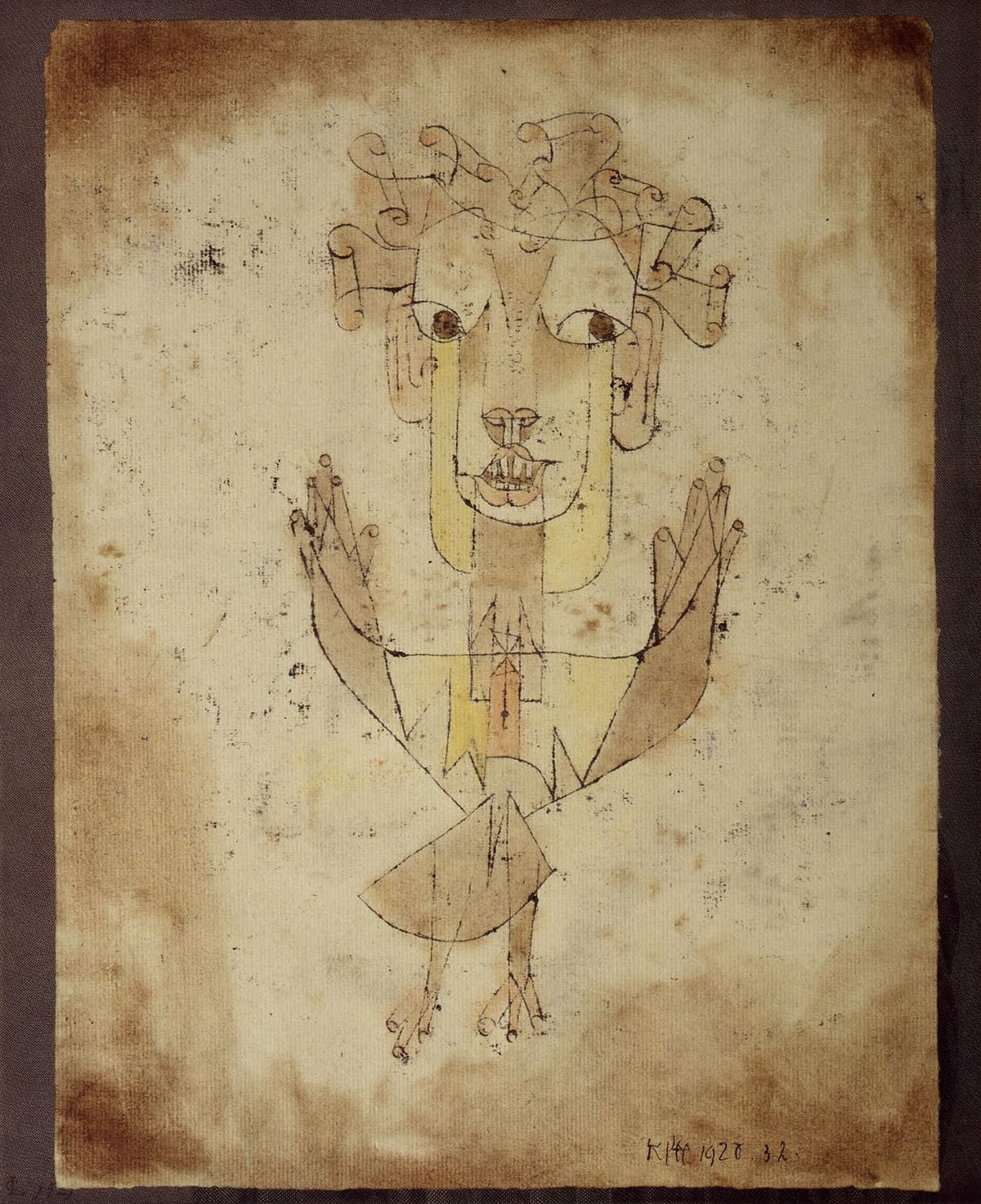
This is serious business! But as Walter Benjamin wrote, in a time of crisis, the here-and-now becomes shot through with messianic time. Gritty recalls the Phillie Phanatic, Sesame Street’s muppets, and Blastaar from the Fantastic Four, but puts all of their energy to use in a sense of futurity, that hope for the future that sports fandom echoes, however dimly. To quote Benjamin again:
It is well-known that the Jews were forbidden to look into the future. The Torah and the prayers instructed them, by contrast, in remembrance. This disenchanted those who fell prey to the future, who sought advice from the soothsayers. For that reason the future did not, however, turn into a homogenous and empty time for the Jews. For in it every second was the narrow gate, through which the Messiah could enter.
It’s ridiculous to see Gritty, the googly-eyed, outie-bellybuttoned Philadelphia Flyers mascot, as a messianic figure of the revolutionary left. But is that any more ridiculous than everything else that is happening in our fucked-up present? No. No, it is not.
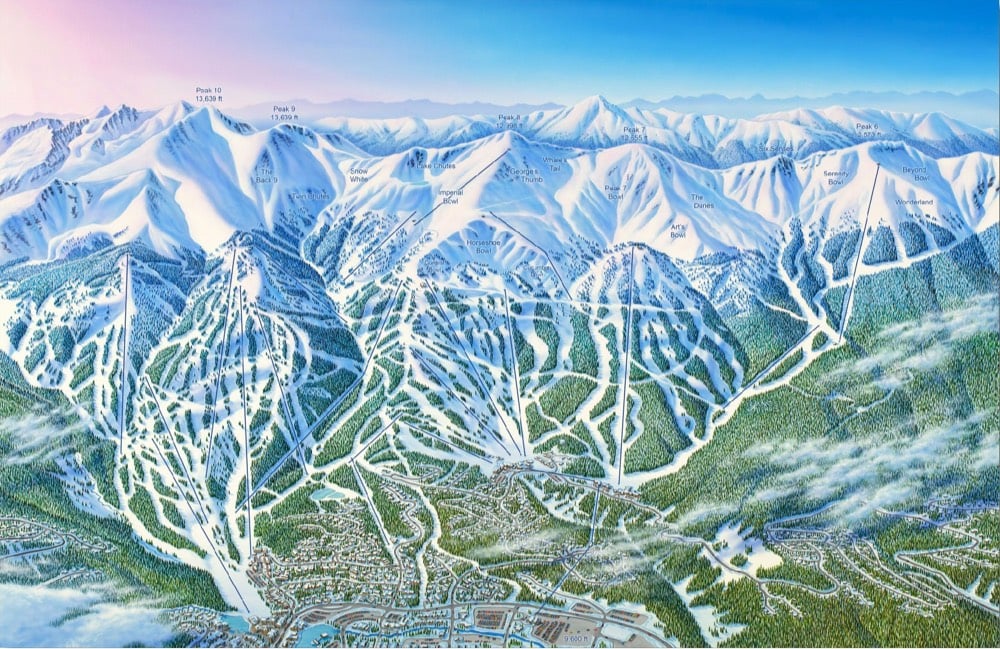
I’ve you’ve ever skied or snowboarded in the US, Canada, or many other spots around the world, chances are you’ve used a ski map painted by James Niehues. He’s hand-painted almost 200 trail maps for places like Alta, Vail, Big Sky, Okemo, and Mammoth.
Ski Magazine regularly ranks the Top 50 resorts in North America. Jim has hand painted 45 of them. His tools of choice are a camera, a notepad, a paintbrush and a canvas. Every painstaking detail — peaks, cliffs, trees and shadows — is painted by hand. Jim’s large and beautiful paintings have helped generations of skiers navigate and capture the unique character of each mountain. He has had more impact on the image and feel of skiing than almost anyone, yet few people know his name.
With the help of a small team, Niehues is publishing a hardcover coffee table book featuring all of his work along with a series of prints. Here are a couple of the maps that will be in the book:

For a cultural program to accompany the 2012 Olympics in London, artist Sue Austin created a video of herself exploring a coral reef in a wheelchair outfitted with motors and wings to help it steer and go through the water.
It’s a tiny bit surreal to see how freely she moves around in something that many of us associate with an absence of a particular type of movement. But as Austin explains in her 2013 TED Talk, she thinks of her wheelchair in terms of freedom of movement, which is highlighted for others by the underwater video. (via colossal)
Darius Miles was drafted 3rd overall by the LA Clippers in the 2000 NBA Draft. After 8 seasons, a major injury, and $62 million, Miles was out of the league and bankrupt. In this entertaining and affecting article for The Players’ Tribune, Miles explains how he got to the NBA and what went wrong.
It’s crazy to think about, but six years after we were at the peak with the Young Clippers, I was basically out of the league. I was 27 years old, and I had doctors telling me that my knee was too messed up to play basketball ever again.
My whole life, I used basketball as an escape. When you grow up how I grew up, I think you’re probably bound to have some kind of PTSD. I ain’t a doctor, but when you grow up running from gunshots all the time, I think there’s something inside you that never leaves. I used to feel this pressure on me — I’m talking like a physical pressure, you know? But I used to be able to go out onto a basketball court and just unleash it. You could let it all out. You could dunk the shit outta that motherfucker in front of 100 people or 20,000 people and feel good for a minute.
Basketball got taken away from me at 27, and I was lost. I was just kind of going through the motions. Then a couple years later, my momma got taken away from me, and I pretty much went insane.
Miles’ friend and former teammate Quentin Richardson edited the piece and wrote one of his own for the Tribune as well.
In his four seasons as manager for FC Barcelona, Pep Guardiola led the club to 14 trophies, including winning the Champions League twice and La Liga 3 times. Sure, he had players like Messi, Eto’o, Xavi, Iniesta, Puyol, Alves, Henry, and Ibrahimović, but as the trailer says, he also knew exactly what to do with them. Take the Ball, Pass the Ball is an upcoming documentary about the Guardiola years at Barca. I’m excited for this…Pep’s first year was right around when I started watching the team in earnest.






Socials & More