kottke.org posts about space
According to NASA, the Perseverance rover has driven just over 28 miles on the surface of Mars, making it the vehicle that has driven the farthest distance outside of Earth.
On Oct. 11, the rover’s odometer reached 28.10 miles (45.22 kilometers), eclipsing the record of 28.06 miles (45.16 kilometers) set by NASA’s Opportunity rover, which explored Mars from 2004 to 2018. Perseverance reached the mark on the 2,006th Martian day, or sol, of its mission, covering in five and a half years a distance that took Opportunity almost 15.
For a vehicle whose top speed is 0.1 mph and which stops all the time to do science, 28 miles is quite a distance. The route video is fun to watch…it resembles a dog’s path, sniffing out its favorite spots and doubling back along familiar routes.
BTW, the Guinness World Record for the number of miles driven by one vehicle on Earth is 3,039,122 miles. (And the guy kept driving it after the record was recorded…he reached 3,260,257 miles before he died.)
Ambient Earth is a 7.5-hour, real-time, 4K, remastered video of the orbital view from the International Space Station. Seán Doran took almost 49,000 images from 27 time-lapse sequences captured from the ISS by astronaut Butch Wilmore, repaired, remastered, and interpolated them into this incredible video.
Perspective is lost when the world speeds by. The scale and beauty of our home planet is truly appreciated when observed on an epic 7.5 hour journey from The International Space Station. This ambitious 4k compilation, crafted through months of meticulous restoration, invites you to slow down and experience Earth in real time just as astronauts do.
The video is accompanied by ambient audio recorded on the station by Chris Hadfield. This would be great for a screensaver, but after poking around for a bit, it doesn’t seem like there’s a good way to set a YT video as a screensaver on MacOS (without downloading it or having it be a livestream).
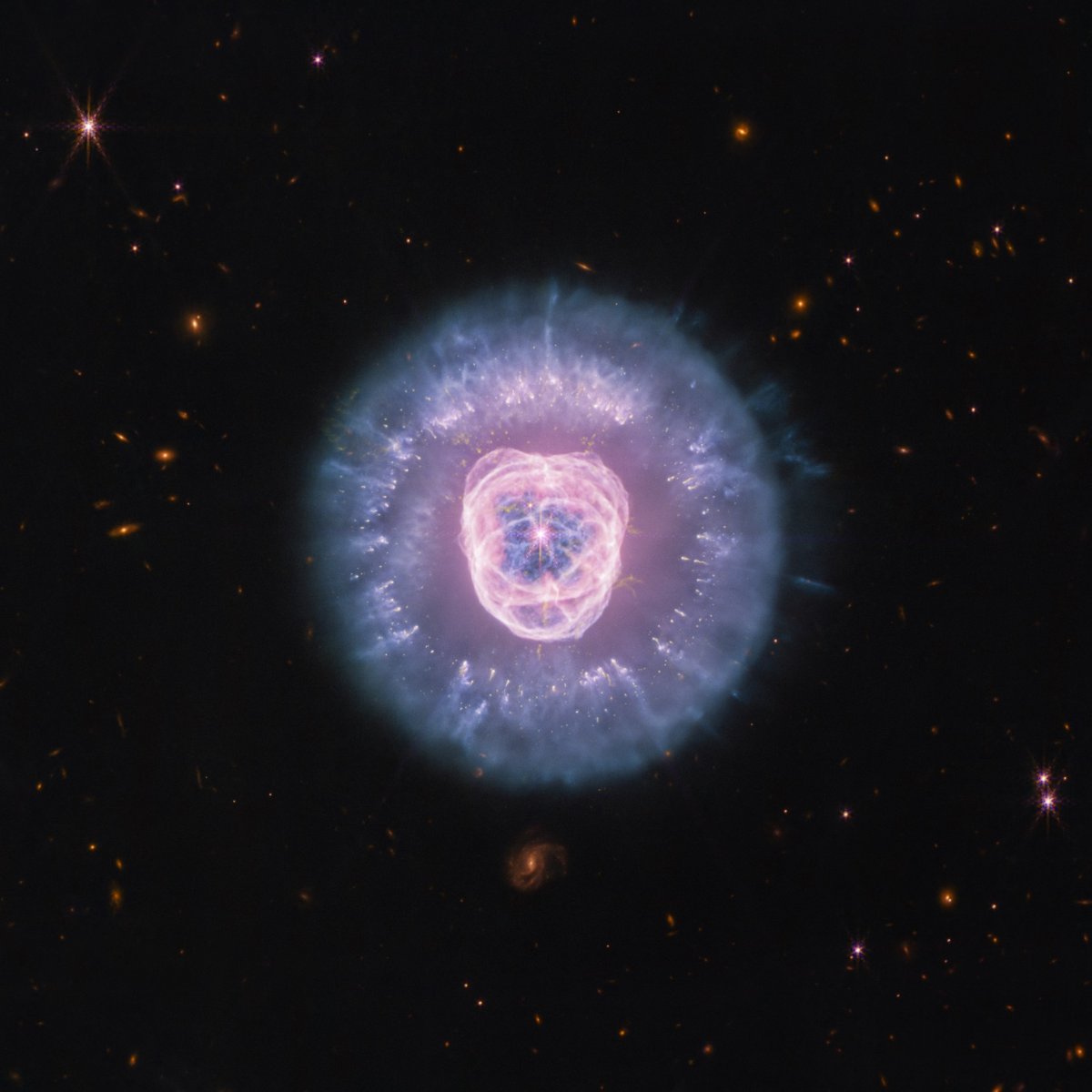
NASA’s JWST recently snapped this image of the Lion Nebula (NGC 2392).
Massive stars undergo supernova explosions at the end of their lives, but these kinds of events are few and far in between. Most of the universe’s stars have lower masses, like the one belonging to NGC 2392. When a lower-mass star can no longer sustain itself with nuclear reactions in its core, the star becomes unstable and pulsates, losing its mass by shedding its outer layers, which then turn into shells of gas and dust called a planetary nebula. (Stars at this life stage are responsible for producing much of the universe’s observable dust.) The star’s radiation drives the ejected material away, leaving behind the very hot stellar core, also known as a white dwarf.
In the Lion Nebula’s case, the death of the oxygen-rich central star has left behind a white dwarf that is “cooking” everything from the inside and producing a bubble of ionized gas as it does. The gas bubble, which forms the lion’s face, is expanding over time and destroying dust that is in its path. Understanding why the swept-up gas has a complex structure of rings and shells, a common feature in planetary nebulae, is an ongoing endeavor.
The mane of the lion is the interior of a dust shell that is being illuminated by the white dwarf at the center. The tufts of hair, which look like cometary tails of material, are compact clumps of dust that have survived the stellar core’s radiation and protect the material that lies behind them.
Webb’s imagery “freezes” this planetary nebula in time, though the star’s death, and its tumultuous effects, go on. NGC 2392 will continue to undergo changes as its gas and dust migrate away from the stellar core. Astronomers estimate the lion will eventually disperse in approximately 10,000 years — a relatively short period in astronomical terms.
The Hubble imaged the nebula in 2000 in visible light, but the JWST’s infrared cameras are higher resolution and better at capturing the gas and dust details.
Discovered by William Herschel in 1787 and “visible with a small telescope”, the nebula was called the Eskimo Nebula until recently — NASA discontinued using that name in 2020 because “certain cosmic nicknames are not only insensitive, but can be actively harmful”. (via robin sloan)
Using high-definition open source videos and photos from NASA and his own music, John Boswell (aka Melodysheep) created this mesmerizing eight-minute video recap of the Artemis II mission that enchanted us all back in the spring. Like all of his videos I’ve featured on KDO, this one is really well done.
See also Animated Artemis II Photos Reveal Satellites Buzzing Around Earth and Stunning Artemis II Phone Wallpapers. (via colossal)
From the filmmakers who made the excellent Once Upon a Time in Northern Ireland comes a four-part series on space exploration, Once Upon a Time in Space. A short trailer is above; here’s a synopsis:
Drawing on intimate, unseen archive and powerful first-hand testimony, this landmark 4-part series tells the human stories behind our quest to explore space, offering a unique perspective on our changing world and where we are headed.
The series first aired on the BBC and the first two episodes are now available on PBS. (thx, mitch)
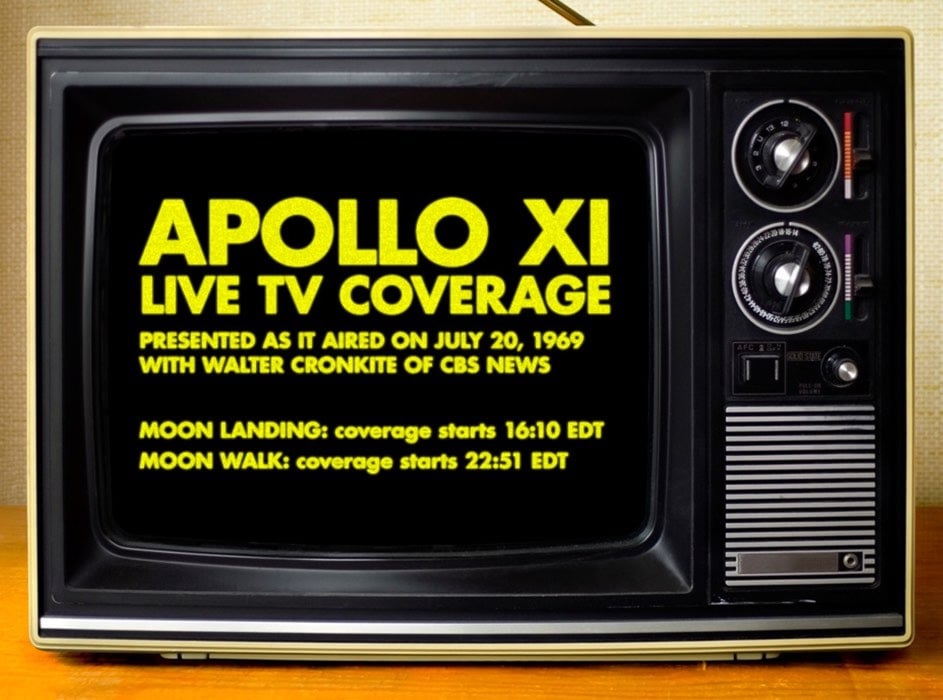
57 years ago today, on July 20, 1969, Neil Armstrong & Buzz Aldrin landed on the Moon and went for a little walk. For the 18th year in a row, you can watch the original CBS News coverage of Walter Cronkite reporting on the Moon landing and the first Moon walk on a small B&W television, synced to the present-day time. Just open this page in your browser today, July 20th, and the coverage will start playing at the proper time. Here’s the schedule (all times EDT):
4:10:30 pm: Moon landing broadcast starts
4:17:40 pm: Lunar module lands on the Moon
4:20:15 pm - 10:51:26 pm: Break in coverage
10:51:27 pm: Moon walk broadcast starts
10:56:15 pm: First step on Moon
11:51:30 pm: Nixon speaks to the Eagle crew
12:00:30 am: Broadcast end (on July 21)
Set an alarm on your phone or calendar! Also, this works best on an actual computer but I think it functions ok on phones and tablets if necessary.
Back in 2018, I wrote a bit about what to look out for when you’re watching the landing:
The radio voices you hear are mostly Mission Control in Houston (specifically Apollo astronaut Charlie Duke, who acted as the spacecraft communicator for this mission) and Buzz Aldrin, whose job during the landing was to keep an eye on the LM’s altitude and speed — you can hear him calling it out, “3 1/2 down, 220 feet, 13 forward.” Armstrong doesn’t say a whole lot…he’s busy flying and furiously searching for a suitable landing site. But it’s Armstrong that says after they land, “Houston, Tranquility Base here. The Eagle has landed.”. Note the change in call sign from “Eagle” to “Tranquility Base”. :)
Two things to listen for on the broadcast: the 1201/1202 program alarms I mentioned above and two quick callouts by Charlie Duke about the remaining fuel towards the end: “60 seconds” and “30 seconds”. Armstrong is taking all this information in through his earpiece — the 1202s, the altitude and speed from Aldrin, and the remaining fuel — and using it to figure out where to land.
Rockwood, Texas is home to a unique business, Starfront Observatories. Owner/operator Bray Falls hosts hundreds of other people’s telescopes in perfect conditions — ultra-dark skies (Class 1 on the Bortle scale), clear weather, and fast internet — so astrophotographers from around the world can run their scopes and make observations completely from their computers.
Out in the middle of nowhere Texas, a young astrophotographer is running one of the largest telescope ranches on Earth. Stargazers from around the world ship their gear to Bray Falls, who tends 550 telescopes (and counting) on 40 acres outside Brady, the geographic heart of Texas. Customers control the scopes from a laptop anywhere on the planet for as little as 99 dollars a month. We dropped by Starfront Observatories on a perfect dark sky night to see how the operation actually works.
I first learned about telescope ranching late last year from astrophotographer Ian Lauer; he’s got a good video about Starfront Observatories as well:
The imagery produced by the telescopes on this ranch is impressive. Here’s one of Falls’ own images, a nebula he discovered called The Crown of Thorns Nebula.
I’ll start this off by saying this nebula should not be here! Supernova remnants are the remains of stars which detonated long ago. Nearly all supernova remnants in the sky exist within 10° of the Milky Way band, where the greatest density of stars can be seen.
This remnant lives 42° off the beaten path in VIRGO! It is a remnant that stands alone surrounded by nothing. It is the only supernova remnant in the constellation Virgo.
It is so far from where it should be, that my scientist friend Dr. Robert Fesen has doubts that it could be what we think it is, and so a professional observatory has collected data on the object and is now studying it.
Ok, this is incredible: this person on Reddit discovered that if you take a bunch of the sequential photos of the Earth captured by the Artemis II crew and animate them, you can see that some of what appear to be stars are actually satellites, buzzing around the Earth like flies. You can see them really clearly in Seán Doran’s remastered animation. Totally totally gobsmacking. Literally awesome.
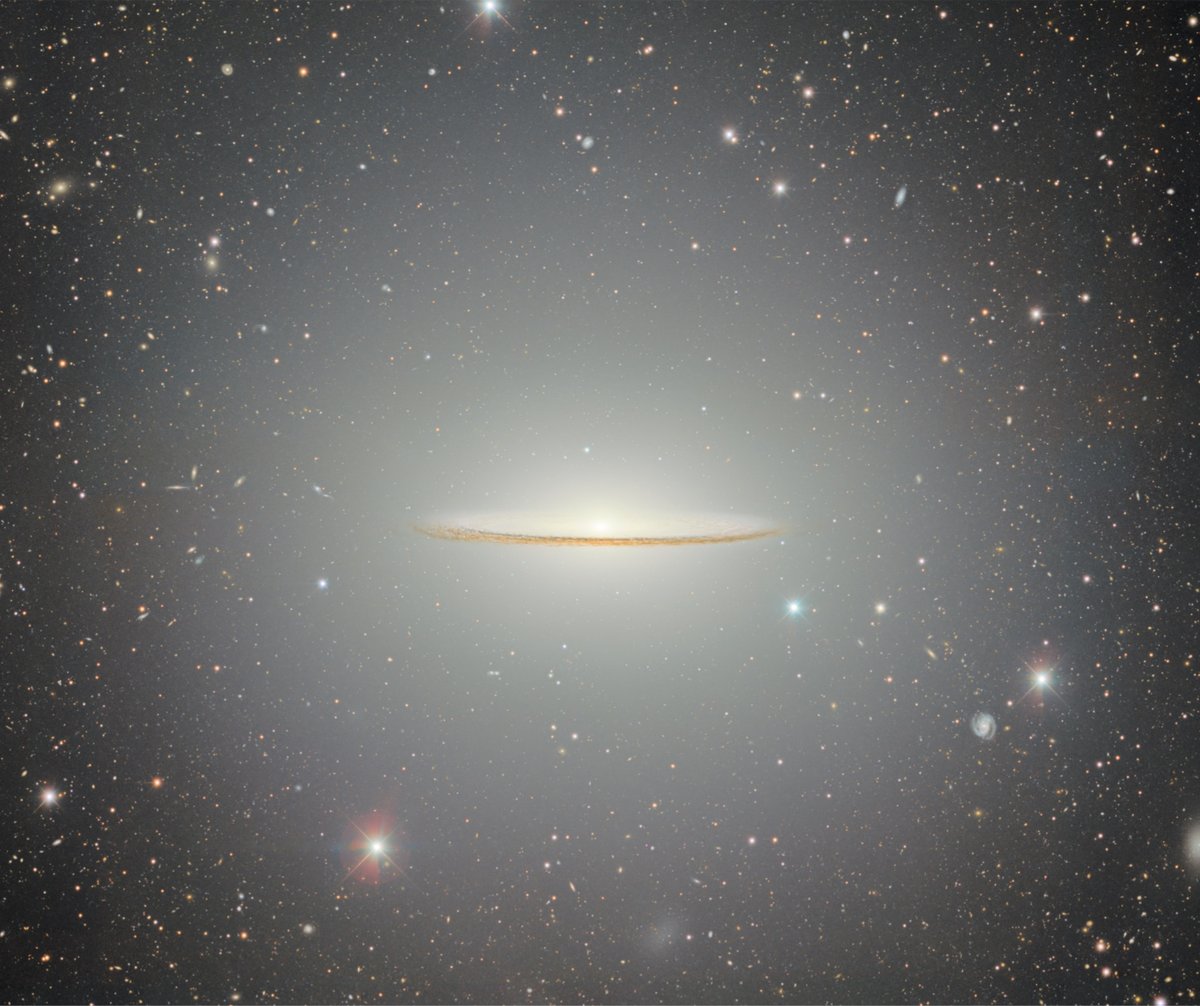
An amazing capture of galaxy Messier 104, aka the Sombrero Galaxy, by the 570-megapixel Dark Energy Camera mounted on a Chilean observatory.
The Sombrero galaxy (Messier 104) is a galactic masterpiece that captivates scientists and astronomy enthusiasts alike. Its intricate system of globular star clusters lends insight into stellar populations, and astronomers are intrigued by the supermassive black hole at its center. Its distinctive visual features and relative brightness make it a favorite among amateur astronomers. The fascinating story of its discovery, involving three esteemed astronomers, has earned it a spot on one of the most important lists of deep sky objects. Today, it stands as one of the most iconic galaxies in the night sky.
If you want the full image, you can download the 725 MB file from the project’s site. (via petapixel)
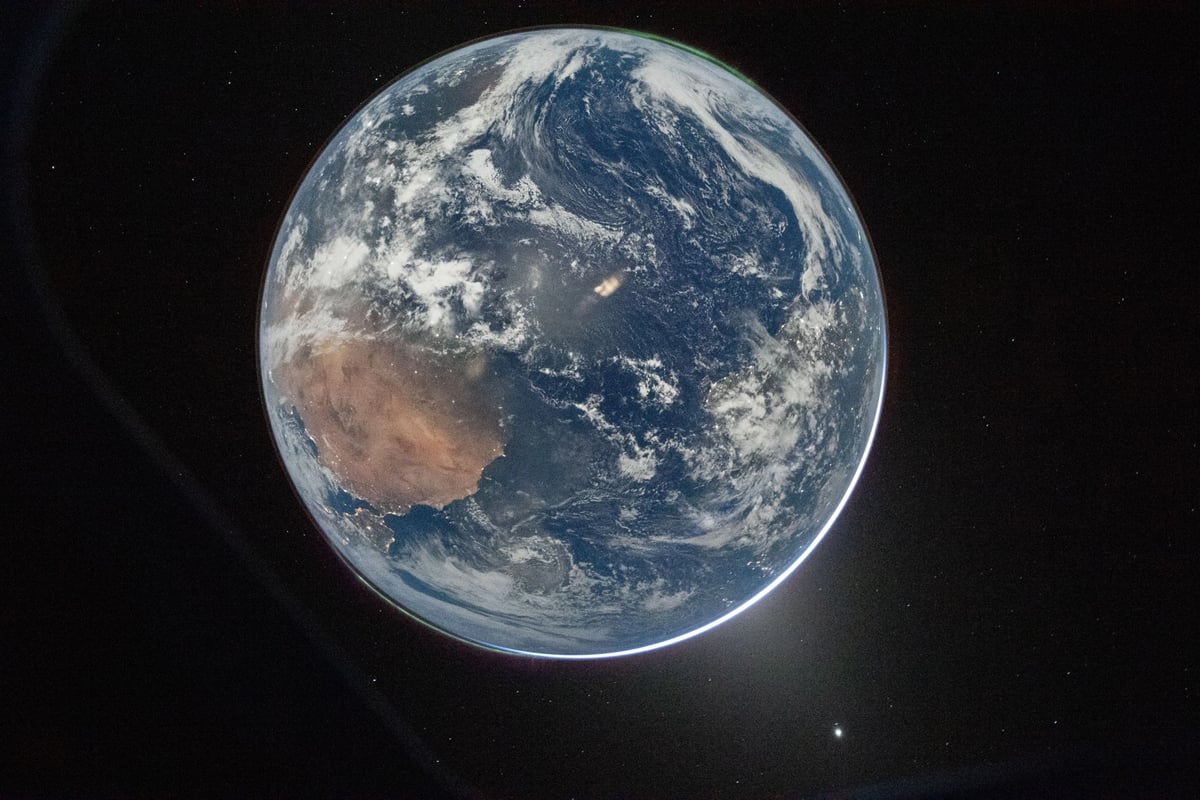
The commander of NASA’s Artemis II mission to the Moon, Reid Wiseman, took this photo of the Earth as the spacecraft speeds away our planet.
There are two auroras (top right and bottom left) and zodiacal light (bottom right) is visible as the Earth eclipses the Sun.
That is so cool. Worth clicking through to see the high-resolution image.
During her time aboard the International Space Station, NASA astronaut Loral O’Hara took a series of photos of the Earth from directly overhead. Seán Doran has stitched those images together into a gorgeous 4K video of a journey across North America, from San Diego to cloud-covered Quebec.
The footage is a simulation, converting an image sequence into video footage using image processing and animation. In reality this journey from California to Quebec took 11 minutes to traverse. In order to better appreciate the view this film slows that speed by a factor of 4.
Along the way, we’re treated to views of Joshua Tree National Park, the Grand Canyon, and the Rocky Mountains. Even the clouds are mesmerizing.
Using thousands of photos taken by NASA astronauts Butch Wilmor and Don Pettit earlier this year from the International Space Station, Seán Doran made this incredible timelapse called Light Fantastic.
21,837 images across 18 time-lapse sequences photographed by NASA astronauts Don Pettit and Butch Wilmore on January 1st, 4th, 5th and February 1st of 2025 are repaired, remastered and retimed to create 3x real time video footage. A method called frame interpolation is used to calculate the extra video frames required to re-create the smooth motion of ISS orbiting Earth. A real-time version of the film would be 4 hours 9 minutes and 30 seconds long.
The video captures incredible auroras, moonsets, nighttime city views, sunrises, and even more auroras, all set to the music of Chris Zabriskie.
This video by Ian Lauer is an excellent accessible explanation of the basics of astrophotography as he runs through the process of how he captures a long-exposure image of the Andromeda galaxy.
This picture is still black and white — and no, the galaxy is not devoid of color. There’s actually color in there, and we’ll get to color in a second. But first, let’s look at what happens when I zoom in on this image.
You can see there’s some graininess in this image, which we call noise. And we hate it because it prevents you from seeing more detail in your image. To combat the noise, we can take multiple images of that same target — so, one after the other — and stack them together using software to average out all of that background noise.
Take a look at what happens when we do that. This image isn’t just a single 1-minute image but 10 1-minute images stacked on top of each other. Look how how much better, how much cleaner, it looks when compared to the single 1-minute image.
There are a bunch more videos on Lauer’s channel to check out, including Shooting the Milky Way from Every Light Pollution Level and The BEST Telescope for Beginners (he recommends the Seestar S50 Astronomical All-in-one Smart Telescope, which many other people recommended on social media instead of anything on this list). Oh, and I’m gonna watch this one about astrophotography with the iPhone 17 Pro right now. (via the kid should see this)
Operation Space Station is a two-part PBS documentary series on the International Space Station. Here’s a very short teaser trailer:
A synopsis:
The size of a football field, the International Space Station hurtles around Earth at 17,000 mph, shielding its astronauts from the most hostile environment humans have ever endured. After 25 years of continuous human presence in space, astronauts and Mission Control insiders reveal the most terrifying moments aboard this remarkable orbiting laboratory, where a single mistake could prove fatal. From ammonia leaks, meteor strikes, and docking disasters, to spacewalk horrors, potentially lethal showers of space junk, and the moment the entire ISS backflipped out of control, follow life-or-death dramas unfolding 250 miles above our planet — and the human ingenuity and teamwork that save the day.
(via installer)


Good luck losing less than an hour to this: a huge archive of logos for government, non-profit, private, military, and even fictional space agencies and companies. There is also a book, but it looks like it was only available on Kickstarter — hopefully it’ll be republished? (via sidebar)
Older posts



Socials & More