kottke.org posts about games
So, this is a time travel movie with Keanu Reeves (narrator) and Alex Winter (director), but it’s not Bill & Ted’s Excellent Adventure, Part 3? No, of course not. It’s actually a video about quantum chess featuring Paul Rudd, Stephen Hawking, and music from The Matrix. Like, WHAT?! If The Chickening hadn’t dropped earlier, this would be the oddest thing you’ll watch this week. (And it’s not quite clear, but the video appears to be an advertisement for a quantum chess game that’s launching on Kickstarter next week. Nothing about this makes any sense…) (via @gavinpurcell)
I love this piece from NPR about how poker player Annie Duke uses her male opponents’ stereotypical views of women against them.
I figured it was part of the game that if somebody was at the table who was so emotionally invested in the fact that I was a woman, that they could treat me that way, that probably, that person wasn’t going to make good decisions at the table against me. So I really tried to sort of separate that out and think about it from a strategic place of, how can I come up with the best strategy to take their money because I guess, in the end, isn’t that the best revenge?
She noticed there were three types of chauvinist players and approached each with a different strategy.
VEDANTAM: She says she divided the men who had stereotypes about her into three categories.
DUKE: One was the flirting chauvinists, and that person was really viewing me in a way that was sexual.
VEDANTAM: With the guys who were like that, Annie could make nice.
DUKE: I never did go out on a date with any of them, but you know, it was kind of flirtatious at the table. And I could use that to my advantage.
VEDANTAM: And then there was the disrespecting chauvinist. Annie says these players thought women weren’t creative.
DUKE: There are strategies that you can use against them. Mainly, you can bluff those people a lot.
VEDANTAM: And then there’s a third kind of guy, perhaps the most reckless.
DUKE: The angry chauvinist.
VEDANTAM: This is a guy who would do anything to avoid being beaten by a woman. Annie says you can’t bluff an angry chauvinist. You just have to wait.
DUKE: What I say is, until they would impale themselves on your chips.
I got this link from Andy Baio, who also linked to the video of the specific match referenced in the NPR piece and noted “Phil Hellmuth attributes all of Annie’s wins to luck, all of his own to skill”.
These folks created a real-life first person shooter game and invited strangers on Chatroulette to control the action.
Here’s a behind-the-scenes look at how they did it. (thx, oren)
Tim Wu writes for the New Yorker about how Netflix uses a ~70/30 combination of data and human judgment to determine their recommendations and what shows/movies to make.
Over the years, however, I’ve started to wonder whether Netflix’s big decisions are truly as data driven as they are purported to be. The company does have more audience data than nearly anyone else (with the possible exception of YouTube), so it has a reason to emphasize its comparative advantage. But, when I was reporting a story, a couple of years ago, about Netflix’s embrace of fandom over mass culture, I began to sense that their biggest bets always seemed ultimately driven by faith in a particular cult creator, like David Fincher (“House of Cards”), Jenji Leslie Kohan (“Orange is the New Black”), Ricky Gervais (“Derek”), John Fusco (“Marco Polo”), or Mitchell Hurwitz (“Arrested Development”). And, while Netflix does not release its viewership numbers, some of the company’s programming, like “Marco Polo,” hasn’t seemed to generate the same audience excitement as, say, “House of Cards.” In short, I do think that there is a sophisticated algorithm at work here — but I think his name is Ted Sarandos.
I presented Sarandos with this theory at a Sundance panel called “How I Learned to Stop Worrying and Trust the Algorithm,” moderated by Jason Hirschhorn, formerly of MySpace. Sarandos, very agreeably, wobbled a bit. “It is important to know which data to ignore,” he conceded, before saying, at the end, “In practice, its probably a seventy-thirty mix.” But which is the seventy and which is the thirty? “Seventy is the data, and thirty is judgment,” he told me later. Then he paused, and said, “But the thirty needs to be on top, if that makes sense.”
This reminds me of the situation in chess, where cyborg human/computer teams can beat computer- or human-only players in chess, although perhaps for not much longer.
Some of you will know that Average is Over contains an extensive discussion of “freestyle chess,” where humans can use any and all tools available — most of all computers and computer programs — to play the best chess game possible. The book also notes that “man plus computer” is a stronger player than “computer alone,” at least provided the human knows what he is doing. You will find a similar claim from Brynjolfsson and McAfee.
Computer chess expert Kenneth W. Regan has compiled extensive data on this question, and you will see that a striking percentage of the best or most accurate chess games of all time have been played by man-machine pairs. Ken’s explanations are a bit dense for those who don’t already know chess, computer chess, Freestyle and its lingo, but yes that is what he finds, click on the links in his link for confirmation. In this list for instance the Freestyle teams do very very well.
I wonder what the human/cyborg split is at Buzzfeed or Facebook? Or at food companies like McDonald’s or Kraft? Or at Goldman Sachs?
Unless you’re a close follower of chess, you’re probably missing out on one of the most impressive feats the game has ever seen. Fabiano Caruana, an Italian born in the US and currently ranked #3 in the world, has won seven straight games in the “strongest ever chess tournament”, the Sinquefield Cup in St. Louis, MO. No losses, no draws, just 7 straight wins.
In terms of comparison, Magnus Carlsen, the world’s current #1 and owner of the highest ranking ever, is 2-1-4 at the same tournament. Which is pretty typical; the best players draw a lot. Over his career, Carlsen has drawn almost 50% of the time and Caruana about 40%.
The modern times of chess have a new king, king Fabiano Caruana. One has to look back to 1968 where in Wijk Aan Zee the legendary Korchnoi started with 8,0/8. The times now are so different and the competition so fierce that already Fabiano’s success can be proclaimed as the most memorable streak in the history of chess.
Along the way, Caruana has beaten Carlsen (#1), Levon Aronian (#2), Maxime Vachier-Lagrave (#9) twice, Hikaru Nakamura (#7), and Veselin Topalov (#6) twice. If you look at the unofficial live chess ratings, you’ll see he has moved into the #2 position in the world, jumping a whopping 34.1 points in rating. He also owns the fourth highest rating in history, behind Carlsen, Kasparov, and Aronian. Caruana plays Carlsen again today, starting from the more advantageous white position. (via @tylercowen)
Update: In his eighth match, Caruana drew against Carlsen but clinched first place overall with two matches remaining.
Update: Seth Stevenson has an article in Slate about what went down at the Sinquefield Cup, saying “one of the most amazing feats in chess history just happened, and no one noticed”.
“Minecraft is a game about creation,” writes Robin Sloan. “But it is just as much a game about secret knowledge.”
There’s no official manual, so the game’s teeming network of devotees, young and old, proper publishers and web-based wildcats, have worked to create them by the score. Not just guides, but wikis, videos, hints, tricks. The rules can only be discovered by observation, reasoning, and experiment. Like science — or magic:
Imagine yourself a child. Imagine yourself given one of these books: not merely a story of exploration and adventure, but a manual to such.
Imagine yourself acquiring the keys to a mutable world in which you can explore caves, fight spiders, build castles, ride pigs, blow up mountains, construct aqueducts to carry water to your summer palace… anything.
Imagine yourself a child, in possession of the secret knowledge.
Maybe the most interesting thing about this, Robin writes, is how the game “calls forth” the books — another kind of magic. Is this a function of how much Minecraft players love the game? Or is that arcane, indirect, networked, bottomless well of knowledge, asking to be impossibly filled, what they love about it?

The moves that expert chess players use to open a game have changed significantly since the 1850s.
It’s a well-known fact that White has a small advantage at the beginning of the game. To maintain this advantage, White should press their advantage to take over the middle of the board as quickly as possible. The most popular first White moves from 1850-2014 are shown below. Note that all of these are fairly aggressive openings that build toward control of the middle of the board.
In 1850, White openings were fairly homogeneous: Most chess experts played King’s Pawn. Chess players didn’t begin to explore variants of the King’s Pawn in earnest until the 1890s, when Queen’s Pawn (moving a Pawn to d4) started to replace King’s Pawn in some player’s repertoires. The 1920s saw another burst of innovation with the rising popularity of the Zukertort Opening (moving the Knight to f3) and the English Opening (moving a Pawn to c4), which completed the set of staple first-turn openings that are really ever used nowadays.
Mike Merrill reimagines the game of Monopoly to better represent the modern financial system by adding the banker as a player, convertible notes, and Series A financing.
Each player starts with only $500. That’s a nice bit of cash, but it’s going to be expensive to build your capitalist empire. Baltic Avenue will cost you $80, States Avenue is $140, Atlantic is $260, and that leaves you just $20. Even if you’re the first to land on Boardwalk you won’t be able to afford the $400 price tag. Another $200 from “passing Go” is not going to last that long. You need more money.
At the start of the game the banker will offer each player a convertible note of $1000 at a 20% discount and 5% interest*. Armed with $1500 the player is now ready to set out on their titan of the universe adventure! (Of course players are not required to take the convertible note.)
That sounds fun? (via waxy)
Ooh, I really like the idea of this smartphone card game on Kickstarter: Game of Phones.
One player picks a card and gets to judge that round. They read the prompt to everyone else. Something like ‘Find the best #selfie’ or ‘Show the last photo you took’. Everyone finds something on their phones and shows the judge, who gets to choose a winner for that round. First to win 10 rounds is the overall winner.
This is pretty much what people do when they get together anyway, why not make it a game?
Shane Parrish’s excerpt and exploration of Paul Tough’s How Children Succeed: Grit, Curiosity, and the Hidden Power of Character made me want to stop everything and read the book all the way through.
“Tell me about your game,” Spiegel said. Sebastian flopped into the chair and handed her his notepad, where he’d recorded all the moves for both players in the game.
Sebastian explained that the other guy was simply better. “He had good skills,” he said. “Good strategies.”
And this is the point where many of us would simply say something along the lines of “did you do your best?,” in which case the likely response is “Yes.” Everyone is at least let off the hook. The teacher for ensuring students try their best, the student for having lost to someone better. Spiegel did not take this approach.
You may remember Tough’s 2011 piece on grit in the NY Times Magazine.
The most critical missing piece, Randolph explained as we sat in his office last fall, is character — those essential traits of mind and habit that were drilled into him at boarding school in England and that also have deep roots in American history. “Whether it’s the pioneer in the Conestoga wagon or someone coming here in the 1920s from southern Italy, there was this idea in America that if you worked hard and you showed real grit, that you could be successful,” he said. “Strangely, we’ve now forgotten that. People who have an easy time of things, who get 800s on their SAT’s, I worry that those people get feedback that everything they’re doing is great. And I think as a result, we are actually setting them up for long-term failure. When that person suddenly has to face up to a difficult moment, then I think they’re screwed, to be honest. I don’t think they’ve grown the capacities to be able to handle that.”
The best chess player in history, 23-year-old Norwegian Magnus Carlsen, has released an iOS app where you can play simulated games against Carlsen at various stages of his career, from age 5 up to the present. The Telegraph has the details.
Anyone who wants to find out more about his playing style can do so with Mr Carlsen’s new app, which allows users to play him at the different levels he has achieved since the age of five.
The app is built on hundreds of thousands of different positions from Mr Carlsen’s games, be they classical, rapid or blitz, to determine what moves he would make at those ages.
The aim is to promote chess among as many people as possible to make the sport more popular and accessible.
“The good thing is that you can play me at any age. At age five, anyone has a chance to beat me,” Mr Carlsen said.
So what is it like for Mr Carlsen to play against his younger self?
“He is really tricky,” the champion said. “Even Magnus at 11 years old was a very gifted tactician. A while ago I played as a test Magnus [aged] 14. I outplayed him at some point positionally. And just boom, boom, he tricked me tactically.
“But he makes mistakes as well, so I just have to be patient.”
(via mr)
No one can solve this. Not Ken Jennings. Not Marilyn vos Savant. Not Alan Turing. Not Ada Lovelace. Not Watson. Not even Richard Feynman. (Ok, maybe Feynman.)
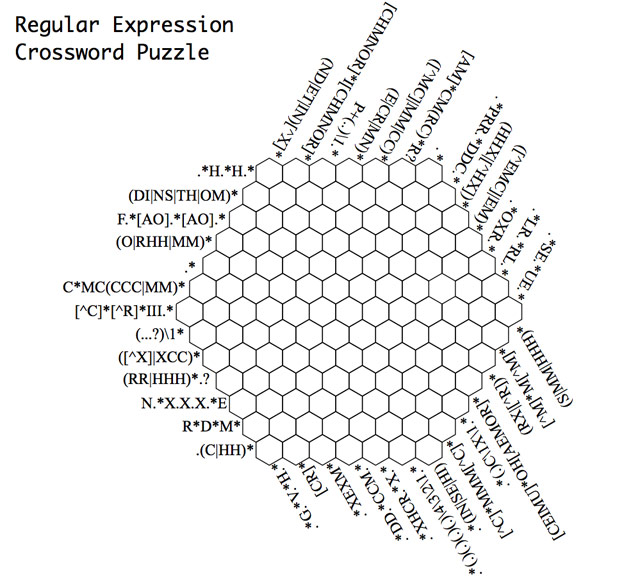
(via @lhl)
Update: Here’s the answer to the puzzle, presumably by some time traveling super-being from the future. (via @grimmelm)

I played chess with my dad growing up, but actually learning how to play (studying openings, notation, etc.) seemed daunting and at cross purposes with what I liked about the game. So I stopped playing sometime in college and never really picked it up again. But I’ve maintained a non-playing interest in the game and have even been playing a little bit recently again, teaching my son how to play. The other day I ran across mate-in-one puzzles (iOS app), which seem more my speed.
Gautam Narula on how you can improve your chess game rapidly.
The tl;dr of this training plan is, play a lot, analyze your games, and primarily study tactics. Your knowledge of openings, endgame, middlegame, etc. will come from analyzing your games and going over grandmaster games. Only study one of those specific topics if it is clear you are specifically losing because of that topic.
It turns out that for many of the games on The Price is Right, a simple application of game theory is all you need to greatly increase your chances of winning. You don’t even need to know any of the prices.
In one instance, when Margie was the last contestant to bid, she guessed the retail price of an oven was $1,150. There had already been one bid for $1,200 and another for $1,050. She therefore could only win if the actual price was between $1,150 and $1,200. Since she was the last to bid, she could have guessed $1051, expanding her range by almost $100 (any price from $1051 to $1199 would have made her a winner), with no downside. What she really should have done, however, is bid $1,201. Game theory says that when you are last to bid, you should bid one dollar more than the highest bidder. You obviously won’t win every time, but in the last 1,500 Contestants’ Rows to have aired, had final bidders committed to this strategy, they would have won 54 percent of the time.
See also how a man named Terry Kniess solved The Price is Right.
Newer posts
Older posts





Socials & More