kottke.org posts about crime
Antonin Scalia once said that no one had ever been executed in the US for a crime they didn’t commit. Well, the Columbia Human Rights Law Review is devoting its entire spring issue to the case of Carlos DeLuna, who was executed by the state of Texas in 1989 for the murder of Wanda Lopez. Their investigation reveals that another Carlos, Carlos Hernandez, actually committed the murder.
Many other glaring discrepancies also stand out in the DeLuna case. He was put on death row largely on the eyewitness testimony of one man, Kevan Baker, who had seen the fight inside the Shamrock and watched the attacker flee the scene.
Yet when Baker was interviewed 20 years later, he said that he hadn’t been that sure about the identification as he had trouble telling one Hispanic person apart from another.
Then there was the crime-scene investigation. Detectives failed to carry out or bungled basic forensic procedures that might have revealed information about the killer. No blood samples were collected and tested for the culprit’s blood type.
Fingerprinting was so badly handled that no useable fingerprints were taken. None of the items found on the floor of the Shamrock - a cigarette stub, chewing gum, a button, comb and beer cans - were forensically examined for saliva or blood.
There was no scraping of the victim’s fingernails for traces of the attacker’s skin. When Liebman and his students studied digitally enhanced copies of crime scene photographs, they were amazed to find the footprint from a man’s shoe imprinted in a pool of Lopez’s blood on the floor - yet no effort was made to measure it.
“There it was,” says Liebman. “The murderer had left his calling card at the scene, but it was never used.”
Even the murder weapon, the knife, was not properly examined, though it was covered in blood and flesh.
Other photographs show Lopez’s blood splattered up to three feet high on the walls of the Shamrock counter. Yet when DeLuna’s clothes and shoes were tested for traces of blood, not a single microscopic drop was found. The prosecution said it must have been washed away by the rain.
Awful. See also Cameron Todd Willingham.
On the Friday after Thanksgiving in 1962, George Wright and another man walked into a gas station in NJ with the intention of robbing its owner, Walter Patterson. After a scuffle, Wright’s associate shot Patterson, wounding him severely enough he would die two days later. Ten years later, after escaping from jail, Wright helped hijack an airplane with 86 passengers, ransomed the passengers for $1 million, flew to Algeria, and disappeared for 40 years. Last year he was arrested in Portugal.
This profile in GQ by Michael Finkel is sympathetic, but fascinating. Wright is described as a positive member of the community, a man rehabilitated, which is supposed to be the purpose of prison. And yet, he’s never paid for his crimes. If pressed, I’d have to say I agree with how it ended up playing out.
During my flight back from Portugal, I try to sort out how I feel about Wright. I’m troubled, of course, by the gas-station crime—even if it wasn’t his gun that fired, he still let an innocent man die. He never called for help. Still, he was a teenager at the time. You can no longer use youthful rashness as an excuse when you’re 29, brandishing a loaded weapon on an airplane and holding more than ninety people hostage. That incident could’ve easily ended in disaster. Wright is fortunate it did not. And I am not entirely sure there aren’t other crimes—crimes for which Wright wasn’t caught. He may still have secrets inside him. We’ll never know.
(via Long Reads)
A collection of vintage mugshots from the 1920s. Crime used to be a lot more civilized.
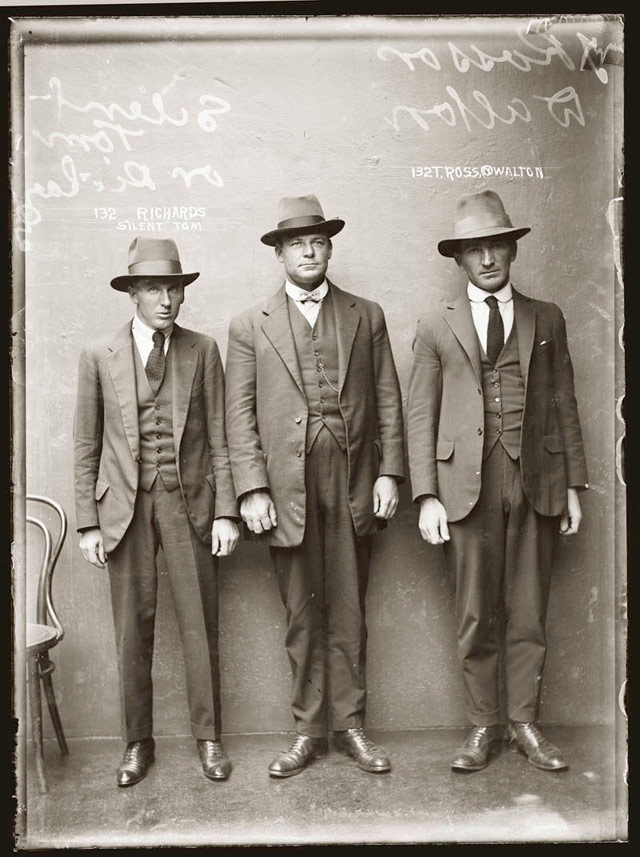
(thx, david)
Remember this New Yorker profile of Lenny Dykstra’s “improbable post-career success story”?
Dykstra ordered a Coke and French fries with ketchup: “And I’m actually going to have that as my meal-might be the oddest order of the day.” (Healthy living was never his specialty.) When the Coke arrived, he sent it back, believing it to be Diet. After the fries were delivered, he made a show of extracting a “You’re welcome” from the waiter, who had since moved on to another table. “I pay a thousand bucks a night — actually, three thousand bucks a night — and people are discourteous,” he said, shaking his head. “There’s some point in life when you have to grow up.”
For many ballplayers, the growing-up point does not arrive until after retirement, when all the freebies vanish and equipment managers and hotel maids can no longer be relied upon for regular laundry service. Dykstra last played in the majors in 1996, at age thirty-three. Improbably, he has since become a successful day trader, and he let me know that he owns both a Maybach (“the best car”) and a Gulfstream (“the best jet”). The occasion for our lunch, however, was a new venture: Dykstra is launching a magazine, intended specifically for pro athletes, called The Players Club. An unfortunate number of his former teammates have ended up broke, or divorced, or worse. The week before we met, the ex-Yankee Jim Leyritz, himself twice divorced and underemployed, had hit a woman while driving home from a bar. He never grew up.
“You’ve got the ten per cent who are going to find their way no matter what,” Dykstra said of the athlete population. “And you get the ten per cent that are fuckheads no matter what— we’ll paste an ‘L’ to ‘em.” The rest need guidance, and Dykstra, who will write a regular column called “The Game of Life,” is prepared to give it. “This will be the world’s best magazine,” he said.
Since then, Dykstra has declared bankruptcy, divorced from his wife, was sentenced to three years in state prison for grand theft auto (and several other charges), and most recently was sentenced to nine months in jail for assault and indecent exposure. He’s also awaiting trial on federal bankruptcy fraud charges.
Casey Neistat tries to steal his own bike in several locations around NYC and finds it’s pretty easy…even if you’re doing so right in front of a police station.
I recently spent a couple of days conducting a bike theft experiment, which I first tried with my brother Van in 2005. I locked my own bike up and then proceeded to steal it, using brazen means — like a giant crowbar — in audacious locations, including directly in front of a police station. I wanted to find out whether onlookers or the cops would intervene. What you see here in my film are the results.
This is a video of the earlier attempt he mentions. (via ★ironicsans)
Con man Victor Lustig shared a list of commandments written for aspiring con men. Among them:
1. Be a patient listener (it is this, not fast talking, that gets a con-man his coups).
8. Never boast. Just let your importance be quietly obvious.
Aaron Cohen calls this “the best story you’ll read about a burglary you’ll read this week” and I think he’s right.
When John Davidson’s apartment gets robbed, he learns that the easiest way to get his stuff back is to have one drug dealer lie to another drug dealer while he lies to the police.
Adrian Chen has an interview with a renegade IT guy named Martin who does social media, hacking, and other tech stuff for “High Net-worth Individuals” and criminals. One of things he does is set up drug rings with prepaid cell phones and a rotating collection of SIM cards a la the Barksdale/Bell drug crew in The Wire.
With Martin’s system, each crewmember gets a cell phone that operates using a prepaid SIM card; they also get a two-week plastic pill organizer filled with 14 SIM cards where the pills should be. Each SIM card, loaded with $50 worth of airtime, is attached to a different phone number and stores all contacts, text messages and call histories associated with that number, like a removable hard drive. This makes a new SIM card effectively a new phone. Every morning, each crewmember swaps out his phone’s card for the card in next day’s compartment in the pill organizers. After all 14 cards are used, they start over at the first one.
Of course, it would be hugely annoying for a crewmember to have to remember the others’ constantly changing numbers. But he doesn’t have to, thanks to the pill organizers. Martin preprograms each day’s SIM card with the phone numbers the other members have that day. As long they all swap out their cards every day, the contacts in the phones stay in sync. (They never call anyone but each other on the phones.) Crewmembers will remind each other to “take their medicine,” Martin said.
That’s clever. The “take their medicine” detail reads like it’s straight out of the movies.
Lakhdar Boumediene was imprisoned in the Guantanamo Bay detention camp for seven years on no charge and with no trial.
On Wednesday, America’s detention camp at Guantanamo Bay will have been open for 10 years. For seven of them, I was held there without explanation or charge. During that time my daughters grew up without me. They were toddlers when I was imprisoned, and were never allowed to visit or speak to me by phone. Most of their letters were returned as “undeliverable,” and the few that I received were so thoroughly and thoughtlessly censored that their messages of love and support were lost.
This is deeply deeply shameful.
An entrepreneur shares the business lessons imparted to him by a organized crime boss.
Interesting things happen when we cut out the middleman. In addition to reducing cost, we often end up creating an internal byproduct that can be productized and sold to a completely new customer. (Amazon Web Services is an example of this.) Sometimes the middleman’s market is so huge, that a freaking enormous business can be built simply by providing their customers a lower cost and more efficient option.
A group of buildings whose tenants continually complained about living conditions changed hands so frequently that city officials could do nothing about it….until a group representing the tenants used social network analysis to reveal the connections between all of the seemingly separate owners.
It was now obvious that properties exchanged hands not as independent and valid real estate investments but as a conspiracy to avoid fixing the building violations. The green links represent borrowed money flowing into the buildings through new mortgages. As time went on, and the buildings appreciated in value during a real estate boom — loans from the mortgage company allowed the owners to “strip mine” the equity from the buildings. This is a common slumlord modus operandi — they suck money out of a building rather than put money back in for maintenance.
Up until very recently, Glasgow’s gang culture made the city one of the most violent in western Europe. Then a program led by Karyn McCluskey turned the city in a better direction.
The unit’s big moment, McCluskey says, was understanding that violence works “like an infectious disease. It’s passed on. You can catch it. You might live and die in a square mile. Your life is not predictable or manageable. You may have alcoholic parents, suffer domestic violence. Nobody cares about you. You’re incapable of empathy: hard-wired for violence.”
They coined a phrase: recreational violence. “There’s also the thrill, the sensation-seeking,” McCluskey says. “You look at their faces on the CCTV, they’re loving it. They’re young guys just not equipped to make good decisions for themselves, caught up in the gang dynamic.”
So, if they see themselves as a group, treat them as a group, reasoned McCluskey. She went to the United States and met a man called David Kennedy, whose model for tackling gang violence had worked in Boston since the late 1990s. In the jargon, it’s known as a “focused deterrence strategy”, harnessing a multitude of different agencies plus resources from within the community. McCluskey set about bringing it to Glasgow.
Since late 2008, the program has cut the rate of violent offending by 46%. John Seabrook wrote about David Kennedy and his program for the New Yorker in 2009. (via @jcn)
Over the past two years, the NYPD has been taking panoramic images of crime scenes in an attempt to better record the evidence.
Each panorama takes between 3 to 30 minutes to produce, depending on the available light, and is added to a database where detectives can access it. Before the switch to the Panoscan, crime scene images sometimes took days to process. Now, soon after the photos are posted, investigators can point and click over evidence from a scene that they might have missed in the hectic hours after the crime.
The short answer is “you can’t” but the longer answer by a former patrol officer is more interesting.
How often do you drive in this manner? Unless you’re running because you’re on parole, this is likely your first dance. Sure, you’ve driven fast before — for a while. Then, for whatever reason, you got uncomfortable and backed off. Maybe your car made a sound you got concerned about, maybe you caught a glint you thought might be a trooper’s windshield, maybe you thought you heard the faintest pulses of a siren. Whatever it was, it weakened your resolve and you slowed down. You have no such luxury here. And while this is fresh for you, this is, to many of the people pursuing you, another day another dollar. They’ve trained for this in training scenarios and have been involved in pursuits in the field. They run code multiple times a week. Even if one of your pursuers was a rookie who got eaten up by the stress, there will be a dozen vets to take his place.
(thx, byrne)
Artist and filmmaker Miranda July used to shoplift as sort of a useful hobby.
But it wasn’t just about the supermarket — the whole world was one giant heist. It goes without saying that I used magnets to reset the Kinko’s copy counters to zero, and carried scissors to cut alarm tags out of clothes. Everyone I knew did these things. I say this not to excuse myself but just so you can visualize a legion of energetic, intelligent young lady criminals. Anytime anyone we knew flew into Portland, we urged her to buy luggage insurance and allow us to steal her bag from the baggage carrousel. The visiting friend then had to perform the role of the frantic claims reporter and was given a cut of the insurance money. Some friends were up for this; others thought it was an inhospitable thing to ask.
From Lapham’s Quarterly, Christopher Hitchens on capital punishment in America.
Since then no country has been allowed to apply for membership or association with the European Union without, as a precondition, dismantling its apparatus of execution. This has led states like Turkey to forego what was once a sort of national staple. The United Nations condemns capital punishment-especially for those who have not yet reached adulthood-and the Vatican has come close to forbidding if not actually anathematizing the business. This leaves the United States of America as the only nation in what one might call the West, that does not just continue with the infliction of the death penalty but has in the recent past expanded its reach. More American states have restored it in theory and carried it out in practice, and the last time the Supreme Court heard argument on the question it was to determine whether capital punishment should be inflicted for a crime other than first-degree murder (the rape of a child being the suggested pretext for extension).
Hitchens, as you may have guessed, pins much of the blame on religion…after all, the US is the most (or only?) fundamentalist country in the West. (via ★interesting-links)
Airbnb is becoming a popular option for travellers looking for cheaper/homier places to stay and owners/renters to make a little dough on the side. But when you’re dealing with people that you don’t know staying in your house, things can sometimes go awry. Or very crazy:
They smashed a hole through a locked closet door, and found the passport, cash, credit card and grandmother’s jewelry I had hidden inside. They took my camera, my iPod, an old laptop, and my external backup drive filled with photos, journals… my entire life. They found my birth certificate and social security card, which I believe they photocopied - using the printer/copier I kindly left out for my guests’ use. They rifled through all my drawers, wore my shoes and clothes, and left my clothing crumpled up in a pile of wet, mildewing towels on the closet floor. They found my coupons for Bed Bath & Beyond and used the discount, along with my Mastercard, to shop online. Despite the heat wave, they used my fireplace and multiple Duraflame logs to reduce mounds of stuff (my stuff??) to ash - including, I believe, the missing set of guest sheets I left carefully folded for their comfort. Yet they were stupid and careless enough to leave the flue closed; dirty gray ash now covered every surface inside.
According to the CEO of Airbnb, they have been working with the police and supposedly a suspect is in custody.
From a NY Times article on how to disappear, a quick tip on how to effectively fake a fingerprint:
Are officials troubling you for fingerprints? “There’s a nongreasy glue, like a mucilage,” he said, that is more or less invisible once applied. “You put it on your thumb. You roll your thumb over your heel. Now, you’ve got a heel print on your thumb for no one who exists.”
Frank Ahearn, one of the people quoted in the article, actually runs a business that helps people disappear…or at least he used to, until he disappeared.
The author of the A Girl and Her Bike blog tells the story of how she and her bike were “nudged” from behind by a car (twice, on purpose) and what happened when the driver discovered that she was a police officer.
The light turned green and I started to proceed. And then I felt *BUMP!!!!!* again, this time a bit harder.
Oh no. No. No. No. I can’t ignore this. I just can’t.
So I stopped. Pulled out my police badge (yes, I’m a cop if you didn’t know before. No I really don’t want to talk about it, thanks) showed it to the driver and motioned him to stay right where he was.
And that’s when he panicked.
(thx, nichol)
Nice summary of the current thinking about why crime is falling in the US even though the unemployment rate is relatively high. One possible culprit is leaded gasoline:
There may also be a medical reason for the decline in crime. For decades, doctors have known that children with lots of lead in their blood are much more likely to be aggressive, violent and delinquent. In 1974, the Environmental Protection Agency required oil companies to stop putting lead in gasoline. At the same time, lead in paint was banned for any new home (though old buildings still have lead paint, which children can absorb).
Tests have shown that the amount of lead in Americans’ blood fell by four-fifths between 1975 and 1991. A 2007 study by the economist Jessica Wolpaw Reyes contended that the reduction in gasoline lead produced more than half of the decline in violent crime during the 1990s in the U.S. and might bring about greater declines in the future. Another economist, Rick Nevin, has made the same argument for other nations.
(via @kbandersen)
The U.S. Marshals Service is auctioning off some of the personal effects of Ted Kaczynski, aka the Unabomber. There’s a photoset up on Flickr of some of the items. This is the sweatshirt and sunglasses Kaczynski wore to one of his bombings…it inspired this famous police sketch.
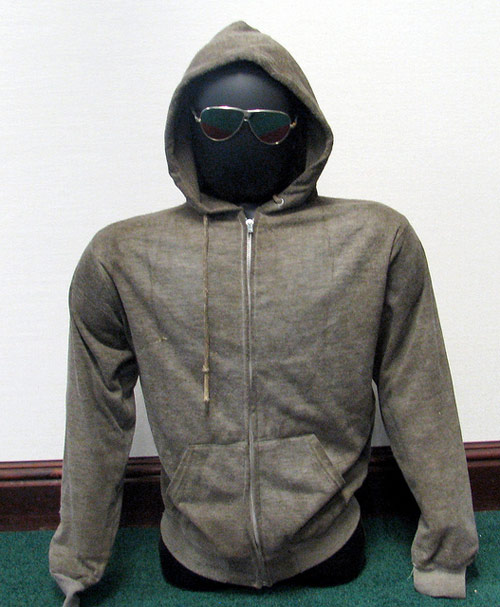
“The U.S. Marshals Service has been given a unique opportunity to help the victims of Theodore Kaczynski’s horrific crimes,” said U.S. Marshal Albert Najera of the Eastern District of California. “We will use the technology that Kaczynski railed against in his various manifestos to sell artifacts of his life. The proceeds will go to his victims and, in a very small way, offset some of the hardships they have suffered.”
The auction starts here on May 18.
Why can’t you get a slice of pizza at John’s on Bleecker or Patsy’s? Allegedly because of Al Capone:
In his 1981 book on the mob called Vicious Circles: The Mafia in the Marketplace, the late Jonathan Kwitny detailed how Al Capone — who owned a string of dairy farms near Fond Du Lac, Wisconsin — forced New York pizzerias to use his rubbery mob cheese, so different from the real mozzarella produced here in New York City since the first immigrants from Naples arrived in Brooklyn around 1900.
As the story goes, the only places permitted to use good mozzarella made locally were the old-fashioned pizza parlors like Lombardi’s, Patsy’s, and John’s, who could continue doing so only if they promised to never serve slices. According to Kwitny, this is why John’s Pizzeria on Bleecker Street still has the warning “No Slices” on its awning today.
(via ★kathryn)
Jeff Smith was a Missouri State Senator who ended up in jail for a year; here’s an account of his experience in the klink.
Before I was shown my new digs, the staff processed me. That meant going repeatedly through the standard battery of questions. The third questioner finished and sent me to a heavyset woman.
“Height and weight?” she asked.
“5’6”, 120.”
She examined my slight frame and frowned. “Education level?”
I winced. “Ph.D.”
She shot me a skeptical look. “Last profession?”
“State Senator.”
She rolled her eyes. “Well, I’ll put it down if you want. If you wanna play games, play games. We got ones who think they’re Jesus Christ, too.”
A fascinating story by David Grann in the New Yorker about a pair of political assassinations in Guatemala that aren’t what they first seemed.
As Rosenberg dug deeper into the subterranean world of Guatemalan politics, he told friends that he had begun receiving threats himself. One day, Mendizábal says, Rosenberg gave him a phone number to write down — it was the number that showed up on his caller I.D. when he received the threats.
Rosenberg told friends that his apartment was under surveillance, and that he was being followed. “Whenever he got into the car, he was looking over his shoulder,” his son Eduardo recalled. From his apartment window, Rosenberg could look across the street and see an office where Gustavo Alejos, President Colom’s private secretary, often worked. Rosenberg told Mendizábal that Alejos had called him and warned him to stop investigating the Musas’ murders, or else the same thing might happen to him. Speaking to Musa’s business manager, Rosenberg said of the powerful people he was investigating, “They are going to kill me.” He had a will drawn up.
Anything by Grann is becoming a must-read at this point. (via someone on Twitter, I forget who (sorry!))
Due to tougher laws and easier opportunities in other areas of crime, pickpockets have all but vanished from the streets and trains of the US.
The decline of dipping on the rails is extraordinary. Subways were always the happiest hunting grounds for pickpockets, who would work alone or in teams. There were classic skilled canons-organized pickpocket gangs-at the top, targeting wealthier riders, then “bag workers” who went for purses, and “lush workers” who disreputably targeted unconscious drunks. Richard Sinnott, who worked as a New York City transit cop in the 1970s and ’80s, also admiringly recalls “fob workers,” a subspecies of pickpocket who worked their way through train cars using just their index and middle fingers to extract coins and pieces of paper money-a quarter here, a buck there-from riders’ pockets. “They weren’t greedy, and they never got caught,” says Sinnott. Bit by bit, fob workers could make up to $400 on a single subway trip; then they’d go to Florida in the winter to work the racetracks. Many of the city’s pickpockets trained elsewhere, “and if they were any good, they came to New York,” Sinnot says, with a touch of pride. “In the subways, we had the best there were.”
I’m generally a fan of Slate’s compulsive contrarianism, but asking if we should miss pickpocketing is just too much.
Felicia Pearson, who played Snoop on The Wire, was arrested today on drug charges.
Felicia “Snoop” Pearson had served a prison sentence for murder and returned to drug dealing on the streets of East Baltimore, before a visit to the set of “The Wire” led to a star turn on the show and offered a new chance to change her life.
But her past kept creeping back - she was a witness to a murder and was arrested after she refused to testify — and subsequent film and television offers were hard to come by.
Now, Pearson, 30, has been accused of playing a part in a large-scale drug organization, whose members were arrested in raids Thursday throughout Baltimore and surrounding counties, as well as in three other states.
(via df)
In 1981, Ray Towler was convicted of rape, kidnapping, and felonious assault of two young children and sentenced to life in prison. Twenty-nine years later, in 2010, DNA evidence proves he didn’t commit the crime and Towler is released from prison.
So many choices. Which car insurance. Which cereal. Which deodorant, toothpaste, toothbrush, soap, shampoo. Rows and rows of products. Varieties, sizes, colors. Which is cheaper? Which is better? What’s the best buy? Which gum to chew? When he went into prison there were, like, two kinds of chewing gum. Now there are a zillion. One of the small gifts he gives himself is trying all the gums. “I can spoil myself a little so long as I stay within my means,” he says. Papaya juice! Kiwi and strawberry nectar! Green tea! Arnold Palmer — he was a golfer when Towler went down. Now he is a drink, sweet and so incredibly thirst quenching.
He loves work. He got out May 5 and started working June 21. Hell, I’ve been vacationing for thirty years. He wears a smock and pushes a mail cart. He stops at all the cubicles, greets everyone with his friendly smile. Ray even loves commuting to work, especially now, in his new car, a black Ford Focus. He’s like a sixteen-year-old who can finally drive himself to school. It costs almost the same to park as it does to take the train.
File this one under “crying at work”.
In 2000, Portugal passed a law decriminalizing the possession of drugs, continued to vigorously pursue drug traffickers and distributors, and improved access to treatment. What happened?
But nearly a decade later, there’s evidence that Portugal’s great drug experiment not only didn’t blow up in its face; it may have actually worked. More addicts are in treatment. Drug use among youths has declined in recent years. Life in Casal Ventoso, Lisbon’s troubled neighborhood, has improved. And new research, published in the British Journal of Criminology, documents just how much things have changed in Portugal. Coauthors Caitlin Elizabeth Hughes and Alex Stevens report a 63 percent increase in the number of Portuguese drug users in treatment and, shortly after the reforms took hold, a 499 percent increase in the amount of drugs seized — indications, the authors argue, that police officers, freed up from focusing on small-time possession, have been able to target big-time traffickers while drug addicts, no longer in danger of going to prison, have been able to get the help they need.
Items on this pimp’s handwritten business plan — aka “Keep It Pimpin’” — include:
- my word is my bond
- take my game to the next level (from the concrete streets to executive suites)
- take care my bitches more better
- minimize my budget (cash cars, houses, etc.)
- keep a good photographer
I told you that someone was gonna use one of these to rob a bank someday.
A white bank robber in Ohio recently used a “hyper-realistic” mask manufactured by a small Van Nuys company to disguise himself as a black man, prompting police there to mistakenly arrest an African American man for the crimes.
In October, a 20-year-old Chinese man who wanted asylum in Canada used one of the same company’s masks to transform himself into an elderly white man and slip past airport security in Hong Kong.
News reports of similar exploits have increased the demand for the masks.
Newer posts
Older posts






Socials & More