kottke.org posts about crime
In the music video for (You Gotta) Fight for Your Right (To Party!) and in promotional material surrounding the release of the band’s debut album Licensed to Ill, the Beastie Boys’ Mike D wore a chain with a VW emblem around his neck.

In the US and around the world, fans of the band started stealing VW emblems from the fronts of cars on the street and in dealer lots. In the UK, facing down some potential bad publicity, Volkswagen cleverly turned this into a marketing opportunity with this magazine ad:

Using the iconic layout of the groundbreaking “Think Small” and “Lemon” ads and calling their logo a “designer label”, VW offered fans of Beasties a free emblem just for writing into the company and requesting one. Brilliant ad. (via @imperica)
For New York magazine, Michael Avedon took photos of 27 survivors of school shootings, including Parkland’s Anthony Borges, a 15-year-old who “barricaded a door to a classroom to protect other students, saving as many as 20 lives”:

Also pictured are survivors from Virginia Tech, Columbine, San Bernardino, and a 1946 shooting in Brooklyn. Accompanying the photos are interviews with each survivor. Here’s Colin Goddard, who was shot at Virginia Tech in 2007:
There were 17 people in that room with me. I’m one of seven alive today.
Eventually, I was able to play sports again and return to my same physical state, which helped my mental state. However, ten years later, I’m dealing with lead poisoning. My mom forwarded me an article about lead levels in gunshot victims, saying, “You ever get tested?” I was never told to.
Sure enough, I had significantly elevated levels of lead in my blood. Thousands of people get shot in this country every year. It’s blown me away that there really is no consensus about how to treat this.
I don’t know how many people under the age of 35 know about the Chicago Tylenol murders, but for a few weeks in 1982, it was a national news sensation. Seven people in the Chicago area died after ingesting Tylenol capsules laced with potassium cyanide. Retro Report took a look back at this episode, with a focus on how Johnson & Johnson and other drug companies modified their packaging to prevent in-store tampering.
The company considered renaming Tylenol, a word that incorporates some of the letters from 4- (aceTYLamino) phENOL, a chemical name for acetaminophen, the drug’s active ingredient. But a name change was rejected.
Instead, a mere six weeks after the crisis flared, the company offered a different solution, a new bottle with the sorts of safety elements now familiar (if at times exasperating) to every shopper: cotton wad, foil seal, childproof cap, plastic strip. Capsules began to be replaced with caplets the following year.
Johnson & Johnson was viewed as an exemplar of corporate responsibility, and enjoyed what some people described as the greatest comeback since Lazarus. Nowadays, all sorts of products come in containers deemed tamper-proof, or at least tamper-evident, meaning that consumers can readily tell if a seal has been broken or something else is amiss.
Incredibly, the case is still unsolved…no one knows who did it or why. Thinking about the amount of in-store surveillance that we have, it seems unlikely that such a crime would go unsolved for long today.
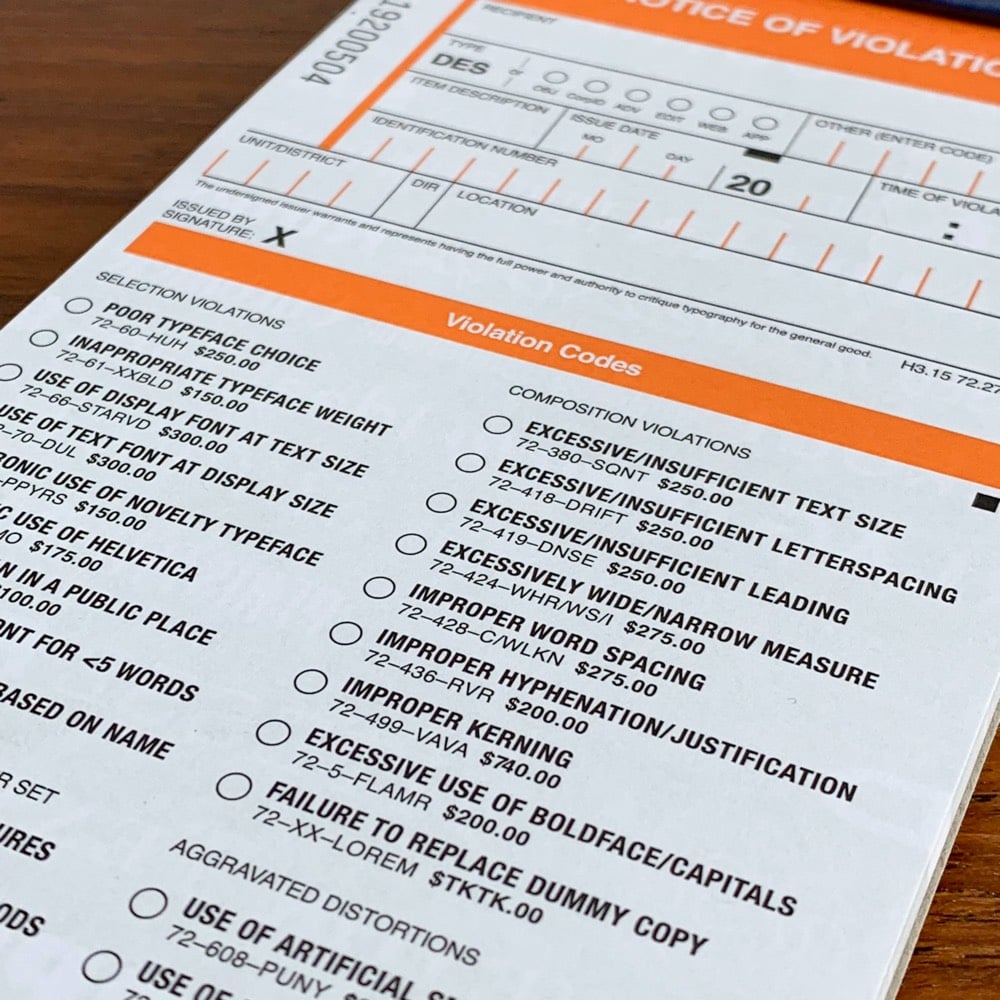
Hoefler & Co are selling copies of The Typographic Ticket Book for type nerds on the go. The idea is that when you’re out and about, you can issue citations for “use of display font at text size” or “unironic use of Helvetica” to people and businesses misusing type.
Contains fifty tickets, each neatly perforated for a satisfyingly loud rip prior to presentation. Bound in soul-deadening municipal pressboard, with a heavy-duty 100pt millboard backing, and foil stamped with an official-looking clip art emblem in gold. Police uniform not included, nor recommended. For novelty use only.
Looks like the book contains a few in-jokes as well…I spotted “$TKTK” as the fine for “failure to replace dummy copy” and the kerning on the fine for “improper kerning” looks a liiittle tight to me.
In season one of Making a Murderer, filmmakers Laura Ricciardi and Moira Demos profiled Steven Avery and Brendan Dassey, who were convicted for murdering Teresa Halbach in 2005, following the process of the police investigation, the trials, and how their families and the family of the victim reacted to everything.
In season two, which starts on Netflix on October 19, Demos & Ricciardi return to Wisconsin as the two men fight to get released from prison. Here’s the teaser trailer:
I thought the first season of the show was excellent, perhaps the best of the recent crop of true crime stories that includes Serial, S-Town, and the like.
Update: Here’s the full trailer.
I could have done without all the ham-fisted dramatic music and cuts…in my recollection, the series isn’t like that at all.
I loved this imaginative and clever piece by Geoff Manaugh called How Will Police Solve Murders on Mars? about how a future human settlement on Mars would handle matters of law and order. For one things, crimes might be more difficult to investigate.
Consider the basic science of crime-scene analysis. In the dry, freezer-like air and extreme solar exposure of Mars, DNA will age differently than it does on Earth. Blood from blunt-trauma and stab wounds will produce dramatically new spatter patterns in the planet’s low gravity. Electrostatic charge will give a new kind of evidentiary value to dust found clinging to the exteriors of space suits and nearby surfaces. Even radiocarbon dating will be different on Mars, Darwent reminded me, due to the planet’s atmospheric chemistry, making it difficult to date older crime scenes.
The Martian environment itself is also already so lethal that even a violent murder could be disguised as a natural act. Darwent suggested that a would-be murderer on the Red Planet could use the environment’s ambient lethality to her advantage. A fatal poisoning could be staged to seem as if the victim simply died of exposure to abrasive chemicals, known as perchlorates, in the Martian rocks. A weak seal on a space suit, or an oxygen meter that appears to have failed but was actually tampered with, could really be a clever homicide hiding in plain sight.
At a broader level, what sort of political system develops because of the Martian environment might shape how law enforcement happens.
In the precarious Martian environment, where so much depends on the efficient, seamless operation of life-support systems, sabotage becomes an existential threat. A saboteur might tamper with the oxygen generators or fatally disable a settlement’s most crucial airlock. When human life is so thoroughly entwined with its technical environment, we should not consider these sorts of acts mere petty crimes, he explained to me. In a literal sense, they would be crimes against humanity-even, on a large enough scale, attempted genocide.
“I think the fact that tyranny is easier in space is a foregone conclusion,” he explained to me, precisely because there is nowhere to escape without risking instant death from extreme cold or asphyxiation. In other words, the constant presence of nearly instant environmental lethality will encourage systems of strong social control with little tolerance for error. Orders and procedures will need to be followed exactly as designed, because the consequences of a single misstep could be catastrophic.
A few paragraphs after this, the terrifyingly wonderful phrase “politically motivated depressurization” is used. I don’t think we’re super close to the colonization of Mars, but Manaugh says, better to think about it now before we “unwittingly construct an interplanetary dystopia run by cops who shoot first and ask questions later”.

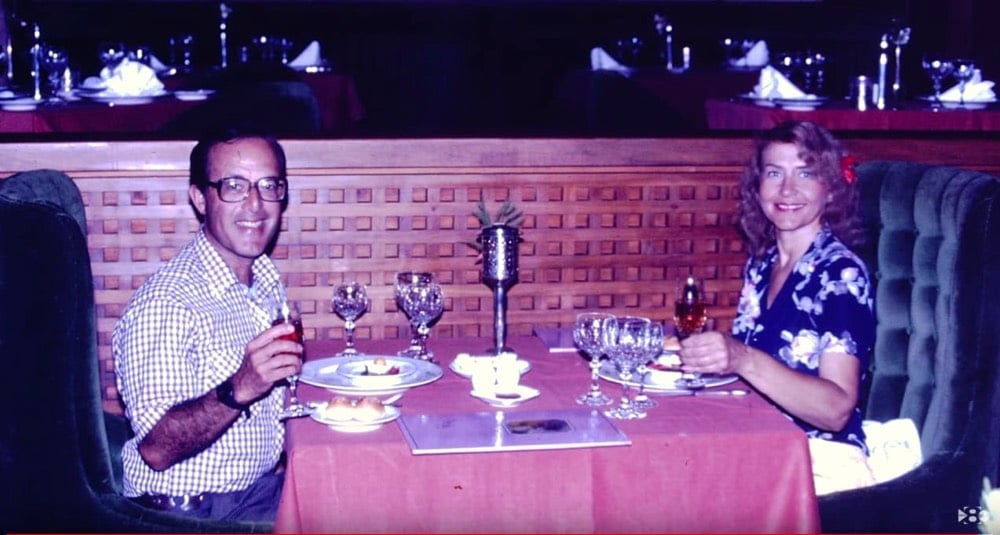
When Jerry and Rita Alter died, a painting was found in their bedroom in the tiny town of Cliff, NM, and then was sold to an antiques dealer along with the rest of their effects for $2000. The dealer soon discovered that the painting was an original Willem de Kooning worth in the neighborhood of $150 million. The painting had been stolen in a daring raid from a Tucson museum in 1985 and a recently discovered piece of evidence shows the Alters were in Tucson on the day before the theft.
The next morning, a man and a woman would walk into the museum and then leave 15 minutes later. A security guard had unlocked the museum’s front door to let a staff member into the lobby, curator Olivia Miller told NPR. The couple followed. Since the museum was about to open for the day, the guard let them in.
The man walked up to the museum’s second floor while the woman struck up a conversation with the guard. A few minutes later, he came back downstairs, and the two abruptly left, according to the NPR interview and other media reports.
Sensing that something wasn’t right, the guard walked upstairs. There, he saw an empty frame where de Kooning’s “Woman-Ochre” had hung.
At the time, the museum had no surveillance cameras. Police found no fingerprints. One witness described seeing a rust-color sports car drive away but didn’t get the license plate number. For 31 years, the frame remained empty.
Earlier this year, WFAA made a short documentary film about the Alters and the heist.
(If you don’t want to watch the entire video, at least check out the bit starting at 18:00 where the painting is given back to the museum and authenticated…that is something you rarely see on video as it happens.)
Adding to the mystery: the couple obviously never sold the painting but they retired early, travelled the world, and left a $1 million inheritance, all seemingly beyond their means as public school employees.
Something else doesn’t add up. Jerry and Rita Alter worked in public schools for most of their careers. Yet they somehow managed to travel to 140 countries and all seven continents, documenting their trips with tens of thousands of photos.
And yet, when they died, they had more than a million dollars in their bank account, according to the Sun News.
“I guess I figured they were very frugal,” their nephew, Ron Roseman, told WFAA.
Hmm, where did they get all that coin?
For years, Jerry Jacobson was in charge of the security of the game pieces for McDonald’s Monopoly, one of the most successful marketing promotions in the fast food giant’s history. And for almost as long, Jacobson had been passing off winning pieces to family, friends, and “a sprawling network of mobsters, psychics, strip club owners, convicts, drug traffickers”, to the tune of more than million in cash & prizes.
Dent’s investigation had started in 2000, when a mysterious informant called the FBI and claimed that McDonald’s games had been rigged by an insider known as “Uncle Jerry.” The person revealed that “winners” paid Uncle Jerry for stolen game pieces in various ways. The $1 million winners, for example, passed the first $50,000 installment to Uncle Jerry in cash. Sometimes Uncle Jerry would demand cash up front, requiring winners to mortgage their homes to come up with the money. According to the informant, members of one close-knit family in Jacksonville had claimed three $1 million dollar prizes and a Dodge Viper.
When Dent alerted the McDonald’s headquarters in Oak Brook, Illinois, executives were deeply concerned. The company’s top lawyers pledged to help the FBI, and faxed Dent a list of past winners. They explained that their game pieces were produced by a Los Angeles company, Simon Marketing, and printed by Dittler Brothers in Oakwood, Georgia, a firm trusted with printing U.S. mail stamps and lotto scratch-offs. The person in charge of the game pieces was Simon’s director of security, Jerry Jacobson.
One of the winners, Jerry Columbo, a partner of Jacobson’s who was allegedly a member of the Mafia, even appeared in this TV commercial holding an oversized novelty key to a car he had “won”:
At the height of the scam, no normal person won any of the best Monopoly prizes…they were all arranged by Jacobson. This has to become a movie, right?
I remember when the Monopoly game started. We didn’t eat out that much when I was a kid, but we still played a few times here and there. But I distinctly remember studying the game board, looking at the odds of winning, and figuring out how they must restrict some single game pieces to make it all work. You could get Park Places all day long, but you’d never ever see a Boardwalk. After that realization, I lost interest in playing. It was an early lesson about not spending too much time and energy striving for unattainable goals. Besides, those delicious McDonald’s fries were reward enough.
Update: Ah, a movie version of the story is in the works with Matt Damon playing Jacobson and Ben Affleck directing.

This is A Map of Chicago’s Gangland from Authentic Sources published in 1931 by Bruce-Roberts, Inc.
Map of Chicago gang locations showing Little Italy, Little Sicily, Cicero, Capone Territory, Westside O’Donnell Territory, Stickney, Saltis Territory, Southside O’Donnell Territory, and Little Africa. “Designed to inculcate the most important principles of piety and virtue in young persons, and graphically portray the evils and sin of large cities.” Numbers in red circles give the sequence of important events in Chicago’s gangland war. Insets include: Mrs. O’Leary’s cow, lawyer running to spring his client, an armored car, bootleggers stealing wheels from prohibition cars, machine gunners arriving from Detroit, World’s Fair grounds of 1933, police tipping over a speakeasy, and “gangland dictionary”.
Al Capone looms large over the map; he was arrested for tax evasion that year and sentenced to 11 years in federal prison. There’s also a zoomable reproduction you can explore at the David Rumsey Map Collection.
Update: See also these historic vice maps of Chicago depicting “all of the bars, dives, brothels, saloons, pool halls and gambling houses in the Levee and Little Cheyenne Districts of Chicago between 1870 and 1923”.
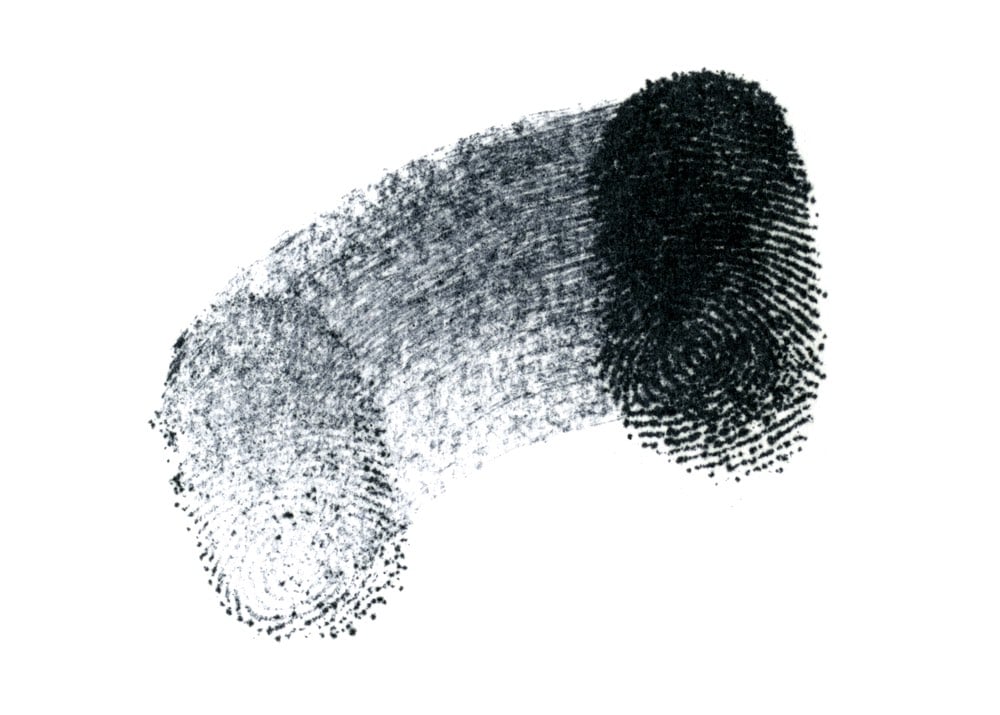
Chantel Tattoli’s piece for The Paris Review, The Surprising History (and Future) of Fingerprints, is interesting throughout, but these two things leapt from the screen (italics mine):
It is true that every print is unique to every finger, even for identical twins, who share the same genetic code. Fingerprints are formed by friction from touching the walls of our mother’s womb. Sometimes they are called “chanced impressions.” By Week 19, about four months before we are issued into the world, they are set.
WHAT?! Is this true? A cursory search shows this might indeed be the case, although it looks as though there’s not established scientific consensus around the process.
Also, Picasso was fingerprinted as a suspect in the theft of the Mona Lisa from the Louvre:
When French authorities interrogated Pablo Picasso, in 1911, at the Palais de Justice about the theft of the Mona Lisa from the Louvre that August, he was clad in his favorite red-and-white polka-dot shirt. Picasso cried. He begged forgiveness. He was in possession of two statuettes filched from the museum, but he hadn’t taken her.
“In possession of”? Turns out a pal of Picasso’s lifted the statuettes from the museum, which was notoriously easy to steal from, and sold them to the artist, who knew exactly what he was buying.
True to Pieret’s testimony, Picasso kept two stolen Iberian statues buried in a cupboard in his Paris apartment. Despite the artist’s later protestations of ignorance there could be no mistaking their origins. The bottom of each was stamped in bold: PROPERTY OF THE MUSÉE DU LOUVRE.
Fingerprint art by Evan Roth. (via @claytoncubitt)
This short film by Ben Proudfoot features Melvin Dismukes, who was a private security guard during the Detroit race riot of 1967. Dismukes responded to a situation at the Algiers Motel and ended up being accused of murder, spending years trying to clear his name. In this film, Dismukes tells his story, which is intercut with scenes from Kathryn Bigelow’s Detroit, which features Star Wars’ John Boyega as Dismukes.
Dismukes also told his story to the Detroit Historical Society last year.
After getting outside there, you could hear gunfire coming from the area of the Algiers, Virginia Park area. National Guard showed up over there to find out what had happened on the corner, and they heard the shots also, so we started headed toward the Algiers, the other two guys that was working with me stayed at the store because we had to protect the store, needed somebody there. Went across the street to the Algiers, gunfire was still coming from the building, lots of gunfire, we couldn’t tell where the gunfire was really coming from. One of the policemen that was in the area with us told us to take out the streetlights. I would say I had a rifle, I didn’t have a shotgun, so the guys with the shotgun took out the streetlights. I had one guy what I thought was a sniper, because I’d seen a flash from a window in the Algiers, it was up on, I think it was the second floor. I fired at that guy, I missed the guy, that’s the only shot I fired during the whole riot, second shot I fired with the rifle. Prior to that, I fired my first day on the job on Sunday, I fired the rifle to get some people off the streets, you know, and they wouldn’t move, and they wanted to play the honky town thing, so fired the gun, the gun had never been fired before, so the barrel was full of oil, and when it went off, and there’s this dust you get flames coming out of it, and they hollered, “He’s got a flamethrower,” so they all turned around and started running.


In Japan, where 27.3% of the population is 65 or older, elderly women are committing petty crimes like shoplifting in order to go to jail to find care and community that is increasingly denied them elsewhere. Japan’s jails are becoming nursing homes.
Why have so many otherwise law-abiding elderly women resorted to petty theft? Caring for Japanese seniors once fell to families and communities, but that’s changing. From 1980 to 2015, the number of seniors living alone increased more than sixfold, to almost 6 million. And a 2017 survey by Tokyo’s government found that more than half of seniors caught shoplifting live alone; 40 percent either don’t have family or rarely speak with relatives. These people often say they have no one to turn to when they need help.
Even women with a place to go describe feeling invisible. “They may have a house. They may have a family. But that doesn’t mean they have a place they feel at home,” says Yumi Muranaka, head warden of Iwakuni Women’s Prison, 30 miles outside Hiroshima. “They feel they are not understood. They feel they are only recognized as someone who gets the house chores done.”
All photos by Shiho Fukada. The first photo is of Mrs. F, aged 89, who stole “rice, strawberries, cold medicine”. She says: “I was living alone on welfare. I used to live with my daughter’s family and used all my savings taking care of an abusive and violent son-in-law.” The woman in the second photo recounts:
The first time I shoplifted was about 13 years ago. I wandered into a bookstore in town and stole a paperback novel. I was caught, taken to a police station, and questioned by the sweetest police officer. He was so kind. He listened to everything I wanted to say. I felt I was being heard for the first time in my life. In the end, he gently tapped on my shoulder and said, ‘I understand you were lonely, but don’t do this again.’
I can’t tell you how much I enjoy working in the prison factory. The other day, when I was complimented on how efficient and meticulous I was, I grasped the joy of working. I regret that I never worked. My life would have been different.
I enjoy my life in prison more. There are always people around, and I don’t feel lonely here. When I got out the second time, I promised that I wouldn’t go back. But when I was out, I couldn’t help feeling nostalgic.
At the time of her death, Michelle McNamara was in the middle of several years of research for a book on the Golden State Killer.1 After she died, her widower Patton Oswalt enlisted an investigative journalist and a researcher to comb through her notes and finish the book. The result, I’ll Be Gone in the Dark, is not only a book about the killer but about McNamara’s descent into obsession. In a blurb, Stephen King wrote:
What readers need to know — what makes this book so special — is that it deals with two obsessions, one light and one dark. The Golden State Killer is the dark half; Michelle McNamara’s is the light half. It’s a journey into two minds, one sick and disordered, the other intelligent and determined. I loved this book.
A NY Times piece about the book describes how consumed she was by the case:
The research consumed her, and began to weigh on her. She suffered from insomnia and anxiety. Once, she panicked because she woke up to a scraping sound: A neighbor was dragging his trash can to the curb in the middle of the night, Mr. Oswalt said. Another time, when Mr. Oswalt tiptoed into their bedroom, trying not to wake her, she mistook him for an intruder and jumped out of bed and swung a lamp at his head. She felt an obligation to solve the case, and was devastated each time she developed a promising theory or zeroed in on a suspect but failed to find sufficient evidence.
“She had overloaded her mind with information with very dark implications,” Mr. Oswalt said.
Update: A suspect has been arrested in the GSK case.
Joseph James DeAngelo, 72, who was taken into custody outside his home on Tuesday and charged with six counts of murder, had been living undisturbed a half-hour drive from where the 12-year rampage began. He was described as a former police officer, and his time in uniform partly overlapped with many of the crimes he is accused of committing.
The case was cracked in the past week, Sheriff Scott Jones of Sacramento County said on Wednesday, when investigators identified Mr. DeAngelo and were able to match his DNA with the murders of Lyman and Charlene Smith in Ventura County in 1980.
This is a chilling in-retrospect red flag:
[DeAngelo] was convicted in 1979 for shoplifting a can of dog repellent and a hammer from a store in Sacramento County. The incident led to his dismissal from the Auburn police force. The arrest came amid the rash of rapes in the area.
Dog repellent and hammers are useful for breaking into homes and he likely shoplifted them because he didn’t want the purchase traced to him.
We’ve seen autonomous swarming killer robots before (in Black Mirror and other places), but this video presents a particularly plausible scenario for their development: a venture-backed company led by a Travis Kalanick-style CEO combining tiny drones invented by a playful technologist, AI-powered facial recognition, and miniature explosives to make tiny killbots that will no doubt disrupt the world while creating a ton of shareholder value.
The video is produced by a group that wants to ban autonomous weapons, and I think these things will probably be banned in some form, possibly by banning drones and some kinds of consumer electronics altogether. What struck me most while watching this is that if guns were a new invention, they would most likely be banned in the US, just like lawn darts or explosive devices. A hand-held machine that can kill a person 1000 feet away and hides easily in a pocket? That sounds like a dangerous, litigious nightmare, just the sort of thing the US routinely regulates against for the safety of its people.
True crime OG Errol Morris has teamed up with Netflix for a 6-part series called Wormwood. The series is an exploration of the CIA experiments with LSD in the 1950s and the death of CIA employee Frank Olson, who was covertly given LSD more than a week before he died. Olson’s death was ruled a suicide, but many years later, the US government settled a potential wrongful death lawsuit out-of-court with a $750,000 payment to the family.
The show itself is a mixture of documentary and historical reenactment (starring Peter Sarsgaard & Bob Balaban) that is now somewhat standard in the true crime genre, having been pioneered by Morris in The Thin Blue Line. Of the show, Morris writes:
Isn’t journalism the pursuit of truth? But what if the truth proves to be elusive, hard to get at? How far does one go? Where does one stop? Are there limits, emotional and otherwise, to the pursuit of truth? Can it be injurious to one’s health? Here we have the story of one man’s sixty-year quest to identify the circumstances of his father’s death. Did he jump from a hotel window? Or was he pushed? And if he was pushed, why? What for? A shadowy world of hidden and imagined intentions coupled with dark and horrifying revelations. In many ways, a personal family story, but in many other ways, a story of America’s decline in the period following World War II. It asks the question: To what extent can a democracy lie to its citizens and still, in the end, remain a democracy?
On Netflix on December 15.
Update: Here’s the full trailer for Wormwood:
Newer posts
Older posts





Socials & More