kottke.org posts about art
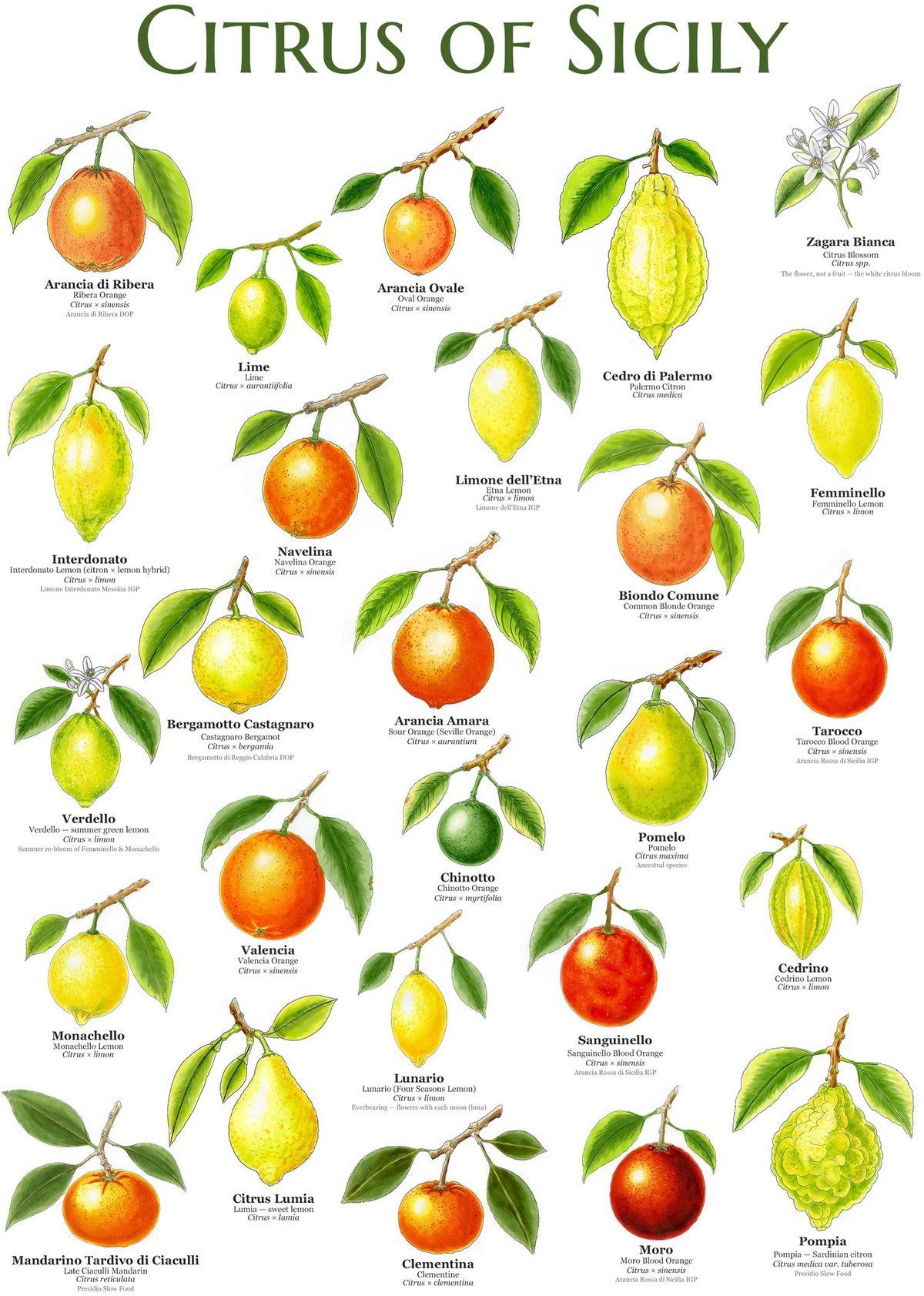
On his site Notes From the Road, Erik Gauger has a wonderful eight-part series on The Citrus Kingdom, a collection of illustrated stories about citrus fruit and Sicily.
The key to the citron’s future—a future that links nearly every aspect of Sicily’s cultural, political and culinary history—lies just outside of urban Palermo. It’s a flat plain that was well watered by three rivers. The Arabs turned it into a fantasyland of fertile agriculture. They dug reservoirs and sank new wells and ran canals out across the valley. They began to see it as paradise—the literal version they knew from Persia. They called it the Conca d’Oro. The Golden Shell.
Today, mention of Sicily’s Conca d’Oro symbolizes endless citrus groves. But before miles of orange and lemon trees, it was the citron that proved an Asian mountain fruit could survive a Sicilian August. The answer? Yes, as long as the water keeps moving.
Somewhere in one of those shaded Palermo courtyards, a gardener planted a skinny sapling from a land Sicilians would never see. He was just keeping a tree alive. He had no way of knowing he was starting a kingdom.
The image of the hand-drawn illustration above is available as a print.
You may remember Gauger from his Hand-Drawn Visual Guide to Chili Peppers.
I love Taiwanese artist Kuang-Yu Tsui’s 1997 conceptual art piece The Welcome Rain Falling From the Sky but I couldn’t really tell you what it means. Something about the way people are bombarded with advertisements for consumer goods? I also couldn’t help but think of the iOS game co-created by Neven Mrgan, The Incident.
For a 1992 conceptual art piece called The Hunt, Christian Jankowski survived for a week on goods he shot at the local supermarket with a bow and arrow.
To rebel against modern society, to return to nature: in pursuit of these primeval instincts, for one week, Jankowski lived off goods he hunted in the supermarket. Instead of stalking animals, he eyed and avoided the supermarket security cameras. Armed heroically with a bow and arrow, Jankowski shot down frozen chickens, butter, toilet paper, and various other essentials. His game, if edible, was not just dead, it was processed on a mass scale. Thus the reaction of the woman working the checkout counter: she remained wholly unimpressed by the trophies of his bargain hunt, which she scanned with the arrows still sticking out of them. He has to pay like everyone else.
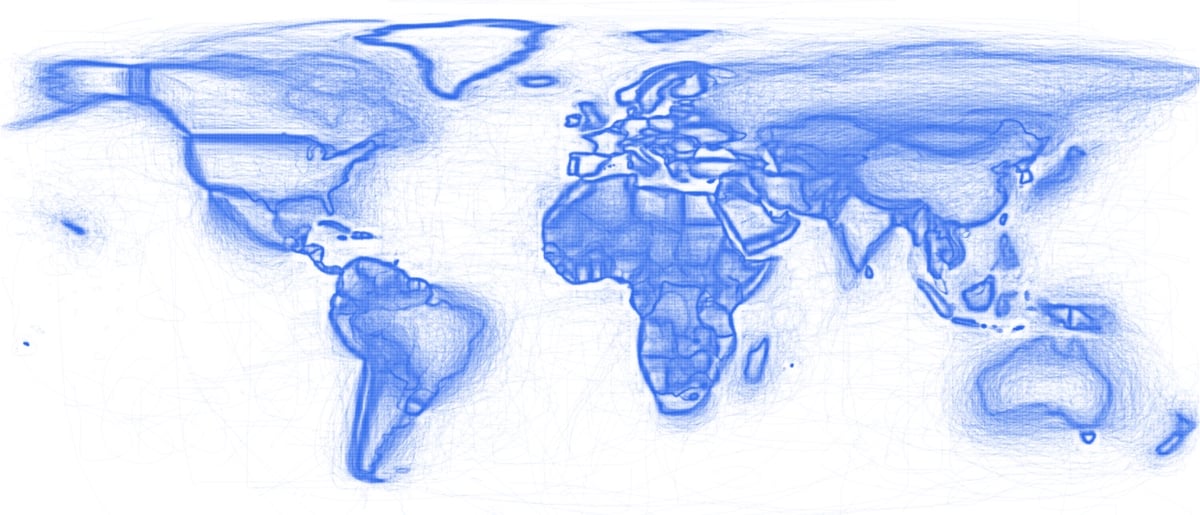
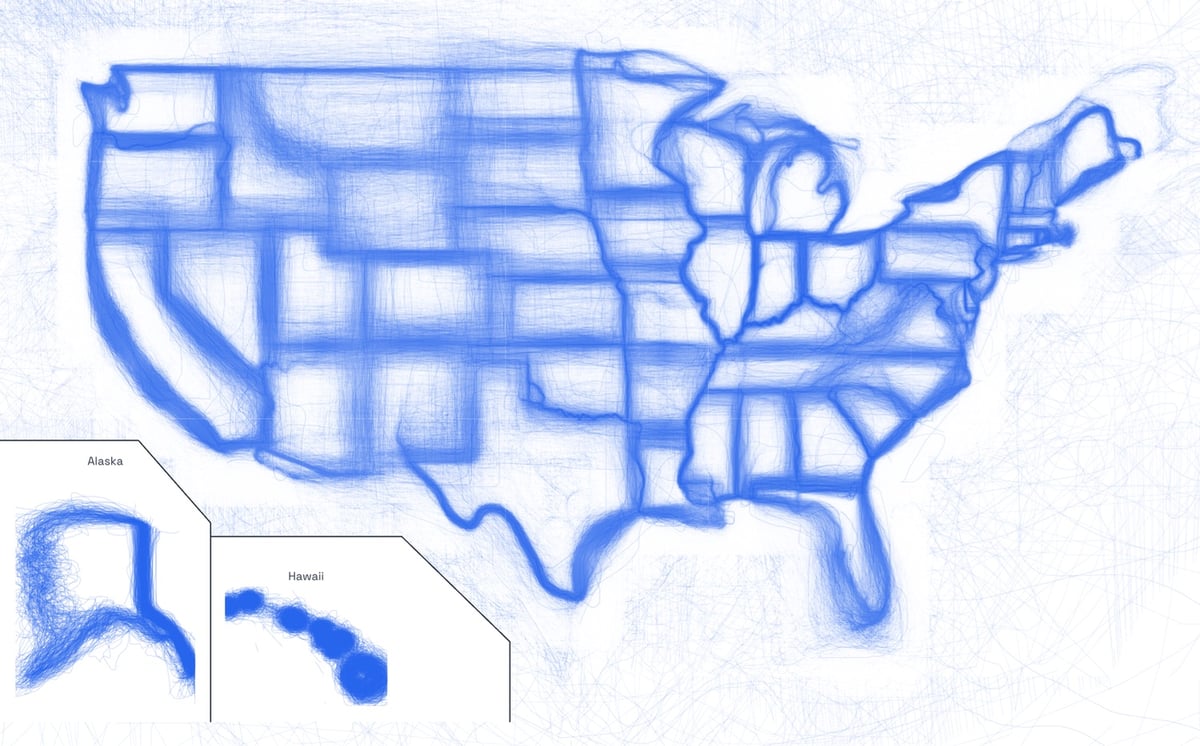
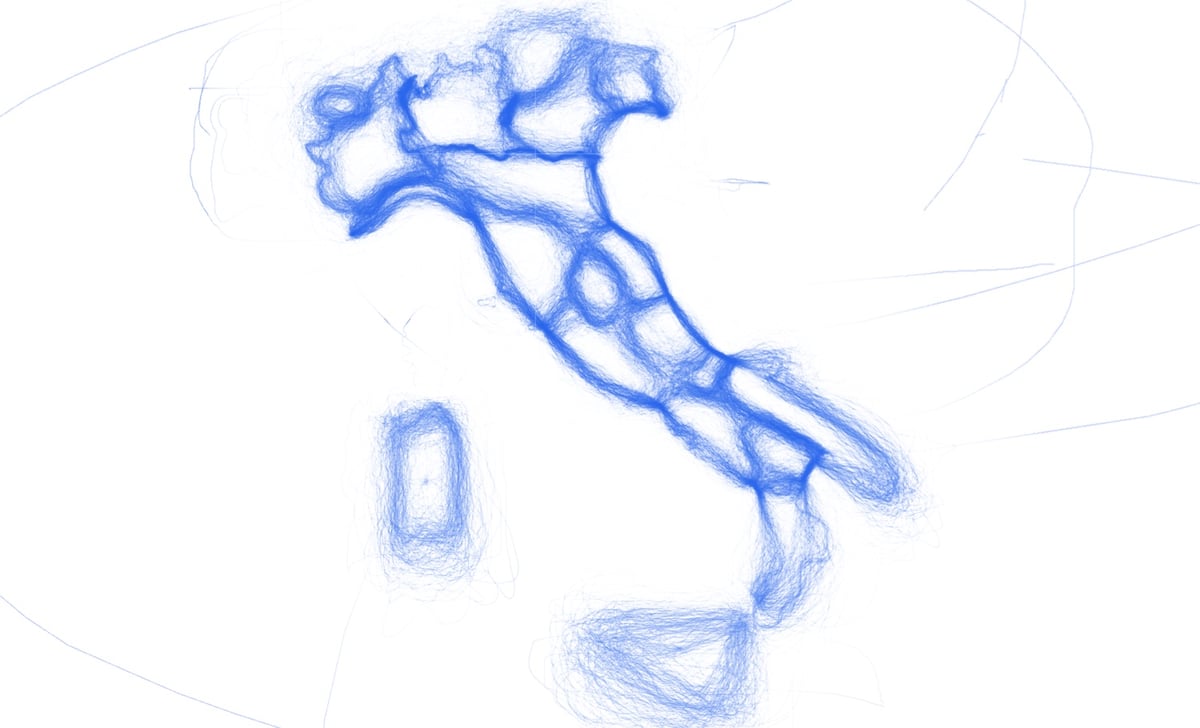
The Drawn Maps are the borders of the countries, state, provinces, and other official territories collectively drawn by more than 300,000 people playing an online daily game called Borderline. There’s a world map as well as maps of the USA, Canada, Italy, and more. There are also timelapse versions of some of the maps.
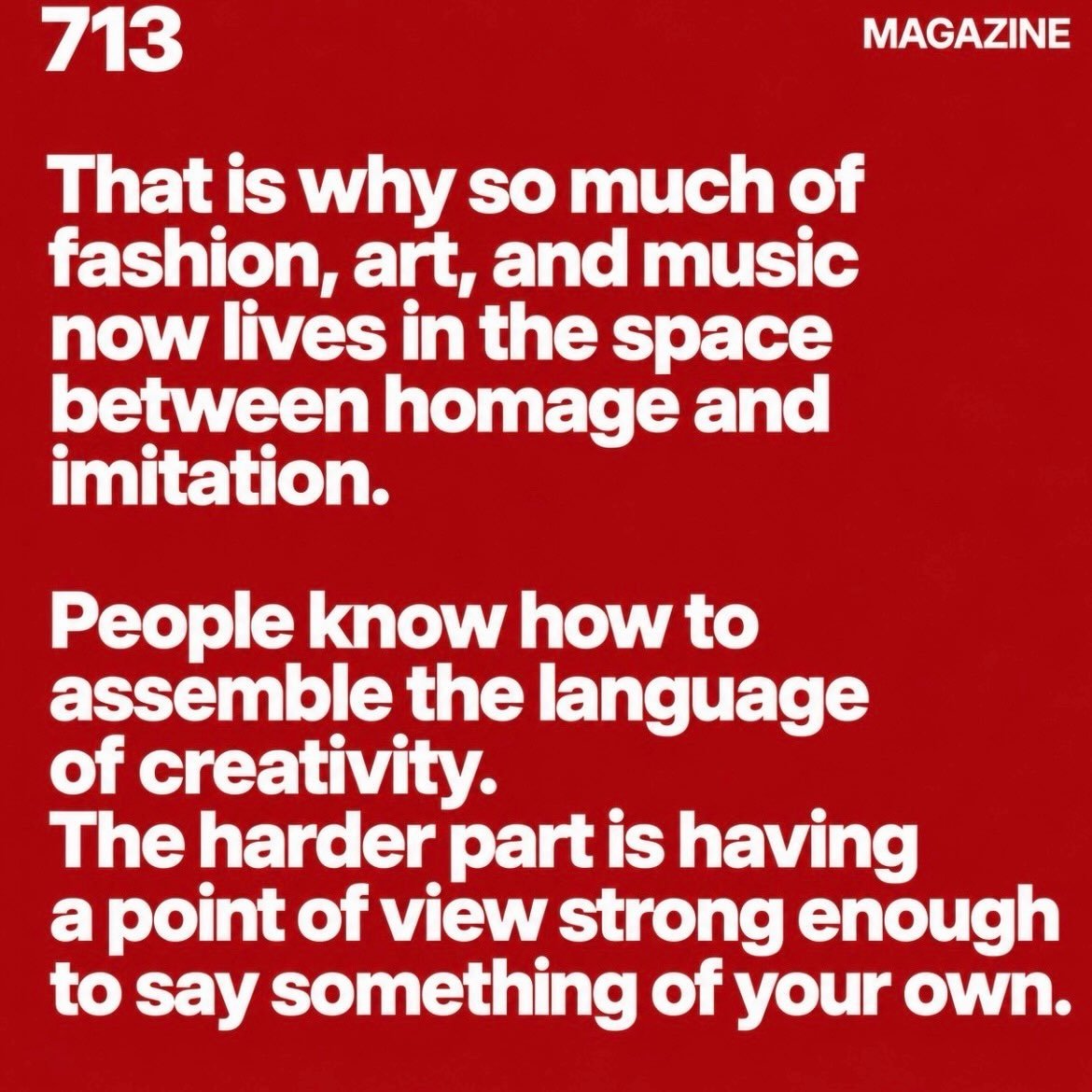
From 713 Magazine on Instagram:
In a world where cultural knowledge has become its own form of social currency, knowing the right designers, listening to the right music, and recognizing the right references can make someone appear just as creative as the people actually producing the work.
We’ve reached a point where an entire identity can be built around what someone consumes, collects, wears, and shares. And while developing good taste requires curiosity, knowledge, and an understanding of culture, recognizing something exceptional isn’t necessarily the same as creating something exceptional.
This doesn’t mean curation lacks creative value. Some of the most influential figures in fashion, art, and music have shaped culture through their ability to recognize talent, connect ideas, and introduce people to things they otherwise might never have discovered.
But there’s a difference between being influenced by something and simply reproducing its appearance. Creativity requires more than understanding what has already been accepted. It often means taking risks, developing an independent perspective, and making something that people might not immediately understand.
One of the slides puts it more succinctly:
We live in a time where curation can look like creation. A person can build an entire identity out of taste alone — what they wear, what they repost, what they collect, what they reference — and still never actually make anything that moves culture forward.
The Harlem Renaissance was a cultural and intellectual movement of African-American artists in the 1920s and 30s. In 1972, filmmaker William Greaves threw a party in Duke Ellington’s apartment for some surviving members of the movement and recorded the whole thing. The footage sat unused for 50 years until Greaves’ son David picked up the project. The result is the documentary film, Once Upon a Time in Harlem; here’s the trailer.
A decade after his death, genre-defying filmmaker William Greaves has one last trick up his sleeve with what he considered the most important event he captured on film: a 1972 party he engineered with the living luminaries of the Harlem Renaissance.
For four hours, this extraordinary group – many of whom had not seen each other in fifty years – reminisced, critiqued, argued, laughed and drank while wrestling with their place in a rapidly shifting cultural landscape.
Shot on 16mm film, newly restored and now directed by Greaves’ son David, this landmark film is at once a self-exploration and an inquiry into the heart of the critical mass of energy called the Harlem Renaissance.
William Greaves’ intent was not only to document these artists and intellectuals as they spoke about their lives and work but also to plumb the meaning of the extraordinary creative period in which they lived to help us better understand how culture has been passed on from one generation to another and the role that the artist plays in keeping it alive.
It looks fantastic. Once Upon a Time in Harlem currently has a 100% rating (67 reviews) on Rotten Tomatoes.
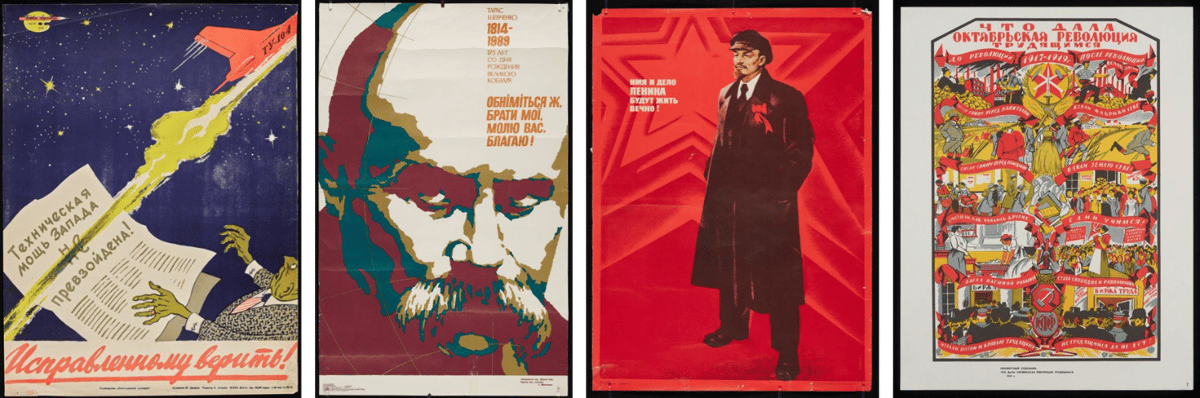
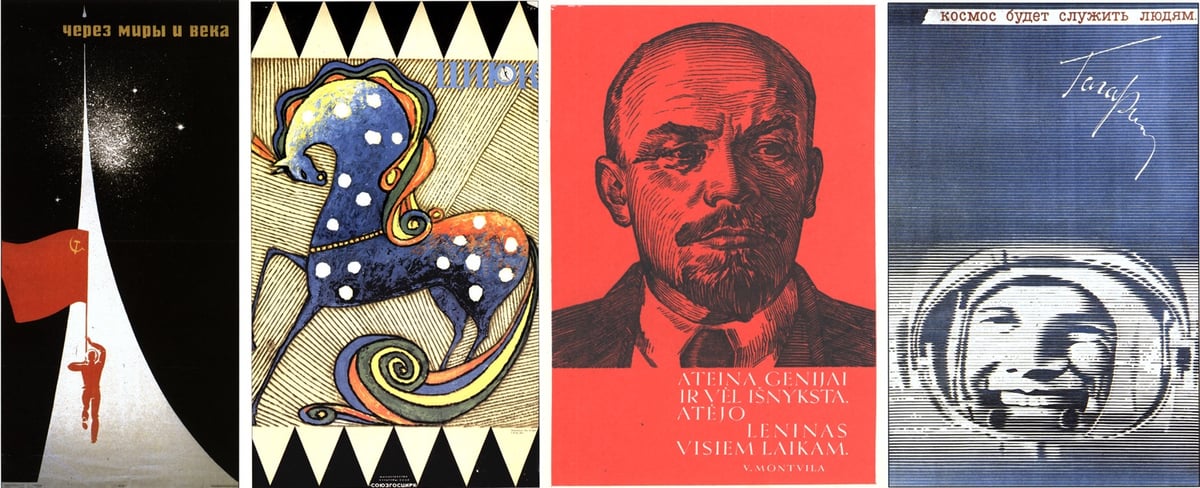
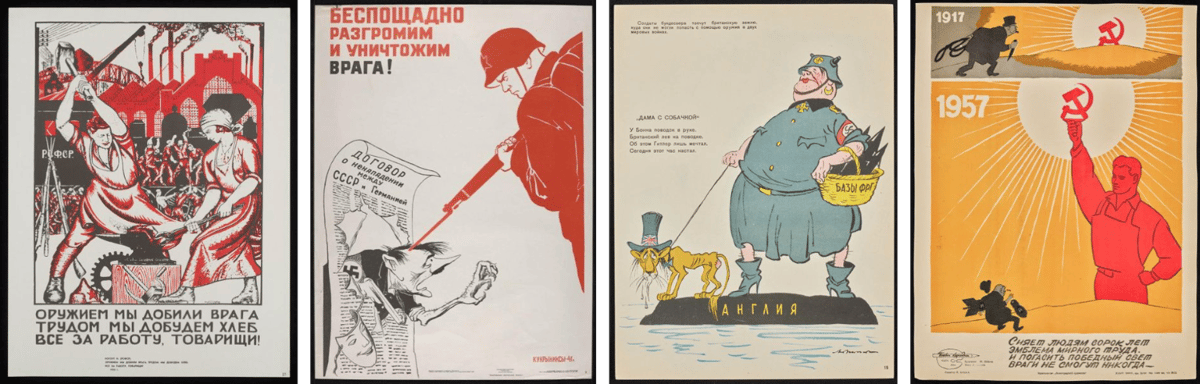
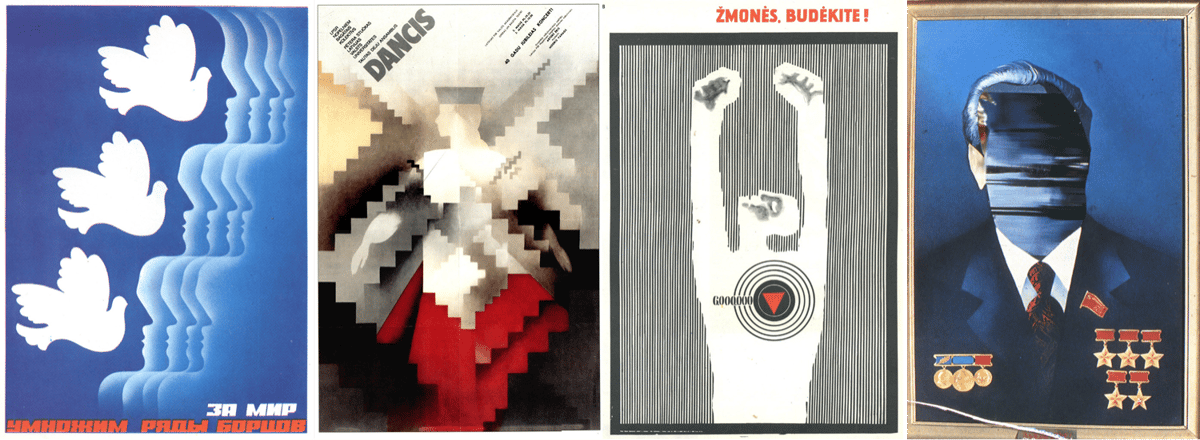
Princeton houses a large digital collection of posters from Russia and Eastern Europe, almost 5000 total item spanning 101 years (1904-2004). This album on Flickr contains nearly 1500 Russian & Soviet posters from 1917-1991 — not sure how much overlap there is between the two.
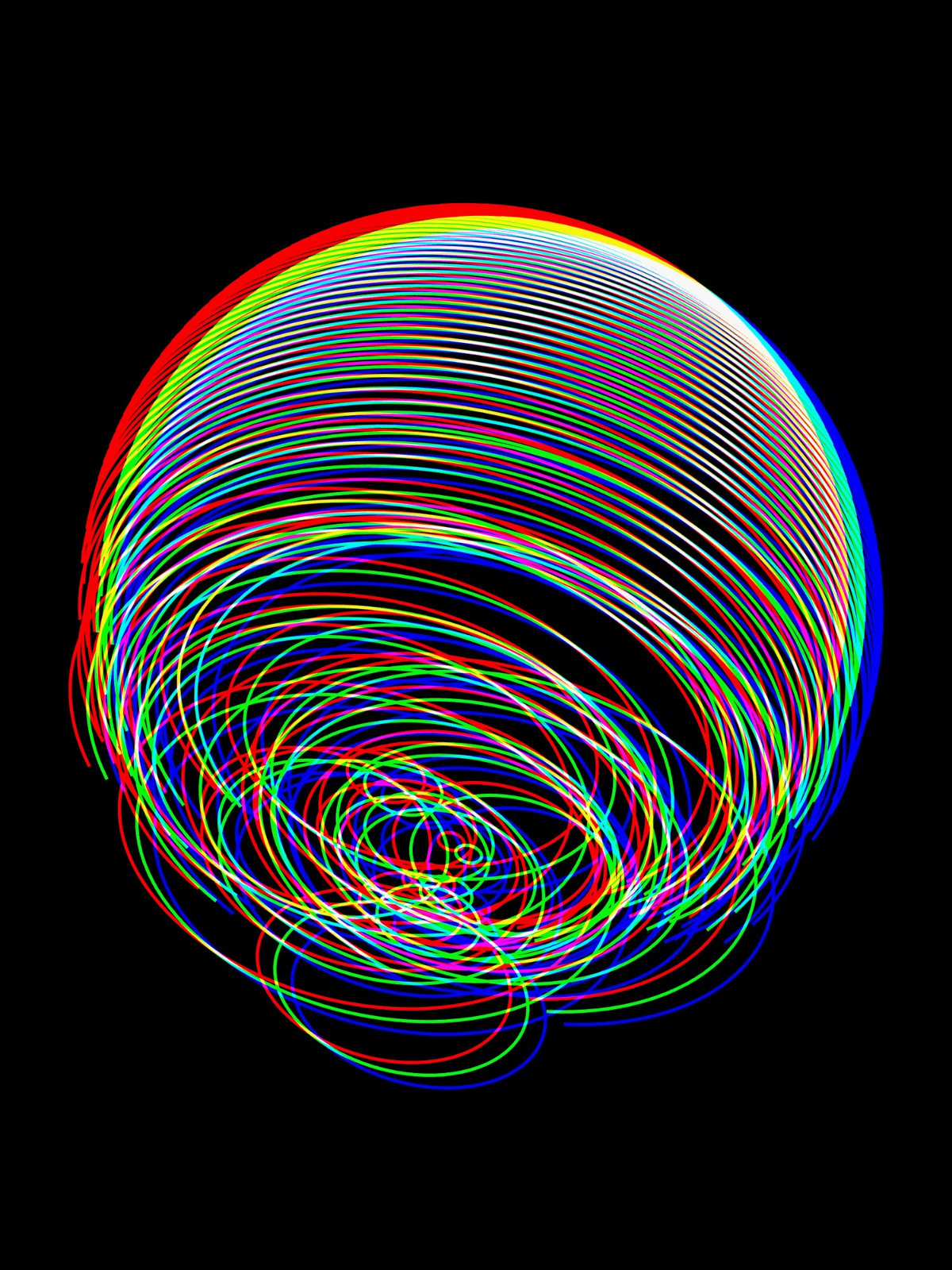
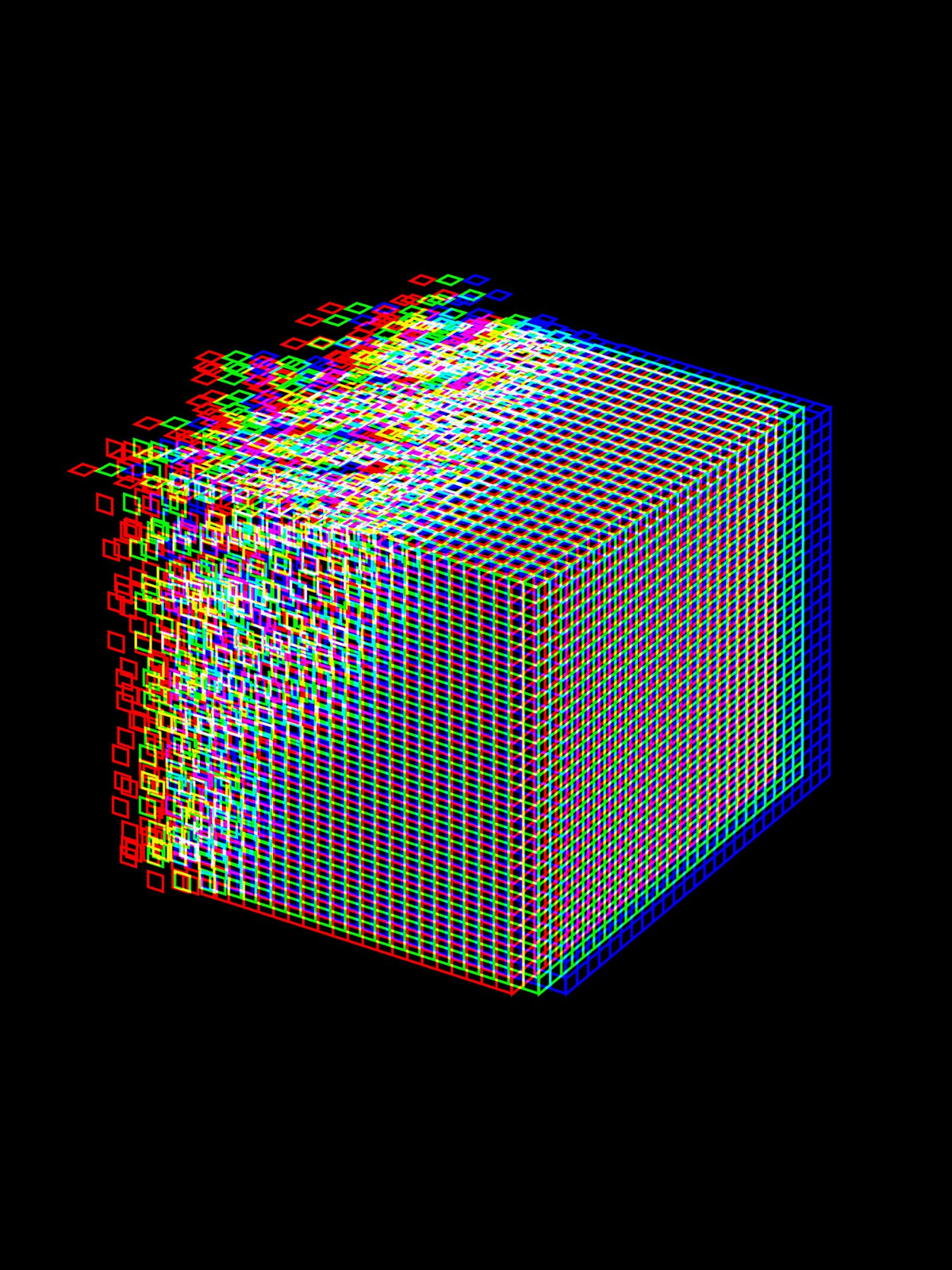
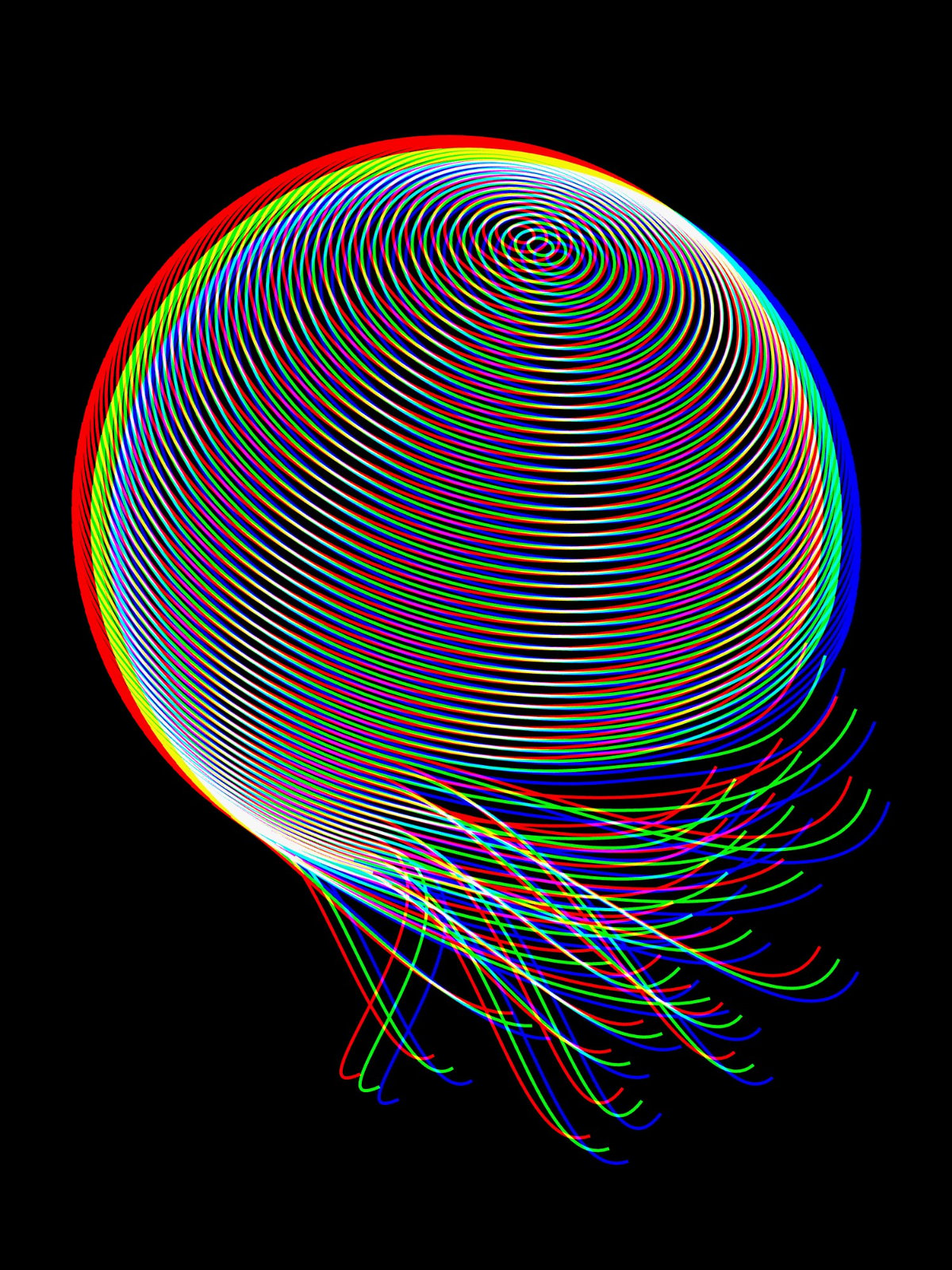
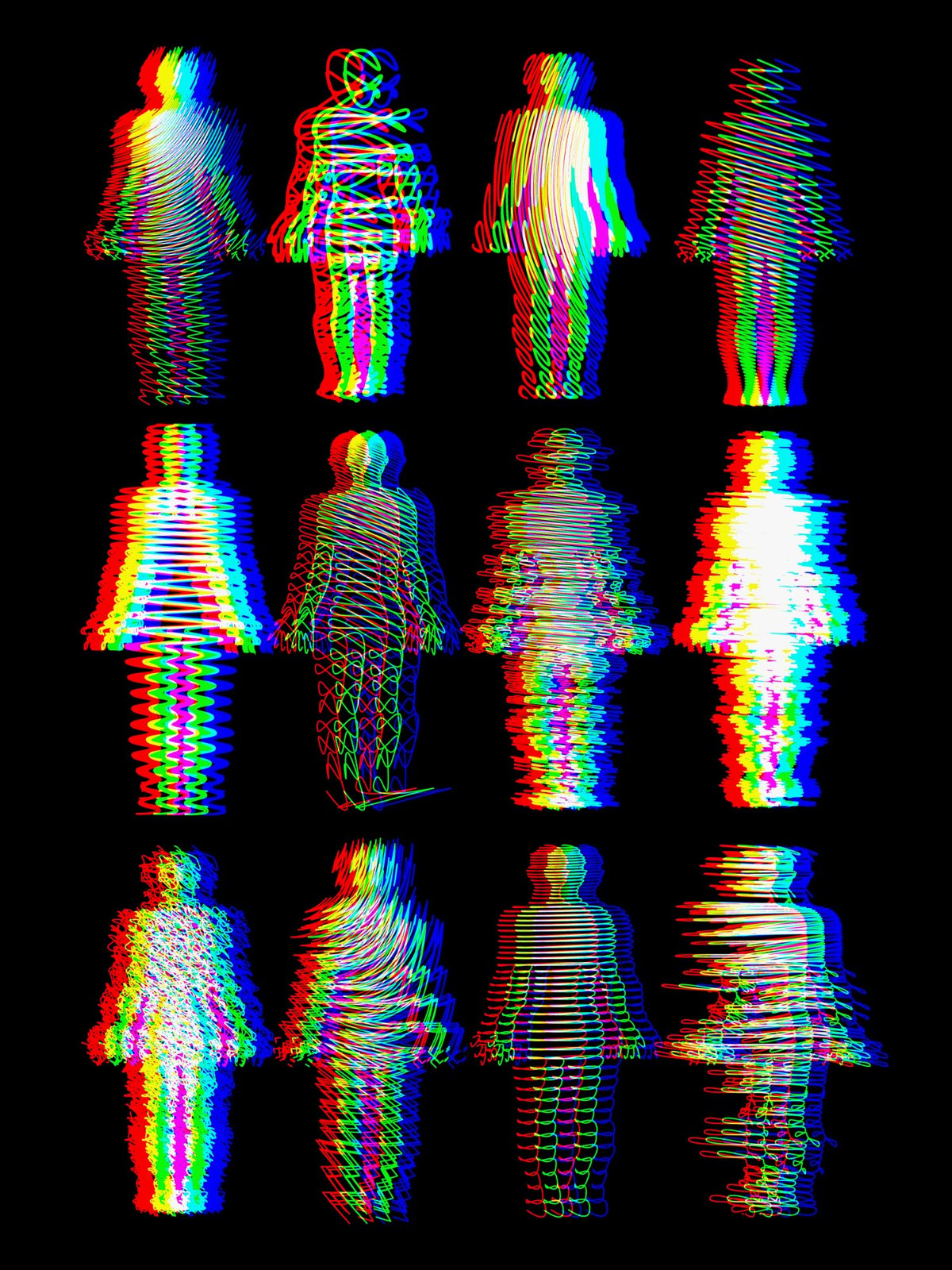
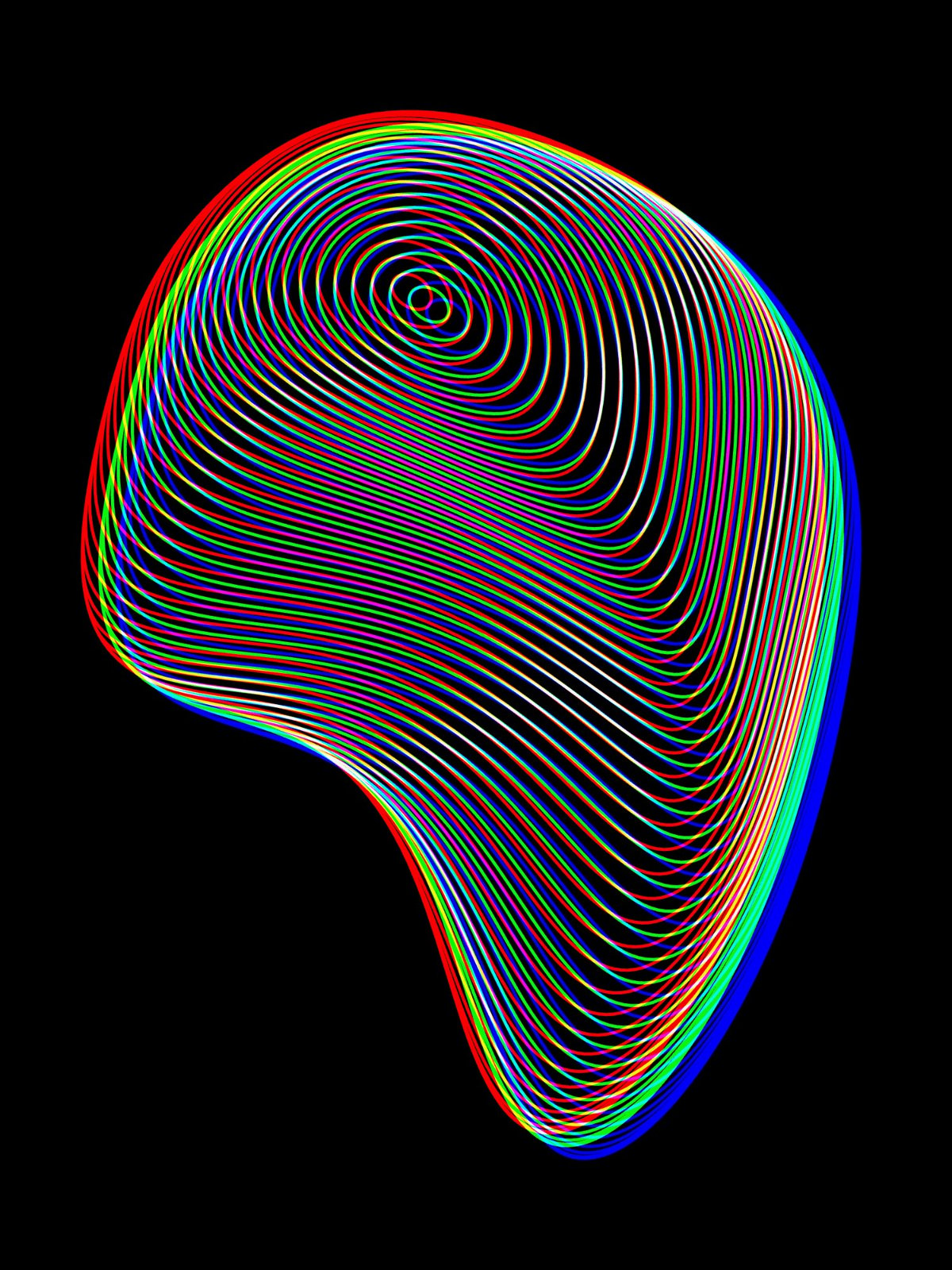
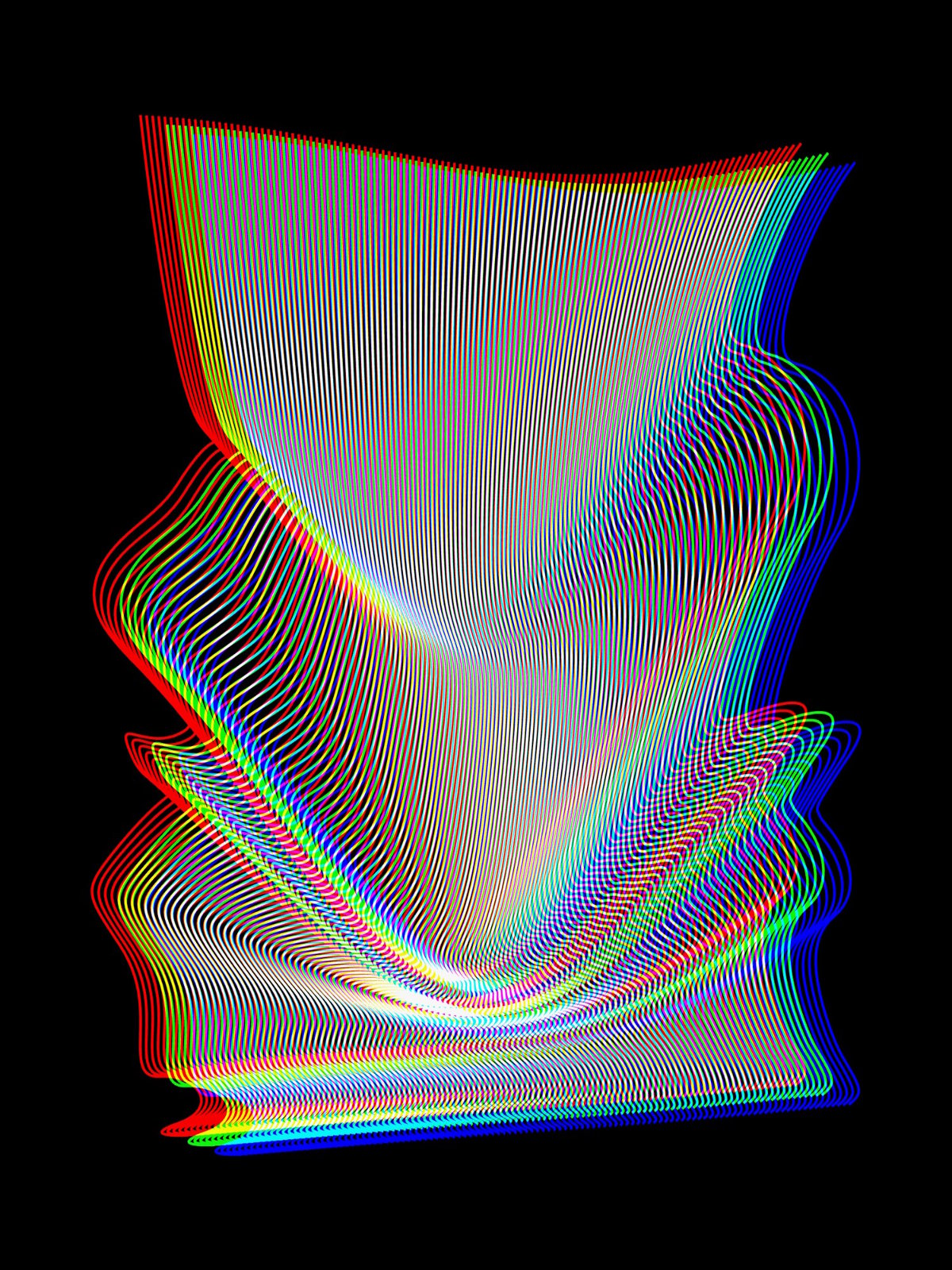
I love these digital illustrations by Adam Fuhrer; he calls them chromatic aberrations. It was difficult to narrow them down to the few favorites above. I posted about Fuhrer’s pen plotted art a couple of years ago…I like the direction he’s taking this.
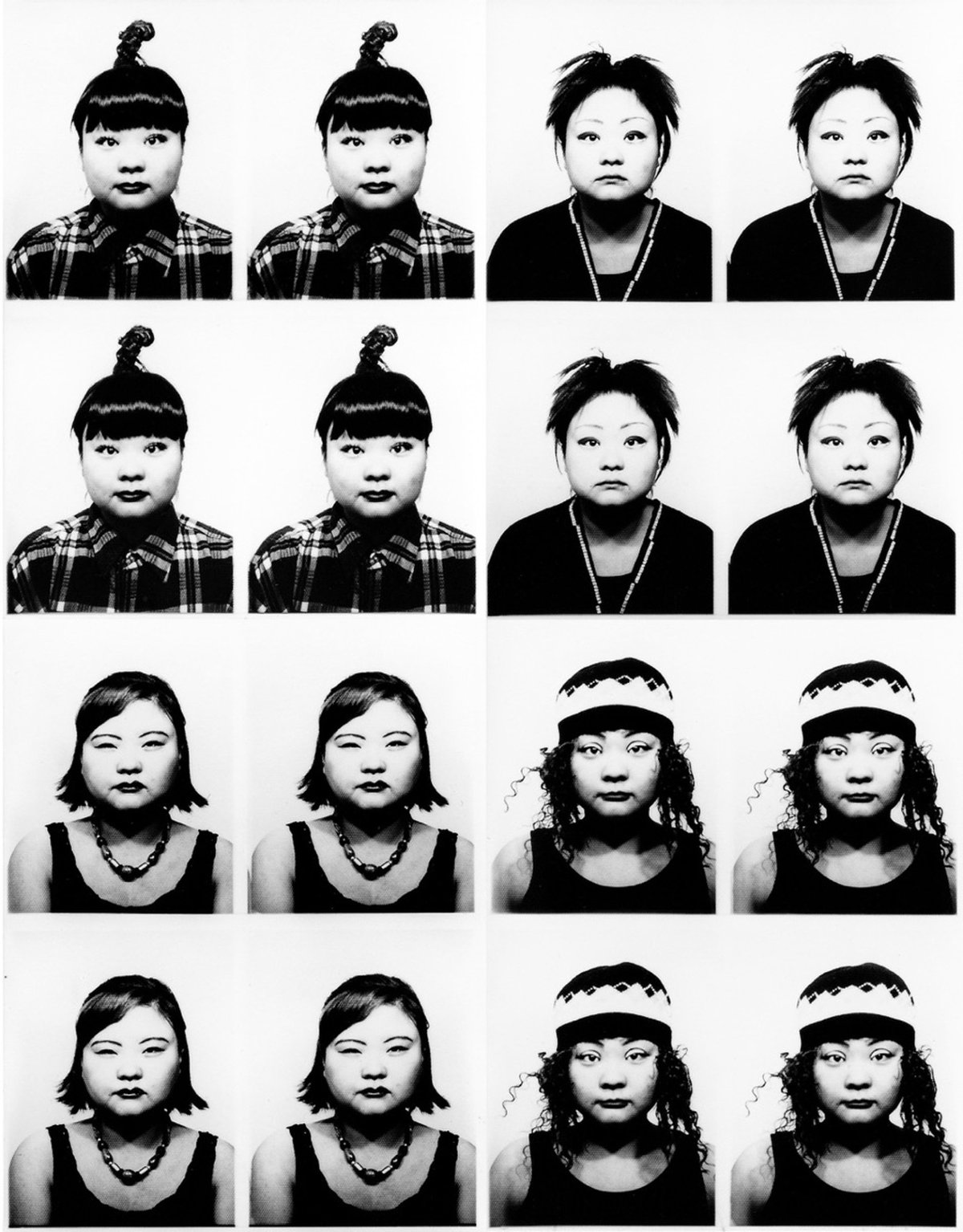
Japanese photographer and artist Tomoko Sawada works primarily in self-portraiture. For her first project, she visited ID photo booths to take hundreds of photos of herself, dressed, posed, and presented differently. Eugenie Shin of Tokyo Weekender calls that 1998 project, ID 400, “a dizzying grid of strangers who are all actually the same woman”.
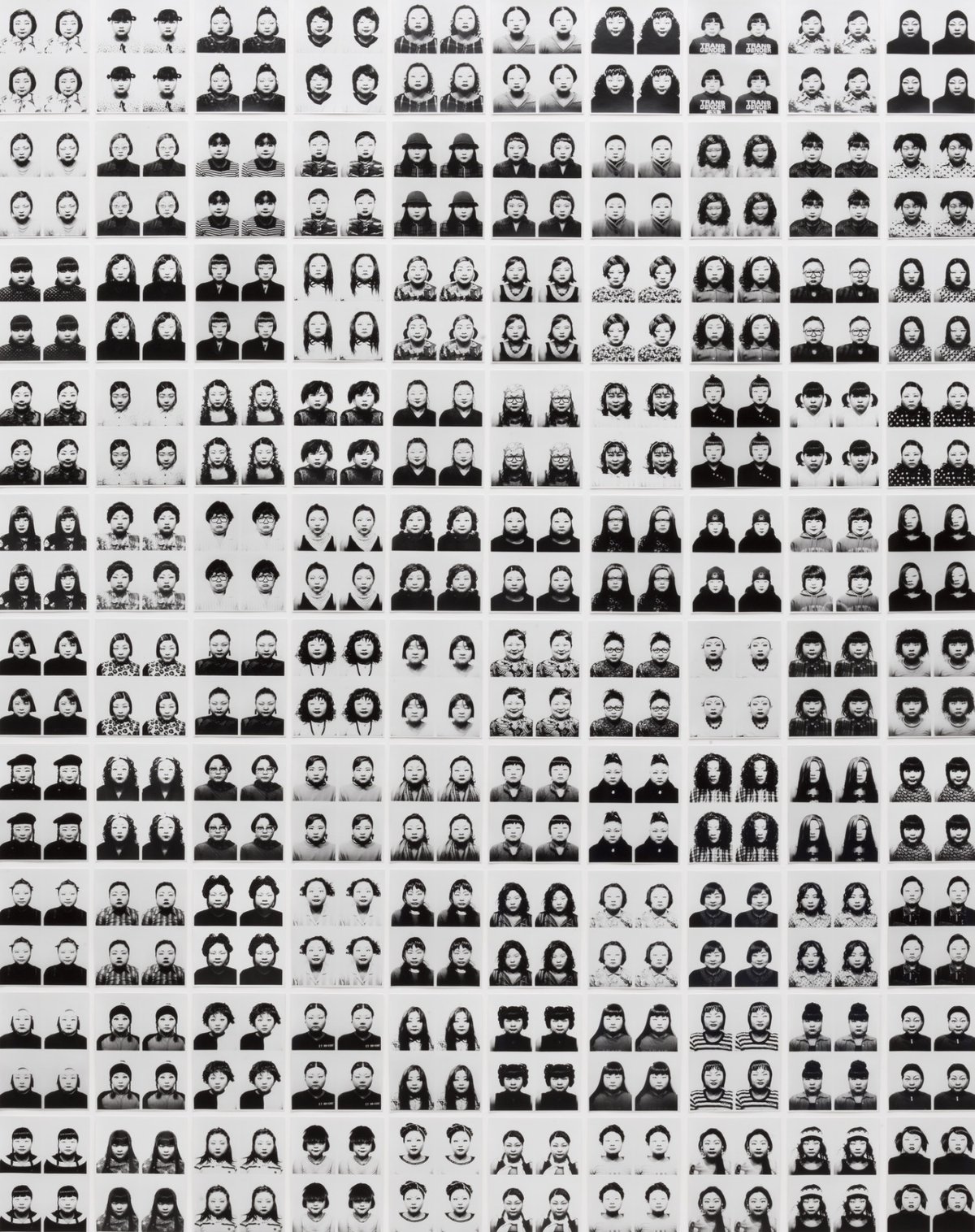
For subsequent projects, Sawada says she’s continued to “examine the relationship between outer appearance and inner self through different concepts”.
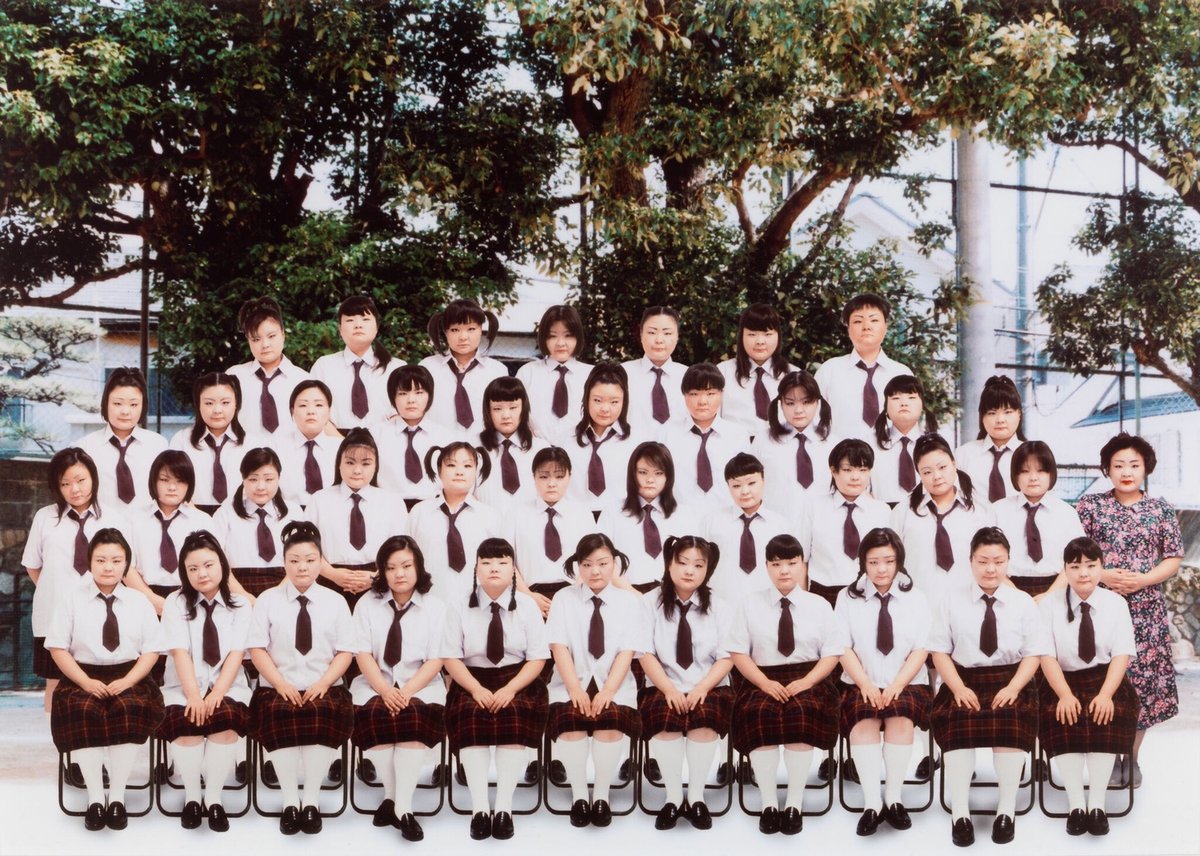
(via tokyo weekender)
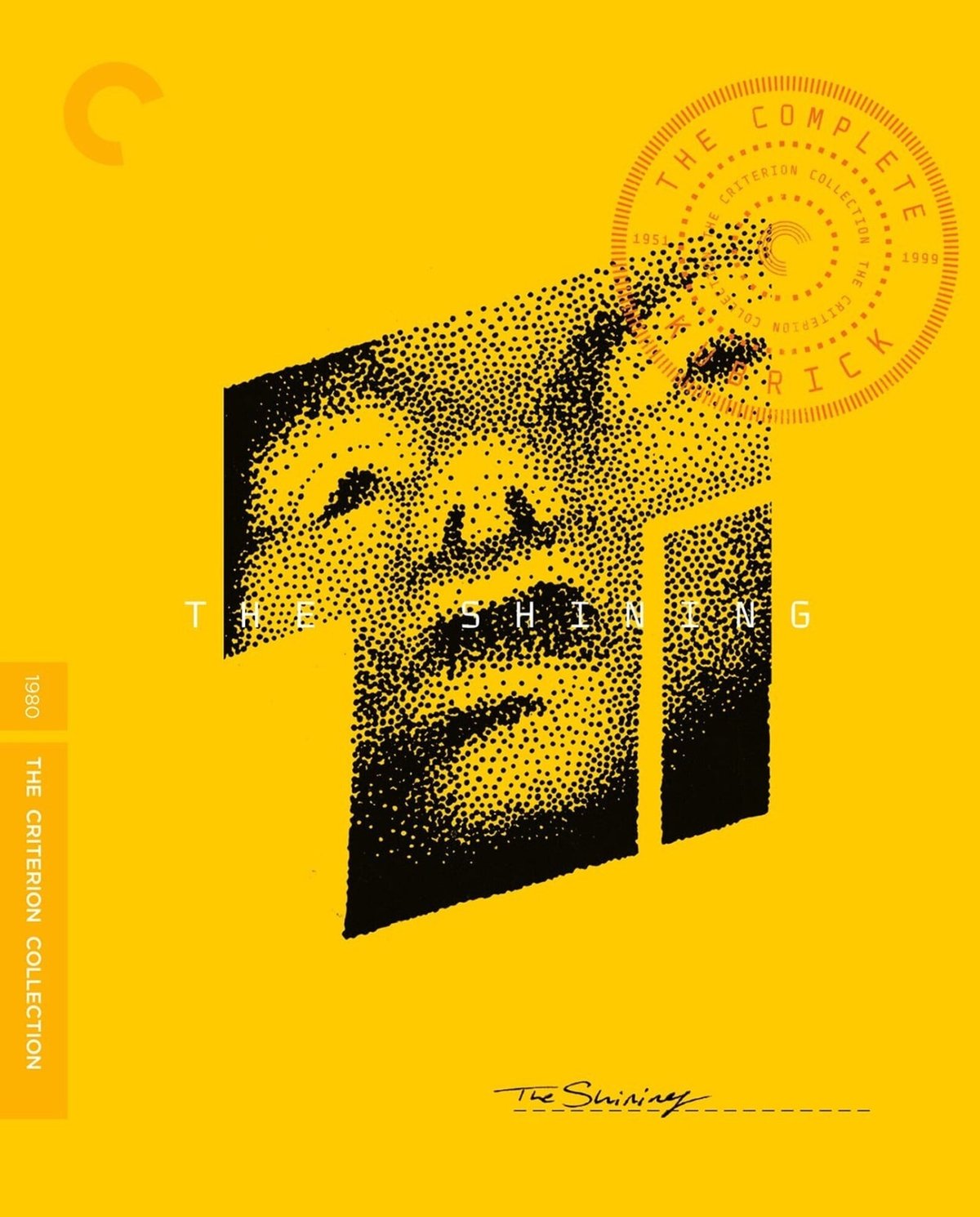
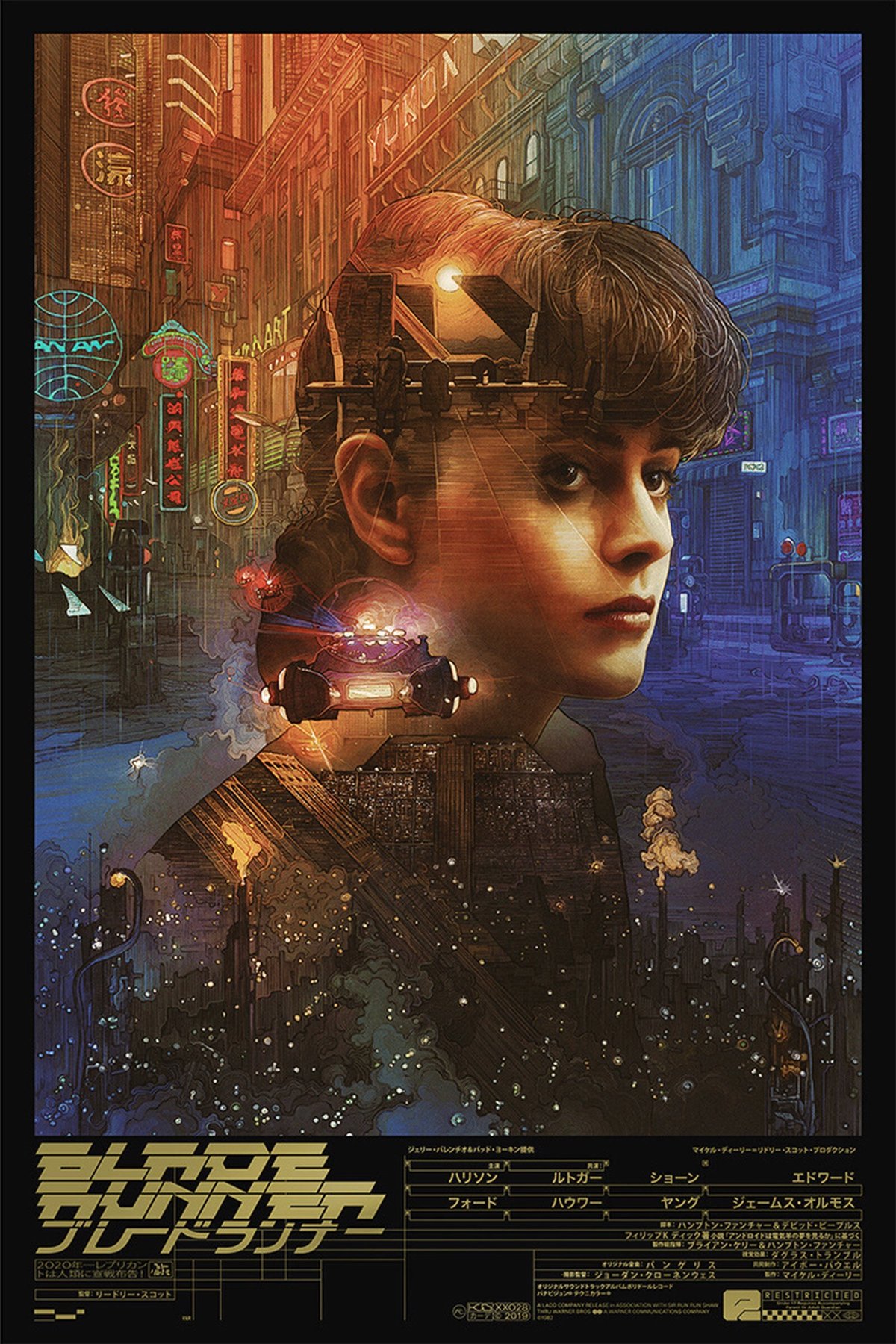
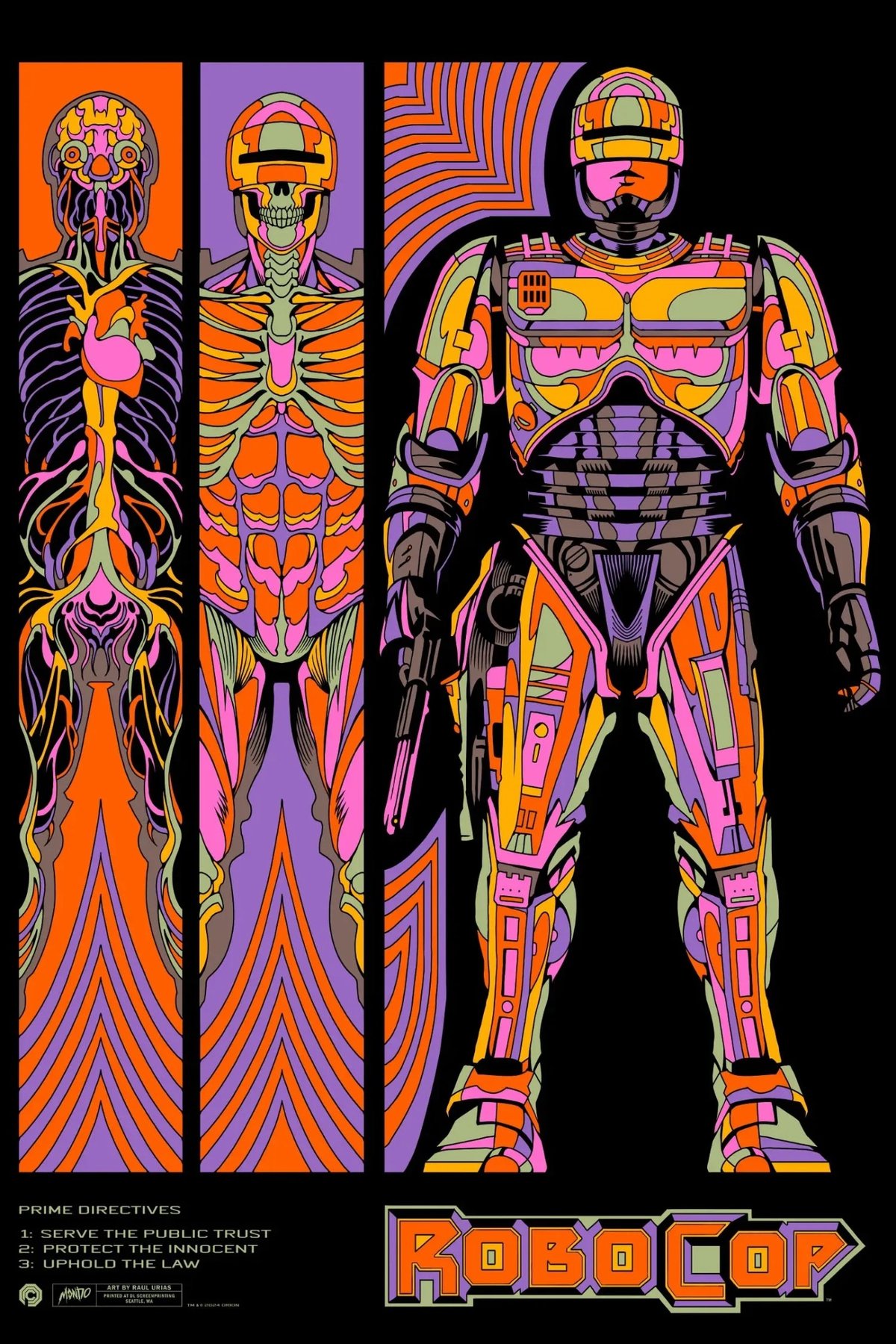
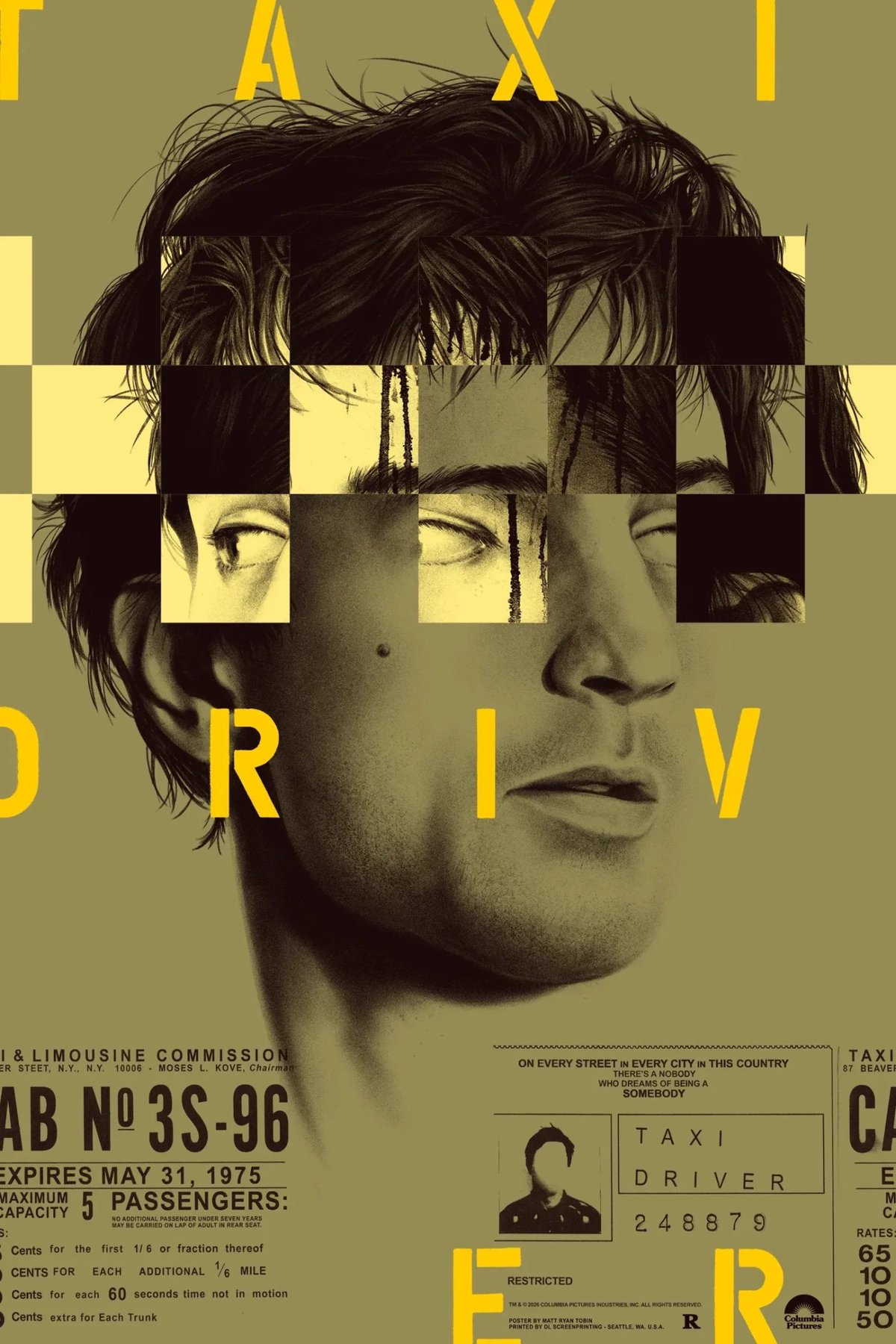
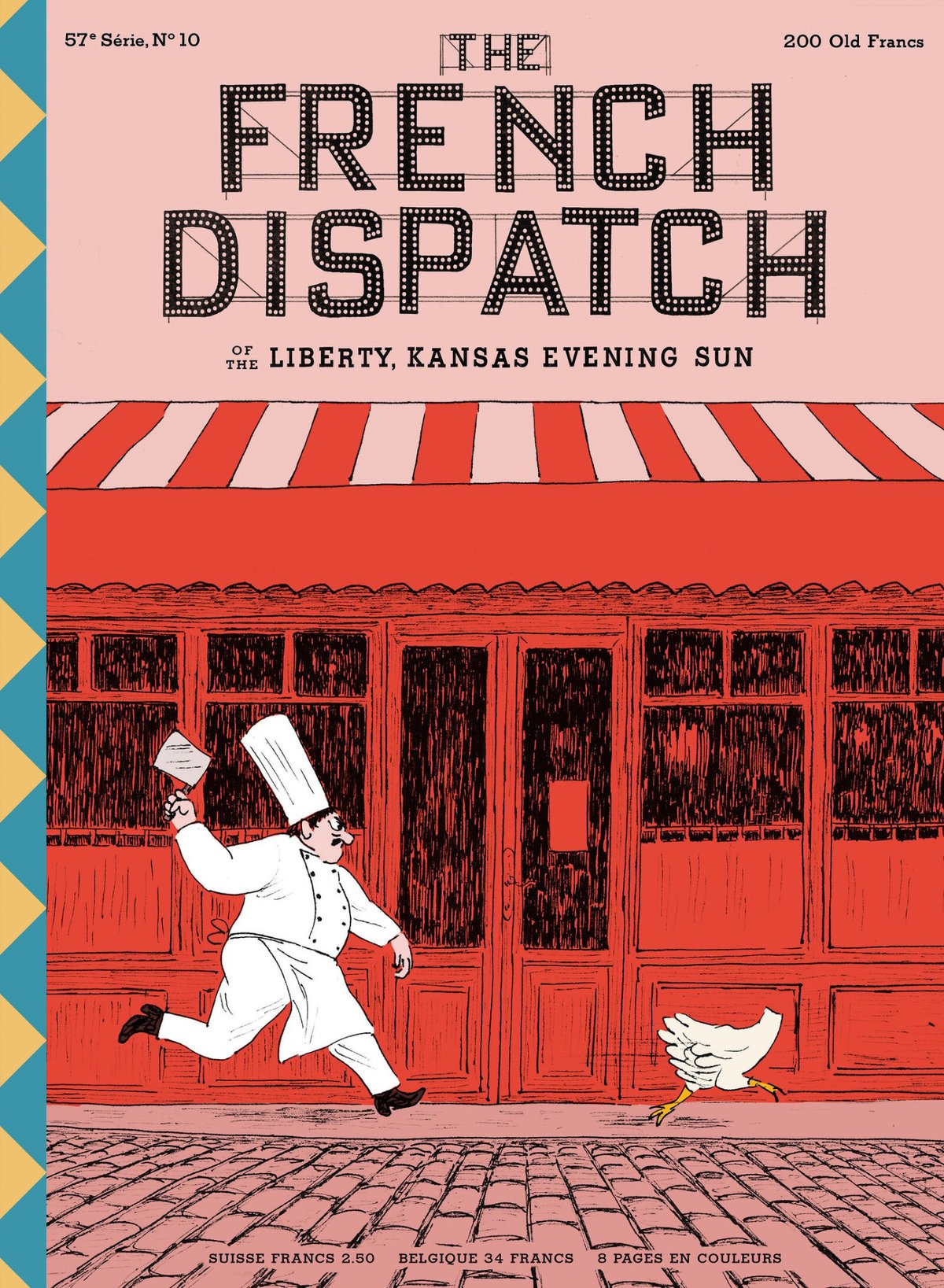
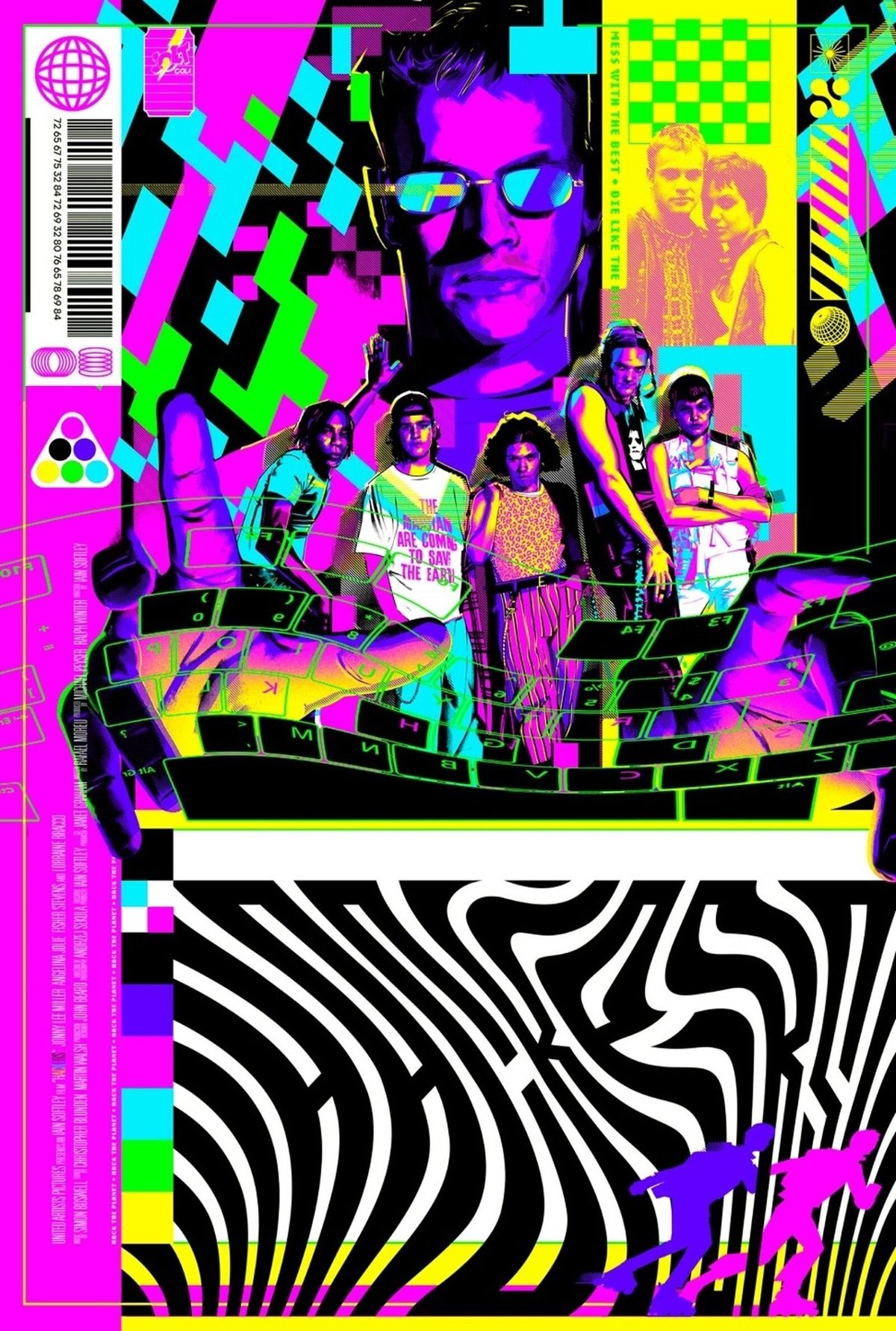
Reelizer is a personal project by Roger Erik Tinch that is a collection of movie art: prints, posters, illustrations, albums, books, covers, etc. Careful, you can lose hours here…Tinch has a great eye. A few of my favorites:
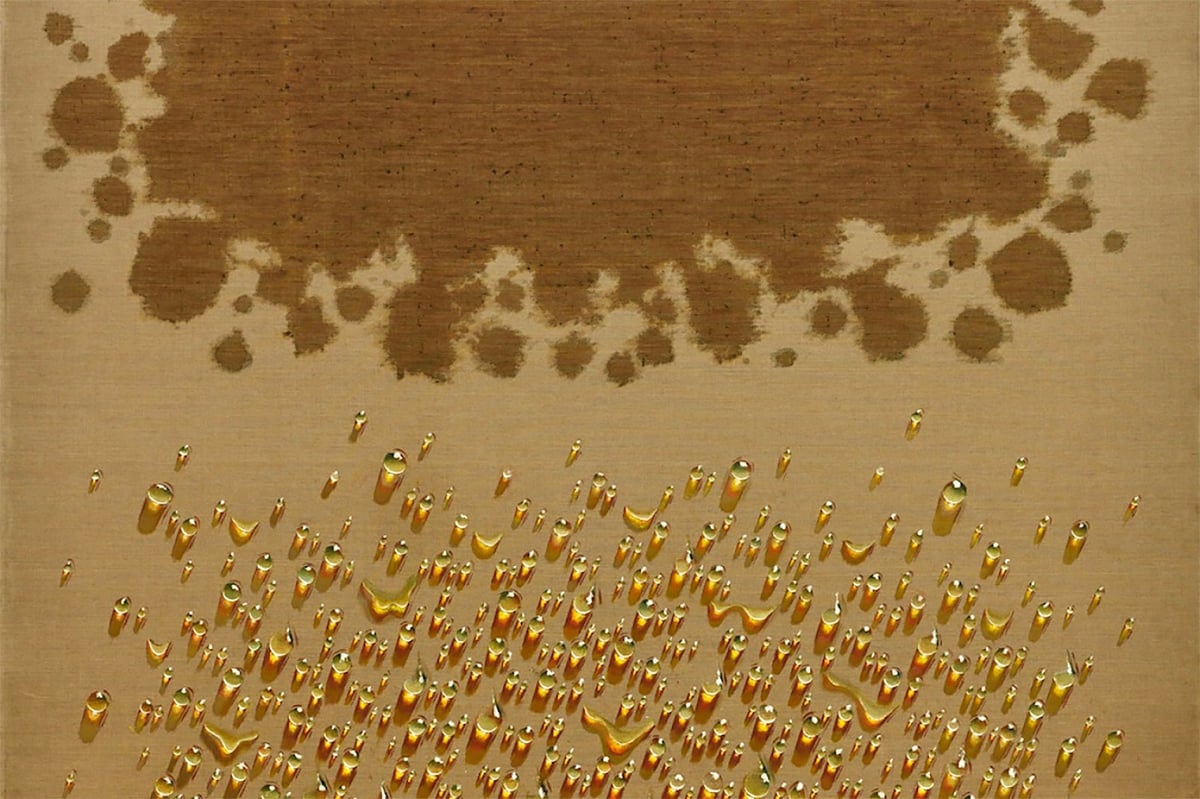
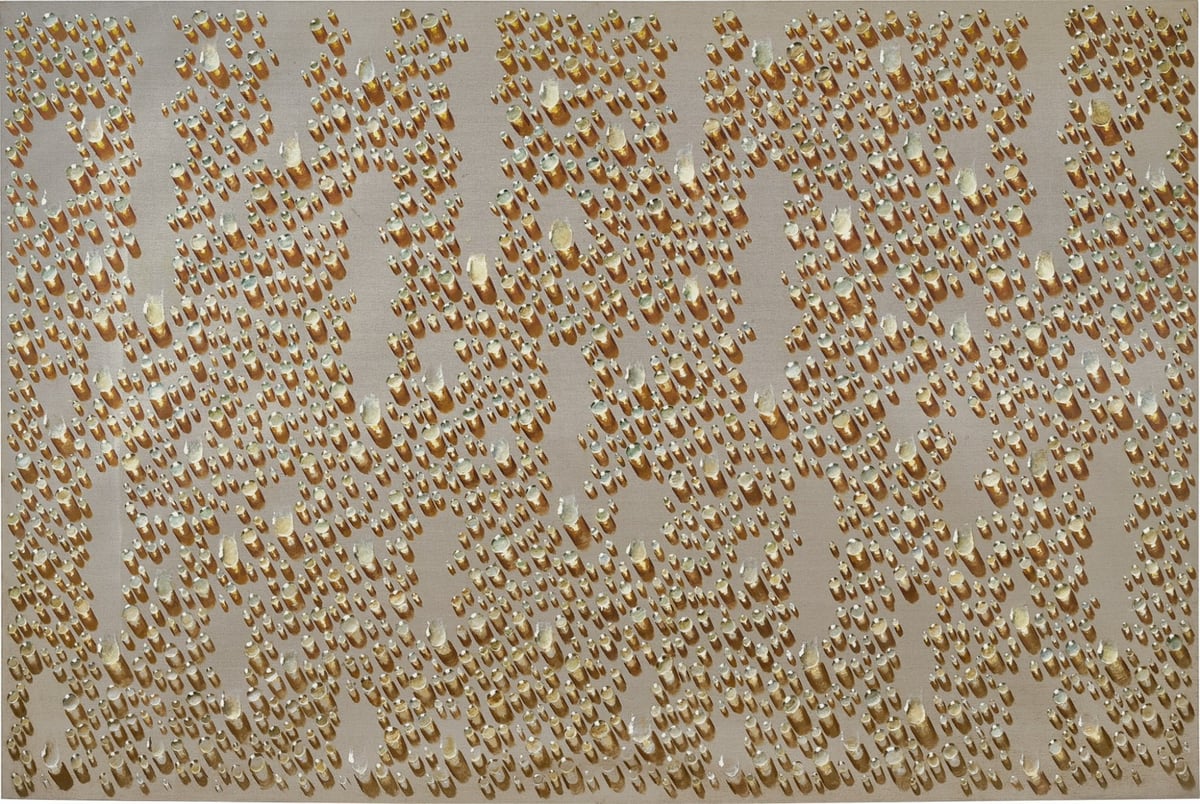
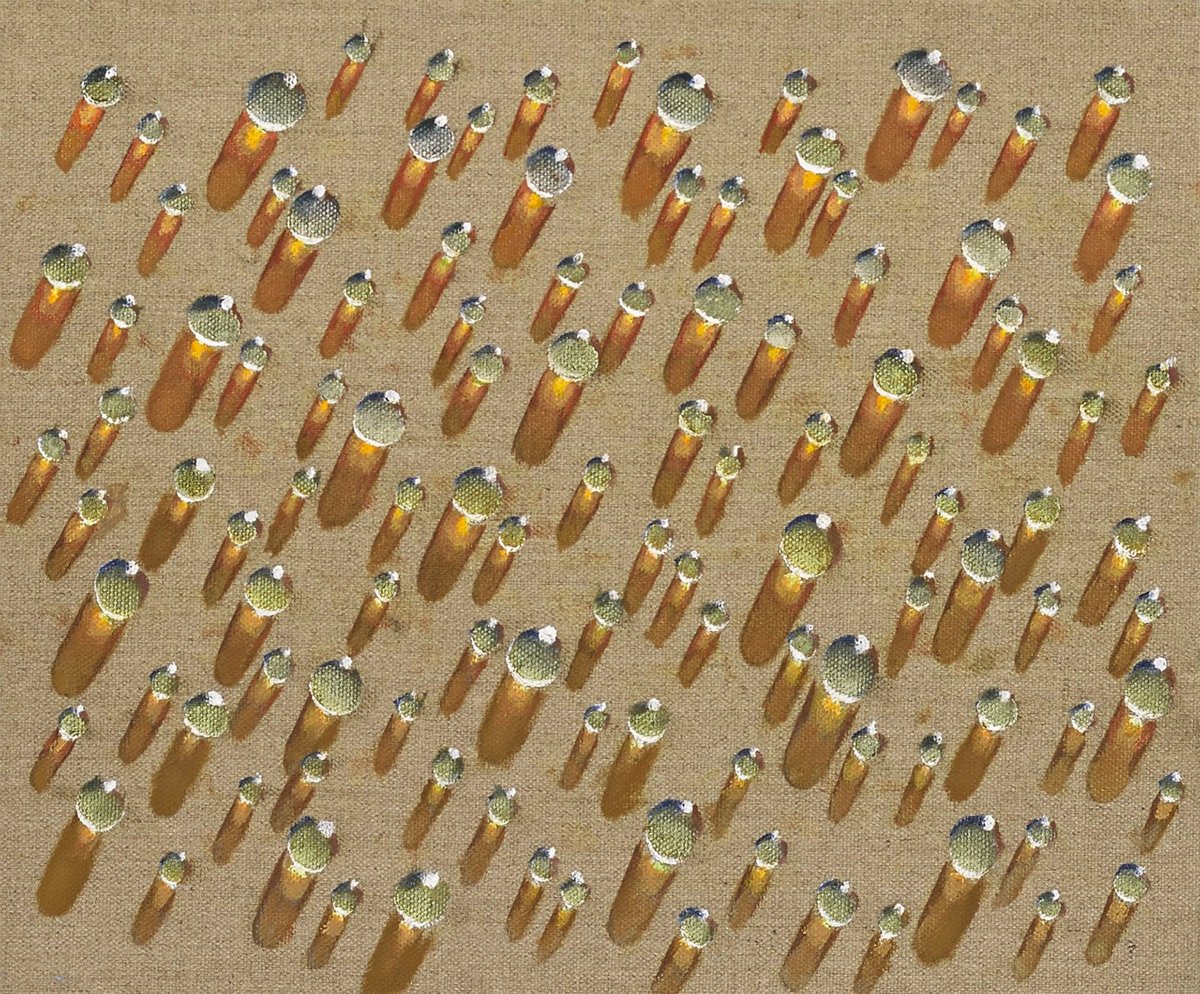
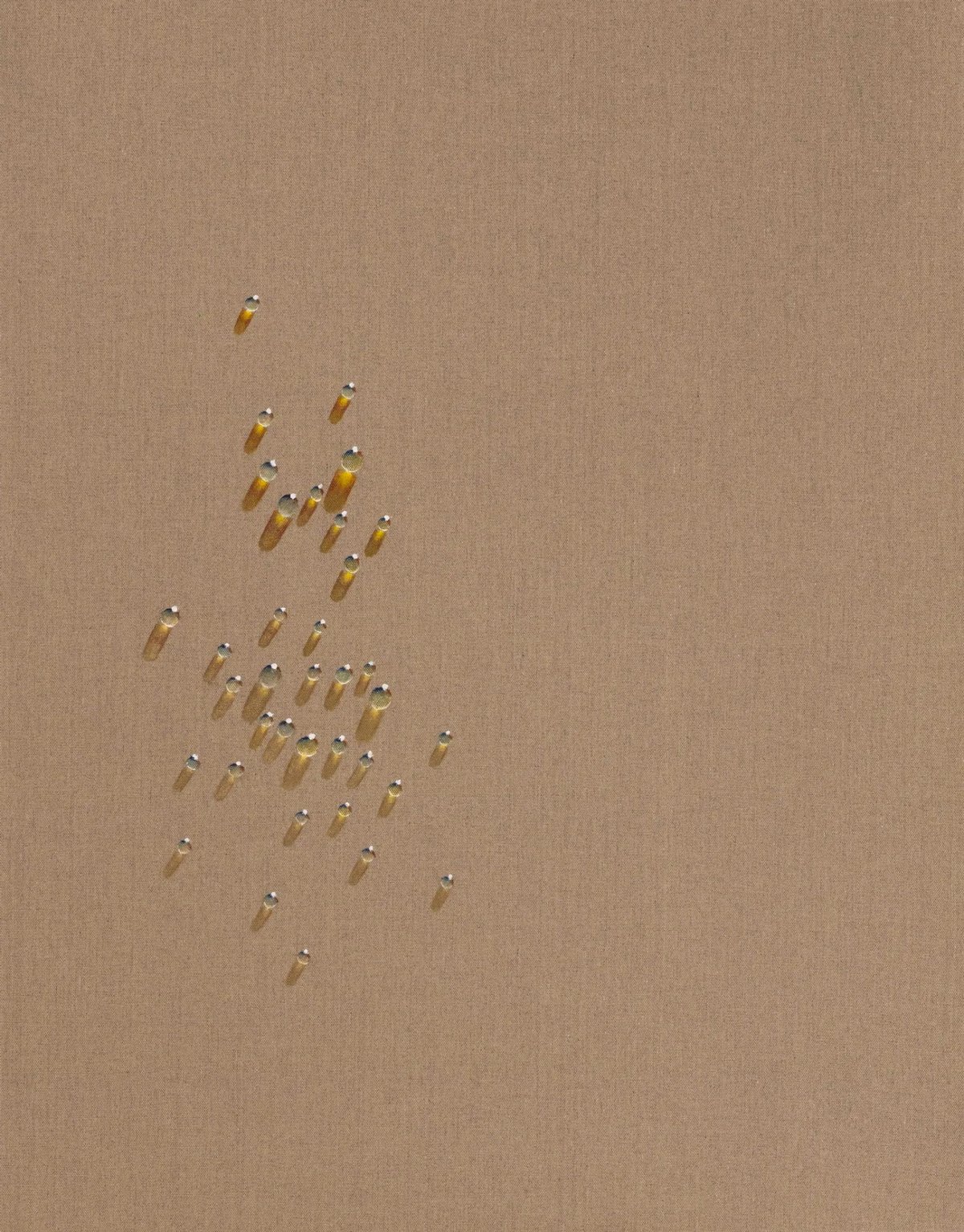
From the early 1970s until his death in 2021, Korean artist Kim Tschang-Yeul painted water droplets. From one of the galleries representing his work:
The waterdrop was the starting point for a singular and iconic body of work, which stands at the confluence of lyrical abstraction, Pop art and Chinese calligraphy. This simple and limpid œuvre subtly fuses Taoist wisdom, modern conceptual irony and the tragedy of war.
You can view more of Kim’s work at Colossal and InspirationGrid.
I always learn so much from Evan Puschak’s videos about art. In this one, he takes a look at the work of Mary Cassatt, who, unlike many of her male peers, used the flattened perspective of Impressionism to reveal the thoughts and feelings of her subjects.
Like Manet, she’s dispensing with traditional modeling and perspective. In fact, her choice of a mirror as background is a brilliant way to literally and figuratively foreground the deceptive nature of perspective. Like Degas, she’s exploring the changing effects of artificial light on flesh and fabric. And she’s experimenting with off-kilter viewing angles.
But Cassat isn’t just adopting these techniques for the sake of it. She’s putting them to work in service of her deeper interest in psychology. She realizes that by not allowing the viewer to get drawn into the narrative space opened up by perspective, this new style of painting actually makes it possible to depict the subtle psychology of everyday life, a psychology uncontaminated by allegory or sentimentality. The trick was to combine the immediacy of Manet’s methods with a meticulous observation of posture, gesture, expression, and activity.
Oh my goodness, I love the look of these cups.
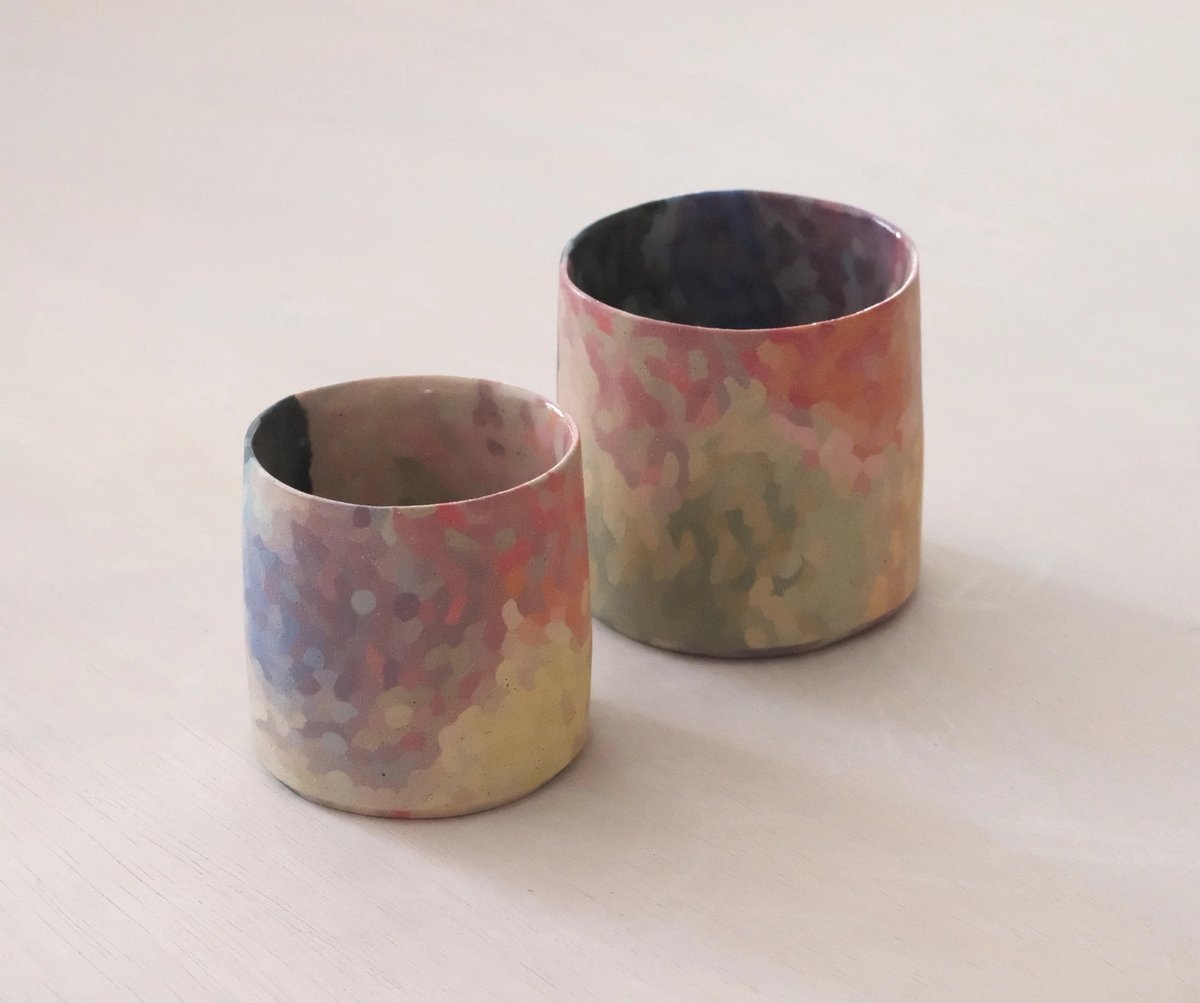
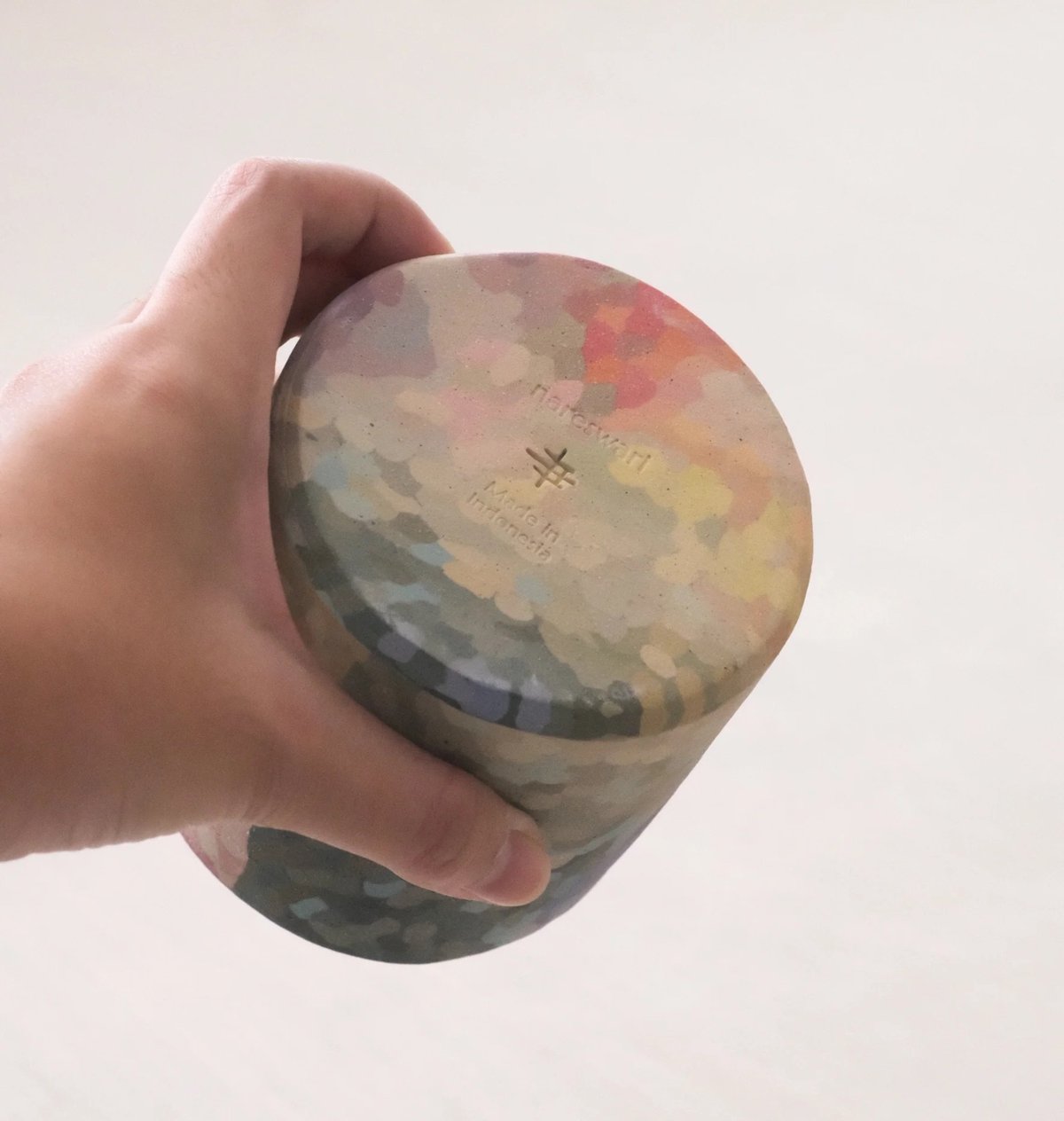
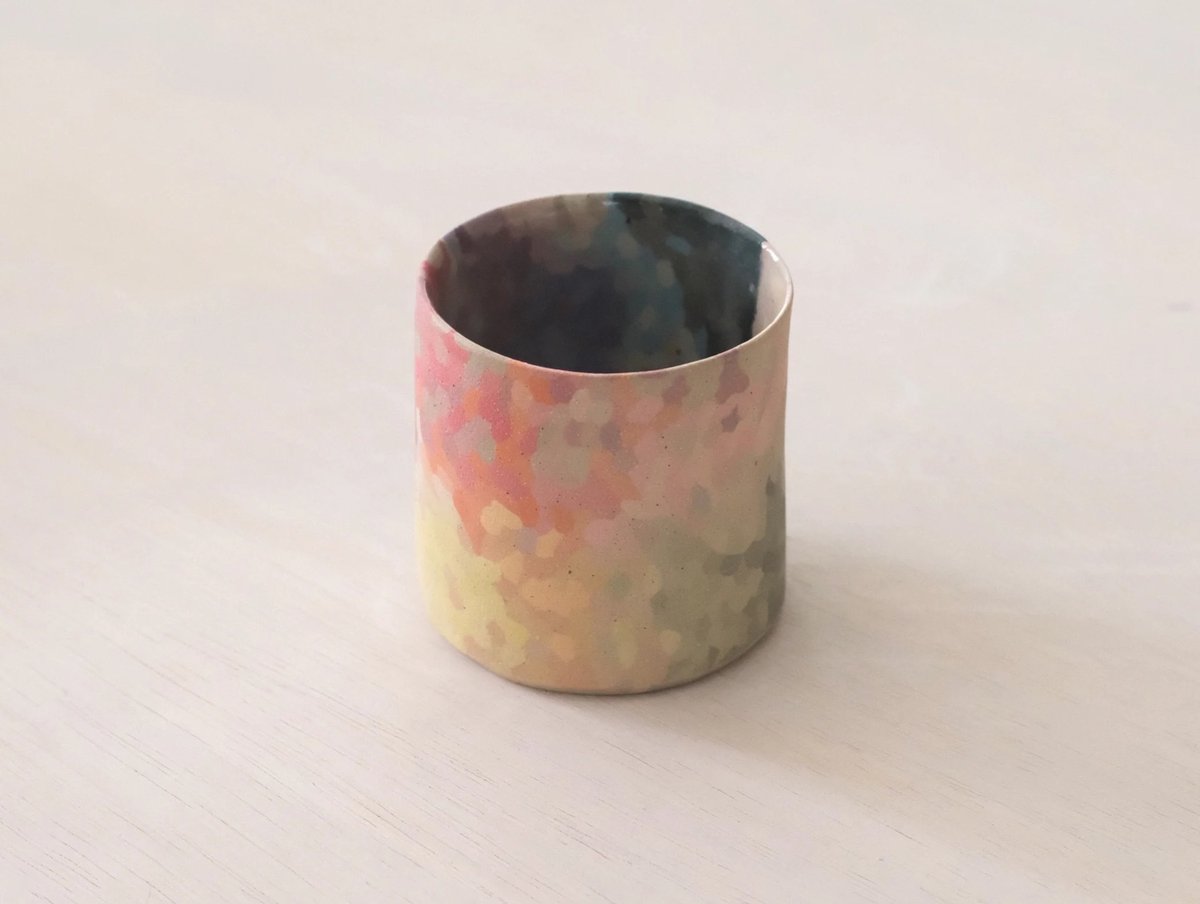
They were made by Indonesian potter Nabila Nareswari using the nerikomi technique. From her about page:
Nerikomi is a technique in pottery that creates decorative patterns by stacking, rolling, and slicing colored clay. Patterns produced by it are structural rather than painted on, which allows the potter to make detailed images or complex repetitive patterns on both sides of the clay slabs.
Nareswari posts videos of her process on Instagram; it is painstaking.
Nerikomi takes a lot of patience and heart 🤍
I think Iris is the epitome of trusting a process. No other work of mine takes as much patience as these lovely mugs and cups do. There isn’t really a shortcut to having them done quicker, you just have to do one thing after another, after another, and before you know it, it’s there in your hands! Albeit two months later😜
She has a shop but all of her Iris collection is currently sold out.
Artist Maya Barkai assembled a collection of pedestrian traffic signals from around the world: Walking Men Worldwide.
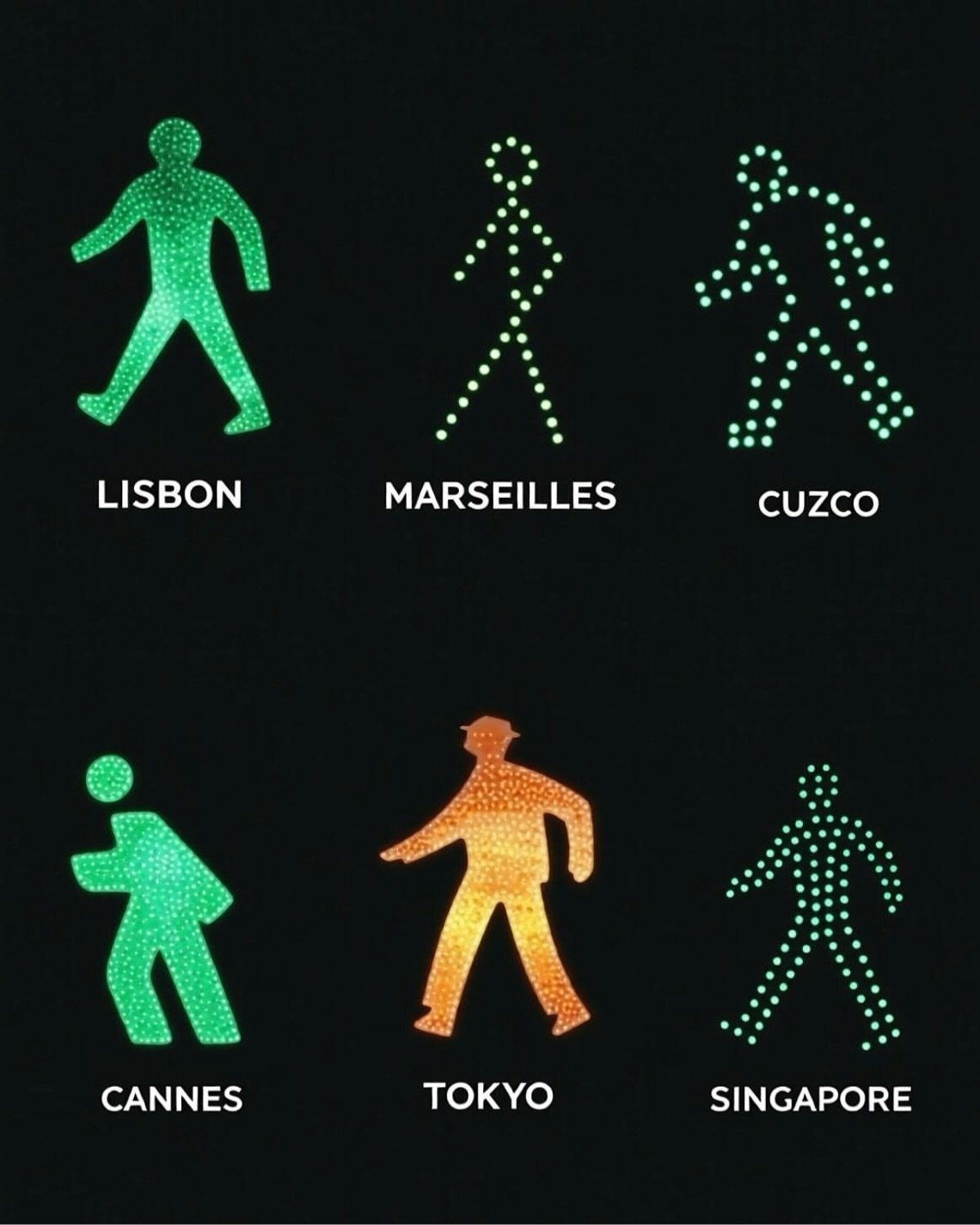
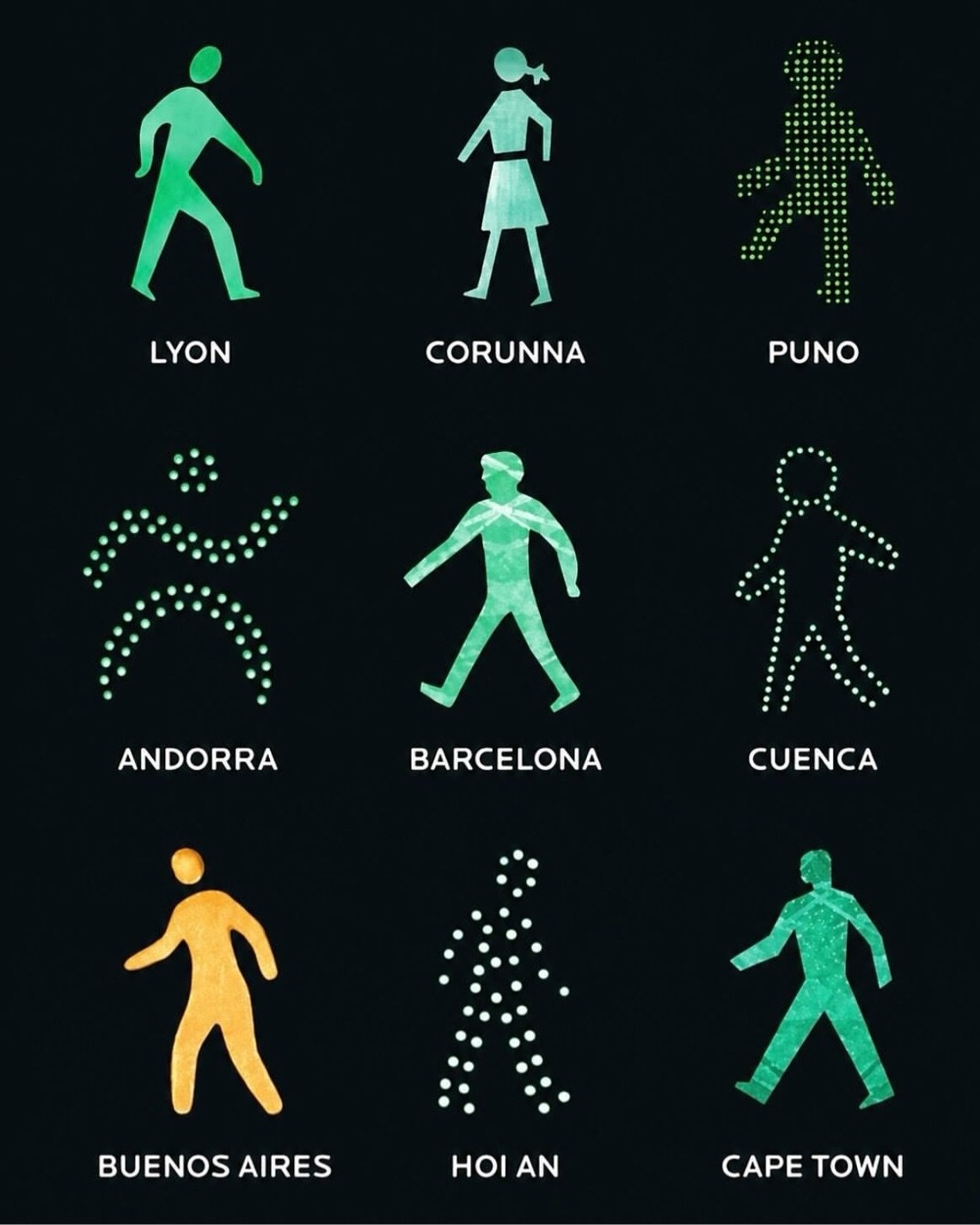
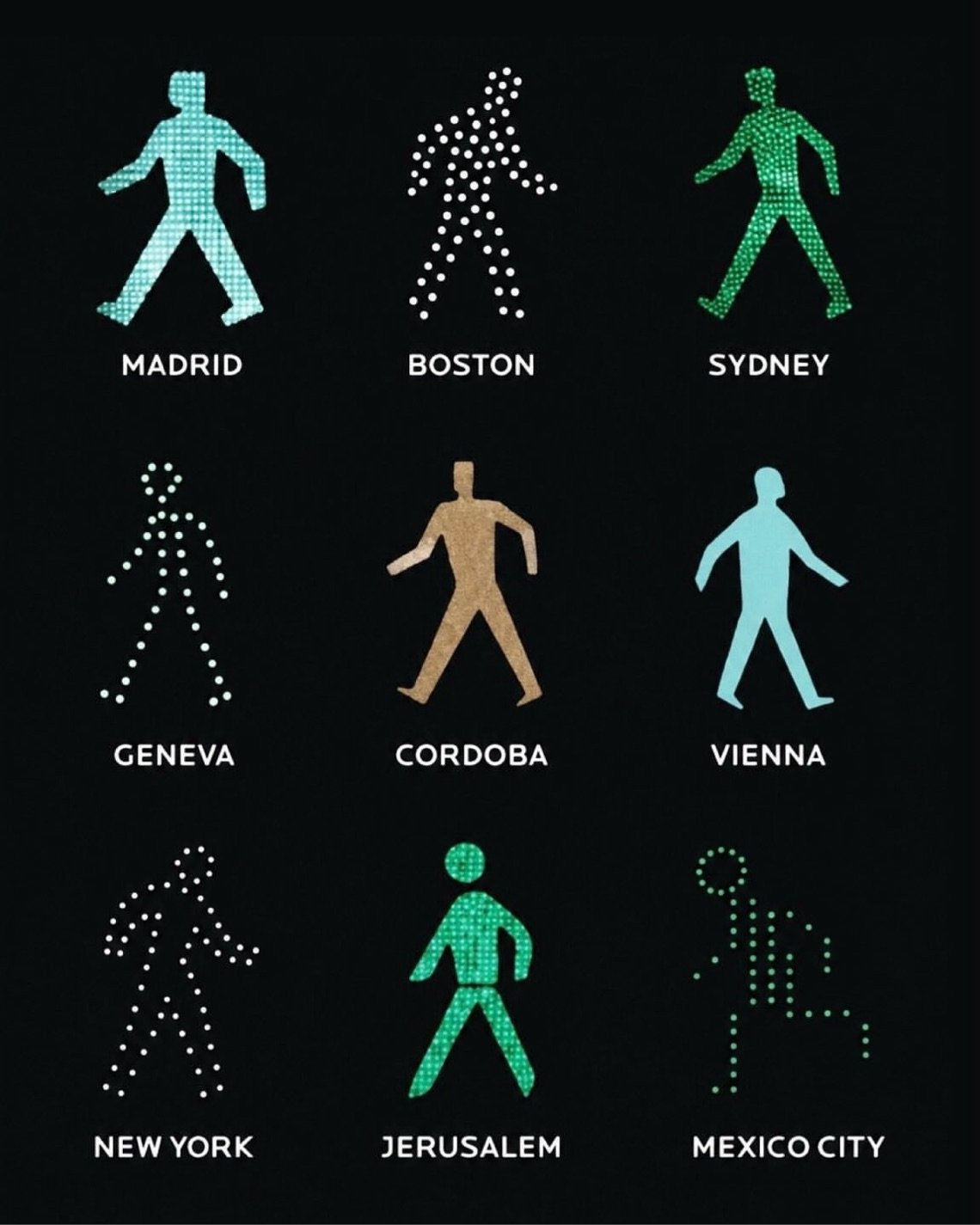
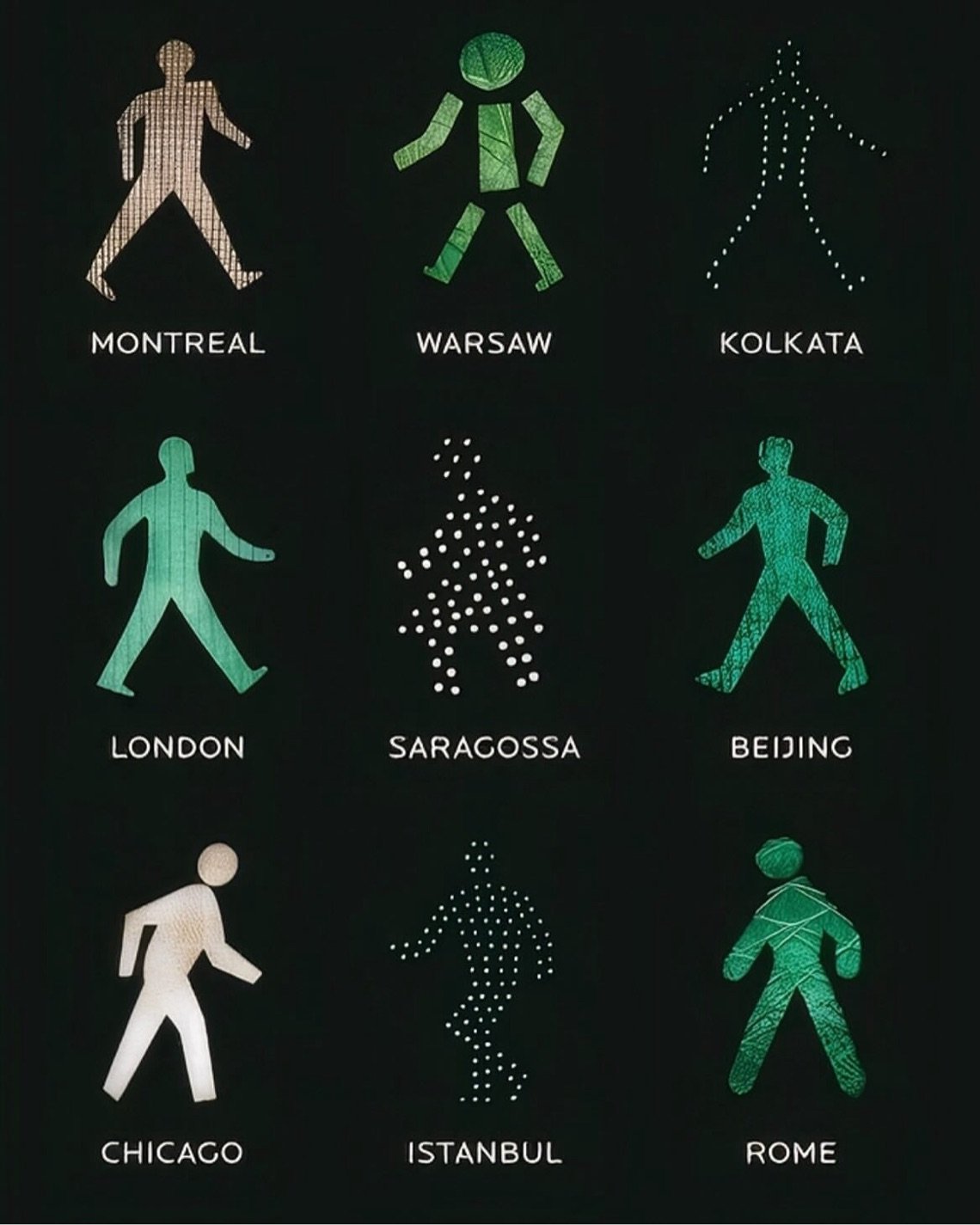
I love all of these little people. The Warsaw one reminds me somewhat of Rocky from Project Hail Mary. Some of the ones from smaller places have more personality, but I feel like the New York and Boston ones are my favorites aesthetically. Weirdly, the iconic German Ampelmännchen isn’t among the crowd here.
A screenprint of the collected pedestrian people is available on the Walking Men Worldwide website. (via @jessicabrillhart)
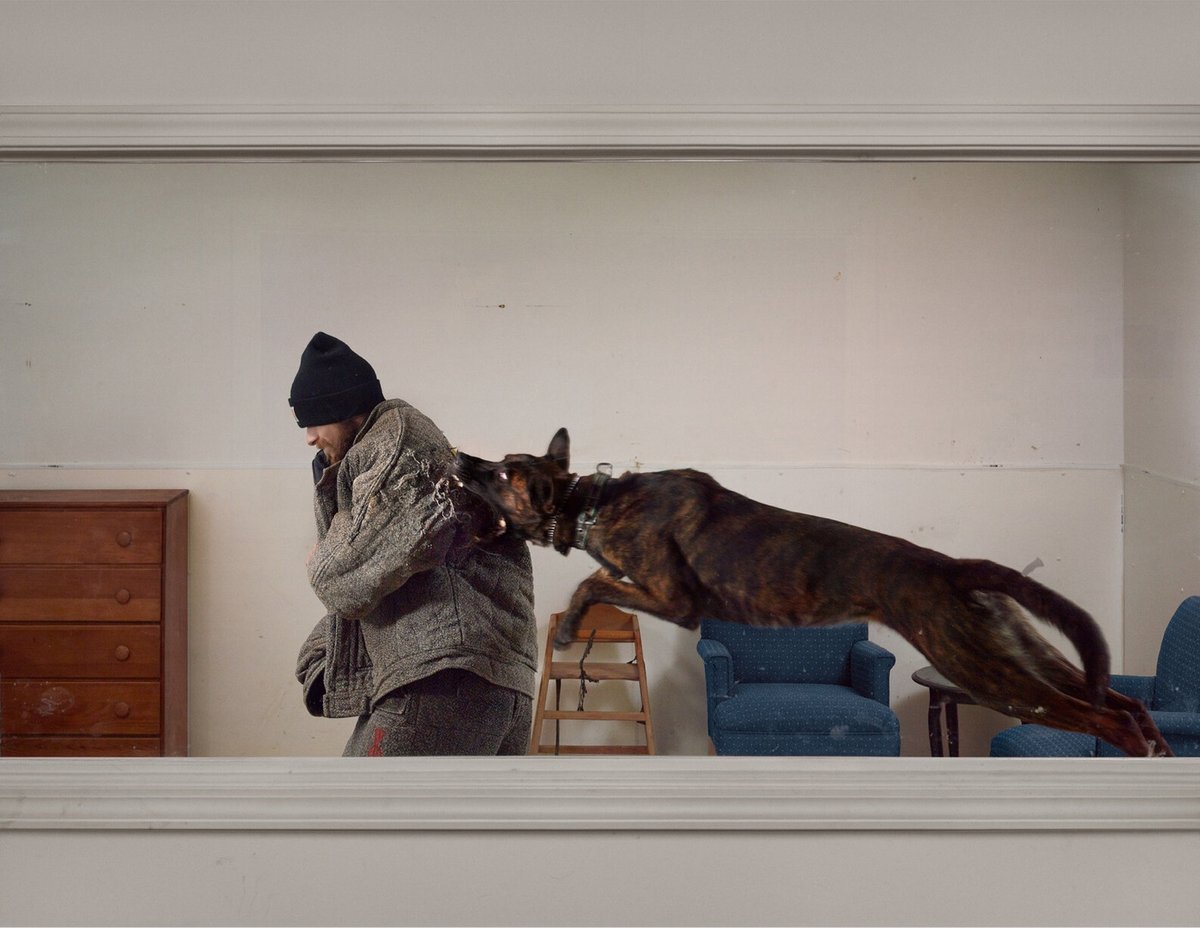
Father Country I Do Love You sounds like a doozy of a new exhibition from photographer Taryn Simon. The project focuses on the life and work of an unnamed, retired FBI agent. From the NY Times: She Spent Years on a Giant Project About One Man. The Result Is Monumental.
As it turned out, his work had touched many catastrophes of American life — the 1996 crash of TWA Flight 800, for example, which the agent helped to inspect, or the attack on the Pentagon on 9/11, when the agent was in charge of sifting debris in the immediate aftermath — and also lesser-known events, historical footnotes that were nonetheless telling. What interested Simon were not just the events themselves, but also their reverberations, far beyond any immediate blast radius. What happened, for instance, to the physical ruins from the TWA crash? What became of the woman who tried to take a photograph of the smoldering Pentagon, whose film the F.B.I. agent had confiscated? Or to the Iraqi diplomat who ran the country’s U.S. embassy during the Persian Gulf war, whom the agent had monitored? Or to the child of a couple accused of being Russian spies, whose house the agent had raided?
The piece describes the project, which includes over 1000 photographs and other material, as “a Great American Novel in visual form” and “huge and fractal: biography as butterfly effect”, which sounds fascinating.
Even Jodie Foster makes an appearance; this particular agent had trained Foster at the FBI Academy in Quantico as preparation for her role as Clarice Starling in The Silence of the Lambs.
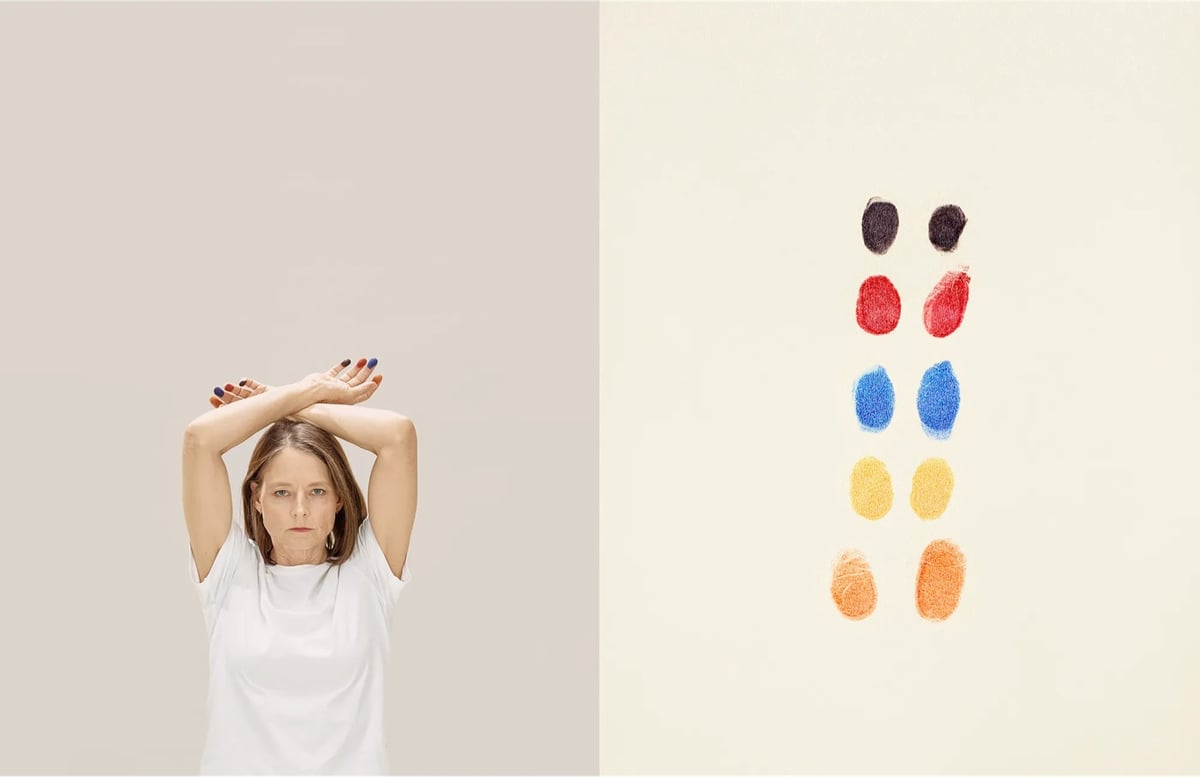
Father Country I Do Love You debuts at the Guggenheim in NYC on September 18 and runs through March 14, 2027.
Older posts



Socials & More