kottke.org posts about art
People are taking photos of statues that cleverly make it look as though the statues are taking selfies.
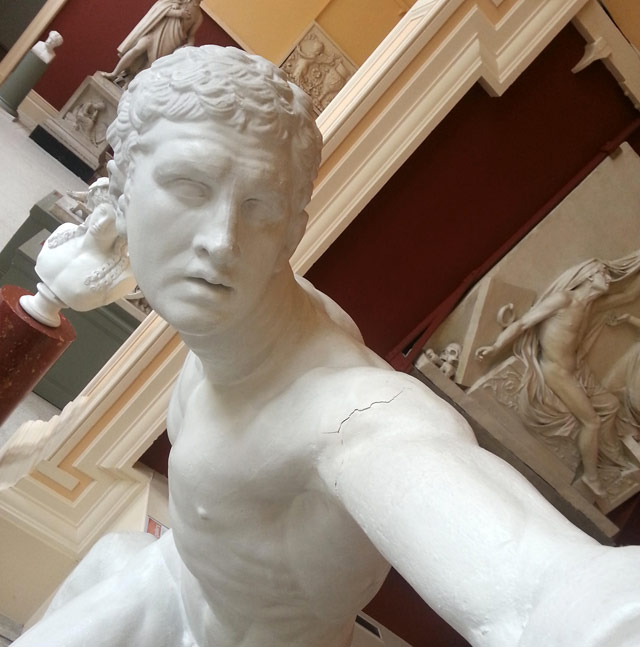
There’s a group on Reddit but most of the photos really aren’t that good. There are more examples on Instagram, including this one and this one from June that predate the activity on Reddit. But the earliest instances I found of statue selfies were this Instagram photo from The Art Institute of Chicago and this tweet featuring the Statue of Liberty, both from December 2013.
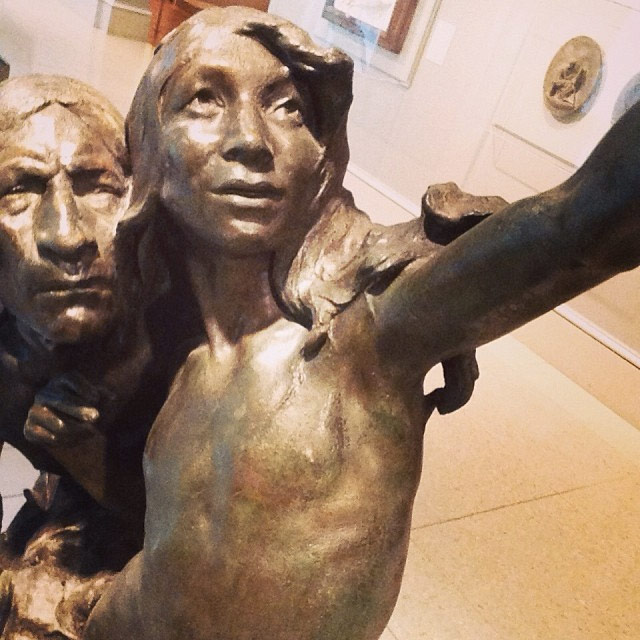
(via @ThatAmelia)
Update: See also Museum of Selfies.
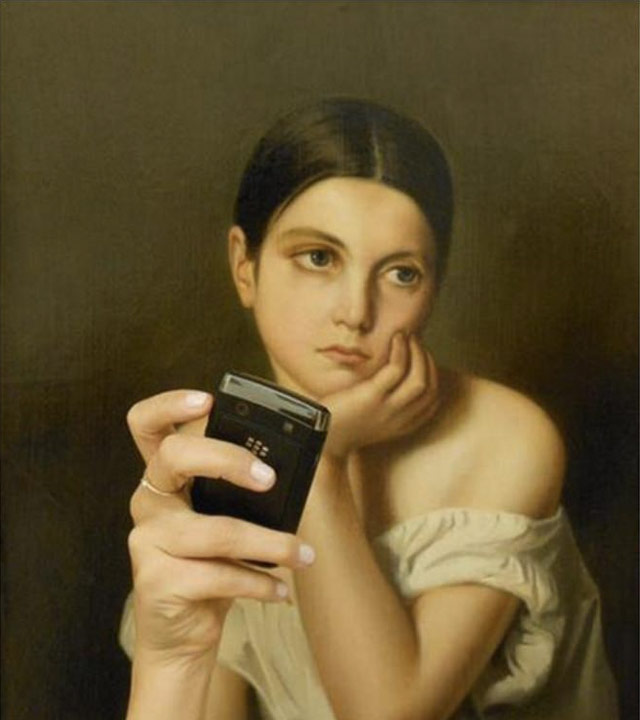
Watch Peanuts creator Charles Schulz draw Charlie Brown. It only takes him around 35 seconds.
(via @fchimero)
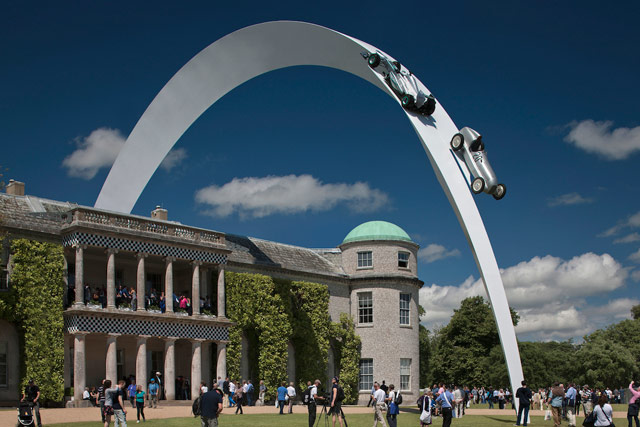
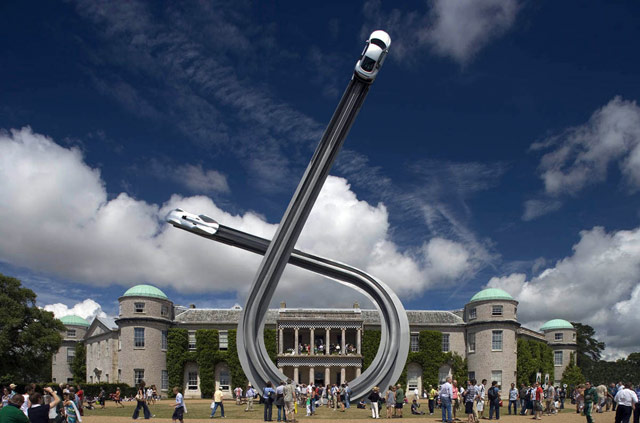
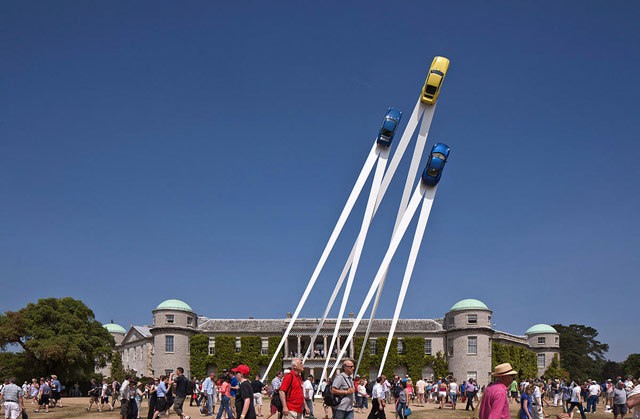
These sculptures by Gerry Judah for the Goodwood Festival of Speed are amazing. Here’s how they made the Mercedes arch for this year’s festival. (via ministry of type)
A seller on Chinese b2b site Alibaba is offering stainless steel sculptures of balloon animal dogs in the style of Jeff Koons. For as little as $500, you can get your own knock-off copy of Balloon Dog, which sold for $58 million last year.
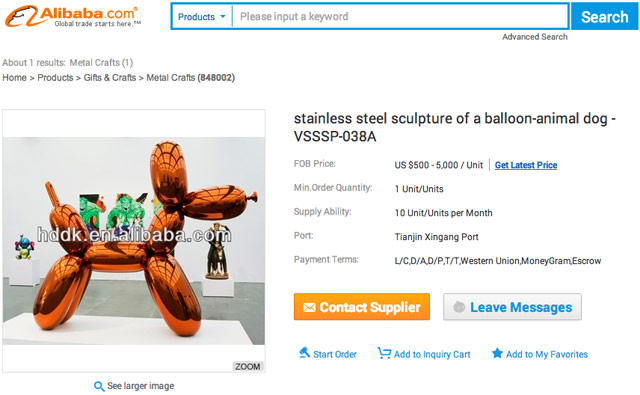
Koons’ dog was about 10 feet tall but the seller notes they can make them anywhere from 3 feet tall to almost 100 feet tall. Jiminy. I wonder what these things look like? I bet they aren’t nearly as precise as the originals, but you never know. See also: Rex Sorgatz’s Uber for Art Forgeries. (via prosthetic knowledge)
Walking City is a slowly evolving walking video sculpture by Universal Everything. A walking tour of modern architecture, if you will.
File this one under mesmerizing. A deserving winner of the Golden Nica award at Ars Electronica. (via subtraction)
In the first two installments of a series about artistic authenticity, Rex Sorgatz writes about five different people’s efforts to own a Vermeer and how you can get your very own masterpiece.
It’s possible that Vermeer — an artist who many consider the greatest painter of all time — could paint with no more acuity than you or me. Vermeer may have been a simple technologist — but a technologist who could recreate the world with scintillating photographic intensity, centuries before photography was invented, which might actually be a bigger deal than being a good painter.
I loved these articles. I wish I would have written them…I am fascinated with both Vermeer and art forgeries. Good stuff.
Sometime around 1918 in Buenos Aires, Marcel Duchamp designed a chess set:
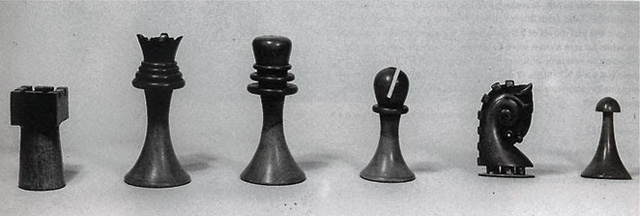
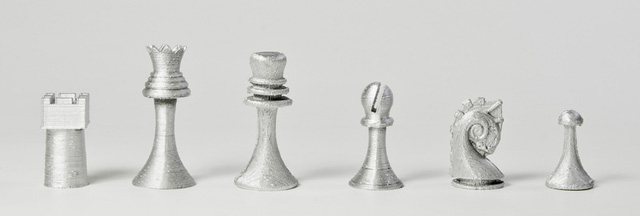
Sometime earlier this year, Scott Kildall and Brian Sera used archival photos of the hard-to-find set, turned them into 3D models of the chess pieces, and made a pattern for 3D printing your own set:
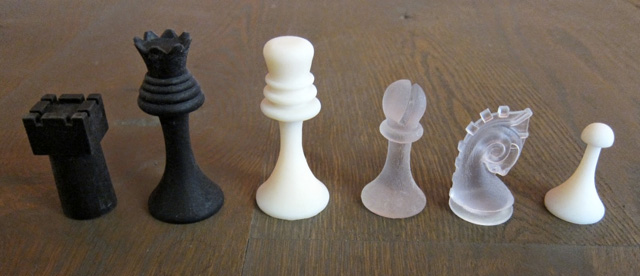
The community at Thingaverse is already busy making interesting variations of Duchamp’s set…look at this one:
Something tells me Duchamp would have loved this whole thing.
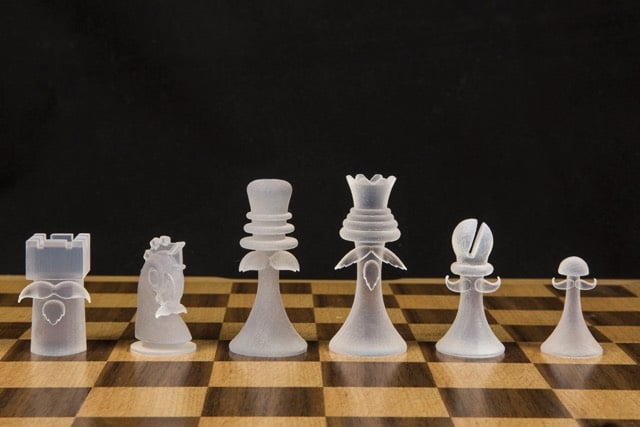
Update: Welllllll, Duchamp may have loved this, but his estate definitely did not. Duchamp’s estate sent Kildall and Sera a cease and desist letter, forcing them to remove the 3D models from Thingiverse. Which, the irony! So, Kildall and Sera, riffing on Duchamp’s mustachioed Mona Lisa, have created a set of six 3D-printed chess pieces with mustaches modeled on the Duchamp set. Fantastic.
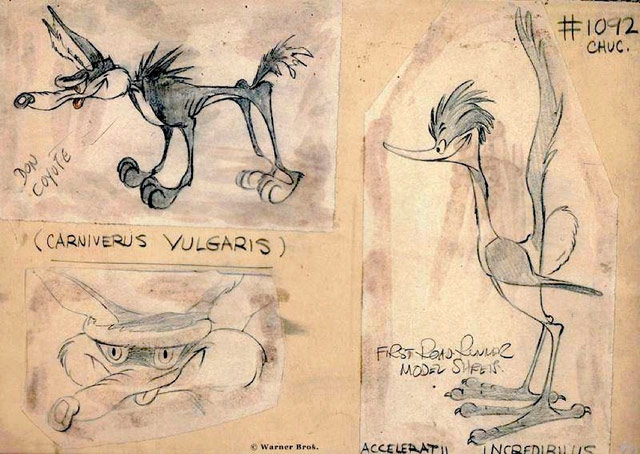
From the official Chuck Jones Tumblr, an early sketch of the Road Runner and Coyote by Jones.
Also by Jones, how to draw Bugs Bunny:
(via @peeweeherman)
When he was around 32 years old, Leonardo da Vinci applied to the Duke of Milan, Ludovico Sforza, for a job. The duke was in need of military expertise and Leonardo’s 10-point CV emphasized his military engineering skills:
3. Also, if one cannot, when besieging a terrain, proceed by bombardment either because of the height of the glacis or the strength of its situation and location, I have methods for destroying every fortress or other stranglehold unless it has been founded upon a rock or so forth.
4. I have also types of cannon, most convenient and easily portable, with which to hurl small stones almost like a hail-storm; and the smoke from the cannon will instil a great fear in the enemy on account of the grave damage and confusion.
And I love what is almost an aside at the end of the list:
Also I can execute sculpture in marble, bronze and clay. Likewise in painting, I can do everything possible as well as any other, whosoever he may be.
Oh yeah, P.S., by the way, not that it matters, I am also the greatest living artist in the world, no big deal. Yr pal, Leo. (via farnam street and the letters of note book)
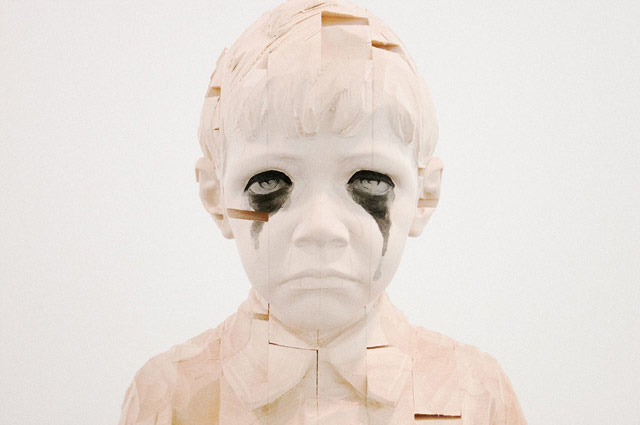
Clayton Cubitt took photographs of The Beautifully Frightful Wooden Children of Gehard Demetz, now on display at Jack Shainman Gallery in Chelsea. From the gallery’s description of the project:
With impeccable craftsmanship, Demetz builds figures and reliefs of children and rural, often religious, architectural forms. While his subjects often take the forms of adolescent or very young children who are at the precipice of self-realization, their grave expressions and powerful stances suggest something much less innocent than their ages might suggest. Situated on plinths, these life-size works are elevated above their natural stature, allowing them to confront adults at eye level with a fierce or introspective gaze far beyond their years. Rather than being carved from a single large block of wood, these sculptures are built up from smaller rectangular units-mimicking classic building blocks-with gaps in their structures like pieces missing from their bodies or lost fragments of their being.
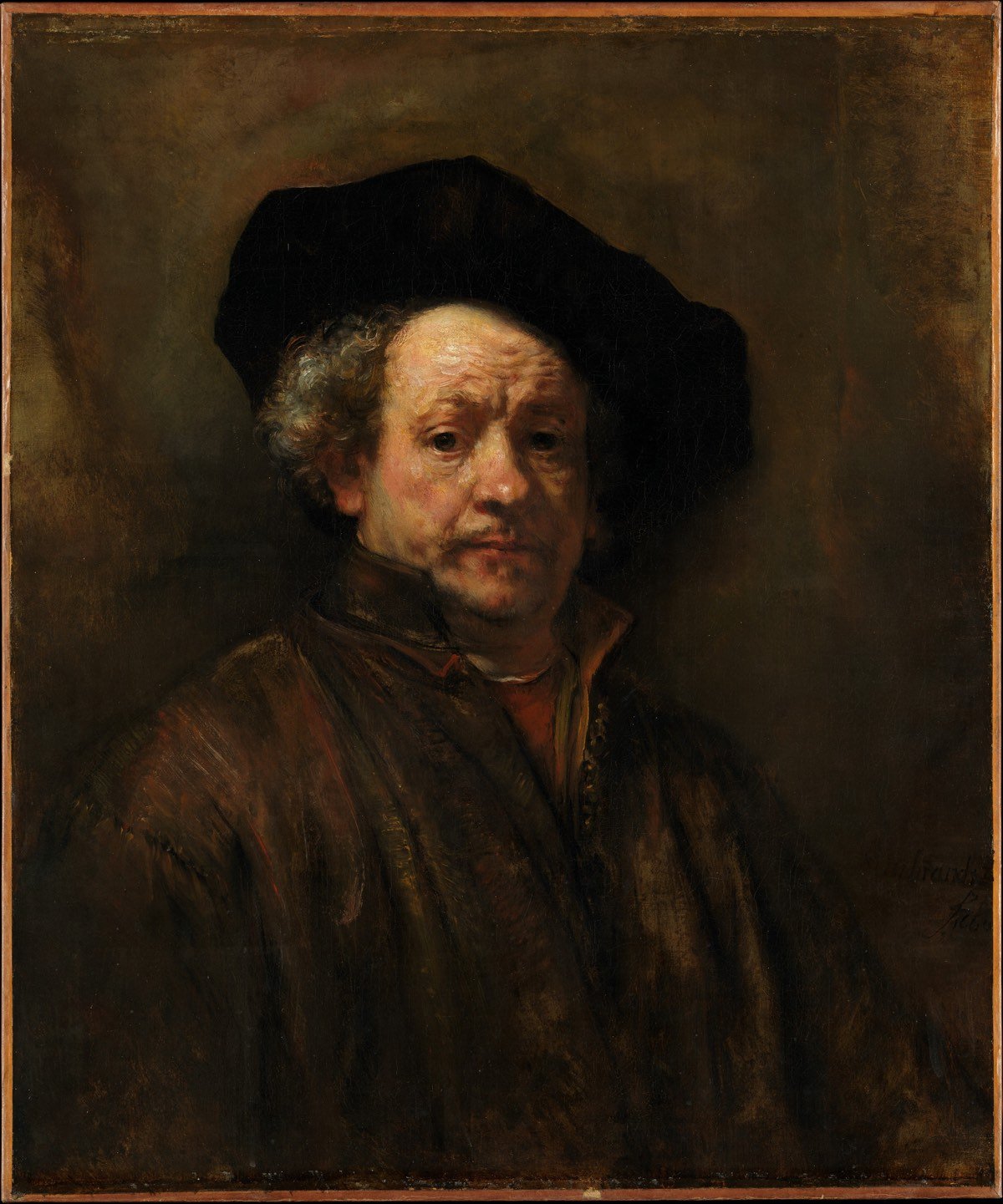
NYC’s Metropolitan Museum of Art has made a whopping 400,000 high-resolution digital images of its collection available for free download. You can browse the collection here.
In making the announcement, Mr. Campbell said: “Through this new, open-access policy, we join a growing number of museums that provide free access to images of art in the public domain. I am delighted that digital technology can open the doors to this trove of images from our encyclopedic collection.”
The Metropolitan Museum’s initiative-called Open Access for Scholarly Content (OASC)-provides access to images of art in its collection that the Museum believes to be in the public domain and free of other known restrictions; these images are now available for scholarly use in any media.
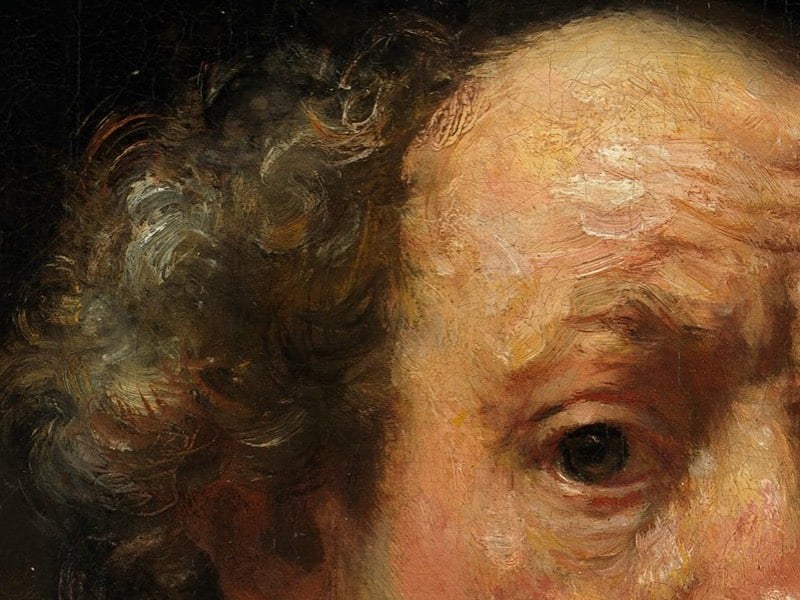
For instance, here’s a 12-megapixel image of Rembrandt’s 1660 self-portrait…you can see quite a bit of detail:
(thx, fiona)
Update: Wendy Macnaughton on why the high-resolution images released by the Met are such a big deal for art students and art history fans.
For someone who went to art school being able to do this is a revelation. I used to go to the museum with my sketchpad and copy the old masters. I’d get as close as I could to understand the brush strokes, colors, lines. The guards knew who to watch out for and would bark suddenly when we stuck our faces over the imaginary line.
As class assignments we were required to copy hundreds — literally hundreds — of the masters drawings and paintings. for those we mostly worked from images in books — a picture the size of a wallet photo.
Which is one of the many reasons this new met resource is fucking phenomenal.
You can get so, so close — far closer than one could in real life.
Update: Today (Feb 7, 2017) the Met announced that they’re releasing 375,000 images under Creative Commons’ CC0 license, which “allows anyone to use, re-use, and remix a work without restriction”. Previously, those works were restricted to non-commercial use only.
Swedish artist Hans Jörgen Johansen makes photographs of mold landscapes, grown in his studio from flour and bread.
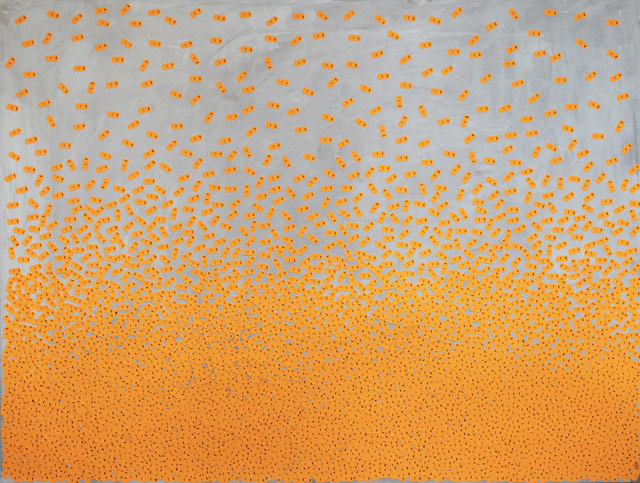
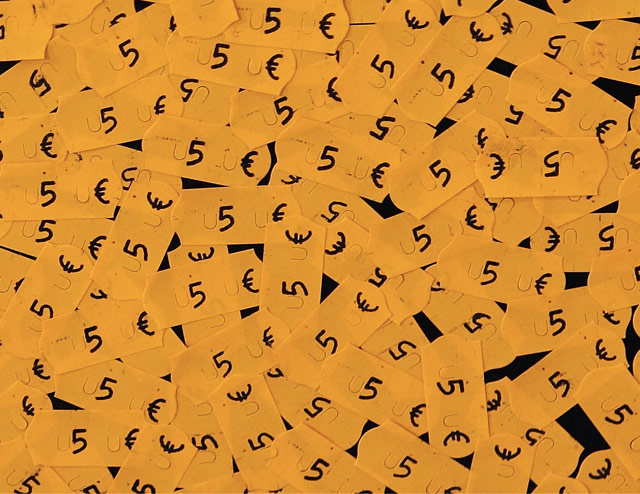
French artist BL67 makes his works by sticking price tags directly to the canvas. Each piece is priced according to the total of the price stickers stuck to it. Here’s a close-up showing some detail:
(via adam)
Newer posts
Older posts




Socials & More