kottke.org posts about art
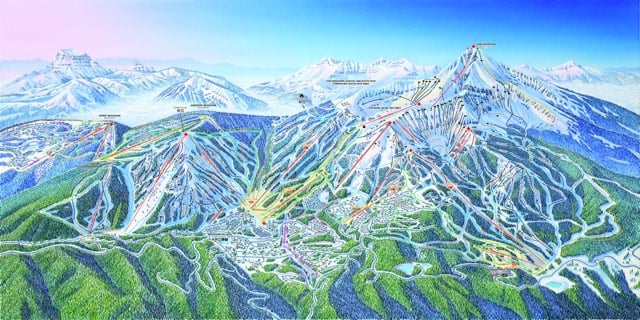
If you’ve ever noticed most ski trail maps look kinda the same, the reason is many of them have been painted by a single individual: James Niehues.
Each view is hand painted by brush and airbrush using opaque watercolor to capture the detail and variations of nature’s beauty. In many instances, distortions are necessary to bring everything into a single view. The trick is to do this without the viewer realizing that anything has been altered from the actual perspective.
Here’s a selection of his work:




Over the holiday, the Smithsonian’s Freer|Sackler art galleries put more than 40,000 works of art online; that’s their entire collection available for high-resolution download. Here’s the announcement on their blog.
We’ve digitized our entire collection and today, we’re making it available to the public. That’s thousands of works now ready for you to download, modify, and share for noncommercial purposes. As Freer|Sackler Director Julian Raby said, “We strive to promote the love and study of Asian art, and the best way we can do so is to free our unmatched resources for inspiration, appreciation, academic study, and artistic creation.”
Great to see galleries and museums doing this sort of thing, e.g. the Met and all the institutions participating in The Commons at Flickr. (via the verge)
A project called Maximum Distance. Minimum Displacement. analyzed the lyrics of several popular rappers for geographical mentions and had an industrial robot draw each rapper’s lyrical journey through the world. At a glance, you can see how worldly (N***as in Paris) or locally oriented (Straight Outta Compton) each rapper is. Compare world-traveller Jay Z:

with Kendrick Lamar:
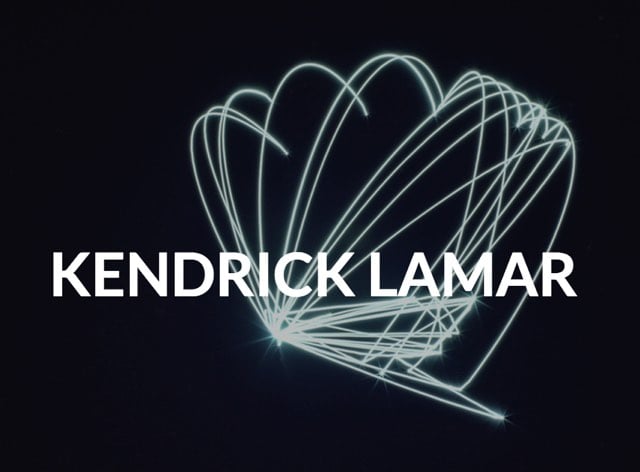
Kendrick Lamar’s analysis is culled from the lyrics of his underground & independent albums and is heavy with Compton references. Over the next few years it will be interesting to see how mainstream successes and personal experience change the travel of his lyrics.
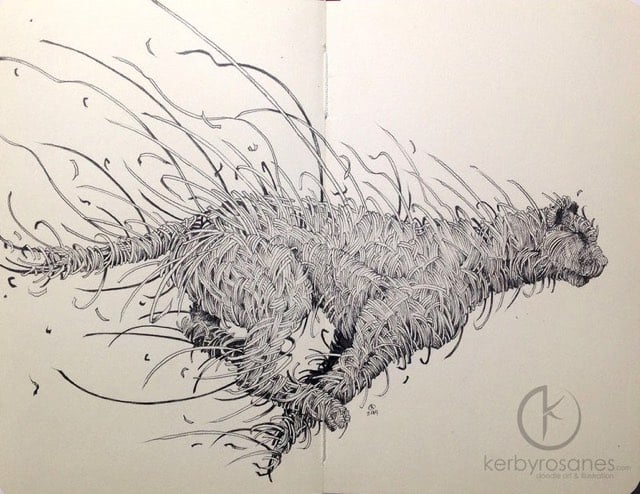
Love this illustration style from Kerby Rosanes. Gorgeous:
(via colossal)
Yarin Gal used an “inpainting” algorithm to extend the canvases of notable paintings. Like van Gogh’s Starry Night or Hokusai’s The Great Wave off Kanagawa:


There’s a post on the Wolfram Alpha blog about how you can achieve similar effects using the Wolfram Language.
Wow, the art of making marbled paper, a short film from 1970. Charmingly British, just like the film about the Teddy Grays candy factory or the putter togetherer of scissors. Super cool how the inks are placed on a water bath, swirled expertly to make patterns, and then transferred to the paper.
Also of note: the segment on the conservation of old books starting at around 9:55…I never knew they took them apart like that to dunk the pages in water! Sadly, the Cockerell Bindery ceased operation in the late 1980s with the death of Sydney Cockerell and its contents were sold at auction. (thx, matt)

A shell found in the 1890s was recently found to have what scientists are calling the world’s oldest “abstract marking”, a 500,000-year-old etching made by Homo erectus, an extinct ancestor of modern humans.
Close inspection under the microscope suggested that the engraving was intentional. The weathering patterns of the grooves, each of which is about 1 centimetre long, show signs of significant ageing, and there are no gaps between turns, indicating that the maker paid attention to detail. He or she probably made the engraving on a fresh shell, and the newly made etching would have resembled white lines on a dark canvas, Joordens’ team notes. Sand grains still embedded in the shell were dated to around 500,000 years ago.

The International Exhibition of Modern Art held at the The 69th Regiment Armory in NYC in 1913 was the first large public exhibition of modern art in the US. It has become known simply as The Armory Show. Among the artists represented at the show were Paul Cézanne, Georges Braque, Georges Seurat, Vincent van Gogh, Auguste Rodin, Pablo Picasso, Wassily Kandinsky, Claude Monet, Marcel Duchamp, Henri Matisse, and Fernand Léger. So yeah, important show.
John Ptak noticed in a book he was reading that the sales total for the show was $44,148, which is something like $1,000,000 in today’s dollars. Of that total, two artists were responsible for almost a third of the total: Odilon Redon made $7000 and Cézanne made $6700. Duchamp sold four pieces for $972. It goes without saying that the ~1600 pieces exhibited at The Armory Show would fetch billions of dollars at auction now.
On the walk back from soccer practice the other day, my sharp-eyed seven-year-old son spotted something through the partially papered-up window of a Chelsea gallery. “Hey, Kara Walker!” he says.1 And sure enough:

The gallery is Sikkema Jenkins on 22nd St and Walker’s show, Afterword, starts there tomorrow and runs through mid-January. The show is an extension of A Subtlety, Walker’s installation at the Domino Sugar Factory in Williamsburg over the summer. Several of the sugar statues and the left fist of the sugar sphinx from the Domino installation will be shown along with new video works and notes & sketches from the planning of A Subtlety. You can see some of the figures in the photo above (fashioned out of Domino Sugar, naturally) and I think that’s probably the fist in the background on the right, wrapped in plastic.
Klaus Kemp is one of the last great practitioners of arranging diatoms, tiny single celled algae. The art is only visible under microscopic magnification.
More information about Kemp and his images is available on his web site. (via waxy)
Everyone knows graffiti artist extraordinaire Banksy is a man. What this post presupposes is, maybe she’s a woman?
But what Banksy Does New York makes plain is that the artist known as Banksy is someone with a background in the art world. That someone is working with a committee of people to execute works that range in scale from simple stencil graffiti to elaborate theatrical conceits. The documentary shows that Banksy has a different understanding of the street than the artists, street-writers, and art dealers who steal Banksy’s shine by “spot-jocking” or straight-up pilfering her work-swagger-jackers who are invariably men in Banksy Does New York.
All of which serves as evidence against the flimsy theory that Banksy is a man.
Or maybe Banksy’s like the Dread Pirate Roberts?
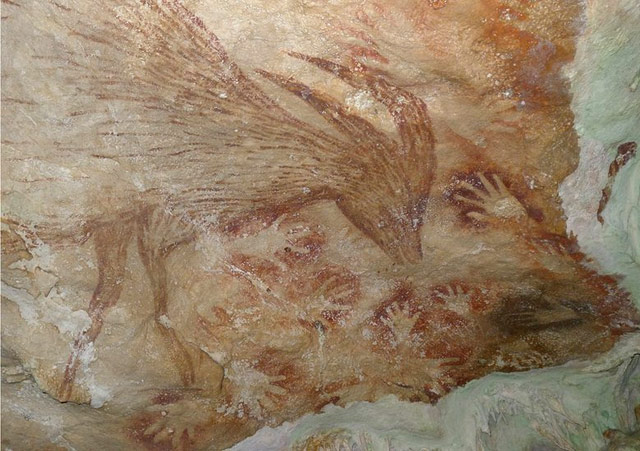
Paintings in a cave in Indonesia have been dated to 40,000 years ago, as old or older than any paintings found in Europe.
For decades, the only evidence of ancient cave art was in Spain and southern France. It led some to believe that the creative explosion that led to the art and science we know today began in Europe.
But the discovery of paintings of a similar age in Indonesia shatters this view, according to Prof Chris Stringer of the Natural History Museum in London.
“It is a really important find; it enables us to get away from this Euro-centric view of a creative explosion that was special to Europe and did not develop in other parts of the world until much later,” he said.
The discovery of 40,000-year-old cave paintings at opposite ends of the globe suggests that the ability to create representational art had its origins further back in time in Africa, before modern humans spread across the rest of the world.
“That’s kind of my gut feeling,” says Prof Stringer. “The basis for this art was there 60,000 years ago; it may even have been there in Africa before 60,000 years ago and it spread with modern humans”.
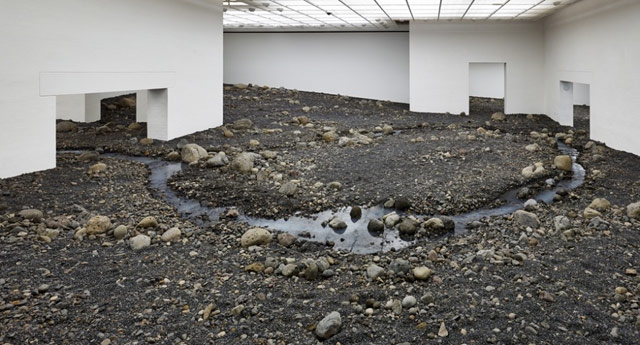
New work from Olafur Eliasson: he installed a riverbed in the Louisiana Museum of Modern Art in Denmark.
Take a closer look at how half-a-dozen ceramics masters practice their craft.
Newer posts
Older posts





Socials & More