
The Dirty Car Artist
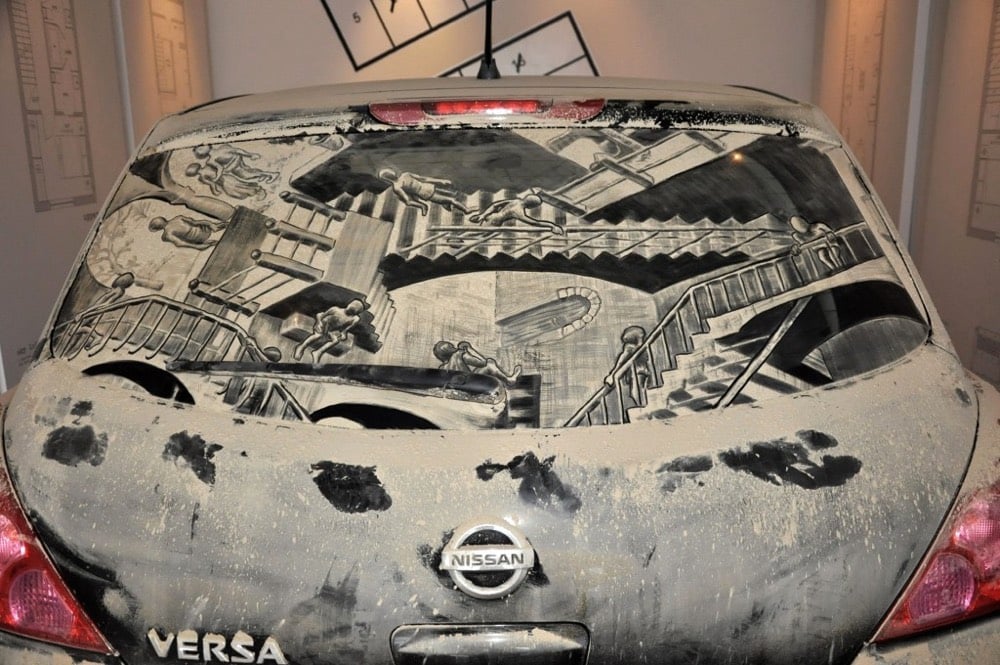
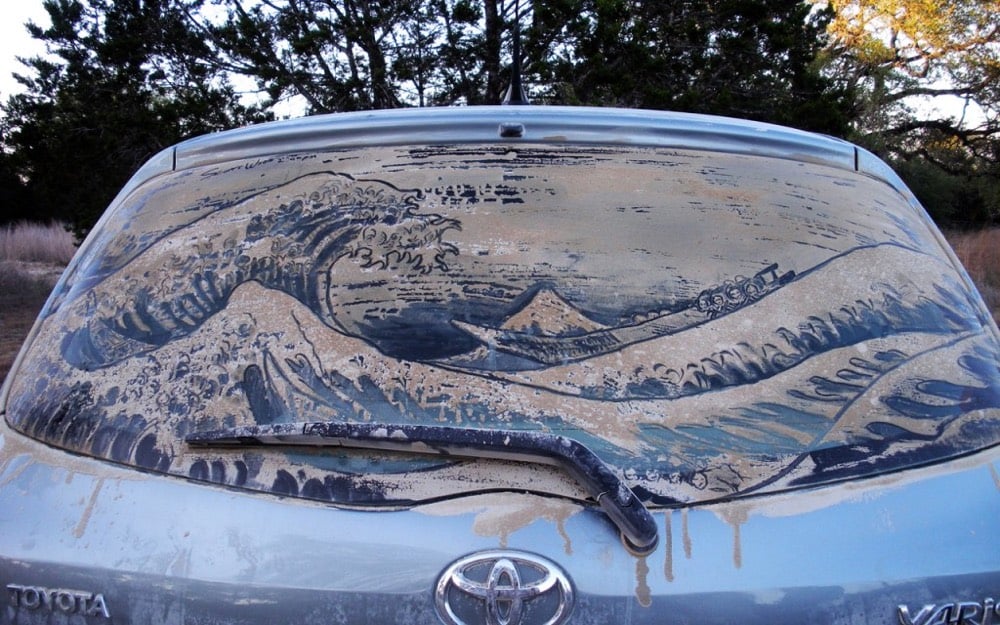
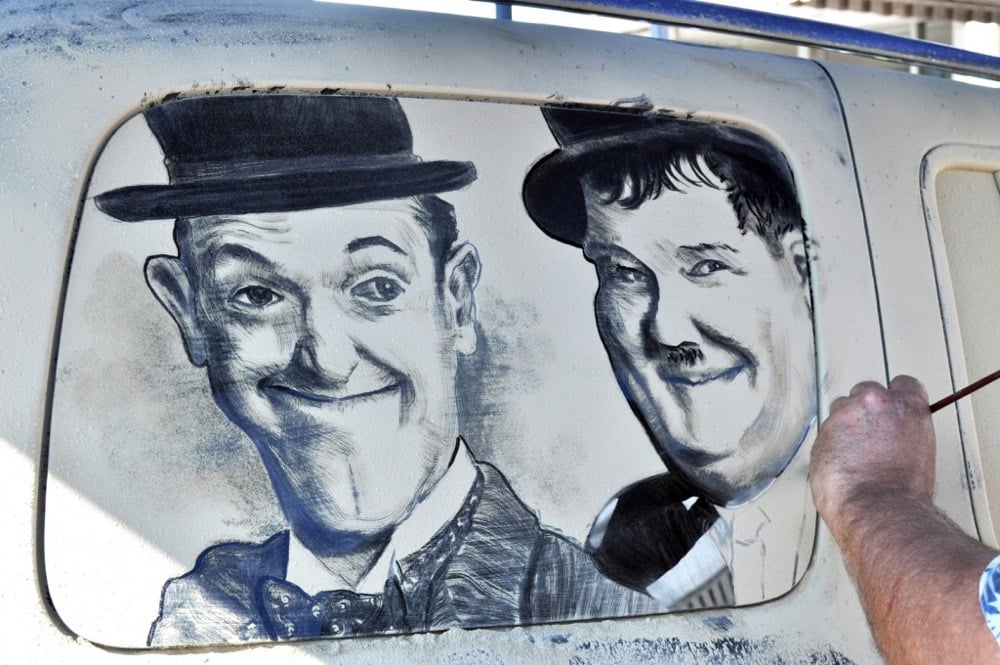
Scott Wade turns the dirty windows of cars into mobile art. Here’s a look at Wade in action:

This site is made possible by member support. 💞
Big thanks to Arcustech for hosting the site and offering amazing tech support.
When you buy through links on kottke.org, I may earn an affiliate commission. Thanks for supporting the site!
kottke.org. home of fine hypertext products since 1998.
Beloved by 86.47% of the web.
Scott Wade turns the dirty windows of cars into mobile art. Here’s a look at Wade in action:
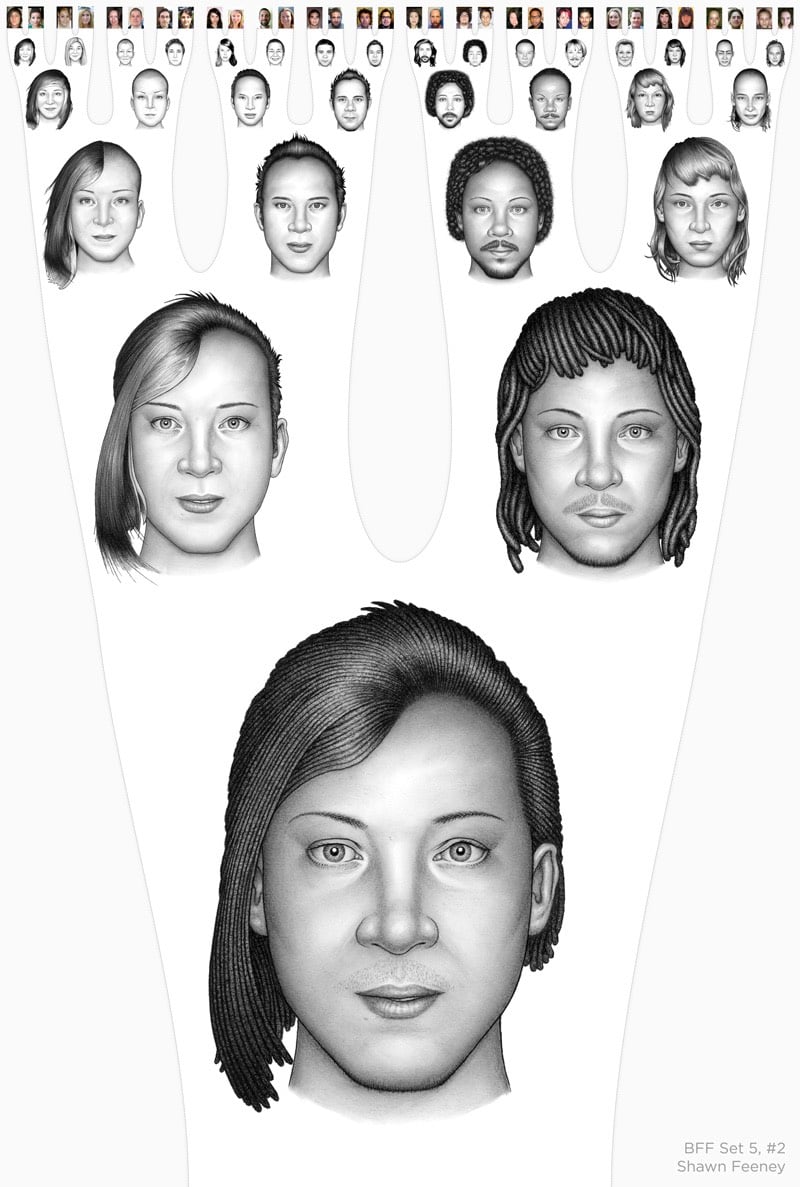
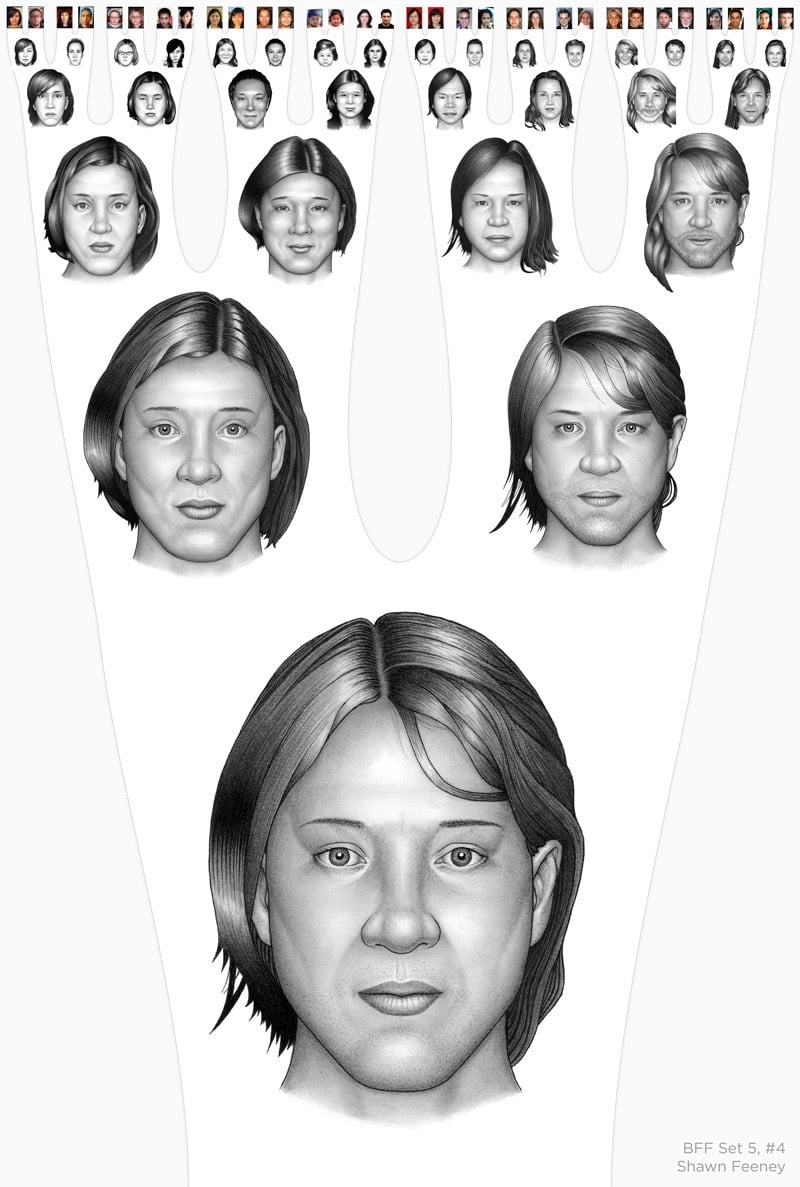
Artist Shawn Feeney worked as a forensic artist for a few years and was inspired by that experience to produce BFF, a project where he combined the faces of pairs of friends into composite portraits, and then pairs of those composites into composite drawings, and so on until a single composite remained from 128 initial faces. Here are two of the quarterfinalist brackets:
And in this video, you get a closer look at the complete bracket and how the lineage of each starting drawing develops through the generations:
This reminds me of the software-averaged faces of people from different countries around the world and also Jason Salavon’s work like the combination of all the couch gags from The Simpsons and Every Playboy Centerfold (SFW).
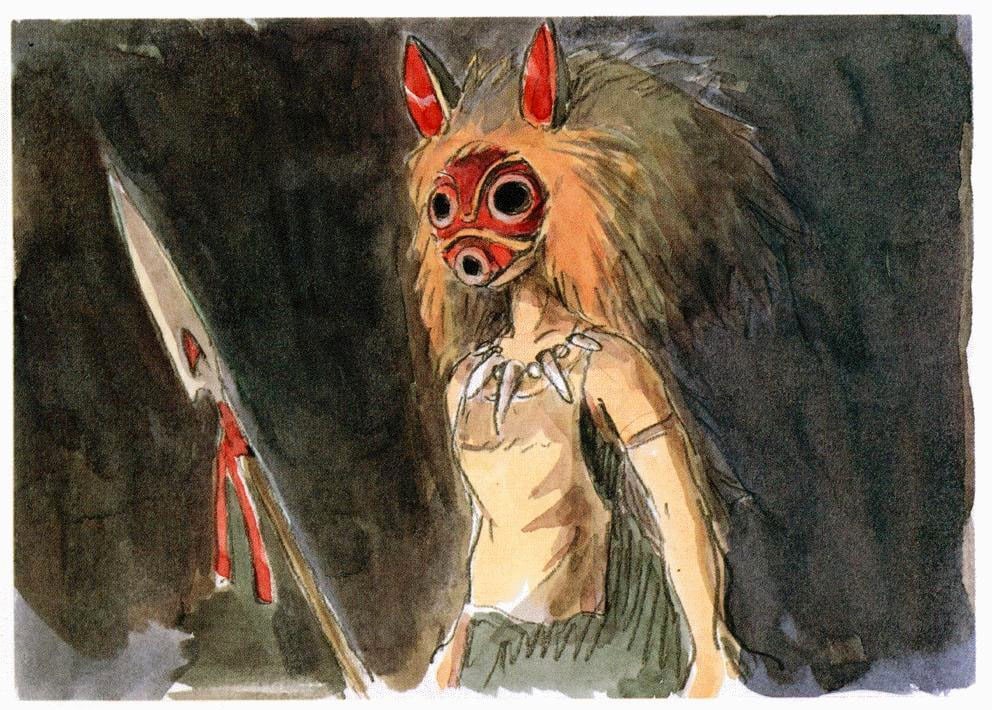
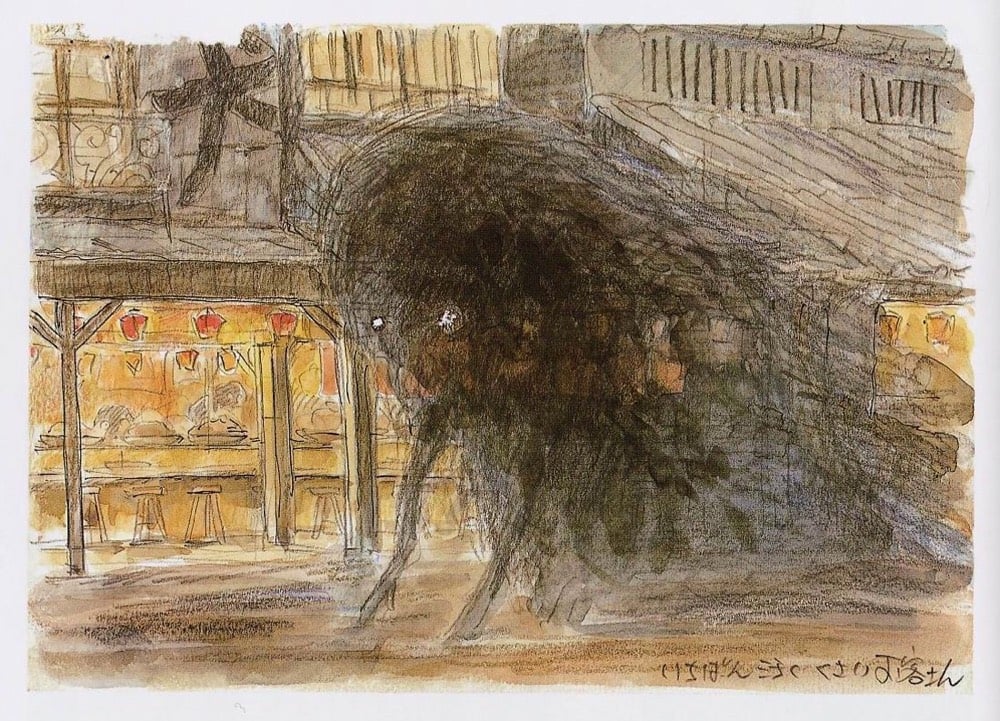
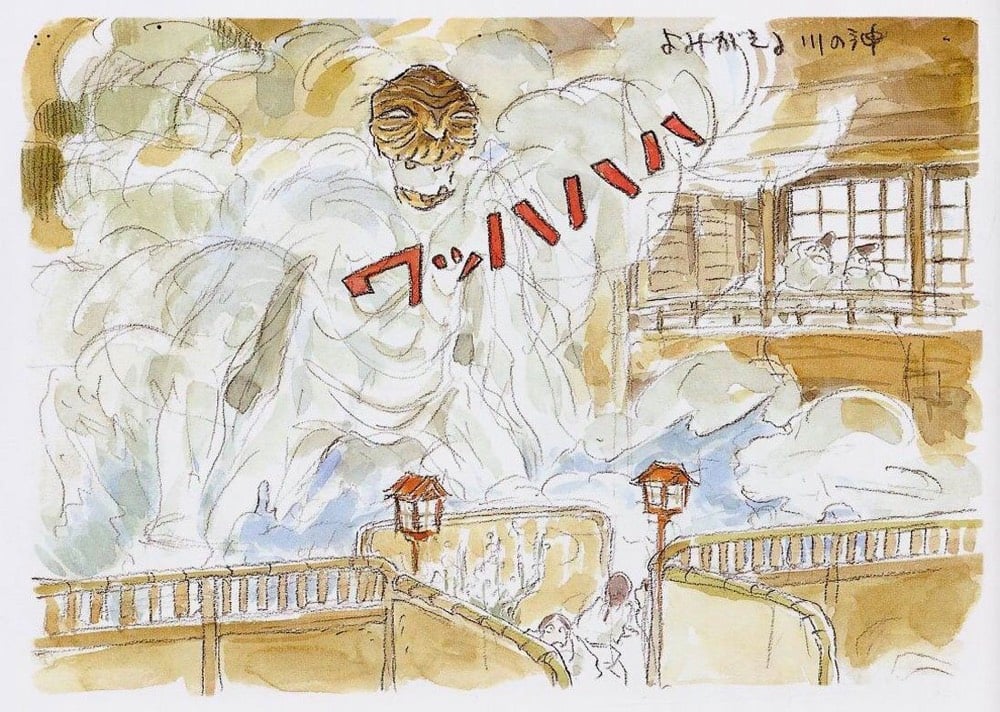
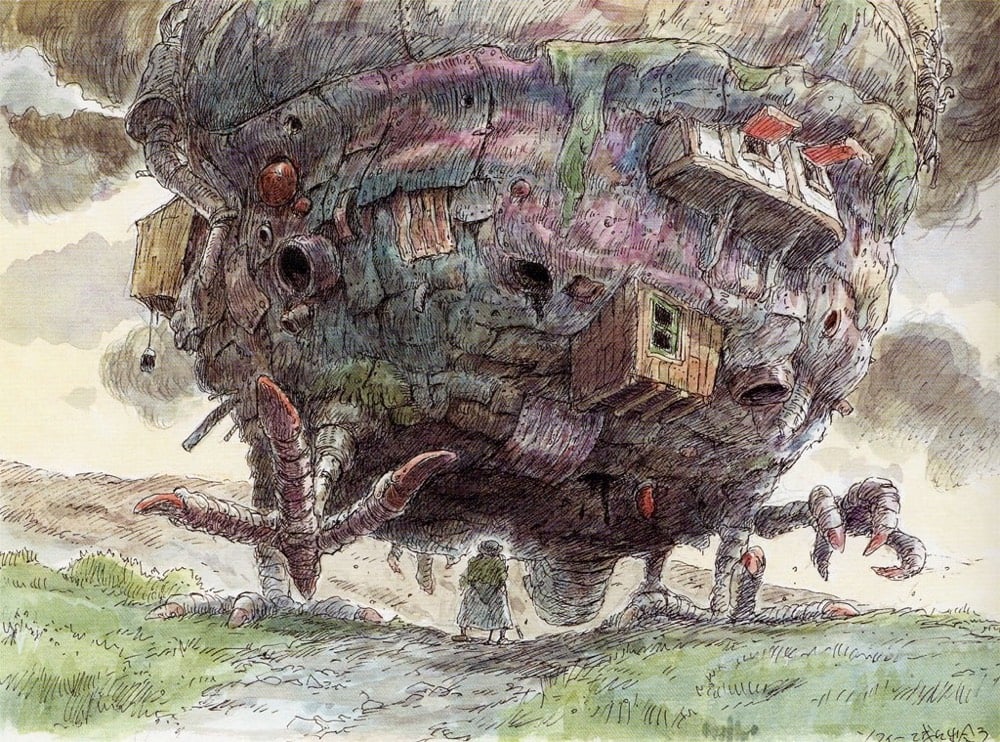
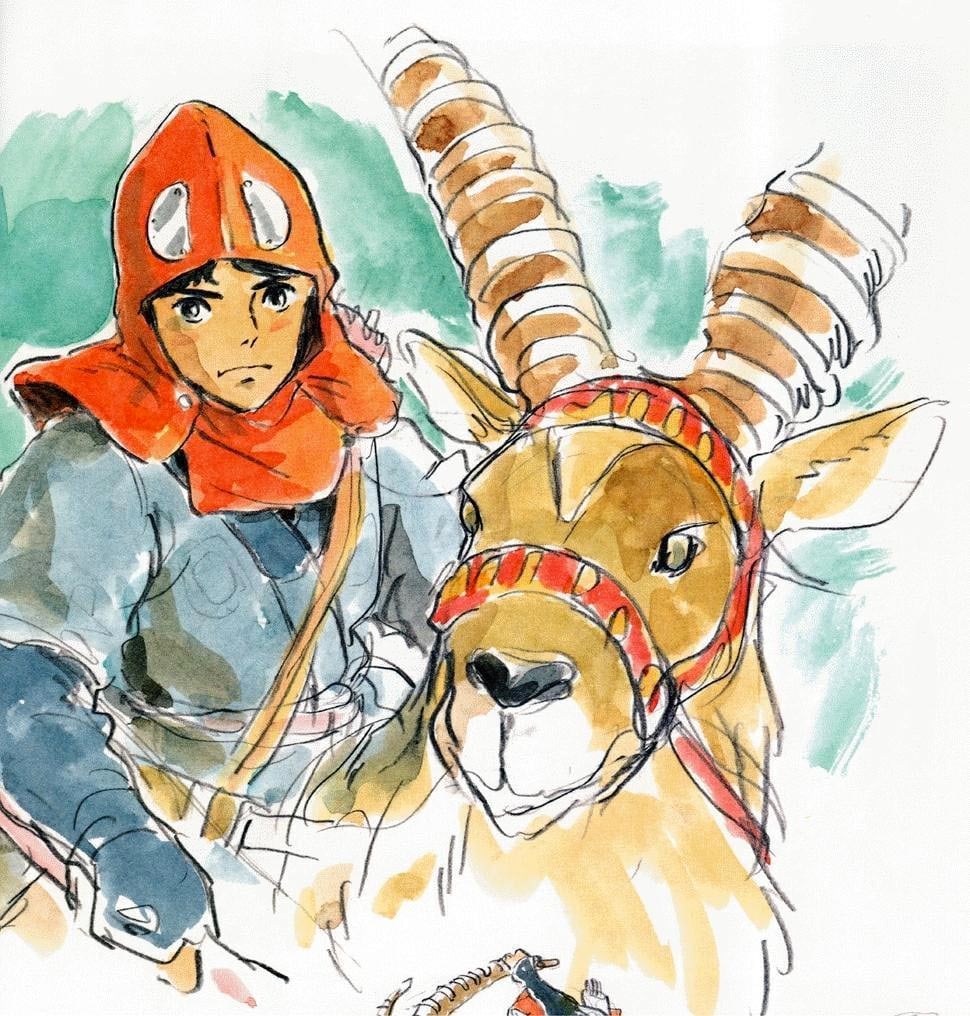
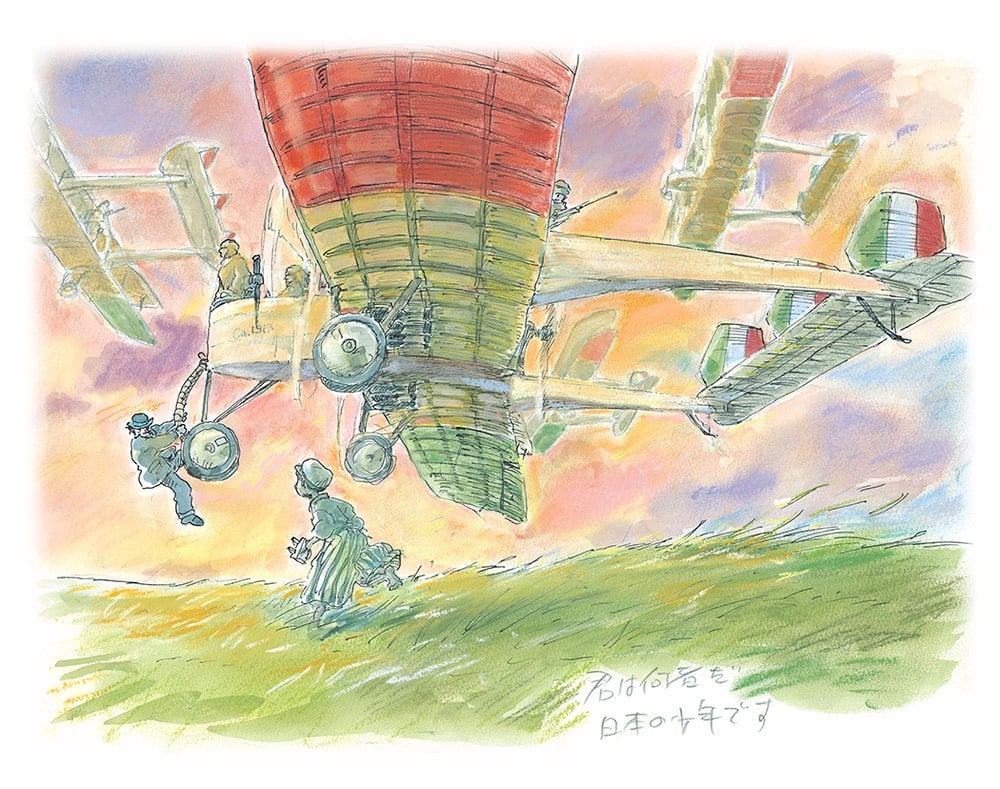
Tales From Weirdland has a collection of posts that feature concept drawings from several Studio Ghibli movies like Spirited Away, Howl’s Moving Castle, and Castle in the Sky. I poked around a little and found artwork & concept drawings from Princess Mononoke, The Wind Rises, and Porco Rosso. Hand dawn and it all just pops off the screen. Wonderful.
Looks like a lot of this is available in book form as well: The Art of Spirited Away, The Art of Princess Mononoke, The Art of Howl’s Moving Castle, etc.
Artist and former advertising art director Alvaro Naddeo does these wonderful paintings of old iconic junk from our branded past repurposed into absurdist structures and vehicles, like Junkyard Wars through the lens of Warhol. It’s tough to explain, so just feast thine eyes on a couple of examples:
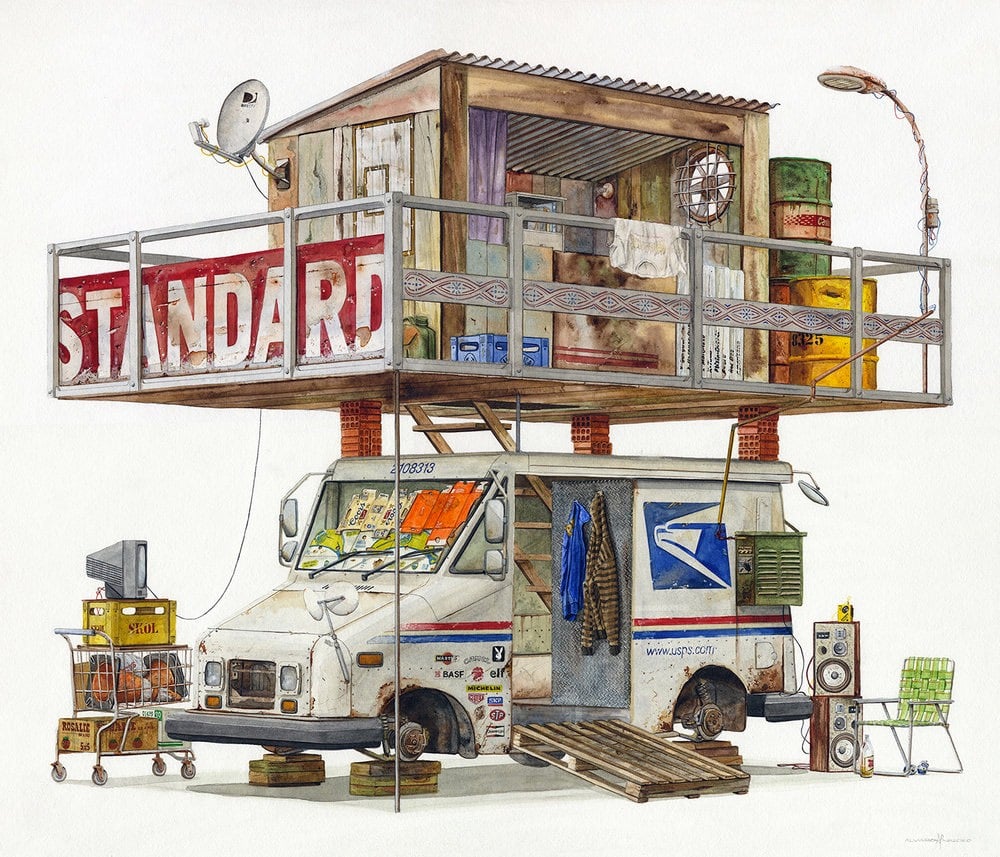
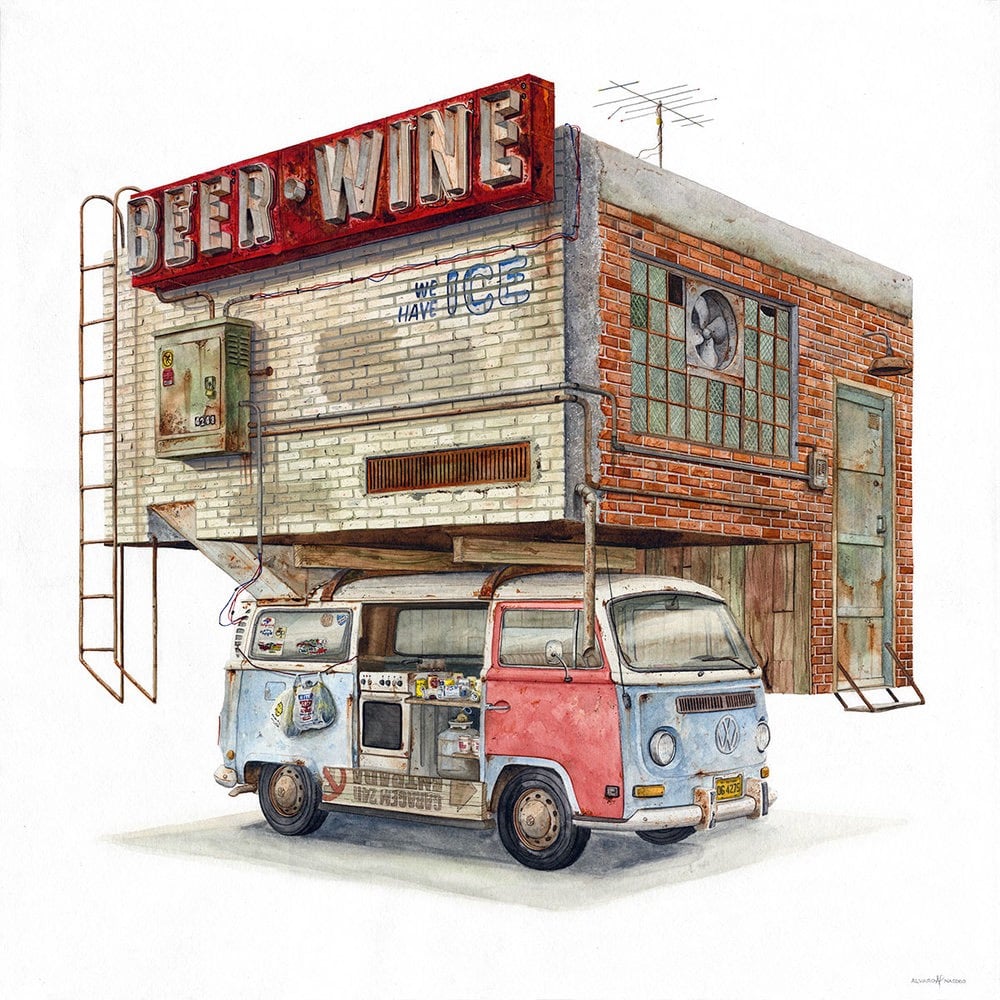
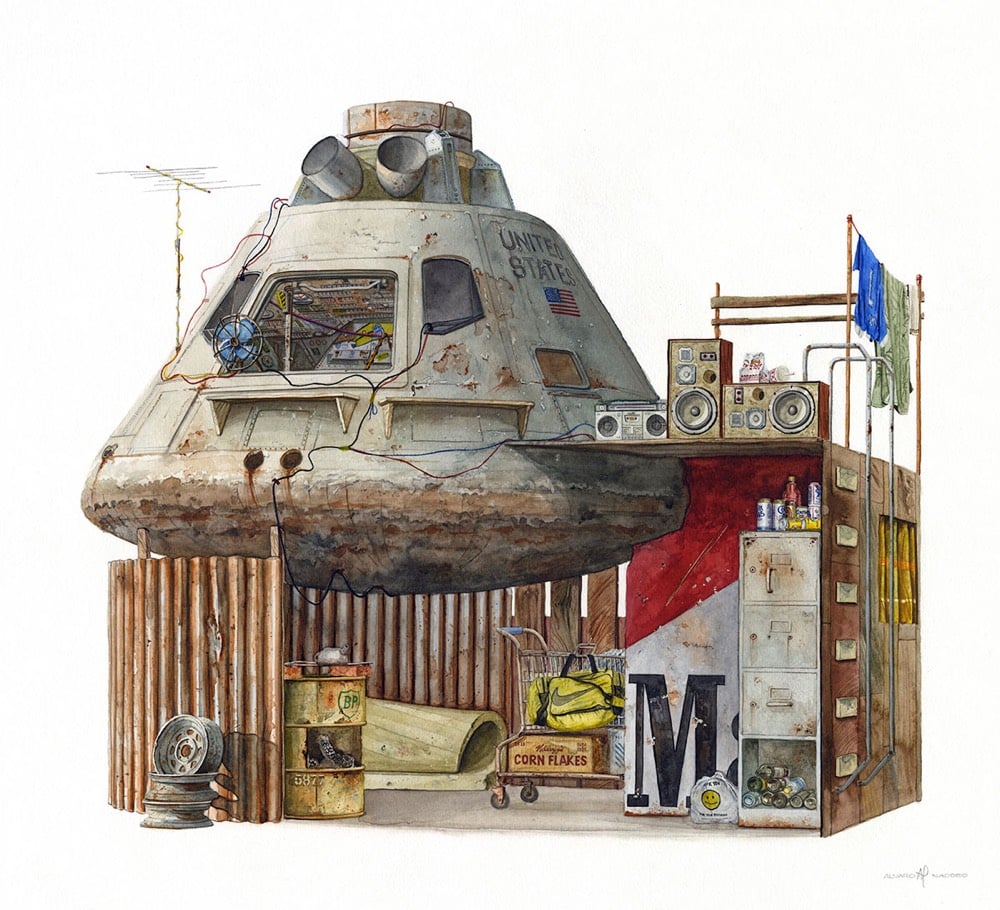
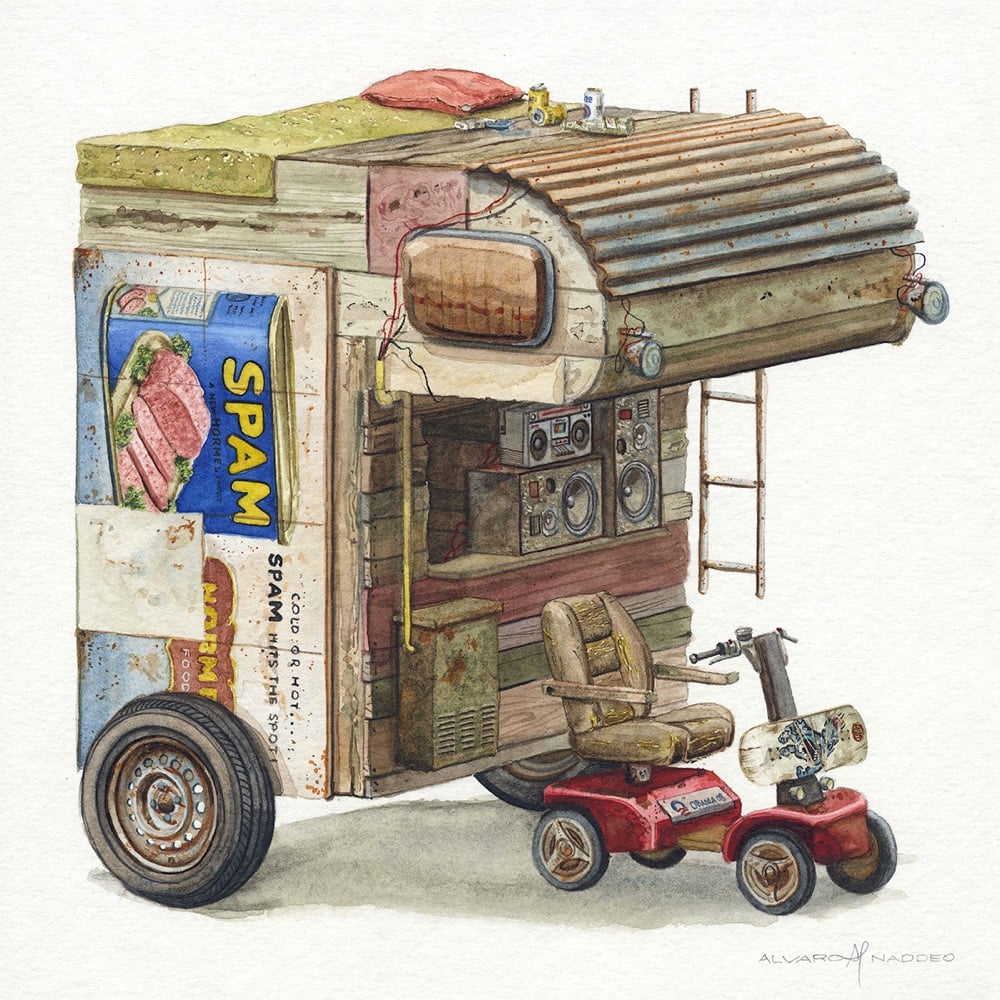
Ok, that was more than a couple. But there are so many more on his website and Instagram (including work-in-progress stuff)…check them out!
Naddeo recently shared his process for making these paintings with Colossal:
Naddeo tells Colossal that he starts with a loose sketch by hand. He then uses 3D software to help define a plausible shape for his imagined constructions, and creates a reference composition in Photoshop. After years of practice, Naddeo shares that he is able to recreate the texture, color, and shadows of various building materials like brick and concrete from memory. He uses reference photos to help flesh out small detail items, which are similarly rendered in watercolor.
A prime example of Robin Sloan’s concept of the flip-flop.
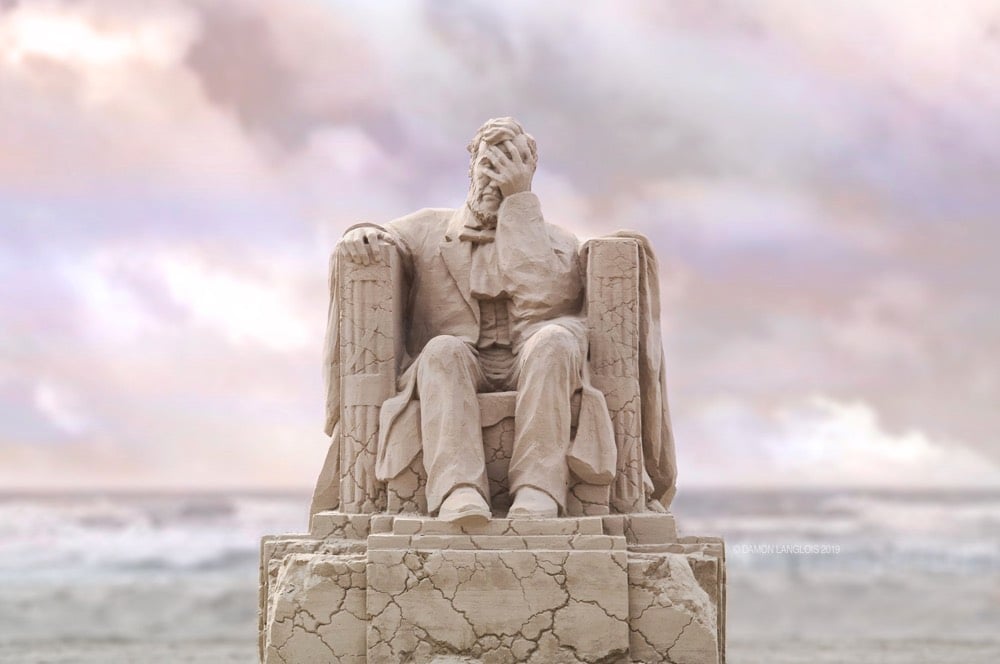
Liberty Crumbling is sand sculptor Damon Langlois’ version of the statue of Abraham Lincoln at the Lincoln Memorial, which won first prize at 2019 Texas SandFest. (via colossal)
The Staatliche Kunstsammlungen Dresden is restoring a painting by Johannes Vermeer after it was “conclusively determined” that part of it was painted over after Vermeer died.
For more than 250 years now, the famous painting by Johannes Vermeer featuring a profile depiction of a girl intently reading a letter in front of a light-coloured empty wall has held a firm place among the masterpieces in the Dresden Gemäldegalerie. This picture, which dates to around 1657/59, is regarded as one of the earliest interior paintings by Vermeer with a solitary figure. Previous x-ray examinations indicated that a picture of a naked Cupid in the painting had been overpainted. Today, new laboratory tests have conclusively determined that the overpainting was not by Vermeer’s hand. On this basis, the Gemäldegalerie Alte Meister decided in the course of the current restoration of the work to remove the overpaint.
The restoration of Girl Reading a Letter at an Open Window is not totally complete, here’s what it looks like now:
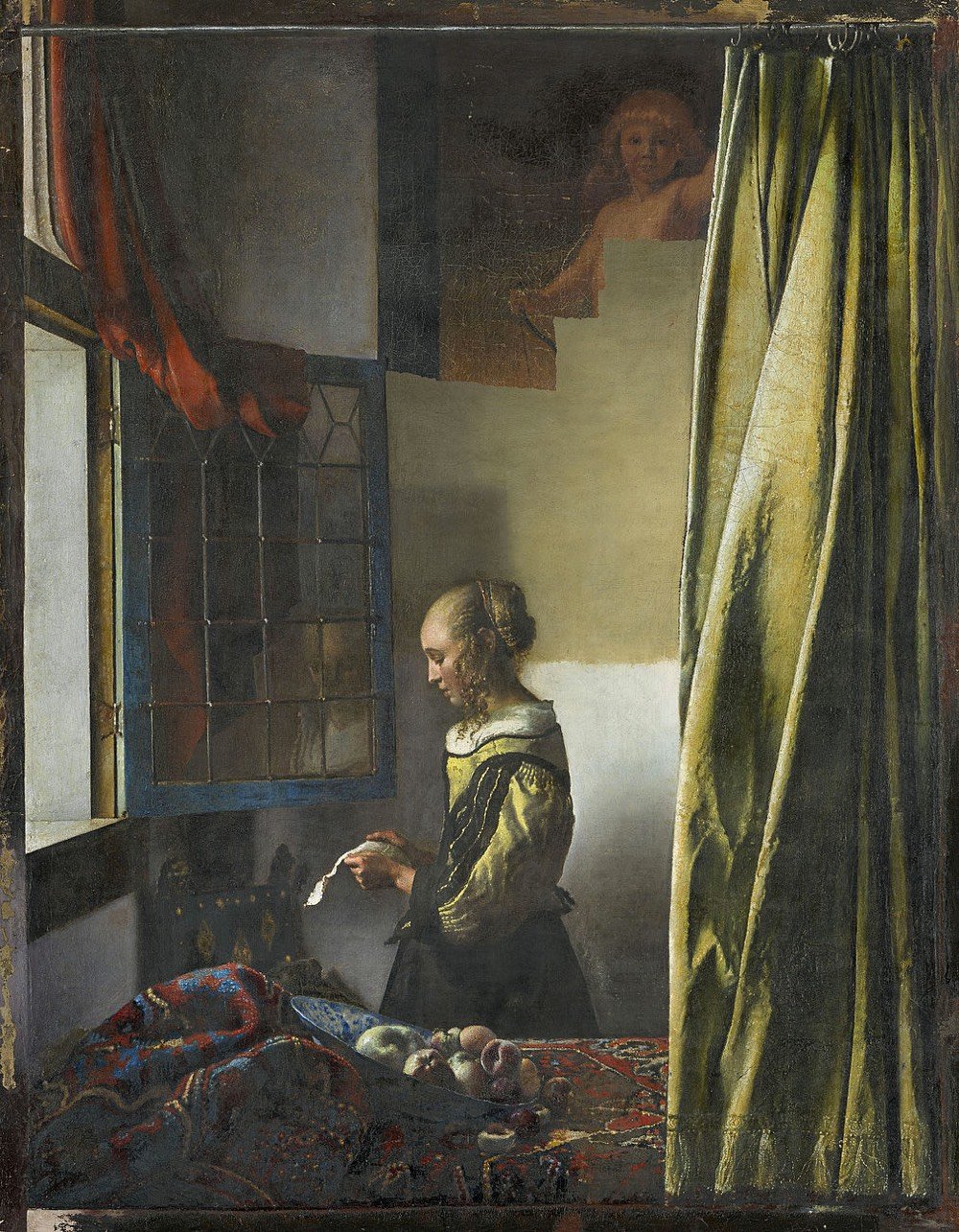
And what it looked like before the restoration started:
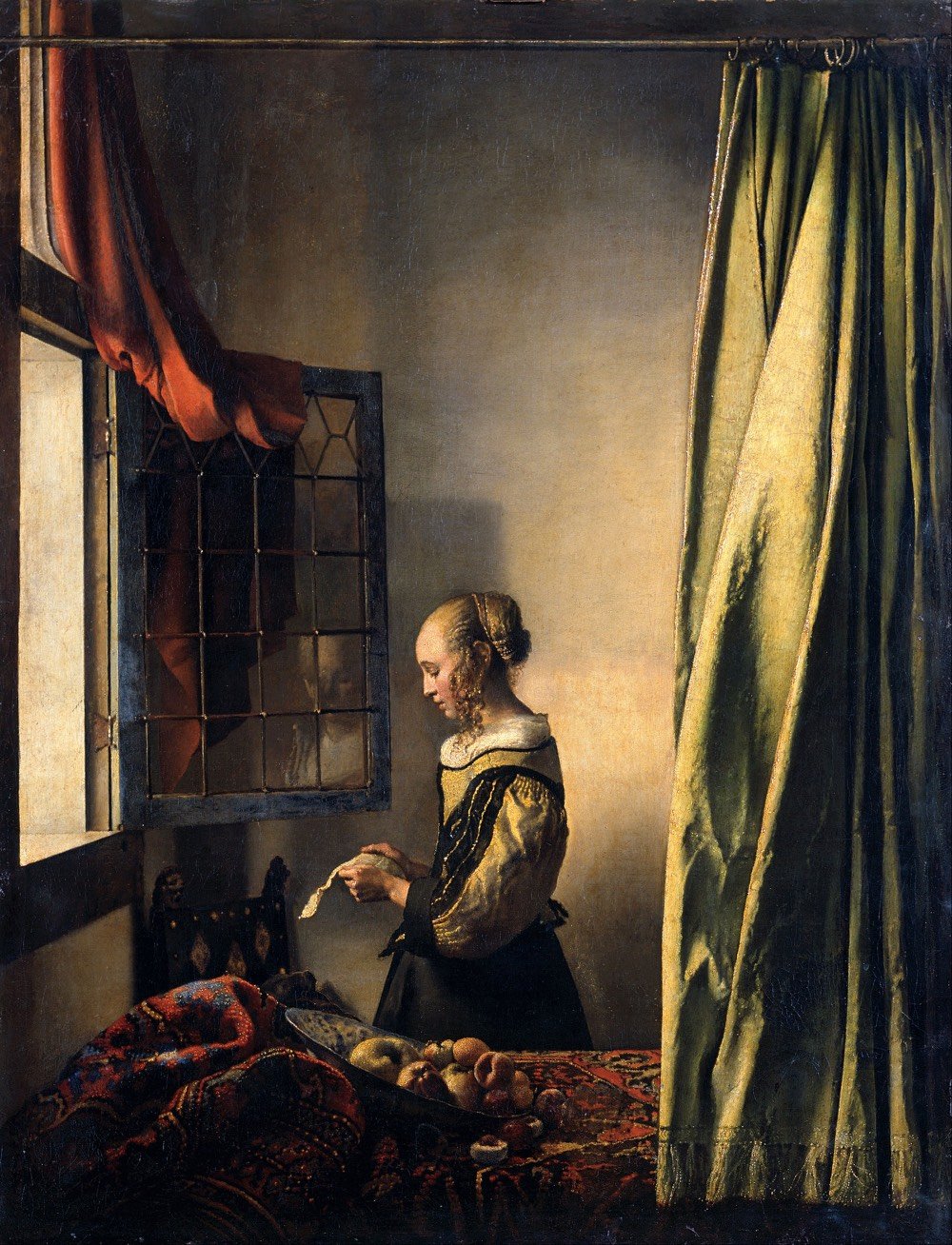
The partially restored painting will be on display at the Gemäldegalerie Alte Meister in Dresden until June 16, after which they will take another year to complete the painstaking restoration.
This past weekend I was in Boston for some cultcha and went to The Museum of Fine Arts. Among several paintings, pastels, and drawings of dancers by Edgar Degas, a bronze casting of his sculpture La Petite Danseuse de Quatorze Ans caught my eye:
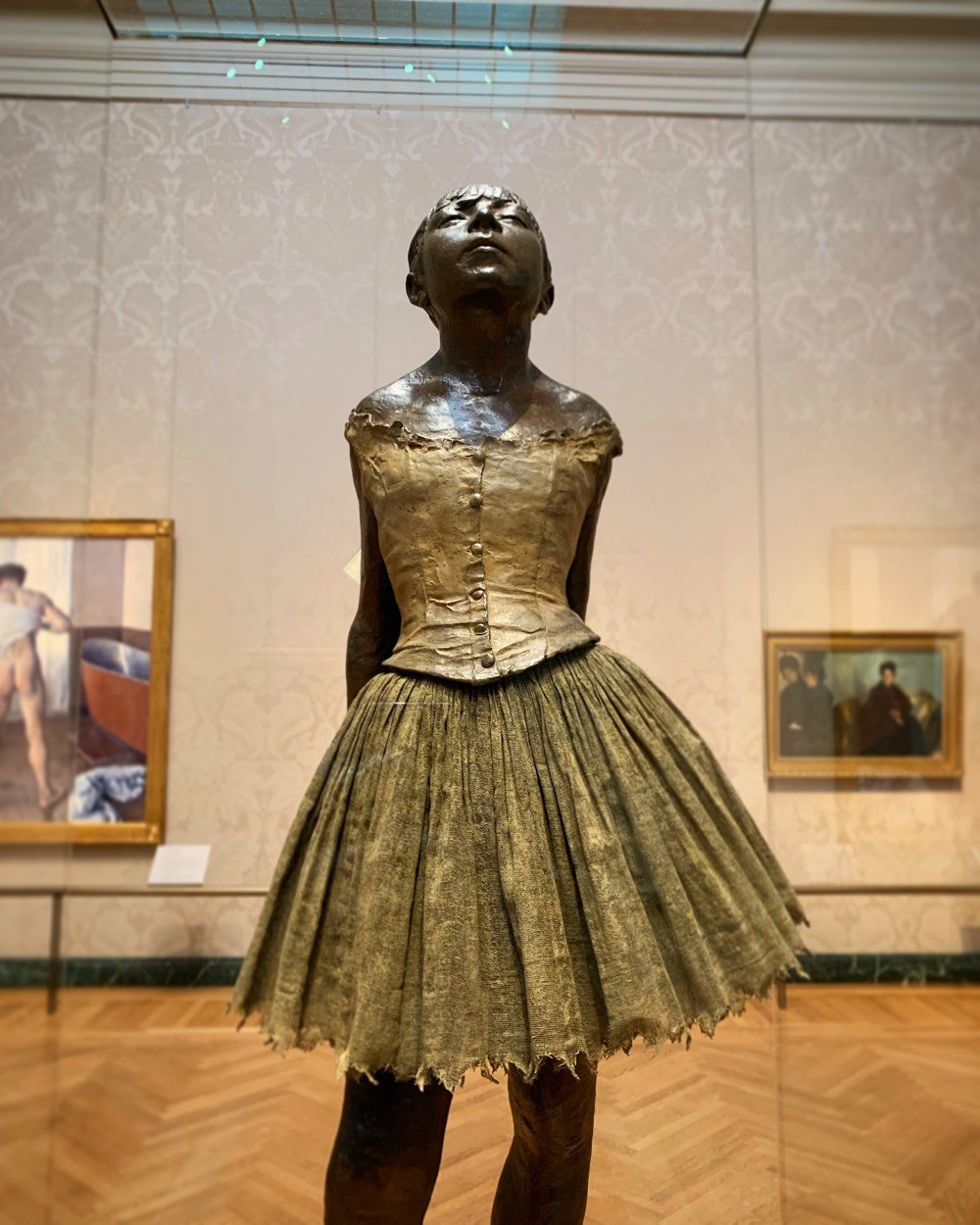
This is Degas’s largest surviving sculpture and the only one he titled and exhibited. The original wax version, a portrait of a young Belgian dancer named Marie van Goethem, was shown at the 1881 Impressionist exhibition in Paris. The wax was tinted to resemble flesh, she wore a wig of real hair, and was dressed in pink slippers and bodice in addition to a skirt and ribbon similar to those on this cast. The excessive naturalism of the work offended many viewers, but the critic J.K. Huysmans called it “the only really modern attempt that I know in sculpture.”
I’ve seen many representations of ballet dancers in Degas’ work over the years, but this time around was different because I had read Julia Wolkoff’s The Sordid Truth behind Degas’s Ballet Dancers last year.
The formerly upright ballet had taken on the role of unseemly cabaret; in Paris, its success was almost entirely predicated on lecherous social contracts. Sex work was a part of a ballerina’s reality, and the city’s grand opera house, the Palais Garnier, was designed with this in mind. A luxuriously appointed room located behind the stage, called the foyer de la danse, was a place where the dancers would warm up before performances. But it also served as a kind of men’s club, where abonnés — wealthy male subscribers to the opera — could conduct business, socialize, and proposition the ballerinas.
Young members-in-training of the ballet companies were called “petits rats” in reference to their often impoverished backgrounds. As Wolkoff observes of the subject of the sculpture:
Marie van Goethem was the “petit rat” who posed for the sculpture, and she likely engaged in the sexually predatory economy of the ballet world to survive. Van Goethem disappeared from the public eye shortly after the sculpture was completed; after being late to a rehearsal, the Paris Opera Ballet dismissed her. The teenager probably returned home to follow in the footsteps of her mother — a laundress and likely prostitute — and older sister, who was also a sex worker.
Here’s a Degas painting of an on-stage practice from the collection at the Met:
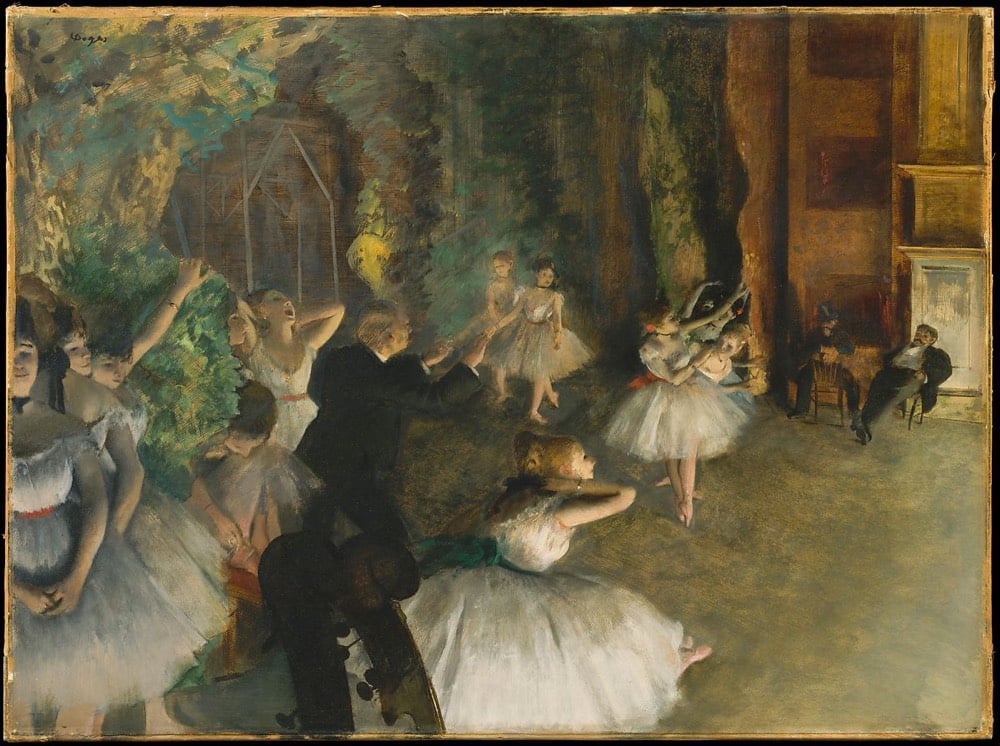
What might look at first glance like a depiction of the beauty of dance takes on a more sinister nature when you notice the men on the right side of the painting, perhaps a pair of wealthy subscribers getting a special preview of that night’s ballet and their choice of ballerinas. You might never look at another of Degas’ ballet paintings the same way again.
In 1965, French-born Polish painter Roman Opalka began work on his series of paintings OPALKA 1965/1 - ∞. Starting in the top-left corner of a canvas, he painted the number “1”, then “2”, then “3”, and so on, continuing until the canvas was full of consecutive whole numbers. At the top of the next canvas, he picked up where he’d left off, and then just kept going from canvas to canvas. By 1970, Opalka abandoned working on anything else and devoted himself solely to filling canvases with numbers.
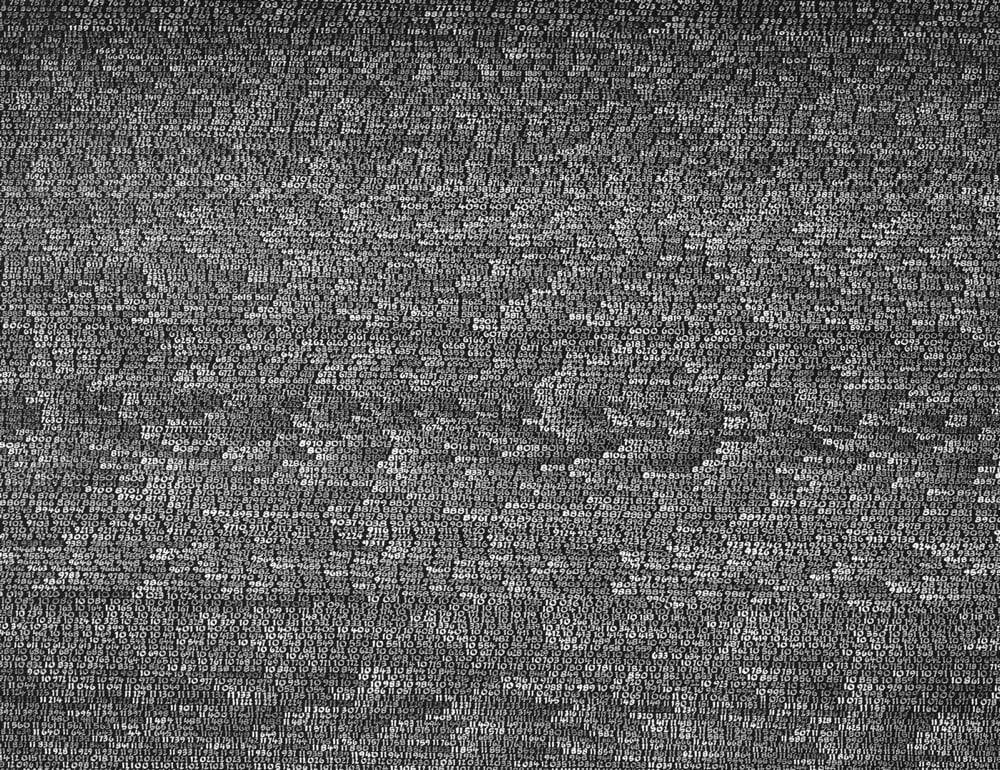
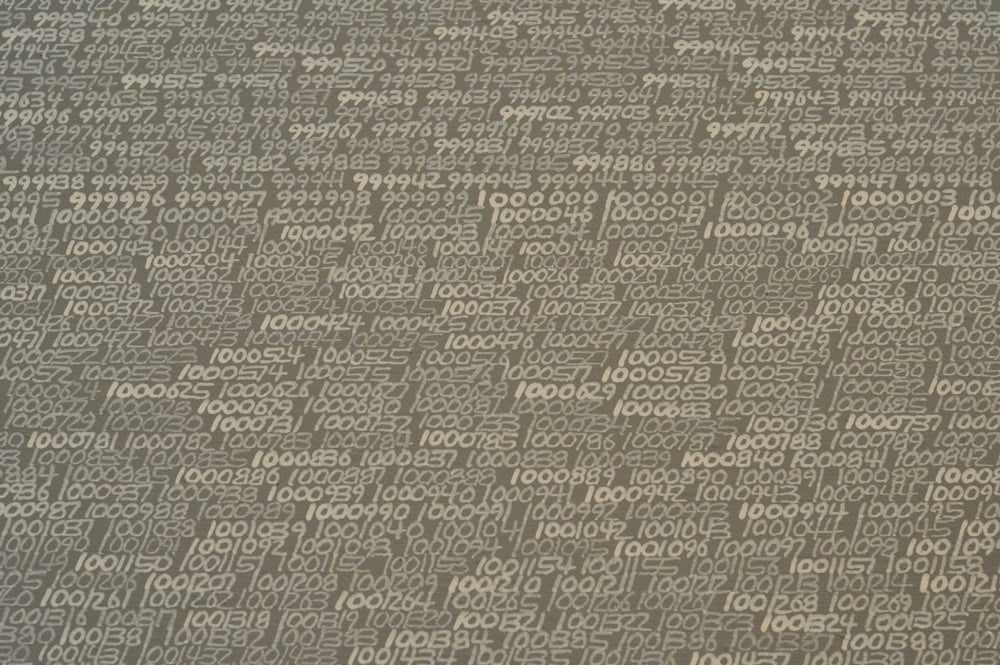
He pursued this culmination on a daily basis, eight hours a day, until the process of painting led him to “white/white” — that is, white numbers on a canvas with a background painted white, the same as the numbers. After three years (1968, possibly 1969), Opalka began to add 1% white pigment to the black background. Gradually, over time, as more paintings were painted, the black surface would become gray. As he continued to count and to paint five, six, and seven digit numbers, he discreetly added 1% white to each canvas, thus making the surfaces appear increasingly lighter. In the late 1970s he declared that the background of his canvases would eventually appear white, the same white used to paint the numerals that would finally dissolve into the surface, embody the surface. Ultimately, there would be no distinction between the white numerals and the white surface; they would culminate as a form of blankness, possibly transcendent, as the numerals grew invisible within the prospect of infinity, the Samadhi or highest level of meditation.
According to Opalka’s website, the last number he painted was 5607249, in white paint, invisible on a white canvas. (via moss & fog)
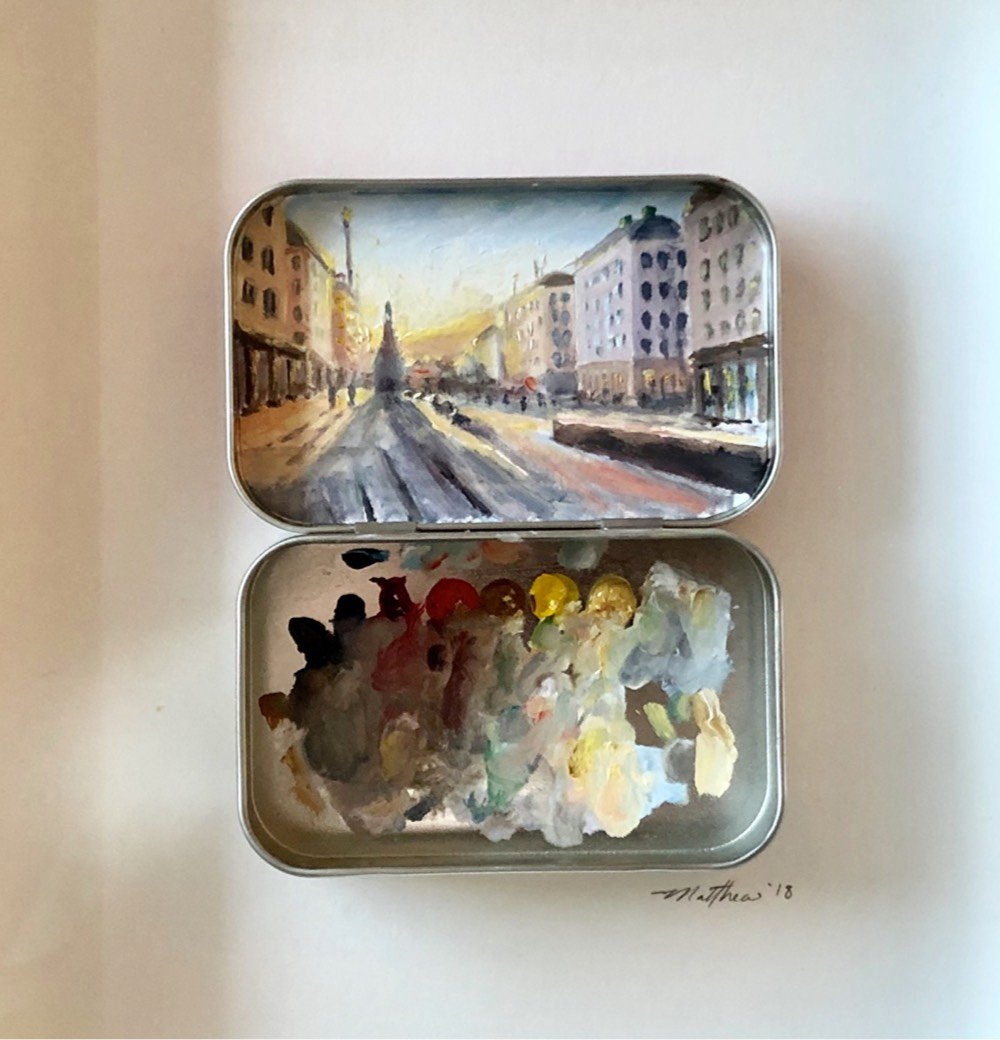
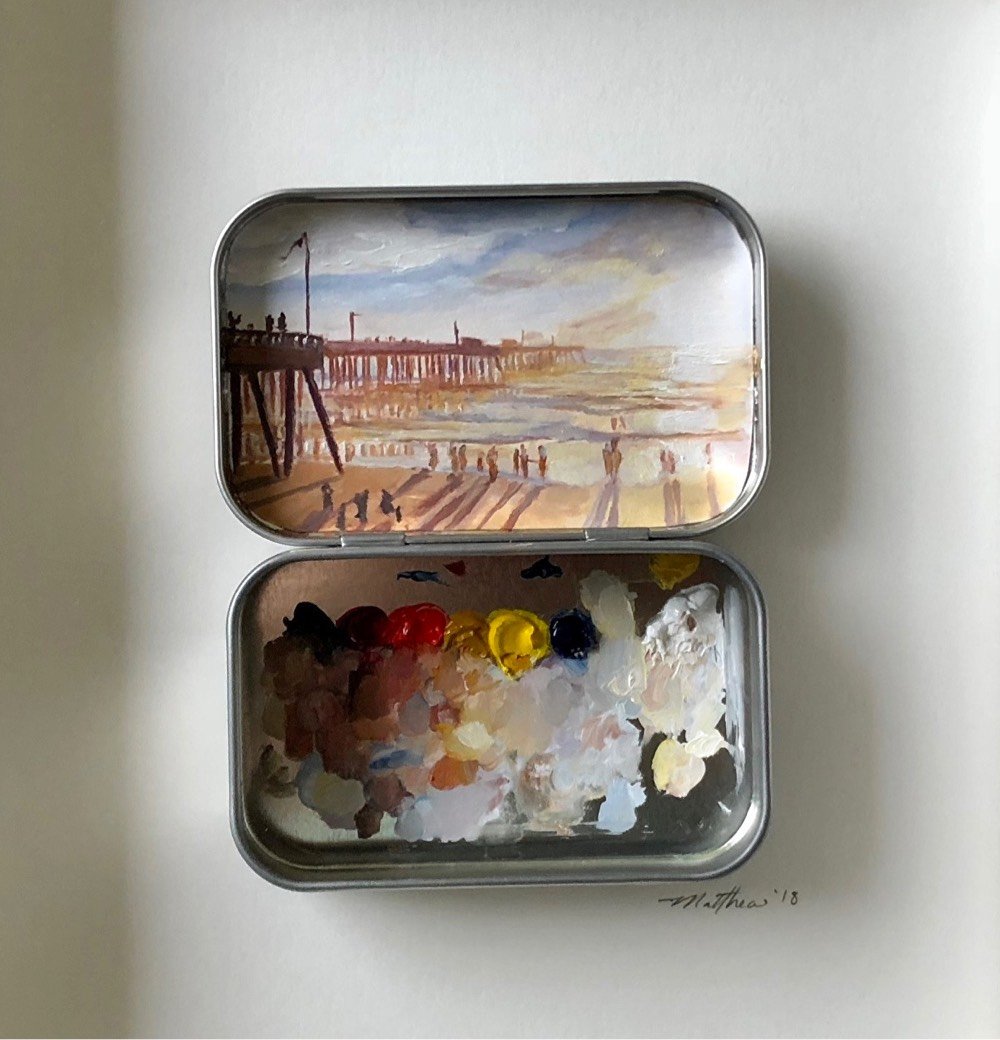
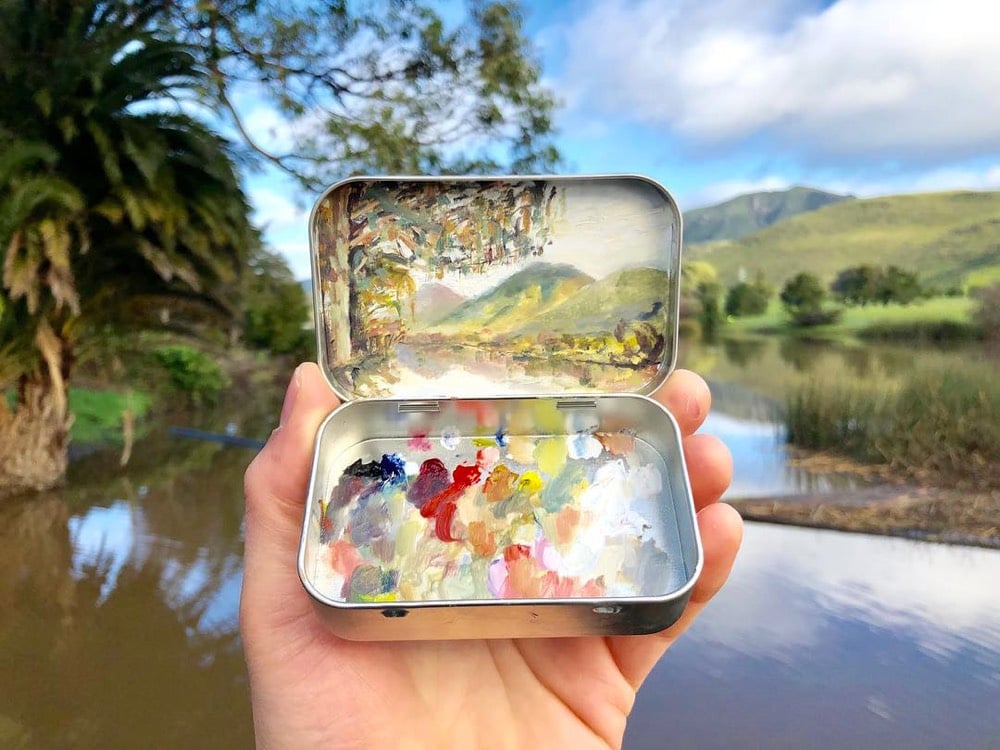
Painter Matthew Betancourt paints these miniature works of art inside the covers of Altoids tins. Aside from the playfulness and cuteness factor, I love that he uses the bottom half of the tin as a palette and it’s displayed along with the finished painting. You get to see the process along with the work. It’s something that Betancourt plays with even more on his Instagram account, where he displays subject, palette, and finished product all in one go:
(thx, brandon)
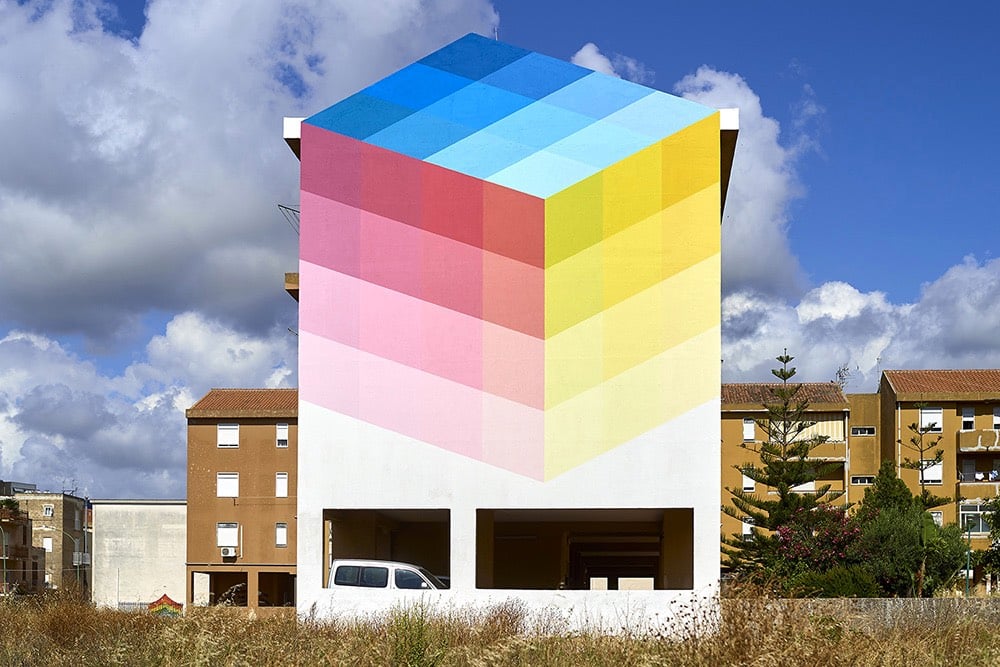
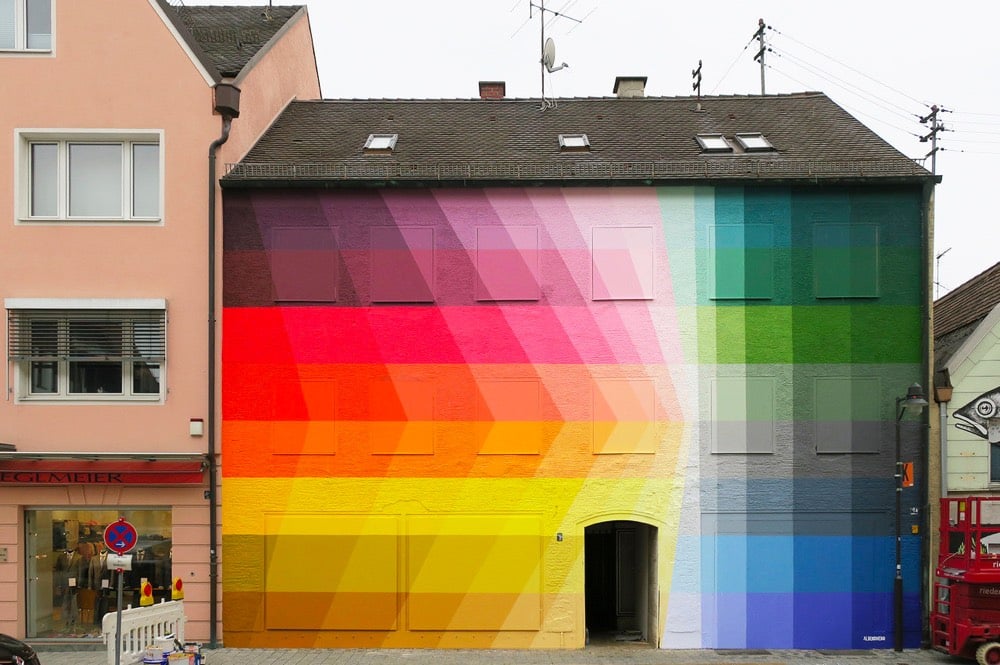
I love these colorful pixelated exteriors by Italian artist Alberonero. These are going on the mood board for my theoretical future house. You can find more of their work on Facebook, Instagram, and Tumblr. (via colossal)
I really like these portraits by artist, illustrator and conceptual designer Linsey Levendall.
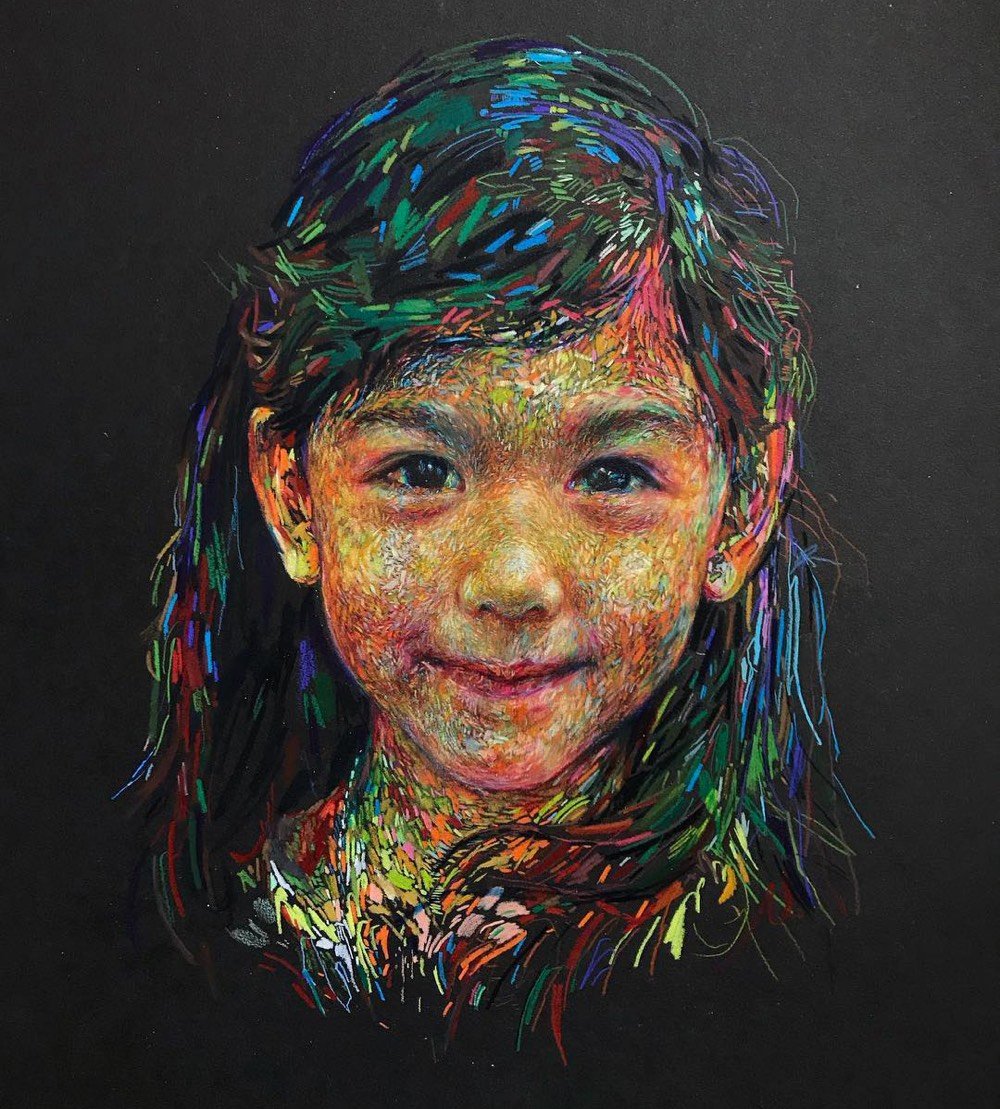
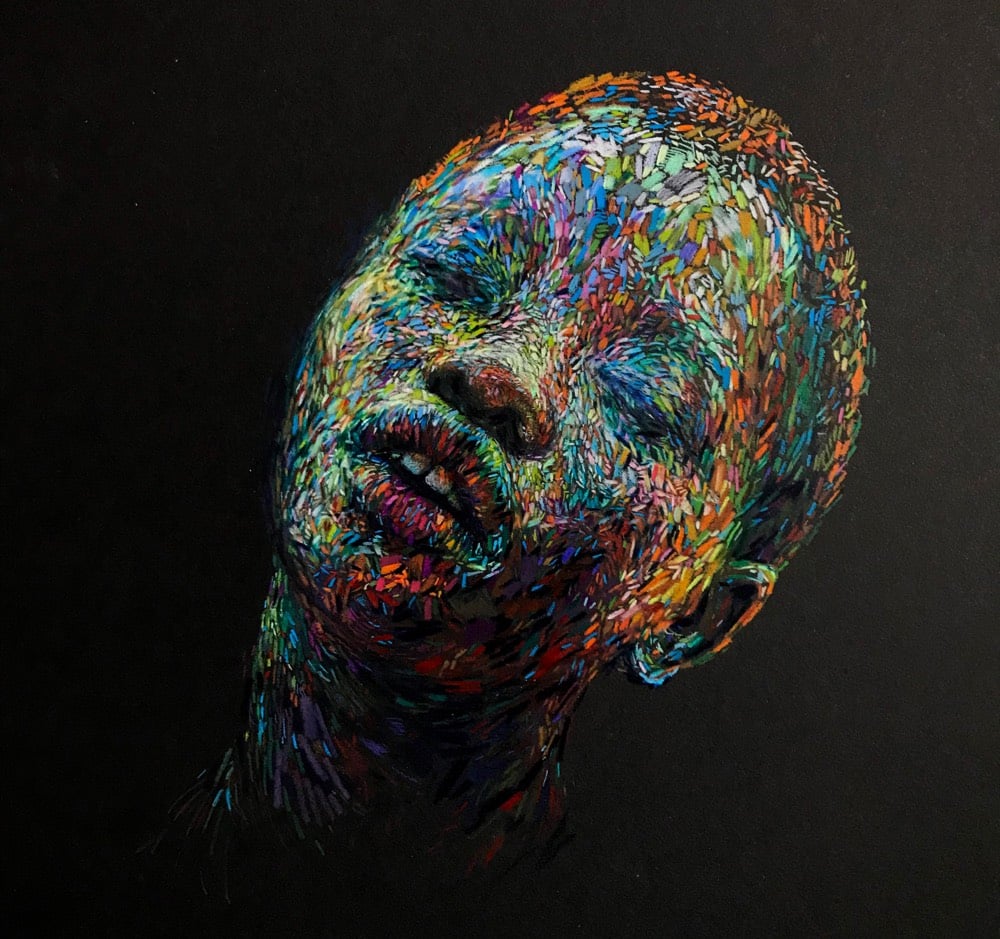
Like I said last week, I am a sucker for any sort of contemporary impressionism that reminds me of the likes of van Gogh, Seurat, or Monet. Maybe I’m just a rube who didn’t see enough art as a kid, but I will never not be impressed by how a thousand tiny strokes of a pen or brush magically come together to make not only a recognizable human face but can also spark a feeling in my brain. (also via colossal)
Using found images as his starting point, Kai Samuels-Davis paints portraits & objects in an impressionistic way.
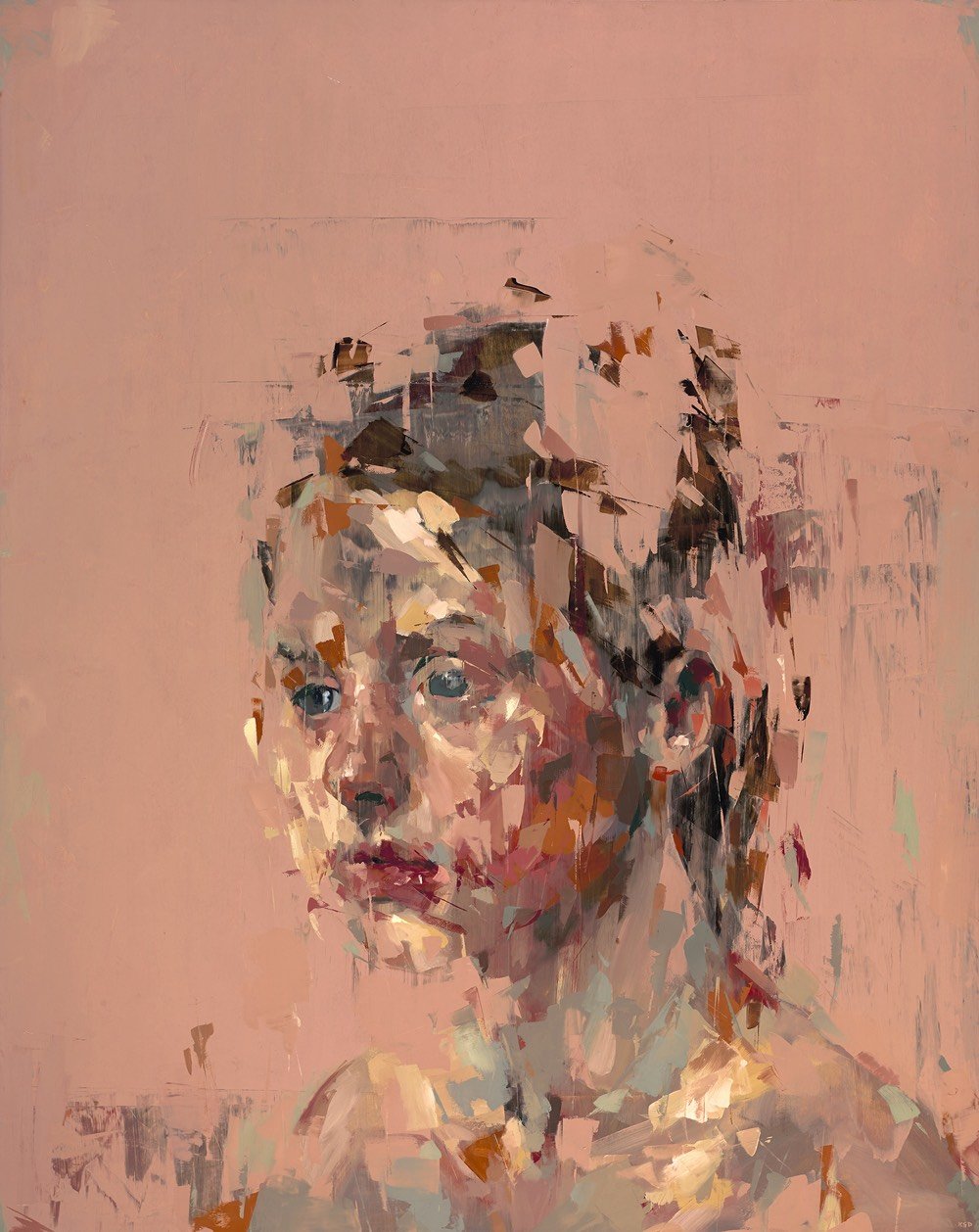
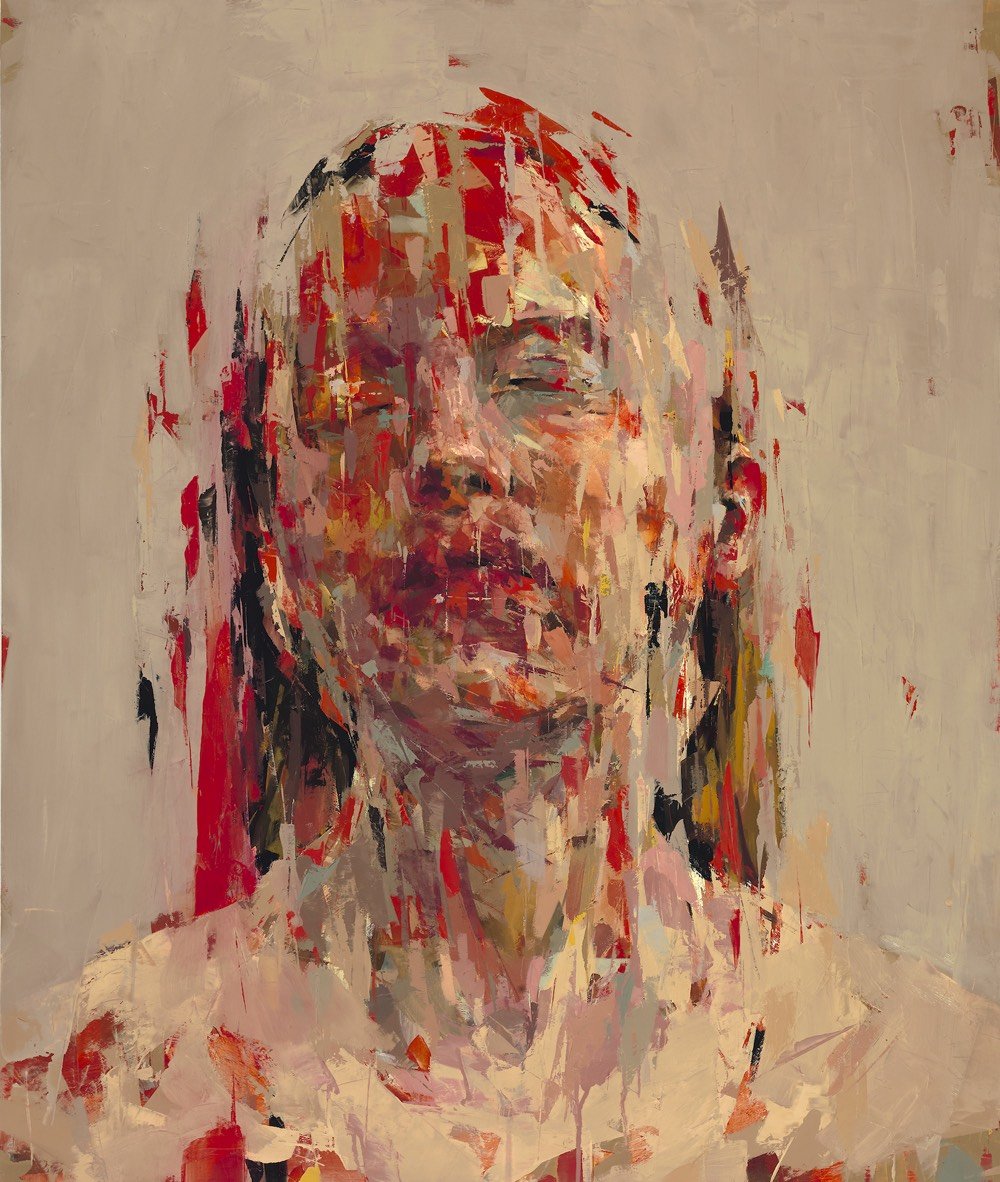
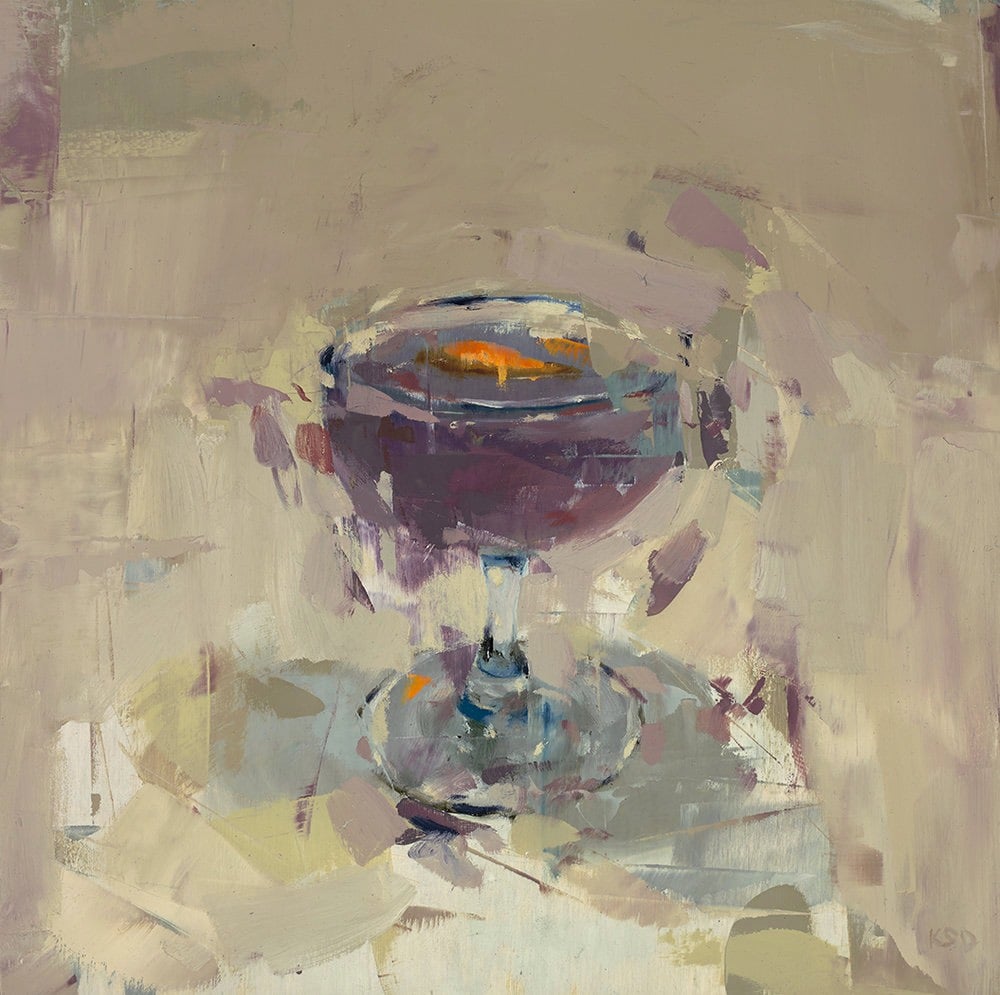
I am a sucker for any sort of contemporary impressionism that reminds me of the likes of van Gogh, Seurat, or Monet. I am also a sucker for observing how artists progress as they mature. Take a look at Samuels-Davis’s older work, from 2015 and before. The older stuff is good but his recent work is stronger and cleaner and more abstract without sacrificing any of the “legibility” of the figures & objects he’s representing. It does more with less. (via colossal)
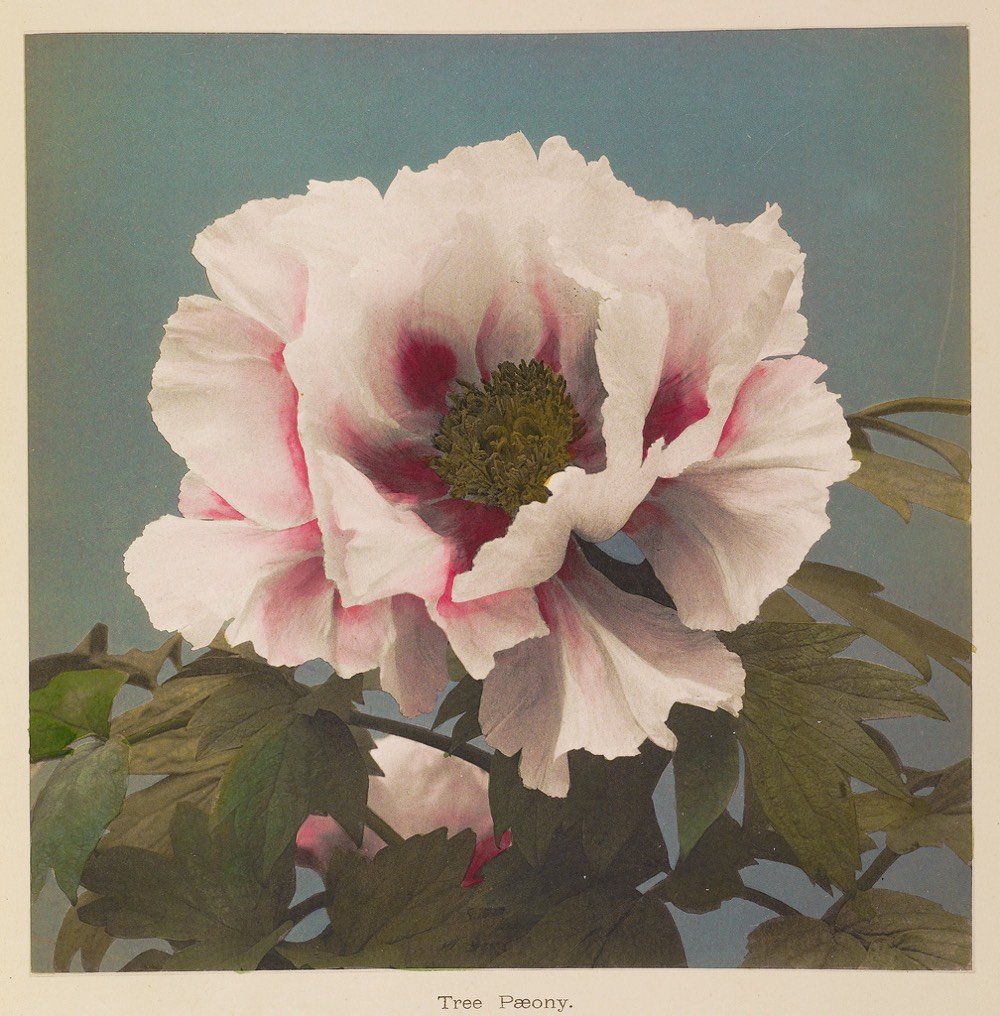
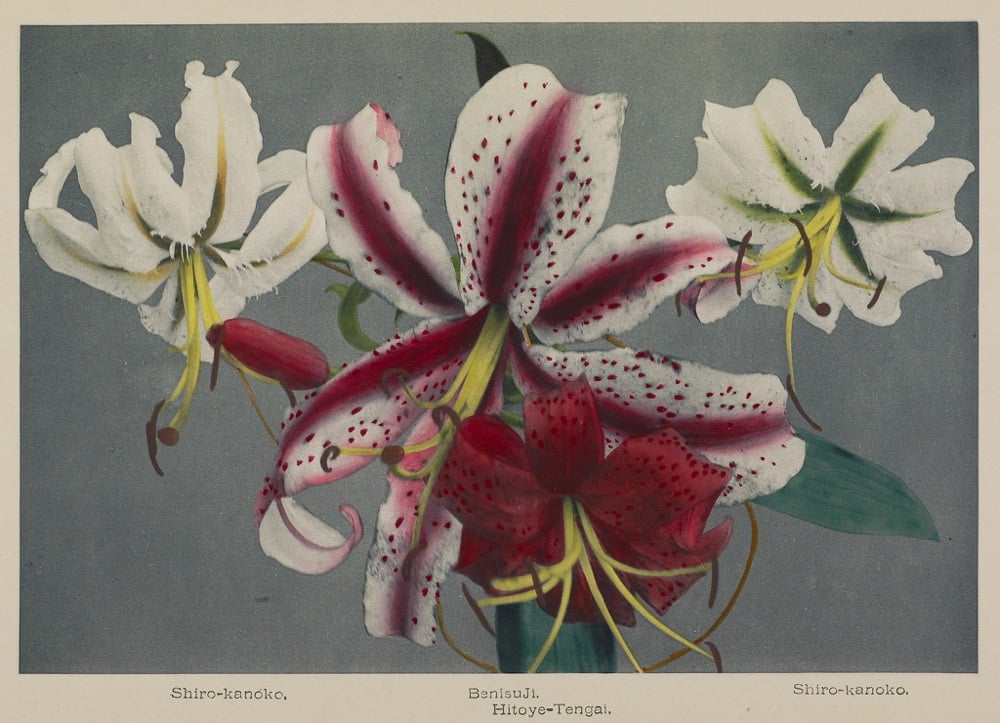
From The Public Domain Review, Ogawa Kazumasa’s Hand-Coloured Photographs of Flowers.
The stunning floral images featured here are the work of Ogawa Kazumasa, a Japanese photographer, printer, and publisher known for his pioneering work in photomechanical printing and photography in the Meiji era.
A reprinted book containing these images by Kazumasa is available as are prints. (via @john_overholt)
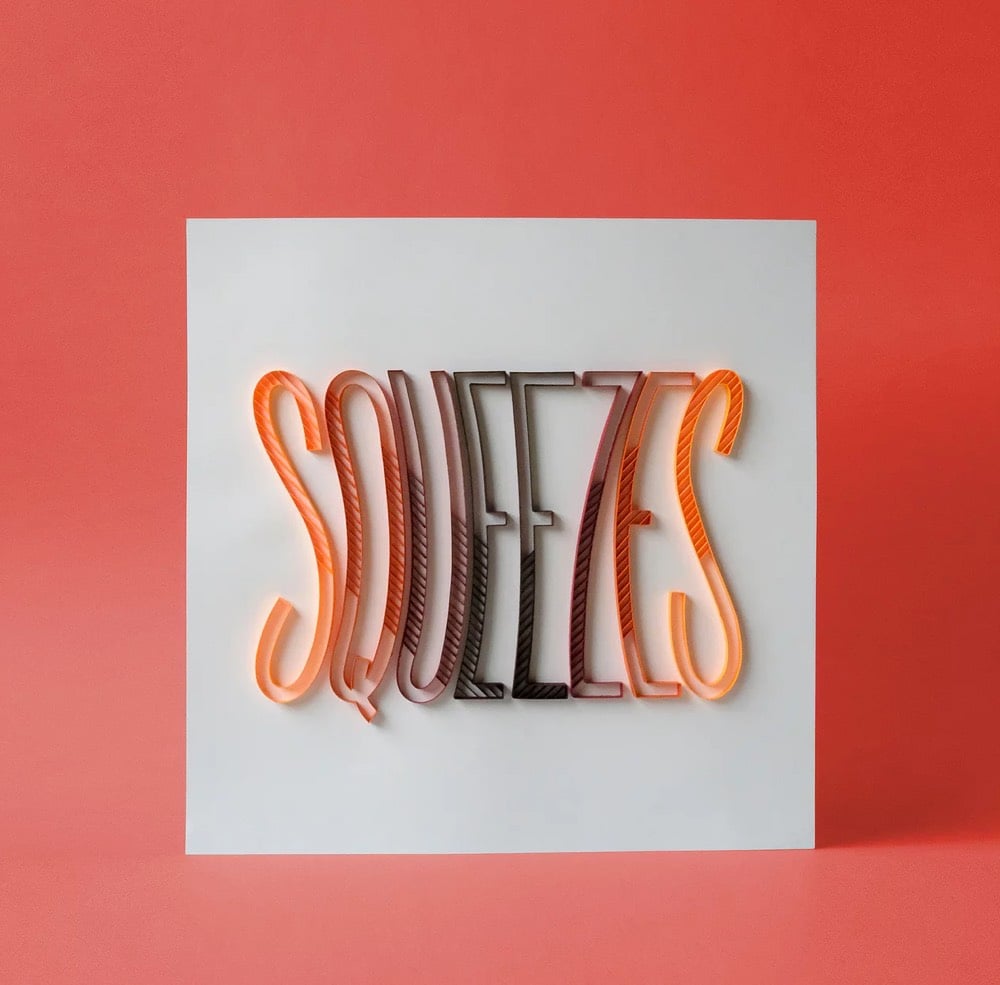
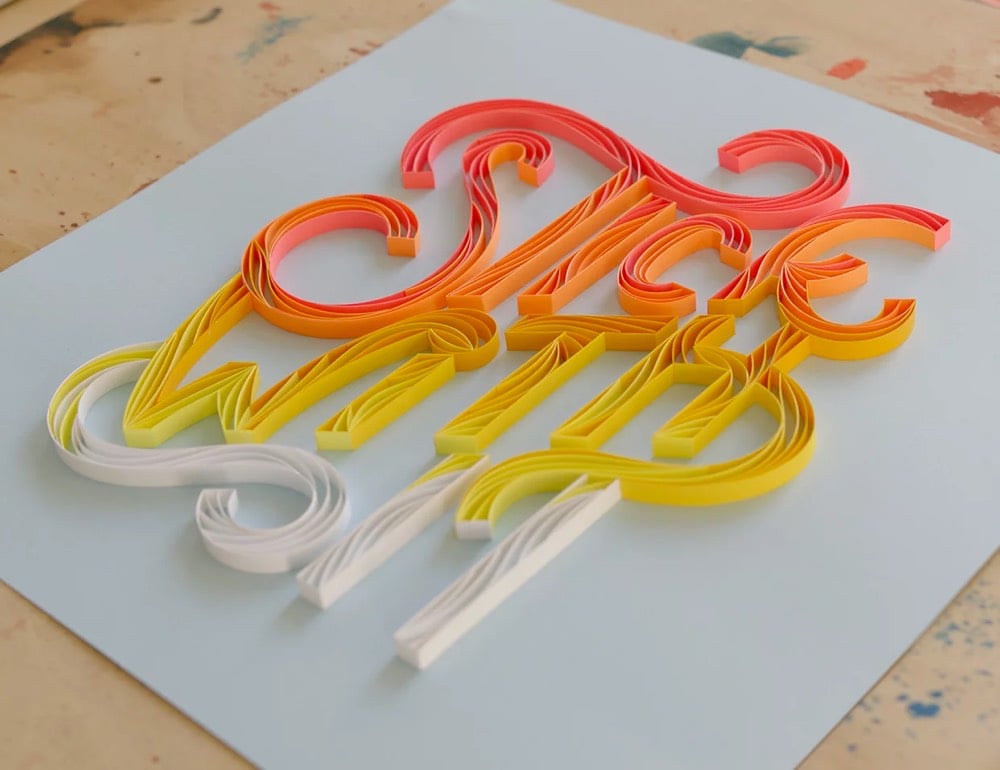
Paper artist Alia Bright combines papercraft and typography to make these colorful, um, sculptures? Texts? They’re super-cool, whatever you call them. Here’s a close-up of one of the pieces, all made by hand of course:
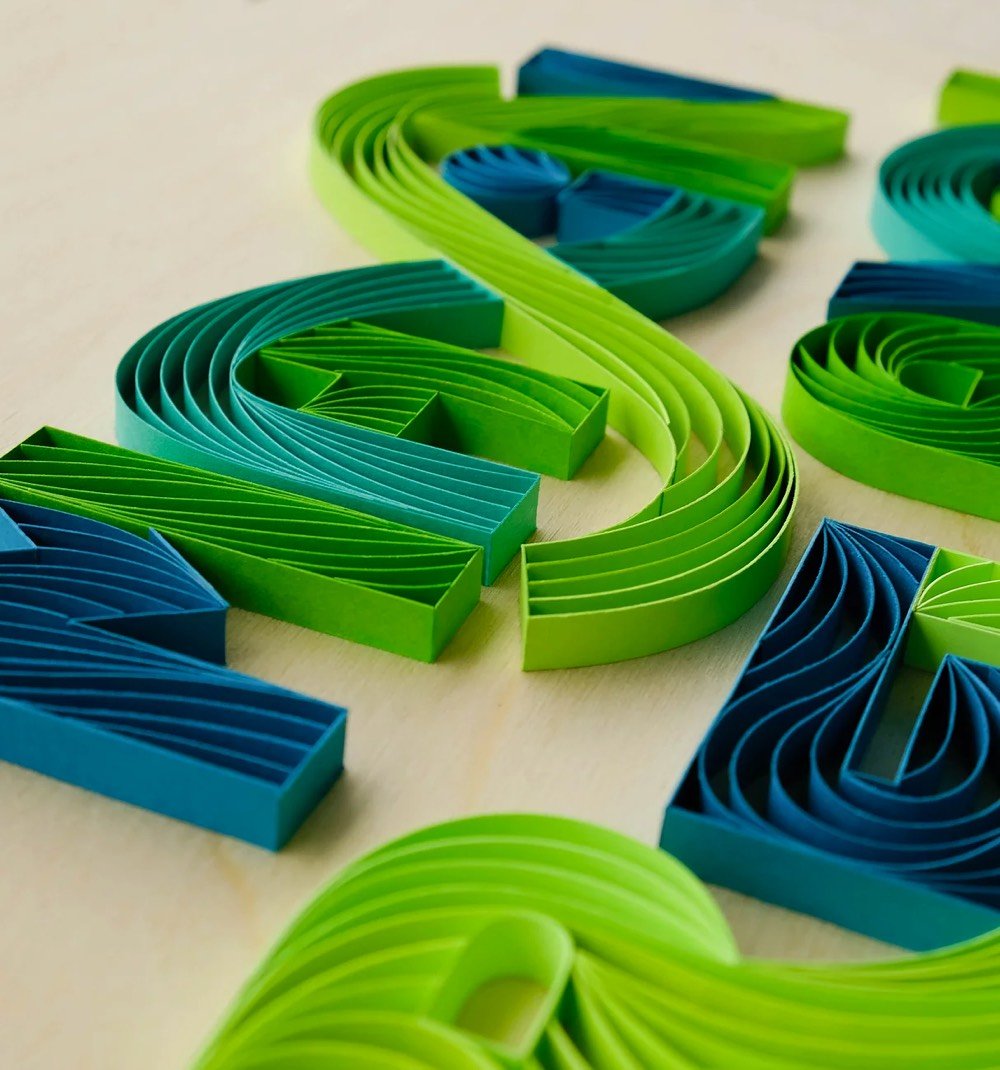
You can keep up with Bright’s newest work on Instagram. (via swissmiss)
Socials & More