kottke.org posts about TV
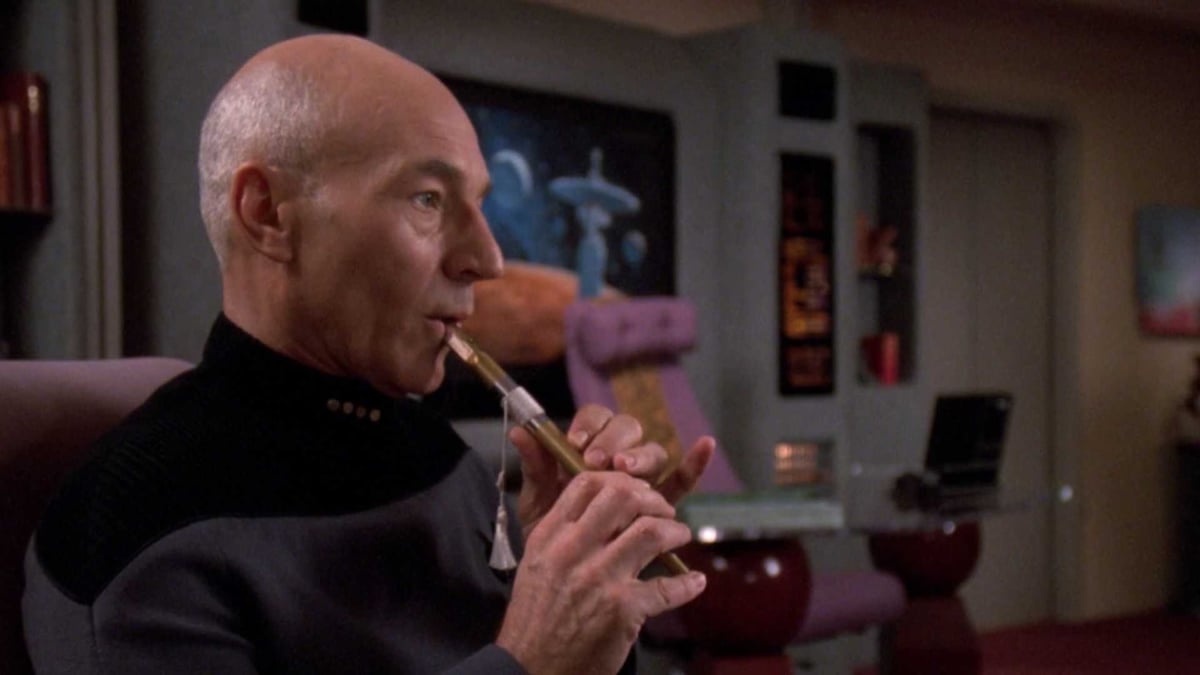
In the wake of Patrick Stewart’s death the other day, I watched a couple episodes of Star Trek: The Next Generation — the two-part series finale All Good Things… in fact.1 Wanting to add more Picard-centric episodes to my watchlist, I did some research.
There are several lists out there of the episodes of ST:TNG and Star Trek: Picard where Captain Jean-Luc Picard particularly shines. Some episodes appear on nearly every list; these are the consensus favorites:
- The Inner Light. “Captain Jean-Luc Picard is struck unconscious by an energy beam from an alien probe. While just 25 minutes pass for the rest of the crew between Picard being struck unconscious and eventually regaining consciousness on the Enterprise bridge floor, the probe makes Picard experience 40 years of lifetime as Kamin, a humanoid scientist whose planet is threatened by the nova of its sun.”
- Family. “Captain Jean-Luc Picard visits his brother’s family in France, where he begins to come to terms with his treatment by the Borg.”
- The Best of Both Worlds. “In this two part episode, the Enterprise must battle the Borg who are intent on conquering Earth, with a captured and assimilated Captain Picard as their emissary.”
- Darmok. “The crew of the Enterprise is unable to establish meaningful communication with the crew of an alien vessel, which is resolved by the struggle of the ships’ captains to defend each other from a vicious beast.”
- All Good Things… “The plot involves Captain Jean-Luc Picard jumping through time and the formation of an anomaly that defies causality, the whole situation being a test that allows Picard to demonstrate human potential to the Q Continuum by making an intuitive leap of faith to understand the cause of, and how to eliminate, the anomaly before it destroys humanity.”
- The Measure of a Man. “In this episode, the rights of the android officer Lt. Commander Data are threatened by a scientist who wishes to dismantle him to produce replicas of him. Captain Jean-Luc Picard fights in a Starfleet court for Data’s right of self-determination, not to be declared mere property of Starfleet, while Commander William Riker is obliged to argue on behalf of the scientist.”
- Starship Mine. “While the Enterprise is evacuated for hazardous maintenance, Captain Picard must, alone, contend with thieves posing as a work crew aboard the ship. The plot has been noted for its similarity to the 1988 action film Die Hard.”
- Chain of Command. “Jean-Luc Picard is relieved of command of the Enterprise and reassigned to lead a covert mission, while his replacement is assigned to deal with the Cardassians openly. The second part of the episode is noted for the intense performance of Patrick Stewart and its depiction of brutal torture and interrogation scenes.”
- Tapestry. “Q allows a supposedly deceased Captain Jean-Luc Picard to re-visit a pivotal event in his youth that he since regrets. Picard changes the past, but upon returning to the present he finds that the event made him the man he became.”
- The Drumhead. “An explosion aboard the Enterprise leads to a high-level investigation headed by Admiral Norah Satie, a retired officer renowned for her skill at exposing conspiracies.”
You can check out the lists at Screen Rant, Collider, Comicbook.com, That Love Podcast, and Popular Mechanics for more good Picard episodes.
The movies seemed to be out of scope for these lists, but I’ve always loved First Contact and Picard’s unhinged pursuit of the Borg — “The line must be drawn here!”
I’d never heard of this before: in 1990, the BBC aired a program created by and starring Douglas Adams called Hyperland. It begins with a frustrated Adams throwing his TV out (too linear, too non-interactive) and Tom Baker (from Doctor Who) popping up as an intelligent interactive agent that promises to “do your every slightest bidding, to fetch and carry for you, to work tirelessly and selflessly on your behalf, always ready, always willing, no job too small or too menial”.
Circumventing the limitations of ‘linear’ broadcast TV, the 50-minute programme imagines a new world in which an AI software ‘agent’ - brought to life here by Doctor Who favourite Tom Baker - helps the user (played by Adams) to find and access material of interest in a global world of hyperlinked information - text, images, audio and video.
Pop-up ‘micons’ (moving icons) conveniently link to interviews with leading technologists of the era (among them Ted Nelson, Robert Winter, Robert Abel, Kristina Hooper, Fabrice Forin and Steve Gano).
Some of this stuff has dated badly - few visions of the future get everything right! - but the programme is nevertheless of considerable historical importance.
Incredibly, at about the time Hyperland was being broadcast, a young CERN computer scientist by the name of Tim Berners-Lee was beavering away on URLs and HTTP, the foundations of what would become the World Wide Web.
Even Adams, who foresaw so much, didn’t anticipate the impact the Web - and the Internet that conveys its data globally - would have on civilisation. Needless to say, the enticing infoworld envisaged in Hyperland was a public-service one of education, art, literature (including nods to Adams’ own works!) and entertainment. There’s no advertising, hacking, cybercrime, information theft, social-media addicts, unaccountable corporate domination or drug-like dependence on the smartphones that Adams himself predicted.
And Tom Baker’s enthusiastic agent isn’t forever popping up to try and sell you something…
The YouTube version above is missing a segment, but you can watch (and download) the whole program on the Internet Archive, a project that fits the vision of the future imagined by techno-utopians like Adams.
I’m imagining what 16-year-old Jason would have made of this (or HyperCard or hypertext had he had any clue that they existed until 4-5 years later) — his brain probably would have exploded.
I 100% love this video of every time someone says a percentage on Star Trek: The Next Generation. And the word “percent” has lost all of its meaning due to semantic satiation. (thx, caroline)
BBC Earth is returning to the ocean. 25 years after the first installment, the legendary naturalist, presenter, and centenarian David Attenborough narrates Blue Planet III. This first look video, backed by a song Hans Zimmer & Jade Thirwall, is teeming with stunning footage of sea life of all sorts.
Ed Yong called BPIII’s predecessor the best nature series ever:
Blue Planet II is the greatest nature series that the BBC has ever produced.
It is almost transcendentally good—the product of a team that, after six decades of experience, is now at the height of its powers. The Blue Planet II crew traveled to 39 countries to capture over 6,000 hours of footage. They stuck their cameras into coral crevices. They hung off speedboats to film dolphins rocketing behind them. They literally stared into the abyss—and then repeatedly entered it. The resulting episodes, each narrated by David Attenborough in his trademark velvety tones, are hour-long distillations of wonder, featuring sequences that would be breathtaking had earlier shots left you with any breath to take away.
Blue Planet III will air sometime later in the year in the UK; not so sure about timelines in other locations at this point.
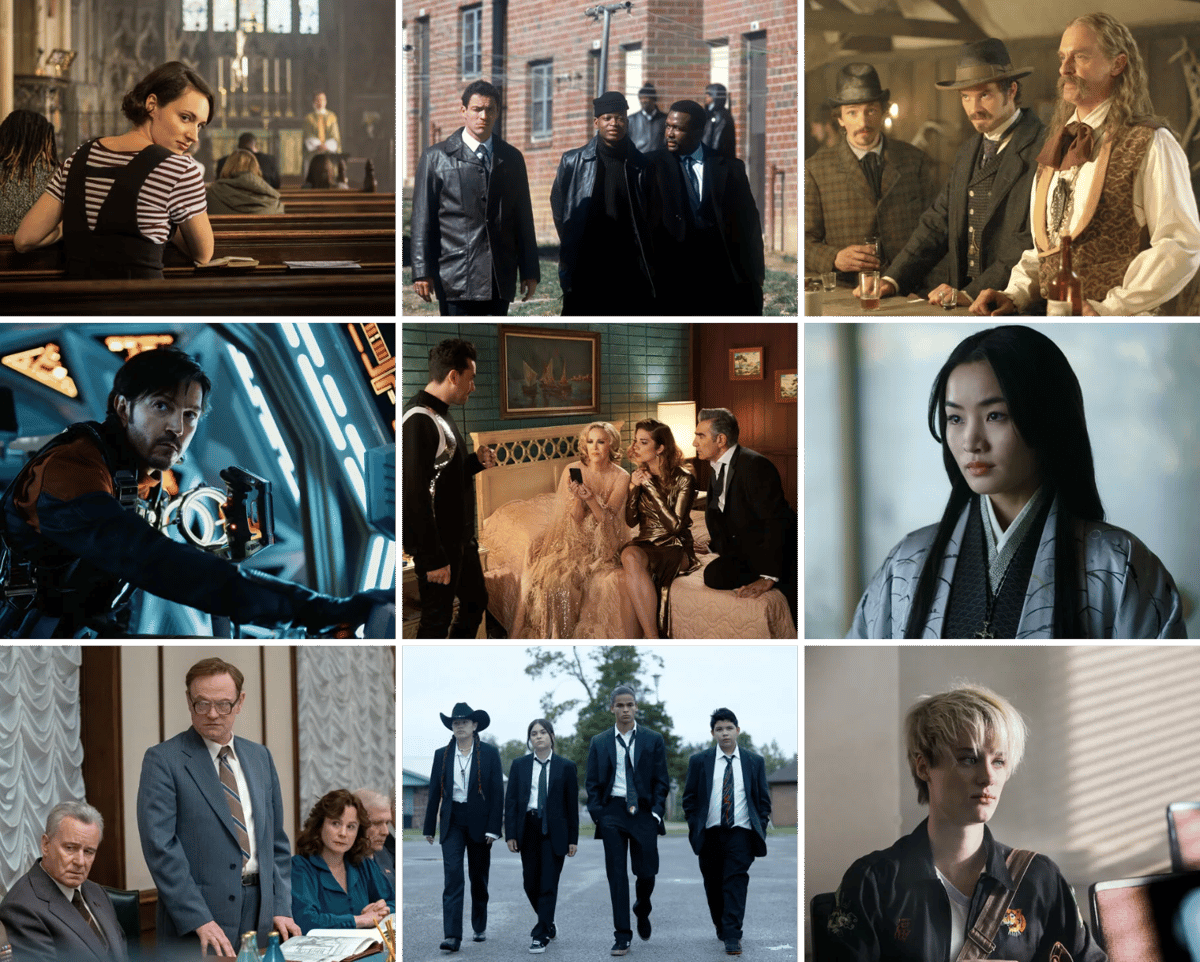
Last week, the NY Times dropped a list of The 100 Best TV Shows of the 21st Century, as picked by a panel of “more than 500 influential stars, showrunners and other notable names in the world of TV”. The rankings have already been dissected online six ways from Sunday, but the link got lost in my forest of browser tabs and so here it is, a bit late but still interesting.
Here are some of my personal favorites from the list and arrowed opinions on whether some should be higher or lower on the list: Halt and Catch Fire (↑), Reservation Dogs (↑), Shogun (↑↑↑), The Great British Bake Off, Planet Earth, Downton Abbey (↓), The Good Place (↑), Normal People, Schitt’s Creek, Andor (↑↑), Severance (↓), Band of Brothers (↑), Deadwood (↑), The Crown (↓), Chernobyl (↑), The Americans (↑), Six Feet Under (↓), Girls (↓), Arrested Development, The Office (US), 30 Rock, Game of Thrones, Fleabag (↑), Succession, Mad Men, The Wire (↑), and Breaking Bad (↓).
There are many excellent shows that didn’t make the list — the one that immediately pops into my mind is My Brilliant Friend. As for stuff that’s on there that perhaps could be replaced with something more worthy, I’ll hold my tongue. I do think the inclusion of some of the more recent shows on the list will not age well when this is looked back on in, say, 10 years.
At the beginning of a clip from this podcast episode of Conan O’Brien Needs a Friend with Matt Groening, Conan talks about one of his favorite things they did on The Simpsons:
It’s a phenomenon that the Simpsons did so beautifully, which is — and we did this with Homer a lot — but Homer is not the smartest guy in the world, but if it’s funny for him to have a certain knowledge of something or turn a phrase, suddenly he has it.
And one of my favorites of that is he’s sitting around the table and Lisa’s despondent. Something didn’t go well for her and she doesn’t think she’s going to get to go to a good school now. And she’s sitting at the table and she said, “Oh no, now I’ll never get to go to an Ivy League school. I’ll have to go to Vasser.” Which is just this like — by the way, my wife went to Vasser, it’s a very good school. But it was just this thing where in Lisa’s little world, oh my god, I’ve been I’ve been ruined. I’ll have to go to Vasser. And Homer like slams a table and says, “There’ll be no Vasser bashing in this house.”
I loved this about the show too. And it was part of a general thing the writers did where sometimes characters would play against type. So Marge became reckless, Homer was smart/sensitive, Bart was organized, and Lisa was a giggly little girl. Those moments helped make the show and when, after the epic run in the early-to-mid 90s, the show became almost exclusively about how dumb & crass Homer was, it was much less rich and entertaining. (thx, mark)
Comedian Mo Welch has a new show on PBS called The Drawing Room, where she interviews people while she draws them (and her guests draw her). What a great idea for a show.
The first three episodes are live already: Brett Goldstein, Sarah Silverman, and violinist Vijay Gupta; here’s the premiere episode with Goldstein:
Each episode is only 10-12 minutes long. The lineup of guests for the rest of the season include Demi Adejuyigbe, Tig Notaro, Adam Conover, and Aparna Nancherla.
From the filmmakers who made the excellent Once Upon a Time in Northern Ireland comes a four-part series on space exploration, Once Upon a Time in Space. A short trailer is above; here’s a synopsis:
Drawing on intimate, unseen archive and powerful first-hand testimony, this landmark 4-part series tells the human stories behind our quest to explore space, offering a unique perspective on our changing world and where we are headed.
The series first aired on the BBC and the first two episodes are now available on PBS. (thx, mitch)

57 years ago today, on July 20, 1969, Neil Armstrong & Buzz Aldrin landed on the Moon and went for a little walk. For the 18th year in a row, you can watch the original CBS News coverage of Walter Cronkite reporting on the Moon landing and the first Moon walk on a small B&W television, synced to the present-day time. Just open this page in your browser today, July 20th, and the coverage will start playing at the proper time. Here’s the schedule (all times EDT):
4:10:30 pm: Moon landing broadcast starts
4:17:40 pm: Lunar module lands on the Moon
4:20:15 pm - 10:51:26 pm: Break in coverage
10:51:27 pm: Moon walk broadcast starts
10:56:15 pm: First step on Moon
11:51:30 pm: Nixon speaks to the Eagle crew
12:00:30 am: Broadcast end (on July 21)
Set an alarm on your phone or calendar! Also, this works best on an actual computer but I think it functions ok on phones and tablets if necessary.
Back in 2018, I wrote a bit about what to look out for when you’re watching the landing:
The radio voices you hear are mostly Mission Control in Houston (specifically Apollo astronaut Charlie Duke, who acted as the spacecraft communicator for this mission) and Buzz Aldrin, whose job during the landing was to keep an eye on the LM’s altitude and speed — you can hear him calling it out, “3 1/2 down, 220 feet, 13 forward.” Armstrong doesn’t say a whole lot…he’s busy flying and furiously searching for a suitable landing site. But it’s Armstrong that says after they land, “Houston, Tranquility Base here. The Eagle has landed.”. Note the change in call sign from “Eagle” to “Tranquility Base”. :)
Two things to listen for on the broadcast: the 1201/1202 program alarms I mentioned above and two quick callouts by Charlie Duke about the remaining fuel towards the end: “60 seconds” and “30 seconds”. Armstrong is taking all this information in through his earpiece — the 1202s, the altitude and speed from Aldrin, and the remaining fuel — and using it to figure out where to land.
In this modified scene from Breaking Bad, Walter White’s hat grows in proportion to his ego. YT commenter: “He was just brimming with confidence.” Could be time for a BB rewatch. (via @ernie.tedium.co)
The folks at Fred Rogers Productions have launched a YouTube channel dedicated to Mister Rogers’ Neighborhood. They plan to post compilations, clips, and full episodes, some of which haven’t been seen on PBS in years & years. One of the first complete episodes they’ve posted is the one about how crayons are made!
Other full episodes include A Visit with Officer Clemmons, The Very First Episode (from 1968), and Koko the Gorilla Meets Mister Rogers.
And there’s also this 30-minute compilation of fan-favorite factory visits.
Again, here’s the channel if you want to subscribe or explore more.

Every so often, the US Postal Service reissues old stamps. This time around, they polled the public about which past stamp they’d like to see reissued and the results were decisive: the people love Mister Rogers.
The Mister Rogers stamp, originally released in 2018, is new again in 2026!
In national Stamp Encore polling, the stamp honoring the television host beloved by generations rose to the top spot from a varied ballot of 25 previous stamp issuances. Americans were asked to celebrate 250 years of postal delivery by choosing among favorite stamps of the last few decades. By the deadline last fall, the Postal Service was flooded with nearly 600,000 total ballots.
The Mister Rogers stamps are out now — you can check out a list of the available purchases here. There’s even a set of Field Notes notebooks.


Mister Rogers is a natural fit for a postage stamp; he was a “prolific letter-writer”.
Fred Rogers had a great appreciation for communication by mail, so the popularity of his stamp in 2018 and the esteem reflected by Stamp Encore ballots seem especially fitting. A prolific letter-writer, sometimes replying to 100 letters per day, Rogers never resorted to form-letter responses. He expressed his sentiments in simple terms: “There is still a place for the written letter.”
In a book recalling mail he had received and sent, Rogers wrote, “One of the first things I do each day is to work on the letters that have arrived from the children and adults who have written to us. I care deeply about sending a personal response.” Rogers added, “It gives me a way to know my television neighbors as real people and to make a more personal connection with them. Just as our program is a ‘television visit,’ “the mail is a ‘letter visit.’ A personal note is still far more valuable than shooting off an email or text,” he said.
(thx, caroline)
Andor loves a good monologue. Among the best of them is Nemik’s Manifesto:
Remember this, Freedom is a pure idea. It occurs spontaneously and without instruction. Random acts of insurrection are occurring constantly throughout the galaxy.
And Kino Loy’s speech to his fellow prisoners on Narkina 5:
There is one way out. Right now, the building is ours. You need to run, climb, kill! You need to help each other. You see someone who’s confused, someone who is lost, you get them moving and you keep them moving until we put this place behind us.
In this just-released episode of Nerdwriter, Evan Puschak breaks down Luthen Rael’s “extraordinary” monologue about what he’s sacrificed for the cause.
Here’s the original scene and a transcript of the speech:
Calm. Kindness. Kinship. Love. I’ve given up all chance at inner peace. I’ve made my mind a sunless space. I share my dreams with ghosts. I wake up every day to an equation I wrote 15 years ago from which there’s only one conclusion, I’m damned for what I do. My anger, my ego, my unwillingness to yield, my eagerness to fight, they’ve set me on a path from which there is no escape. I yearned to be a savior against injustice without contemplating the cost and by the time I looked down there was no longer any ground beneath my feet. What is my — what is my sacrifice? I’m condemned to use the tools of my enemy to defeat them. I burn my decency for someone else’s future. I burn my life to make a sunrise that I know I’ll never see. And the ego that started this fight will never have a mirror or an audience or the light of gratitude. So what do I sacrifice? EVERYTHING!
The great thing about Luthen’s monologue, which Puschak doesn’t really get into, is that it makes the viewer rethink the entire basis of the show — and of Star Wars in general. Instead of Good Guys and Bad Guys, you’re asked to consider shades of gray. These blurred lines are hinted at before, mostly through individual character arcs (Han, Anakin, Lando, Rey, Kylo), but Luthen plainly lays out the moral complexity involved: revolutions and rebellions are led by and made up of flawed people who do harmful things for the right reasons…or at least, that’s what they tell themselves, what they need to tell themselves.
Luthen, Mon Mothma, Cassian — there’s no solution to their personal trolley problem, except that they somehow have to keep living after condemning others to suffering and death. Viewed through that lens, the rest of Star Wars reads quite differently.
The day after ending his run on The Late Show, Stephen Colbert hosted a show called Only in Monroe on a Michigan public access channel. His musical director for the show was Jack White, nestled onstage between a boombox and a reel-to-reel recorder. His guests included Byron Allen, Jeff Daniels, Steve Buscemi, and Eminem.
He told viewers during his final Late Show monologue that they might next find him in Monroe:
At the top of his final CBS monologue Thursday night, Colbert paused to mark the occasion: “Tonight is our final broadcast from the Ed Sullivan Theater.”
When the audience booed, Colbert waved them off.
“No, no, we were lucky enough to be here for the last 11 years, all right? Can’t take this for granted,” he said. “Though technically our first show in July of 2015 was from a public access station in Monroe, Michigan for an audience of 12 people. Show business being what it is these days, that’s probably where you’ll see me next.”
Colbert had hosted Only in Monroe once before, about two months out from starting at The Late Show. His special guest that night was Eminem.
Stephen Colbert? The man knows how to commit to the bit.
One of the questions on The Colbert Questionert that Stephen Colbert would administer to his celebrity guests was “What number am I thinking of?” As you can see from this compilation, his answer was often, but not always, “no”.
A few of the guests said “42” but none ever said “69”?
So anyway, the Late Show is coming to an end tonight, a casualty of CBS’s newfound fealty to the Trump regime, and Stephen Colbert finally took the questionert himself. And yes, at last, he revealed the number that he was thinking of…to Robert De Niro no less:
Older posts





Socials & More