kottke.org posts about Apollo 11
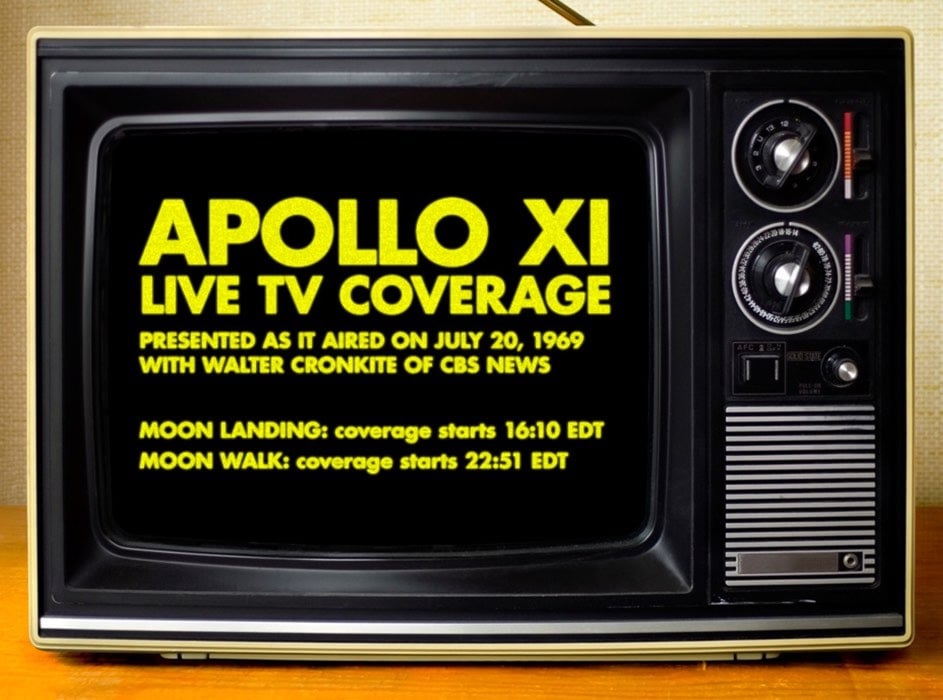
57 years ago today, on July 20, 1969, Neil Armstrong & Buzz Aldrin landed on the Moon and went for a little walk. For the 18th year in a row, you can watch the original CBS News coverage of Walter Cronkite reporting on the Moon landing and the first Moon walk on a small B&W television, synced to the present-day time. Just open this page in your browser today, July 20th, and the coverage will start playing at the proper time. Here’s the schedule (all times EDT):
4:10:30 pm: Moon landing broadcast starts
4:17:40 pm: Lunar module lands on the Moon
4:20:15 pm - 10:51:26 pm: Break in coverage
10:51:27 pm: Moon walk broadcast starts
10:56:15 pm: First step on Moon
11:51:30 pm: Nixon speaks to the Eagle crew
12:00:30 am: Broadcast end (on July 21)
Set an alarm on your phone or calendar! Also, this works best on an actual computer but I think it functions ok on phones and tablets if necessary.
Back in 2018, I wrote a bit about what to look out for when you’re watching the landing:
The radio voices you hear are mostly Mission Control in Houston (specifically Apollo astronaut Charlie Duke, who acted as the spacecraft communicator for this mission) and Buzz Aldrin, whose job during the landing was to keep an eye on the LM’s altitude and speed — you can hear him calling it out, “3 1/2 down, 220 feet, 13 forward.” Armstrong doesn’t say a whole lot…he’s busy flying and furiously searching for a suitable landing site. But it’s Armstrong that says after they land, “Houston, Tranquility Base here. The Eagle has landed.”. Note the change in call sign from “Eagle” to “Tranquility Base”. :)
Two things to listen for on the broadcast: the 1201/1202 program alarms I mentioned above and two quick callouts by Charlie Duke about the remaining fuel towards the end: “60 seconds” and “30 seconds”. Armstrong is taking all this information in through his earpiece — the 1202s, the altitude and speed from Aldrin, and the remaining fuel — and using it to figure out where to land.
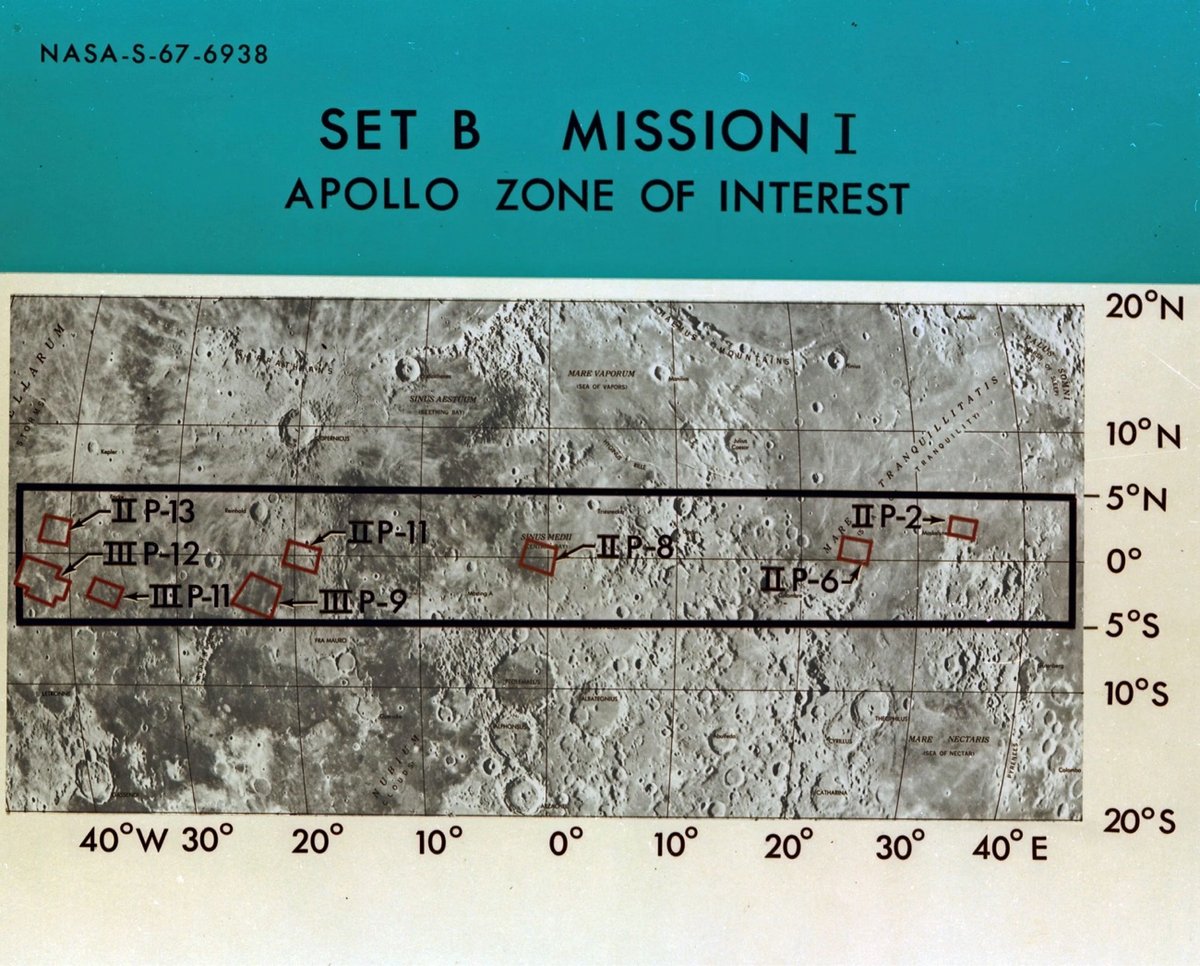
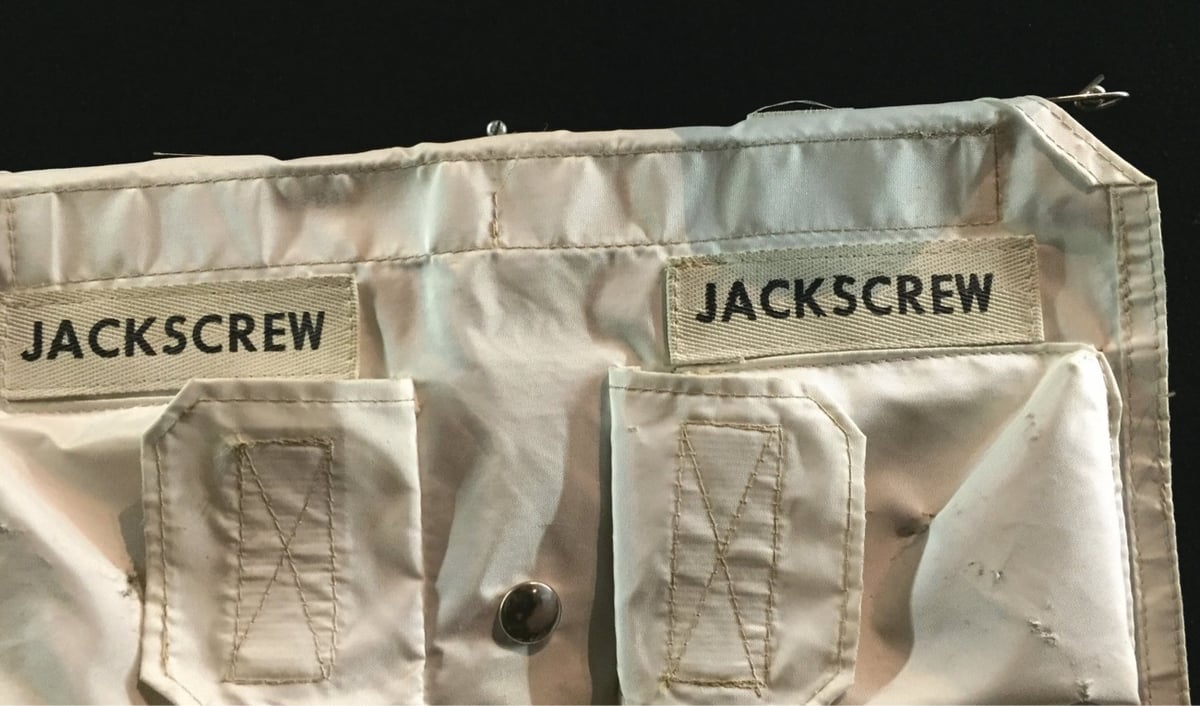
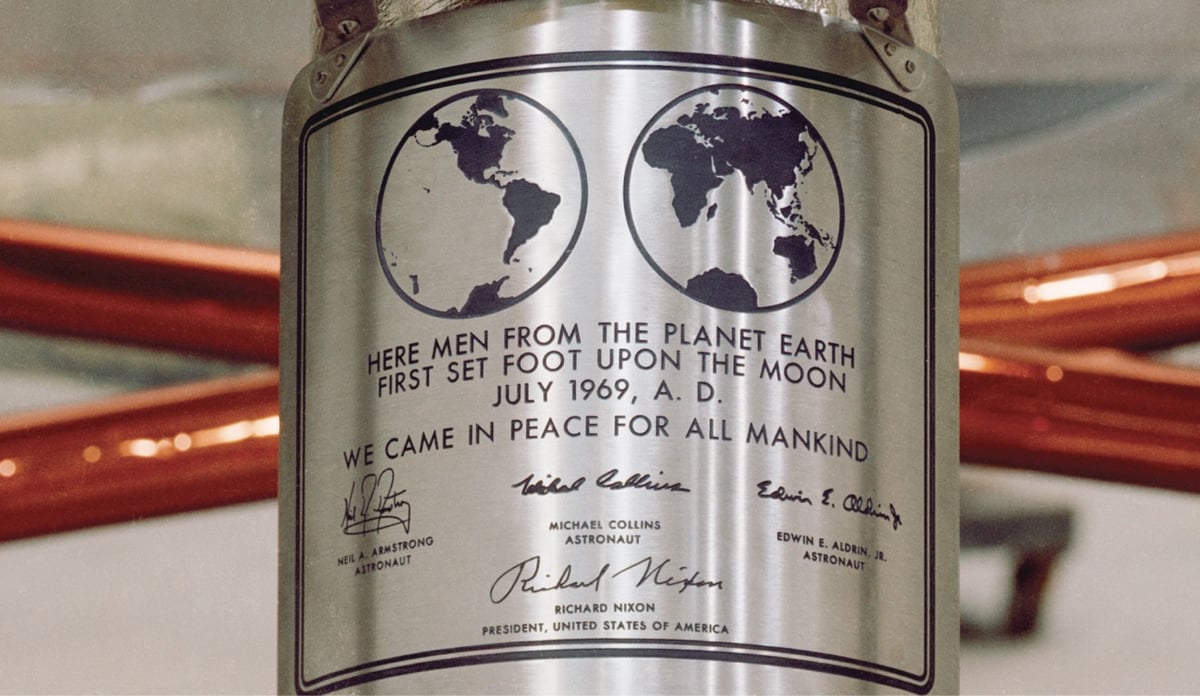
Futura, the typeface favored by the likes of filmmakers Stanley Kubrick and Wes Anderson was also used extensively for NASA’s Apollo 11 mission (along with an American knock-off of Futura called Spartan).
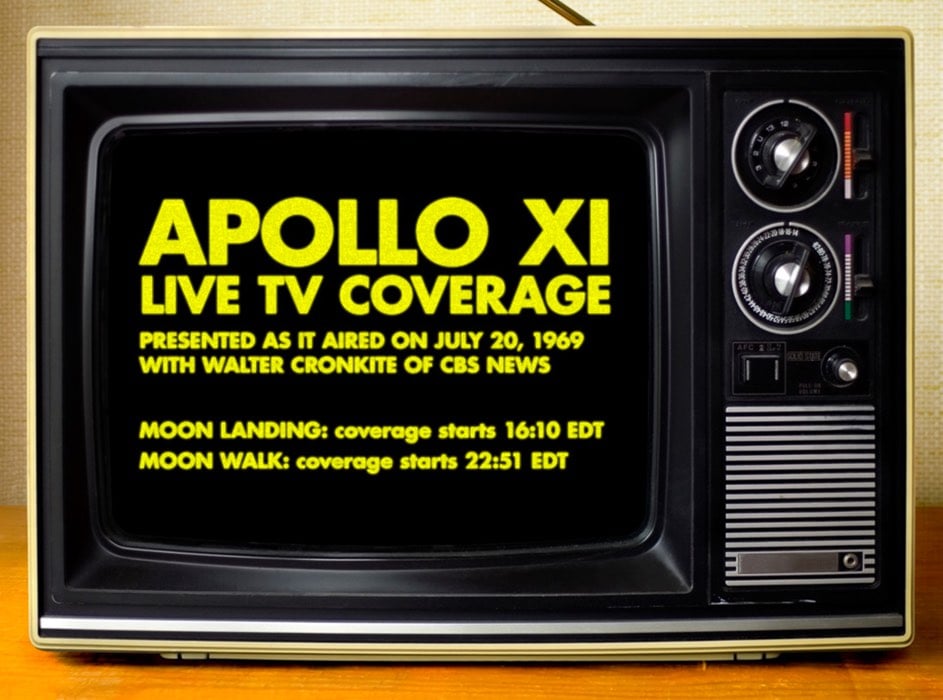
55 years ago today, on July 20, 1969, Neil Armstrong & Buzz Aldrin landed on the Moon and went for a little walk. For the 16th year in a row, you can watch the original CBS News coverage of Walter Cronkite reporting on the Moon landing and the first Moon walk on a small B&W television, synced to the present-day time. Just open this page in your browser today, July 20th, and the coverage will start playing at the proper time. Here’s the schedule (all times EDT):
4:10:30 pm: Moon landing broadcast starts
4:17:40 pm: Lunar module lands on the Moon
4:20:15 pm - 10:51:26 pm: Break in coverage
10:51:27 pm: Moon walk broadcast starts
10:56:15 pm: First step on Moon
11:51:30 pm: Nixon speaks to the Eagle crew
12:00:30 am: Broadcast end (on July 21)
Set an alarm on your phone or calendar! Also, this works best on an actual computer but I think it functions ok on phones and tablets if necessary.
Back in 2018, I wrote a bit about what to look out for when you’re watching the landing:
The radio voices you hear are mostly Mission Control in Houston (specifically Apollo astronaut Charlie Duke, who acted as the spacecraft communicator for this mission) and Buzz Aldrin, whose job during the landing was to keep an eye on the LM’s altitude and speed — you can hear him calling it out, “3 1/2 down, 220 feet, 13 forward.” Armstrong doesn’t say a whole lot…he’s busy flying and furiously searching for a suitable landing site. But it’s Armstrong that says after they land, “Houston, Tranquility Base here. The Eagle has landed.”. Note the change in call sign from “Eagle” to “Tranquility Base”. :)
Two things to listen for on the broadcast: the 1201/1202 program alarms I mentioned above and two quick callouts by Charlie Duke about the remaining fuel towards the end: “60 seconds” and “30 seconds”. Armstrong is taking all this information in through his earpiece — the 1202s, the altitude and speed from Aldrin, and the remaining fuel — and using it to figure out where to land.
54 years ago today, on July 20, 1969, Neil Armstrong & Buzz Aldrin landed on the Moon and went for a little walk. For the 15th year in a row, you can watch the original CBS News coverage of Walter Cronkite reporting on the Moon landing and the first Moon walk on a small B&W television, synced to the present-day time. Just open this page in your browser today, July 20th, and the coverage will start playing at the proper time. Here’s the schedule (all times EDT):
4:10:30 pm: Moon landing broadcast starts
4:17:40 pm: Lunar module lands on the Moon
4:20:15 pm - 10:51:26 pm: Break in coverage
10:51:27 pm: Moon walk broadcast starts
10:56:15 pm: First step on Moon
11:51:30 pm: Nixon speaks to the Eagle crew
12:00:30 am: Broadcast end (on July 21)
Set an alarm on your phone or calendar! Also, this works best on an actual computer but I think it functions ok on phones and tablets if necessary.
Back in 2018, I wrote a bit about what to look out for when you’re watching the landing:
The radio voices you hear are mostly Mission Control in Houston (specifically Apollo astronaut Charlie Duke, who acted as the spacecraft communicator for this mission) and Buzz Aldrin, whose job during the landing was to keep an eye on the LM’s altitude and speed — you can hear him calling it out, “3 1/2 down, 220 feet, 13 forward.” Armstrong doesn’t say a whole lot…he’s busy flying and furiously searching for a suitable landing site. But it’s Armstrong that says after they land, “Houston, Tranquility Base here. The Eagle has landed.”. Note the change in call sign from “Eagle” to “Tranquility Base”. :)
Two things to listen for on the broadcast: the 1201/1202 program alarms I mentioned above and two quick callouts by Charlie Duke about the remaining fuel towards the end: “60 seconds” and “30 seconds”. Armstrong is taking all this information in through his earpiece — the 1202s, the altitude and speed from Aldrin, and the remaining fuel — and using it to figure out where to land.
After Neil Armstrong and Buzz Aldrin landed on the Moon 52 years ago today in the Lunar Module (aka Eagle), they rode the ascent stage of the LM back to rendezvous with Michael Collins in the Command Module (aka Columbia). After docking, Eagle was jettisoned and the three astronauts returned to Earth in Columbia. It was presumed that Eagle orbited the Moon until eventually crashing into the surface, but a recent analysis shows that the spacecraft may have entered a stable orbit and is still circling the Moon decades after the end of the mission, a priceless artifact of an historic achievement.
Most spacecraft in lunar orbit suffer from instability in their orbits due to the ‘lumpy’ nature of the lunar gravity which tends to cause the orbits to eventually get so elliptical that they hit the moon.
However, an amateur space fan wanted to narrow down the possible impact location and used orbit modelling software to propagate the orbit forwards in time until it hit the moon. He was surprised to find that it didn’t hit the moon, and remained in a stable orbit for decades, this suggests that the Eagle may still be orbiting the moon over 5 decades after being left there.
The paper detailing the analysis suggests that if Eagle has survived, it should be detectable by radar.
Fifty-one years ago today, on July 20, 1969, Neil Armstrong & Buzz Aldrin landed on the Moon and went for a little walk. For the 12th year in a row, you can watch the original CBS News coverage of Walter Cronkite reporting on the Moon landing and the first Moon walk on a small B&W television, synced to the present-day time. Just open this page in your browser today, July 20th, and the coverage will start playing at the proper time. Here’s the schedule (all times EDT):
4:10:30 pm: Moon landing broadcast starts
4:17:40 pm: Lunar module lands on the Moon
4:20:15 pm - 10:51:26 pm: Break in coverage
10:51:27 pm: Moon walk broadcast starts
10:56:15 pm: First step on Moon
11:51:30 pm: Nixon speaks to the Eagle crew
12:00:30 am: Broadcast end (on July 21)
Set an alarm on your phone or calendar!
This is one of my favorite things I’ve ever done online…here’s what I wrote when I launched the project in 2009:
If you’ve never seen this coverage, I urge you to watch at least the landing segment (~10 min.) and the first 10-20 minutes of the Moon walk. I hope that with the old time TV display and poor YouTube quality, you get a small sense of how someone 40 years ago might have experienced it. I’ve watched the whole thing a couple of times while putting this together and I’m struck by two things: 1) how it’s almost more amazing that hundreds of millions of people watched the first Moon walk *live* on TV than it is that they got to the Moon in the first place, and 2) that pretty much the sole purpose of the Apollo 11 Moon walk was to photograph it and broadcast it live back to Earth.
In 2018, I wrote about what to watch for during the landing sequence.
The radio voices you hear are mostly Mission Control in Houston (specifically Apollo astronaut Charlie Duke, who acted as the spacecraft communicator for this mission) and Buzz Aldrin, whose job during the landing was to keep an eye on the LM’s altitude and speed - you can hear him calling it out, “3 1/2 down, 220 feet, 13 forward.” Armstrong doesn’t say a whole lot…he’s busy flying and furiously searching for a suitable landing site. But it’s Armstrong that says after they land, “Houston, Tranquility Base here. The Eagle has landed.”. Note the change in call sign from “Eagle” to “Tranquility Base”. :)
In a letter recently published in a new book, A Reluctant Icon: Letters to Neil Armstrong, a teacher wrote a letter to the first human to set foot on the Moon accusing him of making the whole thing up.

To which Armstrong replied:

(via the excellent Letters of Note)
I do not know if hearing about other people’s quarantine experiences makes going through one yourself any easier, but the story of how NASA sequestered the returning Apollo 11 astronauts away from the rest of the world for 21 days is interesting for other reasons as well. The worry was that some sort of “moon bug” or “lunar plague” was going to make its way from the Moon to the Earth in the spacecraft or the astronauts’ bodies.
From the moment the Apollo 11 astronauts arrive back on earth from their epochal visit to the moon, they will be treated not as heroes but as bearers of the most virulent, devastating plague the world has ever known.
So NASA quarantined Armstrong, Aldrin, and Collins in a series of specially designed suits and environments until August 10, 1969. At one point, the three of them lived in a modified Airstream trailer in which the air pressure was lower on the inside than outside so if there was a leak, air would rush into the trailer, not out. Armstrong even celebrated a birthday in quarantine.
After Apollo 11, NASA did similar quarantines for 12 and 14 but abandoned them after that because they figured it was safe.
Oh, and if you were curious about the Soyuz launch yesterday that sent three astronauts to the ISS and how they were going to mitigate the chances of sending any SARS-CoV-2 up there, crews on all missions are subject to a mandatory 2 week quarantine before they leave (according to this press release).
When Neil Armstrong and Buzz Aldrin landed safely on the Moon in July 1969, President Richard Nixon called them from the White House during their moonwalk to say how proud he was of what they had accomplished. But in the event that Armstrong and Aldrin did not make it safely off the Moon’s surface, Nixon was prepared to give a very different sort of speech. The remarks were written by William Safire and recorded in a memo called In Event of Moon Disaster.
Fifty years ago, not even Stanley Kubrick could have faked the Moon landing. But today, visual effects and techniques driven by machine learning are so good that it might be relatively simple, at least the television broadcast part of it.1 In a short demonstration of that technical supremacy, a group from MIT has created a deepfake version of Nixon delivering that disaster speech. Here are a couple of clips from the deepfake speech:
Fate has ordained that the men who went to the moon to explore in peace will stay on the moon to rest in peace.
The full film is being shown at IDFA DocLab in Amsterdam and will make its way online sometime next year.
The implications of being able to so convincingly fake the televised appearance of a former US President are left as an exercise to the reader. (via boing boing)
Update: The whole film is now online. (thx, andy)
50 years ago, the Sony TC-50 cassette player and recorder accompanied the Apollo 11 crew to the Moon and back. (Here’s what they listened to.) Ten years later, the company came out with the Walkman, the first portable cassette player that struck a chord with consumers. In this video, Mat of Techmoan shows us the TC-50 and shows how similar it is to the later Walkman. I found this video via Daring Fireball, where John Gruber remarked on the iterative nature of design: “You get to a breakthrough like the original iPhone one step at a time.”
I was away this weekend at a family function and mostly without internet access, so I didn’t get to watch the coverage of the Moon landing for the first time in more than a decade. I also didn’t get to share a bunch of links I had up in browser tabs and now I think everyone is (justifiably) tired of all the Apollo 11 hoopla, myself included. But I hope you’ll indulge me in just one more and then I’ll (maybe! hopefully!) shut up about it for another year.
It’s tough to narrow it down, but the most dramatic & harrowing part of the whole mission is when Neil Armstrong notices that the landing site the LM (call sign “Eagle”) is heading towards is no good — it’s too rocky and full of craters — so he guides the spacecraft over that area to a better landing spot. He does this despite never having flown the LM that way in training, with program alarms going off, with Mission Control not knowing what he’s doing (he doesn’t have time to tell them), and with very low fuel. Eagle had an estimated 15-20 seconds of fuel left when they touched down and the guy doing the fuel callouts at Mission Control was basically just estimating the remaining fuel in his head based on how much flying he thinks the LM had done…and again, the LM had never been flown like that before and Mission Control didn’t know what Armstrong was up to! (The 13 Minutes to the Moon podcast does an excellent job explaining this bit of the mission, episode 9 in particular.)
Throughout this sequence, there was a camera pointed out Buzz Aldrin’s window — you can see that video here — but that was a slightly different view from Armstrong’s. We’ve never seen what Armstrong saw to cause him to seek out a new landing site. Now, a team at NASA has simulated the view out of his window using data from the Lunar Reconnaissance Orbiter Camera:
The LROC team reconstructed the last three minutes of the landing trajectory (latitude, longitude, orientation, velocity, altitude) using landmark navigation and altitude call outs from the voice recording. From this trajectory information, and high resolution LROC NAC images and topography, we simulated what Armstrong saw in those final minutes as he guided the LM down to the surface of the Moon. As the video begins, Armstrong could see the aim point was on the rocky northeastern flank of West crater (190 meters diameter), causing him to take manual control and fly horizontally, searching for a safe landing spot. At the time, only Armstrong saw the hazard; he was too busy flying the LM to discuss the situation with mission control.
This reconstructed view was actually pretty close to the camera’s view out of Aldrin’s window:
See also a photograph of the Apollo 11 landing site taken by the LRO camera from a height of 15 miles.
You’ve heard by now that it’s the 50th anniversary of the first humans landing on the Moon. On July 20, 1969, 50 years ago today, Neil Armstrong & Buzz Aldrin landed on the Moon and went for a little walk. For the 11th year in a row, you can watch the original CBS News coverage of Walter Cronkite reporting on the Moon landing and the first Moon walk on a small B&W television, synced to the present-day time. Just open this page in your browser today, July 20th, and the coverage will start playing at the proper time. Here’s the schedule (all times EDT):
4:10:30 pm: Moon landing broadcast starts
4:17:40 pm: Lunar module lands on the Moon
4:20:15 pm - 10:51:26 pm: Break in coverage
10:51:27 pm: Moon walk broadcast starts
10:56:15 pm: First step on Moon
11:51:30 pm: Nixon speaks to the Eagle crew
12:00:30 am: Broadcast end (on July 21)
Set an alarm on your phone or calendar!
This is one of my favorite things I’ve ever done online…here’s what I wrote when I launched the project in 2009:
If you’ve never seen this coverage, I urge you to watch at least the landing segment (~10 min.) and the first 10-20 minutes of the Moon walk. I hope that with the old time TV display and poor YouTube quality, you get a small sense of how someone 40 years ago might have experienced it. I’ve watched the whole thing a couple of times while putting this together and I’m struck by two things: 1) how it’s almost more amazing that hundreds of millions of people watched the first Moon walk *live* on TV than it is that they got to the Moon in the first place, and 2) that pretty much the sole purpose of the Apollo 11 Moon walk was to photograph it and broadcast it live back to Earth.
I wrote a bit last year about what to watch for during the landing sequence.
Two other things. You can also experience the landing and Moon walk live at Apollo 11 in Real Time. And it looks like CBS News is doing a livestream of Cronkite’s coverage of the landing on YouTube starting at 3:30pm. Nice to see them catching up! :)
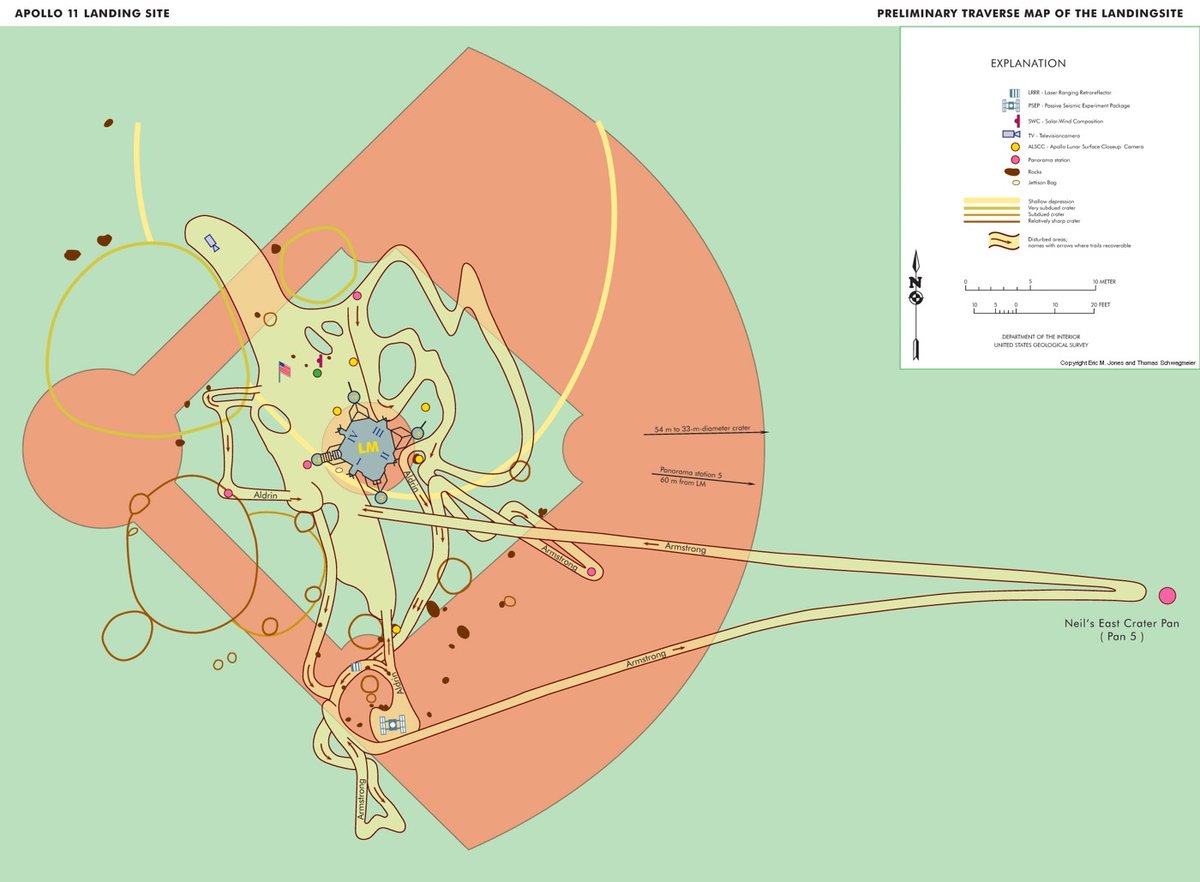
With the 50th anniversary of the first crewed landing on the Moon fast approaching, I thought I’d share one of my favorite views of the Moon walk, a map of where Neil Armstrong and Buzz Aldrin walked on the Moon, superimposed over a baseball field (bigger). The Lunar Module is parked on the pitcher’s mound and you can see where the two astronauts walked, set up cameras, collected samples, and did experiments.
This map easily illustrates something you don’t get from watching video of the Moon walk: just how close the astronauts stayed to the LM and how small an area they covered during their 2 and 1/2 hours on the surface. The crew had spent 75+ hours flying 234,000 miles to the Moon and when they finally got out onto the surface, they barely left the infield! On his longest walk, Armstrong ventured into center field about 200 feet from the mound, not even far enough to reach the warning track in most major league parks. In fact, the length of Armstrong’s walk fell far short of the 363-foot length of the Saturn V rocket that carried him to the Moon and all of their activity could fit neatly into a soccer pitch (bigger):
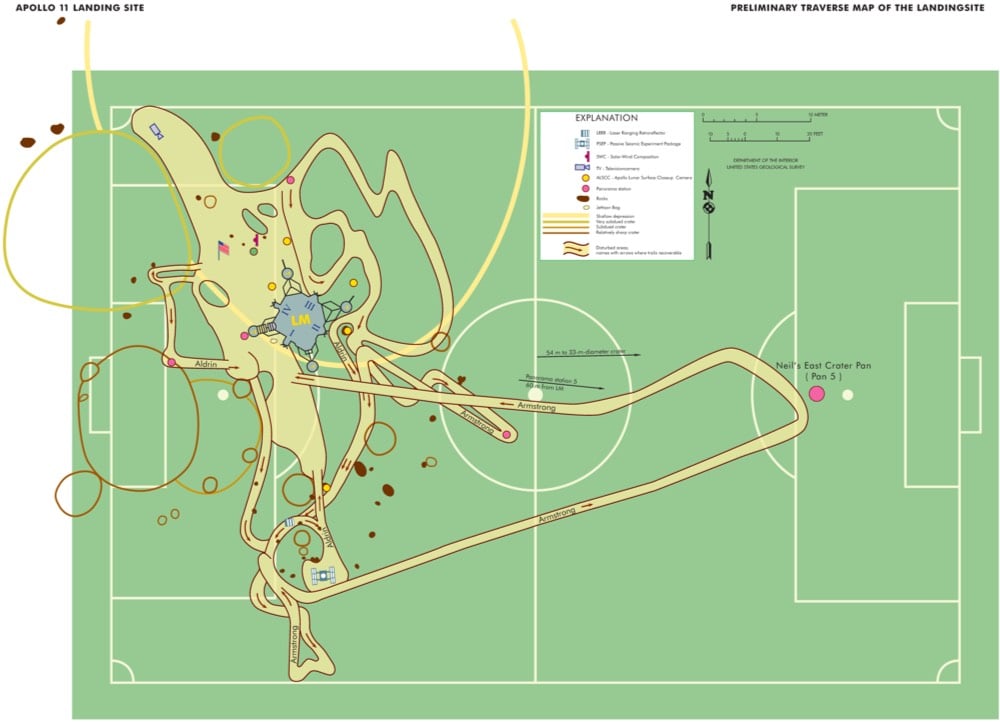
Astronauts on subsequent missions ventured much further. The Apollo 12 crew ventured 600 feet from the LM on their second walk of the mission. The Apollo 14 crew walked almost a mile. After the Lunar Rover entered the mix, excursions up to 7 miles during EVAs that lasted for more than 7 hours at a time became common.
The Apollo Flight Journal has put together a 20-minute video of the full descent and landing of the Apollo 11 Lunar Module containing Neil Armstrong and Buzz Aldrin on July 20, 1969.
The video combines data from the onboard computer for altitude and pitch angle, 16mm film that was shot throughout the descent at 6 frames per second. The audio recording is from two sources. The air/ground transmissions are on the left stereo channel and the mission control flight director loop is on the right channel. Subtitles are included to aid comprehension.
Reminder that you can follow along in sync with the entire Apollo 11 mission right up until their splashdown. I am also doing my presentation of Walter Cronkite’s CBS news coverage of the landing and the Moon walk again this year, starting at 4:10pm EDT on Saturday, July 20. Here’s the post I wrote about it last year for more details. (thx, david)
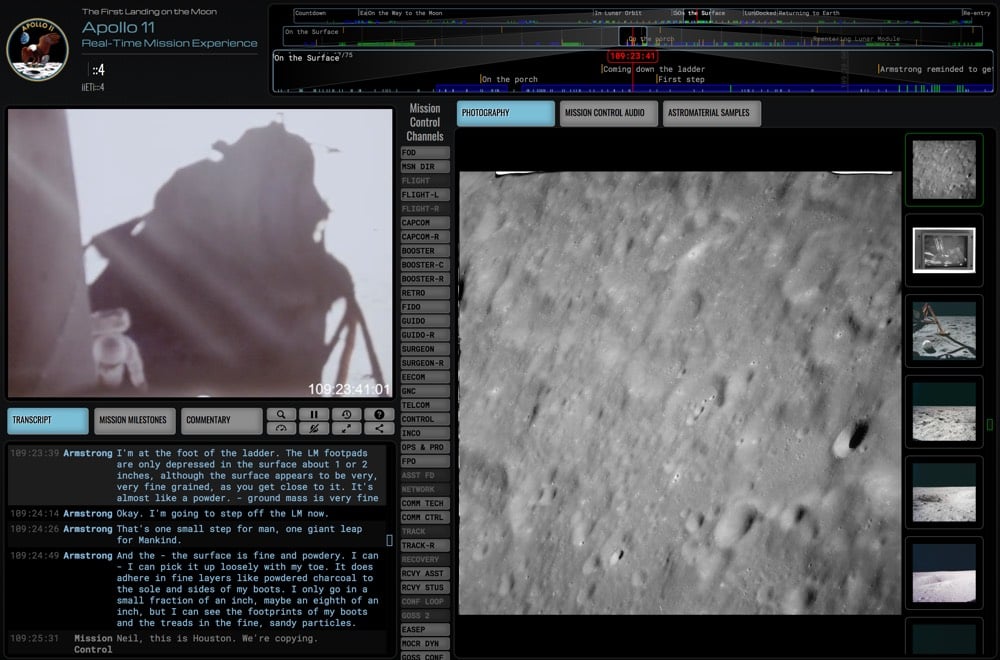
Well, this is just flat-out fantastic. Ben Feist and a team of collaborators have built Apollo 11 In Real Time, an interactive presentation of the first mission to land on the Moon as it happened.
This website replays the Apollo 11 mission as it happened, 50 years ago. It consists entirely of historical material, all timed to Ground Elapsed Time — the master mission clock. Footage of Mission Control, film shot by the astronauts, and television broadcasts transmitted from space and the surface of the Moon, have been painstakingly placed to the very moments they were shot during the mission, as has every photograph taken, and every word spoken.
You can tune in in real time beginning July 16th, watch/experience it right now from 1 minute before launch, or you can skip around the timeline to just watch the moments you want. As someone who has been hosting an Apollo 11 in real time thing for the past 9 years, this site makes me both ridiculously happy and a little bit jealous.
I’ve only ever seen footage of the first moonwalk in grainy videos as broadcast on TV, but this site shows it in the original resolution and it’s a revelation. Here’s the moonwalk, beginning with some footage of the folks in Mission Control nervously fidgeting with their hands (skip to 5:18:00 if the video doesn’t start there):
The rest of the video for the entire mission can be found here…what a trove. This whole thing is marvelous…I can’t wait to tune in when July 16th rolls around.
Older posts






Socials & More